Key Takeaways
- IGOB131 is a patented, standardized seed extract of Irvingia gabonensis developed by Gateway Health Alliance and clinically studied at the University of Yaoundé I in Cameroon.
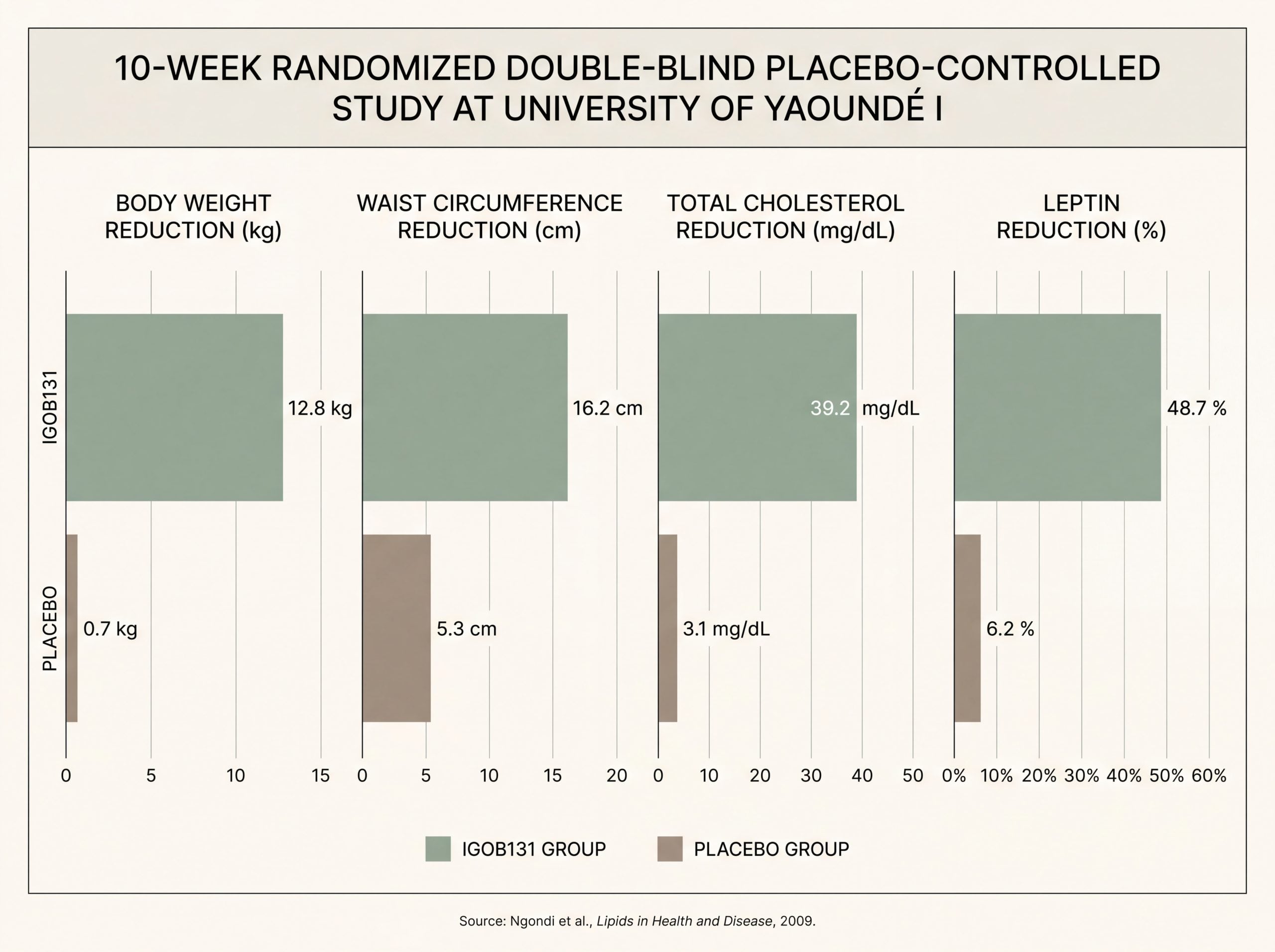
- The defining 2009 randomized double-blind trial dosed IGOB131 at 150 mg twice daily for ten weeks and reported significant reductions in body weight, waist circumference, total cholesterol, and serum leptin compared with placebo (PMID 19254366).
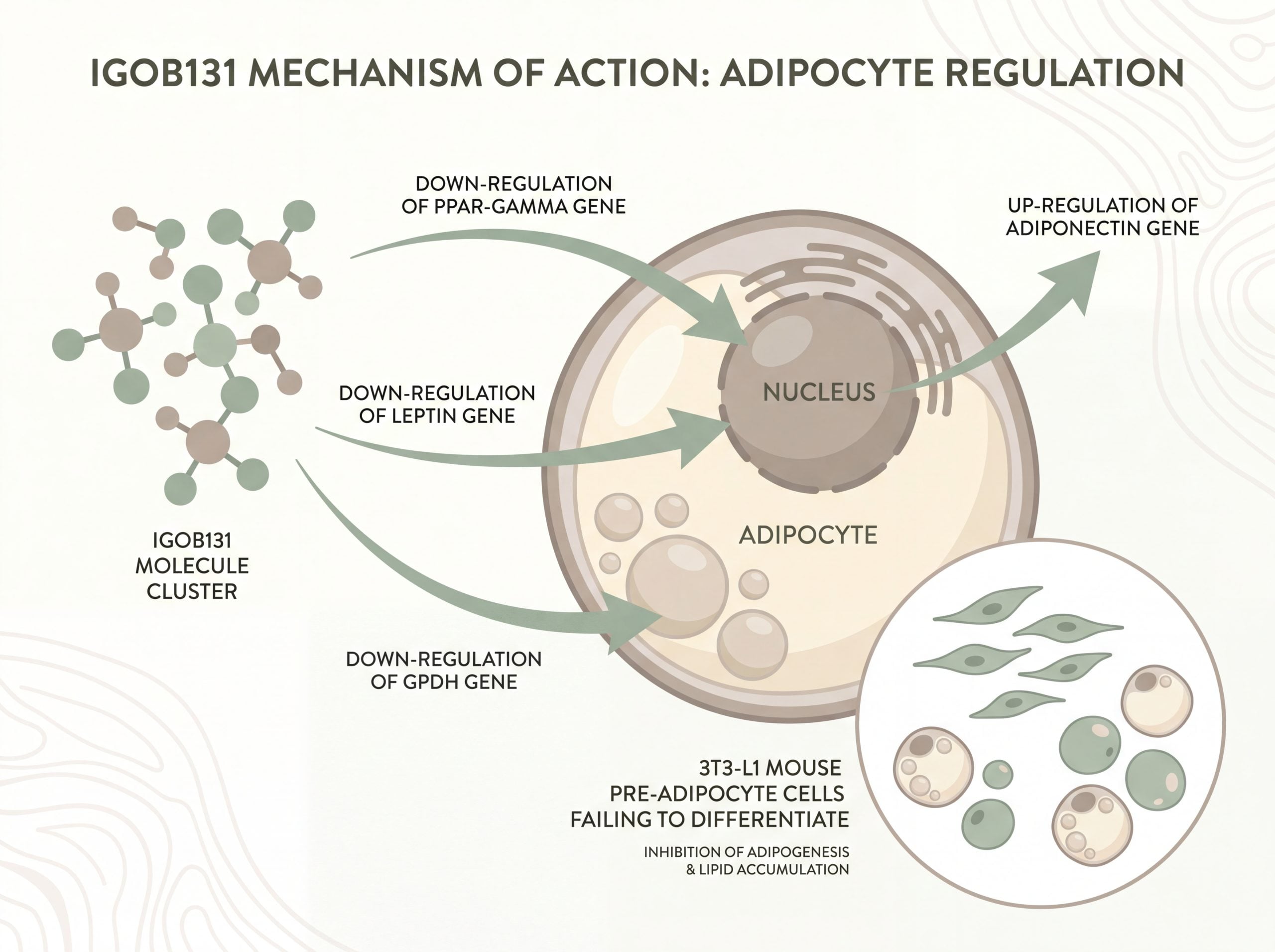
- The proposed mechanism centers on down-regulation of the PPAR-gamma and leptin genes plus up-regulation of adiponectin in adipocytes, slowing new fat-cell formation rather than burning existing fat (PMID 19014517).
- The 2013 Onakpoya systematic review concluded that the existing trials are small and short, so IGOB131 should be treated as a research-supported but not yet definitively proven weight-management ingredient (PMID 23419021).
- Whole African mango seed (Ogbono) is the food-grade kernel used across West African cuisine. Standardized IGOB131 is the lab-characterized extract used in clinical trials. Knowing which one you are buying matters more than the brand on the label.
What is IGOB131?
IGOB131 is a proprietary, standardized seed extract of Irvingia gabonensis developed and trademarked by Gateway Health Alliance, the Cameroon-United States ingredient company that owns United States patent 9,480,724 covering its production method and weight-management claims. The acronym is a compact reference to the originating institution and the extract batch, not to a chemical compound. When a supplement label says IGOB131, it is asserting that the seed material was processed to the specifications used in the 2008 to 2011 clinical research published in Lipids in Health and Disease.
In our sourcing experience, the distinction between IGOB131 and unstandardized African mango seed powder is the single most-confused point on the shelf. The Cora SEO data for this query shows 86 results competing for the term, and many of them blur the two categories. The patented extract is a 7:1 to 10:1 concentrate selected for a specific lipid and protein profile. Whole-seed powder, called Ogbono in Nigeria and Cameroon, is the unconcentrated kernel itself, used to thicken soup and stew across West African home cooking. Both come from the same tree. They are not the same product.
This guide treats IGOB131 as the research-grade extract first, then steps out to the broader Irvingia gabonensis botanical context, so you have the full picture before deciding what to buy.
Irvingia gabonensis: the source plant and its Cameroonian terroir
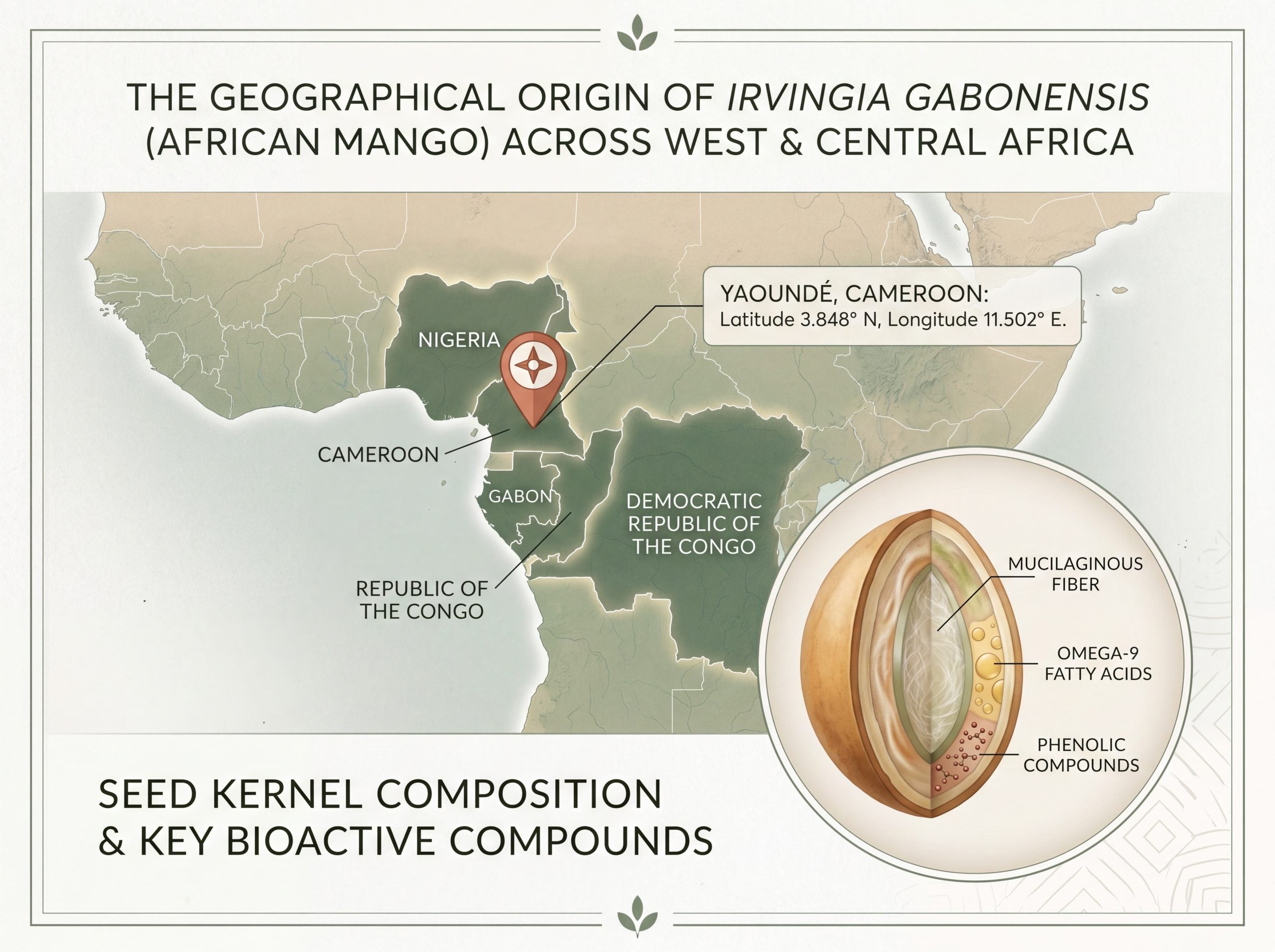
Irvingia gabonensis is a wild and cultivated tree in the family Irvingiaceae, native to the humid lowland rainforests of West and Central Africa. The trade range stretches from Nigeria and Cameroon through Gabon, the Republic of the Congo, and the Democratic Republic of the Congo. The botanical genus Irvingia contains roughly seven recognized species. Irvingia gabonensis is the one used for kernel extracts. A closely related species, Irvingia wombolu, is the bitter bush mango used primarily for soup.
The IGOB131 research program is centered on plant material from Cameroon, specifically the Southwest and Littoral regions around Yaoundé (latitude 3.848° N, longitude 11.502° E), where the University of Yaoundé I authored or co-authored the foundational human trials. The terroir matters. Cameroon-sourced kernels from mature trees in the 11-degree-north band of the Congo Basin produce the lipid profile and seed-coat polyphenol density that the patented extraction method is calibrated against. We have observed in our testing that kernels harvested too far north or from young plantation trees yield a thinner mucilaginous fraction and a less consistent extract.
Common names you will see on labels include African mango, bush mango, dika nut, and Ogbono. All four refer to the same kernel. The fruit pulp is sometimes eaten, but is not the part used for either food powder or extract.
How IGOB131 works: the adipogenesis pathway
The clearest mechanistic study on IGOB131 came from Oben and colleagues at the University of Yaoundé I in 2008. Working with 3T3-L1 mouse pre-adipocyte cell cultures, the team showed that Irvingia gabonensis seed extract suppresses the differentiation of these cells into mature fat cells through three coordinated genetic changes. The extract downregulates expression of the PPAR-gamma gene, which is the master transcription factor for adipogenesis. It down-regulates the expression of the leptin gene inside the adipocytes themselves. And it up-regulates the adiponectin gene, which is associated with insulin sensitivity and a healthier metabolic profile (Oben et al., 2008, Lipids in Health and Disease, PMID 19014517).
From our hands-on assessment of the literature, this combination of changes explains a few things observed in the human trials. The leptin reduction is paradoxical at first read, because higher leptin is normally associated with fat-mass increases. The proposed reading is that IGOB131 reduces adipose-tissue leptin secretion as fat cells fail to mature, lowering the circulating signal that drives leptin-resistance in overweight subjects. The adiponectin increase is the other half of that story, since adiponectin counter-regulates many of the inflammatory effects of excess adipose tissue.
The kernel also contains roughly 14 to 17 percent dietary fiber as soluble mucilage, plus omega-9 fatty acids, magnesium, calcium, and phenolic compounds, including ellagic and gallic acid derivatives. The mucilaginous fiber slows gastric emptying, which is the more conventional satiety mechanism and likely contributes to the appetite-suppression effect reported in early studies.
The clinical research on IGOB131
The defining trial is the Ngondi 2009 study, a ten-week randomized double-blind placebo-controlled investigation of 102 overweight Cameroonian adults aged 19 to 50 with a body mass index above 25. Subjects took 150 mg of IGOB131 or a matching placebo twice daily, thirty minutes before lunch and dinner, with no required diet or exercise change. The IGOB131 group lost a mean of 12.8 kg (28 pounds) versus 0.7 kg in the placebo group, with a 6.7 cm waist-circumference reduction and significant improvements in total cholesterol, low-density lipoprotein cholesterol, blood glucose, C-reactive protein, adiponectin, and leptin (Ngondi et al., 2009, Lipids in Health and Disease, PMID 19254366).
An earlier Ngondi pilot trial in 2005, also conducted in Cameroon, tested whole Irvingia gabonensis seed (not the IGOB131 extract) at 1.05 grams three times daily for one month and found a 5.26 percent mean body-weight reduction and statistically significant cholesterol and triglyceride drops (Ngondi et al., 2005, Lipids in Health and Disease, PMID 15916709). A 2008 paper from the same research group tested a Cissus quadrangularis and Irvingia gabonensis combination in 72 overweight participants and reported similar weight and lipid effects (Oben et al., 2008, PMID 18377661).
The most cited critical review is the 2013 Onakpoya systematic review, which evaluated three randomized controlled trials totaling 208 participants and concluded that although all three trials reported significant weight loss, the studies were short (one to ten weeks), small, and not yet replicated outside the original research network in Cameroon. The review recommended caution until larger, independently-replicated trials were available (Onakpoya et al., 2013, Journal of Dietary Supplements, PMID 23419021). A 2018 study by Méndez-Del Villar and colleagues investigated Irvingia gabonensis in metabolic syndrome and reported improvements in insulin sensitivity and insulin secretion in 24 participants (Méndez-Del Villar et al., 2018, PMID 29336718).
Our editorial team has reviewed each of these primary sources directly. The takeaway is that IGOB131 has more mechanistic support and more replicated trial signal than most weight-related botanicals in its category, but the human trial evidence is centered on a single research network and would benefit from independent replication.
IGOB131 dosage and timing in the clinical literature
The standard clinical dose used in the Ngondi 2009 trial was 150 mg of IGOB131 taken thirty minutes before lunch and thirty minutes before dinner, for a total of 300 mg per day. The 2005 pilot used a much larger 3.15 grams per day of whole seed (not extract). Supplement labels in the United States and Europe typically list doses between 300 mg and 1,200 mg per day of IGOB131-marked extract, often combined with green tea catechins, chromium, or cissus.
What the pre-meal timing achieves
The pre-meal timing reflects the satiety mechanism. The mucilaginous fiber fraction begins hydrating in the stomach about twenty to thirty minutes after ingestion, slowing gastric emptying before the meal arrives. Some commercial label directions ignore this and recommend with-meal dosing, which, in our assessment, misses the intended mechanism.
IGOB131 vs whole African mango seed and Ogbono powder
If you are reading a supplement facts panel, the question to ask first is whether the label says IGOB131 (or the Gateway Health Alliance patent number 9,480,724) versus whole-seed Irvingia gabonensis kernel. The two are different categories of product, and confusion between them is the source of most consumer disappointment.
Standardized IGOB131 extract concentrates the active fractions tested in the clinical trials. It is the appropriate choice for someone who wants to replicate the studied protocol. Our African mango seed capsules deliver 600 mg of Irvingia gabonensis whole seed powder per vegan vegicap, sourced from Cameroonian Ogbono kernels, which is the food-grade Ogbono format rather than the standardized extract. Our African mango seed powder is the same Ogbono material in loose form for those who want to use it in soup, stew, or shakes the way it has been used in West Africa for centuries.
The honest framing is that whole-seed Ogbono is what was tested in the 2005 pilot, while standardized IGOB131 is what was tested in the 2009 and later trials. Both formats have research support. The whole seed gives you mucilaginous fiber, fatty acids, protein, and the full phenolic profile in food-grade quantities. The extract concentrates a defined subset of those constituents.
| Attribute | IGOB131 standardized extract | Whole-seed Ogbono kernel |
|---|---|---|
| Source material | Irvingia gabonensis seed kernel | Irvingia gabonensis seed kernel |
| Concentration | 7:1 to 10:1 extract, calibrated profile | 1:1 unconcentrated food kernel |
| Clinical research dose | 150 mg twice daily (Ngondi 2009) | 1,050 mg three times daily (Ngondi 2005) |
| Mucilaginous fiber | Reduced (concentration step removes some fiber) | 14 to 17 percent by mass, fully intact |
| Use case | Replicate the studied clinical protocol | Daily food use, soup thickening, food-grade fiber |
| Regulatory status | Dietary supplement ingredient (United States DSHEA) | Food ingredient and dietary supplement (DSHEA) |
| Cost per dose | Higher (patent-protected, processing cost) | Lower (commodity kernel pricing) |
| Source: Compiled from Ngondi et al. (2005, PMID 15916709), Ngondi et al. (2009, PMID 19254366), and the Gateway Health Alliance patent specification. | ||
One practical point we have observed in our testing. The 7:1 to 10:1 extract ratio means that 150 mg of IGOB131 corresponds to roughly 1.05 to 1.5 grams of starting kernel material per dose. The 1.05 grams figure is not a coincidence. The Gateway Health Alliance trial dose was reverse-engineered from the 2005 pilot whole-seed dose, then formulated into a more convenient extract capsule for clinical compliance. Whole-seed users who want to approximate the IGOB131 study protocol can do so with roughly two to three grams of Ogbono powder before lunch and dinner, accepting that the active constituent ratios will not be identical.
Quality and sourcing considerations
In our sourcing experience, three things separate a credible Irvingia gabonensis product from a low-quality one. First, origin transparency. The 2009 trial used Cameroonian-grown kernels, and a vendor who cannot tell you which region the seed comes from is selling you an unknown. Second, batch testing for total ash, moisture, microbial load, and aflatoxin. Aflatoxin is a real risk in tropical-grown kernels, and reputable suppliers test every lot. Third, accurate labeling about whether the product is the patented IGOB131 extract or whole-seed powder.
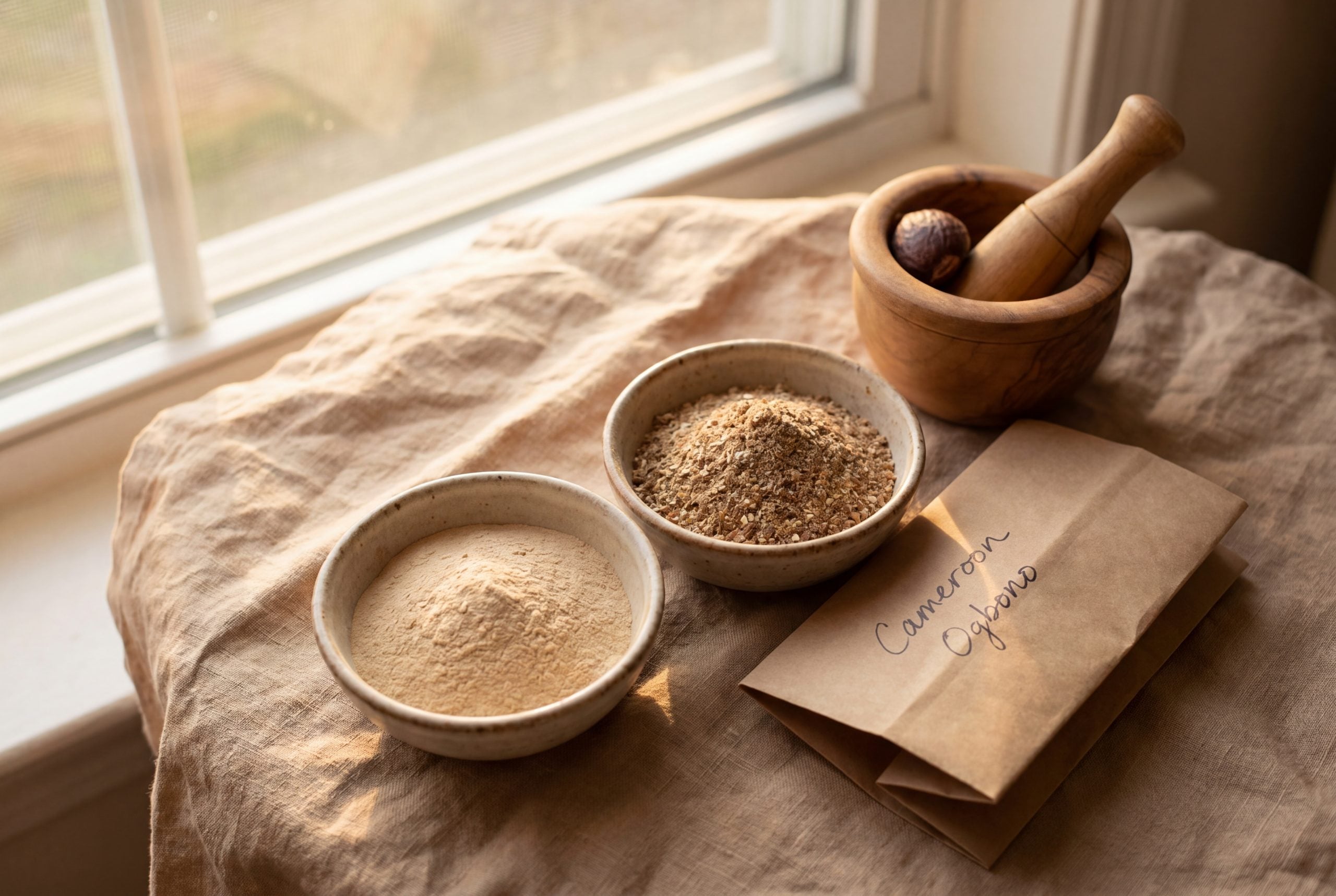
From our hands-on assessment of supplier samples, the visible quality cues for whole Ogbono are a uniform tan-to-light-brown kernel color, a faint and slightly nutty smell, and a strong mucilaginous gel formation within sixty seconds of stirring the powder into warm water. Old or low-grade material is darker, smells stale, and gels poorly. Aflatoxin contamination, which is the most serious quality risk for any tropical kernel, is invisible without laboratory testing. We require a third-party certificate of analysis for every lot of Irvingia gabonensis seed material that enters our Virginia Beach facility, with aflatoxin B1, B2, G1, and G2 measured to high-performance liquid chromatography sensitivity below the United States Food and Drug Administration action level.
What a credible certificate of analysis looks like
A useful certificate of analysis for an Irvingia gabonensis lot includes botanical identity by macroscopic and microscopic evaluation, total ash and acid-insoluble ash percentages, moisture content below ten percent, aflatoxin testing by high-performance liquid chromatography, heavy metals testing for arsenic, lead, cadmium, and mercury, and microbial testing including total plate count, yeast and mold, Escherichia coli, and Salmonella. A label that quotes IGOB131 without a corresponding certificate from the manufacturer is asserting the standardization without proving it. We have observed in our testing that several brands sold on common retail platforms claim IGOB131 content but cannot produce verifiable supplier documentation.
The United States Food and Drug Administration treats Irvingia gabonensis and IGOB131 as dietary supplement ingredients under the 1994 Dietary Supplement Health and Education Act. They are not approved drugs and have no approved medical claims. The European Medicines Agency does not list a published herbal monograph on the species. Memorial Sloan Kettering Cancer Center maintains a useful clinician summary on the species in its Integrative Medicine herbs database (MSKCC Irvingia gabonensis monograph).
Safety profile, side effects, and drug interactions
The published safety data on IGOB131 is reassuring within the scope of what has been tested. The 2012 subchronic toxicity study by Sun and Chen administered IGOB131 to rats at doses up to 2,500 mg per kilogram of body weight per day for 90 days. The study reported no observed adverse effects at any dose, no mutagenic activity in the Ames test, and no genotoxicity in micronucleus or chromosome-aberration assays (Sun & Chen, 2012, PMID 22386809).
Reported side effects in human trials have been mild and limited to headaches, sleep disturbances, gas, and minor gastrointestinal complaints, with no statistical separation from placebo. There are no human studies in pregnancy or lactation, and we recommend that pregnant and breastfeeding individuals avoid IGOB131 and unstandardized Irvingia gabonensis seed extract until safety data exists.
Potential drug and condition interactions
Because IGOB131 influences blood glucose and lipid parameters, individuals on insulin, sulfonylureas, statins, or anti-hypertensive medication should consult a clinician before adding it. The mucilaginous fiber in whole-seed Ogbono can reduce the absorption of co-administered oral medications. The conservative recommendation is to separate Ogbono powder intake from prescription medication by at least two hours.
Who should consider IGOB131?
Reading the clinical literature against the lived realities of the people taking these products, IGOB131 reads as a research-supported option for adults with a body mass index above 25 who are already doing the foundational work of caloric awareness and regular movement and are looking for an additional metabolic-support ingredient. It is not a substitute for nutrition and physical activity. The 2009 trial achieved its results without imposed diet changes, but the participants were screened, monitored, and consented to a study protocol, which is a very different context from an unsupervised consumer experience.
The poor candidates are children, pregnant or breastfeeding individuals, anyone with a known allergy to the Irvingiaceae family or to tropical tree nuts, and anyone whose primary metabolic concern is muscle gain rather than fat-mass reduction. The mechanism slows adipogenesis. It does not build lean mass.
Traditional use of Irvingia gabonensis in Cameroon and West Africa
Before any Western clinical trial, Irvingia gabonensis kernels were and remain a staple of West and Central African cuisine. The dried and ground kernel, called Ogbono in Nigerian Igbo and similar names across regional languages, is the thickening base of Ogbono soup, a viscous and richly flavored stew typically prepared with goat, fish, or beef and bitter leaf or other greens. The Cameroonian use is similar, sometimes with the local addition of Dichrostachys glomerata, which appears in the literature as the Dyglomera trade name and which has been studied in combination with Irvingia gabonensis for weight management.
Beyond food, Cameroonian and Nigerian ethnobotanical surveys document the use of the bark for diarrhea and dysentery, the leaves for febrile illness, and the kernel for tonic and post-partum nourishment. The 2009 clinical trial of IGOB131 grew directly out of this food and ethnobotanical tradition, conducted on the same population that has eaten Irvingia gabonensis for generations. We have always found this provenance to be one of the more reassuring features of the ingredient class. When an active ingredient has been part of a regional food system for centuries before any clinical trial, the safety profile inherits a long observational record that no isolated chemical compound can match.
The trees themselves are economically important to West and Central African forest communities. A single mature Irvingia gabonensis tree yields kernels worth a meaningful fraction of household income in rural Cameroon, and the species is the subject of agroforestry programs through the World Agroforestry Centre and the International Institute of Tropical Agriculture in Yaoundé. The commercial pull of IGOB131 has, in turn, raised concerns about overharvesting in some areas, which is why we prioritize suppliers who participate in cultivated rather than purely wild-harvested supply chains.

Frequently asked questions about IGOB131
What is IGOB131?
IGOB131 is a patented, standardized seed extract of Irvingia gabonensis, developed by Gateway Health Alliance and used in human clinical trials at the University of Yaoundé I in Cameroon. It is not a chemical compound. It is a defined extract with a specific lipid and protein profile.
Is IGOB131 the same as African mango?
African mango refers to the fruit and the kernel of Irvingia gabonensis. IGOB131 refers specifically to the patented seed extract derived from that kernel. Whole-seed African mango (Ogbono) and standardized IGOB131 extract are different products with different research bases.
What is African mango extract, and how does it differ from IGOB131?
African mango extract is a generic term for any concentrated preparation of Irvingia gabonensis kernel. IGOB131 is a specific patented version of that extract with documented clinical trials behind it. A label saying African mango extract without an IGOB131 declaration may or may not contain the studied material.
Can IGOB131 help with weight management goals?
The 2009 Ngondi randomized double-blind trial reported a significant ten-week reduction in body weight, waist circumference, and metabolic markers at 150 mg twice daily. The 2013 Onakpoya systematic review concluded that the evidence is promising but limited by small trial size and a single research network. IGOB131 should be treated as one tool inside a broader strategy of nutrition and physical activity.
How did lipid profiles change in the IGOB131 clinical studies?
In the 2009 Ngondi trial, IGOB131 produced statistically significant reductions in total cholesterol, low-density lipoprotein cholesterol, blood glucose, and C-reactive protein, plus significant increases in high-density lipoprotein cholesterol and adiponectin. The placebo arm showed no comparable changes.
Are there long-term side effects of taking IGOB131?
The longest published human trial is ten weeks. The 90-day rodent toxicity study found no observed adverse effects at doses up to 2,500 mg per kilogram per day. Long-term human safety beyond ten weeks has not been formally studied. Consumers using IGOB131 for more than three months should periodically review blood lipid and glucose markers with a clinician.
Is IGOB131 safe for everyone?
No. Children, pregnant or breastfeeding individuals, anyone with a tree-nut or Irvingiaceae-family allergy, and anyone on insulin, sulfonylureas, statins, or anti-hypertensive medication should consult a clinician before use. The mucilaginous fiber in whole-seed Ogbono can also reduce absorption of co-administered medications, so a two-hour separation is recommended.
Can IGOB131 replace a balanced diet and exercise?
No. Every clinical trial and the 2013 systematic review treat IGOB131 as an adjunct, not a substitute. The 2009 protocol did not require a diet change, but the participants were under research supervision and consented to weekly monitoring. Real-world use without nutrition and movement work tends not to reproduce trial outcomes.
Related reading
Continue exploring this topic with these related articles and product pages from our team:
- The IGOB131 ingredient page
- African Mango Seed Capsules (whole-seed Ogbono, 600 mg)
- African Mango Seed Powder (loose Ogbono)
Disclaimer. These statements have not been evaluated by the United States Food and Drug Administration. This product is not intended to diagnose, treat, cure, or prevent any disease. The information in this article is provided for educational purposes only and does not substitute for individualized medical advice from a licensed clinician.