Key Takeaways
- Mimosa pudica L. seed works mechanically rather than chemically. Its mucilage forms a gel that physically entraps material in the gut.
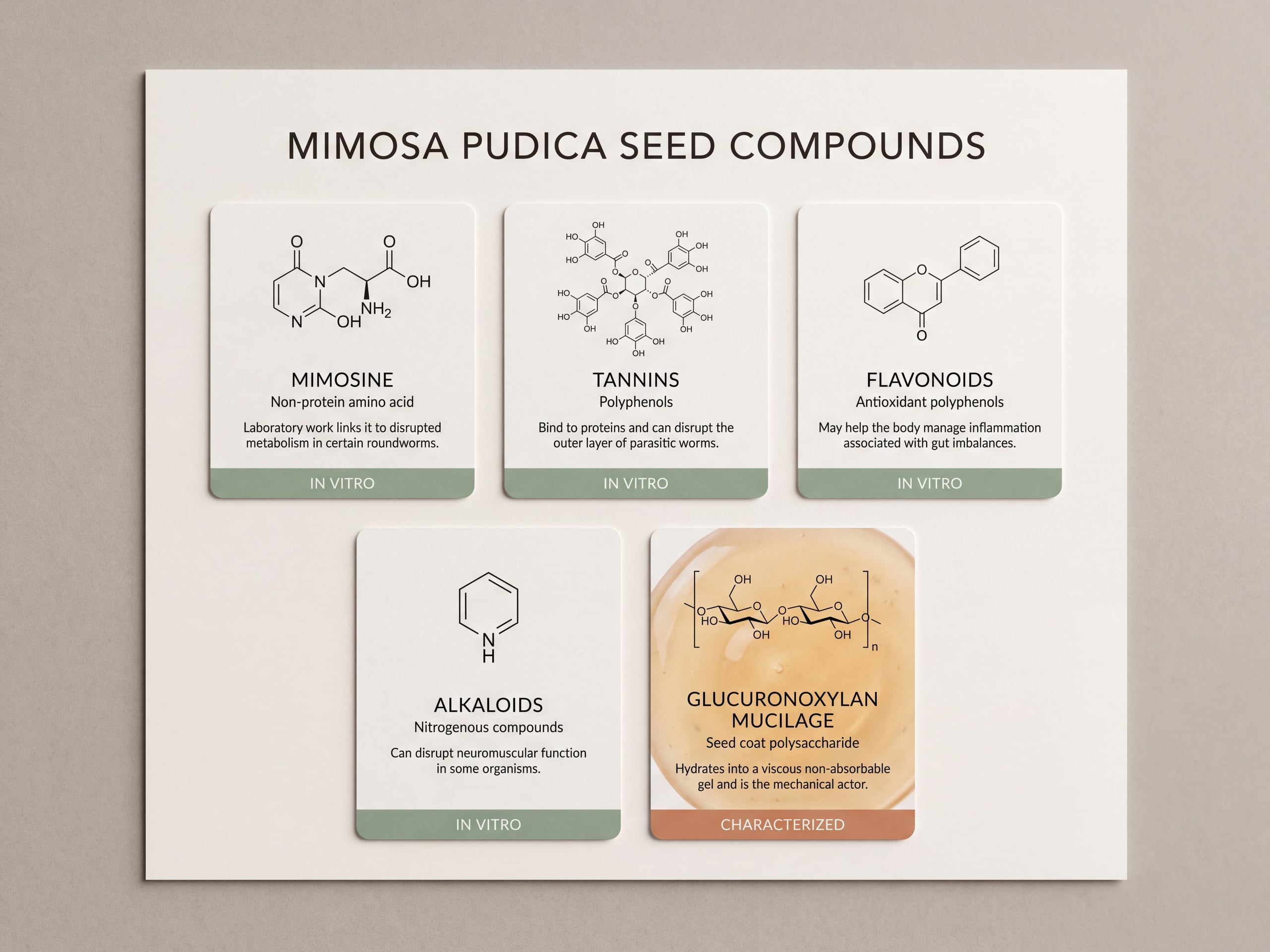
- The seed’s studied compounds include mimosine, a non-protein amino acid, along with tannins, flavonoids, alkaloids, and glucuronoxylan mucilage.
- The evidence is preclinical. No published human clinical trial has tested oral Mimosa pudica seed powder as an antiparasitic.
- The stringy material people photograph after a cleanse is not a recognized parasite. It is consistent with intestinal mucus, shed cells, and the seed mucilage itself.
- Adequate water intake is not optional with this seed. The gel needs fluid to move through the digestive tract.
- Anyone pregnant, breastfeeding, or trying to conceive should avoid Mimosa pudica entirely.
The sensitive plant folds its leaves when you touch it. That reflex made Mimosa pudica a curiosity long before anyone studied its seed, and it is still the reason most people recognize the plant on sight. The seed is a different subject altogether, and it is the part that shows up in parasite cleanse formulas.
This guide covers what the seed actually does in the digestive tract, which compounds have been studied, what the research supports and what it does not, and what the material people find in the toilet after a cleanse is most likely to be. Our editorial team reviewed the available primary literature on this plant and found a consistent pattern worth stating plainly at the start. The mechanism is better documented than the outcome.
What Is Mimosa Pudica?
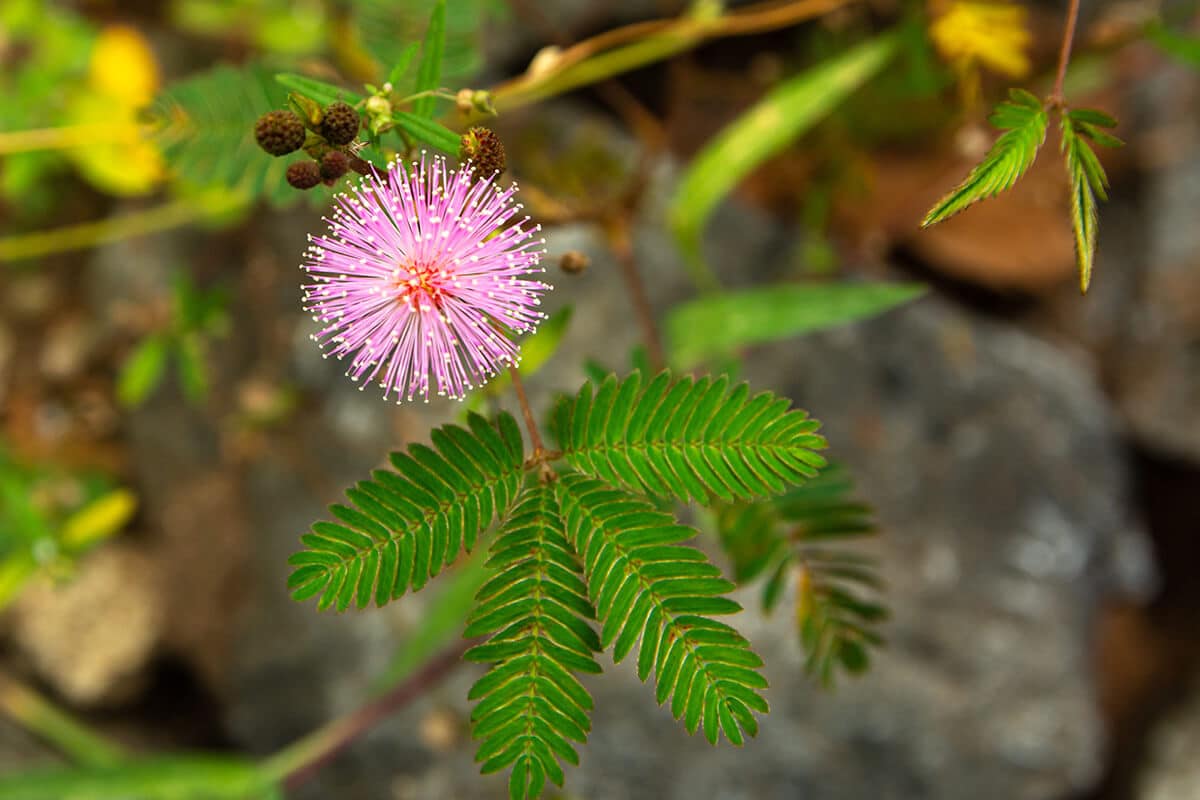
Mimosa pudica L., family Fabaceae, is a tropical legume known as the sensitive plant, the touch-me-not, or Lajjalu in Ayurvedic Sanskrit. It originated in Central and South America and now grows across tropical regions worldwide. The plant is a creeping perennial with compound leaves that fold inward within seconds of contact, a movement driven by turgor pressure changes in specialized motor tissue at the leaf joints.
The seed is the part used in digestive cleansing preparations. Its outer coat is unusually rich in mucilaginous polysaccharides, and that composition is the entire basis of the seed’s behavior in the gut. In our sourcing work with this seed, the mucilage content is the single quality variable that separates a batch that performs from one that does not.
How Does Mimosa Pudica Work Against Parasites?
Research has identified several bioactive compounds in Mimosa pudica. Its most significant property in the digestive tract, though, is physical rather than chemical.
The “Gut Scrubber” Effect of the Seed
When Mimosa pudica seed powder meets liquid in the digestive tract, the seed coat polysaccharides hydrate and form a thick, gelatinous matrix. This gel travels through the intestines, physically binding to material along the way, including organisms, their eggs, biofilms, and debris. This process is not about chemically “killing” parasites in the way a pharmaceutical might. It is about physically entrapping them, making it easier for the body to expel them through normal bowel movements.
The polysaccharide responsible is a glucuronoxylan mucilage. A 2024 review of Mimosa pudica seed mucilage structure and applications, Noor et al. (2024), International Journal of Biological Macromolecules, PMID: 38754657, characterized this material as responsive to pH and salt concentration, capable of forming a viscous gel, and non-absorbable. That last property matters more than it sounds. The mucilage is not digested and not taken up by the body. It transits the gastrointestinal tract and exits with the stool, carrying whatever it bound along the way.
The same review documents this mucilage being used as a pharmaceutical tablet binder for targeted drug release. We flag that deliberately, because a material selected by formulators for its ability to bind and hold compounds will do the same thing to a medication swallowed alongside it. That is covered further in the safety section below.
Key Bioactive Compounds and Their Actions
In addition to its physical properties, the plant contains several compounds that have been studied for their activity against gut organisms. The evidence tier column below is not decoration. It states the kind of study each finding comes from, because the difference between a laboratory result and a human result is the whole question with this herb.
| Compound | Potential Role in a Healthy Gut Environment | Evidence Tier |
|---|---|---|
| Flavonoids | Known for antioxidant properties, flavonoids may help the body manage inflammation associated with gut imbalances. | In vitro |
| Alkaloids | These compounds can disrupt the neuromuscular function of some organisms, leading to paralysis and making them easier to remove. | In vitro |
| Tannins | Tannins are known to bind to proteins. In parasitic worms (helminths), this can disrupt their outer layer, leading to inactivation. | In vitro |
| Mimosine | A non-protein amino acid unique to the mimosa genus. Laboratory work associates it with disruption of metabolic and motor function in certain roundworms. | In vitro |
| Glucuronoxylan mucilage | The seed coat polysaccharide that hydrates into a viscous gel. Non-absorbable, and the source of the mechanical binding effect. | Characterized, in vitro |
| Sources: Muhammad et al. (2015), Comprehensive Reviews in Food Science and Food Safety, PMID: 33371596. Noor et al. (2024), International Journal of Biological Macromolecules, PMID: 38754657. | ||
Mimosine deserves a note of its own, because it is the compound most often named in summaries of this plant and most often absent from the retail conversation. Muhammad et al. (2015), Comprehensive Reviews in Food Science and Food Safety, PMID: 33371596, catalogue it alongside tannins, steroids, triterpenes, and glycosylflavones as the plant’s characteristic secondary metabolites. The same review notes the seed’s glucuronoxylan polysaccharide has a high swelling index, which is the formal way of describing what everyone observes in a glass of water.
What Are “Rope Worms”? What the Stringy Material in Stool Actually Is
The long, rope-like strands people photograph after a Mimosa pudica cleanse are almost certainly not parasites. “Rope worms” are not a recognized organism in parasitology. No accepted taxonomy describes them, and no diagnostic laboratory identifies them as a species. The material is consistent with a combination of intestinal mucus, sloughed epithelial cells, biofilm, undigested food residue, and the seed mucilage itself.
That last component is the part usually left out, and it is the part that explains the appearance. The mucilage forms a coherent gel that is not absorbed and not broken down. It transits the gut intact and exits looking exactly like what it is, a long strand of hydrated polysaccharide that has picked up whatever it passed. Noor et al. (2024), PMID: 38754657, describe this material as forming a viscous, cohesive matrix. A cohesive non-absorbable gel moving through several meters of intestine and then leaving the body will produce a rope. That is what a rope-forming gel does.
Quick reference on what people are seeing:
- Composition. Intestinal mucus, shed epithelial cells, biofilm, food residue, and hydrated seed mucilage.
- Why it looks rope-like: the gel is cohesive and non-absorbable by design. Its shape is a property of the material, not evidence of an organism.
- What would actually confirm an infection. Stool ova and parasite testing or a stool antigen test ordered by a clinician. Visual inspection confirms nothing.
- If you are genuinely concerned. Photograph nothing and test instead. A laboratory identifies species. A phone camera does not.
We take the position that this section belongs on the page rather than off it. A customer who understands what the mucilage is will not mistake a normal result for a dramatic one, and will not skip testing they actually need.
What Does the Research Actually Show About Mimosa Pudica and Parasites?
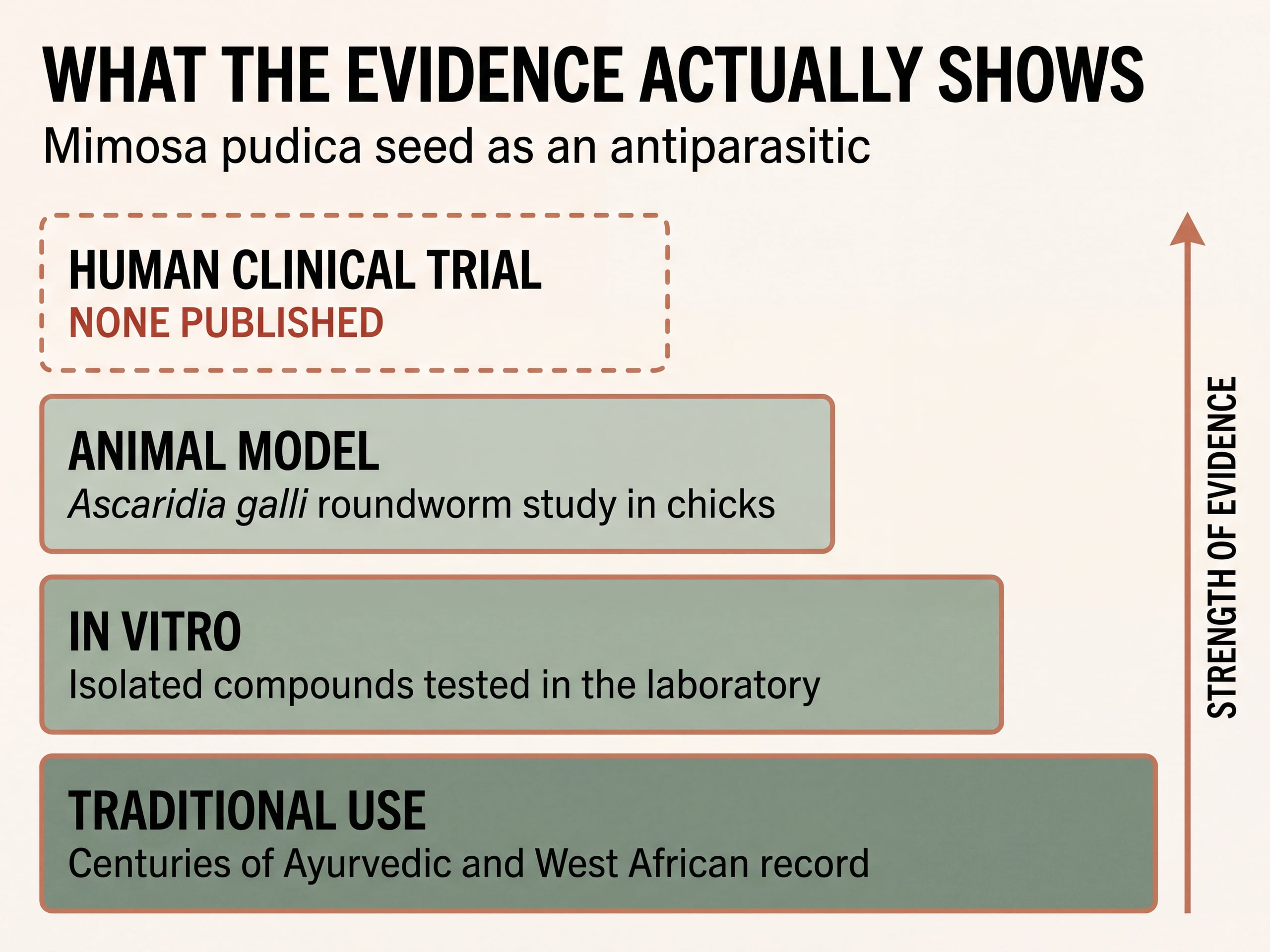
No published human clinical trial has evaluated oral Mimosa pudica seed powder as a treatment for parasitic infection. The support for this herb rests on a long traditional use record plus laboratory and animal studies. The most direct in vivo result available is Nghonjuyi et al. (2019), Veterinary Parasitology Regional Studies and Reports, PMID: 32057401, which tested Mimosa pudica extract against Ascaridia galli, an intestinal roundworm, in experimentally infected chicks in Cameroon. That study is an avian model, not a human one.
The evidence ladder for this plant, rung by rung:
- Traditional use. Centuries of documented use as an anthelmintic across Ayurvedic and West African folk medicine systems. Real, and the reason the plant was investigated at all. Not a substitute for a trial.
- In vitro. Laboratory work on isolated compounds, including mimosine and tannins, against helminths and microorganisms, catalogued in Muhammad et al. (2015), PMID: 33371596.
- Animal model. Nghonjuyi et al. (2019), PMID: 32057401, in chicks infected with Ascaridia galli. The strongest in vivo signal available.
- Human clinical trial. None published for oral seed powder as an antiparasitic.
Stating that the fourth rung is empty costs nothing and is worth a great deal. A shopper who reads it can make a decision. A shopper who is told the herb is proven, and later finds out otherwise, has been sold something we did not have.
Which Parasites Has Mimosa Pudica Been Studied Against?
The evidence is not uniform across organism types. Grouping them honestly matters, because a result in one category does not transfer to another.
Intestinal Roundworms (Nematodes)
This is where the evidence is strongest, and it is still preclinical. Nghonjuyi et al. (2019), PMID: 32057401, is the direct in vivo work, conducted against Ascaridia galli in an avian host. Laboratory studies on the plant’s tannin and mimosine content point in the same direction. If Mimosa pudica has an antiparasitic profile at all, current data suggest roundworms are where it sits.
Tapeworms (Cestodes)
Limited direct evidence. Tapeworms differ from roundworms in structure, attachment, and life cycle, and a mechanical gel that binds luminal contents is a poor theoretical match for an organism anchored to the intestinal wall by a scolex. We have found no study supporting Mimosa pudica seed against cestodes specifically. Treat any claim to the contrary as unsupported.
Giardia and Other Protozoa
Minimal direct evidence. Protozoal organisms are single-celled and behave nothing like helminths. Extrapolating an animal-model roundworm result to Giardia lamblia is not a small stretch; it is a category error. Suspected protozoal infection is a clinical matter, not a cleanse matter.
How Does Mimosa Pudica Compare to Other Traditional Antiparasitic Herbs?
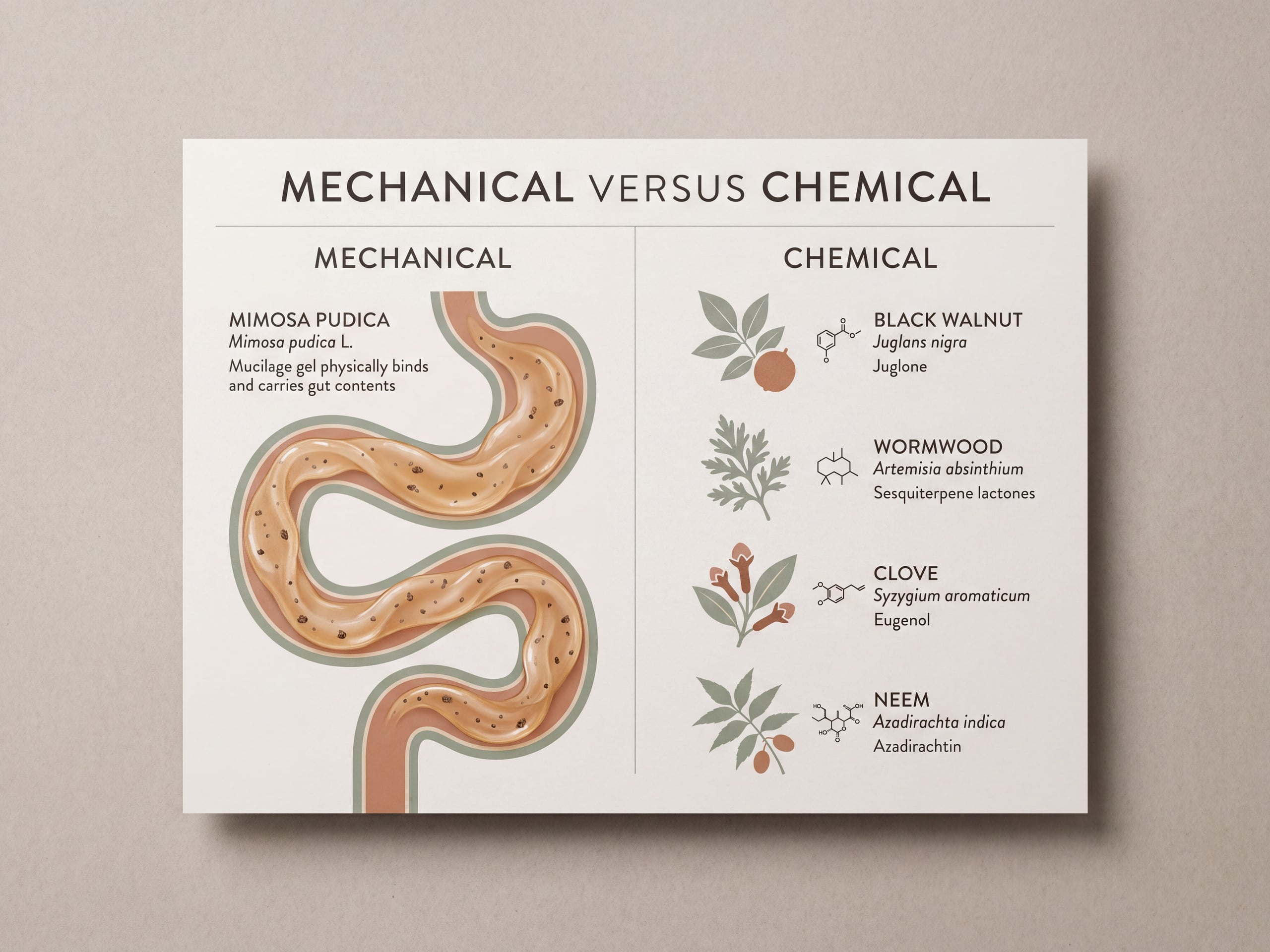
Mimosa pudica occupies an unusual position in the traditional antiparasitic category. Nearly every other herb in this space is understood to act chemically. This one is understood to act mechanically. That distinction is the reason it is often combined with the others rather than substituted for them.
| Herb | Primary Mechanism | Traditionally Used Against | Evidence Tier | Key Consideration |
|---|---|---|---|---|
| Mimosa pudica (Mimosa pudica L.) | Mechanical. Mucilage gel binds and carries luminal contents. | Intestinal worms, digestive complaints | In vitro and animal model (PMID: 32057401) | Requires substantial water. Binds medications taken at the same time. |
| Black walnut hull (Juglans nigra) | Chemical. Naphthoquinone content, principally juglone. | Intestinal worms, fungal overgrowth | In vitro and traditional | Tree nut. Not appropriate for anyone with a nut allergy. |
| Wormwood (Artemisia absinthium) | Chemical. Sesquiterpene lactones and bitter principles. | Intestinal worms, sluggish digestion | In vitro, animal, and traditional | Thujone content. Duration should be limited and defined. |
| Clove (Syzygium aromaticum) | Chemical. Eugenol content. | Traditionally paired for the egg stage | In vitro and traditional | Essential oil and powder are not interchangeable by volume. |
| Neem (Azadirachta indica) | Chemical. Limonoid content, principally azadirachtin. | Intestinal and skin parasites in Ayurveda | In vitro and traditional | Traditional anti-fertility associations. Avoid when trying to conceive. |
| Traditional-use column reflects historical application in documented herbal systems and is not a statement of clinical efficacy. | ||||
Read down the mechanism column, and the point of the table appears. Four chemical actors and one mechanical one. Our parasite and worm cleanse powder is built on black walnut and wormwood for that reason, and mimosa pudica seed powder is a separate item rather than a component of it.
Mimosa Pudica in Traditional Medicine and Ayurveda
Mimosa pudica, known as Lajjalu in Ayurveda, has a long history of use. Its properties, according to this ancient system, are considered bitter, astringent, and cooling. Traditionally, it has been used to support the body in cases of diarrhea, amoebic dysentery, and other intestinal complaints, which aligns with its modern understanding as a gut-cleansing and supportive herb.
The West African record runs parallel and independent. Cameroonian ethnoveterinary practice uses Mimosa pudica as an anthelmintic in livestock, and that tradition is what prompted the formal veterinary studies now cited on this page. Two unconnected medicine systems arriving at the same application is a meaningful signal about where to look. It is not the same thing as a clinical result.
How to Use Mimosa Pudica Seed
Using Mimosa pudica seed requires a responsible approach. These are general guidelines, and any protocol should be discussed with a qualified healthcare professional. There is no clinically validated antiparasitic dose for humans, because no human trial has established one. Traditional and commercial practice has converged on the following.
- Forms. Most commonly available as a seed powder or in capsules.
- Timing. Taking it on an empty stomach, at least 30 to 60 minutes before or two hours after a meal, is generally recommended so the gel interacts with intestinal contents rather than with food.
- Hydration. Not negotiable. Take with a full glass of water, at minimum 8 to 12 ounces, and keep fluid intake up across the day. The gel requires water to move.
- Duration. Traditional protocols run in defined windows rather than open-ended. Two to four weeks with a break afterward is the common pattern.
- Spacing from medication. Separate by at least two hours in both directions. See the safety section below for why.
From our own handling of this seed, the most frequent mistake is under-hydrating. The complaints that follow are almost always about the water, not the herb.
Safety, Side Effects, and Contraindications
Generally well tolerated in traditional use, though it is not appropriate for everyone. Consult your healthcare provider before use.
The available toxicology is thin and indirect. Nghonjuyi et al. (2015), Journal of Ethnopharmacology, PMID: 26657577, tested hydroalcoholic Mimosa pudica leaf extract in chicks at single oral doses from 40 to 5,120 mg/kg with no mortality, and at 80 to 640 mg/kg daily for 42 days with no significant hematological or biochemical change other than a transient white blood cell rise at the highest dose. Two qualifiers apply, and both are important. That study used leaf extract, not seed. And it was conducted in birds, not people.
- Digestive changes. Due to its sticky, fibrous nature, some individuals may experience temporary bloating or constipation, especially if hydration is inadequate. In severe under-hydration, a bulking gel carries a genuine risk of intestinal obstruction. This is the reason the water instruction is written the way it is.
- Pregnancy and fertility. Mimosa pudica has been used in some traditions as a temporary contraceptive agent. It should not be used by anyone pregnant, breastfeeding, or trying to conceive.
- Higher-risk groups. Young children, older adults, anyone with liver or kidney disease, anyone with an existing gastrointestinal condition, and anyone taking prescription medication including anticoagulants should not begin this herb without clinician guidance.
- Always consult a professional. Speak with a healthcare provider before using Mimosa pudica, particularly with underlying health conditions or current medications.
Mimosine, Duration, and Why Dose Ceilings Matter
Mimosine is the compound that argues for defined durations rather than indefinite use. It is a non-protein amino acid, chemically unusual, and characterized in Muhammad et al. (2015), PMID: 33371596, as one of the plant’s principal secondary metabolites. Amino acid analogues of this kind warrant respect for cumulative exposure as a general principle of herbal practice. We are not going to assert a human toxicity threshold, because no human data establishes one. The practical conclusion is the same either way. Use it in windows, not continuously, and stay within the dose on the label.
Medication and Supplement Spacing
This one is under-communicated and worth its own heading. The seed’s mucilage is used commercially as a pharmaceutical binder for controlled drug release, documented in Noor et al. (2024), PMID: 38754657. The property that makes it a good binder is the property that makes it an interaction risk. A gel engineered to hold a compound and release it slowly will do exactly that to a pill swallowed alongside it.
Separate Mimosa pudica from prescription medication, fat-soluble vitamins, and mineral supplements by at least two hours in both directions. This is not a caution about the herb being harmful to the medication. It is a caution about the medication not being fully absorbed.
What to Expect, and What Not to Read Into It
Expectations are worth setting honestly, because this is where most of the misinformation lives.
Within the first few days, most people notice changes in stool bulk and consistency. That is the mucilage doing what mucilage does, and it says nothing about parasites either way. Across a two- to four-week window, traditional use reports general digestive comfort. Whether that reflects an antiparasitic effect, a fiber effect, or both is not something current evidence can separate.
On the question people search most often, how to tell whether parasites are dying off, the honest answer is that stool appearance is not a diagnostic signal. There is no visual change that confirms a parasitic infection was present or that it resolved. Only laboratory testing does that. Any source telling you to read your results out of the toilet bowl is selling certainty that does not exist.
When to See a Healthcare Provider Instead
A cleanse is not a diagnosis, and some presentations need a clinician rather than a supplement. Seek medical care rather than self-treating if you have persistent or severe diarrhea, blood or mucus in the stool, unexplained weight loss, prolonged abdominal pain, fever alongside digestive symptoms, or recent travel to a region with endemic parasitic disease followed by new symptoms.
The diagnostic route is straightforward. A clinician orders stool ova and parasite testing or a stool antigen test, identifies the organism if one is present, and treats it specifically. The CDC maintains public guidance on parasitic infections and their diagnosis, and the National Institute of Diabetes and Digestive and Kidney Diseases publishes accessible material on digestive symptoms and when they warrant evaluation.
The real cost of substituting a cleanse for a diagnosis is not the herb. It is the delay. Symptoms attributed to parasites frequently turn out to be inflammatory bowel disease, celiac disease, small intestinal bacterial overgrowth, or a food intolerance, and each of those has a treatment that a mucilage gel will not provide.
Frequently Asked Questions
What happens when you take Mimosa pudica?
The seed powder absorbs water in the digestive tract and forms a thick gel within roughly 30 to 60 minutes. That gel moves through the intestines, binding luminal contents as it goes, and exits with the stool. Most people notice increased stool bulk and a change in consistency. Adequate water intake is required for the gel to transit comfortably.
How do you know if parasites are dying off?
You cannot determine this from stool appearance, and no reliable visual indicator exists. Claims about identifying expelled parasites by sight are not supported by parasitology. Confirmation requires stool ova and parasite testing or a stool antigen test ordered by a clinician. If you suspect an infection, test rather than observe.
Does Mimosa pudica break down biofilm?
The mechanism is physical rather than enzymatic. The mucilage gel can bind and carry biofilm material it makes contact with in the intestinal lumen, which is different from chemically dissolving it. Laboratory work supports the binding behavior. No human study has measured biofilm reduction from oral seed powder.
Is Mimosa pudica safe for women?
Not for anyone pregnant, breastfeeding, or trying to conceive. Mimosa pudica has documented traditional use as a temporary contraceptive agent, which makes it inappropriate during any stage of reproductive planning. Outside those circumstances, it is generally well tolerated, though anyone with a gastrointestinal condition or on prescription medication should consult a healthcare provider first.
What are the main Mimosa pudica supplement side effects?
The most common are temporary bloating, gas, and constipation, and nearly all of these trace back to insufficient water intake. In severe under-hydration, the bulking gel carries a risk of intestinal obstruction. The mucilage can also reduce absorption of medications and fat-soluble nutrients taken at the same time, which is why two-hour spacing is recommended.
How long should you take Mimosa pudica seed?
Traditional protocols use defined windows rather than continuous use, commonly two to four weeks followed by a break. No clinically validated duration exists for humans, because no human trial has established one. Given mimosine’s presence as a non-protein amino acid, limiting cumulative exposure is a reasonable precaution rather than open-ended daily use.
Does Mimosa pudica actually kill parasites?
Not in the pharmaceutical sense of chemically destroying an organism. The documented mechanism is mechanical entrapment by the seed’s mucilage gel. Preclinical work, including an animal model against the roundworm Ascaridia galli (PMID: 32057401), shows antiparasitic activity, but no published human clinical trial has tested oral seed powder for this purpose.
Related Reading
Continue with our guide to a herbal parasite cleanse for the broader protocol context, our examination of whether walnuts kill parasites for the black walnut evidence specifically, and our overview of herbs for digestive health.
These statements have not been evaluated by the Food and Drug Administration. This product is not intended to diagnose, treat, cure, or prevent any disease. Consult your healthcare provider before use.