Key Takeaways
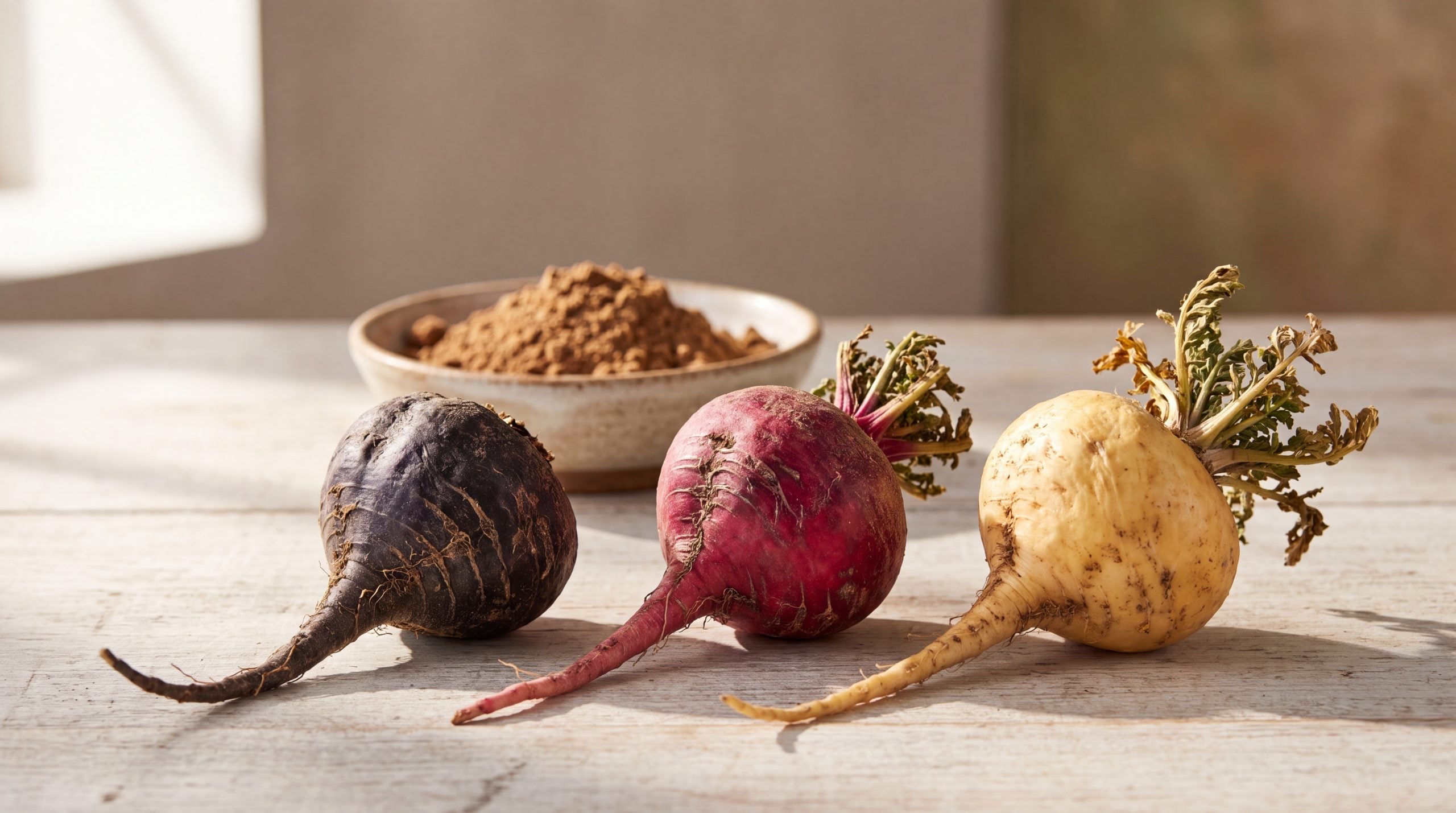
- Black maca is the rarest of the three main maca phenotypes, making up roughly 10 to 15 percent of the Peruvian harvest.
- Across multiple human trials, maca improved sexual desire but did not raise serum testosterone. That null result is consistent and repeated.
- Black maca specifically has been studied in male elite athletes, where it shifted inflammatory markers and energy-system performance over eight weeks.
- The fertility evidence is suggestive rather than settled. The systematic review authors say so themselves.
- Processing matters. Colour, altitude, and post-harvest method all change what is actually in the powder.
This article provides a detailed, evidence-based look at black maca’s benefits for men, how it works in the body, and practical guidance for its use.
What Makes Black Maca Unique?
Black maca is a cruciferous vegetable, related to broccoli and radishes, grown at elevations between 13,000 and 15,000 feet. Its rarity and distinct properties set it apart from yellow and red maca, the other two common varieties. While all maca types provide health benefits, black maca is especially valued for its effects on male vitality.
Comparing Maca Varieties
Maca is not one plant with one profile. A 2024 review in Nutrients (Minich et al., PMID: 38398854) counted up to seventeen distinct color phenotypes, and found that color, hypocotyl size, growing altitude, cultivation method, and post-harvest processing each measurably change the nutrition content and the phytochemical profile. The colors are not marketing. They are different chemistry.
| Variety | Share of harvest | Traditional and research association | Relevance to men |
|---|---|---|---|
| Yellow maca | Most abundant | General energy and mood support. The everyday variety, and the one most maca products default to. | Broad, non-specific |
| Red maca | Moderate | Most often studied in women’s health contexts. In the 175-person trial of black and red maca extracts (PMID: 27548190), red maca showed higher GABA content and produced the stronger effect on mood and energy. | Lower |
| Black maca | Rarest, roughly 10 to 15 percent | The variety studied specifically in male athletes (PMID: 37049458). In the same 175-person trial, black maca extract measured higher in macamides and fatty acids than red, and was the variety that reduced blood glucose. | Highest. This is why it carries the traditional name “men’s maca.” |
| Sources retrieved from PubMed. Traditional associations reflect ethnobotanical use and are not clinical claims. | |||
One caution worth stating, because the review above raises it directly: a large share of published maca research does not specify which color was used. That makes some of the “maca” literature difficult to assign to any one variety. When we read a maca study, the first thing our team checks is whether the authors named the phenotype. Many do not.
This article centers on black maca, drawing on the trials that named it.
Key Benefits of Black Maca for Men
Black maca offers a range of benefits backed by research, making it a compelling option for men seeking natural health support. Here’s what the science says about its effects.
What the Clinical Research Actually Shows
Black maca is one of the more heavily marketed roots in the men’s wellness aisle, so it is worth separating what has been measured from what has been claimed. Our editorial team pulled the primary literature rather than the summaries. Here is what the human trials report.
| Study | Design | What it measured | Finding |
|---|---|---|---|
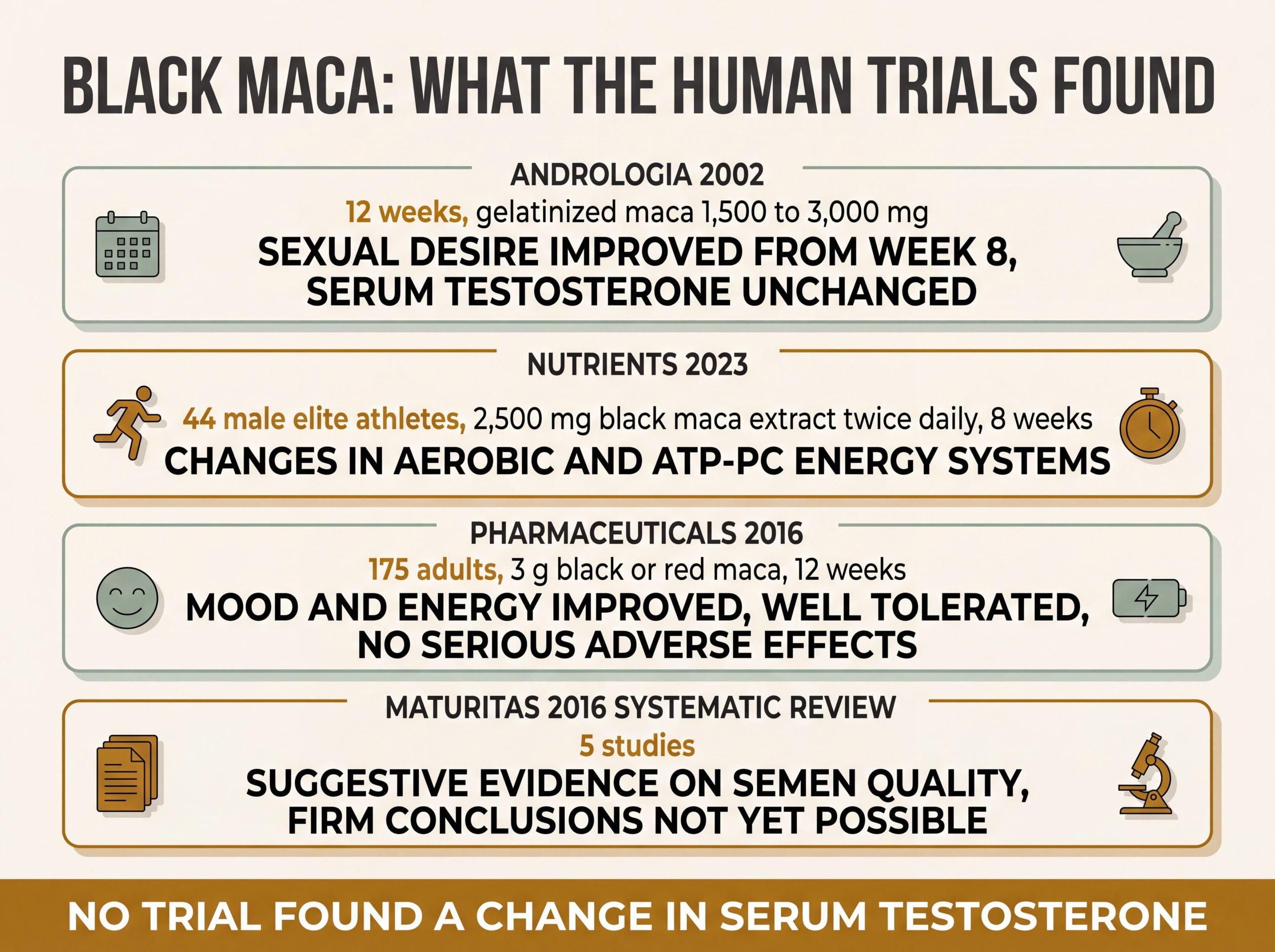
| Gonzales et al. (2002), Andrologia, PMID: 12472620 | 12-week double-blind, placebo-controlled RCT. Gelatinized maca, 1,500 mg or 3,000 mg daily. | Self-reported sexual desire, mood, serum testosterone, serum estradiol. | Improvement in sexual desire from week 8. Serum testosterone and estradiol were no different from placebo. The effect was independent of mood scores. |
| Lee et al. (2023), Nutrients, PMID: 37049458 | 44 male elite athletes. 2,500 mg concentrated black maca extract, twice daily, 8 weeks. | Inflammatory markers, physical fitness, energy-system performance. | Changes in ATP-PC and aerobic energy systems, most pronounced in fin swimmers. Authors attribute this to antioxidant activity and mitochondrial biosynthesis regulators. Described as preliminary evidence. |
| Gonzales-Arimborgo et al. (2016), Pharmaceuticals, PMID: 27548190 | 175 adults. Black or red maca extract, 3 g daily, 12 weeks, at low and high altitude. | Sexual desire, mood, energy, quality of life, blood glucose, blood pressure, hemoglobin, safety. | Improvements in mood, energy, and health status. Black maca contained higher macamides and fatty acids than red. Well tolerated with no serious adverse effects. |
| Lee et al. (2016), Maturitas, PMID: 27621241 | Systematic review of 5 clinical studies (3 randomized). | Semen quality parameters in healthy and infertile men. | Suggestive evidence that maca improves semen quality. The authors state plainly that the small number of trials prevents firm conclusions. |
| Sources retrieved from PubMed. Doses and durations are as reported in each trial and are not a recommendation. | |||
Two things stand out when you read these end to end. The first is that the evidence for sexual desire and energy is more consistent than the evidence for fertility, which remains suggestive rather than settled. The second is that none of these trials found a change in serum testosterone. That is not a weakness in the research. It is the finding, repeated across studies, and it tells you something specific about how this root appears to work.
Enhanced Libido and Sexual Health
One of the standout benefits of black maca is its ability to increase sexual desire. Unlike synthetic supplements, it works without directly raising testosterone levels, offering a gentler approach.
- Evidence: A study published in Andrologia (Gonzales et al., 2002, PMID: 12472620) showed that men taking maca for eight weeks reported higher libido. While the study didn’t isolate black maca, its higher levels of macamides, unique compounds in maca, are thought to amplify this effect.
- Mechanism: Black maca likely influences the hypothalamus and pituitary glands, which oversee hormone regulation, enhancing desire naturally.
For men experiencing low libido or mild erectile challenges, this adaptogenic root may provide subtle yet noticeable support.
Improved Fertility and Sperm Quality
Black maca has shown potential in supporting male reproductive health, particularly by improving sperm count and motility.
- Research: A 2009 study (Gonzales et al.) found that black Lepidium meyenii increased sperm production and movement in rats more than other varieties. A human study from 2001 (PMID: 11753476) also noted better semen parameters after four months of maca use.
- Significance: These findings suggest black maca could be a natural aid for men addressing fertility concerns, though results vary by individual.
This is the area where maca has the most human data behind it, and also the area where the honest summary is more cautious than the label copy usually admits.
- Gonzales et al. (2001), Asian Journal of Andrology, PMID: 11753476. Nine men took 1,500 mg or 3,000 mg of maca daily for four months. Seminal volume, sperm count per ejaculate, motile sperm count, and sperm motility all increased. Serum luteinizing hormone, follicle-stimulating hormone, prolactin, testosterone, and estradiol were unchanged. The improvement was not dose-dependent.
- Melnikovova et al. (2015), Evidence-Based Complementary and Alternative Medicine, PMID: 26421049. A double-blind, randomized, placebo-controlled pilot in 20 healthy men, 1.75 g daily for 12 weeks. Sperm concentration and motility showed rising trends against placebo. Hormone levels did not shift. The authors describe it as a pilot, and the word “trends” is theirs, not ours.
- Lee et al. (2016), Maturitas, PMID: 27621241. A systematic review across 11 databases that found five qualifying clinical studies. The conclusion: suggestive evidence of effectiveness, with the total number of trials, total sample size, and risk of bias preventing firm conclusions. More rigorous studies are warranted.
We include that last line deliberately. A systematic review saying “we cannot draw firm conclusions yet” is useful information, and any source that leaves it out is selling you something. The pattern across these studies is consistent and points in one direction. The sample sizes are small and the certainty is not there yet. Both statements are true at once.
Note also what did not move in any of them: hormone levels. Whatever maca is doing to semen parameters in these trials, it is not doing it by raising testosterone.
Increased Energy and Physical Stamina
Men looking to enhance their physical performance may find black maca’s energy benefits appealing.
- Study: Research by Stone et al. (2009) indicated that maca improved endurance in cyclists, hinting at its stamina-enhancing properties.
- Application: Unlike stimulants like caffeine, black maca delivers steady energy without jitters, making it suitable for active men or those combating fatigue.
Black Maca and Physical Performance: The Elite Athlete Trial
The most specific evidence on black maca and physical output comes from a 2023 trial in Nutrients (Lee et al., PMID: 37049458). Forty-four elite athletes, all male, took 2,500 mg of concentrated black maca extract twice daily for eight weeks. The group included shooters, racket sports athletes, and fin swimmers.
The researchers recorded changes in both the ATP-PC system, which powers short explosive effort, and the aerobic energy system, which powers sustained work. The aerobic changes were most pronounced in the fin swimmers, the athletes whose sport leans hardest on that system. The authors attribute the effect to increased antioxidant activity and to influence on mitochondrial biosynthesis regulatory factors, which is a plausible mechanism for endurance rather than raw strength.
Read that carefully, because the marketing usually does not. This trial does not show black maca building muscle. It shows a shift in how trained bodies handled inflammation and energy production under load. The authors call it preliminary evidence, and we would too. It is a single trial in a highly-trained population, and what happens in a fin swimmer does not automatically happen in a desk worker.
What it does establish is that black maca specifically, not maca generally, has been studied in men under real physical demand, and that the signal pointed toward endurance and recovery rather than toward hormones.
Cognitive Support and Mental Clarity
Emerging evidence points to black maca’s ability to sharpen mental focus and memory, an often-overlooked benefit.
- Findings: A 2007 study by Rubio et al. showed black maca outperforming other types in improving memory in mice. Human studies are still needed, but the results are promising.
- Relevance: For men juggling demanding schedules, this could mean better concentration and productivity.
Stress Adaptation and Overall Vitality
As an adaptogen, black maca helps the body manage stress, which can indirectly benefit libido, energy, and mood.
- How It Works: It supports the adrenal glands, reducing the impact of stress hormones like cortisol, which can sap vitality.
How Black Maca Functions in the Body
Black maca’s effects stem from its classification as an adaptogen, a class of plants that help the body maintain balance under stress. It doesn’t spike testosterone or other hormones directly, a key distinction from many male enhancement supplements. Instead, it nurtures the endocrine system for broader wellness.
Active Compounds
- Macamides: Fatty acids unique to maca, linked to libido and energy benefits.
- Glucosinolates: Antioxidants that may be more abundant in black maca, supporting cellular health.
These compounds likely contribute to its reputation, though ongoing research continues to clarify their roles.
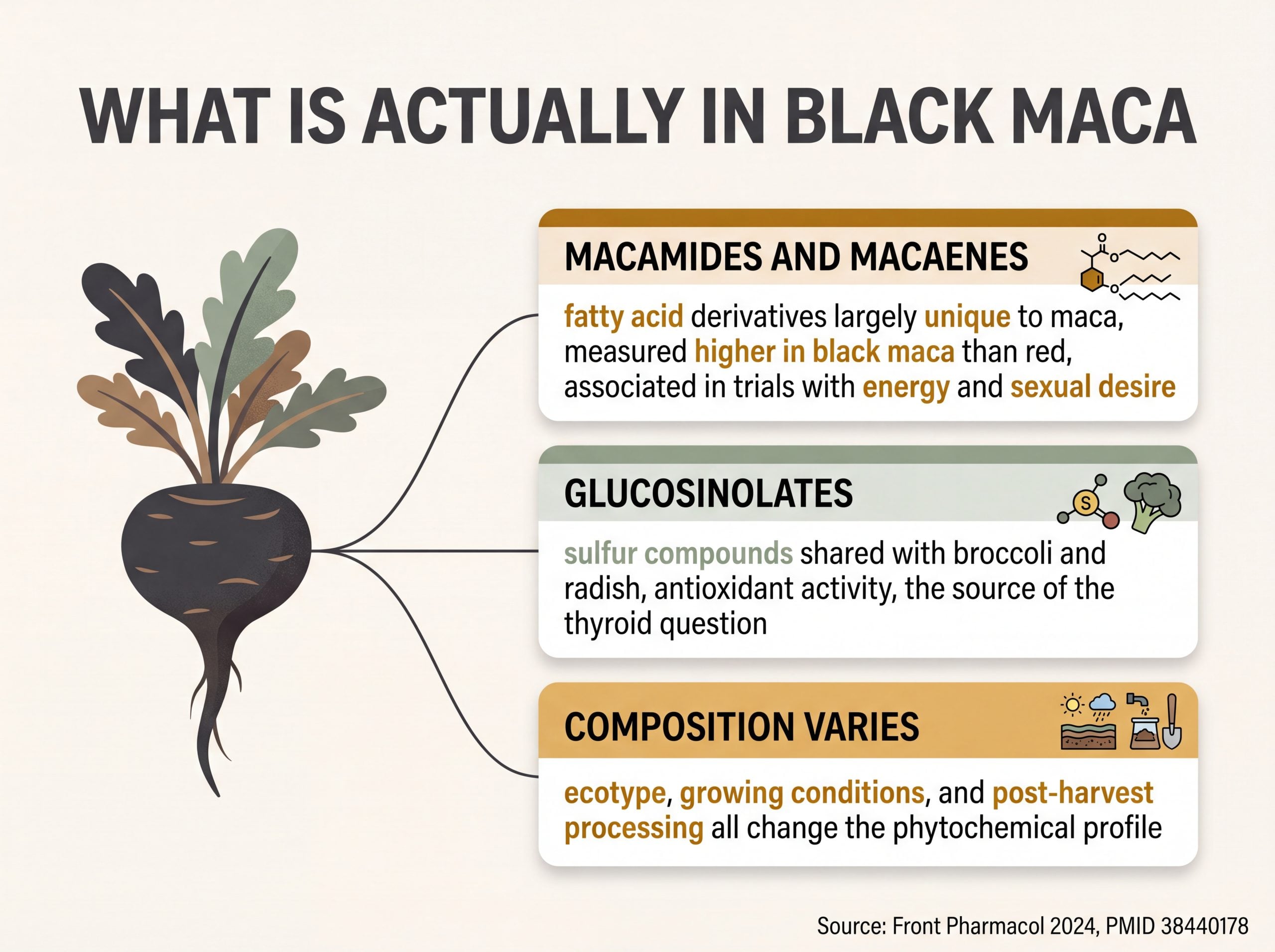
A 2024 review in Frontiers in Pharmacology (Ulloa Del Carpio et al., PMID: 38440178), co-authored with the United States Pharmacopeia, maps the chemistry in more detail. Three points from it matter for anyone choosing a maca product.
- Macamides and macaenes. These are the fatty acid derivatives largely unique to maca. They are the compounds most often linked to the energy and libido findings, and they are the class that measured higher in black maca than in red in the 175-person extract trial (PMID: 27548190).
- Glucosinolates. The sulfur compounds maca shares with broccoli, radish, and the rest of the Brassicaceae family. They carry antioxidant activity, and they are also the reason the thyroid question comes up at all, which we address in the safety section below.
- Composition is not fixed. This is the finding that gets left out of most product pages. The review states that maca’s chemical composition varies with ecotype, growth conditions, and post-harvest processing. Two bags of maca can carry meaningfully different macamide and glucosinolate loads.
That last point is the one we would ask you to hold on to. It means the question “is maca good for men” is incomplete. The real questions are which phenotype, grown where, and processed how. The preclinical work summarized in the same review points toward antioxidant, anti-inflammatory, and neuroprotective activity as the plausible mechanisms, with the caveat that preclinical is not clinical and the human trials remain the higher bar.
Using Black Maca: Forms, Dosage, and Timing
To reap its benefits, black maca must be used thoughtfully. Below are practical details on forms, doses, and expected timelines.
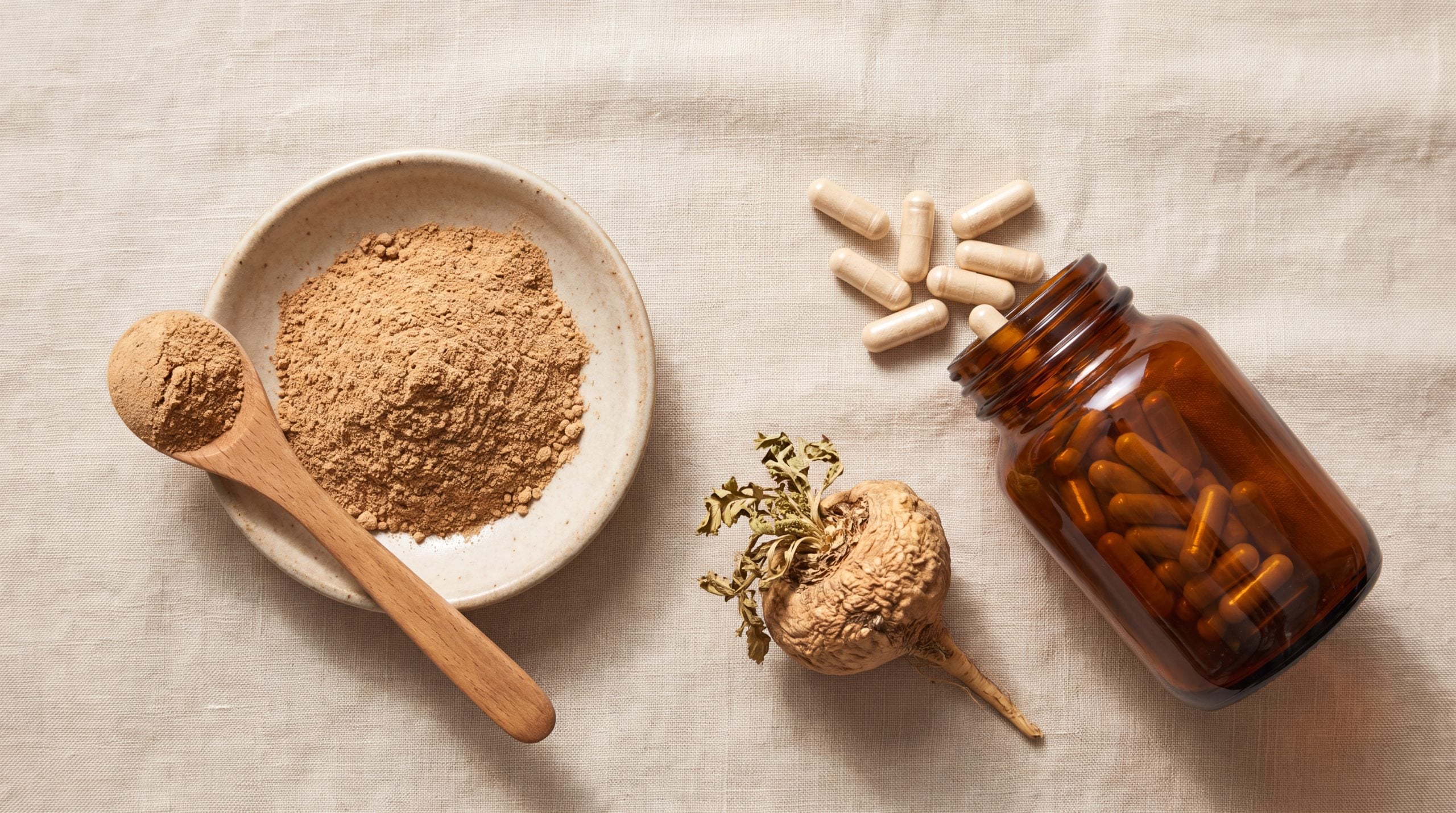
Available Forms
| Form | Description | Best For |
|---|---|---|
| Powder | Organic black maca root powder | Mixing into food or drinks |
| Capsules | Black maca root capsules | Convenience and consistency |
- Powder: Ideal for smoothies, coffee, or recipes. Offers flexibility.
- Capsules: Pre-measured, portable, and tasteless for easy use.
The description above tells you what each form is. It does not tell you which one to pick, so here is the decision as we would actually frame it for someone standing in front of both.
| Consideration | Powder | Capsules |
|---|---|---|
| Dose accuracy | Depends on your scoop. A heaped teaspoon and a level teaspoon are not the same dose. | Pre-measured and consistent. This matters if you want to match a studied dose. |
| Cost per serving | Generally lower. You are not paying for encapsulation. | Generally higher for the same gram weight. |
| Taste | Distinctly malty and earthy. Some people like it in coffee or a smoothie. Some people do not like it anywhere. | Effectively tasteless. |
| Reaching a 3,000 mg dose | Straightforward. Roughly one teaspoon. | Requires several capsules. Check the label’s per-capsule weight. |
| Best suited to | People who already make a morning drink and will not forget to add it. | People who travel, who dislike the taste, or who want the dose fixed. |
In our experience helping people choose between the two, the deciding factor is almost never the biology. It is whether you will actually take it. A powder that sits unopened because you dislike the taste delivers nothing. If you know you will skip it, buy the capsules.
Our own maca is a gelatinized full-spectrum maca in capsule form, which is the format we reach for when consistency of dose matters more than flexibility. Whichever brand you choose, check the label for the phenotype and the processing method, because as the section above showed, both change what is in the capsule.
Dosage Guidelines
| Form | Starting Dose | Typical Dose | Notes |
|---|---|---|---|
| Powder | 1/2 tsp (1.5 g) | 1-2 tsp (3-6 g) | Adjust based on tolerance |
| Capsules | 1,500 mg | 3,000 mg (split) | Follow label instructions |
- Tips: Begin with a small amount to test your response, then increase gradually. Daily use for 4-6 weeks is often needed for full effects.
- Raw vs. Gelatinized: Raw retains all nutrients but may upset sensitive stomachs. Gelatinized is pre-cooked for easier digestion.
Raw vs. Gelatinized Black Maca
This choice gets one line on most maca pages, and it deserves more, because it is one of the few maca variables with real research attached to it.
Gelatinization is not a gelatin product, and there is nothing animal-derived about it. It is a heat-and-pressure process that breaks down the root’s starch. Raw maca keeps the root closer to its harvested state. Gelatinized maca has had the starch content reduced, which is why it tends to sit more easily with people whose stomachs react to the raw powder.
Here is why the distinction is more than a comfort issue. Both 2024 reviews of maca (PMID: 38440178 and PMID: 38398854) independently report that post-harvest processing changes maca’s phytochemical profile. Processing is not a neutral step. It is one of the named variables that determines what ends up in the finished powder.
And there is a detail in the clinical literature that almost every maca article misses. The 2002 Andrologia trial (PMID: 12472620), the most-cited human study on maca and sexual desire in men, did not use raw maca. It used Maca Gelatinizada. The trial that established both the desire finding and the absence of any testosterone effect was run on gelatinized maca specifically.
| Consideration | Raw maca | Gelatinized maca |
|---|---|---|
| Processing | Dried and milled, closer to the harvested root. | Heat and pressure applied to break down starch. |
| Digestive tolerance | Can be harder going for sensitive stomachs. Bloating and gas are the common complaints. | Generally the easier of the two to tolerate. |
| Starch content | Full. | Reduced, which concentrates the remaining solids by weight. |
| Clinical trial use | Used in some trials. | The form used in the 2002 sexual-desire RCT (PMID 12472620). |
| Taste | Sharper, more bitter and earthy. | Milder and maltier. |
Our editorial team has settled on gelatinized for our own sourcing, and the tolerance question is the honest reason why. The most common thing that stops someone from taking maca for the eight to twelve weeks the trials ran is not skepticism. It is an unhappy stomach in week two. Our organic gelatinized maca powder from Junin, Peru is a full-spectrum maca rather than a single-phenotype black maca, and we would rather say that plainly than let the label imply otherwise.
If you are specifically after black maca, read the label for the phenotype. Many products sold as maca are yellow, and many do not say.
When to Expect Results
| Benefit | Timeframe | Factors Affecting Speed |
|---|---|---|
| Libido | 2-3 weeks | Age, health, consistency |
| Fertility | 8-12 weeks | Dosage, baseline sperm count |
| Energy | Days to 1 week | Activity level, diet |
Patience is key. Results build over time with regular use.
Are There Side Effects?
Black maca is generally safe, but some men may experience mild issues:
- Digestive Upset: Gas or bloating, especially with raw powder or high doses.
- Hormonal Sensitivity: Rare, but those with prostate conditions should consult a doctor.
- Allergies: Itching or rashes are uncommon but possible.
Safety Tips
- Start low and go slow to gauge tolerance.
- Speak with a healthcare provider if you have medical conditions or take medications.
- Avoid if allergic to cruciferous vegetables.
Thyroid Considerations and Who Should Be Cautious
Black maca is a cruciferous vegetable, related to broccoli, radish, and cabbage. That family connection is not just trivia. It is the reason the thyroid question comes up, and most maca pages either ignore it or overstate it. Here is the accurate version.
Cruciferous vegetables contain glucosinolates, and glucosinolates are the compound class with recognized goitrogenic potential, meaning they can interfere with iodine uptake by the thyroid at sufficient intake. Maca contains glucosinolates. That is documented in the pharmacology literature (PMID: 38440178).
Now the part that gets left out. The human trials on maca have not found thyroid harm. The 2024 Frontiers in Pharmacology review describes maca as generally safe, with rare adverse effects, low toxicity in preclinical work, and good tolerance in humans. The 175-person trial of black and red maca extracts at 3 g daily for 12 weeks (PMID: 27548190) reported good acceptability and no serious adverse effects. Heat processing, which is what gelatinization applies, reduces glucosinolate content in cruciferous foods generally.
So the honest position is this. The theoretical mechanism is real. The clinical signal is not there. That is a meaningfully different statement from “maca damages your thyroid,” and it is also different from “maca is completely safe for everyone,” and we are not going to pretend it is either.
Talk to your healthcare provider before taking black maca if you:
- Have a diagnosed thyroid condition, or take levothyroxine or any other thyroid medication
- Have low iodine intake
- Take blood-glucose-lowering medication, since black maca extract reduced blood glucose in the 175-person trial (PMID: 27548190)
- Have a hormone-sensitive condition
- Are taking any prescription medication, particularly one with a narrow therapeutic window
- Are allergic to cruciferous vegetables
The most commonly reported side effects across the maca literature are mild and digestive. Bloating, gas, and stomach discomfort, more often with raw than gelatinized. Some people report trouble sleeping when they take it late in the day, which is a reasonable argument for taking it in the morning.
None of the above is medical advice. It is the list of situations where we would want a person to check with someone who knows their chart.
Choosing High-Quality Black Maca
Not all maca products are equal. For the best results:
- Origin: Peruvian Andes, preferably organic.
- Purity: No fillers, pesticides, or additives.
- Label: Specifies “black” maca, not a generic blend.
Third-party testing or certifications ensure you’re getting authentic, potent black Lepidium meyenii.
Practical Ways to Add Black Maca to Your Routine
Black maca’s mild, earthy flavor, with a hint of butterscotch, makes it easy to incorporate:
- Smoothies: Blend with fruit, protein, and milk for a nutrient-rich drink.
- Beverages: Stir into coffee or tea for a subtle twist.
- Meals: Mix into oatmeal, yogurt, or baked goods.
Experiment to find what suits your taste and lifestyle.
Who Can Benefit from Black Maca?
Black maca isn’t just for men; it’s used by women too, but its benefits align closely with male health needs. Men seeking natural support for libido, fertility, energy, or focus may find it particularly useful. Unlike ginseng or other supplements, its adaptogenic nature offers a balanced approach without overstimulation.
My Expertise
As someone with a background in nutrition and men’s health, I’ve seen how plants like black maca can fill gaps where modern diets fall short. Its centuries-long use in Peru, combined with growing research, makes it a standout option for those wary of synthetic alternatives.
Addressing Common Questions
Does It Affect Testosterone?
No direct evidence shows black maca raises testosterone. Its benefits come from supporting the endocrine system as a whole.
That is not a hedge. It is what the research repeatedly found, and the study most often cited on this question says so in its title.
Gonzales et al. (2002), published in Andrologia (PMID: 12472620), is titled “Effect of Lepidium meyenii (MACA) on sexual desire and its absent relationship with serum testosterone levels in adult healthy men.” In that 12-week double-blind, placebo-controlled trial, men taking 1,500 mg or 3,000 mg of gelatinized maca daily reported improved sexual desire from week eight onward. Serum testosterone and estradiol were measured and were no different from placebo. Logistic regression confirmed the desire effect was independent of testosterone, estradiol, and mood and anxiety scores.
The same absence shows up everywhere else it has been looked for. Hormone levels did not move in the 2001 semen-parameter study (PMID: 11753476). They did not move in the 2015 placebo-controlled pilot (PMID: 26421049). Three separate trials, measuring hormones directly, all reporting the same null result.
We want to be blunt about what this means, because a lot of black maca marketing depends on you not knowing it. If you are buying black maca as a testosterone booster, the evidence does not support that purchase. If you are interested in it for sexual desire, energy, or physical endurance, the evidence is more interesting, and the fact that it appears to work without touching testosterone is arguably the most notable thing about it.
Can It Replace Medical Treatments?
No. It’s a supplement, not a cure. For serious issues like infertility or erectile dysfunction, consult a doctor.
Is It Better Than Other Supplements?
It depends on your goals. Compared to ginseng, it is less stimulating. Compared to products marketed as testosterone boosters, it works differently, because the trials consistently show it does not raise testosterone at all. We would stop short of calling it safer, because long-term safety beyond roughly four months has not been formally studied in a controlled trial for maca either.
Does Black Maca Affect Blood Pressure?
This one comes up often enough that it is worth a straight answer rather than a shrug.
The 175-person randomized, double-blind, placebo-controlled trial of black and red maca extracts (PMID: 27548190) measured blood pressure directly as a primary outcome, alongside blood glucose and hemoglobin, over 12 weeks at 3 g daily. The trial ran participants at both low and high altitude. The maca extracts were well tolerated and produced no serious adverse effects.
The finding that did reach significance in that trial was on blood glucose, not blood pressure. Black maca reduced blood glucose levels. Black maca also reduced hemoglobin, but only in high-altitude participants who started with abnormally high hemoglobin, and not in lowlanders at all. Preclinical work summarized in the 2024 pharmacology review (PMID: 38440178) does note antihypertensive activity among maca’s documented effects, but preclinical means cells and animals, and that is a much weaker claim than a human trial.
So: black maca is not a blood pressure intervention and should not be treated as one. The clearer metabolic signal from human trials is on blood glucose. If you take medication for blood pressure or for blood sugar, that glucose finding is the reason to mention maca to your provider before you start.
Can You Take Black Maca Every Day?
Daily use is how it was studied. Every human trial cited on this page ran continuous daily dosing, not intermittent use.
| Trial | Daily dose | Duration |
|---|---|---|
| Sexual desire RCT (PMID 12472620) | 1,500 mg or 3,000 mg gelatinized maca | 12 weeks continuous |
| Black and red maca extract RCT (PMID 27548190) | 3 g extract | 12 weeks continuous |
| Elite athlete trial (PMID 37049458) | 2,500 mg black maca extract, taken twice daily | 8 weeks continuous |
| Semen parameter study (PMID 11753476) | 1,500 mg or 3,000 mg | 4 months continuous |
| Doses are reported as studied and are not a dosing recommendation. Follow your product label and your provider’s guidance. | ||
Three practical notes from reading these end to end.
- Consistency matters more than size of dose. The desired effect in the 2002 trial did not register at week four. It appeared at week eight. The semen-parameter effects took four months. Someone who takes black maca for ten days and concludes it does nothing has not run the experiment the studies ran.
- Bigger is not better. In the 2001 semen study, the increase in sperm count was explicitly not related to dose. Going from 1,500 mg to 3,000 mg did not double anything.
- Cycling is not evidenced either way. You will see “cycle off every few weeks” advice on a lot of maca pages. There is no trial supporting it, and there is no trial refuting it, because nobody has tested it. Anyone who tells you the cycling schedule with confidence is making it up. The trials ran continuously for 8 to 16 weeks with good tolerance and no serious adverse effects.
Long-term safety beyond about four months has not been formally studied in a controlled trial, which is worth knowing before you commit to it indefinitely. Maca has a centuries-long history as a food in the Peruvian Andes, and that traditional record is genuinely reassuring, but it is not the same thing as clinical safety data and we are not going to dress it up as such.
Why Black Maca Stands Out
Black maca’s rarity, combined with its targeted benefits for men, sets it apart from yellow and red varieties. Its ability to enhance libido, sperm quality, energy, and mental clarity, without hormonal disruption, makes it a versatile addition to a wellness routine. For men and women alike, its adaptogenic properties offer a natural way to support vitality.
References
Every clinical claim on this page traces to one of the following peer-reviewed sources, retrieved from PubMed. Where the evidence is preliminary, or the authors themselves flagged uncertainty, we have said so in the text rather than rounding it up.
- Gonzales GF, Cordova A, Vega K, et al. Effect of Lepidium meyenii (MACA) on sexual desire and its absent relationship with serum testosterone levels in adult healthy men. Andrologia. 2002;34(6):367-72. PMID: 12472620. DOI
- Gonzales GF, Cordova A, Gonzales C, et al. Lepidium meyenii (Maca) improved semen parameters in adult men. Asian J Androl. 2001;3(4):301-3. PMID: 11753476
- Melnikovova I, Fait T, Kolarova M, et al. Effect of Lepidium meyenii Walp. on semen parameters and serum hormone levels in healthy adult men: a double-blind, randomized, placebo-controlled pilot study. Evid Based Complement Alternat Med. 2015;2015:324369. PMID: 26421049. DOI
- Lee MS, Lee HW, You S, Ha KT. The use of maca (Lepidium meyenii) to improve semen quality: a systematic review. Maturitas. 2016;92:64-69. PMID: 27621241. DOI
- Gonzales-Arimborgo C, Yupanqui I, Montero E, et al. Acceptability, safety, and efficacy of oral administration of extracts of black or red maca (Lepidium meyenii) in adult human subjects: a randomized, double-blind, placebo-controlled study. Pharmaceuticals (Basel). 2016;9(3):49. PMID: 27548190. DOI
- Lee E, Park M, Kim B, Kang S. Effect of black maca supplementation on inflammatory markers and physical fitness in male elite athletes. Nutrients. 2023;15(7):1618. PMID: 37049458. DOI
- Minich DM, Ross K, Frame J, et al. Not all maca is created equal: a review of colors, nutrition, phytochemicals, and clinical uses. Nutrients. 2024;16(4):530. PMID: 38398854. DOI
- Ulloa Del Carpio N, Alvarado-Corella D, Quinones-Laveriano DM, et al. Exploring the chemical and pharmacological variability of Lepidium meyenii: a review of the effects of maca. Front Pharmacol. 2024;15:1360422. PMID: 38440178. DOI
Additional background on dietary supplement safety and regulation is available from the NIH Office of Dietary Supplements and the National Center for Complementary and Integrative Health.
Disclaimer
These statements have not been evaluated by the Food and Drug Administration. This product is not intended to diagnose, treat, cure, or prevent any disease. Consult your healthcare provider before use, particularly if you are pregnant, nursing, have a thyroid or hormone-sensitive condition, take blood-glucose-lowering medication, or take any prescription medication.