Key Takeaways
- No single herb balances every hormone. Botanicals act on four separate mechanisms, and matching the mechanism to the goal matters more than picking a popular herb.
- Adaptogens such as ashwagandha, holy basil, and rhodiola act indirectly through the stress axis rather than adding hormones to the body.
- Vitex works through dopamine signalling that lowers prolactin. It does not directly raise progesterone, which is a common misunderstanding.
- Some herbs move hormones the wrong way. Licorice root raises active cortisol, which is a problem for anyone whose cortisol is already high.
- Hormonal shifts follow cycle-length timescales. Most clinical trials in this area run 8 to 12 weeks before measuring an effect.
Medical Disclaimer: The information in this article is for educational purposes only and is not intended as a substitute for professional medical advice, diagnosis, or treatment. Always seek the advice of your physician or another qualified health provider with any questions you may have regarding a medical condition. Never disregard professional medical advice or delay in seeking it because of something you have read here.
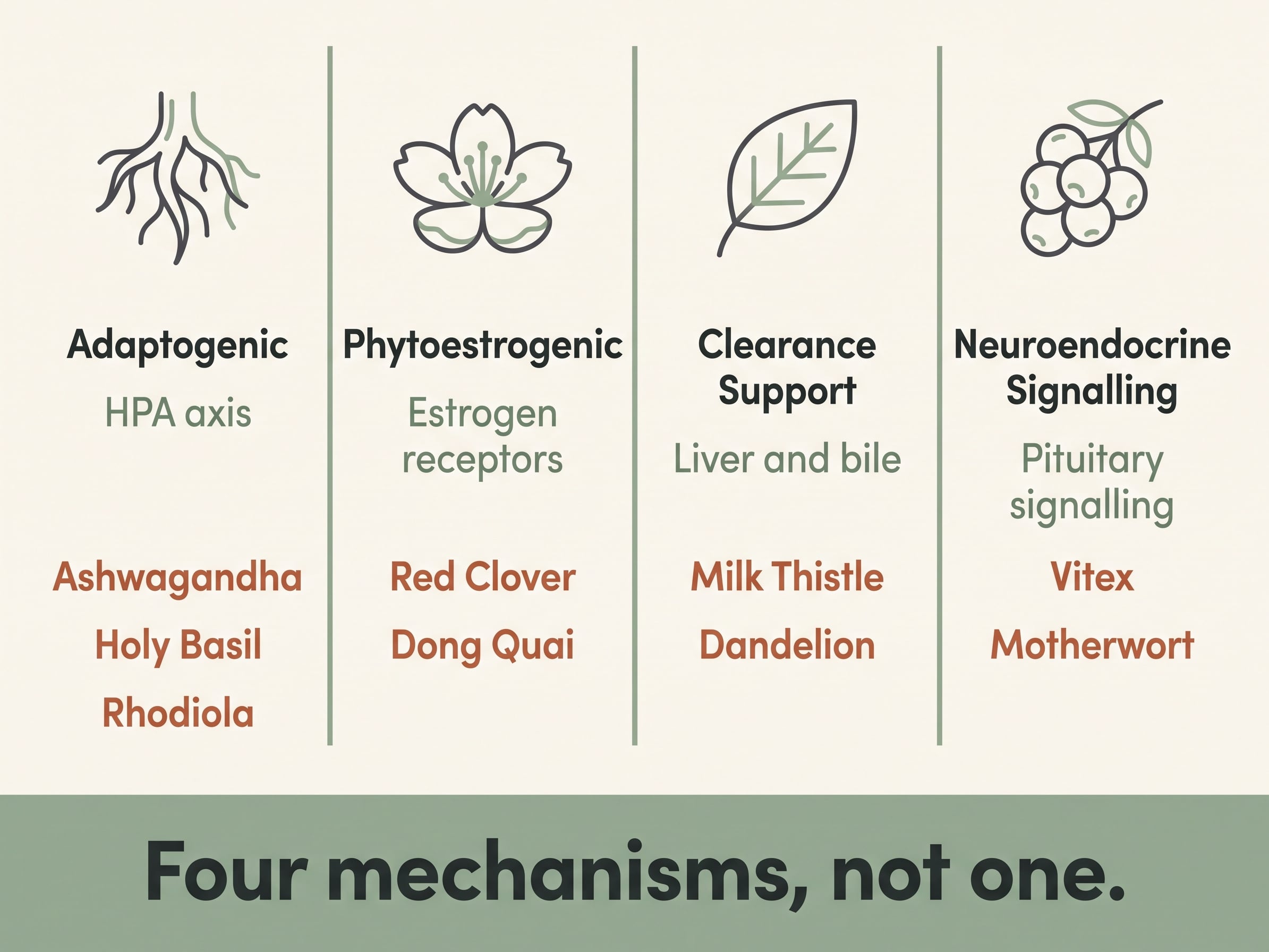
Herbs that regulate hormones fall into four mechanism classes, and the class matters more than the plant. Adaptogens such as ashwagandha (Withania somnifera) act on the stress axis. Phytoestrogenic plants such as red clover (Trifolium pratense) bind weakly to estrogen receptors. Liver-support herbs such as milk thistle (Silybum marianum) assist the pathways that clear hormones already in circulation. Neuroendocrine herbs such as vitex (Vitex agnus-castus) change pituitary signalling. No botanical balances every hormone at once.
This guide from Back To Your Roots Herbs sorts fourteen botanicals by what they actually do, grades the human evidence behind each, and names where an herb makes hormonal problems worse. It is written for anyone, not only for women. Cortisol, thyroid, and androgen questions apply across the board.
For signs of a hormonal imbalance, what causes one, how testing works, and which foods and habits support hormone health, our guide to female hormonal balance covers that ground. This page stays on the botanicals.
What Do Hormone-Regulating Herbs Actually Do?
Plants influence hormonal systems through four distinct pathways. Sorting an herb into the right one tells you what it can do and, just as usefully, what it cannot.
| Mechanism class | How it acts | Herbs in this class | What it does not do |
|---|---|---|---|
| Adaptogenic | Modulates the HPA axis, changing the cortisol response to stress | Ashwagandha, holy basil, rhodiola, maca, shatavari | Does not supply hormones. Sex-hormone effects are downstream of the stress response |
| Phytoestrogenic | Plant compounds bind weakly and partially to estrogen receptors | Red clover, dong quai, flaxseed lignans | Not equivalent to prescribed estrogen therapy. Binding is weak and tissue-selective |
| Clearance support | Supports liver and bile pathways that clear circulating hormones | Milk thistle, dandelion root | Does not change hormone production, only clearance |
| Neuroendocrine signalling | Acts on pituitary signalling, not on hormones directly | Vitex, motherwort | Does not add progesterone or estrogen. Changes the upstream signal |
Two clarifications appear constantly in popular writing, and neither is accurate. Maca (Lepidium meyenii) is not a phytoestrogen and contains no plant estrogens. Black cohosh (Actaea racemosa), despite decades of being called estrogenic, does not appear to change circulating hormone levels.
Which Herbs Have the Strongest Evidence?
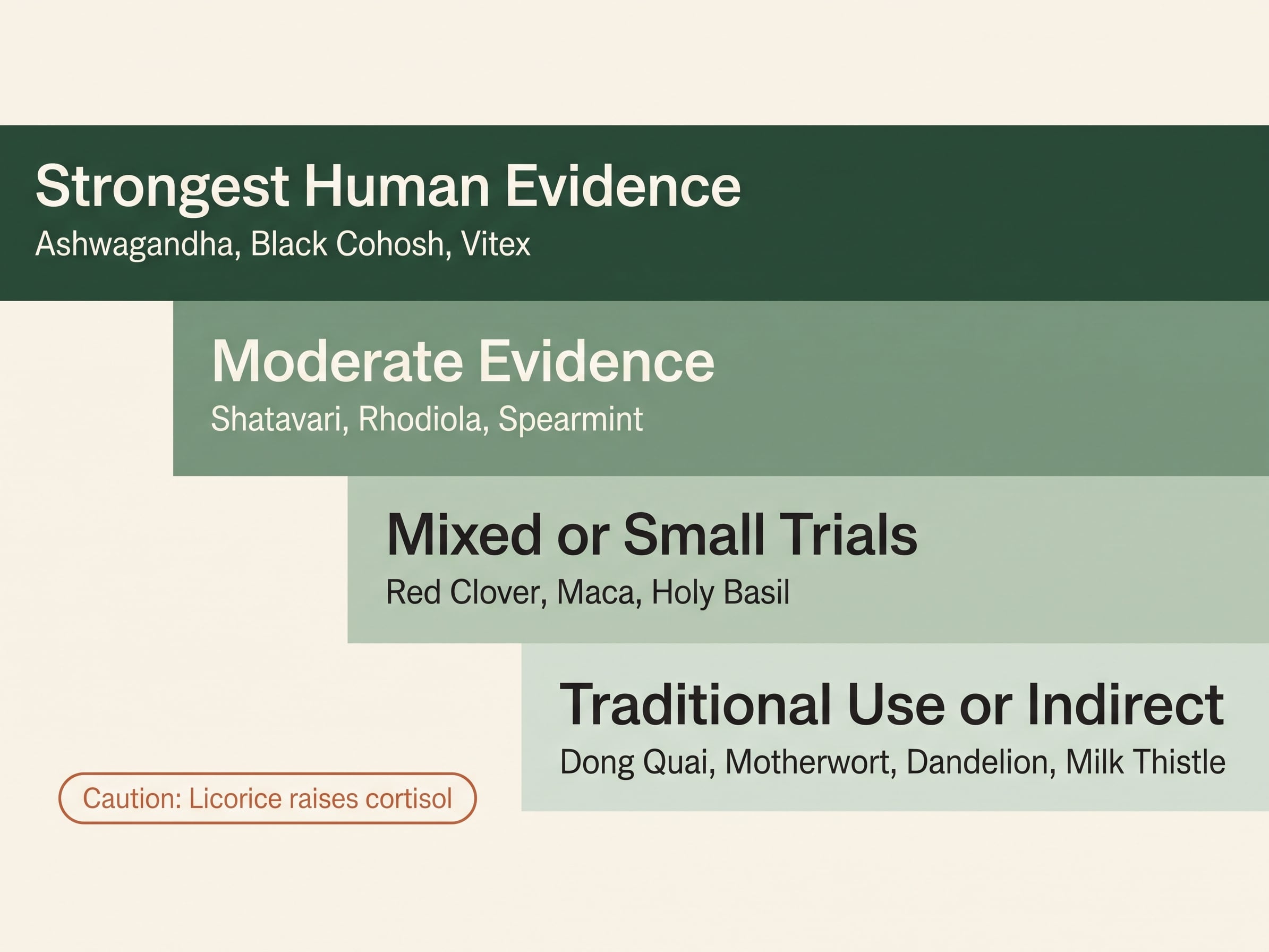
Three botanicals have strong human trial evidence. The rest range from moderate support to traditional use alone. In our editorial team’s review, the gap is too wide to treat these herbs as interchangeable.
| Herb | Latin binomial | Primary action | Evidence tier | Key caution |
|---|---|---|---|---|
| Ashwagandha | Withania somnifera | Lowers cortisol | Strongest (23 RCTs, n=1,706) | Affects thyroid T4. Avoid in pregnancy |
| Black cohosh | Actaea racemosa | Reduces vasomotor symptoms | Strongest (35 studies, n=43,759) | Discuss with a clinician if you have liver concerns |
| Vitex | Vitex agnus-castus | Lowers prolactin via dopamine receptors | Strong for cyclical breast pain | Interacts with hormonal contraceptives and dopamine drugs |
| Shatavari | Asparagus racemosus | Modulates FSH, LH, and estradiol | Moderate (2 placebo-controlled trials) | Avoid with asparagus allergy. Mild diuretic effect |
| Rhodiola | Rhodiola rosea | Blunts the cortisol awakening response | Moderate (Phase III, stress fatigue) | Can be activating. Take early in the day |
| Spearmint | Mentha spicata | Lowers free and total testosterone | Moderate (one 30-day RCT) | Not appropriate where higher androgens are the goal |
| Red clover | Trifolium pratense | Isoflavone receptor binding | Mixed, inconsistent trials | Caution with hormone-sensitive conditions |
| Maca | Lepidium meyenii | Non-hormonal adaptogen | Mixed, small trials | Contains no phytoestrogens despite frequent claims |
| Holy basil | Ocimum tenuiflorum | Adaptogenic cortisol modulation | Emerging, small trials | May affect blood clotting. Stop before surgery |
| Milk thistle | Silybum marianum | Hepatoprotective clearance support | Good for liver, indirect for hormones | Ragweed family allergy risk |
| Dandelion root | Taraxacum officinale | Bile flow and clearance support | Traditional use only | Consult a clinician with gallbladder conditions |
| Dong quai | Angelica sinensis | Circulatory and cycle support in TCM | Traditional use only | Anticoagulant activity. Avoid with blood thinners |
| Motherwort | Leonurus cardiaca | Nervine, cardiac and uterine tonic | Traditional use only | Avoid in pregnancy and with sedatives |
| Licorice root | Glycyrrhiza glabra | Raises active cortisol | Well documented, wrong direction | Raises blood pressure and lowers potassium |
| Evidence tiers reflect the volume and quality of published human trials, not the size of any individual effect. | ||||
Herbs That Act on Cortisol and the Stress Axis
This is the best-evidenced category, and the one that applies regardless of sex. Chronically elevated cortisol suppresses reproductive signalling and interacts with thyroid function, so herbs that steady the stress response affect hormones they never touch directly.
Ashwagandha for Cortisol Modulation
Ashwagandha (Withania somnifera) is the most studied adaptogen in Ayurvedic medicine, where it is classed as a rasayana. Its withanolide content is the compound group most associated with activity on the HPA axis.
A 2026 systematic review and meta-analysis of randomized placebo-controlled trials pooled 23 studies covering 1,706 adults. Ashwagandha significantly reduced cortisol, with a standardized mean difference of -1.18. Testosterone rose in men by a mean difference of 57.43 ng/dl but did not rise meaningfully in women, a difference between the groups the authors found statistically significant. Thyroid-stimulating hormone and T3 were unchanged, while T4 increased modestly. Estradiol did not shift in either group. Fornalik et al. (2026), Planta Medica, PMID: 41740946.
That last finding is worth reading twice. Ashwagandha is widely marketed as an estrogen or progesterone support herb, and the pooled data do not support that. What it reliably does is lower cortisol.
Cautions and considerations: the modest T4 increase matters if you take thyroid medication. Avoid during pregnancy. People with autoimmune conditions should speak with a healthcare professional first.
Holy Basil for Stress-Driven Hormonal Disruption
Holy basil (Ocimum tenuiflorum), known as tulsi, is a second Ayurvedic adaptogen with a gentler profile than ashwagandha. It is traditionally used to support a calm stress response, and its eugenol and ursolic acid content is the focus of most pharmacological work on the plant.
Its human evidence base is smaller than ashwagandha’s and consists largely of small trials measuring perceived stress rather than serum hormones directly, which places it in the emerging tier. In our sourcing experience, it suits people who find ashwagandha too sedating.
Cautions and considerations: holy basil may affect blood clotting, so discontinue before scheduled surgery. Consult a clinician if you take anticoagulants.
Rhodiola for Cortisol Rhythm and Stress Fatigue
Rhodiola (Rhodiola rosea) is an Arctic adaptogen traditionally used in Scandinavian and Siberian herbalism. Its rosavins and salidroside are the constituents standardized in clinical extracts.
A Phase III randomized double-blind placebo-controlled trial of 60 adults with stress-related fatigue used a standardized extract at 576 mg daily for 28 days. Compared with placebo, the treatment group improved on burnout scoring and on several attention measures. The cortisol response to awakening differed significantly between groups. Olsson, von Schéele and Panossian (2009), Planta Medica, PMID: 19016404.
Cortisol awakening response is a specific endpoint, not the same thing as total daily cortisol. Rhodiola’s evidence sits on that narrower target.
Cautions and considerations: rhodiola is stimulating for many people. Taking it late in the day can disrupt sleep, which works against the cortisol rhythm you are trying to steady.
Herbs That Act on the Reproductive Axis
Vitex and the Prolactin Pathway
Vitex (Vitex agnus-castus), also called chasteberry, is traditionally used to support menstrual cycle regularity. Its mechanism is frequently described incorrectly, including across a great deal of published health content.
Vitex does not directly raise progesterone. Research on the plant identified a group of diterpenes, principally clerodadienols, that bind to the dopamine D2 receptor protein and suppress prolactin release with potency approaching dopamine itself. Cyclical breast pain in premenstrual syndrome is driven partly by latent hyperprolactinemia, which is why lowering prolactin helps. Any progesterone effect follows downstream from that change in pituitary signalling. Wuttke et al. (2003), Phytomedicine, PMID: 12809367.
The pathway is practical, not academic. It explains why vitex interacts with dopamine-active medications and why it is inappropriate alongside hormonal contraceptives.
Cautions and considerations: not for use during pregnancy or breastfeeding. May interfere with hormonal medications including birth control pills, and with dopamine agonists or antagonists.
Shatavari and the Perimenopausal Transition
Shatavari (Asparagus racemosus) is an Ayurvedic tonic traditionally used to support the female reproductive system through life transitions. Two recent placebo-controlled trials give it firmer footing than most herbs in this category, and reading them side by side is instructive.
An eight-week randomized double-blind placebo-controlled study gave 300 mg daily of root extract to perimenopausal women. Menopause Rating Scale and Perceived Stress Scale scores improved significantly, hot flashes improved, and estradiol, FSH, and T3 all increased. Mahajan et al. (2025), International Journal of Women’s Health, PMID: 41209045.
A separate 120-day trial of a different standardized extract at 200 mg daily reported the opposite direction on two of those markers, with FSH down 56.3 percent and LH down 34.3 percent, alongside a large increase in anti-Mullerian hormone. Yadav et al. (2025), Journal of the American Nutrition Association, PMID: 40434025.
Both reported symptom improvement. They disagree on hormonal direction, and the extracts, doses, and durations all differed. Our reading is that shatavari has real activity on the reproductive axis and that the endpoint pattern is unsettled, which is more accurate than the confident claims usually made about it.
Cautions and considerations: may have a diuretic effect. Avoid with an asparagus allergy. Those with heart or kidney conditions should consult a doctor.
Dong Quai and Motherwort
Dong quai (Angelica sinensis) is a mainstay of Traditional Chinese Medicine used for cramping and irregular cycles, where it is thought to improve pelvic circulation. Motherwort (Leonurus cardiaca) is a Western nervine with a traditional dual action on the heart and the uterus, used to ease the nervous tension that accompanies premenstrual and menopausal periods.
Both rest on traditional use rather than trial evidence, which is why we place them in the lowest tier here. That does not make them useless. It does mean the confidence attached to them should be lower than for ashwagandha or black cohosh.
Cautions and considerations: dong quai has anticoagulant properties and should be avoided during pregnancy and by those on blood-thinning medications. Motherwort should be avoided in pregnancy, and anyone with a heart condition or taking sedative medication should consult a doctor.
Phytoestrogens and the Menopause Herbs
Red clover (Trifolium pratense) is rich in isoflavones, a class of phytoestrogen that binds weakly and selectively to estrogen receptors. Trial results for menopausal symptoms are inconsistent. Phytoestrogens are not equivalent to prescribed estrogen therapy, and NHS guidance on herbal alternatives to hormone replacement therapy makes that distinction explicitly.
Black cohosh (Actaea racemosa) deserves a correction that appears almost nowhere in popular herbal writing. A systematic review and meta-analysis covering 35 clinical studies and 43,759 women, of whom 13,096 received an isopropanolic extract, found significant superiority over placebo for neurovegetative and psychological menopausal symptoms, with a standardized mean difference of -0.694. Efficacy was comparable to low-dose transdermal estradiol. Critically, hormone levels remained unchanged, and estrogen-sensitive tissues, including the breast and endometrium, were unaffected. Castelo-Branco et al. (2020), Climacteric, PMID: 33021111.
Black cohosh is therefore not acting as a phytoestrogen in any measurable sense. It reduces symptoms without moving hormone levels, which is a different and more interesting mechanism than the one usually attributed to it. The NCCIH black cohosh page is a good starting point for the regulatory reading.
Cautions and considerations: both should be discussed with a clinician by anyone with a history of hormone-sensitive conditions. Anyone with existing liver concerns should raise black cohosh with their doctor first.
Spearmint and Androgen Levels
Spearmint (Mentha spicata) taken as a tea is the one herb on this page studied specifically for lowering androgens.
A 30-day two-centre randomized controlled trial enrolled 42 volunteers with polycystic ovary syndrome, of whom 41 completed. Free and total testosterone fell significantly in the spearmint group, LH and FSH rose, and self-reported hirsutism scores improved. The objectively rated Ferriman-Galwey score did not change significantly, and the author attributed that to the trial being too short for hair follicle turnover to register a visible difference. Grant (2010), Phytotherapy Research, PMID: 19585478.
We include the null result deliberately. The hormonal change was measurable. The visible cosmetic change was not, within a month. Both facts belong in an honest summary.
Cautions and considerations: spearmint tea is generally well tolerated. Concentrated supplements warrant more care, and lowering testosterone is obviously undesirable for anyone whose goal runs the other way.
The Clearance Herbs: Milk Thistle and Dandelion
The liver clears circulating hormones, so it matters for hormonal balance even though neither herb touches hormone production.
Milk thistle (Silybum marianum) is the better studied, and its active compound group, silymarin, has a substantial hepatoprotection literature. Dandelion root (Taraxacum officinale) is a traditional bitter used to support bile production. Their contribution here is indirect, and we would not position either as a primary hormone herb.
Cautions and considerations: both belong to families that overlap with common allergies. People sensitive to ragweed and the wider Asteraceae family may react to either. Consult a doctor if you have gallbladder issues.
When Herbs Make Hormones Worse
Most writing here assumes hormone-active herbs move hormones in a helpful direction. Several do the opposite in the wrong person, and licorice root is the clearest example.
- Licorice root raises active cortisol rather than lowering it, which is the wrong direction for anyone already dealing with elevated cortisol.
- Vitex interacts with hormonal contraceptives and dopamine-active medications because its mechanism runs through the dopamine system.
- Red clover and other phytoestrogens warrant caution with hormone-sensitive conditions.
- Ashwagandha raised T4 modestly in pooled trial data, which is relevant if you take thyroid medication.
- Dong quai has anticoagulant activity and should be avoided alongside blood-thinning medication.
- Most hormone-active herbs, including vitex, black cohosh, and dong quai, are not appropriate during pregnancy or breastfeeding.
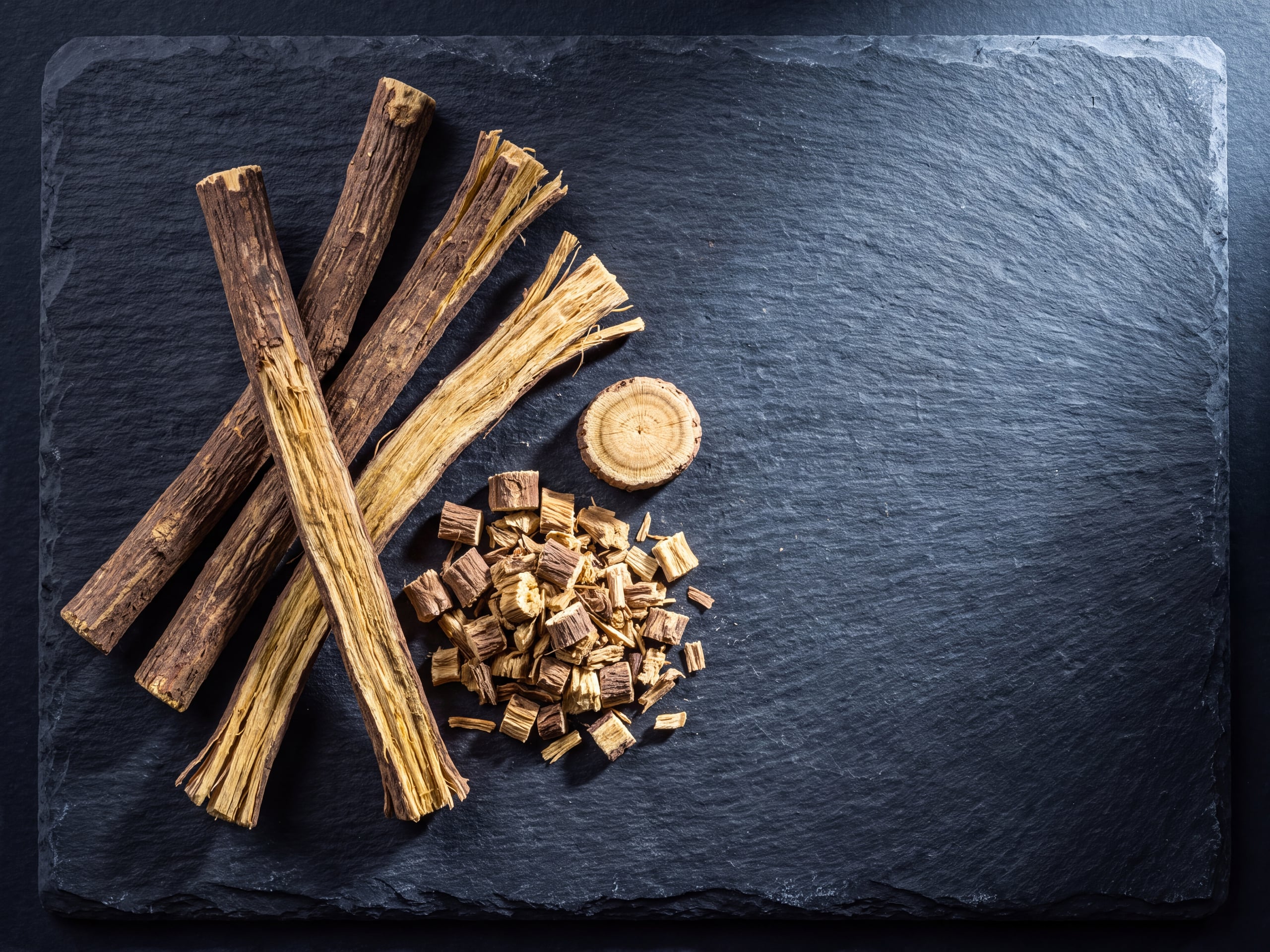
The licorice mechanism is well characterized. Glycyrrhizic acid inhibits 11-beta-hydroxysteroid dehydrogenase type 2, the enzyme that converts cortisol to inactive cortisone in the kidney. Blocking it leaves cortisol free to activate the mineralocorticoid receptor, producing hypertension, low potassium, and metabolic alkalosis. Kerstens et al. (1999), Journal of Internal Medicine, PMID: 10620097.
This is not a theoretical risk. A 2024 case report described a 65-year-old woman who developed accelerated hypertension, hypokalemia, and metabolic alkalosis after taking a commercial liver-support supplement containing glycyrrhizic acid. All findings resolved once she stopped the product, and the authors noted that glycyrrhizic acid is increasingly appearing in unregulated supplements. Szendrey et al. (2024), Journal of Medical Case Reports, PMID: 39107810.
That case is the strongest argument for reading labels and buying from suppliers who publish third-party testing. In our sourcing work, knowing exactly what is in a bag of plant material is not a marketing detail.
Trying a Hormonal Herb: A Practical Protocol
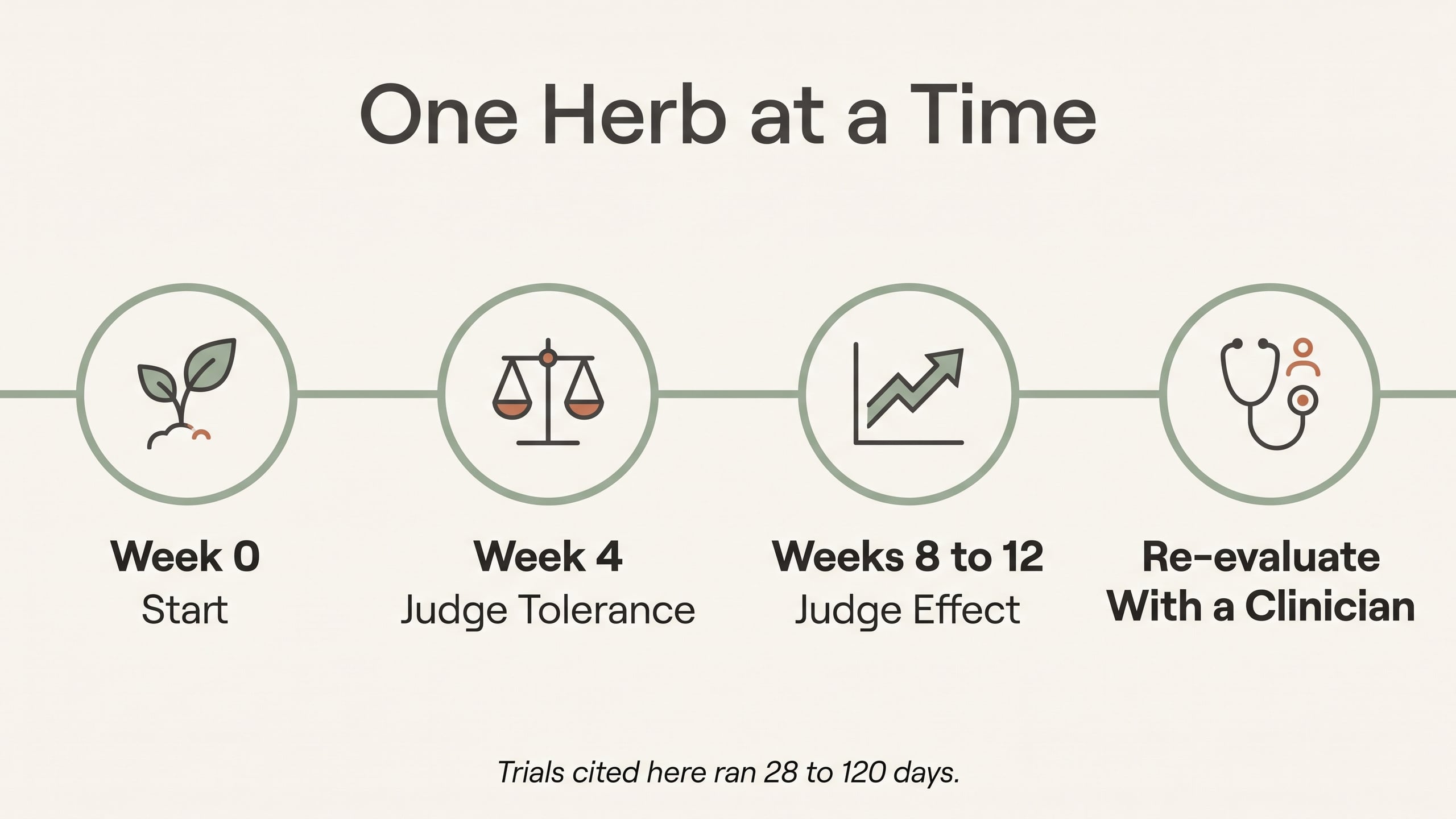
Herbs here work slowly, and the most common mistake we see is stacking several at once and being unable to tell which did what.
- One herb at a time. Introduce a single botanical and hold everything else steady.
- Give it four weeks before judging tolerance. Side effects and mismatches usually surface inside a month.
- Give it 8 to 12 weeks before judging effect. Nearly every trial cited here ran between four weeks and four months. Hormonal feedback loops move on cycle-length timescales.
- Re-evaluate with a clinician. If you take medication or manage a diagnosed condition, have that conversation before you start.
Anyone promising a botanical will reset your hormones in a week is describing something the endocrine system does not do.
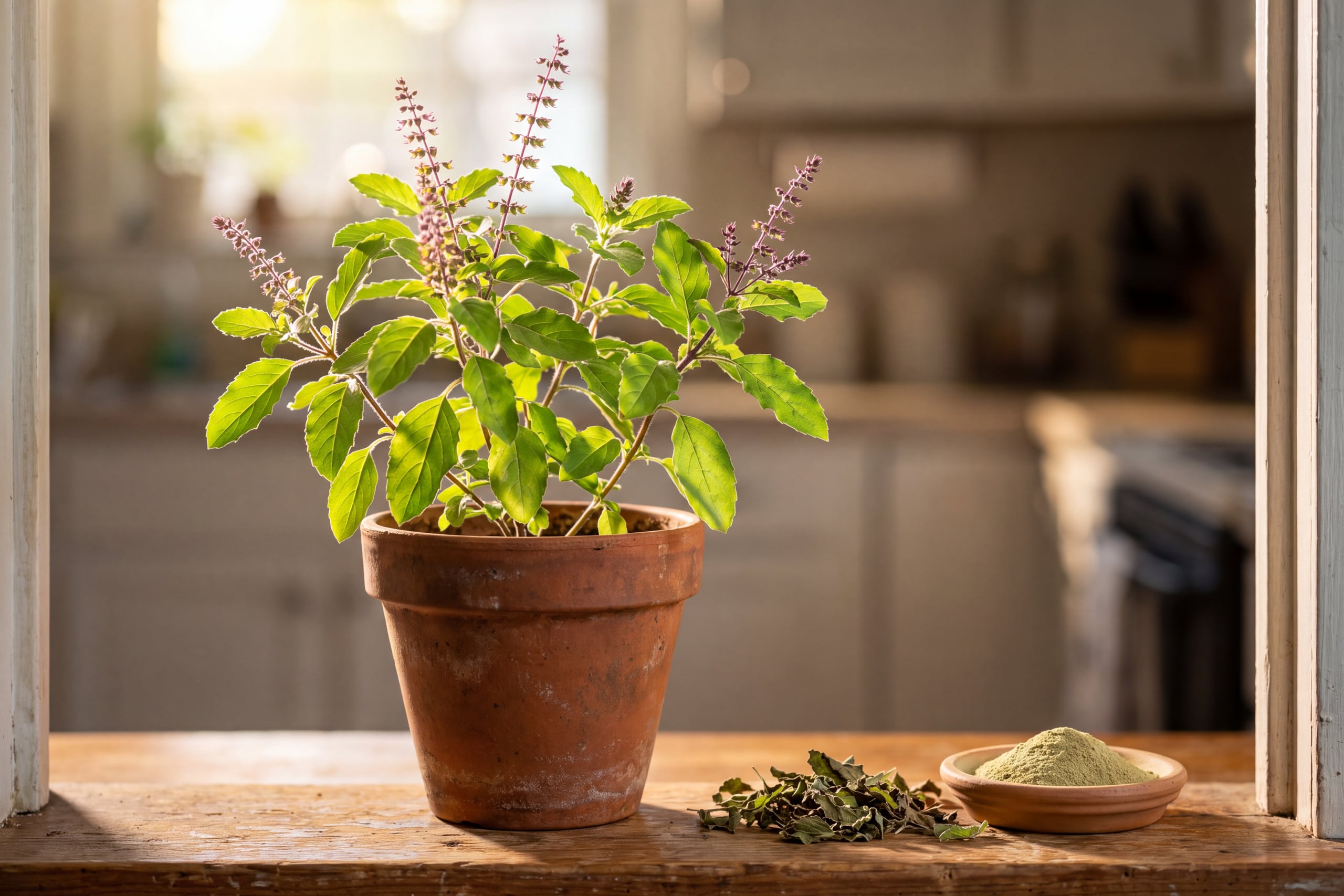
Quality matters more here than in most categories, as the licorice case shows. Our organic holy basil powder is whole-leaf Rama tulsi, heavy-metal tested, with a certificate of analysis on request. Whichever supplier you choose, ask for that document.
A Complete Path to Hormonal Wellness
Herbs are one input. Diet, sleep, movement, and stress management form the base they act on, and no botanical compensates for a missing foundation. Our guide to female hormonal balance covers the nutritional and lifestyle side, along with the signs of imbalance and how testing works.
Common Questions About Hormonal Herbs
What is the most powerful herb for hormones?
There is no single answer, because the right herb depends on which hormone is involved. Ashwagandha has the strongest pooled evidence for lowering cortisol, black cohosh the largest base for menopausal symptoms, and vitex the best support for cyclical breast pain. Mechanism matters more than popularity.
Can you reset your hormones in 7 days?
No. Endocrine feedback loops operate on cycle-length timescales, and the trials behind these herbs ran four weeks to four months before measuring outcomes. Sleep, meals, and stress management can change how you feel within a week. Measurable hormonal change takes far longer.
Are phytoestrogens the same as hormone replacement therapy?
No. Phytoestrogens such as red clover isoflavones bind weakly and selectively to estrogen receptors, which is a different action from prescribed estrogen therapy at a therapeutic dose. NHS guidance on herbal alternatives to hormone replacement therapy draws this distinction directly.
Which herbs affect cortisol, and which affect sex hormones?
Ashwagandha, holy basil, and rhodiola act mainly on cortisol. Vitex acts on prolactin through pituitary dopamine signalling. Red clover acts on estrogen receptors. Spearmint lowers androgens. Milk thistle and dandelion support clearance. Several herbs marketed for sex hormones work on cortisol first.
Does ashwagandha raise testosterone in women?
Pooled trial data say no. The 2026 meta-analysis of 23 randomized trials found a meaningful testosterone increase in men but not in women, and the difference between the groups was statistically significant. Estradiol did not change in either group.
Is black cohosh a phytoestrogen?
The evidence says it is not. A meta-analysis covering 43,759 women found black cohosh reduced menopausal symptoms significantly against placebo while leaving hormone levels unchanged and estrogen-sensitive tissues unaffected. It appears to work through a non-hormonal pathway despite its reputation.
How long does it take for herbs to balance hormones?
Plan on 8 to 12 weeks of consistent use before drawing conclusions, and about four weeks before you can judge whether an herb suits you. The trials cited on this page ran 28 days at the shortest and 120 days at the longest.
Which herbs should I avoid with hormone issues?
Licorice root, because it raises active cortisol. Vitex is inappropriate alongside hormonal contraceptives. Phytoestrogens, including red clover, warrant caution with hormone-sensitive conditions. Most hormone-active herbs are unsuitable in pregnancy and breastfeeding. Anyone on thyroid medication, anticoagulants, or hormone therapy should review any new botanical with their prescriber first.
Related Reading
Continue with our detailed guides on female hormonal balance, ashwagandha for cortisol, chasteberry for perimenopause, and rhodiola for thyroid support in Hashimoto’s.
These statements have not been evaluated by the Food and Drug Administration. This product is not intended to diagnose, treat, cure, or prevent any disease. Consult your healthcare provider before use, especially if you are pregnant, nursing, taking medication, or have a medical condition.