According to current research summaries, astaxanthin is a potent antioxidant offering significant benefits for skin health. It is suggested to help shield the skin from UV damage, improve elasticity and moisture levels, and diminish the appearance of fine lines and wrinkles. Its primary mechanisms involve neutralizing damaging free radicals and reducing inflammation. It can be used as an oral supplement or applied topically as part of a skincare regimen.
| Potent Antioxidant Action | Works at a cellular level to neutralize free radicals, a primary cause of premature aging. |
|---|---|
| Natural UV Protection | Helps mitigate damage from UV radiation, acting as an “internal sunscreen” to support skin resilience. |
| Hydration & Elasticity | Improves skin moisture retention and supports the structures that keep skin firm and supple. |
| Visible Improvements | Contributes to a reduction in fine lines, wrinkles, and hyperpigmentation for a more even skin tone. |
| Application Methods | Can be effective when taken orally as a supplement or used topically in serums and creams. |
What Is This Potent Antioxidant?
Astaxanthin is a naturally occurring pigment belonging to a group of chemicals called carotenoids. It’s the compound responsible for the vibrant red and pink hues seen in salmon, shrimp, and flamingos. Unlike many other antioxidants, its primary source is not fruits or vegetables, but a specific type of microalgae known as Haematococcus pluvialis. When this algae is stressed, it produces astaxanthin as a protective shield, allowing it to survive harsh conditions. This remarkable survival mechanism is the source of its powerful protective properties for human skin.
The Cellular Science of Skin Protection
The appearance of our skin is a direct reflection of its health at the cellular level. Astaxanthin works in several ways to protect and maintain the integrity of skin cells.
Neutralizing Free Radicals
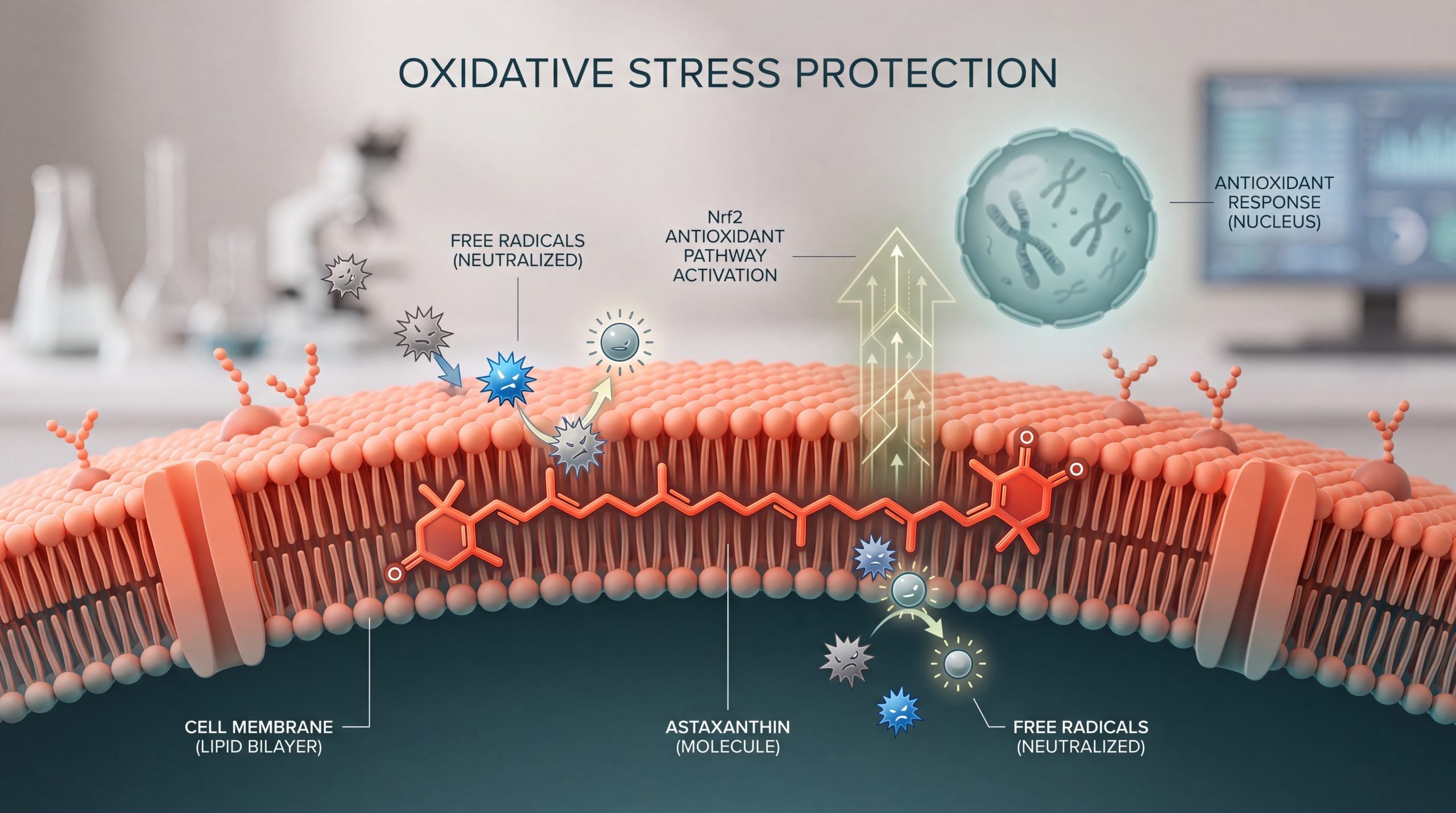
Every day, our skin is exposed to factors like UV radiation and pollution, which generate unstable molecules called free radicals. These molecules damage cells, degrade collagen, and accelerate the aging process. Astaxanthin has a unique molecular structure that allows it to effectively neutralize these free radicals. It spans the entire cell membrane, providing comprehensive protection from both internal and external oxidative stress, which is fundamental for skin health.
This dual-membrane antioxidant action, along with astaxanthin’s role in activating the body’s own Nrf2/HO-1 antioxidant response pathway, is detailed in a review of the clinical and mechanistic literature (Davinelli, Nielsen & Scapagnini, 2018, Nutrients, PMID 29690549).
Mitigating UV Damage
While it is not a replacement for sunscreen, astaxanthin provides an additional layer of defense against the sun’s harmful effects. Research indicates that it can help reduce the damage caused by UVA radiation, which penetrates deep into the skin and contributes to wrinkles and loss of elasticity. By accumulating in the skin layers, it helps absorb UV energy and lessens the inflammatory response that leads to sunburn and long-term photoaging.
A randomized, double-blind, placebo-controlled trial in 22 healthy adults found that 4 mg of oral astaxanthin daily for 9 weeks significantly increased the skin’s minimal erythema dose, a measure of UV resistance, and reduced UV-induced moisture loss compared to placebo (Ito, Seki & Ueda, 2018, Nutrients, PMID 29941810).
Anti-Inflammatory Action
Inflammation is a root cause of many skin concerns, from acne to redness and premature aging. Astaxanthin has been shown to have calming properties, helping to soothe stressed skin and reduce the inflammatory pathways that can damage skin structures over time. This contributes to a more even and balanced complexion.
This anti-inflammatory activity is linked to astaxanthin’s inhibition of NF-κB signaling, one of the primary pathways the body uses to trigger inflammatory responses in skin tissue (Davinelli, Nielsen & Scapagnini, 2018, Nutrients, PMID 29690549).
Evidence-Based Skin Health Improvements
The benefits of astaxanthin are not just theoretical; they are supported by a growing body of scientific research focused on visible and structural skin improvements.
Wrinkles and Fine Lines
Oxidative stress breaks down collagen and elastin, the proteins that give skin its youthful firmness. By fighting this damage, astaxanthin helps preserve the skin’s existing collagen supply. In a randomized, placebo-controlled trial of 65 women, participants taking 6 mg or 12 mg of astaxanthin daily for 16 weeks showed no significant worsening in wrinkle depth or skin moisture over the study period, while the placebo group’s skin measurably declined (Tominaga, Hongo, Fujishita, Takahashi & Adachi, 2017, Journal of Clinical Biochemistry and Nutrition, PMID 28751807). A larger 2021 meta-analysis pooling 11 human studies found that oral astaxanthin significantly improved skin moisture and elasticity, though the reduction in wrinkle depth did not reach statistical significance when measured with objective instrumentation (Zhou, Cao, Orfila, Zhao & Zhang, 2021, Nutrients, PMID 34578794). Read together, the current evidence points to astaxanthin helping guard existing collagen against age-related decline more reliably than it reverses wrinkles already present.
Skin Hydration and Elasticity
Proper hydration is key to plump, healthy skin. Astaxanthin helps strengthen the skin barrier, reducing water loss and improving the skin’s ability to retain moisture. This enhanced hydration, combined with its protective effects on elastin fibers, matches the moisture and elasticity improvements reported in the Tominaga and Zhou research cited above, which found these two markers responded most consistently to oral astaxanthin supplementation among the skin outcomes studied.
Hyperpigmentation and Skin Tone
Sun exposure and inflammation can lead to an overproduction of melanin, causing dark spots and an uneven skin tone. Astaxanthin’s ability to mitigate UV effects and reduce inflammation can help prevent the formation of these spots and contribute to a brighter, more uniform complexion over time.
Integrating It Into Your Routine
To achieve the best results for your skin, astaxanthin can be incorporated in two primary ways. Many people find that a combination of both oral and topical use provides the most comprehensive benefits.
Oral Supplementation
Taking astaxanthin as a supplement allows it to be distributed throughout the body, accumulating in the skin layers to provide protection from the inside out. This systemic approach is particularly effective for leveraging its UV-protective and anti-inflammatory properties across the entire surface of the skin. As a company dedicated to natural wellness, Back To Your Roots Herbs recognizes the value of such internal support for external vitality.
Topical Application
When included in serums, creams, or lotions, astaxanthin provides targeted antioxidant benefits directly to the skin. It helps neutralize surface-level free radicals generated by environmental exposure and can offer immediate soothing and protective effects. Its strong color can give products an orange or red tint, which typically absorbs without staining the skin.
Astaxanthin Dosage for Skin: How Much and How to Take It
Human skin studies have used oral astaxanthin doses ranging from 4 mg daily, the amount used in the UV-protection trial referenced above (Ito et al., 2018, PMID 29941810), up to 6 mg or 12 mg daily, the range studied in the 16-week wrinkle and moisture trial (Tominaga et al., 2017, PMID 28751807). Because astaxanthin is fat-soluble, taking it alongside a meal that contains some dietary fat can support absorption. The 12 mg upper amount reflects what has been studied in clinical research rather than a universal recommendation for every person. Consult your healthcare provider to determine the right dose for you, particularly if you are taking any medication or managing a health condition. For a convenient oral source, BTYRH’s astaxanthin powder allows for flexible dosing within this studied range.
A Comparison with Other Antioxidants
In the world of skincare, several antioxidants are well-regarded, but astaxanthin holds a unique position.
Astaxanthin vs. Vitamin C
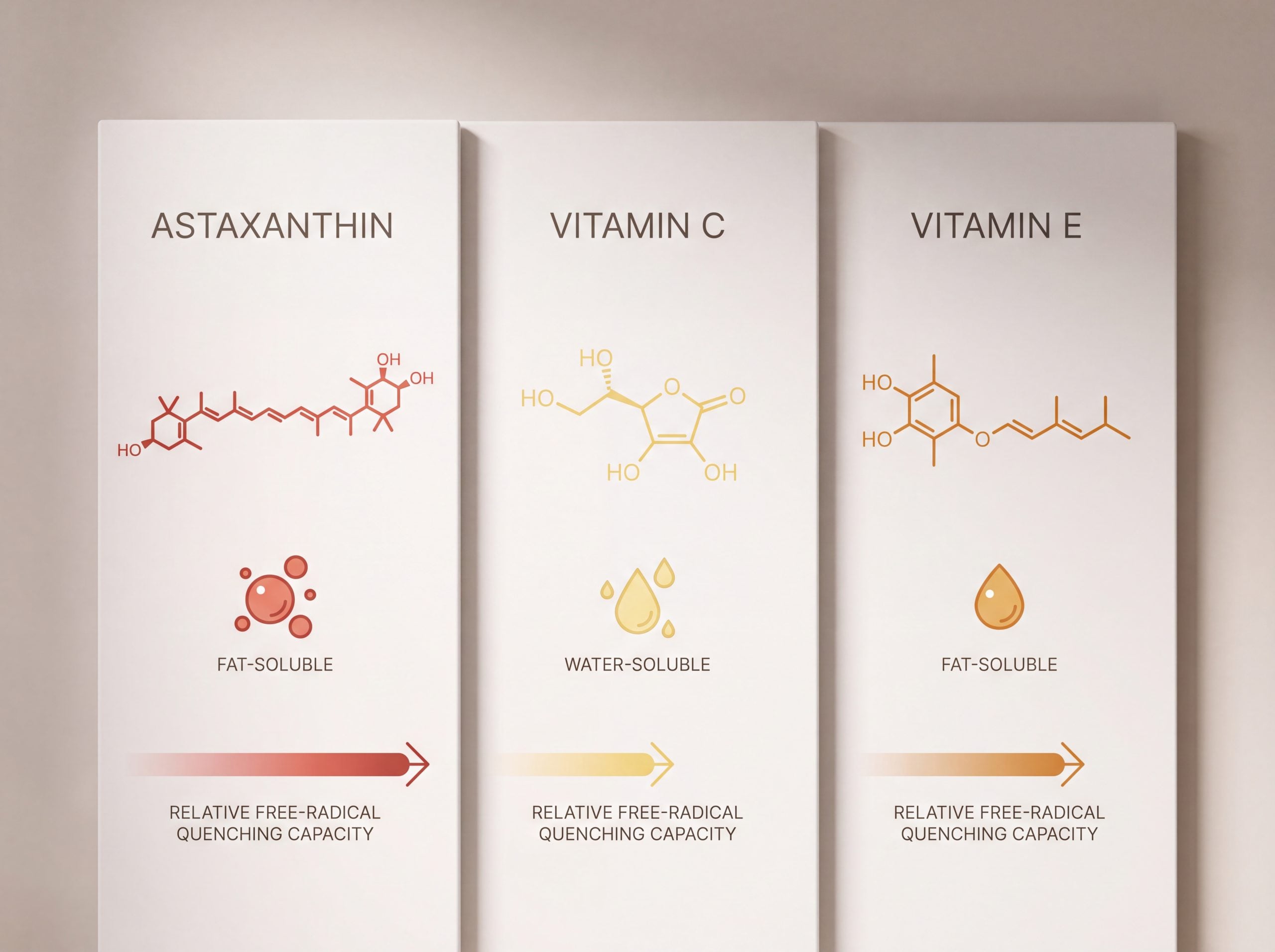
Vitamin C is a powerful antioxidant known for its brightening and collagen-supporting properties. However, astaxanthin is considered to be significantly more powerful in its ability to quench certain types of free radicals. While Vitamin C works primarily in the water-soluble parts of the cell, astaxanthin’s structure allows it to protect both the water- and fat-soluble parts, offering more complete cellular defense.
Astaxanthin vs. Vitamin E
Vitamin E is another fat-soluble antioxidant that is excellent for moisturizing and healing. Astaxanthin complements Vitamin E but is much more effective at handling a broader range of oxidative stressors without becoming a pro-oxidant itself—a risk with some antioxidants under certain conditions.
Safety and Important Considerations
Astaxanthin is generally recognized as safe for most people when consumed in amounts found in food and taken in appropriate supplement doses. It is derived from a natural source and has been consumed as part of the human diet for centuries through seafood. As a topical ingredient, it is well-tolerated by most skin types. As with any new supplement or skincare product, it is wise to consult with a healthcare professional, especially if you are pregnant, nursing, or have a medical condition.
This guidance applies to daily use as well. Because dedicated long-term daily-use research on astaxanthin for skin specifically is still developing, and because safety during pregnancy or while nursing has not been established for this use, anyone in either situation should speak with a healthcare provider before starting supplementation. See the questions below for guidance on medication interactions and other skin conditions.
Common Questions Answered
How long does it take for astaxanthin to work on skin?
Consistency is key. When taking oral supplements, studies suggest visible improvements in skin moisture, elasticity, and fine lines can take anywhere from 6 to 12 weeks as the compound accumulates in the skin tissues. Topical results may be noticed sooner in terms of skin feel and hydration.
Which is better for skin, collagen or astaxanthin?
They serve different but complementary roles. Collagen provides the structural building blocks for the skin, while astaxanthin acts as a protector of that structure. Astaxanthin helps prevent the breakdown of existing collagen from oxidative stress. For a comprehensive approach, using both can be highly effective.
Can you put astaxanthin directly on your face?
Yes, astaxanthin is used in many topical skincare products like serums and creams. It is safe for direct application when formulated correctly within a cosmetic product. Its potent antioxidant action makes it an excellent addition to a daily skincare routine.
What are the negative effects of astaxanthin?
Astaxanthin has a high safety profile with very few reported side effects at standard dosages. In very high doses, oral supplementation might cause increased bowel movements or a reddish stool color. Some sources note it could potentially influence hormone levels, so individuals with hormone-sensitive conditions should consult a doctor.
Does astaxanthin interact with medications like statins or blood thinners?
A published case report described an interaction between the blood thinner warfarin and astaxanthin supplementation, in which a patient’s anticoagulation levels changed after starting the supplement (Santiyanon, Yeephu et al., 2019, Journal of Cardiology Cases, PMID 31073352). This is a single case report rather than a controlled trial, so it does not establish how often this occurs, but it is reason enough for caution. If you take warfarin, another anticoagulant, an antiplatelet medication, a statin, or any other prescription drug, talk with your healthcare provider before adding astaxanthin to your routine.
Can astaxanthin help with acne or other skin conditions?
Dedicated clinical trials testing astaxanthin specifically for acne are limited, so this page stops short of an acne-specific claim. What the broader research does support is astaxanthin’s anti-inflammatory action, described above, which has been studied in the context of other inflammatory skin conditions in review literature (Davinelli, Nielsen & Scapagnini, 2018, PMID 29690549). For that reason, astaxanthin may support skin that is already dealing with inflammation and oxidative stress generally, rather than functioning as a targeted acne treatment. Anyone managing acne or another diagnosed skin condition should work with a dermatologist on a treatment plan.
Important: This article is for educational and informational purposes. The statements have not been evaluated by the Food and Drug Administration. The herbs and herbal products discussed are not intended to diagnose, treat, cure, or prevent any disease. Speak with a qualified healthcare provider before starting any new herbal regimen, especially if you are pregnant, nursing, taking medication, or managing a health condition.