Back To Your Roots Herbs is dedicated to providing comprehensive, evidence-based insights into natural wellness.
Ashwagandha, an ancient herb rooted in Ayurveda, has garnered attention for its potential to support overall well-being, including aspects of sexual health. Often classified as an adaptogen, it is believed to help the body manage stress. But can this revered botanical truly influence libido? This article seeks the truth behind the claims, examining the scientific evidence for its effects on sexual desire, which is a vital part of healthy love and relationships. While sometimes mentioned alongside herbs like damiana, ashwagandha has a unique profile as a potential aphrodisiac. We will look into its mechanisms, efficacy, and safety.
How Ashwagandha May Influence Libido: The Stress Connection
Libido, or sexual desire, is a complex interplay of physical, hormonal, and psychological factors. Stress, in particular, can be a significant deterrent. When the body is under stress, it produces cortisol, a hormone that, in elevated levels, can suppress the production of sex hormones like testosterone and estrogen.
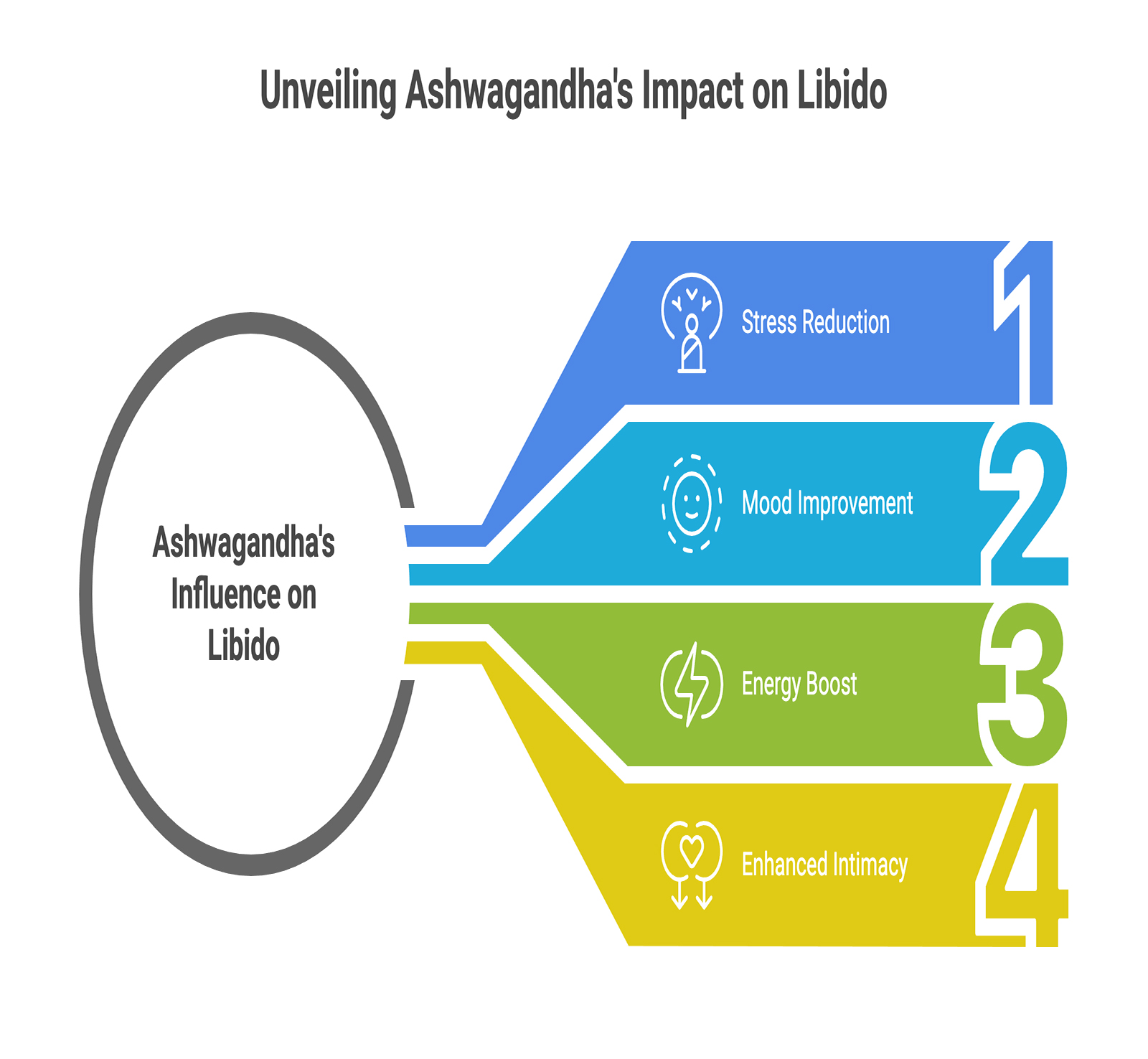
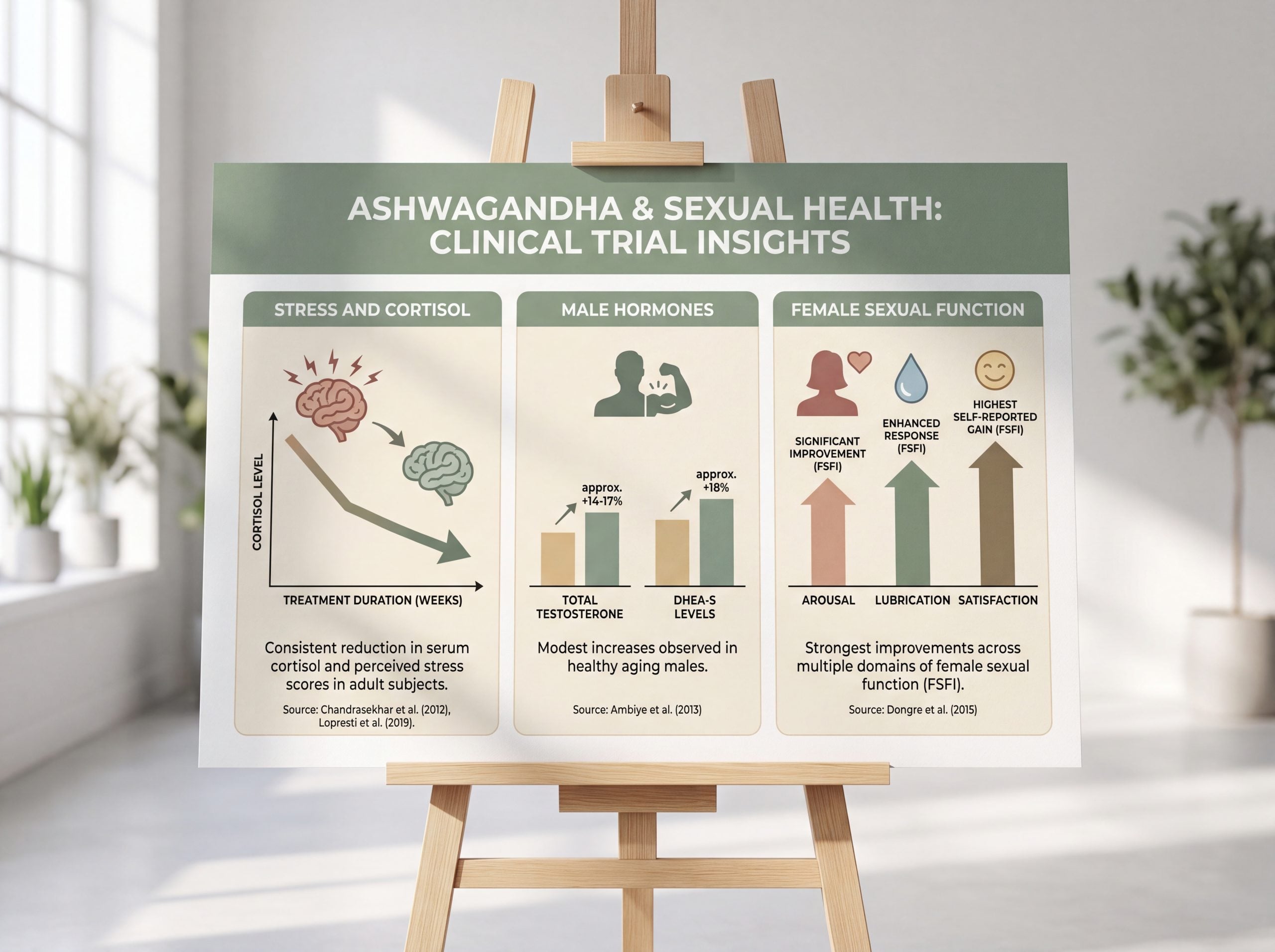
Ashwagandha (Withania somnifera) is known for its adaptogenic properties, meaning it helps the body adapt to and cope with various stressors. In a randomized, double-blind, placebo-controlled trial of 64 adults with a history of chronic stress, participants taking a high-concentration ashwagandha root extract saw serum cortisol drop significantly more than the placebo group (P=0.0006), alongside significant reductions on every stress-assessment scale used by Day 60 (P<0.0001) (Chandrasekhar et al., 2012, Indian Journal of Psychological Medicine, PMID: 23439798). By modulating the body’s stress response and lowering cortisol, ashwagandha may indirectly support a healthy libido. Less stress often translates to improved mood, better energy, and a greater openness to intimate connection, all factors that contribute to sexual interest. This adaptogenic action forms a primary pathway through which ashwagandha is thought to impact sexual health.
Ashwagandha for Male Libido: The Testosterone Factor and Beyond
For men, ashwagandha’s influence on libido often involves its potential effects on testosterone. Testosterone is a key hormone regulating male sexual desire, erectile function, and overall sexual performance. For concerns like mild ED (erectile dysfunction), hormonal balance, and stress management are key considerations.
Research suggests that ashwagandha supplementation may support healthy testosterone levels. In a 16-week randomized, double-blind, placebo-controlled crossover trial of aging, overweight men, ashwagandha was associated with a 14.7% greater increase in testosterone (P=.010) and an 18% greater increase in DHEA-S (P=.005) compared with placebo (Lopresti et al., 2019, American Journal of Men’s Health, PMID: 30854916). Worth noting in the interest of a balanced read: that same trial did not find a statistically significant between-group difference in self-reported sexual function or vitality scores, so the hormonal shift is real, but the direct effect on lived sexual experience is still an open question. Beyond direct hormonal impact, the herb’s stress-reducing qualities can also indirectly benefit male sexual health by alleviating performance anxiety and improving general well-being. For a deeper look at the testosterone research specifically, see our guide to ashwagandha and testosterone.

Ashwagandha for Female Libido: Addressing Arousal and Satisfaction
The impact of ashwagandha on female libido appears to stem from a broader range of effects compared to men, often extending beyond direct hormonal changes. For women, sexual desire and satisfaction are intimately linked with stress levels, mood, and overall vitality.
Studies focusing on sexual health in females have indicated that ashwagandha may contribute to improvements in several areas, and the female-specific evidence here is more consistent than the male-specific data above. In an 8-week randomized, double-blind, placebo-controlled trial of 50 women, ashwagandha root extract produced significantly greater improvement than placebo on the Female Sexual Function Index total score, along with the arousal, lubrication, and satisfaction domains (all P<0.001) and the orgasm domain (P=0.004), plus a significant increase in successful sexual encounters (P<0.001) (Dongre et al., 2015, BioMed Research International, PMID: 26504795). While direct hormonal shifts are less emphasized in women, the herb’s adaptogenic effects, reducing stress and anxiety, are highly relevant. Lower stress levels can remove psychological barriers to sexual interest, foster a calmer state, and support the physiological responses involved in sexual function.

What the Science Says: Clinical Evidence
Numerous clinical trials have investigated ashwagandha’s effects on sexual health. While more extensive research is always valuable, existing studies provide insights into its potential effectiveness.
Summary of Key Findings:
| Outcome | Male Studies | Female Studies |
|---|---|---|
| Libido & Desire | Testosterone increases have been measured directly, though the one trial testing self-reported desire alongside hormone levels did not find a statistically significant difference from placebo. | Improvements in sexual interest and overall satisfaction were reported. |
| Sexual Function | Better erectile function and overall sexual performance. | Enhanced arousal, lubrication, and ability to achieve orgasm. |
| Hormonal Impact | Increases in testosterone levels were observed. | May contribute to hormonal balance; primary benefits are often linked to stress reduction rather than direct hormonal increase. |
| Stress Reduction | Significant reductions in stress and anxiety, indirectly supporting sexual health. | Marked reduction in sexually related distress, a critical factor for female sexual function. |
| Fertility (Male-specific) | Improvements in sperm quality, including count and motility. | Not a primary focus, though overall hormonal balance may play a supportive role. |
| Overall Well-being | Enhanced energy levels and endurance contributing to vitality. | Improved overall quality of life, which positively impacts sexual health. |
It is important to note that while studies show promising results, they often involve specific standardized extracts and dosages. The mechanisms are still being explored, and effects can vary among individuals.
Studies referenced above: Chandrasekhar et al. (2012), Indian Journal of Psychological Medicine, PMID 23439798 · Lopresti et al. (2019), American Journal of Men’s Health, PMID 30854916 · Dongre et al. (2015), BioMed Research International, PMID 26504795.
Practical Guide: Dosage, Timeline, and Expectations
Understanding how to use ashwagandha and what to realistically expect is important for anyone considering it as a dietary supplement for libido support. Our own organic ashwagandha root powder is a straightforward way to start at a measurable, adjustable dose.
Recommended Dosage
Typical dosages used in clinical studies range from 300 mg to 600 mg of a standardized ashwagandha root extract, often taken once or twice daily. It is generally advisable to look for extracts standardized to contain a certain percentage of withanolides. The best approach is to start with a lower dose and gradually increase it to assess individual tolerance.
How Long Does It Take to Work?
Ashwagandha’s effects are generally not immediate. While not definitively proven to work for every individual, studies often show results after 8 to 12 weeks of daily supplementation. It is not an “on-demand” supplement but rather a botanical that works over time to support the body’s systems.
What to Expect
Individuals may experience improvements in:
- General feelings of well-being and reduced stress.
- Increased energy levels.
- Enhanced sexual desire and arousal.
- Better sexual satisfaction.
However, results can vary, and ashwagandha should be viewed as a supportive aid within a healthy lifestyle.
Is Ashwagandha Safe? Potential Side Effects and Considerations
While generally considered safe, ashwagandha can have a noticeable effect and potential side effects. It should not be considered a primary treatment for clinical sexual dysfunctions, which require medical diagnosis.
Common Side Effects
- Mild digestive upset (e.g., stomach discomfort, diarrhea).
- Drowsiness, especially at higher doses.
Contraindications and Precautions
It is crucial to consult with a healthcare provider before starting ashwagandha, particularly if you have existing health conditions or are taking other medications. Ashwagandha may interact with:
- Pregnancy and Breastfeeding: Avoid use.
- Autoimmune Conditions: May stimulate the immune system, potentially exacerbating conditions like rheumatoid arthritis or lupus.
- Thyroid Conditions: May influence thyroid hormone levels.
- Sedatives: Can have sedative effects and may potentiate the effects of sedative medications.
- Immunosuppressants: Might interfere with immunosuppressant drugs.
- Diabetes Medications: May lower blood sugar levels.
- Blood Pressure Medications: Might lower blood pressure.
Monitoring for any adverse events and discontinuing use if concerns arise is always recommended.
Frequently Asked Questions
How long does it take for ashwagandha to work for libido?
Many studies suggest that consistent use of ashwagandha for at least 8 to 12 weeks is often required to observe noticeable effects on libido and sexual function. Its benefits accumulate over time rather than being immediate.
Does ashwagandha make you last longer in bed?
While ashwagandha is primarily known for stress reduction and hormonal support, which can indirectly improve stamina, direct evidence specifically linking it to “lasting longer in bed” is limited. Its adaptogenic effects may contribute to improved energy, which can positively influence sexual endurance.
Does ashwagandha make you feel horny?
Some users report an increase in sexual desire, which could be described as feeling more horny. This is likely an indirect result of reduced stress, improved mood, and better hormonal balance rather than a direct aphrodisiac effect that works instantly.
Who should not take ashwagandha?
Individuals who are pregnant or breastfeeding, have autoimmune diseases, thyroid conditions, or are taking sedatives, immunosuppressants, or medications for diabetes or blood pressure should generally avoid ashwagandha or use it only under strict medical supervision.
Key Takeaways
Ashwagandha is a promising adaptogenic herb with potential benefits for libido and sexual health. Its primary mechanism appears to be through stress reduction, with additional gender-specific influences. While scientific evidence is growing, it is crucial to approach supplementation with a balanced perspective, understanding that individual responses vary. Always prioritize safety by consulting with a healthcare professional before incorporating ashwagandha into your regimen.
References
- Chandrasekhar K, Kapoor J, Anishetty S. A prospective, randomized double-blind, placebo-controlled study of safety and efficacy of a high-concentration full-spectrum extract of ashwagandha root in reducing stress and anxiety in adults. Indian Journal of Psychological Medicine. 2012. PMID: 23439798
- Lopresti AL, Drummond PD, Smith SJ. A Randomized, Double-Blind, Placebo-Controlled, Crossover Study Examining the Hormonal and Vitality Effects of Ashwagandha in Aging, Overweight Males. American Journal of Men’s Health. 2019. PMID: 30854916
- Dongre S, Langade D, Bhattacharyya S. Efficacy and Safety of Ashwagandha Root Extract in Improving Sexual Function in Women: A Pilot Study. BioMed Research International. 2015. PMID: 26504795
- National Institutes of Health, Office of Dietary Supplements. Ashwagandha: Is it helpful for stress, anxiety, or sleep? Health Professional Fact Sheet
- National Center for Complementary and Integrative Health (NCCIH). Ashwagandha: Usefulness and Safety
These statements have not been evaluated by the Food and Drug Administration. This product is not intended to diagnose, treat, cure, or prevent any disease. Consult your healthcare provider before use, especially if you are pregnant, nursing, taking medication, or have a medical condition.