Key Takeaways
- Purple corn (maíz morado) is a flint variety of Zea mays L. from the Peruvian Andes whose kernels and cob are colored by anthocyanins, mainly cyanidin-3-O-glucoside (C3G).
- Purple corn kernels carry roughly 3 to 5 grams of anthocyanins per kilogram, more than ten times the level found in yellow corn, according to a 2026 review in Trends in Food Science & Technology.
- Cell and animal studies link purple corn phenolics to antioxidant defense, a balanced inflammatory response, healthy glucose metabolism, and healthy body-weight regulation. Human trial data is still limited.
- One 2025 randomized controlled trial in 32 menopausal women found a purple waxy corn drink supported working memory and lowered oxidative stress markers over two months, with no serious side effects reported.
- Purple corn is eaten as chicha morada, whole-kernel powder, or standardized extract, and its pigment is studied as a natural replacement for synthetic Red Dye No. 40.
Purple corn benefits come from one family of pigments: anthocyanins. In our sourcing experience with Andean growers, the deep violet color of maíz morado is the first thing buyers notice, but the chemistry behind that color is what the research community has spent two decades studying. This article explains what purple corn is, which antioxidants it contains, how it compares to yellow corn, blueberries, and ube, what the cell, animal, and early human evidence actually shows, how the grain is used as food, drink, powder, and natural colorant, and what to know about side effects. Every major claim carries a PubMed citation, and the language stays within what the evidence supports.
What is purple corn and why is it considered beneficial?
Purple corn, known in Peru as maíz morado, is a flint variety of Zea mays L. native to the Peruvian Andes whose kernels and cob are pigmented by anthocyanins. The dominant anthocyanin is cyanidin-3-O-glucoside (C3G), a water-soluble flavonoid studied for its antioxidant activity and its role in supporting a balanced inflammatory response. A 2017 review in Comprehensive Reviews in Food Science and Food Safety by Lao and colleagues at Ohio State University summarized cell, animal, and limited human studies on purple corn phenolics and concluded that the grain warrants attention as a functional food (Lao et al. 2017, Compr Rev Food Sci Food Saf, PMID: 33371534).
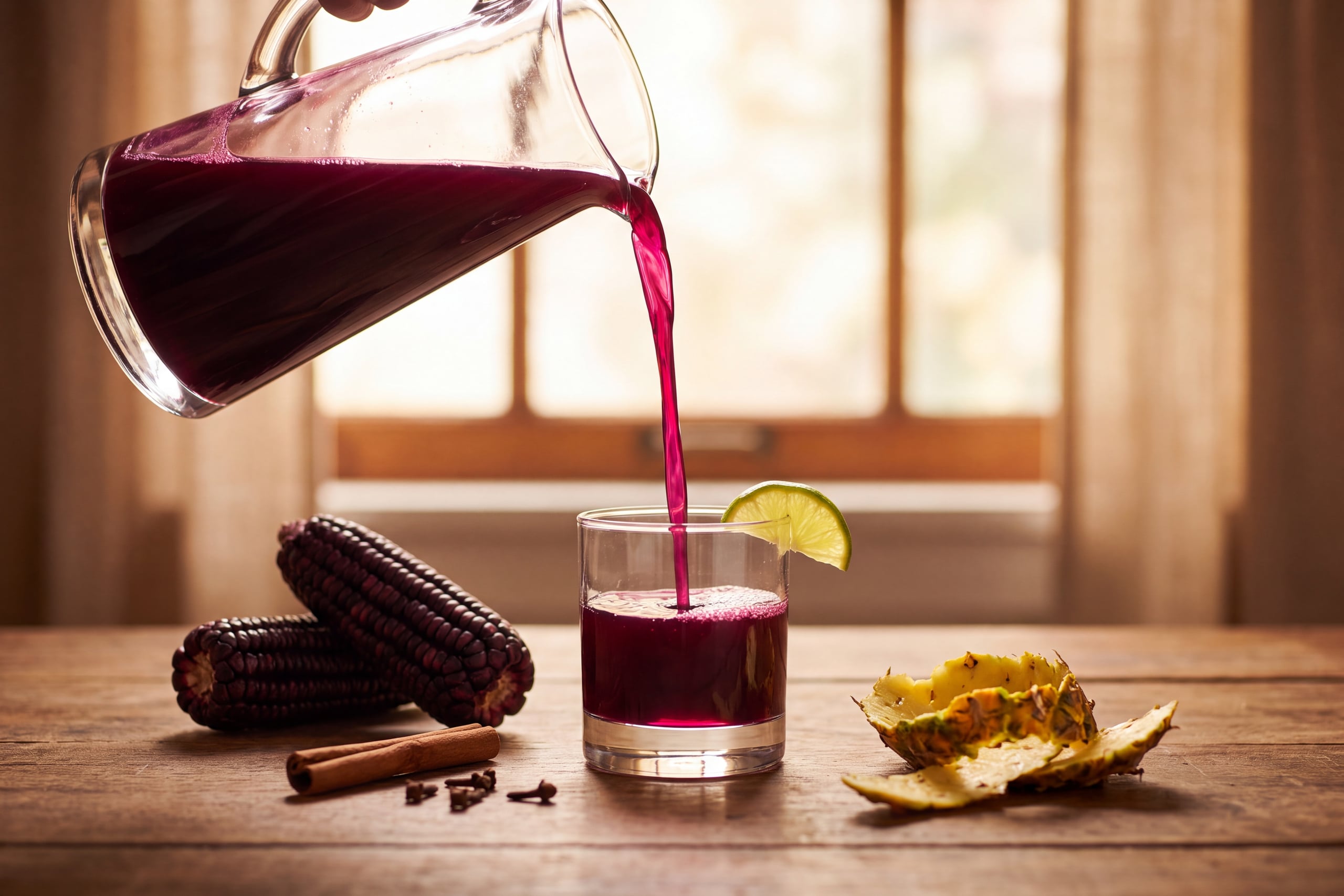
The plant itself is botanically the same species as table corn. What differs is a set of genes that switch on anthocyanin production in the pericarp, the outer layer of the kernel, and in the cob. Andean farmers selected for that trait over centuries. Purple corn has been grown in the highlands around Cusco, Ayacucho, and Arequipa, at elevations between roughly 2,000 and 3,500 meters, since long before the Spanish arrival, and it remains the base of chicha morada, a spiced, non-alcoholic drink made by simmering the cobs with pineapple, cinnamon, and clove.
What antioxidants are in purple corn?
Purple corn contains three main anthocyanins and a set of non-anthocyanin phenolics. Researchers at the University of Illinois at Urbana-Champaign profiled 20 purple maize genotypes and identified cyanidin-3-O-glucoside, pelargonidin-3-O-glucoside, and peonidin-3-O-glucoside, along with their acylated (malonylated) forms, as the major anthocyanins. The same extracts also carried quercetin, luteolin, rutin, and the phenolic acids vanillic acid and protocatechuic acid (Zhang et al. 2019, Food Chem, PMID: 30955674). In that work, C3G and peonidin-3-glucoside correlated most strongly with the biological activity of the extracts.
Whole grain cereals colored by anthocyanins, including purple and blue maize, are reviewed as a category in a 2020 paper in Nutrients. The authors note that anthocyanins have shown antioxidant activity in both test-tube and animal studies, and that diets high in anthocyanin-rich foods are associated with favorable health outcomes in observational research (Francavilla and Joye 2020, Nutrients, PMID: 32987758). The word “associated” matters. Association is not proof of cause, and the reviews are careful to say so.
How does purple corn compare to yellow corn, blueberries, and ube?
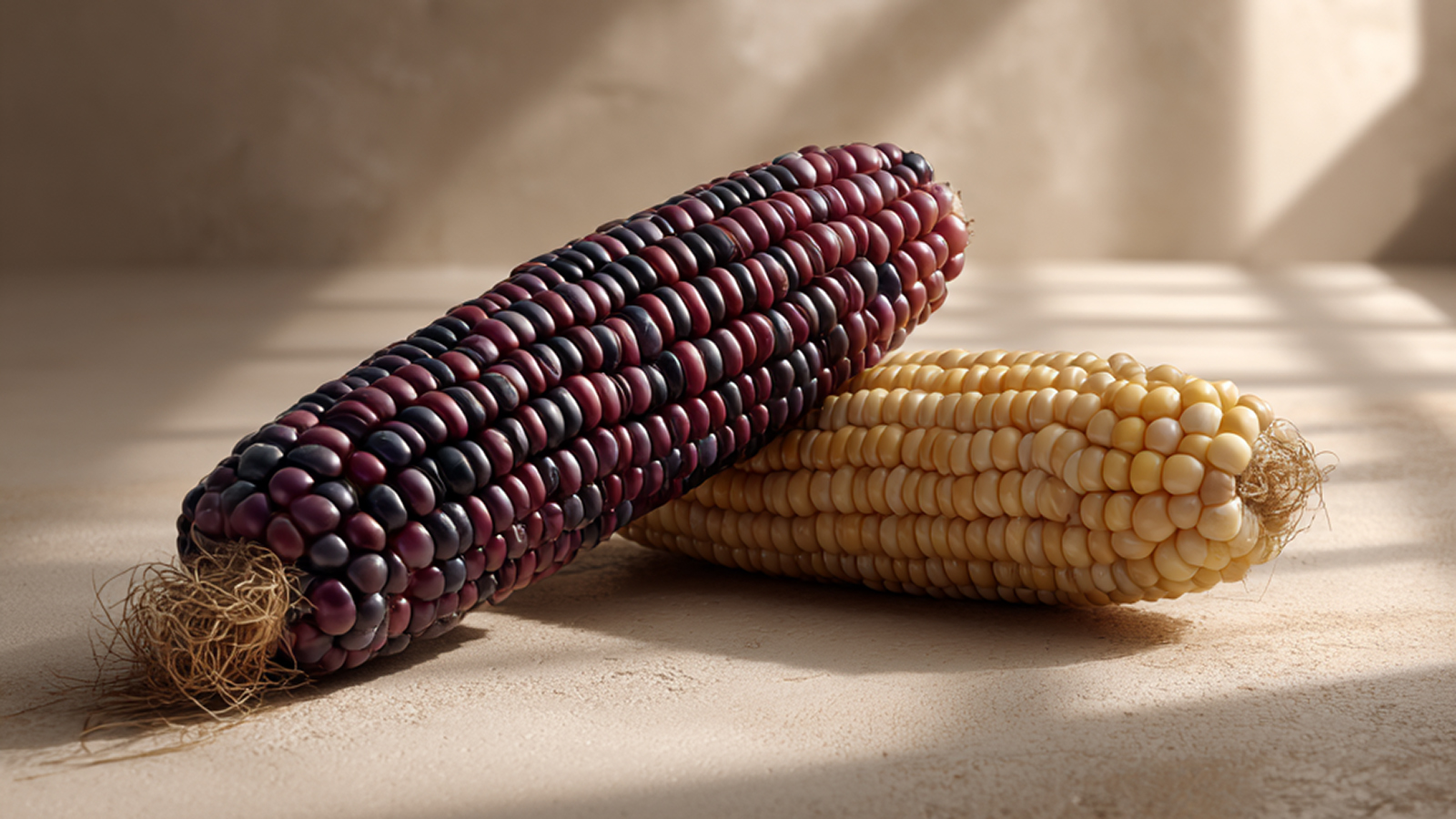
Purple corn outscores yellow corn on anthocyanin content by more than an order of magnitude, and on a dry-weight basis it sits in the same range as blueberries. A 2026 review in Trends in Food Science & Technology by Cao and colleagues reports purple corn kernels at roughly 3 to 5 grams of anthocyanins per kilogram, more than ten times the level in yellow corn, with total phenolics between 810 and 4,110 milligrams of gallic acid equivalents per 100 grams. Yellow corn brings something purple corn does not: the carotenoids lutein and zeaxanthin, which give it its color. Ube, the purple yam of the Philippines, is a different plant entirely and is discussed below.
| Food | Plant and part | Dominant pigment | Anthocyanin content | Other notable compounds | Typical use |
|---|---|---|---|---|---|
| Purple corn (maíz morado) | Zea mays L., cereal grain, kernel pericarp and cob | Cyanidin-3-O-glucoside, plus pelargonidin and peonidin glucosides | About 3 to 5 g per kg of kernels, more than 10 times yellow corn (Cao et al. 2026) | Quercetin, luteolin, rutin, ferulic and protocatechuic acids, fiber | Chicha morada, whole-kernel powder, extract, natural colorant |
| Yellow corn | Zea mays L., cereal grain, endosperm | Lutein and zeaxanthin (carotenoids, not anthocyanins) | Negligible | Fiber, resistant starch, B vitamins | Sweet corn, cornmeal, polenta |
| Blueberries | Vaccinium spp., fruit skin and flesh | Malvidin, delphinidin, and cyanidin glycosides | Roughly 1 to 4 mg per g fresh weight, comparable to purple corn when both are compared dry (HerbalGram issue 65) | Vitamin C, chlorogenic acid, fiber | Fresh fruit, frozen, juice |
| Ube (purple yam) | Dioscorea alata, tuber | Cyanidin- and peonidin-based anthocyanins bound to starch | Lower per gram than purple corn, diluted by starch and water content | Resistant starch, potassium, vitamin C | Boiled or mashed, halaya jam, desserts, ice cream |
| Sources: Cao et al. 2026, Trends in Food Science & Technology. Zhang et al. 2019, Food Chemistry, PMID: 30955674. Francavilla and Joye 2020, Nutrients, PMID: 32987758. American Botanical Council, HerbalGram issue 65. Figures vary by cultivar, growing conditions, and analytical method. | |||||
How do purple corn and ube compare?
Purple corn and ube share a color and little else. Purple corn is a cereal grain, a member of the grass family Poaceae, and its anthocyanins are concentrated in the thin pericarp and the cob rather than in the starchy endosperm. Ube (Dioscorea alata) is a root vegetable in the yam family Dioscoreaceae. Its violet flesh is colored by cyanidin- and peonidin-type anthocyanins, but those pigments are spread through a dense, starchy, water-heavy tuber, so gram for gram the anthocyanin concentration is well below that of dried purple corn. Ube is cooked and eaten as a starch, in Filipino halaya jam and desserts. Purple corn is more often steeped, powdered, or extracted, which is why it appears in functional-food research far more often than ube does. If the goal is pigment density in a small serving, purple corn is the stronger source. If the goal is a whole-food starch, ube is the better vegetable.
What are the main health benefits of purple corn?
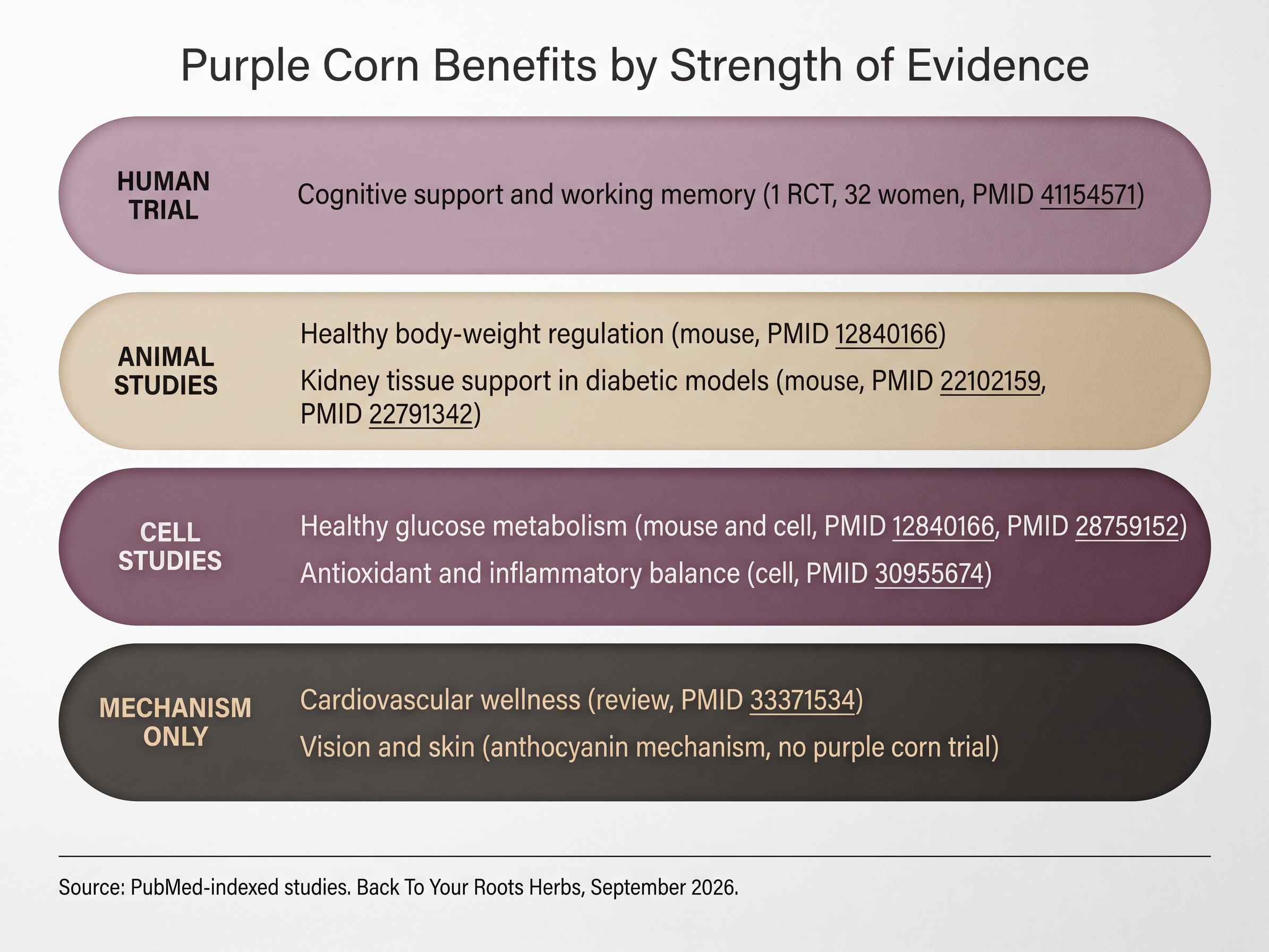
The research on purple corn falls into five areas, and the evidence tier differs for each. Our editorial team has reviewed the primary literature and grouped the findings below, with the study type stated so the reader can weigh it.
- Antioxidant defense and a balanced inflammatory response: supported by cell studies in macrophages and adipocytes, and by animal feeding studies (Lao et al. 2017, PMID: 33371534; Zhang et al. 2019, PMID: 30955674).
- Healthy glucose metabolism: supported by insulin-resistant adipocyte models and by high-fat-diet mouse studies (Luna-Vital et al. 2017, PMID: 28759152; Tsuda et al. 2003, PMID: 12840166).
- Healthy body-weight regulation: supported by a 12-week mouse study of C3G-rich purple corn color (Tsuda et al. 2003, PMID: 12840166).
- Kidney tissue support in diabetic animal models: supported by two mesangial cell and db/db mouse studies (Li et al. 2011, PMID: 22102159; Kang et al. 2012, PMID: 22791342).
- Cognitive support: supported by one 2-month randomized, double-blind, placebo-controlled crossover trial in 32 peri- and postmenopausal women (Wattanathorn et al. 2025, PMID: 41154571).
- Vision and skin: supported by general anthocyanin mechanism research rather than purple-corn-specific human trials.
Antioxidant defense and a balanced inflammatory response
Anthocyanins from purple corn have been studied for their ability to quench reactive oxygen species and to lower the output of pro-inflammatory signals in cultured immune cells. In the University of Illinois genotype study, anthocyanin-rich water extracts reduced the production of inflammatory mediators in RAW 264.7 macrophages, and the effect tracked with C3G and peonidin-3-glucoside content (Zhang et al. 2019, PMID: 30955674). The Lao review reaches the same conclusion across a wider set of studies and describes purple corn phenolics as having antioxidant and anti-inflammatory activity in cell and animal models (PMID: 33371534). Some of those laboratory studies also examined cultured cells under oxidative stress. Those findings are in-vitro research context, are preliminary, and are not evidence of any effect on disease in humans.
Does purple corn help lower blood sugar?
Purple corn anthocyanins may support healthy glucose metabolism, and the mechanism has been mapped in cell models. Diego Luna-Vital and Elvira Gonzalez de Mejia at the University of Illinois treated insulin-resistant 3T3-L1 fat cells with a purple corn pericarp extract and with pure C3G. Both increased glucose uptake, reduced reactive oxygen species, and increased movement of the GLUT4 glucose transporter to the cell membrane, by 7.5-fold for the extract and 6.3-fold for C3G, compared with untreated insulin-resistant cells (Luna-Vital et al. 2017, Mol Nutr Food Res, PMID: 28759152). The USDA National Institute of Food and Agriculture, which funded the Illinois program through the Hatch Act, reported that insulin resistance in these mouse fat cells fell by 29 to 64 percent depending on the corn genotype.
Earlier animal work points in the same direction. Tsuda and colleagues fed mice a high-fat diet with or without cyanidin-3-glucoside-rich purple corn color for 12 weeks. The diet-induced rises in blood glucose, insulin, and leptin seen in the high-fat group were normalized in the group that also received purple corn color (Tsuda et al. 2003, J Nutr, PMID: 12840166). These are cell and mouse findings. No human trial has yet tested purple corn on blood sugar, and this article makes no claim that it manages or treats any condition.
Aid for cardiovascular wellness
Anthocyanins are studied for their effect on the endothelium, the single-cell lining of blood vessels that regulates dilation and constriction. The Lao review summarizes animal and cell studies in which purple corn phenolics supported healthy blood pressure and lipid profiles, and lists cardiovascular wellness among the areas where purple corn has been most studied (PMID: 33371534). The 2020 Nutrients review on colored cereals notes that the same anthocyanins found in purple maize have been linked to favorable vascular measures in dietary studies of other anthocyanin-rich foods (PMID: 32987758). This is supportive, mechanism-level evidence, not a treatment claim.
Does purple corn support healthy body-weight regulation?
In the Tsuda mouse study, purple corn color suppressed the gain in body weight and in white and brown fat tissue that the high-fat diet otherwise produced, and prevented the enlargement of fat cells in the epididymal fat pad. The extract also lowered the expression of enzymes involved in fatty acid and triglyceride synthesis in fat tissue (Tsuda et al. 2003, PMID: 12840166). In cultured preadipocytes, purple corn anthocyanins reduced the transition into mature fat cells (Luna-Vital et al. 2017, PMID: 28759152). Purple corn supported healthy body-weight regulation in a high-fat-diet mouse model. That is the accurate sentence. Whether the effect holds in people at dietary doses is unknown.
Is purple corn good for the kidneys?
Two studies from Hallym University in South Korea examined purple corn anthocyanins in models of diabetes-related kidney stress. In cultured human mesangial cells exposed to high glucose, an anthocyanin-rich purple corn fraction reduced the production of collagen IV and connective tissue growth factor, two markers of tissue stiffening, and in db/db diabetic mice an 8-week course of purple corn extract lowered plasma glucose and reduced protein loss in the urine (Li et al. 2011, Eur J Nutr, PMID: 22102159). A follow-up study found the same extract reduced immune-cell infiltration into the glomeruli of diabetic mice (Kang et al. 2012, Am J Physiol Renal Physiol, PMID: 22791342). These are animal and cell findings on kidney tissue support. They are not evidence that purple corn prevents or treats kidney disease in humans.
Does purple corn support brain health and memory?
This is the one benefit area with a human randomized trial. Researchers at Khon Kaen University in Thailand ran a two-arm, randomized, double-blind, placebo-controlled crossover study in 32 peri- and postmenopausal women. Participants took 400 milligrams daily of an anthocyanin-enriched functional ingredient made from purple waxy corn cob for two months. Compared with placebo, the purple corn group showed shorter N100 and P300 latencies on event-related potential testing, which are measures of attention and cognitive processing speed, along with improved working memory scores and lower oxidative stress markers. No serious side effects were observed (Wattanathorn et al. 2025, Antioxidants, PMID: 41154571). It is one small trial, in one population, using a specific cob-derived ingredient. It is a promising start rather than a settled result.
Promotion of healthy vision and skin
Anthocyanins as a class are studied for retinal support and for protecting skin cells from oxidative stress after UV exposure. The purple-corn-specific evidence here is thin, and most of what is written online extrapolates from bilberry, black currant, and general anthocyanin research. Purple corn’s C3G is the same molecule studied in those foods, so the mechanism is plausible. We have not found a purple corn trial on vision or skin outcomes in humans, and we do not present one.
How do you use purple corn: food, drink, powder, or extract?
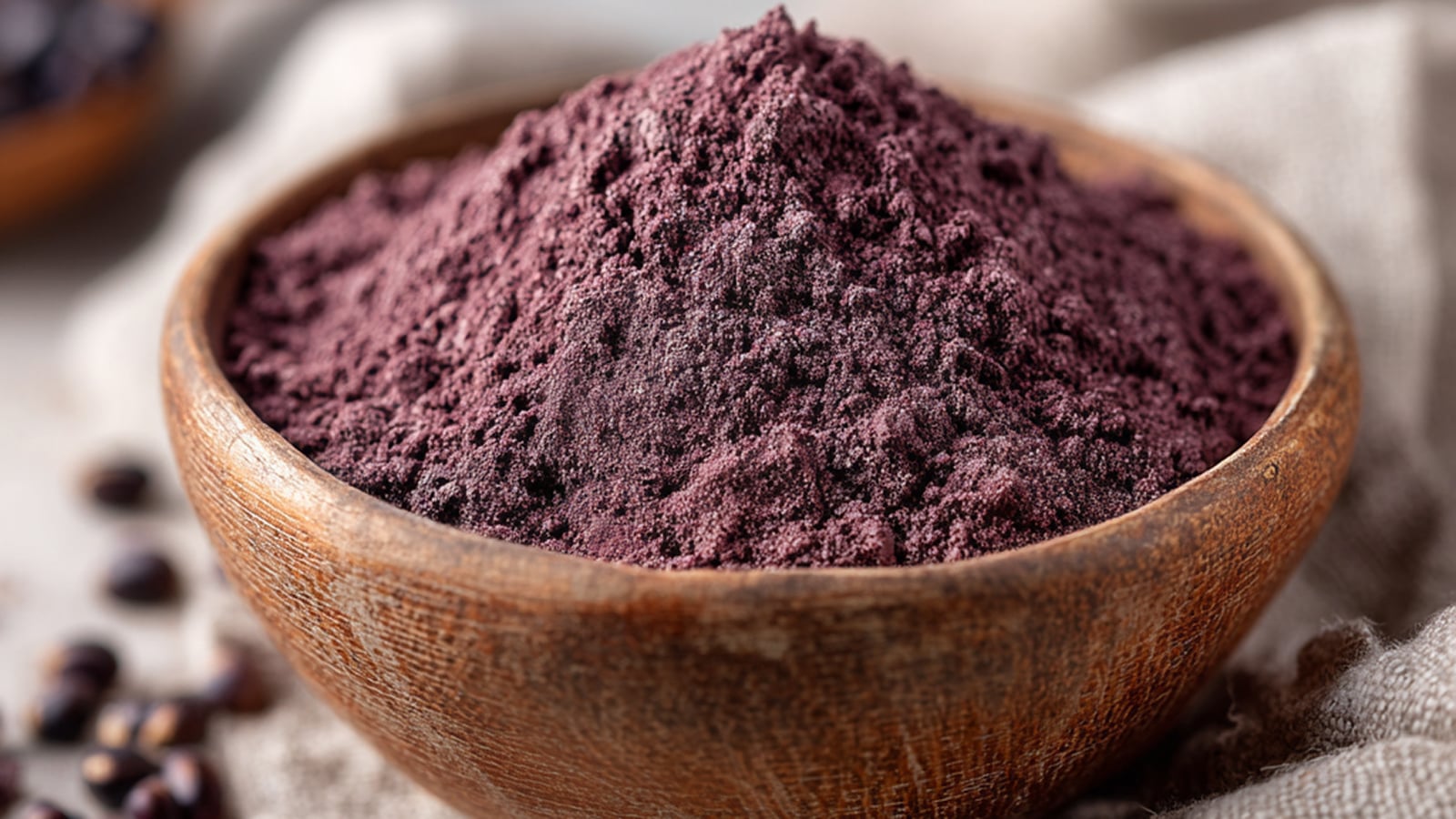
Purple corn is used in four forms, and each suits a different purpose. Whole dried cobs and kernels are simmered to make chicha morada or a purple broth for soups and stews. Whole-kernel purple corn powder, milled from the entire kernel with the pigment-rich pericarp intact, is stirred into smoothies, oatmeal, yogurt, and baked goods as a food ingredient. Purple corn capsules and liquid extracts concentrate the anthocyanins into a standardized daily serving for people who want the compounds without the culinary use. From our hands-on assessment, the powder is the most versatile form for a home kitchen, and the extract is the most consistent form for anyone tracking anthocyanin intake.
The traditional preparation is worth knowing. For chicha morada, dried purple corn cobs are simmered with pineapple peel, cinnamon, and clove for roughly 45 minutes, strained, cooled, and finished with lime juice. The color of the finished drink comes from the anthocyanins leaching from the cob into the water. That same leaching is why a purple corn broth can stain a wooden spoon, and why the pigment has drawn interest as a food colorant.
Is purple corn powder the same as purple corn flour?
No. Purple corn powder is typically milled from the whole kernel, sometimes with cob included, so it keeps the anthocyanin-rich pericarp and is used as a nutritional or coloring add-in. Purple corn flour is milled for baking, often from the starchy endosperm with the bran removed, and it can carry far less pigment unless it is labeled whole-kernel. Purple corn extract is a third product: a concentrated preparation standardized to a stated anthocyanin percentage, sold in capsules or as a liquid. In our sourcing experience, a single-origin Peruvian whole-kernel purple corn powder is the form that best preserves both the phenolic profile described by Zhang and colleagues and the flavor of the grain. Read the label for the word “whole” and for the country of origin.
Can purple corn be used as a natural food dye?
Yes. The anthocyanins in purple corn pericarp and cob are water-soluble and extract easily, which makes them a candidate replacement for synthetic colorants. Crop scientist John Juvik of the University of Illinois told the USDA that purple corn pigment could potentially replace Red Dye No. 40, one of the most widely used synthetic food dyes in the United States, and the USDA National Institute of Food and Agriculture has supported that research. The Lao review opens on the same point, noting that the food industry’s interest in purple corn began with its potential as a source of natural colorant (PMID: 33371534). In August 2026, Harvest Public Media reported on Midwest researchers advancing purple corn as a natural dye as food makers move away from petroleum-based colors. Chicha morada is the oldest example of the idea: a beverage colored entirely by the corn it is made from.
Are there any side effects of purple corn?
Purple corn is generally well tolerated as a food, and no serious adverse effects were reported in the one human trial to date (Wattanathorn et al. 2025, PMID: 41154571). Three cautions apply. First, corn allergy is uncommon but real, and anyone allergic to corn should avoid purple corn in every form. Second, concentrated extracts deliver far more anthocyanin than a serving of chicha morada, and the Lao review, which examined dosage and toxicity data from animal studies, notes that human safety data at supplemental doses is limited (PMID: 33371534). Third, because cell and animal studies show effects on glucose handling and blood pressure, anyone taking glucose-lowering or blood-pressure medication should speak with a healthcare provider before using a purple corn extract. That is a plausibility caution, not a documented interaction. Pregnant and nursing women should also consult a provider before using concentrated extracts, since those populations were not studied.
Quality and sourcing considerations
Anthocyanin content in purple corn varies widely by cultivar and growing region. The Illinois team found a 20-fold range across the genotypes they bred (Zhang et al. 2019, PMID: 30955674), and the Cao review reports similar spread. In our sourcing experience, the deepest pigment comes from traditional Peruvian landraces grown at altitude, where cool nights and intense ultraviolet light drive anthocyanin production in the pericarp. We’ve observed in our testing that color depth in the dry kernel is a reasonable proxy for anthocyanin density, and that powders which look mauve rather than near-black have usually been cut with endosperm flour. Our organic purple corn powder is single-origin Peruvian maíz morado, milled from the whole kernel, and our purple corn capsules use the same source material for readers who prefer a measured daily form. The product pages carry the serving details. This article stays with the science.
Frequently asked questions about purple corn benefits
Is purple corn healthier than yellow corn?
Purple corn carries more than ten times the anthocyanin content of yellow corn and a much higher total phenolic load, which is why it is studied as a functional food. Yellow corn is not without merit. It supplies lutein and zeaxanthin, carotenoids studied for eye health, that purple corn lacks. Both are whole grains with fiber. If antioxidant density is the goal, purple corn is the stronger choice.
Is purple corn good for you?
Purple corn is a whole grain rich in anthocyanins, fiber, and phenolic acids, and it has been studied for antioxidant defense, a balanced inflammatory response, healthy glucose metabolism, and cognitive support. Most evidence is from cell and animal studies, with one small human trial on cognition. It is a reasonable addition to a varied diet rather than a replacement for medical care.
What does purple corn taste like?
Purple corn tastes like sweet corn with less sugar and a deeper, earthier, slightly nutty character. The texture of the whole kernel is chewier than yellow sweet corn. As chicha morada, the flavor is mild and fruity, dominated by the pineapple, cinnamon, and clove it is simmered with, and the corn contributes color and body more than a strong taste of its own.
Are there any side effects of purple corn?
Purple corn is generally well tolerated as a food. Corn allergy is the main reason to avoid it. Concentrated extracts have limited human safety data at supplemental doses, and people taking glucose-lowering or blood-pressure medication, and those who are pregnant or nursing, should consult a healthcare provider before using an extract. No serious side effects were reported in the 2025 human trial.
Is purple corn good for the kidneys?
Two animal studies found that purple corn anthocyanin extracts supported kidney tissue in diabetic mice, reducing markers of tissue stiffening and protein loss in urine (Li et al. 2011, PMID: 22102159; Kang et al. 2012, PMID: 22791342). There are no human trials on purple corn and kidney function. The findings are preliminary and do not mean purple corn prevents or treats kidney disease.
Can purple corn be used as food coloring?
Yes. Purple corn pericarp and cob anthocyanins are water-soluble and have been studied by USDA-supported researchers as a natural alternative to synthetic Red Dye No. 40. Whole-kernel purple corn powder colors smoothies, frostings, and doughs a violet to magenta shade, and chicha morada is a traditional beverage colored entirely by the corn.
Where can I find purple corn?
Dried purple corn cobs and kernels are sold in Latin American and Peruvian grocery stores, and whole-kernel purple corn powder and purple corn capsules are available from specialty herb retailers online. Back To Your Roots Herbs offers single-origin Peruvian purple corn powder and purple corn capsules. Look for whole-kernel milling and a stated country of origin.
The bottom line on purple corn benefits
Purple corn is an anthocyanin-dense whole grain with a long Andean food history and a growing research record. Cell and animal studies support its role in antioxidant defense, a balanced inflammatory response, healthy glucose metabolism, healthy body-weight regulation, and kidney tissue support, and one small human trial supports cognitive benefit. The gap between that evidence and a proven human health effect is real, and we have tried to keep it visible throughout. Eaten as chicha morada, stirred in as whole-kernel powder, or taken as a standardized extract, purple corn is a well-tolerated way to add C3G and related phenolics to a varied diet.
Related Reading
Continue with our related articles on honeyberry health benefits, astaxanthin for skin, and moringa and blood sugar balance.
Important: This article is for educational and informational purposes. The statements have not been evaluated by the Food and Drug Administration. The herbs and herbal products discussed are not intended to diagnose, treat, cure, or prevent any disease, including diabetes, kidney disease, or cardiovascular disease. Information presented here is not a substitute for professional medical advice, diagnosis, or treatment. Always consult a qualified healthcare provider for medical guidance specific to your circumstances. Do not delay seeking medical care because of information you have read on this site.