Key Takeaways
- Bacopa monnieri carries the strongest human evidence for memory, with six randomized trials run at 300 to 450 mg daily over 12 weeks.
- Onset is not uniform. Rosemary aroma and L-theanine act within hours, while Bacopa and Gotu Kola require 8 to 12 weeks of steady use.
- A 2026 review of healthy adults found no measurable benefit for Bacopa or green tea on attention and processing speed, though Holy Basil improved reaction time.
- Ginkgo interacts with blood thinners, and several of these botanicals interact with thyroid, sedative, and diabetes medications.
- Evidence quality varies widely across these twelve botanicals. Our matrix grades each one rather than presenting them as equally supported.
Mental clarity has become harder to hold onto, and the search for botanical support has outpaced the research behind it. Herbal options for mental focus most often include Ginkgo biloba, Bacopa monnieri, and Rhodiola rosea, working through improved cerebral circulation, antioxidant protection of neurons, and modulation of the stress response. Adaptogens such as Withania somnifera and Ocimum tenuiflorum may support concentration indirectly by moderating cortisol. A 2021 review in Current Neuropharmacology (Roe and Venkataraman, PMID: 34315377) examined this exact group of botanicals and found the efficacy and safety data uneven across them.
That unevenness is the part most articles skip. Our editorial team has reviewed the primary literature on each botanical profiled below, and the honest position is that some of these herbs have six controlled trials behind them while others rest on a handful of small studies. This guide grades the evidence rather than flattening it, because a reader deciding where to spend money and twelve weeks of patience deserves to know which claims are load-bearing.
Which Herbs for Clarity and Focus Actually Have Human Evidence?
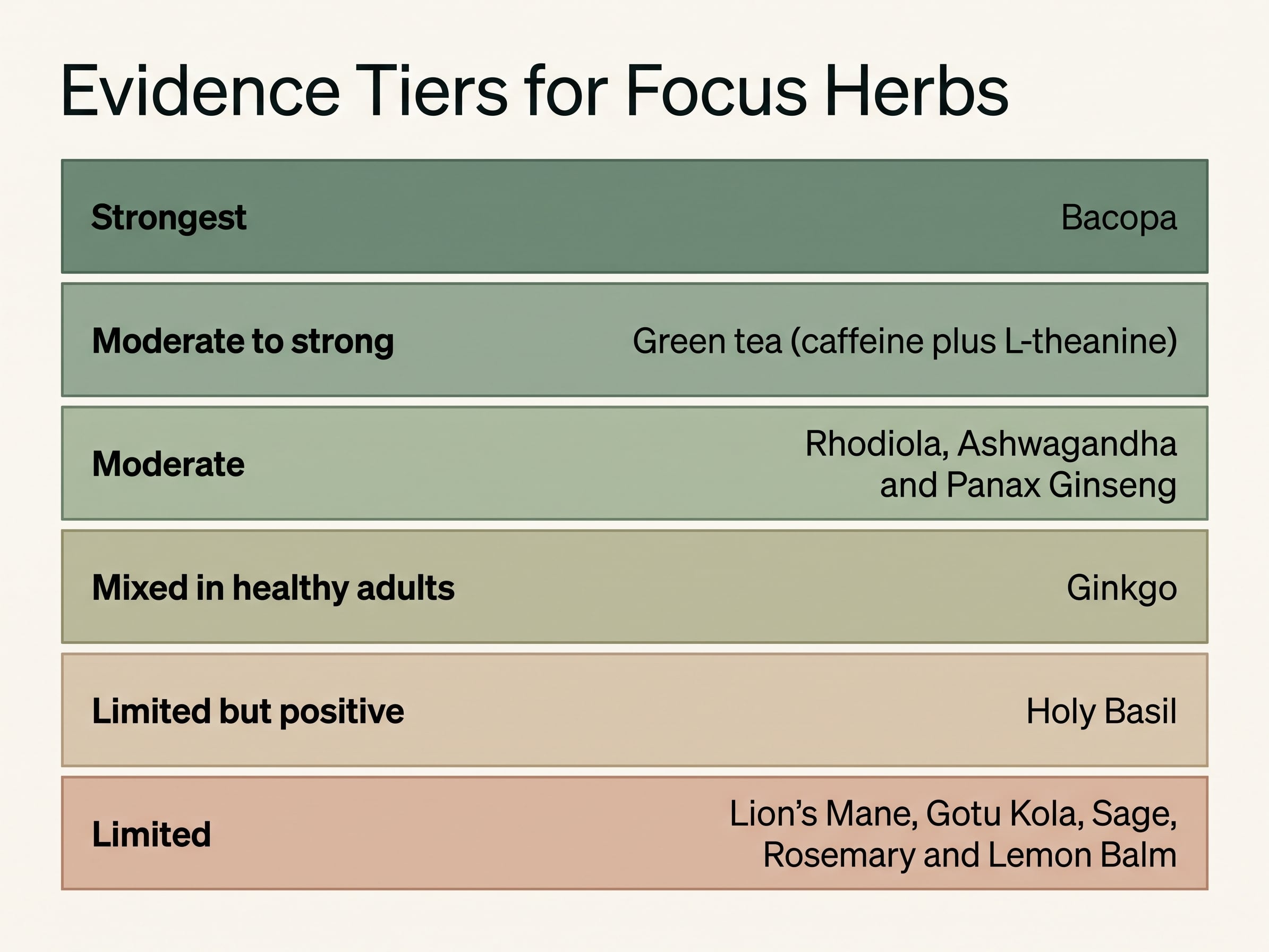
Three botanicals carry meaningfully stronger human data than the rest: Bacopa monnieri for memory, Rhodiola rosea for mental fatigue under stress, and the caffeine plus L-theanine pairing found in Camellia sinensis for sustained attention. Everything else on this list sits somewhere between moderate and preliminary. The matrix below grades each botanical against the published trial record rather than against tradition or popularity.
| Botanical | Latin Binomial | Primary Domain | Evidence Tier | Onset Window |
|---|---|---|---|---|
| Bacopa (Brahmi) | Bacopa monnieri | Memory free recall | Strongest | 8 to 12 weeks |
| Rhodiola | Rhodiola rosea | Mental fatigue under stress | Moderate | 1 to 4 weeks |
| Green tea (caffeine plus L-theanine) | Camellia sinensis | Selective attention, alertness | Moderate to strong | Same day |
| Ashwagandha | Withania somnifera | Stress-related mental fog | Moderate | 4 to 8 weeks |
| Ginkgo | Ginkgo biloba | Cerebral circulation, recall | Mixed in healthy adults | 4 to 12 weeks |
| Holy Basil (Tulsi) | Ocimum tenuiflorum | Executive function, reaction time | Limited but positive | 2 to 8 weeks |
| Lion’s Mane | Hericium erinaceus | Long-term neural support | Limited | 8 to 16 weeks |
| Gotu Kola | Centella asiatica | Cognitive vitality, calm | Limited | 8 to 12 weeks |
| Panax Ginseng | Panax ginseng | Working memory, reaction time | Moderate | 2 to 8 weeks |
| Sage | Salvia officinalis | Memory, attention | Limited | Hours to weeks |
| Rosemary | Salvia rosmarinus | Alertness, recall | Limited | Minutes (aroma) |
| Lemon Balm | Melissa officinalis | Calm, reduced mental noise | Limited | Hours to 2 weeks |
| Sources: Roe and Venkataraman (2021), Current Neuropharmacology, PMID: 34315377. Pase et al. (2012), Journal of Alternative and Complementary Medicine, PMID: 22747190. Lorca et al. (2022), Critical Reviews in Food Science and Nutrition, PMID: 34978226. Marsh et al. (2026), International Journal of Neuropsychopharmacology, PMID: 41575193. Onset windows reflect trial protocol durations rather than predicted individual response. | ||||
Two patterns are worth naming. First, the botanicals with the strongest evidence are also the slowest, which runs against how most people shop for focus support. Second, the 2022 systematic review by Lorca and colleagues, which assessed 256 papers across six neurocognitive domains, found that caffeine outperformed most plant compounds for attention and executive function. That finding is inconvenient for the herbal category, and it belongs here anyway.
How Do Botanicals Support Brain Function?
These plants work through several distinct pathways, and grouping them as one category obscures more than it reveals. Some act as nootropics, influencing neurotransmitter availability and synaptic signaling directly. Others are adaptogens, which moderate the hypothalamic-pituitary-adrenal axis and reduce the cortisol load that produces mental fog in the first place. A third group works vascularly, supporting cerebral blood flow so neurons receive adequate oxygen and glucose.
The distinction matters practically. If your difficulty concentrating stems from chronic stress, a circulatory botanical will disappoint you, and an adaptogen may help. If your concern is age-related recall, the reverse applies. In our editorial team’s review of the trial literature, the studies showing the clearest effects are consistently those that matched the botanical’s mechanism to the participants’ actual deficit.
How Long Before Herbs for Focus Start Working?
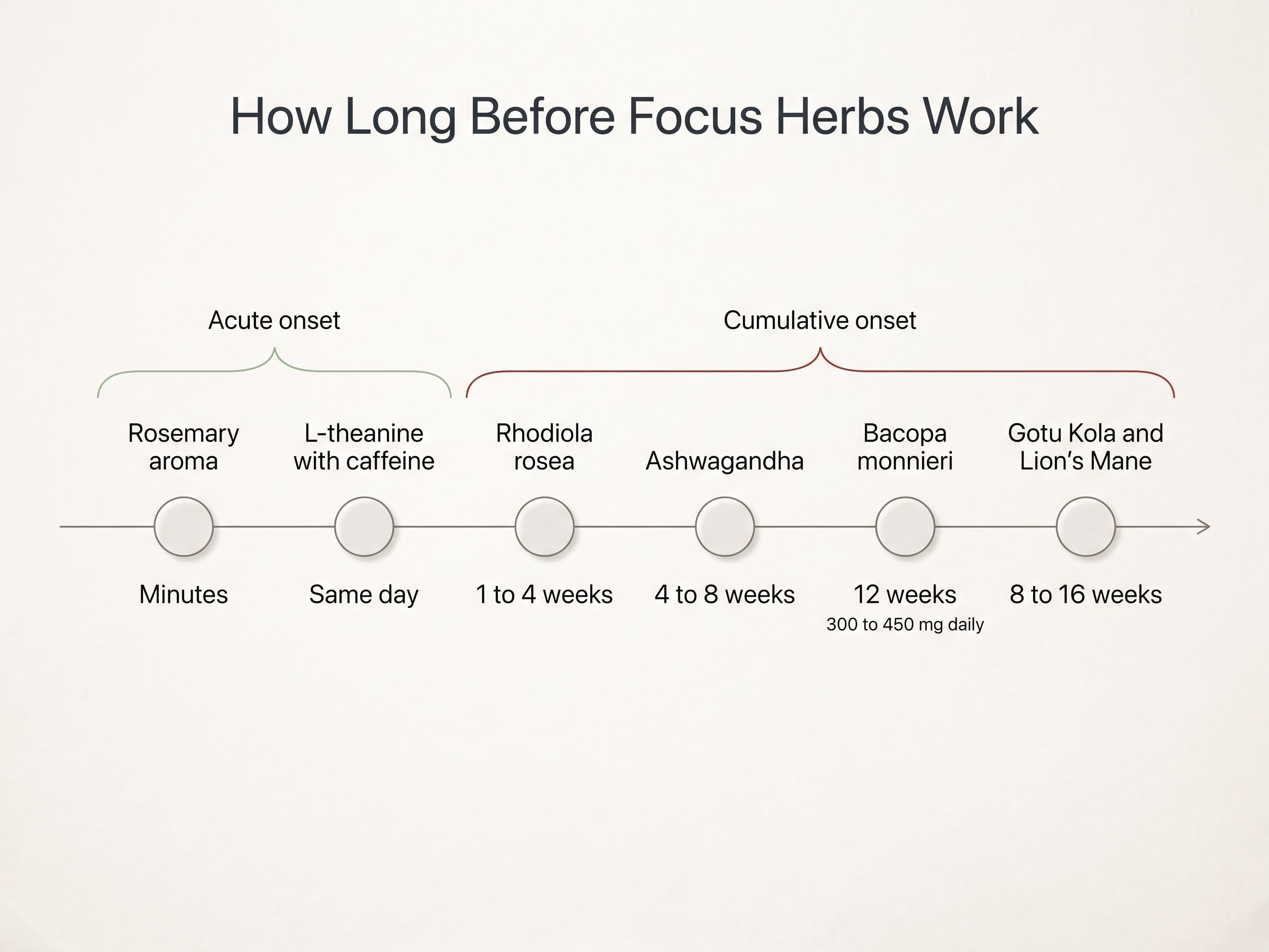
Onset separates into two distinct groups, and confusing them is the most common reason people abandon a botanical before it could have worked. Acute-onset botanicals act within minutes to hours. Cumulative-onset botanicals require weeks of uninterrupted daily use before any measurable change appears.
- Bacopa monnieri: 12 weeks. Every one of the six randomized controlled trials in the Pase et al. systematic review (2012, PMID: 22747190) ran for 12 weeks at 300 to 450 mg of standardized extract daily. No trial in that review tested acute single-dose effects successfully.
- Gotu Kola and Lion’s Mane: 8 to 16 weeks. Both are studied as long-horizon neural support rather than same-day performance aids.
- Rhodiola rosea: 1 to 4 weeks. Faster than the Ayurvedic memory herbs, with effects reported on mental fatigue during stressful cognitive tasks.
- Ashwagandha: 4 to 8 weeks. Cortisol modulation takes time to register as subjective clarity.
- L-theanine with caffeine: same day. The pairing shows effects on selective attention within a single dose, which is why it has the most practical evidence for immediate focus.
- Rosemary aroma: minutes. Aromatic exposure studies measure alertness shifts within a single session, though the effect sizes are small and the research base is thin.
Our practical read from the sourcing side: if you are trialing a cumulative botanical, commit to the full 12 weeks or do not start. Stopping at week four and concluding it does not work is a conclusion the trial design cannot support.
What Does the 2026 Research Say About Healthy Adults?
A 2026 review in the International Journal of Neuropsychopharmacology (Marsh et al., PMID: 41575193) tested a specific and uncomfortable question: do these botanicals measurably help people whose cognition is already normal? Across the seven qualifying randomized controlled trials, the authors found no benefit from Bacopa monnieri or Camellia sinensis on processing speed, attention, working memory, language, psychomotor function, or overall cognitive performance in healthy individuals. Ocimum tenuiflorum was the exception, improving reaction time on an executive function task.
We include this because omitting it would misrepresent the field. The most defensible reading of the current evidence is that these botanicals show their clearest effects in people with a measurable deficit, whether from stress, fatigue, or age-related decline, and much weaker effects in already-healthy adults seeking an edge. The 2022 Lorca review reached a compatible conclusion, describing the results across plant-derived nootropics as marked by inconsistency that requires further research.
That does not make the category worthless. It does mean the honest framing is support for a system under load rather than enhancement of a system working well.
Top Botanicals for Mental Acuity
These are the botanicals most frequently studied and most often used for concentration and mental clarity, with the mechanism and the evidence position for each.
Ginkgo Biloba for Cerebral Circulation
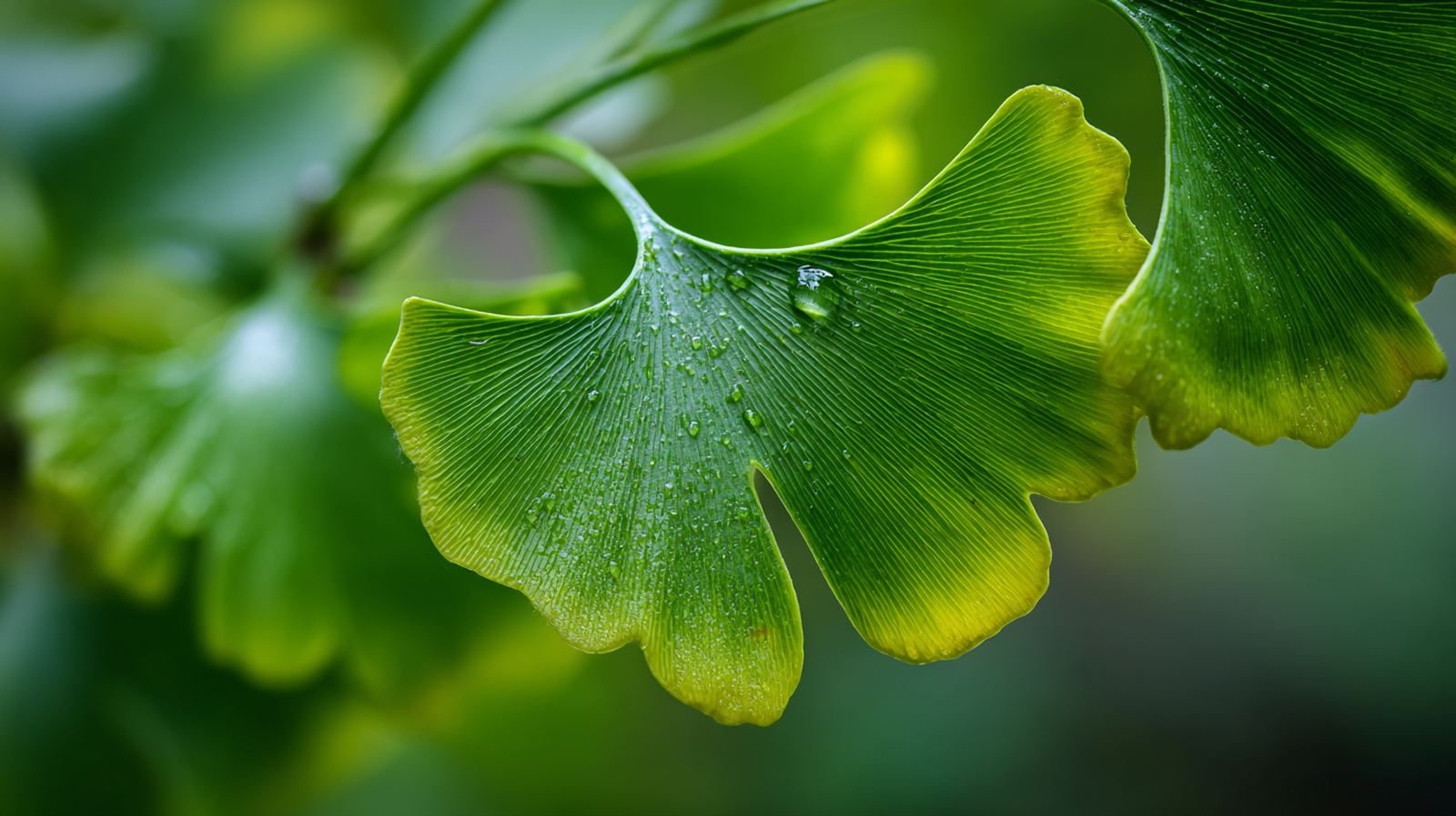
Ginkgo biloba functions as a traffic manager for the brain’s vascular system. Its leaves are rich in flavone glycosides and terpene lactones that help relax blood vessels, improving cerebral blood flow. Better circulation means more oxygen and glucose reaching neurons. Evidence in healthy adults is genuinely mixed, and Ginkgo is the botanical on this list most often described in reviews as inconsistent, so we grade it accordingly rather than repeating its popular reputation.
Bacopa Monnieri (Brahmi) for Memory Support
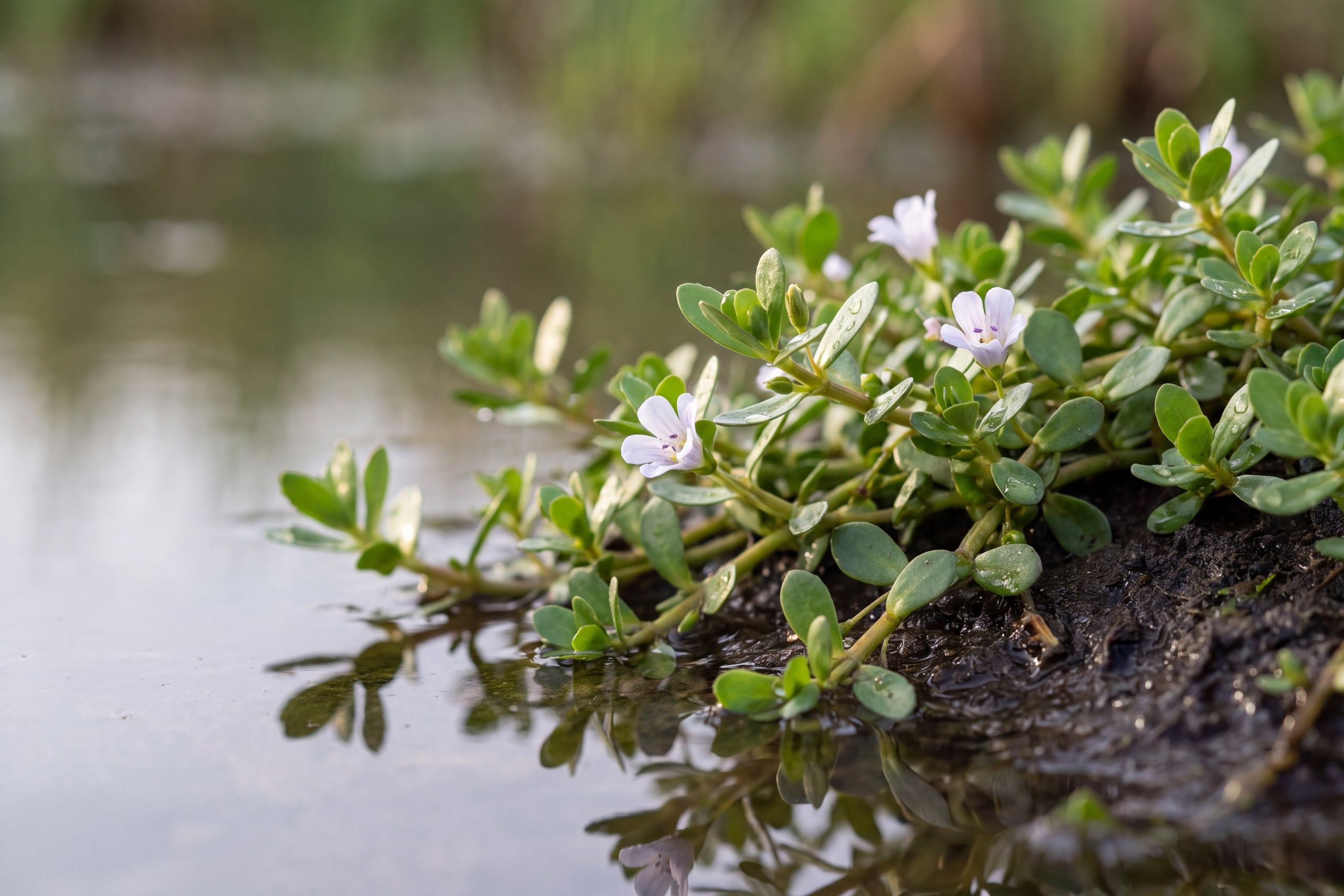
A staple of traditional Ayurvedic practice, Bacopa monnieri holds the strongest evidence position on this page. Its active bacosides support signaling between neurons and memory consolidation. The systematic review by Pase and colleagues (2012, PMID: 22747190) examined six randomized controlled trials, all 12 weeks in duration at 300 to 450 mg of standardized extract daily, and found improvement on 9 of 17 tests of memory free recall, with little evidence of enhancement in other cognitive domains. Gastrointestinal effects, including stomach upset and nausea, are the most commonly reported tolerability issues, and taking Bacopa with food reduces them for most people. We cover Brahmi’s mechanism and dosing in depth in our dedicated article on its brain benefits.
Rhodiola Rosea for Mental Stamina
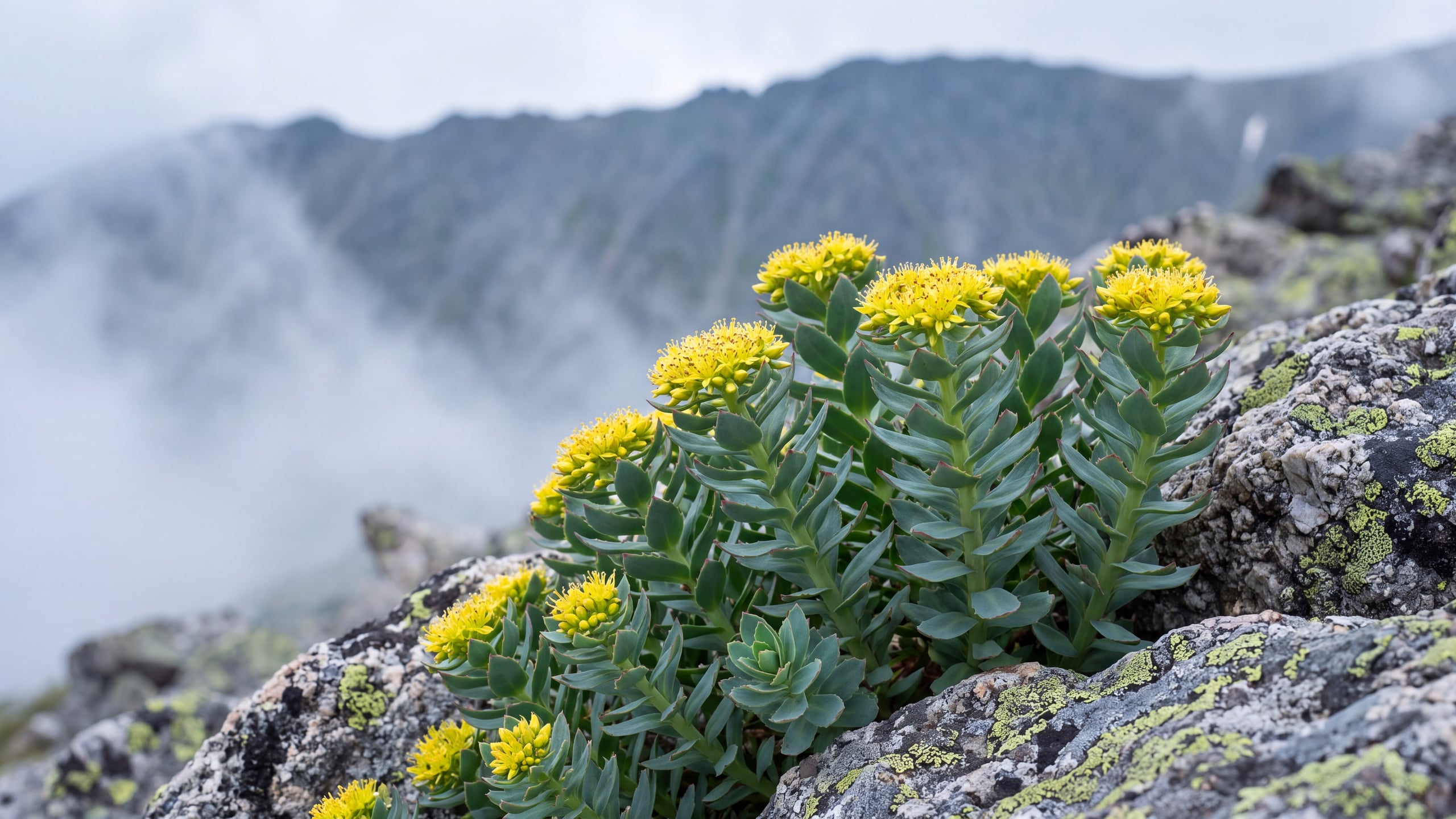
Rhodiola rosea is an adaptogen from cold, high-altitude regions, containing rosavins and salidroside. It functions as a mental endurance aid, helping the mind resist fatigue during long periods of concentration by influencing serotonin and dopamine signaling. Its evidence base is strongest for fatigue under stress rather than for memory.
Lion’s Mane Mushroom for Nerve Health
Hericium erinaceus contains hericenones and erinacines, compounds studied for their relationship to Nerve Growth Factor. NGF is a protein central to the maintenance and regeneration of neurons. By supporting NGF activity, Lion’s Mane is associated with neural plasticity, the capacity to form and reorganize connections that underlies learning. Human trial data remain limited relative to the enthusiasm around it.

Ashwagandha for Stress-Related Mental Fog
When stress runs high, elevated cortisol interferes with cognitive function in a way many people describe as brain fog. Withania somnifera is an adaptogen whose withanolides help moderate the body’s stress response. By supporting a calmer baseline, it helps clear mental clutter and allows for steadier focus. The 2022 Lorca review associated Withania somnifera specifically with anxiety and social cognition rather than with direct attention enhancement.
Gotu Kola for Cognitive Vitality
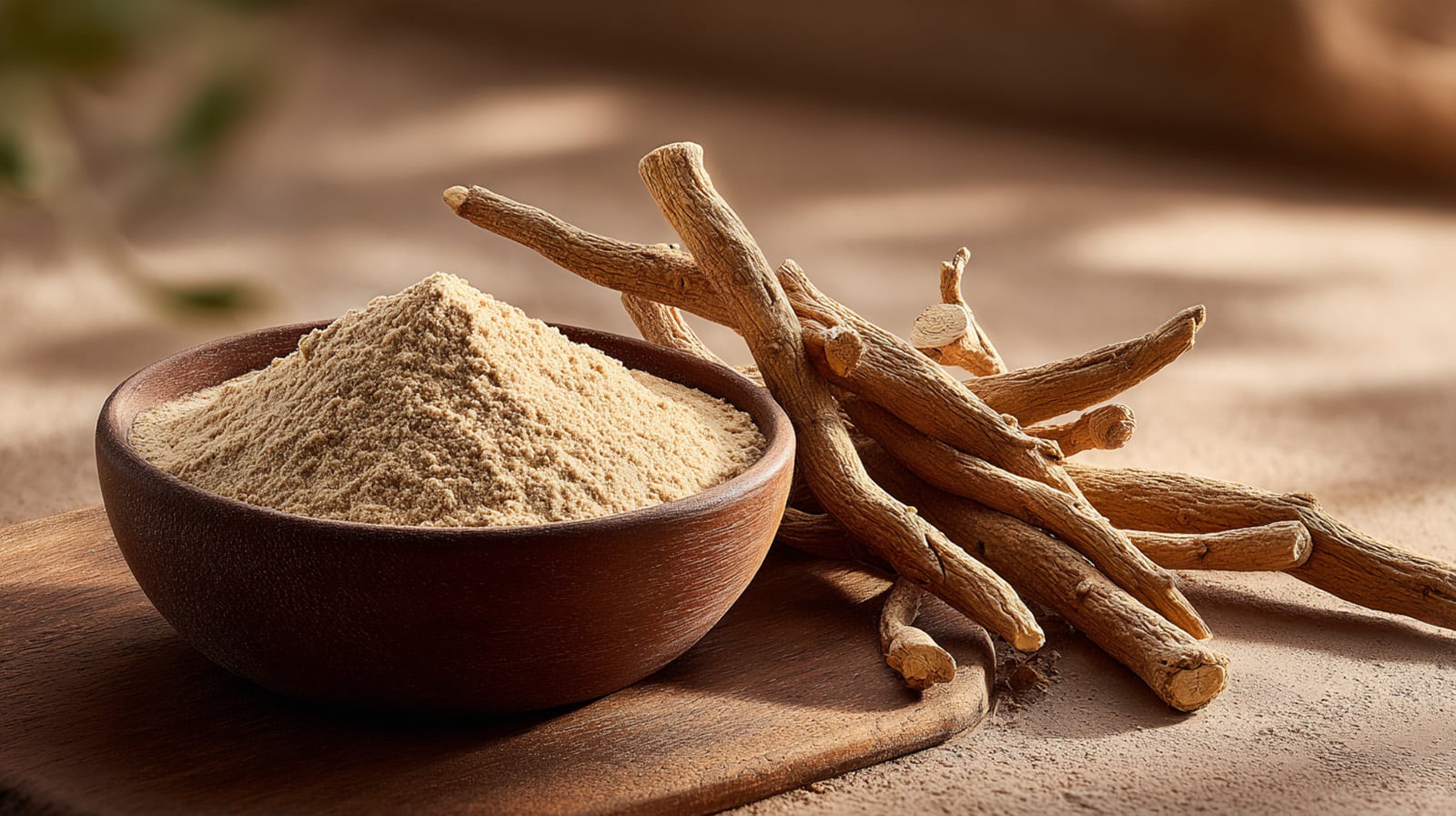
Often called the herb of longevity, Centella asiatica is valued across Ayurvedic and Southeast Asian traditions for supporting brain health. Its triterpenoid compounds, including asiaticoside, are studied for antioxidant activity and circulatory support. Unlike stimulants, Gotu Kola supports mental function while promoting calm, which makes it useful for steady, clear-headed work.
Rosemary for Alertness and Recall
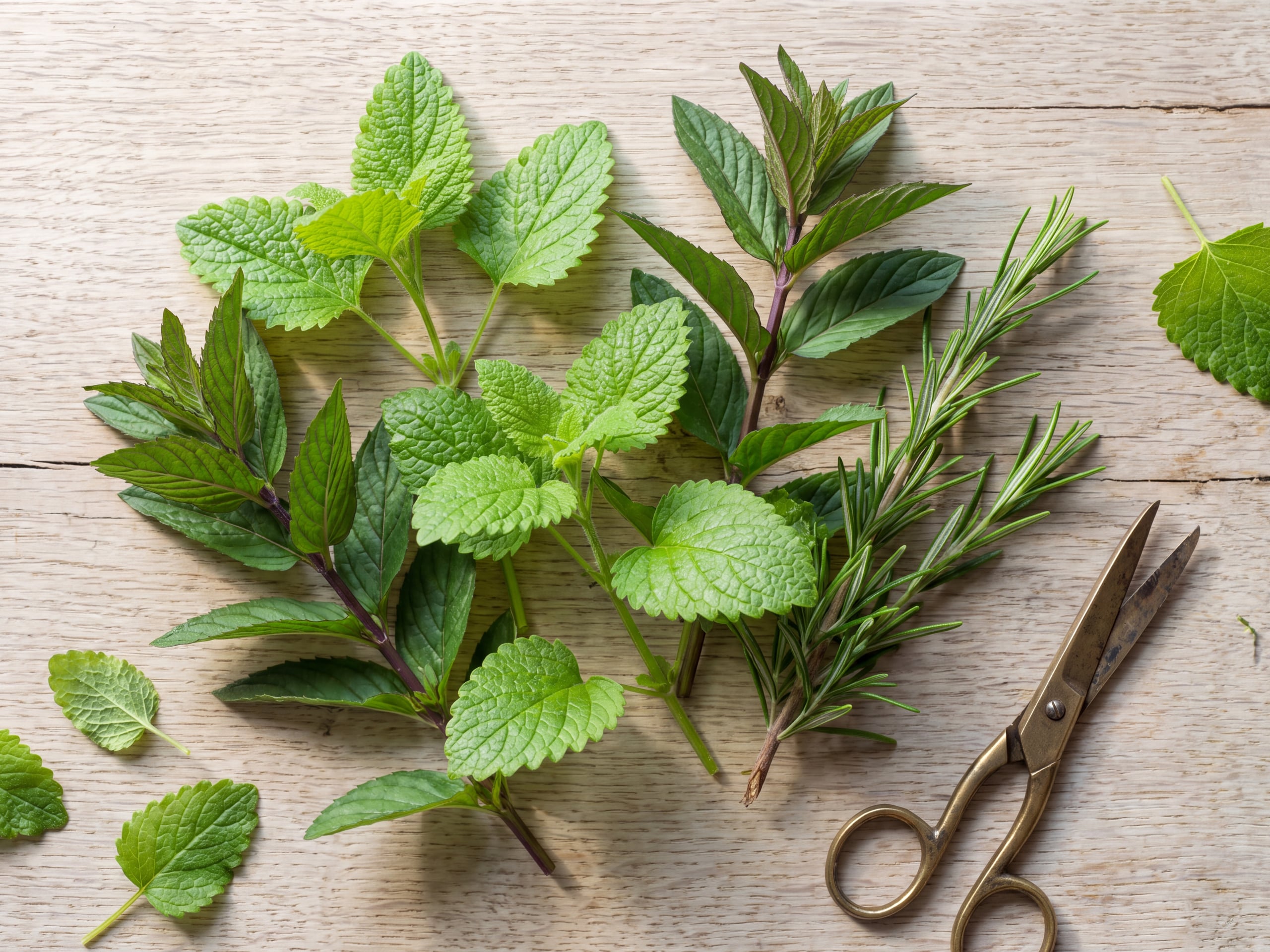
More than a kitchen herb, the aroma of Salvia rosmarinus has been linked to improved alertness and memory performance in small aromatic exposure studies. Carnosic acid, one of its active components, is an antioxidant studied for its protective activity in neural tissue. Whether used in aromatherapy or taken as a supplement, rosemary is traditionally used to support mental focus.
Peppermint and Spearmint for Rapid Alertness
Mentha piperita and Mentha spicata share rosemary’s aromatic pathway to alertness. Both appear in the Roe and Venkataraman review (PMID: 34315377) among botanicals studied for focus and attention, with spearmint specifically noted for its rosmarinic acid content. The realistic position is that these are pleasant, low-risk options with modest evidence, best suited to clearing mild afternoon dullness rather than to serious cognitive support. In our sourcing experience, the aromatic potency of dried mint degrades quickly, so freshness matters more here than with root or bark material.
Panax Ginseng for Cognitive Performance
Known for supporting energy and resisting fatigue, Panax ginseng also has direct relevance to cognition. Its ginsenosides are studied for effects on working memory and reaction time, providing a non-jittery form of mental energy suited to demanding tasks.
Holy Basil (Tulsi) for Calm Concentration
Ocimum tenuiflorum is an Ayurvedic adaptogen that helps the body adapt to stress and quiets a distracted mind. It earns a specific mention in the 2026 Marsh review as the one botanical among those tested that produced a measurable improvement, shortening reaction time on an executive function task where Bacopa and green tea did not.
Lemon Balm for Reducing Mental Noise
Melissa officinalis is a mint-family perennial whose rosmarinic acid content is studied in relation to calm and attention. Its practical value is quieting the nervous background hum that makes sustained work difficult, rather than producing alertness directly. It appears among the botanicals reviewed by Roe and Venkataraman for nootropic activity, and it pairs naturally with cumulative botanicals for people whose focus problem is agitation rather than fatigue.
L-Theanine for Focused Relaxation
L-theanine is an amino acid abundant in Camellia sinensis leaves rather than an herb in its own right. It promotes alert relaxation by increasing alpha brain wave activity, associated with wakeful rest. Its strongest evidence comes when paired with caffeine: the combination shows better support for selective attention during demanding tasks than most botanical options assessed alone, and it produces a smoother subjective effect than caffeine by itself. For anyone wanting same-day focus support rather than a twelve-week commitment, this pairing is the most evidence-backed route available.
Sage for Cognitive Support
The name sage derives from the Latin salvere, meaning to be saved. Salvia officinalis has clinical research suggesting support for memory and attention, though reviews consistently note the evidence is not strong enough to treat it as an established cognitive enhancer. Its compounds appear to influence acetylcholine availability, a neurotransmitter central to memory formation.
Choosing a Form: Tea, Capsule, Tincture, or Powder
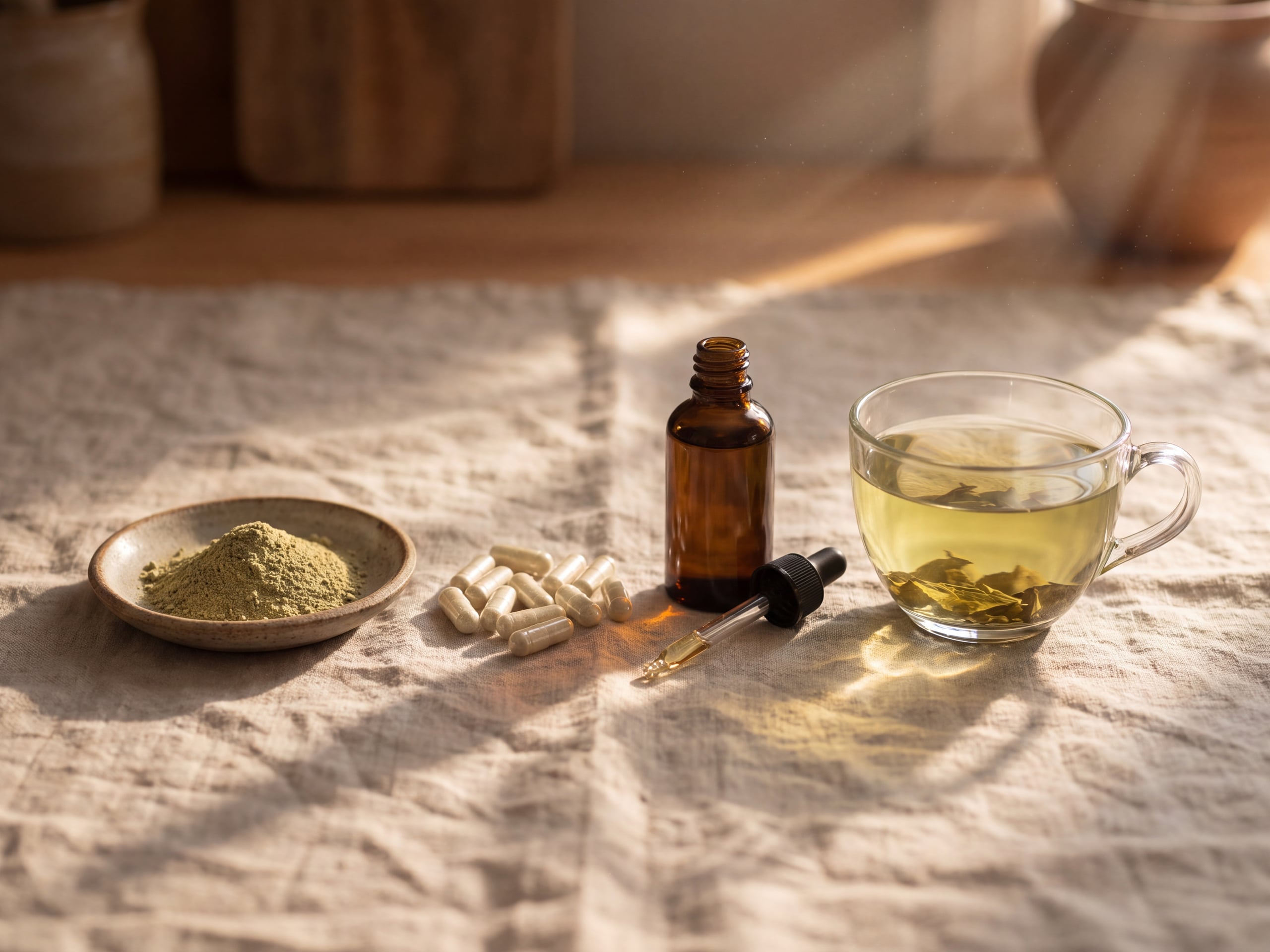
Form is not a matter of preference alone. It determines dose accuracy, and for several of these botanicals, it determines whether you receive a research-relevant amount at all.
- Capsules and standardized extracts are the only form that reliably delivers the doses used in trials. If you are following the 300 to 450 mg Bacopa protocol, this is the form that protocol was tested in.
- Powders give dosing flexibility and a whole-herb constituent range, which suits daily maintenance use and blending into food or beverages.
- Teas and infusions suit the aromatic botanicals best. Rosemary, peppermint, lemon balm, and green tea deliver their relevant compounds well in hot water, and the ritual itself supports the calm state these herbs target.
- Tinctures offer rapid absorption and long shelf stability, useful for adaptogens taken situationally rather than on a fixed daily schedule.
Our practical guidance from years of sourcing: match the form to the onset window. Same-day botanicals work well as teas and tinctures. Twelve-week botanicals belong in a standardized capsule where the dose is consistent across every day of the trial period. For readers wanting a single prepared option covering focus and memory support, our Brain Cells Formula Capsules combine guarana, catuaba, and samambaia in a whole-herb blend.
Lifestyle Habits for a Sharper Mind
Herbal supplements work best as one component of a broader approach to cognitive health. The 2026 Marsh review’s null findings in healthy adults reinforce this: botanicals are poor substitutes for the foundations.
- Prioritize sleep. The glymphatic system clears metabolic waste and consolidates memory during deep sleep. Seven to nine hours of quality sleep does more for clarity than any botanical on this page.
- Eat for the brain. A diet rich in omega-3 fatty acids from fish and flaxseed, antioxidants from berries and leafy greens, and B vitamins supports neural function directly.
- Move regularly. Physical activity increases cerebral blood flow and stimulates neurogenesis through BDNF signaling.
- Manage stress. Chronic stress is corrosive to focus. Meditation, breathwork, and time outdoors change the cortisol picture that adaptogens can only partly address.
Safety, Side Effects, and Medication Interactions
Natural does not mean universally safe. Several botanicals on this page interact with common medications, and the interaction profile is the part of herbal content most often left vague.
- Blood thinners and anticoagulants. Ginkgo biloba is the primary concern, with documented potential to affect platelet activity. This interaction warrants a conversation with your prescriber before use.
- Thyroid medication. Withania somnifera may influence thyroid hormone levels, which matters for anyone on levothyroxine or managing a thyroid condition.
- Sedatives and central nervous system depressants. Melissa officinalis, Withania somnifera, and Bacopa monnieri may compound sedative effects.
- Diabetes medication. Panax ginseng may affect blood glucose, requiring monitoring if you take glucose-lowering drugs.
- Gastrointestinal tolerability. Bacopa monnieri commonly produces stomach upset, cramping, or nausea. Taking it with a meal reduces this for most people.
- Pregnancy, nursing, and liver conditions. Safety data is insufficient for most of these botanicals in these populations. Default to avoiding them unless a qualified provider advises otherwise.
Two further practices matter. Choose products from manufacturers who perform third-party testing for purity and potency, since the supplement category is unevenly regulated and adulteration is a real risk. Sourcing quality is a priority at Back To Your Roots Herbs, and we treat identity verification as a baseline rather than a feature. Second, begin at the lowest recommended dose and increase only after observing your response.
Frequently Asked Questions About Herbs for Clarity and Focus
Which herbs have the best evidence for focus?
Bacopa monnieri holds the strongest evidence for memory, based on six randomized controlled trials reviewed by Pase et al. (2012, PMID: 22747190). For same-day attention rather than memory, the caffeine and L-theanine pairing found in green tea has better support than most single botanicals. Rhodiola rosea has moderate evidence specifically for mental fatigue under stress.
How much Bacopa should I take for memory?
Trials in the PASE systematic review used 300 to 450 mg of standardized extract daily, taken for 12 weeks. Every trial in that review ran the full 12 weeks, and acute single-dose studies did not show effects. Taking it with food reduces the gastrointestinal upset that is its most common side effect. Confirm dosing with your healthcare provider, particularly if you take other medications.
How long until these herbs start working?
It depends entirely on the botanical. Rosemary aroma and L-theanine act within minutes to hours. Rhodiola rosea typically requires one to four weeks. Bacopa monnieri, Gotu Kola, and Lion’s Mane require 8 to 16 weeks of consistent daily use. Abandoning a cumulative botanical at week four is the most common reason people conclude it does not work.
Are nootropic herb blends safe to use daily?
Blends complicate both dosing and interaction assessment, because you cannot easily tell whether any single constituent is present at a research-relevant amount. Multi-herb formulas also multiply the interaction surface with medications. Single-botanical products at known doses are easier to evaluate and easier to discuss with a provider. Whichever you choose, review the full ingredient list with your healthcare provider before daily long-term use.
What are the side effects of Ginkgo and Ashwagandha?
Ginkgo biloba may affect platelet activity and is the main interaction concern for anyone taking blood thinners. Reported effects also include headache and digestive upset. Withania somnifera may influence thyroid hormone levels and can compound sedative medications. Both warrant a conversation with your prescriber rather than self-assessment.
Can herbs help with stress-related brain fog?
This is the scenario where adaptogens have their clearest rationale. When raised cortisol is the driver of poor concentration, Withania somnifera and Ocimum tenuiflorum address the underlying stress response rather than stimulating attention directly. Holy Basil was the one botanical in the 2026 Marsh review (PMID: 41575193) that improved reaction time on an executive function task.
What is the best herb to support energy and focus together?
Rhodiola rosea and Panax ginseng both support mental energy without the jitteriness associated with stimulants. For a caffeine-free option, Rhodiola has the better fatigue-specific evidence. If caffeine is acceptable, the caffeine and L-theanine combination in green tea has the strongest attention data of anything discussed here.
Related Reading
Continue with our dedicated articles on Brahmi health benefits for the brain, Bacopa monnieri and Lion’s Mane together, Ginkgo biloba research, and how to support brain power through daily habits. Readers looking specifically at attention conditions should see our separate coverage of Bacopa and ADHD, Rhodiola and ADHD, and ashwagandha for ADD, which address that question in the depth it requires.
Important: This article is for educational and informational purposes. The statements have not been evaluated by the Food and Drug Administration. The herbs and herbal products discussed are not intended to diagnose, treat, cure, or prevent any disease. Speak with a qualified healthcare provider before starting any new herbal regimen, especially if you are pregnant, nursing, taking medication, or managing a health condition.