Key Takeaways
- Herbal medicine uses specific plant parts, not whole plants, because active compounds concentrate unevenly in roots, leaves, bark, and flowers.
- The six starter herbs most beginners meet first are chamomile, ginger, peppermint, turmeric, echinacea, and calendula, each with a named active compound.
- Delivery form changes outcome. Tinctures absorb faster than capsules, and clinical trials often test an oil or extract rather than the tea.
- Roughly one in three American adults takes a herbal supplement, and most do not tell their physician, which is where interaction risk begins.
- Dried leaves and flowers hold potency for about 12 months. Roots, bark, and seeds hold 2 to 3 years when stored away from light, heat, and moisture.
For centuries, people across the globe have turned to the natural world for wellness, relying on a deep knowledge of plants passed down through generations. This practice, called herbalism or botanical medicine, forms the foundation of many traditional health systems. Today, renewed interest in natural approaches has brought these plant-based preparations back into common use.
This guide gives foundational information for anyone curious about using plants for health, with a strong focus on safe and responsible practice. In our sourcing experience, the single largest gap between a curious beginner and a confident one is not enthusiasm. It is specificity. Knowing that chamomile is calming helps a little. Knowing that the calming activity is attributed to apigenin, that clinical trials standardized extracts to 1.2% of it, and that chamomile belongs to the same botanical family as ragweed, helps considerably more.
What is herbal medicine?
Herbal medicine is the use of specific plant parts, or preparations made from them, to support normal body function. It draws on seeds, berries, roots, rhizomes, leaves, bark, and flowers rather than whole plants, because active compounds concentrate unevenly across a plant’s anatomy. Those compounds fall into recognizable chemical classes, including flavonoids such as apigenin in chamomile, terpenes such as menthol in peppermint, curcuminoids in turmeric, and alkaloids such as berberine in goldenseal.
This distinction matters more than it first appears. A dietary supplement label reading “chamomile” tells you the species. A label reading “chamomile flower, standardized to 1.2% apigenin” tells you the plant part and the compound concentration, which is what a clinical trial would have measured. The NIH Office of Dietary Supplements and the National Center for Complementary and Integrative Health both organize their botanical reference material this way, by species and constituent rather than by common name alone.
Herbal medicine is one of the oldest forms of healthcare, with a history stretching back thousands of years in cultures from ancient China and Egypt to the Americas. It remains central to several traditional medicine systems, including Ayurveda, Traditional Chinese Medicine, Unani, and Western herbalism, each of which classifies the same plant differently depending on its own framework.
How do plant remedies work?
Plants are not just simple greens. They are complex chemical factories. Each plant contains hundreds of active compounds, and these substances can interact with the body’s systems to produce a physiological effect.
Think of it this way. An herb is like a key, and its active compounds are the specific teeth on that key. These teeth are shaped to fit certain locks, or receptors, within our bodies. When the key fits the lock, it can initiate a response. Many modern pharmaceuticals were originally derived from these plant compounds, which is a useful reminder of how potent botanical ingredients can be.
The named compound is what makes the metaphor concrete. Apigenin, the flavonoid in chamomile flower, binds at benzodiazepine sites on the GABA-A receptor, which is the same receptor family several sedative medications act on. Menthol, the terpene in peppermint leaf, activates the TRPM8 cold receptor and relaxes smooth muscle in the gut wall. Allicin, formed when garlic bulb tissue is crushed, is a sulfur compound that degrades within hours, which is why preparation method changes what you actually take. Curcumin, the curcuminoid in turmeric rhizome, is poorly absorbed on its own, which is why traditional preparations pair it with black pepper and fat.
What are the top 20 healing herbs?
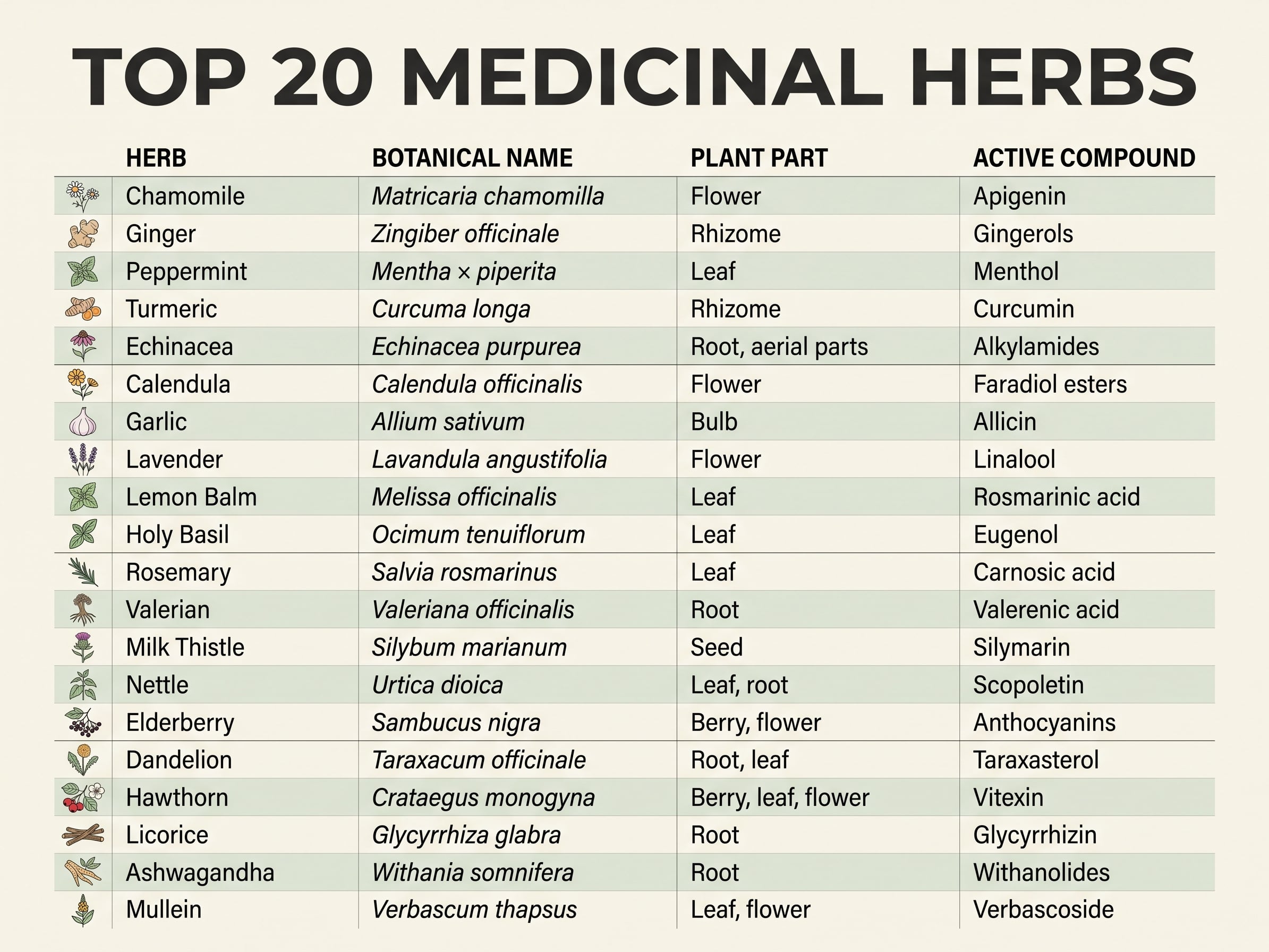
Getting started is best done with gentle, well-documented plants. The following twenty are widely recognized for their history of traditional use and are generally well-tolerated by most adults when used appropriately. Consult your healthcare provider before adding any of them, particularly if you take prescription medication.
Read this table by column, not by row. The Latin binomial identifies the species precisely, because common names overlap across unrelated plants. The plant family predicts allergy cross-reactivity. The plant part tells you which portion of the plant the tradition and the research actually used. The named compound is what a quality supplement label should reference.
| Common name | Latin binomial (family) | Plant part | Traditional use | Common form | Named compound |
|---|---|---|---|---|---|
| Chamomile | Matricaria chamomilla (Asteraceae) | Flower | Traditionally used to support relaxation and restful sleep | Tea, tincture, extract | Apigenin |
| Ginger | Zingiber officinale (Zingiberaceae) | Rhizome | Traditionally used to support digestive comfort, including during travel | Tea, capsule, fresh rhizome | Gingerols, shogaols |
| Peppermint | Mentha × piperita (Lamiaceae) | Leaf | Traditionally used to support digestive comfort and ease occasional head tension | Tea, enteric-coated oil capsule | Menthol |
| Turmeric | Curcuma longa (Zingiberaceae) | Rhizome | Traditionally used to support a healthy inflammatory response and joint comfort | Powder, capsule, tincture | Curcumin |
| Echinacea | Echinacea purpurea (Asteraceae) | Root, aerial parts | Traditionally used to support normal immune function during seasonal changes | Tea, capsule, tincture | Alkylamides, cichoric acid |
| Calendula | Calendula officinalis (Asteraceae) | Flower | Traditionally applied topically to support the skin’s normal recovery process | Salve, infused oil, cream | Faradiol esters |
| Garlic | Allium sativum (Amaryllidaceae) | Bulb | Traditionally used to support cardiovascular function | Fresh clove, aged extract, capsule | Allicin |
| Lavender | Lavandula angustifolia (Lamiaceae) | Flower | Traditionally used to support calm and evening wind-down | Tea, essential oil (diluted), capsule | Linalool, linalyl acetate |
| Lemon balm | Melissa officinalis (Lamiaceae) | Leaf | Traditionally used to support a settled mood and easy digestion | Tea, tincture | Rosmarinic acid |
| Holy basil (tulsi) | Ocimum tenuiflorum (Lamiaceae) | Leaf | Traditionally used in Ayurveda to support the body’s response to everyday stress | Tea, powder, capsule | Eugenol, ursolic acid |
| Rosemary | Salvia rosmarinus (Lamiaceae) | Leaf | Traditionally used to support alertness and circulation | Culinary, tea, infused oil | Carnosic acid, rosmarinic acid |
| Valerian | Valeriana officinalis (Caprifoliaceae) | Root | Traditionally used to support sleep onset | Capsule, tincture, decoction | Valerenic acid |
| Milk thistle | Silybum marianum (Asteraceae) | Seed | Traditionally used to support normal liver function | Capsule, standardized extract | Silymarin |
| Stinging nettle | Urtica dioica (Urticaceae) | Leaf, root | Leaf traditionally used as a mineral-rich nutritive; root for urinary comfort | Tea (leaf), capsule (root) | Scopoletin, lignans |
| Elderberry | Sambucus nigra (Adoxaceae) | Berry, flower | Traditionally used to support normal immune function | Syrup, tea, capsule | Anthocyanins |
| Dandelion | Taraxacum officinale (Asteraceae) | Root, leaf | Root traditionally used to support bile flow, leaf as a bitter digestive | Decoction (root), tea (leaf) | Taraxasterol, inulin |
| Hawthorn | Crataegus monogyna (Rosaceae) | Berry, leaf, flower | Traditionally used to support cardiovascular function | Tea, tincture, capsule | Oligomeric proanthocyanidins, vitexin |
| Licorice | Glycyrrhiza glabra (Fabaceae) | Root | Traditionally used to support the throat and digestive lining | Decoction, capsule, DGL chew | Glycyrrhizin |
| Ashwagandha | Withania somnifera (Solanaceae) | Root | Traditionally used in Ayurveda as a rasayana to support the stress response | Powder, capsule, extract | Withanolides |
| Mullein | Verbascum thapsus (Scrophulariaceae) | Leaf, flower | Traditionally used to support respiratory comfort | Tea (well strained), tincture | Verbascoside, mucilage |
| Botanical nomenclature follows current accepted names. Traditional use statements are structure and function statements, not treatment claims. | |||||
Four of these belong to the Asteraceae family, which is chamomile, echinacea, calendula, milk thistle, and dandelion. If you react to ragweed, daisies, or marigolds, that family grouping is the practical warning you need, and it is information a common-name list cannot give you.
Do root and leaf forms have different active compounds?
Yes, and often dramatically so. The same species can yield two preparations with different chemistry, different traditional applications, and different safety profiles depending on which part was harvested.
Stinging nettle is the clearest example. Nettle leaf is used as a mineral-rich nutritive infusion. Nettle root is used for urinary comfort and contains a different constituent profile entirely. They are not interchangeable, and a label reading only “nettle” has not told you which one you bought. Dandelion behaves the same way. The root is a bitter, carrying taraxasterol and the prebiotic fiber inulin, traditionally taken as a decoction. The leaf is a different preparation with a different purpose.
This is why serious labels name the plant part. In our sourcing experience, “aerial parts” means the above-ground portion, typically leaves, stems, and flowers together, and it is a legitimate designation. A label that names no part at all is the one worth questioning, because it usually means the manufacturer either does not know or does not want to say.
Tincture, capsule, or tea: which form should a beginner choose?
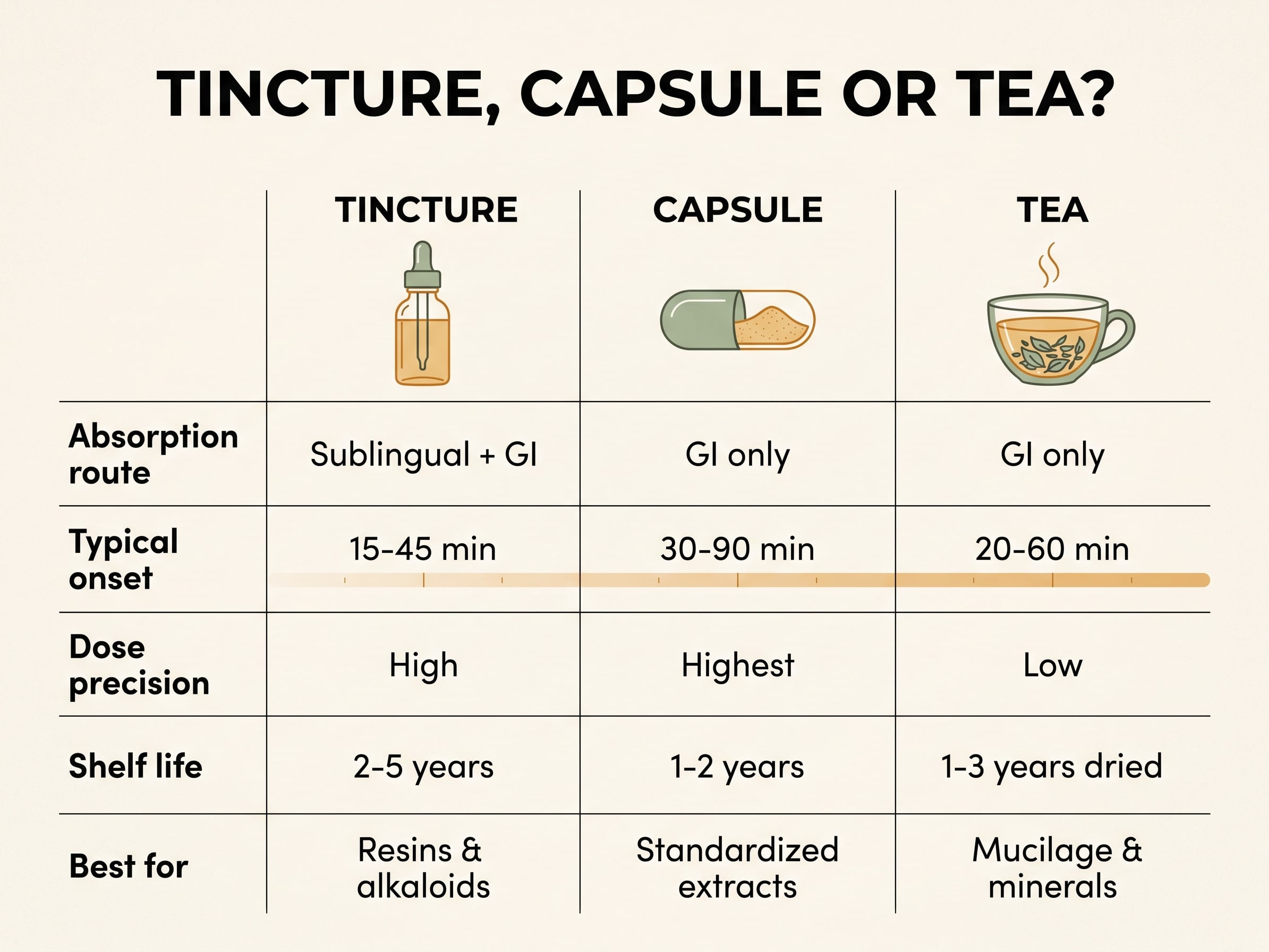
Tinctures absorb faster than capsules. Alcohol-based tinctures taken under the tongue begin absorbing through the oral mucosa within minutes, bypassing first-pass liver metabolism, while a capsule must disintegrate in the stomach before absorption starts. Faster is not automatically better, and the right answer depends on the compound you are after.
| Factor | Tincture | Capsule | Tea (infusion or decoction) |
|---|---|---|---|
| Absorption route | Sublingual and gastrointestinal | Gastrointestinal only | Gastrointestinal only |
| Typical onset | 15 to 45 minutes | 30 to 90 minutes | 20 to 60 minutes |
| Dose precision | High, measured by dropper | Highest, fixed per capsule | Low, varies with steep time and water volume |
| Shelf life | 2 to 5 years in alcohol | 1 to 2 years | Dried herb 1 to 3 years, brewed tea hours |
| Best suited to | Resins, alkaloids, and compounds poorly soluble in water | Bitter or unpalatable herbs, standardized extracts | Mucilage, minerals, and water-soluble flavonoids |
| Trade-off | Alcohol content unsuitable for some people | Slowest onset, no taste feedback | Least consistent dose |
Which herbs work better as tinctures than capsules? Resinous and alkaloid-rich material generally extracts better into alcohol than water, which is why myrrh, propolis, and many root barks are sold as tinctures. Mucilage-rich herbs such as marshmallow and mullein are the opposite case, because the soothing polysaccharide is water-soluble and alcohol precipitates it out.
Dosing a tincture as a beginner follows one rule above all others. Start at the low end of the label range, take it at the same time each day, and change only one variable at a time so you can tell what did what. Tincture effects typically last two to four hours, which is why traditional protocols space doses across the day rather than concentrating them.
How do you prepare herbs at home?
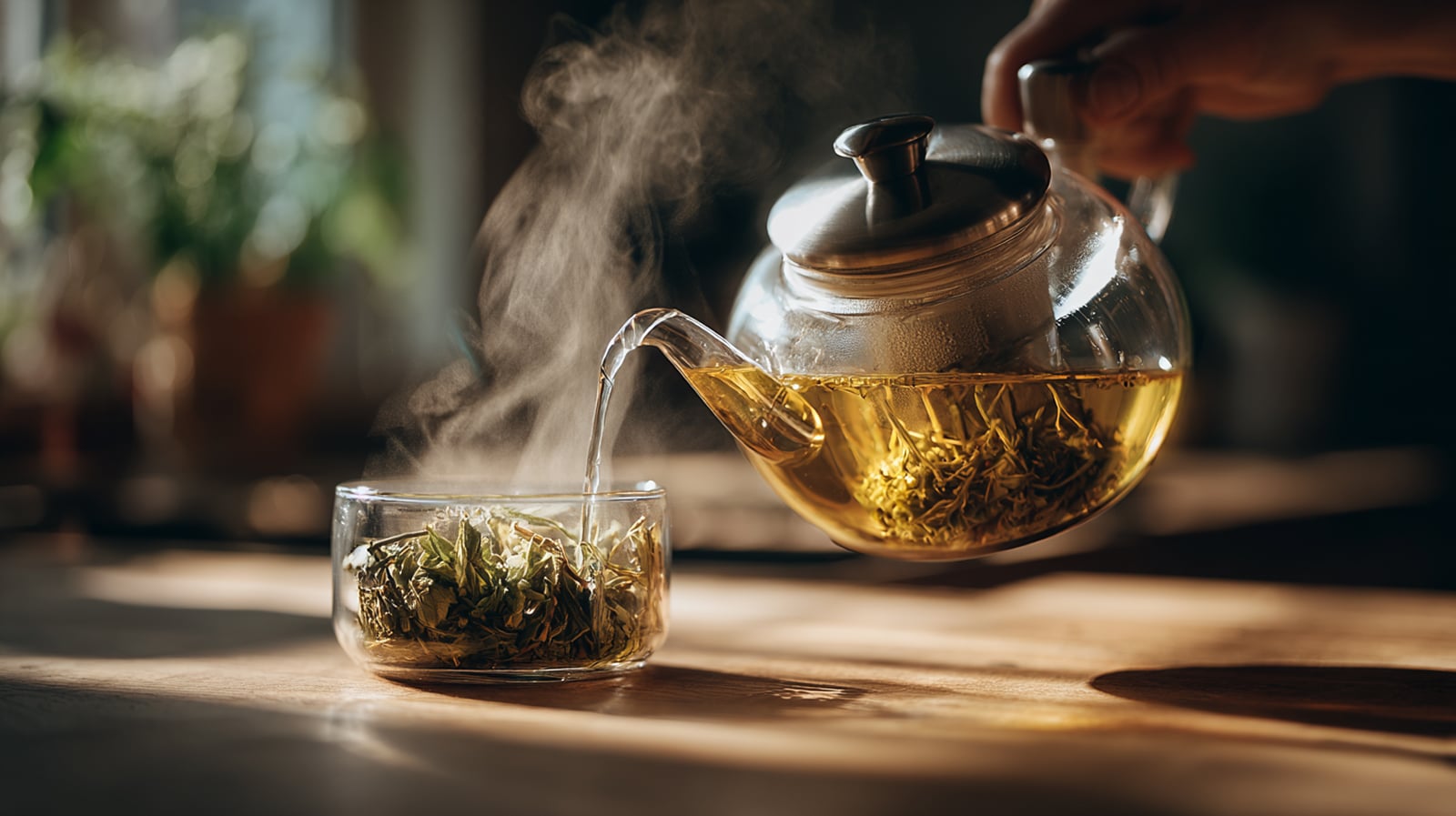
Preparing herbs at home is simple and rewarding. The two most common methods for water-based extracts are infusions and decoctions, and the choice between them is determined by plant part, not by preference.
- Infusions (teas) suit delicate plant parts such as leaves and flowers. Pour hot but not boiling water over the herbs, cover the container, and steep for 10 to 15 minutes. Covering matters more than most beginners realize, because volatile compounds such as menthol and linalool leave with the steam. Strain and drink.
- Decoctions suit tougher plant parts such as roots, bark, and berries. Combine the herbs with cold water in a pot, bring to a simmer, and let it bubble gently for 20 to 45 minutes with the lid on. Strain the liquid for use.
Can you use the same herb for both? Sometimes, when the plant offers both a soft and a hard part. Dandelion leaf is infused while dandelion root is decocted. Ginger is the interesting exception, because fresh rhizome infuses well, but dried powdered rhizome benefits from a short simmer. Applying a 40-minute decoction to chamomile flower would not extract more; it would drive off the volatile oil and leave a bitter cup.
Which method extracts more? Decoction extracts more from dense material, because heat and time break down cell walls that a 10-minute steep cannot. For delicate material, the ranking reverses. The honest general answer is that the correct method for the plant part extracts more than the aggressive method applied to the wrong part.
Equipment is minimal. A lidded mug or a glass teapot handles infusions. A small stainless or glass saucepan with a lid handles decoctions, avoiding reactive aluminum. A fine mesh strainer is needed for both, and a finer cloth or coffee filter is needed for mullein specifically, because the leaf hairs irritate the throat if they pass through. A kitchen scale beats a spoon for consistency.
What are the safety risks of herbal medicine?
The most important principle of herbal use is safety. Natural does not mean risk-free. Herbs contain active compounds, and active compounds have consequences.
- Roughly one in three US adults uses a herbal supplement, and many do not report that use to their physician, per a 2022 review in Proceedings (Baylor University Medical Center), PMID: 36304597.
- Garlic and hawthorn are strongly associated with surgical bleeding on their own, independent of any anticoagulant medication, in that same review.
- Ginkgo, turmeric, chamomile, peppermint, fenugreek, and milk thistle are associated with bleeding risk specifically in people already taking anticoagulants.
- The general surgical recommendation is to discontinue nonessential herbal supplements two weeks before a scheduled procedure.
- Start any new herb at the low end of the labeled range and add only one new herb at a time.
- In the United States, the Food and Drug Administration regulates herbal products as dietary supplements rather than as drugs, so they are not subject to the same pre-market testing for safety and efficacy.
Which herbs most commonly interact with prescription drugs?
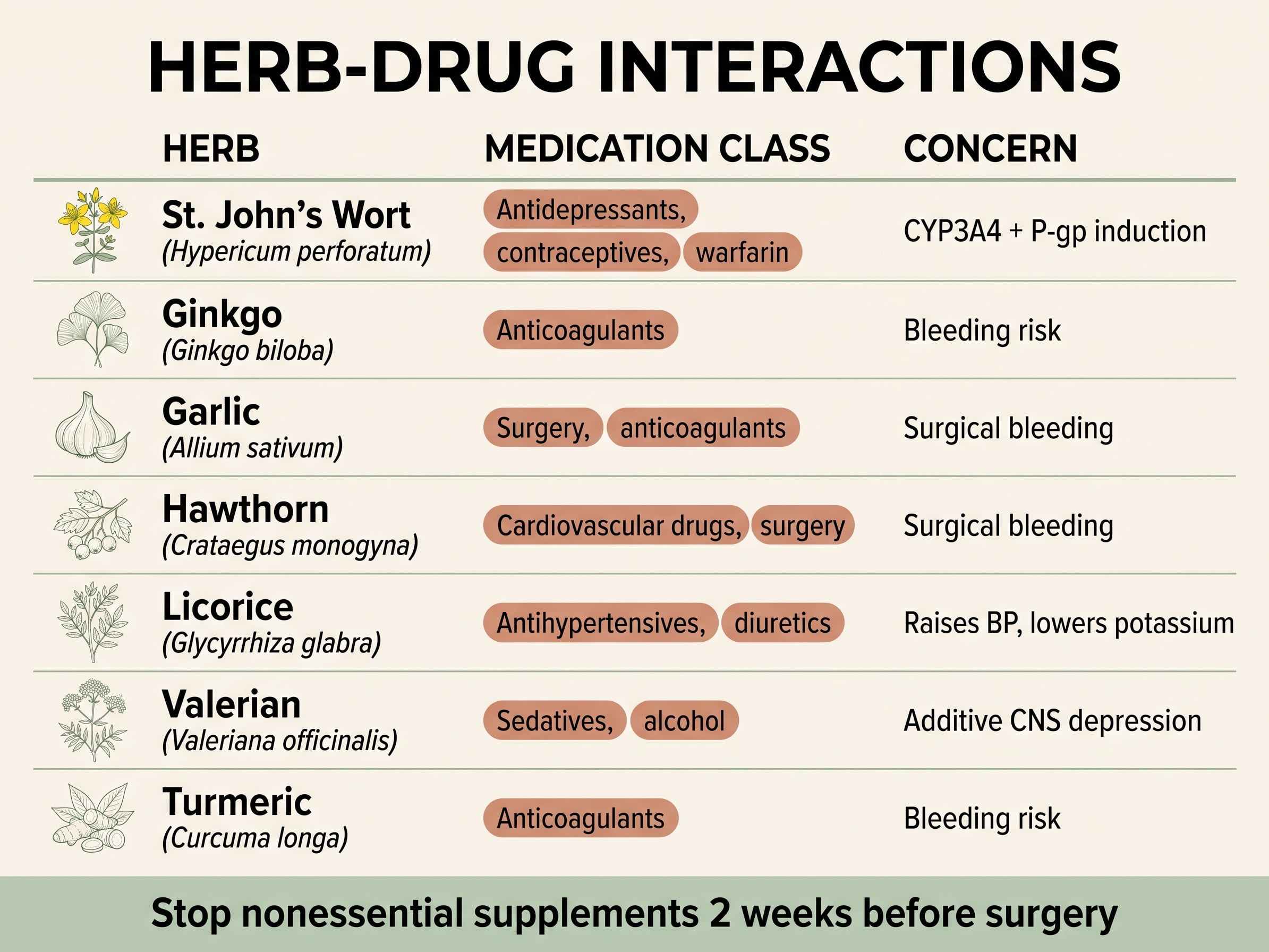
| Herb | Medication class | Mechanism or concern |
|---|---|---|
| St. John’s Wort (Hypericum perforatum) | Antidepressants, oral contraceptives, warfarin, cyclosporine, digoxin, simvastatin, some antivirals | Hyperforin induces CYP3A4 and P-glycoprotein, lowering plasma levels of many drugs. Induction correlates with hyperforin content, and products under 1% have not shown clinically relevant induction. PMID: 16477470 |
| Ginkgo (Ginkgo biloba) | Anticoagulants and antiplatelets | Associated with bleeding risk in anticoagulated patients. PMID: 36304597 |
| Garlic (Allium sativum) | Anticoagulants, and surgery generally | Strongly associated with surgical bleeding independent of anticoagulants. PMID: 36304597 |
| Hawthorn (Crataegus monogyna) | Cardiovascular medications, and surgery generally | Strongly associated with surgical bleeding independent of anticoagulants. PMID: 36304597 |
| Licorice (Glycyrrhiza glabra) | Antihypertensives, diuretics, corticosteroids | Glycyrrhizin can raise blood pressure and lower potassium with sustained use. Deglycyrrhizinated (DGL) forms avoid this. |
| Valerian (Valeriana officinalis) | Sedatives, sleep medications, alcohol | Additive central nervous system depression. |
| Turmeric (Curcuma longa) | Anticoagulants | Associated with bleeding risk in anticoagulated patients. PMID: 36304597 |
| This table is not exhaustive. Discuss every supplement you take with your pharmacist or prescriber. | ||
Can herbal supplements affect blood pressure or heart medications?
Some can. Licorice root is the clearest case, because glycyrrhizin promotes sodium retention and potassium loss, which can raise blood pressure with sustained use and complicate diuretic or antihypertensive therapy. Hawthorn acts on cardiovascular function directly, which is precisely why it needs prescriber oversight rather than casual stacking alongside heart medication. Anyone managing blood pressure pharmacologically should treat every new botanical as a change to the regimen and say so at the next appointment.
What are the warning signs of a bad herb-drug interaction?
Stop the herb and contact your provider if you notice unusual bruising or bleeding, including bleeding gums or nosebleeds, unexpected drowsiness or difficulty waking, a racing or irregular heartbeat, dizziness on standing, yellowing of skin or eyes, dark urine, persistent nausea, or a rash that spreads. The pattern that matters most is timing. A new symptom appearing within days of starting a new supplement deserves attention even if it seems minor.
How can I check whether a supplement interacts with my medicine?
Bring the actual bottle to a pharmacist rather than the herb’s common name, because the label carries the species, plant part, extract ratio, and standardization percentage a pharmacist needs. The NIH Office of Dietary Supplements maintains botanical fact sheets, Memorial Sloan Kettering maintains its About Herbs database covering interactions, and MedlinePlus indexes herbs and supplements alongside conventional drug monographs. Check before starting, not after a symptom appears.
How do I choose a high-quality herbal supplement?
Quality is where beginner outcomes diverge most sharply, and the label tells you nearly everything if you know the six things to read. In our sourcing experience, a supplier who will answer all six questions is worth more than one with a lower price.
- Latin binomial on the label. Common names collide across unrelated species. The binomial is the only unambiguous identifier.
- Plant part named. Root, leaf, bark, flower, seed, or aerial parts. As shown above, the part determines the chemistry.
- Extract ratio (DER) explained. A 10:1 extract means ten parts raw herb reduced to one part extract by weight. It signals concentration, not potency of any specific compound, and it is not comparable across manufacturers using different solvents.
- Standardization percentage. “Standardized to 1.2% apigenin” is a measurable claim. “High potency” is not.
- Third-party testing and a Certificate of Analysis. A COA should confirm species identity plus screening for heavy metals, pesticides, and microbial contamination. Ask for it. Reputable suppliers provide it.
- Origin and harvest disclosure. Growing region affects constituent profile. A supplier who names the region is telling you they know their chain of custody.
Manufacturing in a cGMP-compliant facility is a baseline expectation rather than a distinguishing feature. Our team applies this same checklist to every herb, root, and rhizome we bring into our Virginia Beach facility, and the herbs that fail identity testing do not reach the catalog. If you are assembling a starter set rather than a single herb, our curated herb bundles group compatible botanicals so beginners are not buying twenty separate jars at once.
How long do dried herbs stay potent, and how should they be stored?
Dried leaves and flowers hold useful potency for roughly 12 months. Roots, bark, and seeds hold 2 to 3 years. Powdered material of any type degrades faster than cut-and-sifted material, because grinding multiplies the surface area exposed to oxygen.
Four things degrade dried herbs, and all four are controllable. Light bleaches the pigments that often accompany active constituents. Heat drives off volatile oils, which is why the cabinet above the stove is the worst storage spot in most kitchens. Oxygen oxidizes the same delicate compounds. Moisture invites mold, which is the one failure mode that makes an herb unsafe rather than merely weak.
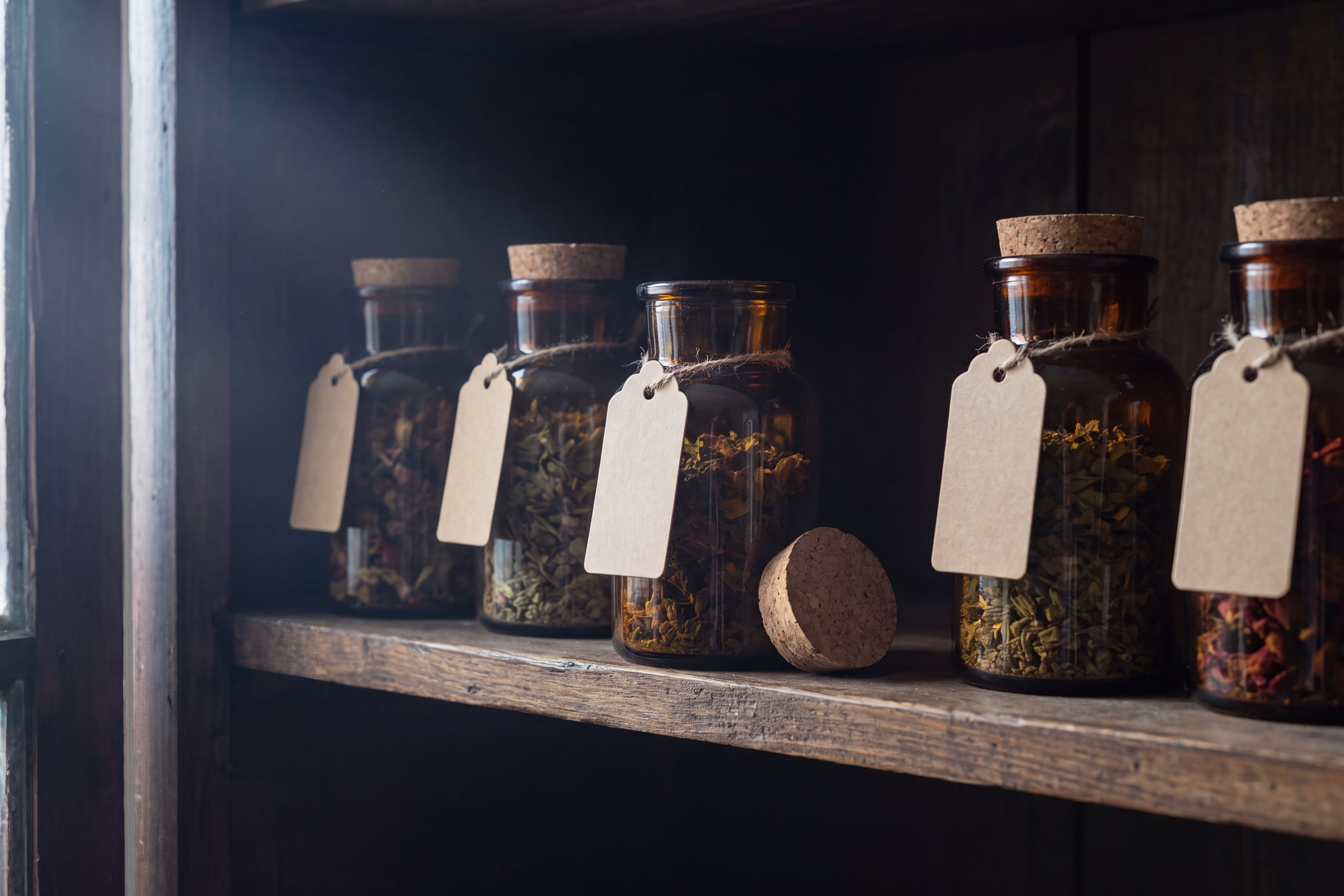
Store in airtight glass jars, amber or opaque where possible, in a cool, dark cupboard away from the stove and dishwasher. Label every jar with the herb name and the date received, because a year from now you will not remember. Whole or cut-and-sifted stores better than powdered, so grind small amounts as needed rather than buying pre-ground quantities you cannot use within a season.
How do you tell if dried herbs have gone bad? Colour is the first tell, since faded grey-green where there was vivid green means light or age exposure. Aroma is the more reliable one. Crush a pinch between your fingers, and if the smell is faint or absent, the volatile oils are gone. Any mustiness, visible mold, or clumping from absorbed moisture means discard rather than salvage. Herbs past their prime are usually weak rather than dangerous, with mold contamination the exception.
Which herbs have the strongest clinical evidence?
Evidence quality varies enormously across this category, and treating all of it as equivalent is the most common error we see. A useful hierarchy runs from human randomized controlled trials, to human observational data, to animal and cell studies, to documented traditional use. Traditional use is meaningful evidence about safety and application, but it is not the same claim as a controlled trial.
Based on research indexed in PubMed, several of the herbs above sit in the upper tiers.
- Peppermint oil. A network meta-analysis of 51 randomized controlled trials covering 4,644 patients ranked peppermint oil first for improvement in global irritable bowel symptoms, with a relative risk of 0.63 (95% CI 0.48 to 0.83). Black et al. (2020), Lancet Gastroenterology and Hepatology, PMID: 31859183. Note that the trials tested enteric-coated peppermint oil capsules, not peppermint tea.
- Turmeric and curcumin. A GRADE-assessed systematic review and dose-response meta-analysis of 66 randomized controlled trials found supplementation reduced C-reactive protein by 0.58 mg/L (95% CI -0.74 to -0.41), with reductions also in TNF-alpha and interleukin-6. Dehzad et al. (2023), Cytokine, PMID: 36804260.
- Ginger. A systematic review and meta-analysis of 12 randomized controlled trials involving 1,278 pregnant women found ginger significantly improved nausea symptoms (MD 1.20, 95% CI 0.56 to 1.84, p = 0.0002), with subgroup analysis favouring daily doses under 1,500 mg. Viljoen et al. (2014), Nutrition Journal, PMID: 24642205.
- Chamomile. A randomized, double-blind, placebo-controlled trial of 57 participants using a 220 mg extract standardized to 1.2% apigenin found a greater reduction in Hamilton Depression Rating scores versus placebo. Amsterdam et al. (2012), Alternative Therapies in Health and Medicine, PMID: 22894890.
The peppermint finding carries a lesson worth generalizing. The trials that produced that top ranking used enteric-coated oil capsules delivering a controlled dose past the stomach. A cup of peppermint tea is a different preparation at a different dose by a different route. When you read that an herb is “clinically supported,” the useful follow-up question is always which preparation was tested.
What is a herbalist, and how do they choose herbs for a person?
A herbalist is a practitioner trained in the traditional and contemporary use of medicinal plants. In the United States, herbalism is not a licensed profession in the way medicine and nursing are, so titles vary. The American Herbalists Guild confers Registered Herbalist (RH) status through a peer-review process requiring documented clinical hours. Other practitioners hold certificates from clinical herbalism programs of widely differing length and rigour, which is why asking about training is reasonable rather than rude.
How do they choose? A clinical herbalist works from the whole picture rather than matching a symptom to a plant. That typically means an intake covering constitution and energetics, digestion and sleep patterns, current medications and supplements, prior herb experience, and practical constraints such as whether someone will realistically brew a decoction twice a day. Naturopathic physicians (ND) hold a different credential with its own scope, and are licensed in some states and not others.
Our own role is worth stating plainly. We are a supplier, not a clinical practice. We identify, source, test, and document herbs. We do not diagnose, and we do not build personal protocols. For individualized guidance, a qualified practitioner working with your medical history is the right partner.
Can you grow medicinal herbs at home?
Yes, and several of the twenty above are forgiving for beginners. Calendula, chamomile, lemon balm, peppermint, and holy basil all grow readily from seed in most temperate zones. Peppermint spreads aggressively by runner and belongs in a container unless you want a peppermint bed.
Two honest caveats separate growing from sourcing. First, constituent concentration varies with soil, sun, water stress, and harvest timing, so home-grown material is rarely consistent batch to batch. Second, roots and barks such as valerian, ashwagandha, and hawthorn take years to reach harvestable maturity, which is why they are more practically purchased than grown. Growing chamomile for your evening cup is genuinely achievable. Growing your own standardized extract is not.
Frequently asked questions about herbal medicine
Is herbal medicine backed by science?
Some of it is, and some of it rests on traditional use alone. Peppermint oil, turmeric, ginger, and chamomile have human randomized controlled trial data behind specific applications, with the citations above. Many other herbs have animal or cell data only, and some have centuries of documented use without controlled trials. A lack of trials does not prove a preparation ineffective, but it does mean the claim rests on a weaker tier of evidence, and honest sources say which tier they are standing on.
What is the best herb for medicine?
There is no single best herb, because the question depends on what you are supporting, your medications, and your tolerance. If you want the most defensible starting point, chamomile and ginger combine long traditional use, human trial data, gentle profiles, and easy home preparation. That makes them good first herbs rather than best herbs.
What is the most powerful healing herb in the world?
There is no single most powerful herb, as each plant has unique properties and works differently in each individual. Effectiveness depends on the person, the purpose, the preparation, and the quality of the material. A well-identified, well-stored, correctly prepared common herb will do more than a poorly sourced exotic one.
Can you take medicinal herbs every day?
It depends on the herb. Chamomile, ginger, and nettle leaf are traditionally used daily and are generally well-tolerated. Echinacea is traditionally used in short cycles rather than continuously. Licorice containing glycyrrhizin is specifically not for indefinite daily use because of its effect on blood pressure and potassium. Follow the guidance of a healthcare professional, particularly beyond a few weeks.
Which herb is best for sleep, and which for digestive upset?
For sleep, valerian root and chamomile flower are the two most commonly used, with valerian generally the stronger of the pair and better suited to short-term use. For digestive comfort, peppermint leaf and ginger rhizome are the usual starting points, with peppermint holding the strongest trial evidence in enteric-coated oil form. Persistent digestive symptoms, especially with weight loss, blood, or fever, need medical evaluation rather than herbs.
Do tinctures absorb faster than capsules?
Yes. A sublingual tincture begins absorbing through the oral mucosa within minutes and typically takes effect in 15 to 45 minutes, while a capsule must disintegrate first and generally takes 30 to 90 minutes. Effects from a tincture usually last two to four hours. Capsules offer more precise dosing in exchange for slower onset.
How long do dried herbs stay potent?
Dried leaves and flowers hold roughly 12 months of useful potency, while roots, bark, and seeds hold 2 to 3 years. Powdered forms degrade faster than whole or cut-and-sifted. Store in airtight glass away from light, heat, and moisture, and judge by aroma rather than by date alone.
How do herbal remedies compare to conventional medicine?
They differ in standardization, regulation, and evidence base rather than in kind. Many conventional drugs originated in plants, including aspirin from willow bark and metformin from goat’s rue. The practical differences are that pharmaceuticals deliver an isolated compound at a precisely controlled dose with pre-market safety testing, while herbal preparations deliver a variable mixture of constituents regulated as dietary supplements. Neither replaces the other, and the two are frequently taken together, which is exactly why interaction awareness matters.
Related reading
Continue with our evidence-based guides on peppermint tea and bloating, herbal teas for liver health, valerian root for sleep, and hawthorn berry and blood pressure.
These statements have not been evaluated by the Food and Drug Administration. This product is not intended to diagnose, treat, cure, or prevent any disease. Consult your healthcare provider before use, particularly if you are pregnant, nursing, taking prescription medication, or scheduled for surgery.