Moringa seed oil is a cold-pressed carrier oil produced from the seeds of Moringa oleifera Lam., and it is also sold under the older trade name ben oil. It runs roughly 70 to 76 percent oleic acid, carries behenic acid as its signature minor fatty acid, and is used topically on skin, scalp, and hair (Shahbaz et al. 2024, Food Science and Nutrition, PMID: 39554357).
Key Takeaways
- Moringa seed oil is roughly 70 to 76 percent oleic acid, which is why it absorbs without the heavy film heavier oils leave behind.
- Its old name, ben oil, comes from behenic acid, the long-chain fatty acid that also drives its unusual resistance to going rancid.
- A cream formulation raised skin hydration and reduced redness in testing, but did not change melanin content, so it is not a pigment-fading oil.
- Refining strips carotenoids and raises oxidation, which is the measurable reason to buy cold-pressed and unrefined.
- The oil is food-grade when cold-pressed for culinary use, and its thermal stability exceeds that of soybean, sunflower, canola, and cottonseed oil.
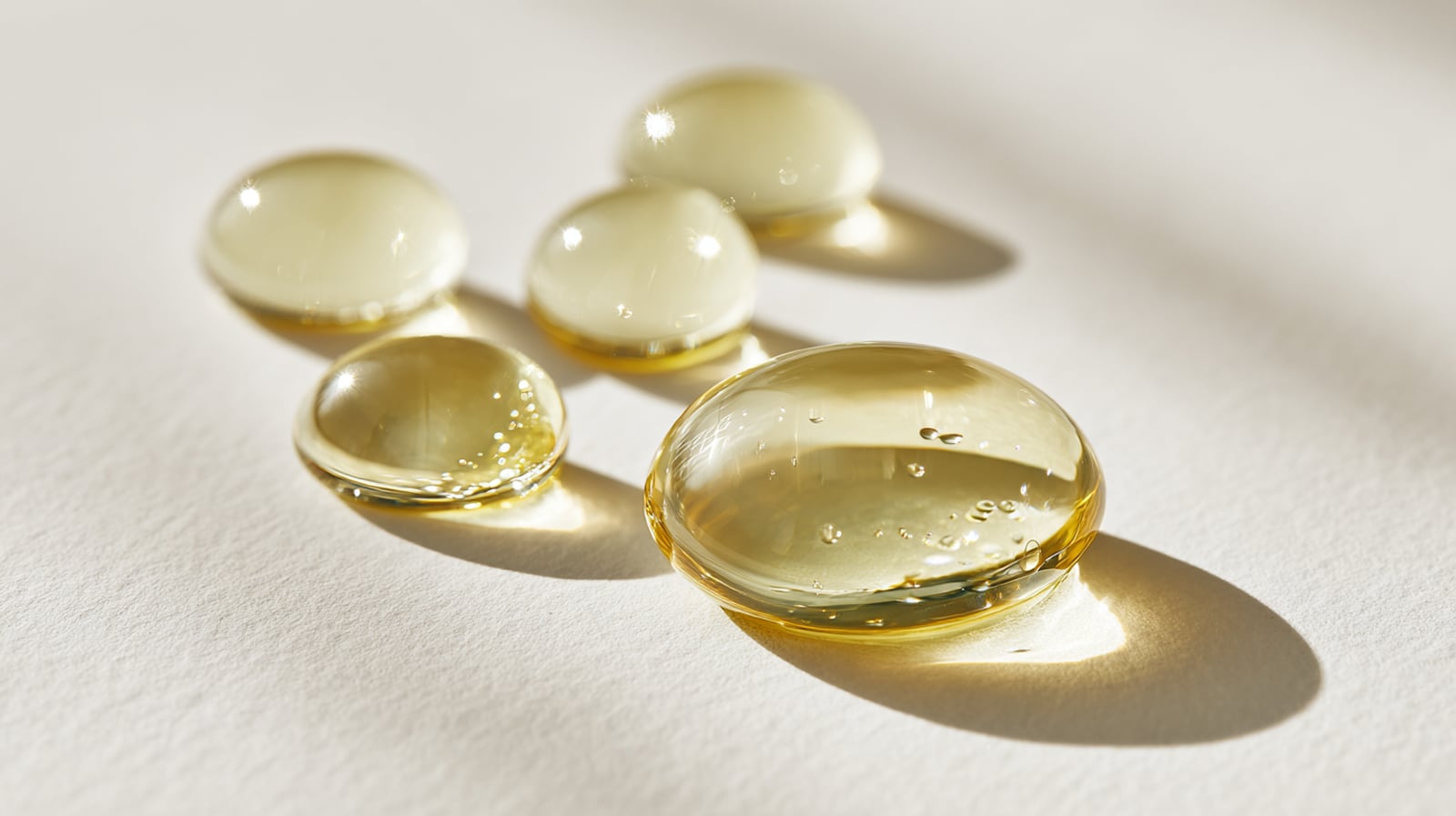
What Is Moringa Seed Oil, And Why Is It Called Ben Oil?
The oil comes from the seed, not the leaf. That distinction matters more than most product pages admit, because moringa leaf and moringa seed are two different raw materials with two different chemistries and two different uses. The leaf is dried and milled into a nutritional powder. The seed is pressed into an oil, and the seed itself holds 35 to 40 percent oil by weight (Nadeem and Imran 2016, Lipids in Health and Disease, PMID: 27931216).
Moringa oleifera Lam. belongs to the Moringaceae family, a small family of drought-tolerant trees native to the sub-Himalayan foothills of northern India and now cultivated across sub-Saharan Africa, Southeast Asia, and Central America. Both Ayurvedic and Unani traditions record the seed and its oil separately from the leaf, which tells you the distinction is not a modern marketing invention.
Why It Is Called Ben Oil
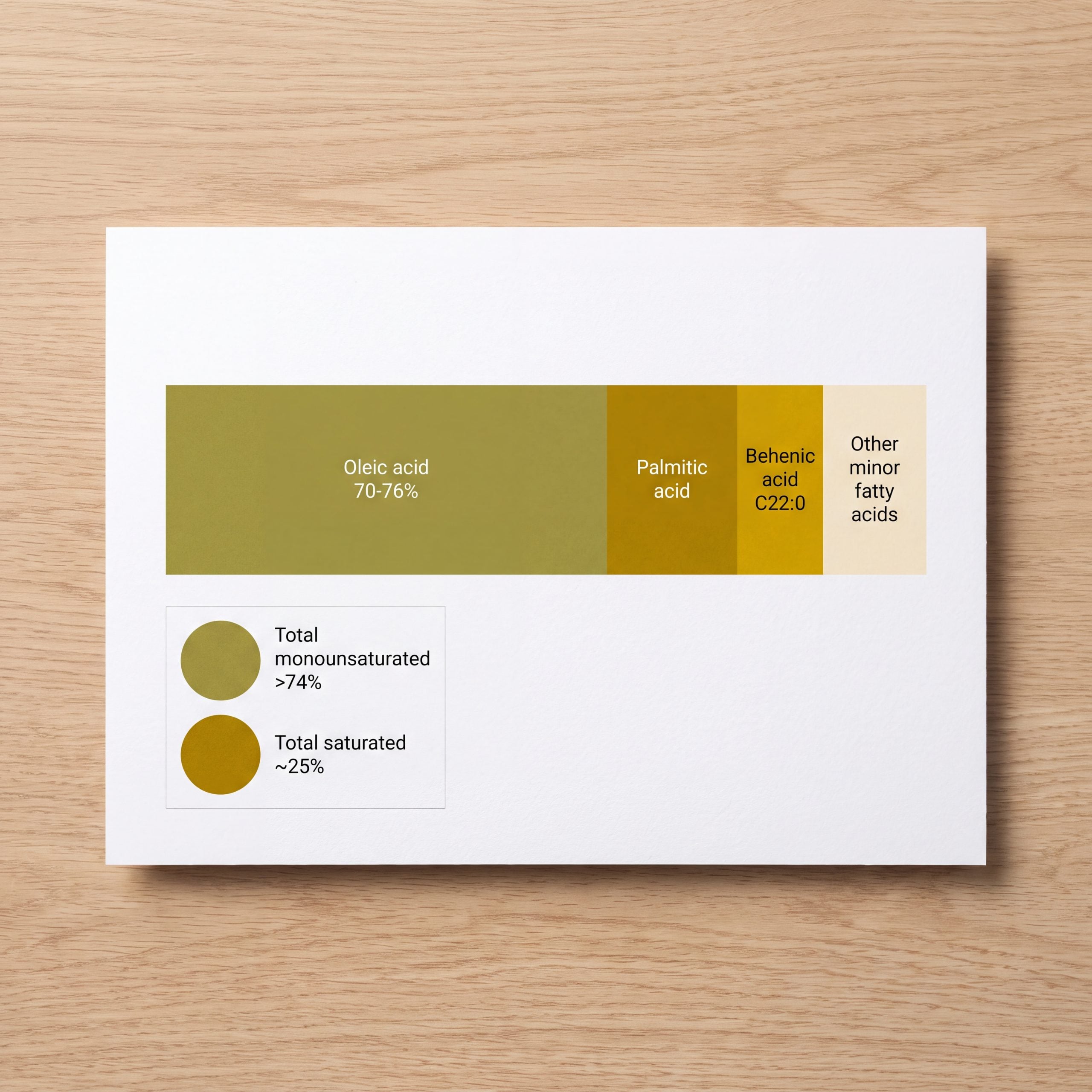
Ben oil, sometimes written behen oil, is named for behenic acid. Behenic acid is docosanoic acid, a 22-carbon saturated fatty acid, and it is one of nine fatty acids identified in moringa seed oil by gas chromatography. Oleic acid was the largest fraction, followed by palmitic acid, then behenic acid (Sanchez-Machado et al. 2015, Food Chemistry, PMID: 25976997).
That long carbon chain is doing real work. Behenic acid sits at the skin surface and forms a light occlusive film that slows transepidermal water loss, which is the mechanism behind the oil’s staying power on dry skin. It is also part of why the oil resists rancidity, a point covered in the shelf-life section below. We have looked for a consumer source that explains the behenic acid to ben oil to stability chain in one place, and outside of a small number of formulation papers, it is simply not being said.
The Fatty Acid Profile, By The Numbers
Most articles on this oil say “over 70 percent oleic acid” and stop. The honest answer is that the figure moves with cultivar, growing region, and extraction method. Reported monounsaturated fatty acid content runs above 74 percent, with total saturated fatty acids near 25 percent depending on whether the oil was solvent-extracted or ultrasound-assisted. For a cold-pressed cosmetic oil, expect oleic acid in the low-to-mid seventies as a percentage of total fatty acids.
Oleic acid matters here because human sebum is itself oleic-acid-rich. An oil whose dominant fatty acid resembles what your skin already produces spreads and absorbs differently than one built on shorter or more polyunsaturated chains. That is the practical reason moringa oil feels lighter than its richness would suggest.
The Antioxidant Fraction
Beyond the fatty acids, the oil carries tocopherols, carotenoids, sterols, and polyphenols. Tocopherols are the vitamin E family. Carotenoids give crude moringa oil its faint yellow cast, and their concentration is a useful visual signal of how hard the oil has been processed. These compounds are the reason the oil holds up in storage, and they are also the first thing lost when the oil is refined.
Zeatin And The Cytokinins
Moringa is a natural source of cytokinins, a class of plant growth regulators, and zeatin is the one that appears most often in cosmetic literature on the plant. Cytokinins are part of the phytochemical profile catalogued in reviews of moringa’s dermatological and cosmeceutical use (Garg et al. 2023, Naunyn-Schmiedeberg’s Archives of Pharmacology, PMID: 38055069).
We flag this one carefully. Zeatin gets repeated across skincare copy with a confidence the evidence does not yet support in human skin, and much of the underlying work is plant-physiology research rather than dermatology. It belongs in an honest ingredient description. It does not belong in a claim about visible results.
What Does Moringa Seed Oil Do For Skin?
The short version, before the detail: it hydrates, it softens, and it reduces redness. It does not fade pigment. Those are three supported outcomes and one common claim that the best available testing does not back.
Hydration And Dry Skin
This is the oil’s strongest and least controversial use. A moringa seed oil cream formulation raised measured skin hydration levels in testing (Athikomkulchai et al. 2020, Cosmetics, DOI: 10.3390/cosmetics8010002). The oleic acid fraction spreads across the surface, and the behenic acid fraction slows water loss from underneath, which is a two-part mechanism rather than a single occlusive effect. On genuinely dry or weather-stressed skin, this is where the oil earns its place.
The Appearance Of Fine Lines
Antioxidant compounds in the oil, principally the tocopherols and carotenoids, are associated with defence against oxidative stress at the skin surface. Reduced oxidative load is linked in the broader literature with the visible signs of skin ageing. What the oil does directly and measurably is hydrate, and well-hydrated skin reads as smoother. We would rather say that plainly than imply a structural change the data does not show.
Blemish-Prone Skin And The Comedogenic Question
Moringa seed oil is generally rated 0 to 1 on the comedogenic scale, which places it among the least pore-clogging of the common carrier oils. Jojoba and argan sit in similar territory. A low comedogenic rating means the oil is unlikely to contribute to congestion. It does not mean the oil addresses acne, which is a medical condition and belongs with a clinician rather than a carrier oil.
For blemish-prone skin, the realistic position is this. The oil is a reasonable moisturiser choice for someone whose skin is both oily and dehydrated, because it hydrates without a heavy occlusive load. Introduce it slowly, two to three nights a week, and stop if congestion appears.
Supporting The Skin Barrier
The lipid profile of moringa seed oil is close enough to skin’s own surface lipids that it integrates into the barrier rather than sitting on top of it. Where the barrier is compromised by over-cleansing, cold weather, or retinoid use, replacing surface lipids is a sensible supportive step. This is barrier support, not wound care. Broken skin, burns, and anything that is not healing belongs with a healthcare provider.
Does Moringa Oil Brighten Skin Or Fade Dark Spots?
No, and this is worth being direct about because nearly every other page on this topic says otherwise.
The most relevant controlled work on this question tested a moringa seed oil cream and measured three outcomes. Skin hydration improved. Skin erythema, which is redness, was reduced. Melanin content did not change (Athikomkulchai et al. 2020, Cosmetics, DOI: 10.3390/cosmetics8010002).
Melanin is the pigment responsible for dark spots and uneven tone. An ingredient that leaves melanin content unchanged is not a brightening agent, whatever the marketing around it says. Our editorial team reviewed the brightening claims circulating for this oil against that finding and could not support them.
What the same study does support is redness reduction, which is a different and genuinely useful outcome. If your concern is a flushed, reactive, or irritated complexion, the evidence points your way. If your concern is hyperpigmentation, this is not the ingredient, and you are better served looking at actives with a pigment-pathway mechanism.
What Does The Research Say About Redness And Inflammation?
The most detailed work here is an animal study, and we want to label it as such before describing it, because the finding is interesting enough that it gets repeated without that context.
Researchers applied moringa seed oil topically in mouse models of induced skin inflammation and compared it against oleic acid on its own (Cretella et al. 2020, Journal of Ethnopharmacology, PMID: 32142866). The whole oil reduced swelling across all three inflammation models tested. Isolated oleic acid reduced it in only two. The whole oil also reduced the chronic inflammation and epidermal thickening produced by repeated exposure, which isolated oleic acid did not. Repeated application did not thin the skin, unlike the topical steroid used as a comparator.
Two things follow. First, the whole oil outperformed its own principal constituent, which is an argument for using the pressed oil rather than an oleic acid isolate. Second, these are animal models. They describe a mechanism worth knowing about. They do not establish a human clinical outcome, and nothing here should be read as a substitute for medical care.

What Does Moringa Seed Oil Do For Hair And Scalp?
- Moringa seed oil conditions the hair shaft and reduces the roughness that causes breakage, which is different from stimulating growth.
- Applied to the scalp, it delivers surface moisture and can ease the tightness and flaking of a dry scalp.
- Its light texture means it can be used on mid-lengths and ends without the weight heavier oils leave on fine hair.
- It does not stimulate the hair follicle, and no controlled human trial supports a growth claim for this oil.
Dry Scalp
A dry scalp and a flaking scalp are not always the same problem, and it is worth separating them. Where the issue is genuine dryness, a small amount of oil massaged in and left for 30 minutes before washing delivers surface moisture. Where flaking is persistent, greasy, or itchy, that pattern points toward a condition a clinician should look at rather than an oil.
Conditioning, Shine, And Breakage
The fatty acids coat the cuticle, and a smoother cuticle reflects light more evenly, which is what shine actually is. Smoothing the cuticle also reduces the friction that causes mechanical breakage during brushing and styling. Less breakage means length is retained. This is a real and useful effect, and it is frequently mislabelled as growth.
Does Moringa Oil Actually Grow Hair?
No. There is no controlled human evidence that moringa seed oil stimulates the hair follicle or increases the rate of hair growth.
What it does is reduce breakage, and the visible result of less breakage is hair that reaches a greater length before it snaps. People experience that as growth. The distinction matters if you are choosing between products, because if your hair is thinning at the root rather than breaking at the ends, a conditioning oil is not addressing your problem, and you will lose months finding that out.
How Do You Use Moringa Seed Oil?
For the face. After cleansing, press two to four drops onto skin that is still slightly damp. Damp application matters because the oil slows evaporation of the water already on the skin rather than supplying moisture itself. It also works as a first-step cleansing oil, massaged in and removed with a warm damp cloth.
For the body. Apply to damp skin after showering. Elbows, knees, shins, and heels take it best.
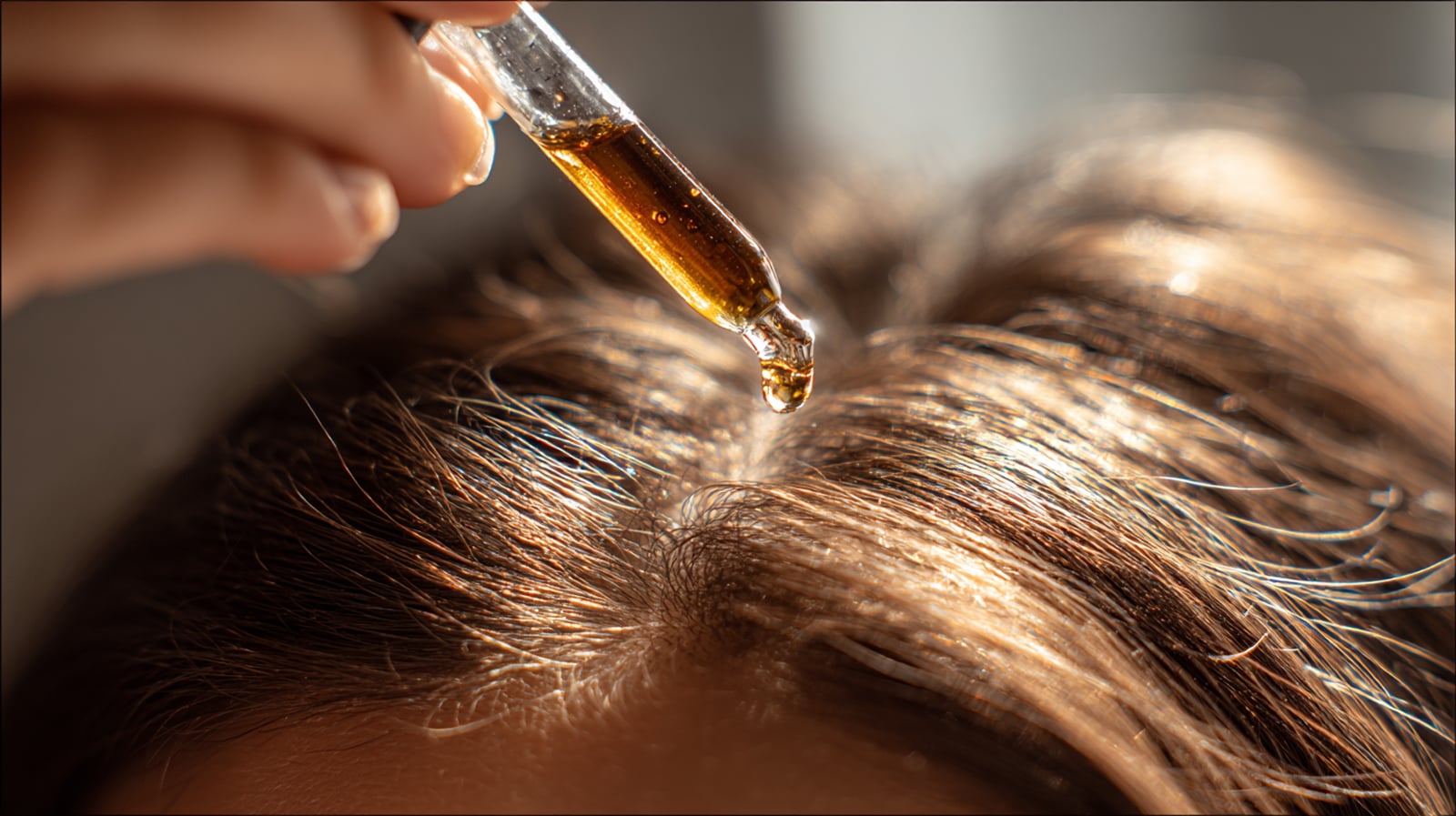
For hair. Massage a small amount into the scalp and leave for 30 minutes before shampooing, or use one or two drops on dry mid-lengths and ends to smooth flyaways. Start with less than you think you need.
Is Moringa Oil Better Than A Cream Or Lotion?
They do different jobs, and the answer depends on whether your skin needs water or needs help holding onto it. Creams and lotions are emulsions, meaning they carry water alongside oil, so they deliver hydration directly. A pure oil carries no water. It slows the loss of water that is already there.
Worth noting for anyone comparing the two: the hydration and redness data described earlier came from a moringa seed oil cream, not the neat oil. If you are dealing with genuinely dehydrated skin, the sequence that makes sense is a water-based layer first, then the oil on top to hold it. Oil alone on dry, dehydrated skin has less to work with.
What Should You Not Mix Moringa Oil With?
The considerations here are about layering order rather than chemical incompatibility.
- Apply oils last. An oil layered underneath a water-based serum blocks that serum from reaching the skin.
- With retinoids or exfoliating acids, use the oil on alternate nights or apply it after the active has absorbed. Layering an occlusive directly over a fresh acid application increases the chance of irritation.
- Patch test before first use on the inner forearm, and wait 24 to 48 hours.
- If you are using prescription topicals, ask the prescriber before adding any carrier oil to the routine.
Can You Eat Or Cook With Moringa Seed Oil?
Yes, when it is produced as a food-grade oil. Moringa seed oil has a fatty acid composition suitable for both edible and non-edible applications, and its thermal stability is greater than that of soybean, sunflower, canola, and cottonseed oil (Nadeem and Imran 2016, Lipids in Health and Disease, PMID: 27931216).
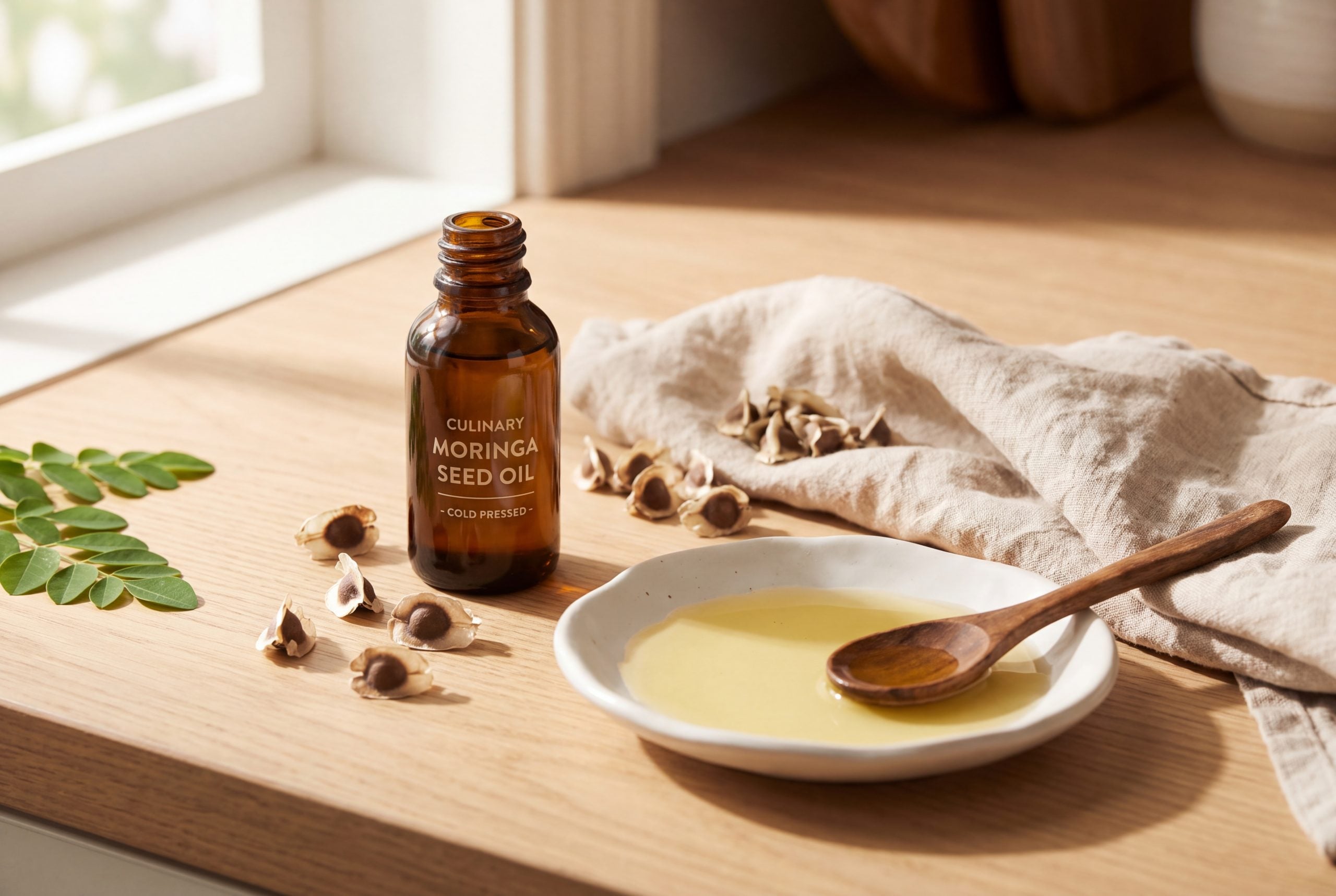
- Culinary moringa oil is cold-pressed and food-grade, with a mild nutty flavour.
- Cosmetic-grade oil is not automatically food-safe, and the two are produced to different standards.
- Its thermal stability is higher than several common cooking oils, which suits it to moderate-heat use.
- Evidence for specific health outcomes from consuming the oil is limited, and most of it is laboratory or animal work.
Is Moringa Seed Oil Food-Grade?
Only if it was produced and labelled as such. This is the single most common point of confusion around this oil. A bottle sold for skincare has been through a supply chain built for cosmetic use, and it may have been refined, deodorised, or blended in ways that are fine on skin and inappropriate in food. If the label does not say food-grade or edible, treat it as cosmetic. In our sourcing experience, reputable suppliers state this plainly on the certificate of analysis, and the ones that do not are usually the ones you want to ask more questions of.
How It Compares To Olive Oil In The Kitchen
Both are oleic-acid-dominant oils, which makes them behave similarly in the pan and gives them broadly comparable fatty acid profiles. The difference is stability. Moringa oil’s combination of a high monounsaturated fraction, saturated behenic acid, and a native tocopherol content gives it a thermal stability profile that exceeds several refined seed oils. Flavour-wise it is milder and nuttier than a peppery extra virgin olive oil, which suits it to dressings and finishing more than to anything that needs the olive character.
Moringa Seed Oil Or Moringa Leaf Powder For Internal Use?
If your interest is nutritional rather than culinary, the leaf is the part you want, not the seed oil.
The seed oil is a fat. It supplies fatty acids and fat-soluble antioxidant compounds and nothing else of nutritional consequence. The leaf carries the vitamin, mineral, and polyphenol content that moringa is known for nutritionally, including vitamin A, vitamin K, iron, and calcium. Almost every study on moringa’s nutritional profile is a leaf study, not a seed oil study. Our organic moringa oleifera leaf powder is shade-dried whole leaf, cold-milled, and raw, which preserves the heat-sensitive fraction that hot-air drying degrades.
Put simply, use the oil on your skin and in the pan. Use the leaf for nutrition.
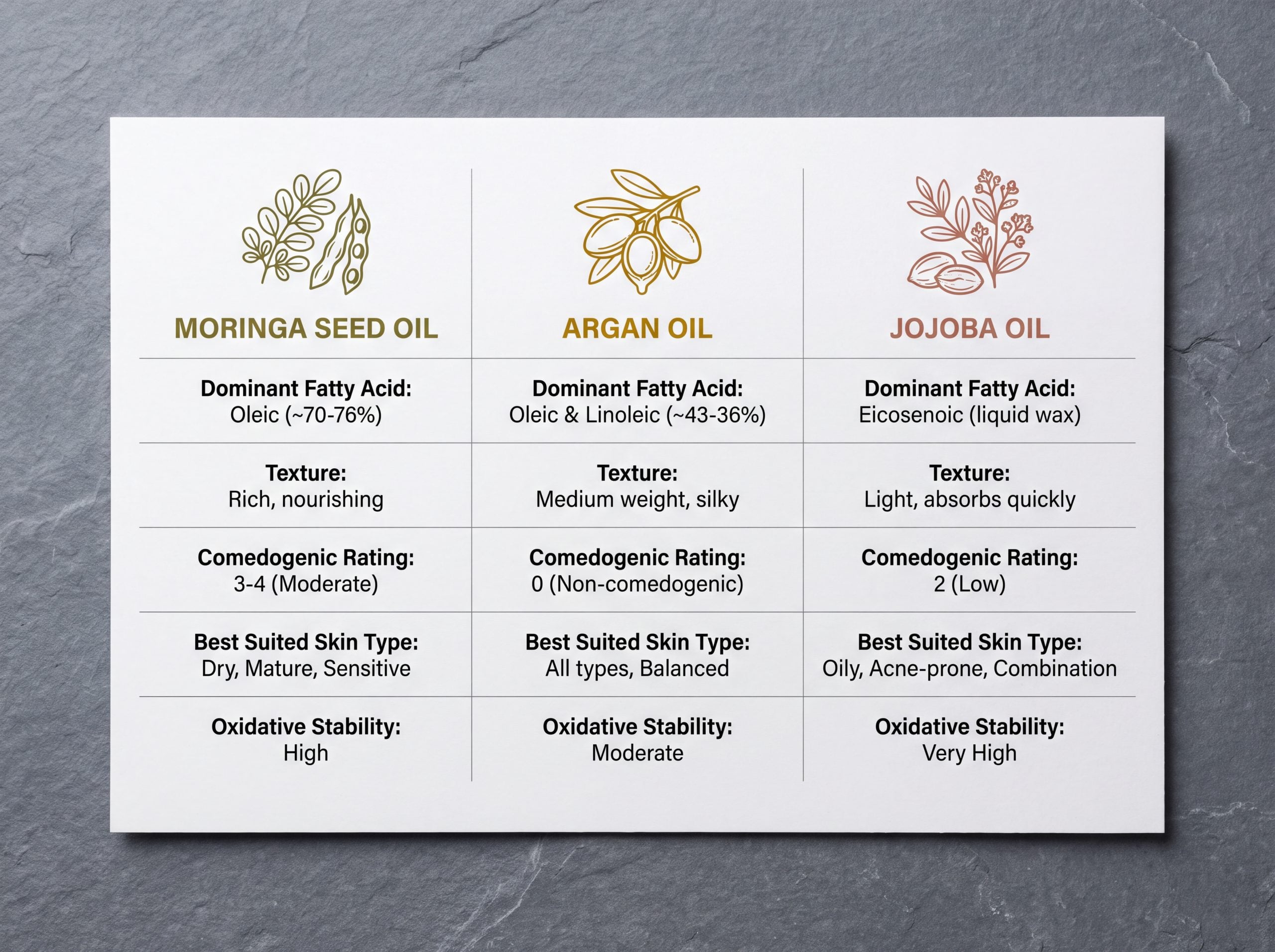
Moringa Oil Compared To Argan Oil And Jojoba Oil
| Feature | Moringa seed oil | Argan oil | Jojoba oil |
|---|---|---|---|
| Botanical source | Moringa oleifera Lam. seed | Argania spinosa kernel | Simmondsia chinensis seed |
| Dominant fatty acid | Oleic acid, roughly 70 to 76 percent | Oleic and linoleic, roughly balanced | Not a true oil. A liquid wax ester |
| Signature minor component | Behenic acid, C22:0 | Tocopherols, high vitamin E | Wax esters close to human sebum |
| Texture and absorption | Light, absorbs without residue | Light to medium, fast-absorbing | Very light, near-dry finish |
| Comedogenic rating | 0 to 1 | 0 | 0 to 2 |
| Best suited skin type | Dry, mature, or redness-prone | Oily, combination, or blemish-prone | Oily and sebum-imbalanced |
| Best suited hair type | Coarse, thick, or dry strands | Fine to medium, frizz control | Scalp care and light conditioning |
| Oxidative stability | High. Resists rancidity, thermal stability above soybean, sunflower, canola, and cottonseed oil | Moderate to high | Very high. Wax esters resist oxidation |
| Suitable for culinary use | Yes, when food-grade | Yes, culinary argan exists | No. Not digestible |
| Fatty acid and stability data for moringa from Sanchez-Machado et al. 2015, Food Chemistry, PMID: 25976997 and Nadeem and Imran 2016, Lipids in Health and Disease, PMID: 27931216. | |||
The practical read on that table is short. Choose moringa when the skin is dry, mature, or reactive, and you want something that absorbs without weight. Choose argan when the skin runs oily, and you want vitamin E density. Choose jojoba when sebum balance is the problem, since it is a wax ester rather than a triglyceride oil and behaves differently for that reason.
How To Choose A High-Quality Moringa Seed Oil
Cold-Pressed And Unrefined
This is the one specification that changes what is actually in the bottle, and there is direct evidence for it rather than the usual assertion.
Researchers tracked moringa seed oil through the three stages of commercial refining, which are neutralisation, degumming, and bleaching, and measured what each stage did. Carotenoid content fell. Oxidation rose. Crude, neutralised, and degummed oils all held high primary oxidative stability, while the fully bleached oil showed a different and less favourable oxidation profile (Sanchez-Machado et al. 2015, Food Chemistry, PMID: 25976997).
So the case for unrefined oil is not aesthetic preference. Refining measurably removes the carotenoid fraction and measurably increases oxidation. From our hands-on assessment, unrefined moringa oil carries a faint yellow tint and a mild nutty aroma. Water-clear, odourless moringa oil has usually been bleached and deodorised.
Shelf Life And Oxidative Stability
Moringa seed oil keeps unusually well for a plant oil. Its thermal stability is greater than soybean, sunflower, canola, and cottonseed oil, and it is described in the lipid literature as extremely resistant to autoxidation, to the point that it has been studied as a stabiliser for other commercial edible oils (Nadeem and Imran 2016, Lipids in Health and Disease, PMID: 27931216).
Two features explain it. The high monounsaturated fraction gives fewer double bonds for oxygen to attack than a polyunsaturated oil offers. The native tocopherol and carotenoid content acts as a built-in antioxidant system, which is exactly the fraction that refining removes.
In practice, a cold-pressed unrefined moringa oil stored away from heat and light holds for around 18 to 24 months from pressing. Store it below 25 degrees Celsius, keep the cap closed, and keep it out of the bathroom, where shower heat and humidity age oils faster than anything else in a normal home. Rancid oil smells sharp and crayon-like rather than nutty, and it should be discarded rather than used.
Organic And Sustainably Sourced
Certified organic material removes pesticide residue from the equation, which matters more for an oil than for a dried leaf because lipophilic residues concentrate in the fat fraction during pressing. Sustainable sourcing also has a practical quality dimension, since growers paid properly for seed tend to harvest at correct maturity, and seed maturity affects oil yield and fatty acid profile.
Packaging
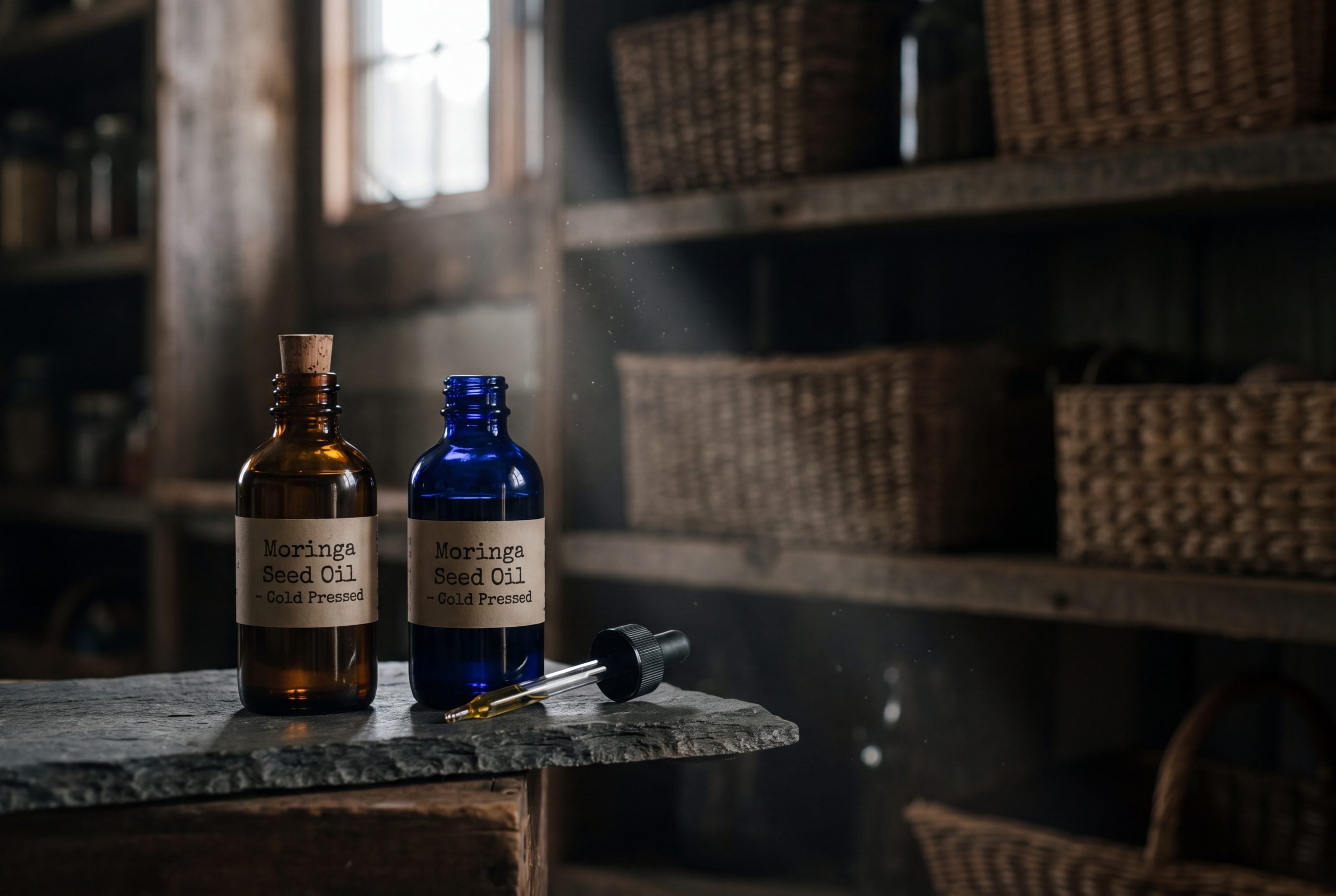
Dark glass, and a bottle sized to how fast you will actually use it. Light degrades carotenoids, and every time a part-full bottle is opened, it takes on a fresh charge of oxygen. A small bottle finished in three months will be in better condition at the end than a large one opened for a year. We have observed in our own testing that headspace is the variable most people overlook.
If a cold-pressed African seed oil for skin and hair is what you are after, our akpi seed oil is pressed from Ricinodendron heudelotii seed and made for the same use case.
Safety, Side Effects, And Who Should Be Cautious
Topical moringa seed oil is generally well tolerated. Allergic reactions are uncommon but possible, and they present as redness, itching, or stinging. Discontinue use if that happens.
Moringa seed oil is reviewed as a cosmetic ingredient by the Cosmetic Ingredient Review, the industry safety assessment programme, alongside related moringa-derived ingredients. Broader safety reviews of Moringa oleifera report a high degree of safety in the studied preparations, with the caveat that standardisation across products is inconsistent (Stohs and Hartman 2015, Phytotherapy Research, PMID: 25808883).
Sensible precautions. Patch test on the inner forearm and wait 24 to 48 hours before first facial use. Anyone pregnant or breastfeeding should speak to a healthcare provider before adding new botanical products, topical or otherwise. Keep the oil away from broken skin and away from the eyes. Anyone with a known allergy to plants in the Moringaceae family should avoid it. If you are treating a diagnosed skin condition, a carrier oil is not a substitute for the care your clinician has prescribed.
Frequently Asked Questions
Is moringa oil good for wrinkles?
It supports the appearance of skin around fine lines mainly through hydration, and hydrated skin reads as smoother. The tocopherol and carotenoid fraction is associated with defence against surface oxidative stress. What has been measured directly in a moringa seed oil cream is improved hydration and reduced redness, so set expectations around those outcomes rather than structural change.
Can I apply moringa oil directly to my face?
Yes. It is light, absorbs well, and carries a comedogenic rating of 0 to 1, which places it among the least pore-clogging carrier oils. Press two to four drops onto slightly damp skin after cleansing. Patch test first on the inner forearm and wait 24 to 48 hours.
Is moringa seed oil safe for sensitive skin?
It is a reasonable choice for sensitive skin, and the reduction in erythema measured in cream formulation testing is directly relevant to reactive complexions. Sensitivity is individual, so patch test, introduce it on its own rather than alongside other new products, and give it a week before adding anything else.
Can moringa seed oil be taken internally?
Food-grade cold-pressed moringa seed oil is edible and has a fatty acid profile suited to culinary use. Cosmetic-grade oil is not food-safe and should not be consumed. Evidence for specific health outcomes from consuming the oil is limited and largely preclinical, so treat it as a cooking oil rather than a supplement.
How does moringa oil compare to argan oil?
Moringa is oleic-acid-dominant and suits dry, mature, or redness-prone skin and coarser hair. Argan carries a more balanced oleic and linoleic profile with high vitamin E and suits oily or blemish-prone skin and finer hair. Moringa has the stronger oxidative stability of the two. Neither is better in the abstract, and the comparison table above breaks the differences down feature by feature.
Does moringa oil grow hair?
No controlled human study shows that moringa seed oil stimulates hair growth. It conditions the shaft and reduces breakage, and retaining length that would otherwise snap off is often experienced as growth. If hair is thinning at the root rather than breaking at the ends, a conditioning oil is not the right tool.
What are the side effects of moringa oil?
Topical use is generally well tolerated. Allergic reactions are uncommon and present as redness, itching, or irritation; in which case, stop using it. Avoid broken skin and the eye area. Consult a healthcare provider if you are pregnant, breastfeeding, or using prescription topicals.
Does moringa oil lighten dark spots?
The available testing does not support that. A moringa seed oil cream improved hydration and reduced erythema but left melanin content unchanged, and melanin is the pigment behind dark spots. For pigmentation concerns, look to ingredients with a documented pigment-pathway mechanism.
Related Reading
Continue with our articles on astaxanthin for skin, bidens pilosa for collagen production, akpi seeds benefits, and moringa and diabetes.
Disclaimer. These statements have not been evaluated by the Food and Drug Administration. This product is not intended to diagnose, treat, cure, or prevent any disease. Consult your healthcare provider before use.