Parasitic infections are a widespread health concern, often presenting with subtle symptoms that can range from digestive discomfort to more systemic issues. While conventional medicine offers treatments, many individuals explore natural approaches, such as using specific herbs and dietary modifications, to support their body’s ability to get rid of these unwelcome organisms. This article provides a comprehensive overview of these natural methods, emphasizing the importance of informed decision-making and professional guidance.
Understanding Parasites and Human Infection
Parasites are organisms that depend on a host for survival, often to the host’s detriment. Intestinal parasites affecting humans fall into two primary groups:
- Protozoa: Microscopic, single-celled organisms capable of multiplying within the human body. Examples include Giardia lamblia and Cryptosporidium parvum.
- Helminths: Larger, multi-cellular organisms, commonly called worms. These typically do not multiply within the human host in their adult stage. Examples include tapeworms (Taenia species), roundworms (Ascaris lumbricoides), pinworms (Enterobius vermicularis), hookworms, and flukes (trematodes).
Recognizing the Signs of Parasitic Infection
The symptoms associated with a parasitic infection can be highly variable, depending on factors such as the specific parasite, the intensity of the infection, and the individual’s overall health. Some individuals may remain asymptomatic, while others experience significant health problems. Common indicators may include:
- Digestive Disturbances: Diarrhea, constipation, excessive gas, bloating, abdominal pain or cramping, nausea, and vomiting are frequent complaints.
- Chronic Fatigue: Persistent tiredness and a general lack of energy, even with sufficient rest, can be a sign.
- Unexplained Weight Changes: Both weight loss and gain, are related to appetite changes and digestive dysfunction.
- Skin Manifestations: Rashes, itching, hives, eczema, or other skin irritations can occur.
- Nutrient Malabsorption: Parasites can hinder the absorption of essential nutrients, potentially leading to deficiencies.
- Sleep Issues: Difficulty falling asleep, insomnia, or restless sleep patterns can be related.
- Perianal Itching: Intense itching around the anus, particularly at night, is a hallmark symptom of pinworms.
- Musculoskeletal Pain: Aches, pains, or inflammation in muscles and joints may be present.
- Anemia: Can occur from certain parasites.
Supporting the Body’s Natural Defenses with Herbs at Home
While not a replacement for conventional medical treatment, certain herbs have a long history of traditional use for supporting the body’s ability to eliminate intestinal parasites. The approach often involves combining specific herbs with dietary modifications. It centers on:
- Interfering with Parasite Viability: Certain herbs contain compounds believed to disrupt the parasite’s life cycle, inhibiting its ability to reproduce, grow, or survive within the host.
- Enhancing Immune Response: Some herbs are thought to have immunomodulatory effects, potentially boosting the body’s natural defenses against infection.
- Restoring Gut Health: A healthy gut microbiome is less conducive to parasite colonization. Many protocols include dietary changes and herbs that promote the growth of beneficial gut bacteria.
- Supporting natural expulsion of parasites.
It’s helpful to acknowledge that, while traditional use and some preliminary research support the use of these herbs, comprehensive clinical trials specifically evaluating complete parasite elimination protocols are limited.
Herbs Traditionally Used for Parasite Support
Several herbs have been traditionally employed for their potential antiparasitic properties. These are often used in synergy to maximize their effects:
- Wormwood (Artemisia absinthium): Renowned for its activity against various intestinal worms. It’s commonly consumed as a tea or in capsule form. The active compound is believed to weaken parasite membranes.
- Black Walnut Hulls (Juglans nigra): Contains juglone, a compound exhibiting antiparasitic, antifungal, and antibacterial actions. It’s thought to be effective against intestinal parasites and aids in cleansing the digestive system.
- Cloves (Syzygium aromaticum): Particularly valued for their potential to target parasite eggs. Cloves contain eugenol, a potent antimicrobial substance.
- Garlic (Allium sativum): A widely used culinary ingredient with recognized antiparasitic and immune-supporting properties. Allicin, a compound in garlic, is believed to contribute to its effects.
- Oregano Oil (Origanum vulgare): Contains carvacrol and thymol, compounds exhibiting strong antimicrobial activity. Oregano oil is often utilized for its potential to address various pathogens, including parasites.
- Berberine-Rich Herbs: Herbs such as Goldenseal (Hydrastis canadensis), Oregon Grape (Mahonia aquifolium), and Barberry (Berberis vulgaris) contain berberine, an alkaloid with demonstrated antiparasitic activity against certain protozoa and helminths.
- Anise (Pimpinella anisum): May help address mild intestinal parasite infections.
- Grape Seed Extract: Exhibits anti-parasite properties.
- Propolis: Demonstrates anti-parasitic effects.
- Neem (Azadirachta indica): Shows potential anti-parasitic activity.
- Olive Leaf (Olea europaea): Has demonstrated some capacity to support the body in combating parasites.
It is absolutely essential to use these herbs under the supervision of a qualified healthcare practitioner. Dosages and potential interactions with medications (such as ivermectin) must be carefully considered.
Clove: Essential Oil or Powder for a Parasite Cleanse?
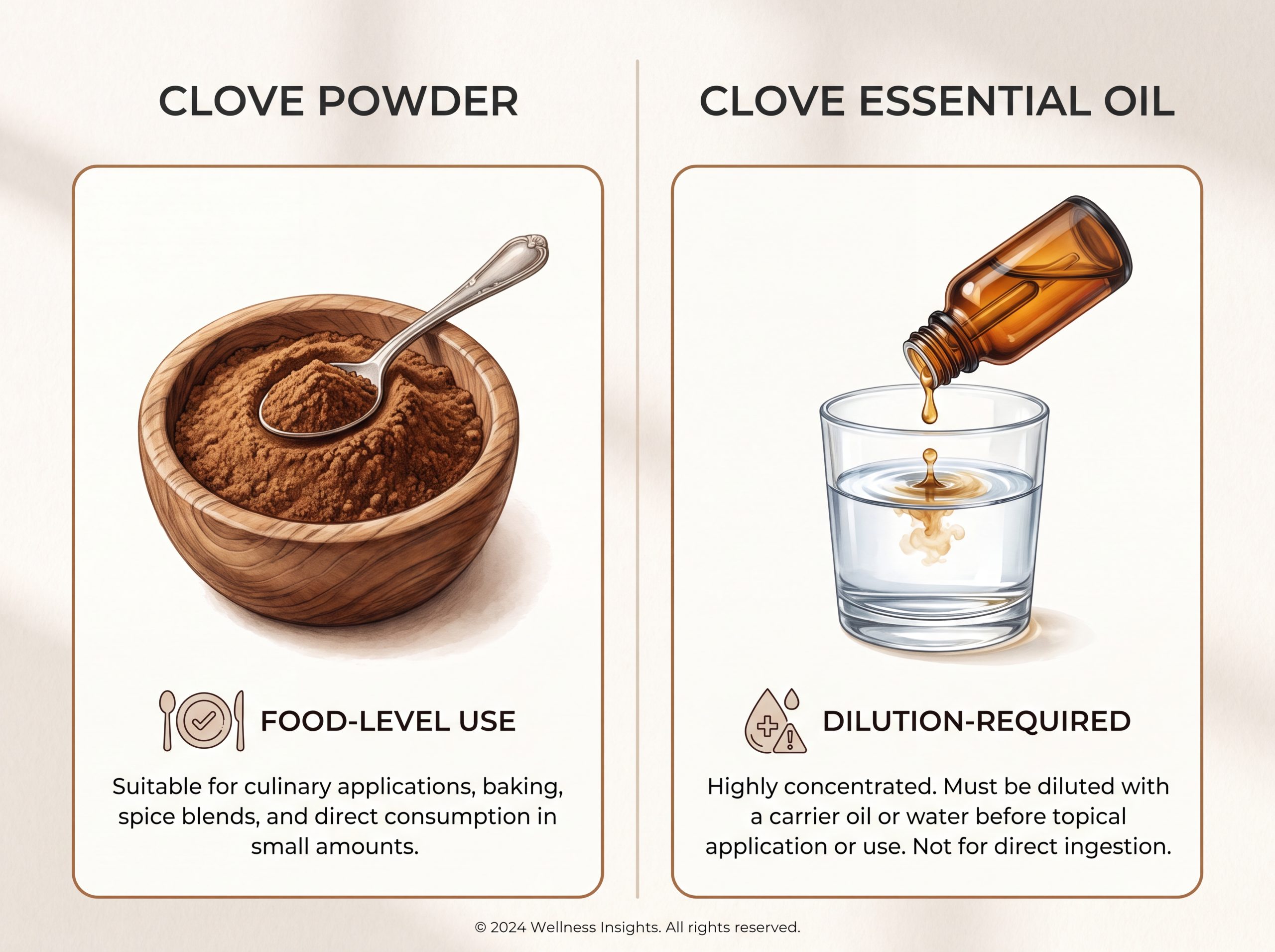
Clove appears in most traditional parasite-support protocols in one of two forms, and the two are not interchangeable. Ground clove powder is the whole dried flower bud, used in food-level amounts in teas, capsules, or alongside meals. Clove essential oil is a concentrated extraction of the same plant, built almost entirely of the compound eugenol, and it is many times more potent by volume than the powder.
Laboratory research on Syzygium aromaticum essential oil and its eugenol content found that both inhibited the growth of Giardia lamblia, a parasite that does infect humans, and interfered with the parasite’s ability to attach to surfaces during testing (Anti-Giardia activity of Syzygium aromaticum essential oil and eugenol, PMID: 21272580). That is laboratory evidence on an isolated organism, not proof that swapping oil for powder changes the outcome of a home cleanse. In our sourcing experience, the practical difference that matters most is safety margin: essential oil needs to be properly diluted and is not meant to be dosed the way a kitchen spice is, while powder form fits more predictably into a traditional food-based routine. Anyone substituting one for the other should adjust dosing accordingly and talk with a healthcare provider first, particularly for children, anyone pregnant or nursing, or anyone taking other medications.
Dietary Strategies for Parasite Elimination Support
Dietary modifications play a crucial role in supporting the body’s natural defenses against parasites. The aim is to create an internal environment that is less hospitable to these organisms while simultaneously promoting overall gut health.
- Foods to Favor:
- Fiber-Rich Options: Vegetables, fruits, and whole grains (if tolerated) encourage regular bowel movements, aiding in parasite elimination.
- Garlic and Onions: As previously mentioned, these possess antiparasitic properties.
- Pumpkin Seeds: Contain cucurbitacin, an amino acid that may help expel tapeworms and roundworms.
- Papaya Seeds: Contain carpaine, which may be beneficial.
- Coconut: The medium-chain fatty acids in coconut may offer antiparasitic effects.
- Probiotic-Rich Choices: Fermented foods like sauerkraut, kimchi, and yogurt (if dairy is tolerated) can contribute to a healthy gut microbiome.
- Prebiotic-Rich Foods: Items like asparagus, bananas, and chicory root nourish beneficial gut bacteria.
- Foods to Limit or Avoid:
- Refined Sugar: Parasites thrive on sugar; therefore, eliminating refined sugars and sweeteners is paramount.
- Processed Foods: These often contain additives and unhealthy fats that can compromise gut health.
- Excessive Simple Carbohydrates: Restrict refined grains (white bread, pasta) as they are rapidly converted to sugar.
- Alcohol: Alcohol can suppress the immune system and negatively affect gut health.
- Certain Meats: Some practitioners advise avoiding pork and raw or undercooked meats during this process.
- Dairy: Some practitioners suggest avoiding dairy products.
A Step-by-Step Approach to Natural Parasite Elimination
This guide offers a general framework. The specific protocol should be individualized and overseen by a healthcare professional.
- Preparation (1-2 weeks prior):
- Consultation: Seek guidance from a qualified healthcare practitioner, such as a naturopathic doctor, herbalist, or functional medicine physician. Discuss your health history, current medications, and objectives.
- Dietary Adjustments: Begin eliminating the “Foods to Limit or Avoid” listed above. Gradually increase your consumption of fiber-rich foods and water.
- Consider Prebiotics and Probiotics: Begin supplementing with prebiotics and probiotics to support a healthy gut environment.
- Selecting Appropriate Herbs:
- Collaborate with your healthcare practitioner to select a combination of herbs and determine the correct dosages. Common forms include capsules, tinctures, and teas.
- While many individuals work with practitioners to customize their herbal regimens, others prefer the convenience of pre-formulated herbal blends.
- The Elimination Protocol (2-6 weeks, or as directed):
- Adherence: Take the chosen herbs as prescribed by your practitioner. Consistency is crucial.
- Dietary Maintenance: Strictly adhere to the dietary recommendations.
- Hydration: Consume ample filtered water throughout the day to facilitate toxin removal.
- Rest: Ensure sufficient rest to support the body’s natural healing processes.
- Observation: Carefully monitor any symptoms you experience. Report any adverse reactions to your practitioner.
- Maintenance (Ongoing):
- Dietary Transition: Gradually reintroduce foods, observing your body’s responses. Maintain a focus on a whole-foods, low-sugar diet abundant in fiber, prebiotics, and probiotics.
- Lifestyle Practices: Uphold good hygiene habits, particularly handwashing. Practice safe food handling, especially during travel. Take steps to actively prevent re-infection.
- Follow-Up: Schedule a follow-up appointment with your healthcare provider to evaluate the protocol’s effectiveness and discuss long-term strategies. A stool test might be repeated to assess parasite presence.
Important Precautions and Considerations
- Professional Guidance is Paramount: Always consult a healthcare professional before undertaking any parasite elimination protocol, especially if you have pre-existing health conditions, are taking medications (including over-the-counter drugs), are pregnant or breastfeeding, or have a weakened immune system.
- Possible Side Effects: Some individuals may experience mild side effects, such as headaches, fatigue, digestive discomfort, or flu-like symptoms. These are often attributed to a “Herxheimer reaction,” a temporary symptom exacerbation due to parasite die-off and the release of toxins. If symptoms are severe or persistent, discontinue the protocol and consult your practitioner.
- Potential Drug Interactions: Herbs can interact with pharmaceutical drugs. Fully inform your physician about all herbs and supplements you are using.
- Not a Replacement for Medical Care: Natural parasite elimination protocols are not a substitute for conventional medical diagnosis and treatment. If you suspect a parasitic infection, seek prompt professional medical advice.
- Product Quality: Our related products should come from a high-quality provider.
Are There Risks to Long-Term or Repeated Parasite Cleanses?
Yes, and the risk profile changes the longer a cleanse continues. Wormwood is the clearest example. A published risk assessment of thujone, the compound responsible for wormwood’s neurotoxic potential at high doses, concluded that short-term medicinal use is generally considered lower-risk, while long-term use is where the safety data gets thin (Risk assessment of thujone in foods and medicines containing sage and wormwood, PMID: 20727933). Most herbalist guidance limits wormwood use to about four weeks at a time, followed by a break, rather than continuous daily use for months.
Black walnut hull carries a similar caution. Its antiparasitic activity is linked to juglone-related compounds that are biologically active enough to affect single-celled organisms in laboratory testing (PLS-Prediction and Confirmation of Hydrojuglone Glucoside as the Antitrypanosomal Constituent of Juglans Spp., PMID: 26035104), which is exactly why it is not a supplement to treat as a daily, indefinite habit. From our hands-on assessment of how these protocols are typically used, a defined start and end date, built around a specific goal, is safer than an open-ended routine. Repeated or extended cleanses without a break, or without a healthcare provider involved, are where the long-term risk actually lives. Anyone with liver or kidney concerns, anyone on prescription medication, and anyone pregnant or nursing should speak with a healthcare provider before starting any multi-week herbal protocol.
The Importance of Scientific Scrutiny
It is essential to acknowledge the limited robust scientific evidence supporting the widespread claims regarding natural parasite elimination protocols. Although many of the individual herbs used have shown antiparasitic activity in laboratory settings (in vitro) or animal studies, large-scale, well-designed human clinical trials are lacking to definitively confirm their effectiveness in treating parasitic infections in humans. While anecdotal evidence and traditional use hold value, they do not replace rigorous scientific investigation. The information presented here is for educational purposes and should not be construed as medical advice. Always collaborate with a qualified healthcare professional.
How Strong Is the Evidence Behind a Parasite Cleanse?
Most of what people call a “parasite cleanse” combines herbs with a long history of traditional use, not a single clinically tested protocol. Laboratory research on individual ingredients does exist. Wormwood (Artemisia absinthium) extract reduced live nematode egg counts by over 90 percent in a controlled animal trial (Anthelmintic activity of extracts of Artemisia absinthium against ovine nematodes, PMID: 19070963), and clove essential oil and its compound eugenol slowed the growth of Giardia lamblia in laboratory testing (PMID: 21272580).
Animal and laboratory findings are a meaningful starting point. They are not the same as a large human clinical trial confirming that a store-bought cleanse product clears an active infection. The CDC’s guidance on diagnosing parasitic disease recommends laboratory stool testing, sometimes across three or more separate samples, before treatment begins. If you suspect an active infection rather than general digestive support, that diagnostic step comes first. Our editorial team has reviewed this evidence gap directly with readers in mind: herbs traditionally used for parasite support may support the body’s natural processes, but a confirmed diagnosis and a healthcare provider’s guidance are what determine whether treatment for an actual infection is needed.
Related Reading
Continue exploring how specific herbs support a parasite cleanse with this related article from our team:
- Do walnuts kill parasites? What the research on black walnut actually shows
If you are ready to put a traditional herbal approach into practice, our Parasite and Worm Cleanse formula is built around the same wormwood, black walnut, and clove combination discussed above, and is also available as a tincture or capsules depending on your preferred format.
A Note on This Information
These statements have not been evaluated by the Food and Drug Administration. This product is not intended to diagnose, treat, cure, or prevent any disease. Consult your healthcare provider before use.