How Does Ginkgo Biloba Affect Libido?
Ginkgo biloba’s potential effects on libido are thought to stem from several key mechanisms:
Nitric Oxide and Vasodilation
Ginkgo biloba helps increase levels of nitric oxide, a molecule that relaxes blood vessels and improves blood flow. This increased blood flow to the genital area is essential for both male and female sexual arousal and function. Proper vasodilation is a fundamental physiological process necessary for healthy erectile function in men and adequate lubrication and sensation in women.
Neurotransmitter Modulation
Ginkgo biloba can influence neurotransmitters like dopamine and serotonin, which play important roles in sexual desire, arousal, and mood. Studies suggest it may help balance these neurotransmitters, potentially leading to an improvement in libido. The interplay of these neurotransmitters is complex, but their balance is vital for a healthy sex drive.
This circulatory and neurotransmitter rationale is the reason ginkgo has most often been studied in the context of sexual difficulty associated with antidepressant (SSRI) use, where reduced arousal is a common complaint. The research here is genuinely mixed. An early open-label report suggested a high response rate in people experiencing antidepressant-associated sexual difficulty (Cohen and Bartlik, 1998, Journal of Sex and Marital Therapy, PMID: 9611693), but open trials have no placebo control and tend to overstate benefit. When the same question was tested under rigorous blinding, two placebo-controlled trials found no significant advantage for ginkgo over placebo (Wheatley, 2004, Human Psychopharmacology, PMID: 15378664; Kang et al., 2002, PMID: 12404672). In our editorial review of this literature, the honest reading is that ginkgo is traditionally used to support circulation and a healthy stress response, but the controlled evidence for a direct effect on antidepressant-associated sexual difficulty remains inconsistent. A 2021 systematic review reached the same conclusion, describing the overall evidence as limited while noting ginkgo is generally well tolerated (PMID: 34290964).
Antioxidant and Anti-inflammatory Effects
Ginkgo biloba is rich in antioxidants (flavonoids and terpenoids) that protect cells from damage caused by oxidative stress. Oxidative stress can negatively impact sexual function, so Ginkgo biloba’s antioxidant properties may contribute to its benefits. Additionally, Ginkgo biloba possesses anti-inflammatory properties, primarily due to the action of ginkgolides. These compounds can inhibit inflammatory pathways, offering support to the cells.
Hormonal Effects
Ginkgo biloba may have mild phytoestrogenic effects. Further clinical research is needed to clarify the extent and implications of these effects, particularly concerning long-term use.
What Does the Research Say About Ginkgo Biloba and Libido?
Research on the Effects of Ginkgo Biloba on Libido Scientists has investigated how ginkgo biloba extract may influence erectile function, arousal, and overall sexuality. While some research suggests that gingko may alleviate symptoms of erectile disorder (ED) and enhance sexual desire, more evidence is needed to fully understand its effects on libido.
A comprehensive review of the scientific literature reveals a mixed picture. Some studies show promising results, while others show no significant difference between Ginkgo biloba and a placebo. This inconsistency highlights the need for further, more rigorous research.
Studies Showing Positive Effects
One study found that Ginkgo biloba supplementation led to improved sexual function in individuals taking antidepressant medications, which are known to cause sexual side effects. The results indicated that Ginkgo biloba may help counteract antidepressant-induced sexual dysfunction and promote healthier arousal and orgasm in both male and female participants.
- Antidepressant-Induced Sexual Dysfunction: A study by Cohen and Bartlik investigated Ginkgo biloba’s effects on patients experiencing sexual dysfunction due to antidepressant use. The results suggested that Ginkgo biloba could be effective in improving sexual function in this population. (Cohen, A. J., & Bartlik, B. (1998). Ginkgo biloba for antidepressant-induced sexual dysfunction. Journal of Sex & Marital Therapy, 24(2), 139-143.) Another study supporting the use of Ginkgo biloba, was by Meston, Rellini, & Telch, in 2008.
- Studies on Postmenopausal Women: Some research indicates that Ginkgo biloba may be particularly beneficial for postmenopausal women experiencing a decline in libido. This may be related to its effects on blood flow and potentially mild hormonal influences, although more research is needed in this area.
- Studies on Men with Erectile Dysfunction: A double-blind trial using 240mg of Ginkgo biloba extract (GBE) showed improvements in some men with erectile dysfunction.
Studies Showing No Significant Effect
- General Population Studies: Some studies examining Ginkgo biloba’s effects on libido in the general population (without specific underlying conditions) have found no significant benefit compared to a placebo. This suggests that Ginkgo biloba may be more effective for individuals with specific causes of low libido, such as medication side effects or circulatory problems.
Studies using standardized extract EGb 761
Many of the studies showing positive results used a standardized Ginkgo biloba extract known as EGb 761. This extract is standardized to contain 24% flavone glycosides and 6% terpene lactones, ensuring a consistent level of active compounds.
Researchers have explored the combination of Ginkgo biloba and other natural supplements, such as ginseng, to assess their synergistic effects on sexual health. Some studies suggest that these herbal remedies may work together to support healthy blood flow and improve physiological responses related to sexual function.
However, it is essential to note that while these findings are promising, more research is necessary to establish a clear link between Ginkgo biloba and enhanced libido. Many studies have limitations, such as small sample sizes or lack of placebo controls, which can impact the reliability of the results.
Key research referenced in this section: Cohen and Bartlik, 1998, J Sex Marital Ther (PMID: 9611693); Kang et al., 2002, Hum Psychopharmacol (PMID: 12404672); Wheatley, 2004, Hum Psychopharmacol (PMID: 15378664); Meston, Rellini and Telch, 2008, Arch Sex Behav (PMID: 18274887); and a 2021 systematic review of ginkgo and sexual function (PMID: 34290964). Taken together, these show a traditional and mechanistic rationale for circulatory support alongside inconsistent controlled outcomes, which is why we frame ginkgo as traditionally used to support blood flow rather than as a proven intervention.
Ginkgo Biloba and Female Fertility: What the Research Shows
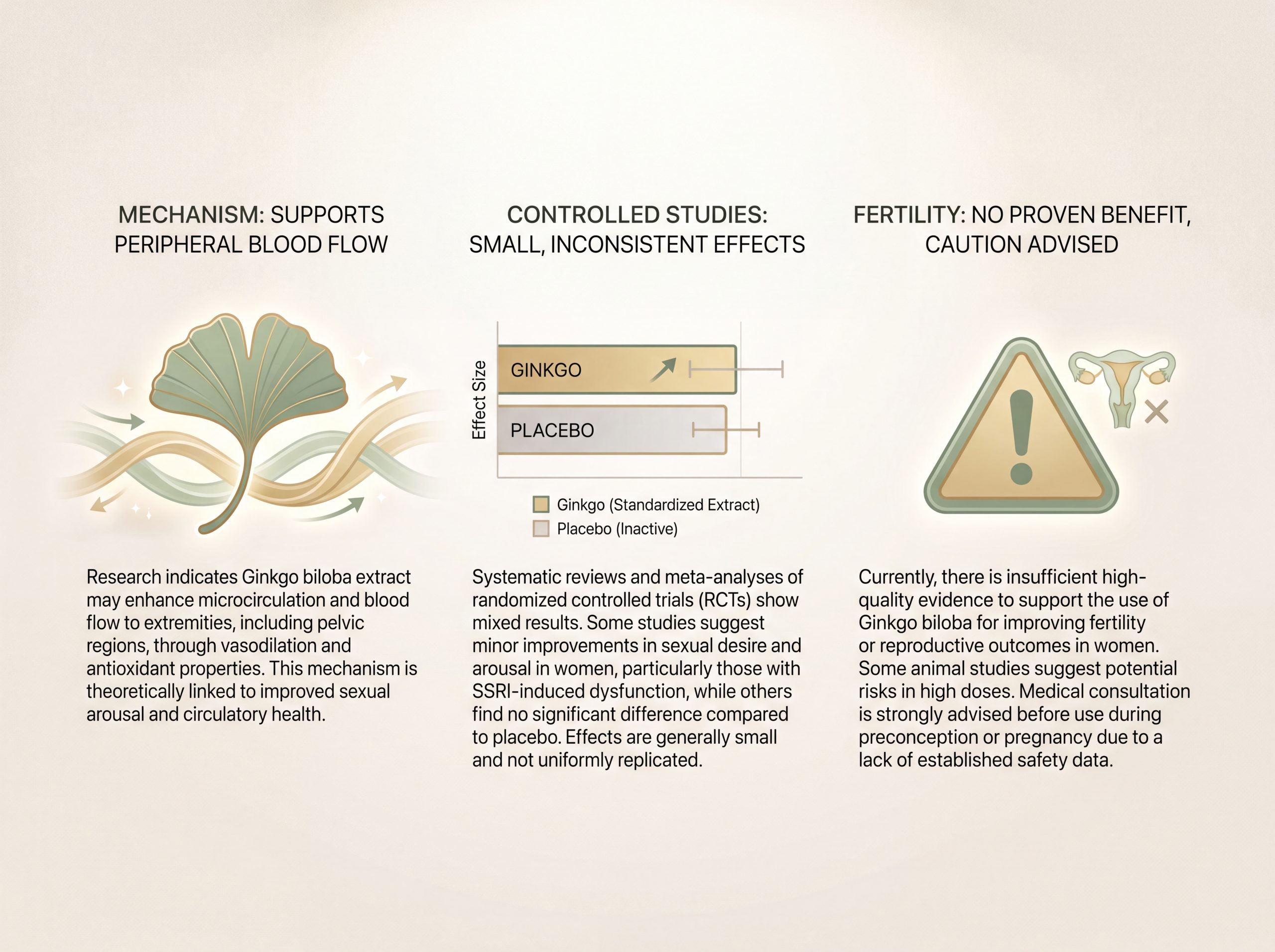
Searches about ginkgo and female fertility are common, so it is worth stating plainly where the evidence stands. Ginkgo biloba (standardized leaf extract, often labeled EGb 761) is traditionally used to support peripheral circulation, and that circulatory rationale is the entire basis for the fertility question. There is, at present, no strong human clinical evidence that ginkgo improves female fertility outcomes. What follows separates the mechanism-based reasoning from what studies have actually measured.
Effects on Circulation and Menstrual-Cycle Comfort
The active constituents in ginkgo are the flavonoid glycosides and terpene lactones (ginkgolides and bilobalide), which are associated with nitric-oxide-mediated vasodilation and antioxidant activity. In traditional and structure/function terms, ginkgo is used to support healthy blood flow to peripheral tissues. Some people ask about ginkgo for cycle-related comfort for this circulatory reason, but it is important to be clear that supporting circulation is not the same as an established fertility benefit, and the two should not be conflated.
What Studies in Women Actually Show
The most directly relevant controlled research looked at sexual arousal rather than fertility. In a study of women with arousal difficulty, a single 300 mg dose of ginkgo extract produced a small increase in physiological arousal measures but no significant change in subjective experience, and longer-term daily use did not significantly outperform placebo (Meston, Rellini and Telch, 2008, Archives of Sexual Behavior, PMID: 18274887). We have found no well-controlled human trials showing that ginkgo raises fertility markers, improves ovulation, or increases conception rates. Anyone reading a confident fertility claim about ginkgo should treat it with caution, because the controlled data to support it does not currently exist.
Combining Ginkgo With Other Fertility-Support Botanicals
People often ask whether ginkgo can be stacked with other traditionally used botanicals such as maca, shatavari, or vitex. The key issue here is safety rather than synergy. Ginkgo has measurable effects on platelet aggregation and can add to the blood-thinning effect of some supplements and medications, so combining it with other actives without professional guidance is not advisable. If you are actively trying to conceive or already taking a fertility protocol, treat ginkgo as something to clear with your healthcare provider first, not something to add on your own.
How Ginkgo Compares to Other Traditionally-Used Botanicals
Compared with botanicals more commonly associated with the female reproductive tradition, ginkgo sits in a different category. Its documented human research centers on circulation and cognition rather than hormonal or cycle regulation, whereas herbs like vitex (Vitex agnus-castus) have a longer research history specifically around cycle regularity. In our editorial assessment, ginkgo is best understood as a circulation-supporting botanical that some people include as part of a broader wellness routine, not as a targeted fertility herb. For an independent overview of ginkgo’s evidence and safety, the National Center for Complementary and Integrative Health maintains a useful summary (NCCIH: Ginkgo), as does Memorial Sloan Kettering’s About Herbs database (MSK About Herbs: Ginkgo).
Ginkgo Biloba: Side Effects, Risks, and Drug Interactions
While Ginkgo biloba is generally considered safe when taken in recommended doses, it’s vital to be aware of potential side effects, risks, and drug interactions.
Common Side Effects
- Headaches
- Digestive issues (stomach upset, nausea, diarrhea)
- Allergic skin reactions (rash, itching)
Serious Side Effects (Rare)
- Increased Bleeding Risk: Ginkgo biloba can interfere with blood clotting, especially when taken in high doses or combined with blood-thinning medications. This is a significant concern and should be discussed with a healthcare provider.
- Seizures: There have been reports of seizures in individuals taking Ginkgo biloba, particularly in those with a history of epilepsy or seizure disorders.
Drug Interactions
Ginkgo biloba may interact with certain medications, potentially altering their effectiveness or causing adverse reactions. It is to discuss the use of Ginkgo biloba with a qualified healthcare professional before starting any supplement regimen, especially if you have a pre-existing medical condition or are taking medications. They can help you weigh the potential benefits and risks, and determine an appropriate dose based on your individual needs and health status.
- Anticoagulants and Antiplatelet Drugs: Ginkgo biloba can increase the risk of bleeding when taken with blood thinners like warfarin, aspirin, and antiplatelet drugs.
- NSAIDs: Combining Ginkgo biloba with NSAIDs (like ibuprofen) may also increase bleeding risk.
- Antidepressants (SSRIs, MAOIs): There’s a potential for interaction, possibly increasing the risk of serotonin syndrome (with SSRIs) or hypertensive crisis (with MAOIs).
- Anti-seizure Medications: Ginkgo biloba may lower the seizure threshold, potentially reducing the effectiveness of these medications.
- Diabetes Medications: Ginkgo biloba may affect blood sugar levels. Individuals with diabetes should monitor their blood sugar closely and consult their doctor.
- Medications for High blood pressure: Ginkgo may lower blood pressure.
Contraindications
- Pregnancy and Breastfeeding: Ginkgo biloba is not recommended for pregnant or breastfeeding women due to a lack of safety data.
- Bleeding Disorders: Individuals with bleeding disorders should avoid Ginkgo biloba.
- Upcoming Surgery: Ginkgo biloba should be discontinued at least two weeks before any scheduled surgery due to the increased bleeding risk.
- Seizure Disorders: Individuals with epilepsy or a history of seizures should use Ginkgo biloba with caution or avoid it altogether.
- Infertility: Discuss with a healthcare provider, as Ginkgo biloba may interfere with getting pregnant.
Pregnancy, nursing, and trying to conceive: Because ginkgo affects platelet activity and its safety during pregnancy has not been established, it is generally advised to avoid ginkgo if you are pregnant, nursing, or actively trying to conceive, unless your healthcare provider has cleared it. This is the same circulatory property discussed in the female-fertility section above, viewed from the safety side. When in doubt, consult your healthcare provider before use.
Ginkgo Biloba Dosage for Libido: How to Use It Safely
If you are interested in using Ginkgo biloba to support your sexual health and libido, here are some tips to keep in mind.
- Dosage Ranges: Most studies showing positive effects on libido have used standardized Ginkgo biloba extract (EGb 761) at dosages of 120mg to 240mg per day, divided into two or three doses. However, the optimal dosage may vary depending on individual factors and the specific product used.
- Forms: Ginkgo biloba is available in various forms, including capsules, tablets, liquid extracts, and teas.
- Standardized Extracts: It’s generally recommended to choose supplements standardized to contain 24% flavone glycosides and 6% terpene lactones. EGb 761 is the most researched standardized extract.
- Start Low, Go Slow: Begin with the lowest recommended dose and gradually increase if needed, under the guidance of a healthcare professional.
- Consistency: It may take several weeks or months to notice any effects on libido. Consistent use is often recommended.
- Consult a Healthcare Professional: Always talk to your doctor before starting Ginkgo biloba, especially if you have any underlying health conditions or are taking medications.
Choosing a High-Quality Ginkgo Biloba Supplement
The quality of Ginkgo biloba supplements can vary considerably. To ensure you’re getting a safe and effective product, consider the following:
- Standardized Extracts: Look for supplements standardized to contain 24% flavone glycosides and 6% terpene lactones. This ensures a consistent level of active compounds. The standardized extract EGb 761 is often used in research.
- Third-Party Certification: Choose supplements that have been independently tested and certified by reputable organizations like USP (United States Pharmacopeia), NSF International, or ConsumerLab. These organizations verify the identity, purity, and potency of supplements.
- Reputable Brands: Opt for well-known and trusted brands with a history of producing high-quality supplements.
- Read Labels Carefully: Check for any added ingredients, fillers, or potential allergens.
A Holistic Approach to Sexual Health
While Ginkgo biloba may offer potential benefits for libido, it’s important to remember that it’s not a “magic bullet.” Sexual health is complex and influenced by various factors, including physical health, mental well-being, relationship dynamics, and lifestyle choices. Combining Ginkgo biloba with a balanced diet, regular exercise, stress management, and open communication with your partner can help support overall sexual wellness.
A comprehensive approach to sexual health includes:
- Healthy Diet: Eating a balanced diet rich in fruits, vegetables, whole grains, and lean protein provides essential nutrients for overall health, including sexual function.
- Regular Exercise: Physical activity improves circulation, boosts energy levels, and enhances mood, all of which can positively impact libido.
- Stress Management: Chronic stress can significantly dampen sex drive. Techniques like yoga, meditation, and deep breathing can help manage stress levels.
- Open Communication: Talking openly and honestly with your partner about your desires, concerns, and needs is crucial for a fulfilling sex life.
- Addressing Underlying Medical Conditions: Certain health conditions, such as diabetes, heart disease, and hormonal imbalances, can affect libido. Seeking treatment for these conditions is essential.
Frequently Asked Questions (FAQ)
- How long does it take for Ginkgo biloba to work for libido? It may take several weeks or even months of consistent use to notice any significant effects on libido. Individual responses can vary.
- Can I take Ginkgo biloba with Viagra? No, it’s generally not recommended to combine Ginkgo biloba with Viagra (sildenafil) or other similar medications due to the increased risk of bleeding. Always consult your doctor before combining any supplements with prescription drugs.
- Is Ginkgo biloba safe for women? Ginkgo biloba is generally considered safe for women when taken in recommended doses. However, pregnant and breastfeeding women should avoid it due to a lack of safety data. Women with bleeding disorders or those taking certain medications should also consult their doctor before use. There is some concern that it may affect fertility.
- What is the best form of Ginkgo biloba for libido? Standardized extracts (containing 24% flavone glycosides and 6% terpene lactones) are generally recommended for consistency and potency. EGb 761 is a well-researched standardized extract. The form (capsule, tablet, liquid) is less important than the standardization.
- Can Ginkgo biloba be taken with Maca? More research is needed.
Final Thoughts
Ginkgo biloba has been the subject of much research and discussion related to sexual health and libido. While some studies suggest that Ginkgo biloba extract may offer benefits for sexual function, particularly in individuals with certain health conditions or those experiencing sexual side effects from medications, more research is needed to confirm its effects and long-term safety.
It is important to approach the use of Ginkgo biloba for libido enhancement with caution and under the guidance of a qualified healthcare professional. They can help you assess whether Ginkgo biloba is appropriate for your needs and health status and monitor for potential side effects or interactions with other medications or supplements.
Disclaimer: These statements have not been evaluated by the Food and Drug Administration. This product is not intended to diagnose, treat, cure, or prevent any disease. Consult your healthcare provider before use, especially if you are pregnant, nursing, taking medication, or have a medical condition.