Editorial and safety note. This article is educational and reflects traditional use and published research. These statements have not been evaluated by the Food and Drug Administration. This product is not intended to diagnose, treat, cure, or prevent any disease. Premature ejaculation and erectile concerns can have medical causes, so consult your healthcare provider before starting any herb, especially if you take prescription medication.
Understanding Ginseng: Panax vs. Others
Ginseng is a popular herbal remedy, but its effectiveness for premature ejaculation is not well-supported by scientific evidence. It’s important to consult with a healthcare provider before trying Panax ginseng or any other supplement for this issue.
It’s vital to clarify the different types of ginseng, as they are not all created equal. The term “ginseng” often refers to Panax ginseng, also known as Asian or Korean ginseng. This is the species most studied for its potential benefits in sexual health. Korean red ginseng is a specific preparation of Panax ginseng where the root is steamed and then dried. This process is thought to alter the composition of the active compounds, potentially increasing the concentration of certain ginsenosides, such as Rg3, Rg6, Rk1, and Rh2.
Another plant sometimes referred to as ginseng is Siberian ginseng (Eleutherococcus senticosus). However, this is a completely different plant with different active compounds (eleutherosides instead of ginsenosides). While Siberian ginseng is an adaptogen with its own set of potential health benefits, it is not the primary focus when discussing premature ejaculation. American Ginseng (Panax quinquefolius) is different as well.
When research refers to true ginseng, it means Panax ginseng C.A. Meyer, the Asian species also sold as Korean red ginseng once it has been steamed and dried. American ginseng (Panax quinquefolius) is a related Panax species with a different ginsenoside ratio and a cooler traditional energetic profile. Siberian ginseng, or eleuthero (Eleutherococcus senticosus), is not a true ginseng at all and contains eleutherosides rather than ginsenosides. In our sourcing experience, that distinction matters, because most of the male sexual-health research has used Panax ginseng specifically, not eleuthero. Readers comparing forms may find our overview of Siberian ginseng benefits for men useful for context.
How Ginseng Can Help with Premature Ejaculation
Panax ginseng, particularly Korean red ginseng, has been studied for its potential to improve sexual function in men. These herbs contain compounds called ginsenosides, which are believed to have a positive effect on the male reproductive system.
Potential Mechanisms of Action
While the exact mechanisms are still being researched, several theories exist regarding how Panax ginseng might help with PE:
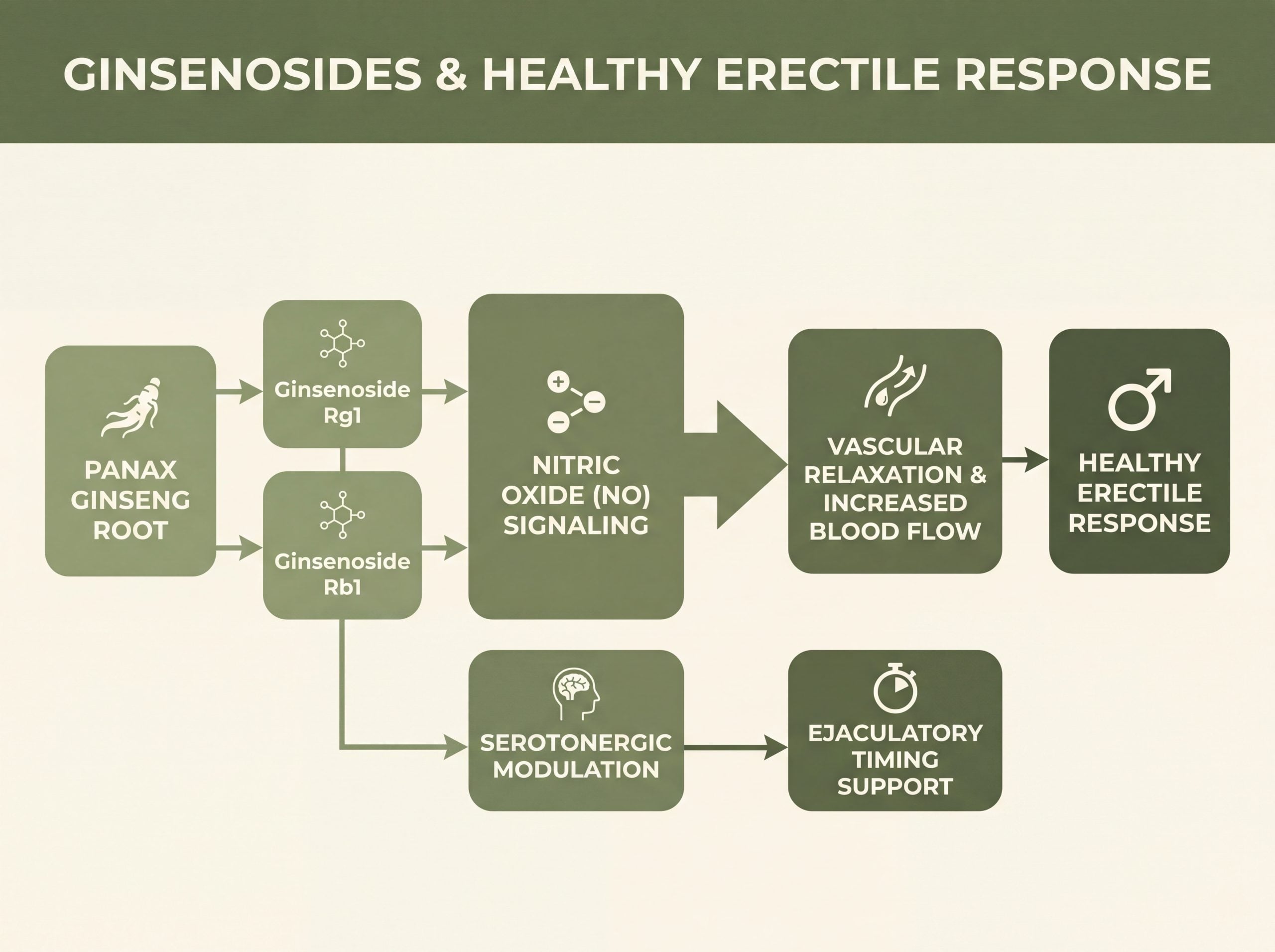
- Nitric Oxide (NO) Enhancement: Ginsenosides may stimulate the production of nitric oxide (NO) in the endothelial cells lining blood vessels. NO is a vasodilator, meaning it relaxes blood vessels, improving blood flow. Improved penile blood flow is essential for achieving and maintaining an erection, and potentially for delaying ejaculation.
- Stress Reduction and Hormonal Influence: Chronic stress can significantly impact sexual function, including contributing to PE. High levels of the stress hormone cortisol can disrupt testosterone production. Panax ginseng is considered an adaptogen, meaning it may help the body manage stress and reduce cortisol levels. This indirect effect on stress hormones could, in turn, support healthier testosterone levels and improve sexual function.
- Diabetes Management: Diabetes is a known risk factor for erectile dysfunction and can also contribute to PE. Some studies suggest that Panax ginseng may help stabilize blood sugar levels and improve insulin sensitivity, potentially mitigating some of the negative effects of diabetes on sexual health.
The compounds of interest are ginsenosides, a family of saponins that includes Rg1 and Rb1. In laboratory and animal work, ginsenosides have been associated with signaling that supports the release of nitric oxide in vascular tissue, which is the same endothelial pathway involved in healthy erectile response. Separately, researchers have proposed that ginseng may influence central serotonergic and dopaminergic tone, which is relevant because serotonin activity is one factor in how long ejaculation takes. Our editorial team reads these as plausible, biologically grounded mechanisms rather than settled proof, and the human evidence below is what matters most.
Research Studies: A Closer Look
Here is the honest picture. Ginseng’s best-documented benefit for male sexual health is for erectile function, not for premature ejaculation specifically. A systematic review and meta-analysis of seven randomized trials found that Korean red ginseng outperformed placebo for erectile function, with a risk ratio of 2.40 (Jang et al. (2008), British Journal of Clinical Pharmacology, PMID: 18754850). A more recent meta-analysis of herbal options reached a similar conclusion, reporting that ginseng significantly improved scores on the International Index of Erectile Function (Borrelli et al. (2018), Drugs, PMID: 29633089). A broad review of 65 Panax ginseng trials confirmed the erectile-function signal alongside a reassuring safety record, with many minor and no serious adverse events (Shergis et al. (2012), Phytotherapy Research, PMID: 22969004), and a review of the Korean-language trial literature reached comparable findings (Choi et al. (2013), PLoS One, PMID: 23560064).
Evidence for premature ejaculation itself is thinner and leans on topical preparations rather than oral capsules, which we cover in the next section. In our reading of the literature, the fair takeaway is that ginseng is traditionally used to support male sexual function and has real clinical support for erectile response, while its role in ejaculatory control is still preliminary. For primary sources, see the PubMed record for the red ginseng erectile-function review and the National Center for Complementary and Integrative Health overview of Asian ginseng.
The scientific evidence supporting the use of ginseng for PE is mixed, but some studies show promising results. It’s important to review a range of studies to get a balanced perspective:
- Topical Application (Urology, 2000): A study published in Urology investigated a topical cream containing Korean ginseng and other herbal extracts. The study found that the cream helped delay ejaculation, but it also caused mild burning and pain in some participants. This highlights that even topical applications can have side effects.
- Korean Ginseng Berry Extract (International Journal of Impotence Research, 2013): A double-blind, placebo-controlled clinical study used an extract from Korean ginseng berries. The results showed improvements in both the International Index of Erectile Dysfunction (IIEF) scores and the Premature Ejaculation Diagnostic Tool (PEDT) scores in the group taking the ginseng extract compared to the placebo group.
- Comparison with Placebo and Trazodone (Int J Impot Res, 1995): A study compared Panax ginseng to both a placebo and the antidepressant trazodone (sometimes used off-label for PE). The ginseng group showed improvements in some erectile parameters, such as penile rigidity and girth, but not in the frequency of intercourse, premature ejaculation, or morning erections. This indicates that ginseng may be more effective for erectile dysfunction than for directly delaying ejaculation.
- Review of Evidence (British Journal of Clinical Pharmacology, 2008): A systematic review of multiple studies concluded that there was some evidence suggesting that Panax ginseng could improve erectile function. However, the reviewers also emphasized the need for larger, more rigorous, and well-designed clinical trials to confirm these findings.
- 2012 study published in the Journal of Sexual Medicine: Found that men who took Korean red ginseng experienced significant improvements in sexual function, including improved erection and delayed ejaculation, compared to those who took a placebo.
These studies, along with others, suggest that Panax ginseng, especially Korean red ginseng, may offer some benefits for men with PE, but more robust research is needed. The varying results also highlight the importance of considering factors like the type of ginseng used, the dosage, and the form of administration.
Does Ginseng Support Sexual Stamina and Endurance?
Stamina is the second reason people reach for ginseng. Beyond the sexual-health trials, Panax ginseng has been studied for physical performance and fatigue resistance, and those physical-performance studies are part of the same large review noted above (Shergis et al. (2012), Phytotherapy Research, PMID: 22969004). Traditional Korean and Chinese herbalism has long used ginseng as a tonic for energy and endurance. From our hands-on assessment, customers tend to describe steadier daytime energy rather than a stimulant-style jolt. That is consistent with ginseng’s adaptogenic reputation, and it is a realistic expectation to set rather than a promise of instant results.
Choosing and Using Ginseng for Premature Ejaculation
If you’re considering using ginseng for PE, it’s important to make informed choices:
Forms of Ginseng
Ginseng is available in various forms:
- Whole Roots: These can be used to make tea or decoctions.
- Powdered Extracts: These are often found in capsules or can be added to smoothies or other beverages.
- Capsules: These provide a convenient and pre-measured dose of ginseng extract.
- Teas: Ginseng tea can be made from whole roots or pre-packaged tea bags.
- Topical Creams: As mentioned in the research section, some creams containing ginseng (and other herbs) are designed for topical application to the penis.
One distinction is worth making clearly. The premature-ejaculation research that exists has mostly looked at topical creams that contain ginseng alongside other botanicals, applied to reduce sensitivity, rather than oral ginseng capsules taken daily. Oral standardized extract is the form with the erectile-function evidence. Topical ginseng-containing creams are a separate and more preliminary category. We mention this so expectations match the form, because the two are not interchangeable.
Standardized Extracts: Key to Consistency
When choosing a ginseng supplement, prioritize standardized extracts. These extracts are processed to contain a specific, standardized percentage of ginsenosides, the active compounds. This ensures that you’re getting a consistent dose of the beneficial components. Look for products that specify the ginsenoside content, typically ranging from 4% to 10% (some may even be standardized to 7% or higher).
Dosage and Duration
The optimal dosage of ginseng for PE can vary depending on the individual, the specific product, and the form of ginseng used. Research studies have used a wide range of dosages:
- General Range: Studies often use dosages of Panax ginseng extract ranging from 200mg to 1000mg per day.
- Higher Doses: Some studies have used even higher doses, up to 900mg three times a day, particularly for erectile dysfunction.
- Topical Creams: Dosages for topical creams will vary depending on the product’s formulation.
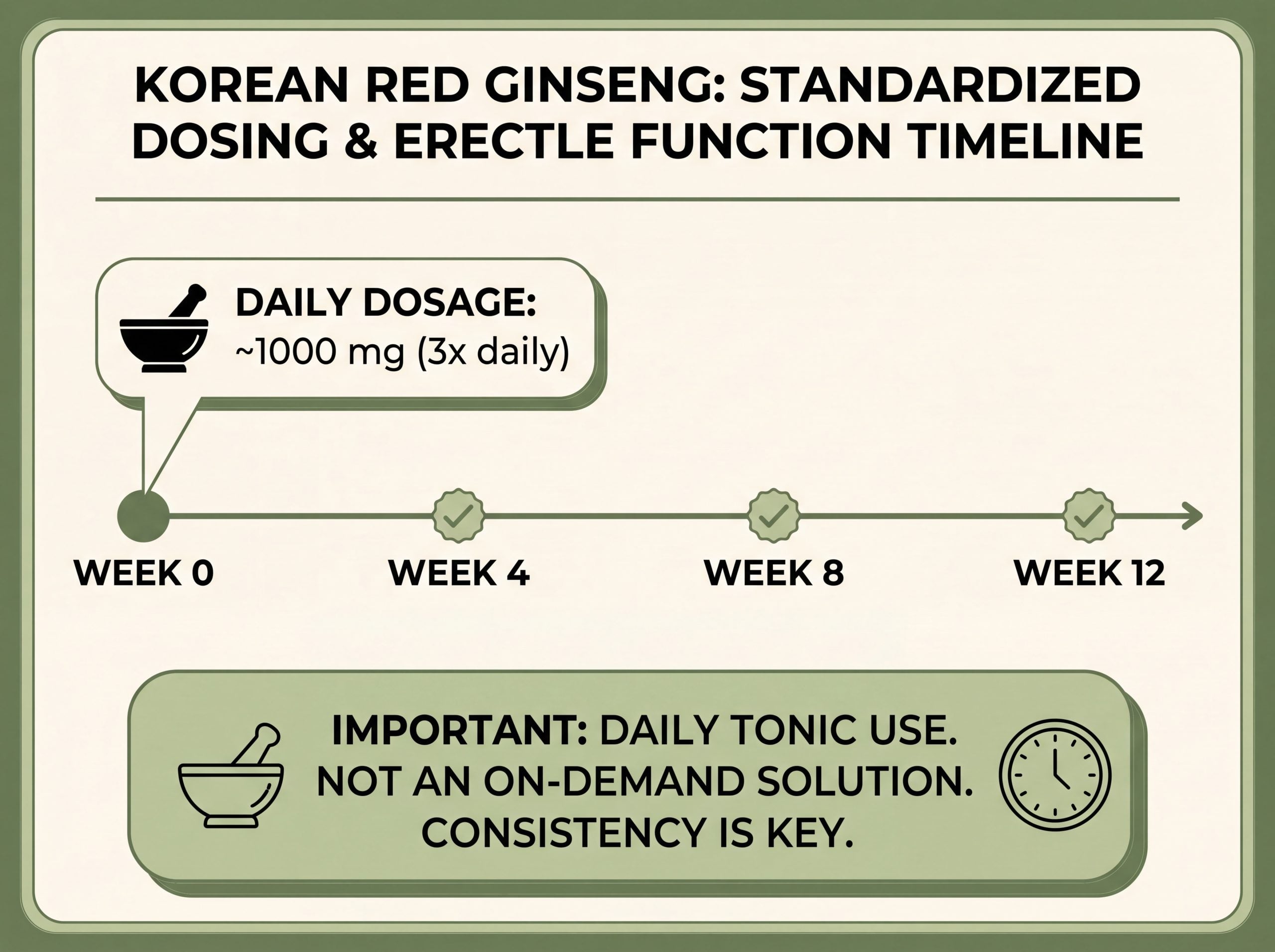
- Duration: It’s generally recommended to take ginseng consistently for at least a few weeks, and in some cases, up to 8 weeks or longer, to see potential effects.
In the clinical trials, standardized Korean red ginseng was commonly taken at around 1,000 mg three times per day, which is roughly 3 grams total, with benefits assessed after about 8 to 12 weeks of consistent use. That timeline is the part people most often get wrong. Ginseng is not an on-demand remedy, and a fair trial means daily use across two to three months rather than a single dose before intimacy. Taking it earlier in the day suits most people, since ginseng can feel mildly energizing. If you want a standardized starting point, our Korean red ginseng capsules are prepared to a consistent ginsenoside content, which makes it easier to keep your daily amount steady. Confirm any dose with your healthcare provider first.
Best Practices
- Start Low, Go Slow: Begin with a lower dose and gradually increase it as needed, paying attention to how your body responds.
- Divide Doses: Consider dividing your daily dose into two or three smaller doses taken with meals to potentially improve absorption and minimize side effects.
- Consistency is Key: Take ginseng regularly, as directed, to allow the potential effects to build up over time.
Potential Side Effects and Interactions of Ginseng
While Panax ginseng is generally considered safe for most people when used appropriately, it can cause side effects, especially at higher doses or with long-term use. It’s also crucial to be aware of potential interactions with medications.
Possible Side Effects
- Insomnia: Ginseng can have a stimulating effect, so it’s often recommended to avoid taking it late in the day to reduce the likelihood of sleep disturbances.
- Headaches: Some individuals may experience headaches, particularly when starting ginseng.
- Digestive Issues: Nausea, diarrhea, or other digestive upset can occur.
- Increased Heart Rate: Ginseng may increase heart rate or blood pressure in some individuals.
- Allergic Reactions: Although rare, allergic reactions are possible, especially in people with allergies to plants in the Araliaceae family.
- Penile Irritation: Topical creams may cause irritation.
Medication Interactions
Panax ginseng can interact with several medications, including:
- Blood Thinners (e.g., warfarin, clopidogrel): Ginseng may increase the risk of bleeding when taken with these medications.
- Diabetes Medications (e.g., insulin, metformin): Ginseng may affect blood sugar levels, potentially requiring adjustments to diabetes medication dosages.
- Stimulants (e.g., caffeine, amphetamines): Ginseng’s stimulating effects may be amplified when combined with other stimulants.
- MAOIs (Monoamine Oxidase Inhibitors): Combining ginseng with MAOIs (a type of antidepressant) can be dangerous.
- Immunosuppressants: Ginseng may interfere with the effectiveness of immunosuppressant medications.
- Viagra: Talk to your doctor before taking any herbal supplements with prescription medication.
Always consult your healthcare provider before using ginseng, especially if you have any pre-existing health conditions, are taking any medications, or are pregnant or breastfeeding. This is to rule out potentially dangerous interactions and to ensure that ginseng is appropriate for your individual situation.
Other Natural Approaches for Premature Ejaculation
Ginseng is just one of many potential natural approaches to managing PE. A holistic approach that addresses various contributing factors is often the most effective.
Behavioral Techniques
- Pelvic Floor Exercises (Kegels): Strengthening the pelvic floor muscles, specifically the pubococcygeus (PC) muscle, can improve ejaculatory control. Kegel exercises involve repeatedly contracting and relaxing these muscles.
- The “Stop-Start” Method: This technique involves stimulating the penis until you feel close to ejaculation, then stopping stimulation until the urge subsides. This process is repeated several times before allowing ejaculation.
- The “Squeeze” Technique: Similar to the stop-start method, but when you feel close to ejaculation, you or your partner gently squeezes the head of the penis for a few seconds, reducing the urge to ejaculate.
Topical Anesthetics
Lidocaine-based sprays or creams can be applied to the penis before intercourse to reduce sensitivity and delay ejaculation. These are available over-the-counter, but it’s best to discuss their use with a doctor.
Other Herbs and Supplements
Besides ginseng, other herbs and supplements are sometimes used for PE:
- Tribulus terrestris: This herb is traditionally used as an aphrodisiac and may improve sexual function.
- Maca Root: Another adaptogen that may enhance libido and energy levels.
- Ginkgo biloba: May improve blood flow, potentially benefiting erectile function.
- Ashwagandha: An adaptogen that may help reduce stress and improve sexual function.
- Safed Musli: Used in traditional Ayurvedic medicine as an aphrodisiac.
- Zinc and Magnesium: Deficiencies in these minerals can contribute to sexual dysfunction, so ensuring adequate intake through diet or supplementation may be helpful.
Lifestyle Modifications
- Diet: A healthy diet rich in fruits, vegetables, whole grains, and lean protein can support overall health, including sexual function. Consider incorporating foods rich in zinc (e.g., oysters, beef, pumpkin seeds). Limit processed foods, alcohol, and excessive caffeine.
- Exercise: Regular physical activity improves cardiovascular health, reduces stress, and can boost overall well-being, all of which can positively impact sexual function.
- Stress Management: Techniques like yoga, meditation, and deep breathing exercises can help reduce stress and anxiety, which can contribute to PE.
Counseling and Therapy
Psychological factors, such as stress, anxiety, depression, relationship problems, and past sexual trauma, can play a significant role in PE. Sex therapy or counseling can be very effective in addressing these underlying issues and developing coping strategies.
Prescription Medications
It’s important to acknowledge that there are prescription medications available for PE, although this article focuses on natural approaches. These include:
- Selective Serotonin Reuptake Inhibitors (SSRIs): Certain antidepressants, such as paroxetine, sertraline, and fluoxetine, can delay ejaculation as a side effect. They are often used off-label for PE.
- Tramadol: This pain medication can also delay ejaculation and is sometimes prescribed for PE.
- PDE5 Inhibitors: Medications like sildenafil (Viagra), tadalafil (Cialis), and vardenafil (Levitra) are primarily used for erectile dysfunction, but they may also help some men with PE by improving erectile function and confidence.
- These medications offer an alternative.
It’s best to have an open and honest discussion with your doctor about the best course of action, which might include a combination of natural approaches, therapy, and, if appropriate, medication. The best alternative depends on the person.
Ginseng, particularly Panax ginseng and its Korean red ginseng form, shows some potential as a natural aid for managing premature ejaculation. However, the scientific evidence is not conclusive, and more research is needed. Ginseng may work through multiple mechanisms, including improving blood flow, reducing stress, and potentially influencing hormone levels. When considering ginseng, it’s crucial to choose standardized extracts, be aware of potential side effects and interactions, and, most importantly, consult with a healthcare provider before starting any new supplement regimen. A holistic approach that incorporates lifestyle changes, behavioral techniques, and potentially other natural remedies, alongside open communication with your partner and healthcare provider, is often the most effective way to address PE and improve sexual satisfaction.
Frequently Asked Questions About Ginseng and Premature Ejaculation
How long does ginseng take to work for sexual performance?
In clinical trials, benefits for erectile function were generally assessed after about 8 to 12 weeks of daily use. Ginseng is a tonic rather than an on-demand option, so a fair trial means consistent daily use across two to three months.
What is a typical daily amount of Korean red ginseng?
Trials commonly used around 1,000 mg three times per day, roughly 3 grams total, of a standardized extract. A consistent, standardized product makes it easier to keep the daily amount steady. Confirm any amount with your healthcare provider.
Is ginseng better for premature ejaculation or erectile dysfunction?
The stronger evidence is for erectile function. Multiple randomized trials support Korean red ginseng for erectile response, while its role in ejaculatory control is more preliminary and tends to involve topical preparations.
Does topical ginseng cream help with premature ejaculation?
Some premature-ejaculation research has used topical creams that contain ginseng among other botanicals, applied to reduce sensitivity. That is a separate category from oral daily capsules and the evidence is still limited.
What are the main side effects of ginseng?
Reported effects are usually mild and can include headache, digestive upset, or trouble sleeping if taken late in the day. Large reviews recorded many minor events and no serious ones, though individual responses vary.
Who should not take ginseng?
People taking blood thinners such as warfarin, people managing blood sugar with medication, those who are pregnant or breastfeeding, and anyone with a hormone-sensitive condition should speak with a healthcare provider before use.
What is the difference between Panax, Korean red, American, and Siberian ginseng?
Korean red ginseng is Panax ginseng C.A. Meyer that has been steamed and dried. American ginseng is Panax quinquefolius, a cooler-profiled relative. Siberian ginseng, or eleuthero, is Eleutherococcus senticosus and is not a true ginseng.
Can ginseng be combined with other herbs for male vitality?
It is often paired in traditional practice with herbs studied for circulation and libido. Because combinations can affect medication and dosing, review any stack with your healthcare provider first.