Key Takeaways
- Butea superba (Red Kwao Krua) is a Thai tonic herb, distinct from Butea monosperma and from Pueraria mirifica (White Kwao Krua).
- Its most-cited human trial found a positive result, then attributed it to the product being blended with a pharmaceutical PDE-5 inhibitor.
- Rodent research found serum testosterone decreasing at higher doses, not increasing, alongside elevated liver enzymes.
- No standardised dose exists because the herb has no consensus marker compound and wild-harvested potency varies.
- Adulteration screening, not potency claims, is the question that matters most when sourcing this particular herb.
Butea Superba, also known by its Thai name “Red Kwao Krua,” is a flowering plant native to Thailand and Southeast Asia. As an expert in natural health supplements, I can confidently say that this plant has gained significant attention for its potential benefits, particularly in the realm of male sexual health and vitality.
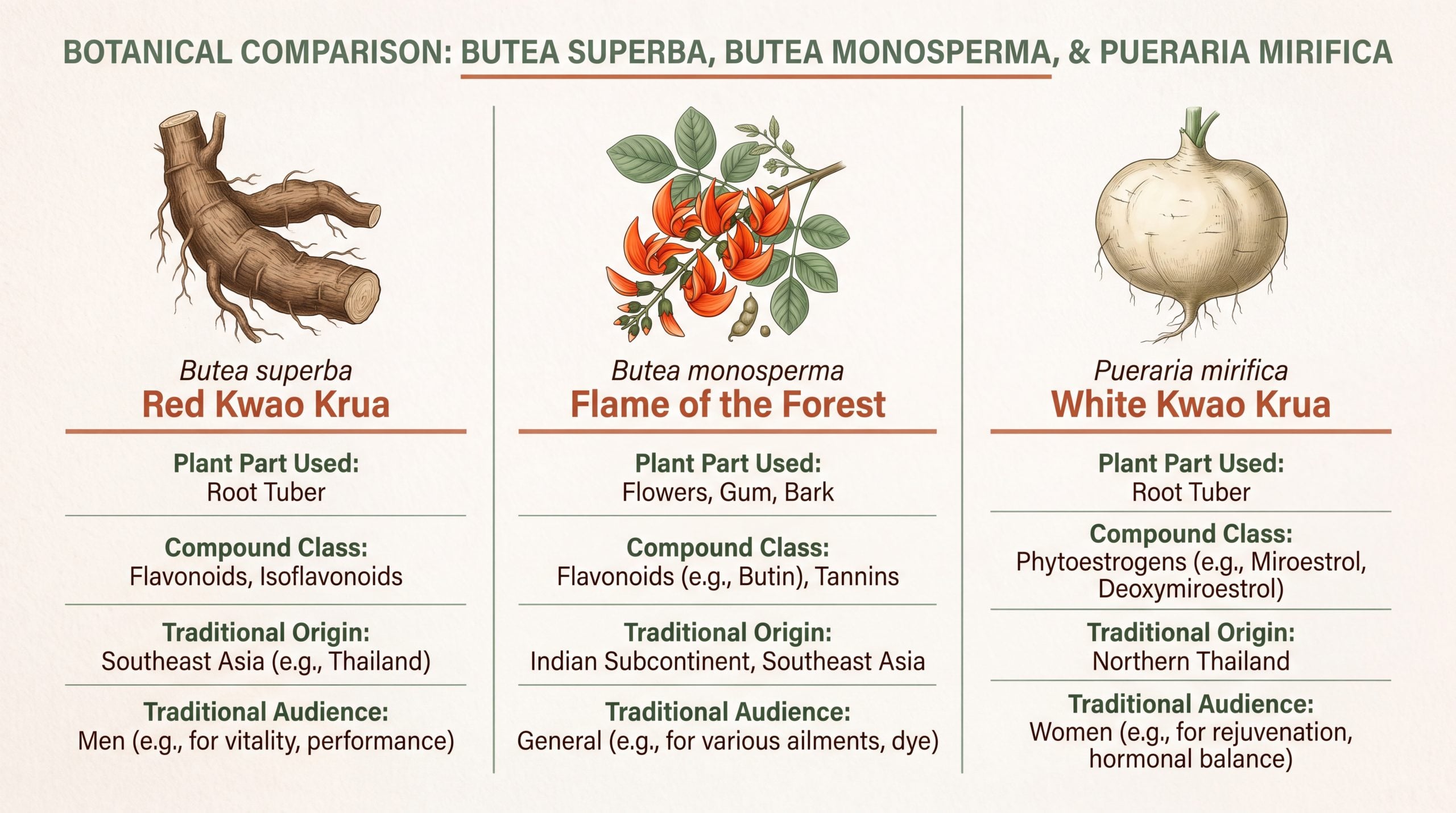
Butea Superba vs. Butea Monosperma vs. Pueraria Mirifica: Clearing Up the Confusion
Before going any further, a problem has to be dealt with. Three different plants get sold, studied, and written about under overlapping names, and the search engines cannot reliably tell them apart. In our editorial review of the current research indexing, we found a 2013 paper on Butea frondosa ranking on the first three pages of Google for “butea superba benefits” – a different species entirely (Goswami et al., 2013, Evidence-Based Complementary and Alternative Medicine, PMID: 24069061). If the search engines are conflating them, buyers certainly are.
Here is the separation, plainly.
| Feature | Butea superba | Butea monosperma (syn. Butea frondosa) | Pueraria mirifica |
|---|---|---|---|
| Common name | Red Kwao Krua | Flame of the Forest, Palash | White Kwao Krua |
| Botanical family | Fabaceae (Leguminosae) | Fabaceae (Leguminosae) | Fabaceae (Leguminosae) |
| Part used | Root tuber | Bark, flowers, seeds | Root tuber |
| Compound class | Flavonoids and flavonoid glycosides, plant sterols including beta-sitosterol | Butrin, isobutrin, palasitrin | Phytoestrogens – miroestrol and deoxymiroestrol |
| Traditional context | Thai folk medicine, male vitality tonic | Ayurvedic medicine, broad traditional use | Thai folk medicine, women’s wellness tonic |
| Who it is traditionally for | Men | Not gender-specific | Women |
The practical consequence: research findings on one plant get quoted as though they applied to another. A study showing Rho-kinase inhibition in Butea frondosa bark tells you nothing about what a Butea superba root tuber does. And a shopper who searches “Kwao Krua” without the colour qualifier can end up with Pueraria mirifica, the White Kwao Krua – a phytoestrogenic herb traditionally used by women, which is close to the opposite of what most Butea superba buyers are looking for.
Everything below this section refers to Butea superba Roxb. specifically. Where a study used a different species, we say so.
Traditional Uses of Butea Superba
The root of Butea superba, often referred to as Red Kwao Krua, has a long history of use in traditional Thai medicine. It’s primarily known as an aphrodisiac and for its potential to enhance male vigor and rejuvenation. Traditional practitioners have used this herb for generations, believing it to improve physical strength and overall vitality. Beyond its use for sexual health, it has also been traditionally employed for conditions like diarrhea, painful urination, and fever, although scientific evidence supporting these uses is limited. The topic of traditional use is important to understand the cultural and historical context of this plant.
One nuance gets lost when this herb is translated into Western supplement marketing. In its original Thai context, Butea superba was not framed as an acute performance agent. It sat in the category of a rejuvenating tonic – a preparation taken steadily over time, associated with vigour, stamina, and recovery from fatigue in a general sense rather than a narrow one. The framing was closer to how Ayurveda treats a rasayana than to how the modern category treats a pre-dose pill.
That distinction has practical value. It sets an expectation of gradual, modest, whole-body support rather than a dramatic same-day effect, and it is the expectation the traditional record actually supports.
Butea Superba and Erectile Dysfunction: Examining the Evidence
One of the primary areas of interest surrounding Butea superba is its potential role in addressing erectile dysfunction (ED). While research is ongoing, and some studies show promising results, it’s essential to approach this topic with a balanced perspective.
Mechanism of Action: How Might It Work?
Several proposed mechanisms explain how Butea superba might influence erectile function:
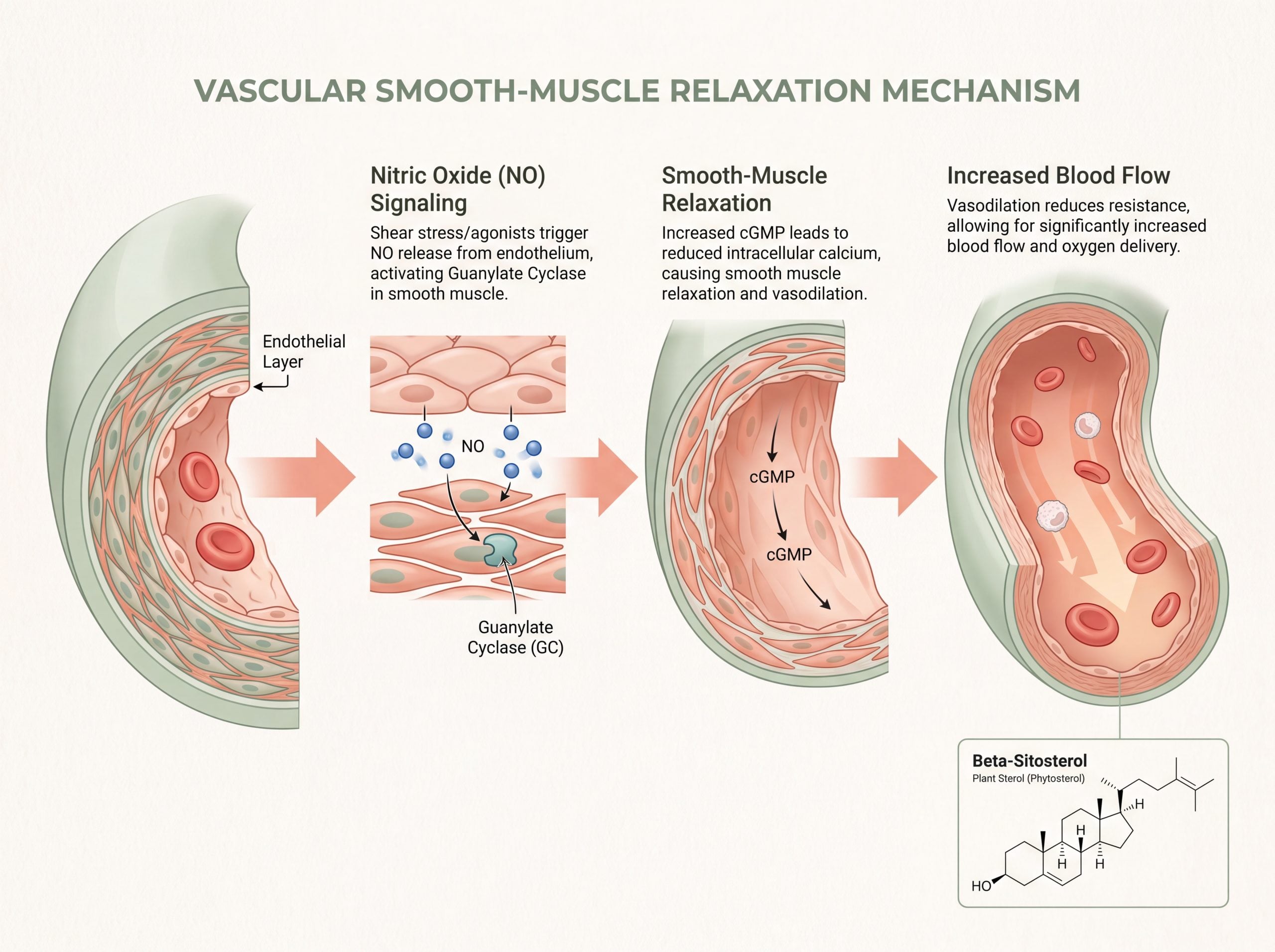
- Nitric Oxide (NO) Production: Butea superba may promote the production of nitric oxide (NO). NO is a crucial molecule for achieving an erection. It relaxes the smooth muscles in the penis, allowing for increased blood flow, which is essential for an erection.
- PDE5 Inhibition: Phosphodiesterase type 5 (PDE5) is an enzyme that breaks down cyclic guanosine monophosphate (cGMP). cGMP is a chemical messenger that promotes smooth muscle relaxation and vasodilation (widening of blood vessels). Some research suggests that Butea superba may act as a PDE5 inhibitor, similar to some pharmaceutical treatments for ED. By inhibiting PDE5, Butea superba could potentially help maintain higher levels of cGMP, leading to improved blood flow and erectile function.
- Intracavernous Pressure (ICP): Some studies, primarily in animals, have indicated that Butea superba can increase intracavernous pressure (ICP). ICP is a direct measurement of the pressure within the erectile tissues (corpora cavernosa) of the penis. Increased ICP is associated with improved erectile function.
- Cavernosal Smooth Muscle Relaxation: Butea superba may enhance the relaxation of the cavernosal smooth muscle.
Clinical Evidence: A Mixed Bag
While the mechanisms above sound promising, the clinical evidence for Butea superba’s effectiveness in treating ED is mixed:
- Positive Studies: Some human clinical trials, such as those by Cherdshewasart & Nimsakul (2003), have shown improvements in erectile function, often measured using questionnaires like the International Index of Erectile Function (IIEF-5).
- Conflicting Studies: Other studies have found no significant difference compared to a placebo. Some research has even raised concerns about potential adulteration of Butea superba products with synthetic PDE5 inhibitors (Cortes-Gonzalez et al., 2010).
- Need for More Research: It’s widely acknowledged that more large-scale, placebo-controlled, double-blind studies are needed to definitively determine the efficacy of Butea superba for ED.
The Adulteration Problem: Why Some Butea Superba Products Have Been Spiked
The mixed clinical picture described above has an explanation that most articles on this herb leave out. It is not a subtle one.
The most-cited human trial on Butea superba is Cortés-González et al. (2009), published in BJU International (PMID: 19624593). It is the study everyone quotes, and it is the study Google surfaces on page one for this topic. In the open-label first phase, 84 percent of men taking Butea superba responded positively, edging out the 81 percent who responded to sildenafil. Those are the numbers that get repeated across the supplement web.
The part that rarely gets repeated is what happened next. The researchers ran a double-blind second phase using a different batch of the same herb. No effect was recorded. Their published conclusion was that the first preparation “was most likely blended with a phosphodiesterase-5 inhibitor” – and the supplier, a natural health products company, subsequently confirmed this after running their own analysis.
Read that again, because it reframes the entire evidence base. The best-known positive result for Butea superba in humans is attributed by its own authors to a pharmaceutical drug that had been mixed into the product. When a clean batch was tested blind, the effect vanished.
This is not an isolated concern. Regulators have repeatedly identified undeclared PDE-5 inhibitors in male-enhancement supplements, and the National Institutes of Health Office of Dietary Supplements is explicit that dietary supplements are not medicines and are not intended to diagnose, treat, cure, or prevent disease. A hidden drug in a capsule is dangerous in a specific and predictable way: PDE-5 inhibitors interact severely with nitrates, and a man who takes nitrate medication for a heart condition and believes he is swallowing a plain root powder has no reason to expect a blood-pressure collapse.
What This Means for How You Buy
In our sourcing experience, three questions separate a credible Butea superba supplier from a risky one.
- Is the species verified? Botanical identity should be confirmed, not assumed from a supplier’s label. Butea superba and Butea monosperma are not interchangeable.
- Is the product screened for undeclared pharmaceuticals? This is the specific test that matters for this specific herb. A generic heavy-metals certificate does not answer it.
- Does the potency claim outrun the evidence? A product promising sildenafil-like performance from a root powder is describing an effect that the literature attributes to sildenafil being present in the root powder.
An honest reading of the research is that Butea superba is a traditional Thai tonic herb with a genuinely interesting flavonoid and plant-sterol profile, and a human evidence base that is thin and contaminated – in the literal sense. That is a different product from the one the category tends to sell.
Butea Superba and Testosterone: A Complex Relationship
The relationship between Butea superba and testosterone levels is another area of significant interest, but also one where the research presents a complex and often contradictory picture. The initial article stated that Butea superba “may help to naturally boost testosterone production”. This is an oversimplification and needs clarification.
Conflicting Research Findings
Studies on the effects of Butea superba on testosterone have yielded a range of results:
- Some Increases: Some studies, particularly in animals, have shown an increase in androstenedione (a precursor to testosterone) and a slight increase in testosterone levels.
- Decreases Observed: Other animal studies, especially those using high doses of Butea superba, have shown decreased testosterone levels. A 90-day rat study found a dose-dependent decrease in serum testosterone at 150 and 200 mg/kg of body weight per day, alongside elevated liver enzymes (Cherdshewasart et al., 2008, Maturitas, PMID: 18554827).
- No Significant Change: Several studies have found no significant impact of Butea superba on testosterone levels. One study measuring pituitary-testicular hormones found no change in testosterone, luteinising hormone, or follicle-stimulating hormone in intact male rats (Malaivijitnond et al., 2010, Brazilian Journal of Medical and Biological Research, PMID: 20721473).
- Luteinizing Hormone (LH) Effect: There is some research that Red Kwao Krua might increase LH, which could stimulate testosterone production. This effect is inconsistent, and the same 2010 study observed an LH reduction in orchidectomised animals rather than an increase.
Potential Mechanisms (Hypothesized)
Several mechanisms have been proposed to explain the potential (though inconsistent) effects of Butea superba on testosterone:
- Luteinizing Hormone (LH): Some researchers suggest that Butea superba might influence the release of luteinizing hormone (LH) from the pituitary gland. LH stimulates the testes to produce testosterone. However, this effect hasn’t been consistently observed in studies.
- Phytoestrogenic Effects: Butea superba contains compounds that may have phytoestrogenic activity (meaning they can mimic some effects of estrogen). The impact of these phytoestrogens on testosterone levels is not fully understood and may vary depending on individual factors and dosage.
The Bottom Line on Testosterone
Given the conflicting evidence, it’s crucial to avoid making definitive claims about Butea superba “boosting” testosterone. More appropriate phrasing would be:
- “May influence testosterone levels”
- “Some studies suggest a potential impact on testosterone”
- “Research is ongoing regarding its effects on testosterone”
Chemical Composition of Butea Superba
Understanding the chemical composition of Butea superba is crucial for understanding its potential mechanisms of action. The plant contains a variety of bioactive compounds, including:
- Flavonoids: These are a large class of plant compounds known for their antioxidant properties.
- Flavonoid Glycosides: These are flavonoids attached to sugar molecules. Both flavonoids and flavonoid glycosides are thought to contribute to some of Butea superba’s potential effects, including PDE5 inhibition.
- Sterols: Butea superba contains several sterols, including:
- β-sitosterol
- Campesterol
- Stigmasterol
- Other Compounds: The plant also contains other compounds such as:
- (-)-Epicatechin
- Procyanidin B2
- Medicarpin
- Isoflavones.
- (-)-Epicatechin
Other Potential Benefits of Butea Superba
Beyond its potential effects on erectile function and testosterone, Butea superba has been associated with other potential benefits, although these are generally less well-studied:
- Improve blood circulation
- Muscle Growth and Strength: Some preliminary research, primarily in animals, suggests that Butea superba might have a positive impact on muscle growth and strength. This is often linked to its potential influence on testosterone, but more research is needed.
- Support healthy immune function
- Promote balanced hormonal activity
- Improved Sperm Concentration and motility. Some studies indicate that the herb may improve sperm concentration and motility.
- Assist in maintaining a healthy weight
What Butea Superba Does Not Do
A large share of the marketing around this herb rests on claims the research does not support. Our editorial team reviewed the available literature against the four promises that show up most often in product copy and forum threads. None of them hold.
It Does Not Increase Penis Size
There is no clinical evidence that Butea superba produces any permanent change in anatomy. No study has tested this outcome, let alone demonstrated it. Any product claiming otherwise is describing something that has never been measured.
It Does Not Reliably Raise Testosterone in Healthy Men
This is the claim most worth examining, because the animal data actively cut against it. As noted in the testosterone section above, the highest-quality rodent safety study found serum testosterone going down at higher doses, not up (Cherdshewasart et al., 2008, Maturitas, PMID: 18554827).
It Does Not Have Demonstrated Fertility or Muscle-Building Effects in Humans
Rodent work has looked at sperm parameters, and a separate body of work has looked at anabolic outcomes. Neither has been carried into a controlled human trial for this herb. Extrapolating a rat result to a human physique goal is not a scientific inference. It is a marketing one.
It Does Not Prevent Hair Loss or Promote Beard Growth
This claim appears to have travelled sideways from the general folklore around androgenic herbs. Butea superba has no published research on androgenetic alopecia or facial hair density in humans. There is nothing here to evaluate.
We include this section because negative findings are findings. A supplement page that only lists what an herb might do, and never what it demonstrably does not, is not being useful. It is being promotional.
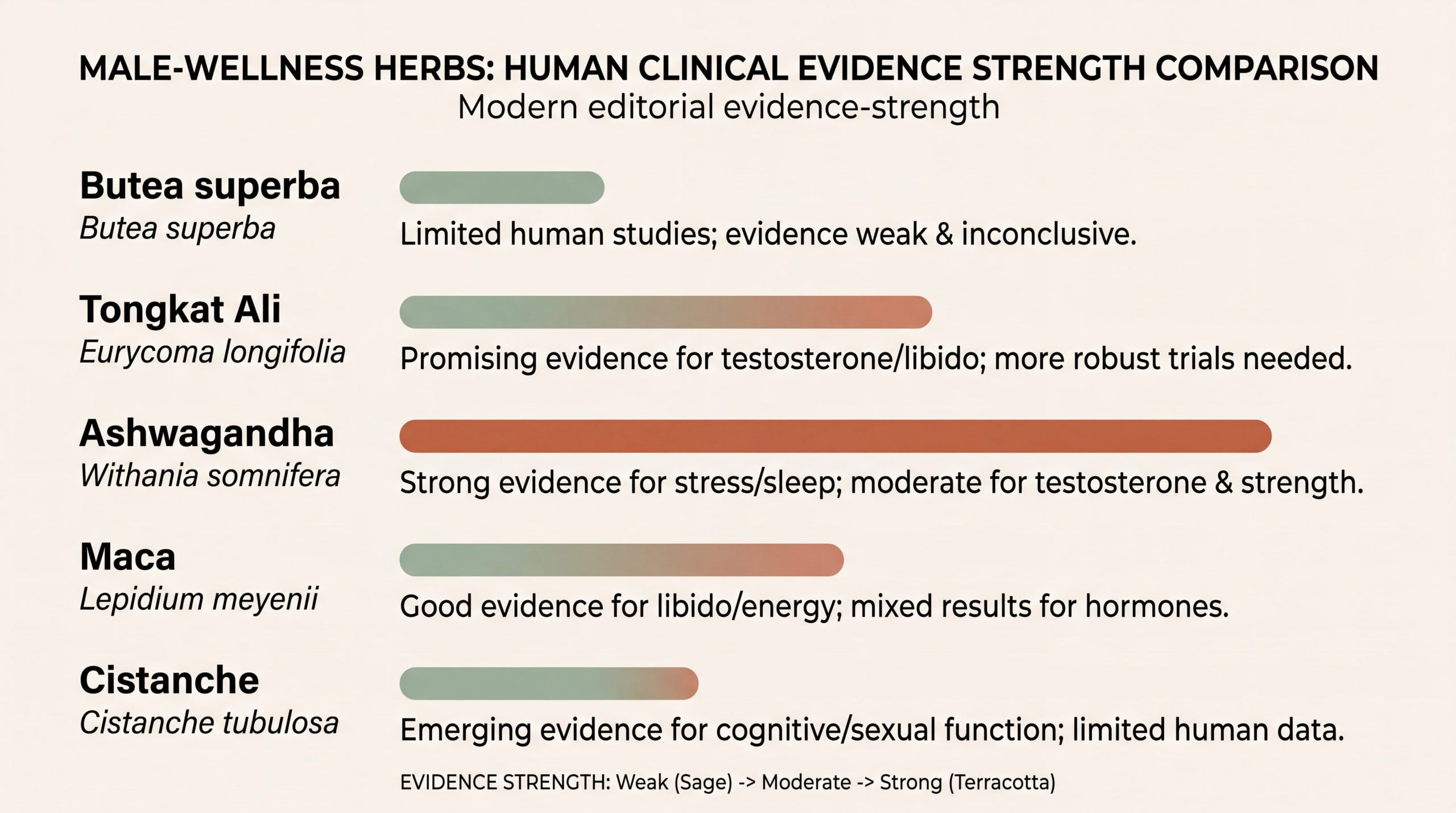
Butea Superba vs. Other Male-Wellness Herbs: An Honest Comparison
Butea superba is usually shelved next to a familiar set of herbs. It does not have the same evidence profile as any of them, and pretending otherwise does the reader no favours.
| Herb | Latin binomial | Human trial evidence | Main caveat |
|---|---|---|---|
| Butea superba | Butea superba Roxb. | Very limited. The best-known positive trial was attributed by its authors to product adulteration. | Adulteration risk. Rodent data show reduced testosterone at high doses. |
| Tongkat Ali | Eurycoma longifolia | Moderate. Several controlled human trials. | Effect sizes modest. Extract standardisation varies widely. |
| Ashwagandha | Withania somnifera | Comparatively strong. Multiple randomised trials, mostly on stress and cortisol. | Best-evidenced for stress, not directly for erectile function. |
| Maca | Lepidium meyenii | Moderate for self-reported desire. Does not act on hormones. | Non-hormonal. Frequently mis-sold as a testosterone agent. |
| Cistanche | Cistanche deserticola | Limited human data. Long traditional use in Chinese medicine. | Most research is preclinical. |
| Evidence strength assessed by our editorial team against published human trial literature, July 2026. | |||
We have written at length about where each of these herbs actually stands – see our review of which testosterone herbs actually hold up in the clinical literature, which is blunter than most of what you will find on this subject.
And Compared to Prescription Medication?
This needs saying directly, because hedging on it would be dishonest. The evidence for prescription PDE-5 inhibitors is vastly stronger than the evidence for any botanical, including this one. A 2023 review in Frontiers in Pharmacology surveyed 34 studies of botanical drugs for erectile dysfunction and concluded that high-quality clinical trials are still needed to establish dosage, target patients, and therapeutic effect for essentially all of them (Xu et al., 2023, PMID: 37654605). PDE-5 inhibitors remain the clinical standard of care.
If erectile dysfunction is the concern, that is a conversation for a physician, not a supplement label. Erectile dysfunction can be an early sign of cardiovascular disease, and treating it with a root powder bought online can mean missing something that matters. Butea superba is a traditional tonic herb. It is not an alternative to medical care, and the research does not position it as one.
Dosage and Administration of Butea Superba
If you’re considering using Butea superba, understanding appropriate dosage and administration is crucial. However, it’s vital to acknowledge that there’s no universally agreed-upon optimal dose, and recommendations can vary widely.
- Available Forms: Butea superba is available in various forms, including powders, capsules, and extracts. The concentration of active compounds can vary significantly between these forms and different products.
- Dosage Ranges: A starting dose of 100-200 mg per day is sometimes suggested, but studies have used a wide range of dosages. Some studies have used dosages based on body weight (e.g., 1mg/kg of body weight).
- Start with a moderate dose of 100-200 mg per day, taken with water or as directed by the product label.
- Consider taking it with food to enhance its absorption and minimize any potential digestive side effects.
- Be patient and consistent with your supplementation. While some individuals may notice a difference within a few weeks, it can take up to several months to experience the full spectrum of advantages.
Crucially, it is strongly recommended to consult a healthcare professional before using Butea superba to determine the appropriate dosage for your individual needs and health status. They can help you assess potential risks and interactions with any medications you may be taking.
Why There Is No Standardised Butea Superba Dose
Ask what dose of Butea superba to take, and you will get a confident number from a dozen different sellers, and no two will agree. That is not sloppiness. There genuinely is no established standard, and it is worth understanding why.
- No agreed marker compound. Standardisation requires a chemical target to standardise against. Ginkgo has flavone glycosides. Milk thistle has silymarin. Butea superba has no consensus marker, so a “10:1 extract” from one supplier is not chemically comparable to a “10:1 extract” from another.
- Wild-harvested root tubers vary. Constituent density in a tuber shifts with plant age, soil, season, and harvest timing. Two authentic batches can differ substantially.
- The clinical trials used different preparations at different doses – and, as covered above, at least one of them used a preparation the authors concluded was adulterated. There is no reliable human dose-response curve to build a recommendation from.
- The animal safety data show a ceiling. Rodent work found adverse changes in blood chemistry at higher doses, which means “more” is not a neutral choice with this herb. Details in the safety section below.
How Long Before Anything Happens?
We get asked this constantly, and the honest answer is that nobody knows, because the question has never been properly studied in humans for this herb. Traditional Thai use frames Butea superba as a tonic taken over time rather than an acute agent, which sets a reasonable expectation: this is not a same-day compound. Anyone promising you a specific timeline in days is extrapolating from nothing.
Given all of that, the only defensible guidance is the unglamorous kind. Follow the dose on the product label, start at the low end, do not stack an unknown quantity on top of an unknown quantity, and talk to your healthcare provider first – particularly if you take any medication for blood pressure or erectile dysfunction.
For readers who have weighed the above and want to source the herb carefully, we offer our wild-harvested Butea superba capsules and whole-root Butea superba powder, both of which we authenticate to species before they reach the shelf.
Beyond Male Wellness: What the Peripheral Research Actually Shows
Search for this herb, and you will find claims attached to it that have drifted well outside its traditional use – skin health, fat loss, immune support. Our editorial team went through the underlying literature on each. The results are uneven, and we would rather say so than pad the page.
Antioxidant Activity: Real, but Modest in Context
Butea superba contains flavonoids and flavonoid glycosides, and free-radical scavenging activity has been confirmed in DPPH and FRAP assays (Sirichaiwetchakoon et al., 2021, Evidence-Based Complementary and Alternative Medicine, PMID: 34671404). This is genuine. It is also true of a great many plants, including ones already in your kitchen. Antioxidant capacity in a test tube is a starting point for research, not a health outcome.
Cognitive Research: The Most Interesting Underexplored Finding
The most novel work on this herb has nothing to do with male vitality. The same 2021 study examined a Butea superba ethanolic extract in a scopolamine-induced memory-impairment model in aged rats and found improvement across Y-maze, novel object recognition, and passive avoidance testing, alongside inhibition of acetylcholinesterase in the cerebral cortex and hippocampus (PMID: 34671404). The extract contained gamma-sitosterol and stigmasterol. This is animal work, and it is early, and it should not be over-read – but it is the direction in this herb’s literature that nobody in the supplement category is talking about.
Skin Health: The Evidence Is Thin
We could not locate controlled human research examining Butea superba and skin outcomes. The claim appears to be an inference drawn from the herb’s antioxidant profile rather than a finding from a study. As an evidence claim, it does not stand up.
Weight Loss: The Evidence Is Absent
There is no clinical evidence that Butea superba assists with weight loss, and no plausible mechanism has been proposed and tested. Where this claim appears, it appears without support. We would treat any product marketing it on that basis with suspicion.
The pattern here is worth naming. As an herb becomes commercially popular, claims accrete to it that have nothing to do with why anyone traditionally used it. Butea superba was a Thai male tonic herb. Most of what has been bolted onto it since is category drift.
Potential Side Effects and Risks of Butea Superba
While Butea superba is often considered possibly safe when taken in appropriate doses for short periods (up to 3 months), it’s essential to be aware of potential side effects and risks.
Possible Side Effects
- Digestive Discomfort: Some individuals may experience digestive issues such as nausea, diarrhea, or stomach upset.
- Headaches or Dizziness: These side effects have been reported in some cases.
- Insomnia or Restlessness: Butea superba may have stimulant-like effects in some individuals, potentially leading to insomnia or restlessness, especially if taken in high doses or close to bedtime.
- Allergic Reactions: Individuals with a history of allergies to plants in the Fabaceae (legume) family may be at higher risk of an allergic reaction to Butea superba.
- Hormonal Imbalances: Because of its potential effects on hormones, Butea superba could potentially lead to hormonal imbalances, especially with long-term use or high doses.
- Changes in Blood Parameters: Some studies have reported changes in blood pressure, blood count, and iron levels.
- Cold sweats, shivers, and nausea.
- Mutagenic Effects: While some studies suggest no mutagenic effects at lower doses, higher doses in animal studies have shown potential genotoxicity (damage to DNA). An Ames test found the extract non-mutagenic, but a micronucleus assay showed genotoxic effects at high doses in vivo (Cherdshewasart et al., 2010, Bioscience, Biotechnology, and Biochemistry, PMID: 20460693).
- Androgenic/Anti-estrogenic Effects: Butea superba may have androgenic (promoting male characteristics) and anti-estrogenic effects, although the extent and significance of these effects are not fully clear.
Contraindications
- Pregnancy and Breastfeeding: Butea superba is not recommended for pregnant or breastfeeding women due to a lack of safety data.
- Pre-existing Medical Conditions: Individuals with pre-existing medical conditions, especially hormone-sensitive conditions (such as prostate cancer or breast cancer), should consult a doctor before using Butea superba.
- Medications: Butea superba may interact with certain medications, particularly those used to treat high blood pressure, depression, or erectile dysfunction. It’s crucial to discuss potential interactions with your healthcare provider.
Two contraindications deserve more weight than the page previously gave them.
Phosphodiesterase-5 inhibitors. Do not combine Butea superba with sildenafil, tadalafil, or vardenafil without a clinician’s sign-off. The concern is additive: both may lower blood pressure, and stacking them risks hypotension. This caution carries extra force for this specific herb, because the adulteration record means you cannot always be certain a Butea superba product does not already contain a PDE-5 inhibitor. In that scenario, a man taking prescribed sildenafil alongside a spiked supplement is double-dosing a drug without knowing it.
Nitrate medication. The same logic applies with greater urgency. The combination of nitrates and PDE-5 inhibitors can cause a severe drop in blood pressure. If you take nitrates for a heart condition, an unverified male-enhancement supplement is not a risk worth taking.
Blood-pressure medication generally. Butea superba has been reported to lower blood pressure. Anyone already medicated for hypertension should treat that as an interaction to discuss, not a bonus benefit.
Women, and anyone with a hormone-sensitive condition. Butea superba has demonstrated androgenic and anti-estrogenic activity in female rats (Malaivijitnond et al., 2008, Journal of Ethnopharmacology, PMID: 19010408). It is not an appropriate herb for women. Those looking at the Kwao Krua family for women’s wellness are looking for a different species entirely – see the disambiguation table at the top of this page.
Stacking Butea Superba with Other Herbs
Butea superba is rarely sold alone. It turns up inside blends alongside Tongkat Ali, ashwagandha, maca, and Panax ginseng, and readers routinely ask whether combining them is sensible.
Two cautions apply, and they are not the ones people expect.
First, the adulteration risk compounds in a blend. A multi-herb capsule gives an unscrupulous manufacturer more places to hide an undeclared pharmaceutical and more ingredients to attribute the resulting effect to. If you cannot verify a single-herb product, you certainly cannot verify a ten-herb one.
Second, combining herbs that may lower blood pressure amplifies that effect. Butea superba has been reported to reduce blood pressure. Stacked with other vasoactive botanicals, and particularly alongside any prescription medication for blood pressure or erectile dysfunction, the additive effect is the thing to worry about – not some exotic herb-herb interaction.
Traditionally, Thai preparations used Butea superba as a simple, on its own, over time. That is the use pattern with the longest track record behind it. The modern kitchen-sink stack has none.
Long-Term Safety
The long-term safety of Butea superba is not fully established. More research is needed to evaluate the potential risks associated with prolonged use.
Here is what the animal toxicity literature actually reports, since it is rarely quoted anywhere.
A 90-day study in male rats found a dose-dependent decrease in serum testosterone at 150 and 200 mg/kg of body weight per day, alongside elevated alkaline phosphatase and aspartate aminotransferase – both liver enzymes – at 150 mg/kg, plus an increase in relative spleen weight (Cherdshewasart et al., 2008, Maturitas, PMID: 18554827). The authors framed the finding as a reason for “awareness of the possible adverse risk of overdose consumption.” An herb marketed as a testosterone agent reduced testosterone at higher doses. That is worth sitting with.
A separate genotoxicity assessment found the extract non-mutagenic in the Ames test, but reported micronucleus formation in vivo at high dose – 300 mg/kg of extract. The authors concluded that consumption is safe at low doses and unsafe at high ones (Cherdshewasart et al., 2010, Bioscience, Biotechnology, and Biochemistry, PMID: 20460693).
Taken together, these do not describe a herb with a clean, well-characterised long-term safety profile. They describe one where the dose ceiling matters, where liver markers moved, and where the hormonal effect is neither consistent nor in the direction the marketing implies. Human long-term safety data beyond roughly three months does not exist. In our assessment, that is a reason for conservative use and clinician involvement, not a gap to be papered over.
Conclusion: A Balanced Perspective on Butea Superba
Butea superba is an herbal remedy with a history of traditional use, particularly for male sexual health. While some research suggests potential benefits for erectile function and other areas, the evidence is often preliminary, conflicting, or limited to animal studies. It’s crucial to approach this topic with a balanced perspective, acknowledging both the potential benefits and the potential risks.
Before considering Butea superba, it’s essential to:
- Consult a Healthcare Professional: Discuss your health status, any medications you’re taking, and your specific goals with a qualified healthcare provider. They can help you determine if Butea superba is appropriate for you and advise on a safe and effective dosage.
- Be Realistic About Expectations: Butea superba is not a substitute for medical treatment, and it is not a solution to a medical condition. Responses vary considerably between individuals, the human research base is small, and – as covered earlier on this page – the most-cited positive human trial was attributed by its own authors to product adulteration rather than to the herb. Set expectations accordingly, and treat any source promising a dramatic or guaranteed outcome as a reason for caution rather than confidence.
- Prioritize Safety: Be aware of potential side effects and contraindications. Start with a low dose and monitor your body’s response.
- Choose High-Quality Products: If you decide to use Butea superba, select a product from a reputable source that provides clear information about its ingredients and manufacturing processes.
By taking a cautious and informed approach, you can make a responsible decision about whether Butea superba is right for you.
Frequently Asked Questions About Butea Superba
What are the main health benefits of Butea superba?
Butea superba is traditionally used in Thai folk medicine as a male vitality and rejuvenating tonic. It contains flavonoids, flavonoid glycosides, and plant sterols including beta-sitosterol, and laboratory work has confirmed antioxidant activity. Human evidence for specific benefits is limited, and the most-cited positive trial was attributed by its own authors to product adulteration rather than to the herb itself.
Is Butea superba safe for men to use?
Short-term use appears reasonably well tolerated in the limited studies available, but the safety picture is not clean. Rodent research found reduced serum testosterone and elevated liver enzymes at higher doses (PMID: 18554827), and genotoxic effects at high doses in vivo (PMID: 20460693). Long-term human safety data beyond about three months does not exist. Consult your healthcare provider before use, particularly if you take medication for blood pressure or erectile dysfunction.
What are the side effects of Butea superba?
Reported effects include headache, stomach upset, and lowered blood pressure. The more serious concerns are interaction-related: Butea superba should not be combined with PDE-5 inhibitors or nitrate medication without clinical supervision, because of the risk of additive hypotension. Adulteration of commercial products with undeclared pharmaceutical PDE-5 inhibitors is a documented and specific risk with this herb.
How does Butea superba compare to other herbal supplements?
Its human evidence base is weaker than that of Tongkat Ali, ashwagandha, or maca, each of which has controlled human trials behind it. Butea superba’s best-known human trial concluded the tested product was most likely spiked with a pharmaceutical drug. Compared to prescription PDE-5 inhibitors, the evidence gap is not closed – PDE-5 inhibitors remain the clinical standard of care for erectile dysfunction.
What is the recommended dosage of Butea superba?
There is no established standard dose. Butea superba has no consensus marker compound to standardise extracts against; wild-harvested tuber potency varies by plant age and season, and the human trials used different preparations at different doses. Follow the product label, start conservatively, and speak with your healthcare provider before use. Animal data indicate that higher doses carry real risk, so more is not better with this herb.
Related Reading
Continue exploring this topic with these related articles from our team:
- our review of which testosterone herbs actually hold up in the clinical literature
- our broader guide to evidence-backed herbs for male libido
- herbs traditionally used for male stamina
Disclaimer
These statements have not been evaluated by the Food and Drug Administration. This product is not intended to diagnose, treat, cure, or prevent any disease. Consult your healthcare provider before use.