The History and Traditional Use of Kanna
The use of Sceletium tortuosum, known locally as “Kougoed” (meaning “something to chew”), dates back centuries. The Khoisan people used kanna for a variety of purposes:
- Mood Enhancement: It was traditionally used to elevate mood and reduce anxiety, particularly before social gatherings or stressful events.
- Endurance: Hunters used kanna to suppress appetite and thirst, and to increase stamina during long hunts.
- Spiritual Practices: Kanna was sometimes used in rituals and ceremonies for its mild psychoactive effects, believed to facilitate spiritual experiences.
- Pain Relief: It was traditionally used to relieve minor pains, such as toothaches.
Traditional Preparation Methods
The Khoisan employed several methods to prepare Sceletium tortuosum:
- Chewing: The most common method involved chewing the fermented (or sometimes unfermented) roots, stems, and leaves of the plant. The saliva would mix with the plant material, and the active compounds would be absorbed through the mucous membranes of the mouth.
- Smoking: Dried kanna leaves were sometimes smoked, often mixed with other herbs.
- Snuff: Finely ground, dried kanna was used as a snuff and inhaled through the nose. Caution should be used with this method due to potential respiratory irritation.
- Tea: Kanna leaves and stems were brewed into a tea.
- Fermentation: A key aspect of traditional preparation is fermentation. The plant material would be crushed and placed in animal skin bags (later, in sealed containers) to ferment for several days. This process is believed to alter the alkaloid profile and potentially reduce the levels of oxalates (which can cause discomfort). After fermentation, the plant material would be dried in the sun.
Understanding How Kanna Works: Composition and Mechanisms
Sceletium tortuosum contains several alkaloids, the primary ones being mesembrine, mesembrenone, and tortuosamine. These molecules are responsible for the plant’s effects.
Kanna, scientifically known as Sceletium tortuosum, is a succulent plant native to South Africa. Indigenous people have traditionally used it for its potential to elevate mood and reduce stress. The plant contains alkaloids, such as mesembrine and mesembrenone, which are believed to interact with the brain’s serotonin and dopamine receptors, leading to its mood-enhancing effects.
When these alkaloids are consumed, they interact with the brain, primarily affecting the serotonin system. Serotonin is a neurotransmitter that plays a vital role in regulating mood, sleep, appetite, and cognitive function.
Kanna’s alkaloids act primarily in two ways:
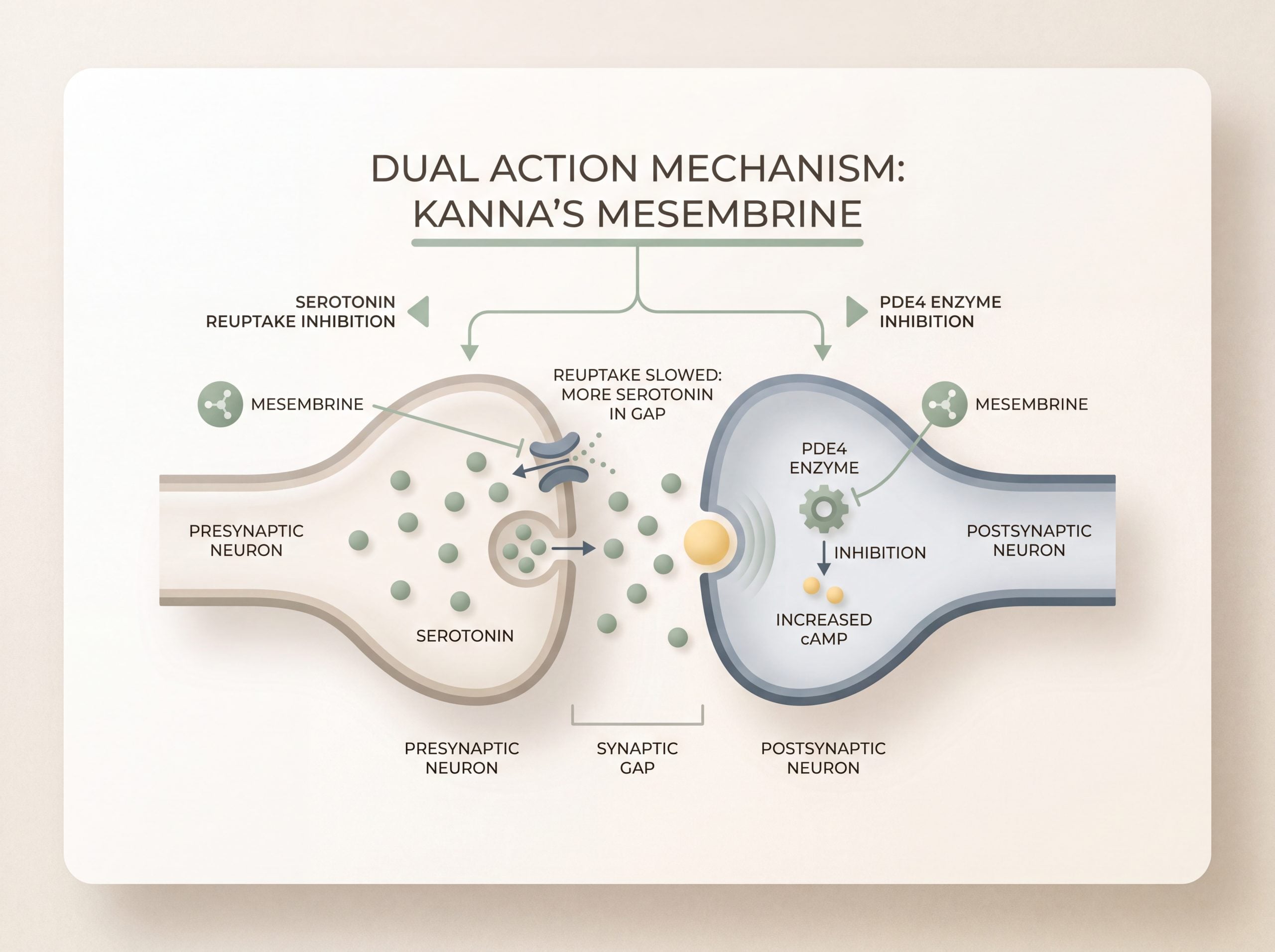
- Serotonin Reuptake Inhibition (SRI): Kanna inhibits the reuptake of serotonin. This means that it prevents the reabsorption of serotonin back into the nerve cells, leaving more serotonin available in the synaptic cleft (the space between nerve cells). This increased availability of serotonin can contribute to improved mood and reduced anxiety. Think of serotonin as a ‘feel-good’ chemical in your brain. The Sceletium tortuosum herb helps keep more of it around for longer, like turning up the volume on a happy song.
- Phosphodiesterase-4 (PDE4) Inhibition: Some research suggests that kanna’s alkaloids may also inhibit PDE4, an enzyme that breaks down cyclic adenosine monophosphate (cAMP). cAMP plays a role in various cellular processes, including those related to mood and cognition, as well as reducing neuroinflammation. Inhibiting PDE4 can increase cAMP levels, potentially contributing to kanna’s effects.
This dual action (SRI and PDE4 inhibition) is a unique aspect that differentiates Sceletium tortuosum from some other supplements.
To understand kanna at the compound level, it helps to look at its family of active alkaloids. The principal one is mesembrine, and it is accompanied by related molecules including mesembrenone, mesembrenol, and tortuosamine. These alkaloids are what distinguish Sceletium tortuosum from ordinary calming herbs, and their concentration varies with growing conditions and traditional fermentation.
What makes mesembrine notable is that it is thought to act through two pathways at once. First, it functions as a serotonin-reuptake inhibitor, meaning it slows the reabsorption of serotonin so more remains available between nerve cells, a mechanism that shares a general principle with how some conventional mood medications are described. Second, it is thought to inhibit an enzyme called phosphodiesterase-4 (PDE4), which plays a role in cellular signaling tied to alertness and mood regulation. This dual action, serotonin-reuptake inhibition paired with PDE4 inhibition, is the leading explanation for why users describe kanna as calming and mood-supporting without heavy sedation. Cognitive research on a standardized extract has reported measurable effects on mood and cognitive flexibility in healthy adults (Reay et al., 2020, Human Psychopharmacology, DOI: 10.1002/hup.2753). It is worth noting that most of this mechanistic work has been conducted on standardized extracts rather than raw plant material, so potency and effect can differ between products.
The Potential Benefits of Kanna
Traditionally consumed by chewing the raw plant material or brewing it into a tea, modern times have seen Sceletium tortuosum available in various forms such as capsules, tinctures, extracts, and even gummies. Research has shown that Sceletium tortuosum may have neuroprotective properties and could potentially benefit mental health conditions.
Mood Enhancement and Stress Reduction
Sceletium tortuosum is best known for its potential to improve mood and reduce stress. This is largely attributed to its interaction with the serotonin system. Kanna is known to promote a sense of calm and relaxation, helping to ease anxiety and tension. It may also support cognitive function, including memory and focus. While the exact mechanisms are not fully understood, research suggests that its alkaloids may inhibit the reuptake of serotonin, allowing more of this neurotransmitter to remain active in the brain, thus contributing to positive mood and emotional wellbeing.
- Situational Anxiety: Kanna may be helpful for managing situational anxiety, such as public speaking or social events. It may also help with other types of anxiety, such as generalized anxiety or even panic attacks (although more research is needed in these areas).
- General Stress: It may also help reduce overall stress levels and promote relaxation. Sceletium tortuosum may help build resilience to stress, not just provide acute relief.
- Depression: Some preliminary research is investigating kanna’s potential as an aid for those dealing with depression. It is important to note that it is not a replacement for conventional treatment or a cure for major depressive disorder, but might offer support for milder forms of depression. Always consult a doctor if you are experiencing symptoms of depression.
- Distinguish between mild, moderate, and major depression.
A study published in the Journal of Ethnopharmacology found that Sceletium tortuosum extract exhibited antidepressant-like effects in animal models. While this is promising, more research, particularly in humans, is needed.
Cognitive Function Improvement
Some research suggests that Sceletium tortuosum may have cognitive-enhancing properties.
- Focus and Concentration: Some users report an improvement in focus and concentration after using kanna, which can lead to a boost in productivity.
- Cognitive Flexibility: There is some evidence that kanna may improve cognitive flexibility, the ability to switch between different tasks or thoughts.
- Executive Function: Kanna might play a role in improving executive function, which encompasses planning, decision-making, and working memory.
- Memory: While more research is needed, some studies are exploring potential benefits for memory, including a possible benefit for early Alzheimer’s disease (though this research is very preliminary).
- Neuroplasticity: Kanna might contribute to neuroplasticity, the brain’s ability to reorganize itself by forming new neural connections.
Other Potential Benefits
- Pain Relief: Traditionally, kanna was used for minor pain relief, such as toothaches. The potential analgesic properties are an area of ongoing research.
- Appetite Regulation: Some traditional uses suggest that kanna may help suppress appetite. Some individuals find that the botanical helps regulate their appetite, potentially aiding in maintaining a healthy weight.
- Zembrin: Zembrin, a standardized extract of Sceletium tortuosum, has been used in several research studies. Zembrin is standardized to contain a specific ratio of alkaloids. Mentioning its existence and use in research adds to the article’s informational completeness. Studies have shown that the extract can help alleviate symptoms of stress and mild depression, making it a popular natural remedy for those seeking alternative ways to support their mental health.
Kanna’s mood-elevating properties may also extend to physical wellbeing. By reducing stress and promoting relaxation, it can help alleviate stress-related physical symptoms such as muscle tension, headaches, and digestive issues.
Kanna for Social Ease (Empathogenic Effects)
One quality that sets Sceletium tortuosum apart from many calming botanicals is its traditional reputation for supporting sociability. The term often used for this property is empathogenic, meaning a compound associated with feelings of openness and connection with others. In the traditional practices of the San and Khoikhoi peoples of Southern Africa, kanna was chewed or fermented and used in communal settings, and many modern users report a similar sense of relaxed social ease rather than sedation.
From a mechanism standpoint, this is consistent with how kanna is thought to work. Its principal alkaloid, mesembrine, acts as a serotonin-reuptake inhibitor, and serotonin signaling is closely tied to mood and social behavior. A placebo-controlled neuroimaging study found that a standardized Sceletium tortuosum extract reduced amygdala reactivity to fearful stimuli, a brain response linked to threat perception and social anxiety (Terburg et al., 2013, Neuropsychopharmacology, PMID: 23653074). In our own review of user-reported experiences, the most consistent theme is feeling more present and at ease in conversation rather than intoxicated. As with any botanical that influences mood, individual responses vary, and kanna is best approached mindfully.
Forms of Kanna and How to Use Them
Sceletium tortuosum is available in a variety of forms, each with its own advantages and disadvantages:
Kanna Capsules
Capsules offer a convenient and discreet way to consume kanna. They provide a pre-measured dose, making it easy to control intake. The effects may take slightly longer to onset compared to sublingual methods.
Kanna Powder
Kanna powder is made by grinding the dried leaves and roots of the plant. It can be consumed sublingually (placed under the tongue) or mixed with water or other beverages. Sublingual use allows for faster absorption. The taste may be unpleasant for some; mixing with a beverage can help.
Kanna Tea
Preparing kanna as a tea is a traditional method of consumption. Steeping the dried leaves or powder in hot water, then straining, creates a tea. This method offers a gentler onset of effects. Be aware that the taste can be strong and bitter; honey or lemon can be added to improve palatability.
Kanna Tinctures and Extracts
Tinctures and extracts are concentrated liquid forms of kanna. They offer rapid absorption and allow for precise dosing.
Onset of Effects Comparison
| Form | Onset Time | Notes |
|---|---|---|
| Sublingual | Fastest | Powder held under the tongue |
| Tinctures/Extracts | Fast | Absorbed quickly |
| Capsules | Slower | Must pass through the digestive system |
| Tea | Moderate | Gentler, more gradual onset |
| Smoking | Very Fast | Can cause respiratory irritation |
| Snuff | Very Fast | Higher risk of rapid absorption and side effects |
Kanna: Dosage and Frequency
There is no universally established “safe” or “effective” dosage for Sceletium tortuosum. Dosage recommendations vary depending on the form, the individual, and the desired effects.
General Guidelines:
- Start Low: It’s always recommended to start with a very low dose, especially when trying kanna for the first time.
- Gradual Increase: If needed, gradually increase the dose while monitoring your body’s response.
- Follow Product Instructions: If using a commercial product, follow the manufacturer’s dosage instructions.
- Traditional Dosage: Traditional use varied widely, with individuals chewing on small pieces of fermented plant material throughout the day.
Dosage Ranges (These are general ranges and should not be taken as medical advice):
- Dried, Unfermented Kanna (Tea): 1-2 teaspoons of dried leaves.
- Powder (Sublingual): 50-200 mg (Note: Potency can vary greatly)
- Capsules: Follow product-specific instructions.
- Tinctures/Extracts: Follow product-specific instructions.
The frequency of use also depends on individual needs and tolerance. Some people use kanna occasionally for specific situations (e.g., before a stressful event), while others may use it more regularly. It’s generally recommended to cycle off Kanna periodically, as long-term safety data is limited.
Kanna vs. Kava, CBD, and Alcohol: How They Compare
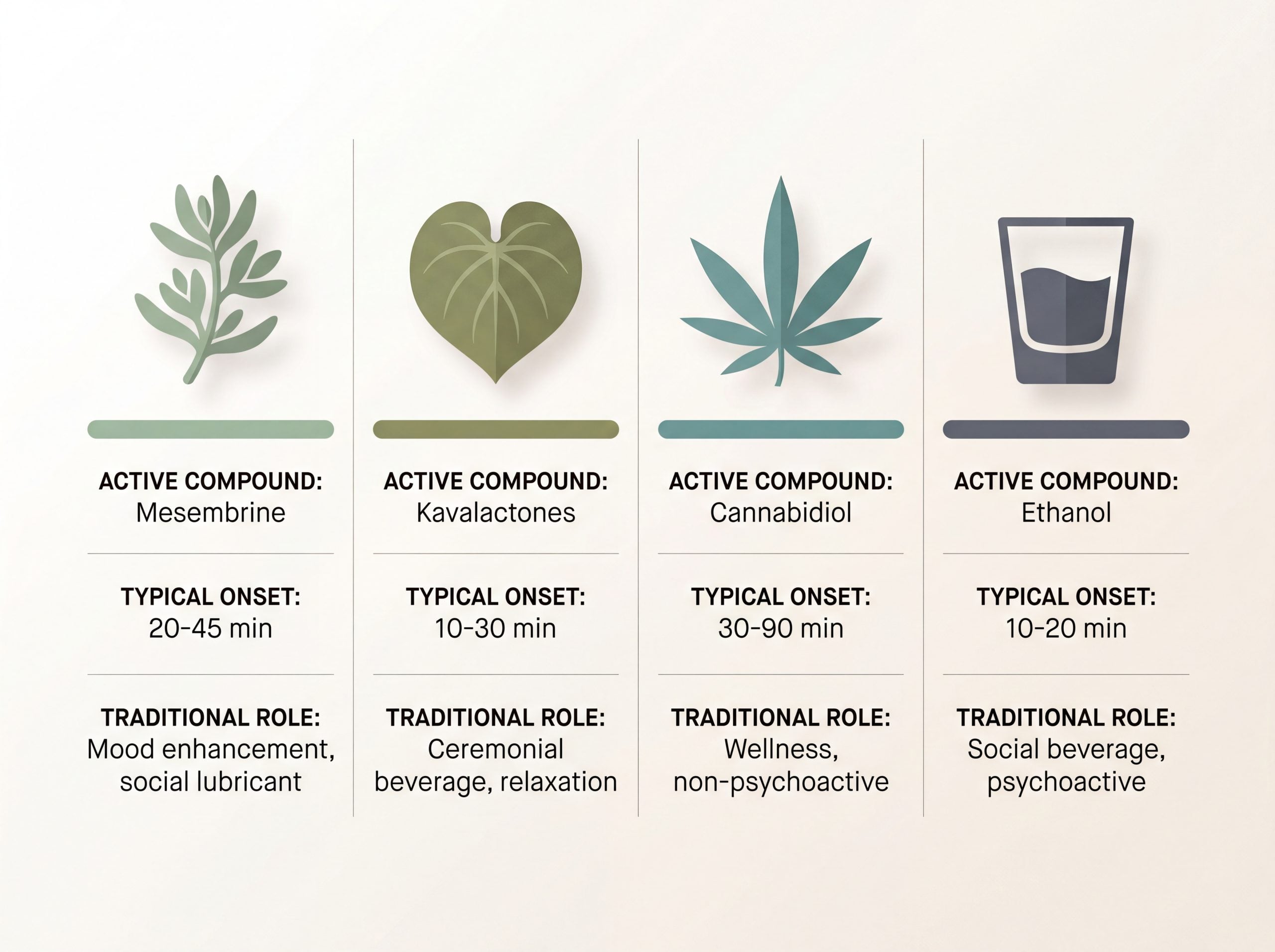
People researching kanna often ask how it differs from other options they reach for when they want to feel calmer or more at ease. In our editorial review of the traditional and clinical literature, the four differ meaningfully in their active compounds, their onset, and their traditional roles. The table below summarizes the practical differences. It is educational context, not a recommendation to combine or substitute any of these.
| Botanical / substance | Primary active compound | Reported onset | Traditional / common role |
|---|---|---|---|
| Kanna (Sceletium tortuosum) | Mesembrine and related alkaloids | Roughly 15 to 45 minutes, form-dependent | Traditionally used by the San and Khoikhoi to support a calm, sociable mood |
| Kava (Piper methysticum) | Kavalactones | Roughly 20 to 30 minutes | Traditionally used across the Pacific Islands in social and ceremonial settings to support relaxation |
| CBD (Cannabis sativa, hemp) | Cannabidiol | Roughly 15 to 90 minutes, delivery-dependent | A modern hemp-derived compound many people use to support a sense of everyday calm |
| Alcohol (ethanol) | Ethanol | Roughly 10 minutes | A widely used social relaxant with well-documented dependence and next-day trade-offs |
| Onset ranges reflect commonly reported values and vary by individual, dose, and preparation. This table is for general education and is not medical advice. | |||
A distinction our team finds most useful for readers: kanna and kava are whole-plant botanicals with long traditional histories of supporting a relaxed, social mood, whereas alcohol carries a well-characterized dependence profile that the botanicals are not typically associated with at traditional serving sizes. For readers weighing a plant-based option, the practical questions are onset, how the compound is thought to act in the body, and personal sensitivity rather than potency alone. If kanna tea specifically is what you are comparing, our guide to preparing kanna tea covers form and method in detail.
Potential Side Effects and Precautions
Sceletium tortuosum is generally considered safe when used responsibly. However, some potential side effects and precautions should be considered:
Common Side Effects
- Mild Headache: Some individuals may experience a mild headache, especially at higher doses.
- Nausea: Some people may experience mild nausea, particularly when starting kanna.
- Drowsiness: Kanna can cause drowsiness, especially at higher doses.
- Reduced Appetite: Kanna may temporarily reduce appetite.
- Gastrointestinal Discomfort: Some individuals may experience mild stomach upset.
- Dry Mouth
- Dizziness
- Insomnia or sleep disturbances
Serious Side Effects and Interactions
- Serotonin Syndrome: Kanna interacts with the serotonin system. Taking kanna with other medications that increase serotonin levels (such as SSRIs, MAOIs, and some other antidepressants) can increase the risk of serotonin syndrome, a potentially life-threatening condition. Do not combine kanna with these medications without consulting a doctor. Symptoms of serotonin syndrome include agitation, confusion, rapid heart rate, high blood pressure, muscle rigidity, and seizures. Seek immediate medical attention if you experience these symptoms.
- Other Drug Interactions: Sceletium tortuosum may interact with other medications, such as:
- Selective Serotonin Reuptake Inhibitors (SSRIs)
- Monoamine Oxidase Inhibitors (MAOIs)
- Serotonin-Norepinephrine Reuptake Inhibitors (SNRIs)
- Tricyclic Antidepressants
- Triptans (for migraines)
- Certain pain medications (like tramadol)
- Supplements like 5-HTP and St. John’s Wort
- CBD
Always consult a doctor before using kanna if you are taking any prescription or over-the-counter medications or other botanicals.
- Recreational Use: Kanna is not a recreational drug and does not produce the same effects as MDMA. Combining it with substances like cannabis or alcohol can be dangerous.
Kanna and Antidepressants: A Serotonin and MAOI Caution
Because kanna’s principal alkaloid, mesembrine, acts as a serotonin-reuptake inhibitor, the most important safety consideration our team emphasizes is combining kanna with other substances that also raise serotonin activity. Prescription antidepressants in the SSRI class (such as sertraline or fluoxetine) and SNRI class work through overlapping serotonin pathways. Stacking two serotonin-active compounds can, in rare cases, contribute to a condition called serotonin syndrome, whose signs include agitation, rapid heart rate, sweating, and confusion.
Monoamine oxidase inhibitors (MAOIs), an older class of antidepressants, warrant particular caution for the same reason. Traditional preparation of kanna sometimes involved fermentation, and the plant’s alkaloid profile means it should not be casually combined with MAOI medications. The practical guidance from our editorial review of the available literature is straightforward: if you take any prescription antidepressant or other serotonergic medication, do not combine it with kanna without first consulting the healthcare provider who manages your prescription. This is a case where professional guidance matters more than any general article can substitute for. Human safety and tolerability data for standardized Sceletium tortuosum extract at typical serving sizes has been encouraging in controlled settings (Chiu et al., 2014, PMCID: PMC4217361), but that research studied kanna on its own, not in combination with antidepressant medication.
Contraindications
- Pregnancy and Breastfeeding: Pregnant and breastfeeding women should avoid kanna due to the lack of safety data.
- Liver Disease: Individuals with liver disease should consult a doctor before using kanna.
- Psychiatric Disorders: Individuals with pre-existing psychiatric disorders, especially those involving anxiety or psychosis, should exercise caution and consult a doctor before using kanna.
Long-Term Effects
There is limited research on the long-term effects of Sceletium tortuosum use. While traditional use suggests a history of safe consumption, more long-term studies are needed. It is generally recommended to use kanna in moderation and to take breaks from usage.
The Legal Status of Kanna
The legal status of Sceletium tortuosum varies around the world:
- United States: Kanna is legal at the federal level and is not a controlled substance. However, Louisiana has specific laws regarding certain plants, including Sceletium tortuosum.
- Canada: Kanna is legal in Canada.
- South Africa: Kanna is legal in South Africa, its native country.
- Europe: The legal status of Kanna in Europe varies by country. Some countries may have regulations or restrictions.
- United Kingdom: The legal status in the UK may vary; check local regulations.
- Australia/New Zealand: Check local regulations before purchasing or using.
It’s always recommended to check the specific regulations in your region before purchasing or using Sceletium tortuosum. Laws can change.
Because kanna’s legal status is one of the most common questions readers ask, it is worth looking beyond any single country. In its native South Africa, Sceletium tortuosum is a traditional plant with a formal biodiversity and traditional-knowledge framework governing its commercial use, reflecting its deep cultural history with the San and Khoikhoi peoples. Across the European Union, kanna is generally sold as a botanical without a unified scheduling status, though individual member states set their own rules on novel foods and supplements. In the United States, kanna is not a federally scheduled substance and is commonly available as a dietary supplement.
The practical takeaway from our editorial review is that kanna is legal to purchase and possess in most places where our readers live, but regulations differ by country and can change. Because supplement and botanical rules are set locally, we recommend confirming the current status in your own region before ordering, especially if you plan to travel with it. This article offers general information, not legal advice.
Choosing a Quality Kanna Product
When selecting a kanna product, consider the following:
- Source: Choose products from reputable suppliers that prioritize sustainable and ethical harvesting practices.
- Quality: Look for products derived from high-quality, organically grown Sceletium tortuosum plants.
- Form: Choose the form that best suits your preferences and needs (capsules, powder, tea, tincture, etc.).
- Third-Party Testing: Opt for products that have been third-party tested for purity, potency, and the absence of contaminants.
- Customer Reviews: Check customer reviews and testimonials to gauge the effectiveness of the product.
Tips for Safely Incorporating Sceletium tortuosum
- Start Low and Go Slow: Begin with the lowest recommended dose.
- Choose a Reputable Source: Buy from trusted suppliers.
- Use in Moderation: Avoid overuse.
- Be Aware of Interactions: Consult a healthcare professional if you take medications.
- Listen to Your Body: Discontinue use if you experience adverse effects.
- Consider Timing: Experiment to find the best time of day to use kanna.
- Store Properly: Store in a cool, dry place, and in an airtight container away from direct light and heat.
Frequently Asked Questions (FAQ) about Kanna
- Q: Is Kanna similar to MDMA?
- A: No. While Kanna affects the serotonin system, it does so in a much milder and different way than MDMA. Kanna is not a recreational drug and does not produce the same intense euphoria or hallucinogenic effects.
- Q: Can Kanna cure anxiety or depression?
- A: Kanna is not a cure for anxiety or depression. It may offer some relief from symptoms, but it should not be used as a replacement for professional medical treatment.
- Q: How long does it take for Kanna to work?
- A: The onset of effects varies depending on the form of Kanna used. Sublingual powder and tinctures tend to work faster than capsules or tea.
- Q: Can I take Kanna every day?
- A: While some people use Kanna regularly, long-term safety data is limited. It’s generally recommended to take breaks from usage.
- Q: What is the difference between Kanna and CBD?
- Kanna and CBD are two different plants that offer different medicinal benefits.
- Q: Where does Kanna come from?
- Kanna comes from South Africa.
- Q: What are the uses for Kanna?
- The Khoisan people have used Kanna for centuries for mood enhancement, endurance, spiritual practices, and pain relief.
These statements have not been evaluated by the Food and Drug Administration. This product is not intended to diagnose, treat, cure, or prevent any disease. Consult your healthcare provider before use, especially if you are pregnant, nursing, taking prescription medication, or managing a health condition.