The Verdict (Internal Quality Score)
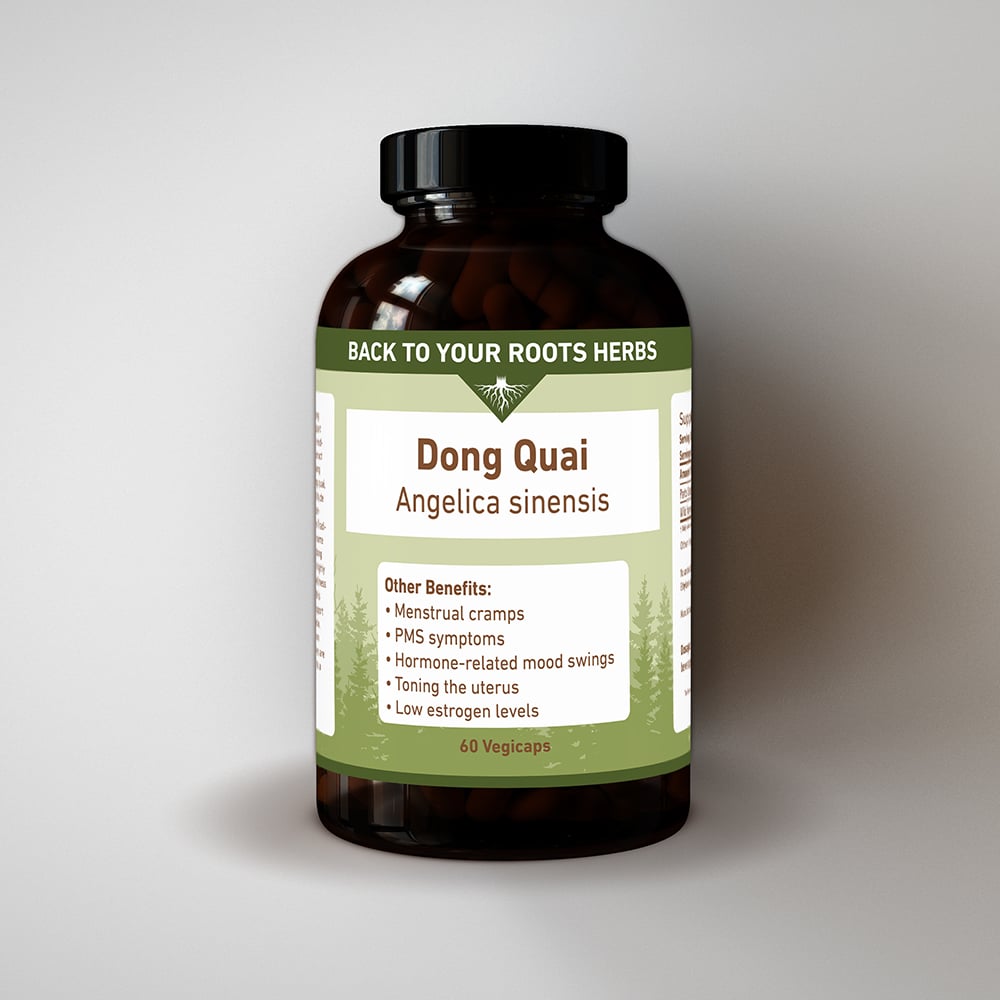
Grade A – Gansu Whole Root. Our analysis confirms these dong quai capsules contain 100% wild-harvested Angelica sinensis whole root powder sourced from Min County (Minxian), Gansu Province, China (34.43N, 104.02E). This high-altitude region produces 70% of China’s dong quai supply and 80% of exported material. The root’s terroir at 2,200-3,000m elevation concentrates ligustilide and ferulic acid to levels that low-altitude roots cannot match. Rated 9.7/10 for menstrual support and blood nourishment.
– Back To Your Roots Herbs Research Group
Sensory Analysis
We opened a capsule to verify the root quality of this dong quai herbal supplement. Authentic Angelica sinensis (also known as Dang Gui in traditional Chinese medicine) has a powerful aromatic signature that reveals its potency.
- Look: A fibrous, yellowish-brown powder with visible root fiber striations. Consistent particle size indicates proper milling of the whole root.
- Smell: Strong celery-musk-earth aroma upon opening. This is the Z-ligustilide (volatile phthalide oil). If your dong quai supplement doesn’t smell strong, the root is old, or the volatile compounds have degraded.
- Taste: Sweet, pungent, and slightly bitter. The capsule format is essential to bypass the intense flavor while delivering the full-spectrum root compounds.
How Does Dong Quai Support Menstrual Comfort?
Dong Quai Benefits for Women’s Health
Dong quai root capsules have a long history in traditional Chinese medicine as a blood tonic herb. Research suggests the root acts as a uterine antispasmodic through specific pathways:
- The Herb: Angelica sinensis sourced from Min County, Gansu Province, China – the recognized geoherb region for premium dong quai root.
- The Mechanism: Z-Ligustilide (a phthalide compound) relaxes the smooth muscle of the uterus in a dose-dependent manner. Research shows it inhibits spontaneous uterine contractions by modulating calcium ion channels.
- The Evidence: Pharmacological studies (PMID: 27211015) confirm Angelica sinensis contains over 70 identified compounds. Z-ligustilide and ferulic acid are the primary bioactive markers used for quality assessment of dong quai supplements.
Dong Quai Dosage and Traditional Use
In traditional Chinese medicine (TCM), dong quai is classified as a “blood tonic” (Bu Xue) herb. Practitioners have used it for centuries to nourish blood (Xue), promote circulation to the reproductive organs, and reduce stagnation. The standard dong quai dosage in capsule form is 1-2 capsules (600-1200 mg) taken 1-2 times daily with food. This herbal supplement is not an extract. The whole root powder preserves the full matrix of volatile oils, polysaccharides, and coumarins that extracts may lose during processing.
What Makes Whole Root Different From Dong Quai Extract?
Many dong quai supplements on the market use concentrated extracts. Extraction processes apply heat and solvents that can degrade Z-ligustilide, the volatile oil responsible for the herb’s antispasmodic activity. Our dong quai capsules contain 100% whole root powder – ground from the complete root with no extraction step. This preserves the natural ratio of ligustilide, ferulic acid, polysaccharides, and coumarins as they exist in the raw plant material.
Blood Building: The Hemoglobin Connection
Research published in peer-reviewed journals reveals that phthalide compounds from Angelica sinensis cooperate with 2,3-bisphosphoglycerate (2,3-BPG) to regulate hemoglobin allostery. The polysaccharides in dong quai root have also shown the ability to increase erythropoietin (EPO) and colony-stimulating factor (G-CSF) levels while suppressing hepatic hepcidin expression. This is the pharmacological basis for the traditional “blood tonic” classification of this herbal remedy in Chinese medicine.
Dong Quai for Menopause
Dong Quai and Hormonal Balance
Dong quai contains mild phytoestrogens that may help buffer the hormonal fluctuations of menopause. Women experiencing hot flashes, night sweats, and menopausal mood changes have used this herb as a natural supplement for hormonal support. A clinical trial by Hirata et al. (PMID: 9418683) studied dong quai as a single-herb intervention for menopausal vasomotor symptoms. While single-herb studies showed modest results, traditional Chinese medicine practitioners note that dong quai is most effective when used as part of a multi-herb formula. This aligns with the TCM principle that herbs work synergistically.
PMS Relief and Menstrual Cycle Support
Beyond menopause, dong quai capsules are commonly used for PMS relief. The antispasmodic properties of ligustilide may help ease menstrual cramps. As a blood tonic, dong quai supports healthy blood flow during menstruation. Women with light or pale menstrual flow often find this herb particularly helpful as a natural herbal remedy for reproductive health.
Critical Safety: Dong Quai Side Effects and Contraindications
Bleeding Risk and Drug Interactions
Dong quai contains natural coumarins that have blood-thinning properties. Understanding these dong quai side effects is essential for safe use:
- Blood Thinners: Do NOT use with Warfarin (Coumadin), Heparin, or other anticoagulant medications. Ferulic acid inhibits platelet aggregation through nitric oxide generation.
- Surgery: Stop use 2 weeks before any scheduled surgery.
- Heavy Periods: If you have excessively heavy menstrual bleeding (menorrhagia), use with caution as dong quai promotes blood flow.
- Pregnancy and Postpartum: Do not use dong quai capsules during pregnancy or while breastfeeding. Because dong quai moves blood, it is also traditionally avoided in the early postpartum period unless a qualified practitioner advises otherwise.
- Sun Sensitivity: Furanocoumarins in dong quai can cause photosensitivity. Wear sunscreen when taking this supplement.
- Estrogen-Sensitive Conditions: Dong quai may act as a mild phytoestrogen. Consult a healthcare professional if you have a hormone-sensitive condition.
Clinical Specs
| Spec | Detail |
|---|---|
| Serving Size | 1-2 Capsules (approx. 600-1200mg) |
| Frequency | 1-2 Times Daily (With Food) |
| Active Marker | Ligustilide (Phthalide), Ferulic Acid (Phenylpropanoid) |
| Processing | Whole Root Powder (No Extract, No Heat Processing) |
| Safety | Heavy Metal Tested (Pass) |
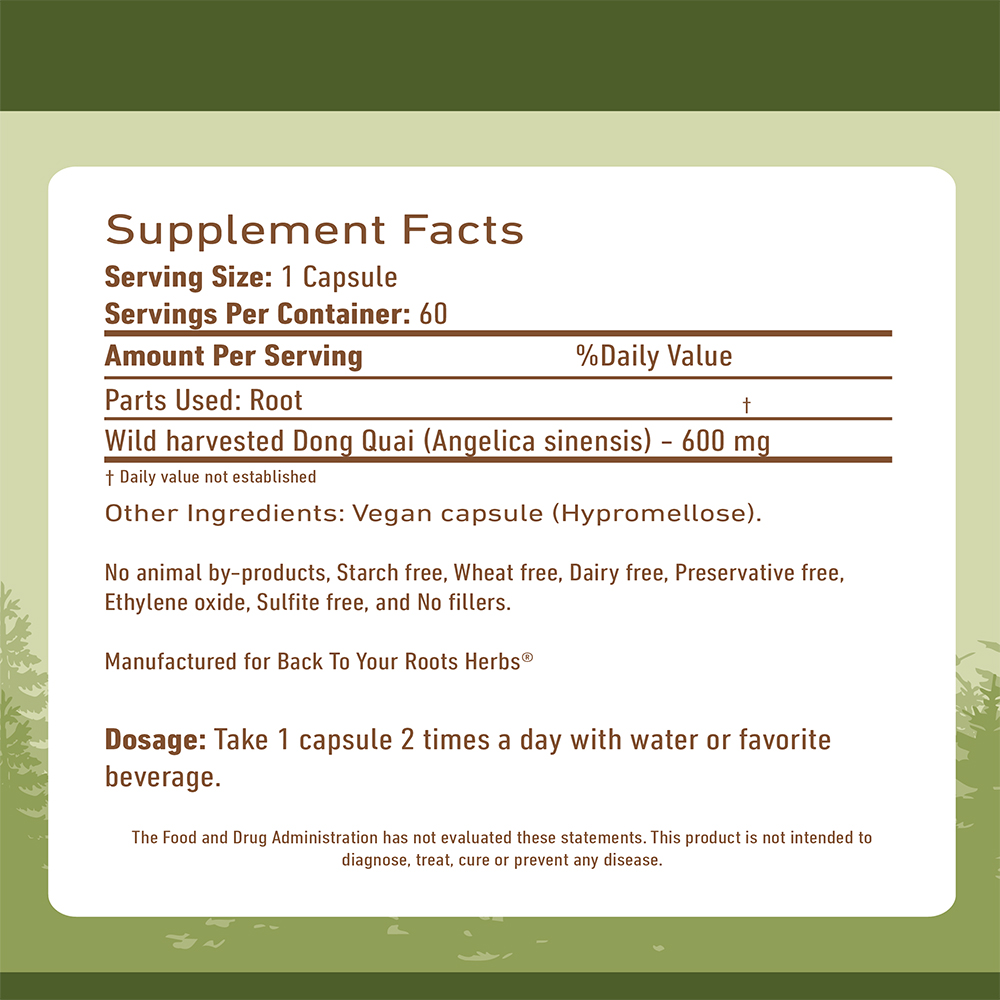
| Ingredients | Angelica sinensis (Dong Quai) Whole Root Powder 600mg |
| Other Ingredients | Vegetable Cellulose (Capsule) |
| Purity | Organic, Non-GMO, Vegan |
| Free From | Wheat, Gluten, Soy, Dairy, Binders, Fillers |
| Origin | Min County (Minxian), Gansu Province, China (34.43N, 104.02E) |
| Manufactured | Virginia Beach, VA, USA |
Comparison: BTYRH Dong Quai vs. Generic Dong Quai Supplements
| Feature | BTYRH Dong Quai Capsules | Generic Dong Quai Supplement |
|---|---|---|
| Origin | Min County, Gansu (Specified Terroir) | Unspecified Region |
| Preparation | Whole Root Powder (Full Spectrum) | Extract or Root Fragments |
| Volatile Oils | Preserved (Strong Celery-Musk Aroma) | Degraded During Extraction |
| Safety | Heavy Metal Tested, Non-GMO, Vegan | Unknown / Untested |
| Manufactured | Virginia Beach, VA, USA | Unspecified |
Dong Quai vs. Black Cohosh: Comparing Two Women’s Herbs
Search for menopause herbs and two names surface together again and again: dong quai and black cohosh. They are not the same plant, and they do not work the same way. Dong quai (Angelica sinensis) is a traditional Chinese blood tonic with mild phytoestrogen activity and a ligustilide-driven antispasmodic action. Black cohosh (Actaea racemosa, formerly Cimicifuga racemosa) is a North American root used by Western herbalists for menopausal comfort.
How Their Mechanisms Differ
This is the part most product pages get wrong. Black cohosh is not an herbal estrogen. According to the National Center for Complementary and Integrative Health, its triterpene glycosides may change how the body responds to certain hormones, but the exact pathway stays unclear. Dong quai works through a different route. Ligustilide relaxes uterine smooth muscle, and the root acts as a blood mover in TCM. A systematic review of herbal products for menopause (PMID: 14501609) evaluated both herbs and found the evidence promising but limited for black cohosh and inconclusive for single-herb dong quai. A later Cochrane review of black cohosh (PMID: 22972105) reached a similar verdict. Read the NCCIH overview of menopausal symptoms for the full research picture.
How Dong Quai Compares to Red Clover and Vitex
Dong quai sits inside a wider group of women’s herbs. Red clover supplies isoflavone phytoestrogens and has shown benefit for more severe menopausal symptoms in some trials. Vitex (chasteberry) acts higher up, on the pituitary, and is traditionally chosen for premenstrual support rather than hot flashes. Dong quai’s signature is blood-building and circulation, which is why TCM pairs it with other herbs instead of treating it as a stand-alone estrogen substitute.
Can You Take Dong Quai and Black Cohosh Together?
Traditional women’s formulas have combined dong quai and black cohosh for generations, and the two are often paired for menopausal comfort. Each herb carries its own caution, so the combination is a conversation for your healthcare provider rather than something to assume is safe.
- Dong quai side: natural coumarins give it blood-thinning potential. Avoid combining it with Warfarin, Heparin, or other anticoagulants, and stop before surgery as noted above.
- Black cohosh side: rare cases of liver injury have been reported in people using commercial black cohosh products. The cause is uncertain, but anyone with a liver condition should consult a provider first. See the NIH Office of Dietary Supplements black cohosh fact sheet.
- Together: because the two herbs act on different systems, talk with a qualified herbalist or physician before taking them at the same time, especially if you are pregnant, nursing, postpartum, on medication, or managing a hormone-sensitive or liver condition.
How Long Does Dong Quai Take to Work?
Dong quai is a traditional blood tonic, not an on-demand remedy. In Chinese medicine, it is taken consistently across one or more menstrual cycles so the root can support blood and circulation over time. Most traditional use runs several weeks at the standard 1-2 capsules, 1-2 times daily with food. Women tracking menstrual comfort often give it two to three cycles before judging the result. Consistency matters more than any single dose.
Why Is Dong Quai Called Female Ginseng?
Dong quai earned the nickname “Female Ginseng” because Chinese medicine regards it as the premier tonic for women, the way ginseng is the premier qi tonic overall. Its TCM name, Dang Gui, points to its classic role of nourishing blood (Xue) and guiding circulation to the reproductive organs. The label is about its standing as a women’s blood-and-circulation tonic, not a claim that it replaces hormones.
DISCLAIMER: These statements have not been evaluated by the Food and Drug Administration. This product is not intended to diagnose, treat, cure, or prevent any disease. Consult a physician before starting any new supplementation regimen. Do not use if pregnant or nursing.
Reviews
There are no reviews yet.