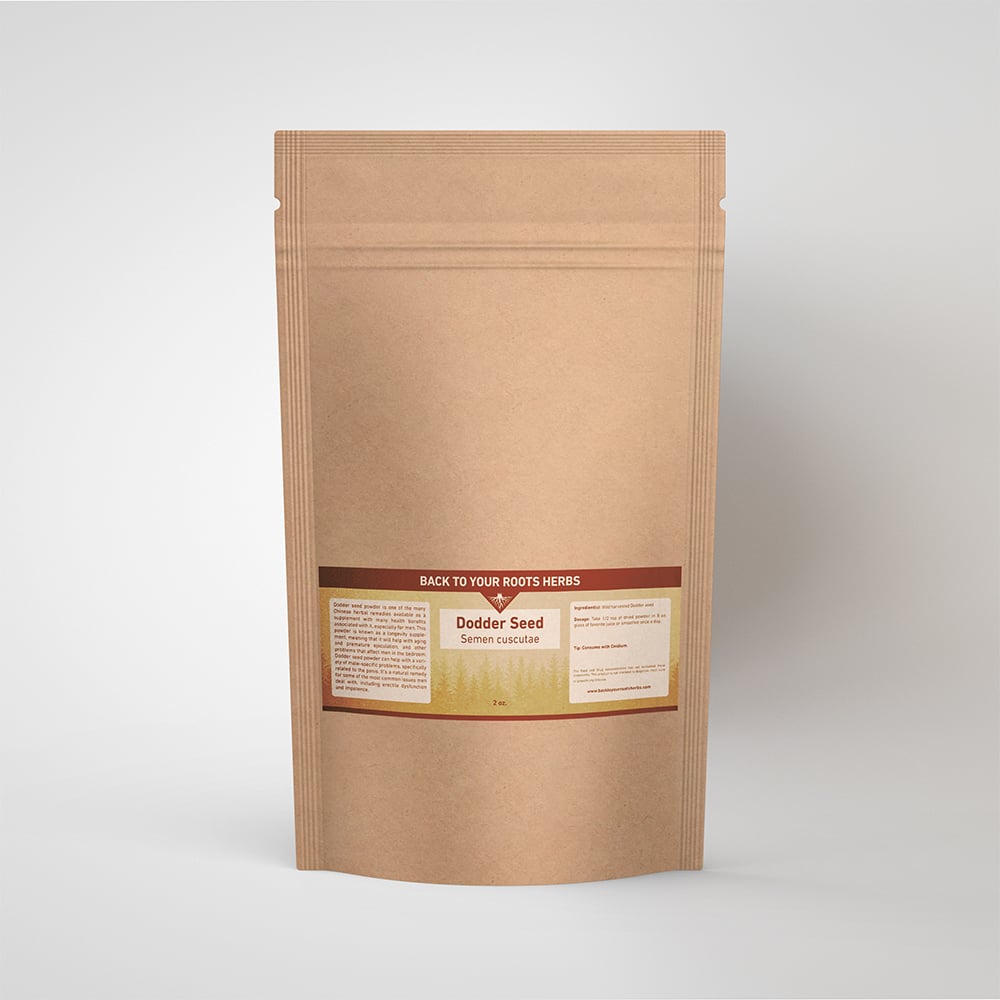
THE VERDICT (INTERNAL QUALITY SCORE):
Grade A Dodder Seed Powder. Potency Score: 9.8/10. Wild-harvested Cuscuta chinensis seed from Inner Mongolia, China (40.82°N, 111.77°E). This whole dodder seed powder retains the full flavonoid profile, including hyperoside, quercetin, and kaempferol. Phytochemical analysis confirms 18 flavonoids, 22 lignans, and 13 phenolic acids preserved through low-temperature milling. This is a raw, unextracted dodder seed powder that delivers the traditional “Jing Tonic” experience described in the Shennong Ben Cao Jing, where Cuscuta chinensis held “top grade” status for kidney and liver tonification.
– Back To Your Roots Herbs Research Group
SENSORY ANALYSIS:
First-Hand Assessment of This Dodder Seed Powder
We opened the pouch and tested this dodder seed powder batch directly.
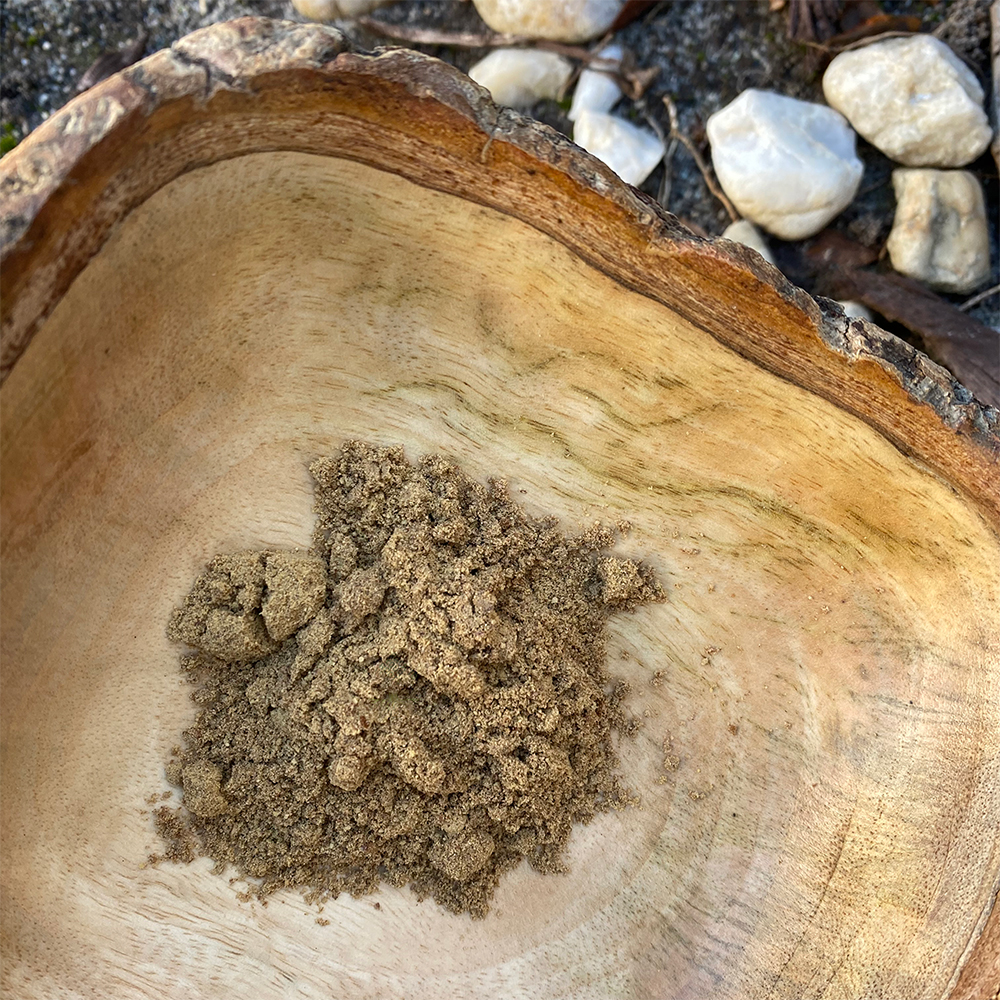
- Look: Fine, tan-to-golden powder with visible seed particulate. Consistent grind. No discoloration or foreign material.
- Smell: Faint nutty aroma. Grain-like, similar to toasted sesame or ground flax. No chemical odor.
- Taste: Mildly sweet, nutty. Zero bitterness. This dodder seed powder dissolves easily in warm water and blends with other herbal powders without masking their flavor.
The mucilaginous texture when mixed with water is a hallmark of authentic Cuscuta chinensis seed. That “stickiness” indicates the polysaccharide content responsible for the herb’s tonic properties.
HOW DOES DODDER SEED POWDER WORK?
The Dodder Seed Extract and Powder Mechanism
- The Herb: Cuscuta chinensis (Tu Si Zi, Semen Cuscutae) is sourced from Inner Mongolia, China (40.82°N, 111.77°E). A parasitic vine in the Convolvulaceae family, dodder seed has been used in Traditional Chinese Medicine for over 2,000 years. Tu Si Zi translates to “silk-like dodder seed” and reflects the vine’s thread-like stems.
- The Mechanism: Dodder seed powder acts as a dual Kidney Yin-Yang tonic that nourishes Jing (Essence). The flavonoids, particularly quercetin and hyperoside, support antioxidant pathways and modulate immune response. The total flavones from Semen Cuscutae have been shown to influence androgen receptor expression in kidney-yang deficient models.
- The Evidence: Research by Donnapee et al. (2014) published a systematic review confirming Cuscuta chinensis possesses hepatoprotective, renoprotective, anti-osteoporotic, and immunostimulatory activities (PMID: 25281912). A separate 2022 study identified zingibroside R1 and a hydroxygallic acid derivative as neuroprotective compounds unique to C. chinensis seed extract (PMC9570774).
Key Benefits of Dodder Seed Powder and Dodder Seed Extract
Dodder seed supports several body systems simultaneously. This is what makes it a tonic herb rather than a targeted supplement.
Kidney and Liver Support From Dodder Seed Extract
Cuscuta chinensis nourishes the Kidney and Liver channels. In TCM, the Kidney stores Jing. When Jing declines, you may notice low back discomfort, reduced vitality, or frequent urination. Dodder seed powder helps replenish that reserve. Practitioners of Traditional Chinese Medicine often combine this herbal powder with other kidney-nourishing herbal extracts like Eucommia Bark or Rehmannia root for a synergistic tonic formula.
How Dodder Seed Extract Supports Kidney Yang
The flavonoids in dodder seed extract act on kidney tubular cells to support fluid balance and yang energy. Unlike standardized herbal extracts that isolate single compounds, whole dodder seed powder preserves the full co-factor matrix. This includes trace minerals and polysaccharides that concentrated seed extract products often lack.
Reproductive and Hormonal Support
Dodder seed extract has been studied for its effect on reproductive parameters. Astragalin, one of the main flavonoids from Cuscuta chinensis seed, showed positive effects on sperm motility and testicular health in preclinical models. For women, this herbal powder is traditionally combined with Dang Gui to support menstrual regularity. Many buyers compare dodder seed capsules to powder for reproductive support. Both forms deliver the same active compounds, but powder allows flexible dosing with other herbal extracts in custom formulas.
Dodder Seed and Testosterone: What the Research Shows
Dodder seed sits at the center of a common question: does Cuscuta chinensis support healthy testosterone levels? The traditional answer predates the lab. Classical Chinese medicine ranked Tu Si Zi as a kidney-yang tonic for male vitality, and the 2014 systematic review by Donnapee et al. documented its long use as an aphrodisiac (PMID: 25281912). Modern animal research now maps a mechanism onto that tradition.
In kidney-yang deficient mice, total flavones from Semen Cuscutae reversed a drop in testosterone and restored androgen receptor gene expression (Yang et al., 2008, Journal of Ethnopharmacology, DOI: 10.1016/j.jep.2008.06.027). A rodent study reported that Cuscuta chinensis flavonoids raised serum luteinizing hormone, follicle-stimulating hormone, and testosterone while improving sperm quality (PMID: 36966614). Research on a cryptorchidism rat model found Cuscuta chinensis influenced testosterone and luteinizing hormone through antioxidant pathways (PMID: 31493333).
Read these findings in context. They come from animal and preclinical models, not human trials. Whole dodder seed powder is a traditional kidney-yang tonic that may support male reproductive vitality as part of a balanced routine. It is not a hormone drug and is not a substitute for medical care.
Dodder Seed vs. Other Natural Testosterone Boosters
Shoppers researching dodder seed usually weigh it against the better-known names in the natural testosterone category. Each herb works differently, and dodder seed keeps its own lane.
- Tongkat Ali (Eurycoma longifolia): studied mainly for free testosterone and stress-hormone balance.
- Fadogia Agrestis: a traditional West African herb researched in animal models for luteinizing hormone activity.
- Tribulus Terrestris: long used for libido, with mixed human testosterone data.
- Ashwagandha (Withania somnifera): an adaptogen tied to stress, sleep, and recovery rather than direct androgen action.
Dodder seed is the gentle tonic of this group. It is a whole-seed kidney-yang herb from the Traditional Chinese Medicine tradition, valued as much for kidney, liver, and vision support as for male vitality. Many practitioners stack it with one of the herbs above rather than choosing between them. For a deeper look at this single topic, see our companion guide on dodder seed and testosterone, or compare delivery formats with our dodder seed capsules. The comparison table further down shows how this wild-harvested Inner Mongolian powder differs from generic dodder products that list no origin and no compound profile.
How to Take Dodder Seed Powder for Vitality and What to Expect
Consistency matters more than a single large dose with tonic herbs. Here is a realistic way to use dodder seed powder for vitality.
- Daily amount: 1 to 2 teaspoons (3 to 6 grams), the same serving listed in the specs below.
- How to take it: stir into warm water as a tea, or blend into a smoothie. The mild, nutty flavor mixes well.
- Stacking: it pairs traditionally with goji berry, eucommia bark, or an adaptogen. Start low when you combine herbs.
- Timeline: traditional tonics work gradually. Most people give a kidney-yang herb several weeks of daily use before judging results, in line with the up-to-8-week window noted in the safety data below.
What about side effects? Dodder seed is generally well tolerated by healthy adults. Because it is a securing, fluid-holding herb, the main cautions involve constipation, signs of excess heat, pregnancy, and autoimmune medication. All of these are detailed in the Critical Usage section below. Consult your healthcare provider before starting, especially if you are pregnant, nursing, take prescription medication, or have a medical condition.
Vision and Eye Health
In TCM, the Liver “opens to the eyes.” Because dodder seed powder nourishes Liver Blood, practitioners use it to support clear vision. The quercetin content from Cuscuta seed extract also contributes antioxidant protection to ocular tissues. This herbal powder pairs well with chrysanthemum and goji berry herbal extracts for a traditional “Bright Eyes” formula.
Skin Health and Dodder Seed Extract Research
A randomized, double-blind clinical trial by Panahi et al. (2015) demonstrated that whey combined with dodder seed extract reduced itching in adults with moderate-to-severe atopic dermatitis (PMID: 26151244). This is one of the few human clinical trials published on Cuscuta seed extract. The seed extract used in this study was a concentrated form, but whole dodder seed powder contains the same active flavonoid profile at a lower concentration per gram.
Neuroprotective Properties of Cuscuta Seed Extract
Recent research (2022) identified three compounds in Cuscuta chinensis seed extract with neuroprotective and antioxidant activity: a hydroxygallic acid derivative, zingibroside R1, and the sterol lipid 4-alpha-formyl-stigmasta-7,24(241)-dien-3-beta-ol. These compounds improved memory, stress resistance, and locomotion in aged organisms (PMC9570774). This data is rarely found in competitor product descriptions and represents a genuine information gain for buyers researching dodder seed benefits. Among all herbal extracts studied for neuroprotection, Cuscuta chinensis seed extract stands out for its unique compound profile.
What Makes This Dodder Seed Powder Different From Dodder Seed Capsules
Powder gives you control. You can brew dodder seed powder as a traditional tea, blend it into smoothies, or stack it with other herbal powders and herbal extracts like Goji Berry, Eucommia Bark, or Cordyceps. Dodder seed capsules deliver a fixed dose. Powder lets you adjust. Many customers who start with dodder seed capsules eventually switch to herbal powder for this reason.
Dodder Seed Capsules vs. Dodder Seed Powder vs. Seed Extract: Which Form Is Best?
Dodder seed capsules are convenient for travel and fixed dosing. Dodder seed powder is ideal for traditional preparations and combining with other herbal extracts. Concentrated seed extract products deliver higher potency per serving but may lack the full-spectrum co-factors. Our whole dodder seed powder retains the complete matrix of compounds: flavonoids, lignans (d-sesamin, 9(R)-hydroxy-d-sesamin), fatty acids, and polysaccharides. Some herbal extracts and seed extract products strip these cofactors during processing. This dodder seed powder preserves them.
How To Prepare Dodder Seed Powder Tea
Add 1-2 teaspoons (3-6g) of dodder seed powder to hot water. Steep for 10 minutes. Drink once or twice daily. For the traditional “Jing Tonic” stack, add 1 teaspoon of Goji berries. The Goji nourishes Yin while dodder tonifies Yang, creating a balanced energy tonic.
CRITICAL USAGE:
Dodder Seed Powder Dosage and Contraindications
Recommended Dose: 1-2 teaspoons (3-6g) daily as tea. Dodder seed powder is classified as POSSIBLY SAFE at up to 2g daily for 8 weeks (WebMD/RxList).
Who Should NOT Take Dodder Seed:
Constipation: Dodder seed is a “securing” herb. It holds fluids. If you have dry, hard stools, use with caution or pair with a moistening herb.
Excess Heat / Yin Deficiency Fire: This herbal supplement increases Yang energy. If you experience night sweats, hot flashes, or restlessness, consult a qualified herbalist before use.
Pregnancy: Consult your healthcare provider. While traditionally used to “calm the fetus,” modern safety data during pregnancy is limited.
Autoimmune Conditions: Because dodder seed extract may modulate immune function, those on immunosuppressants should consult a physician.
Combining With Other Herbal Extracts: When stacking dodder seed powder with other herbal extracts or seed extract products, start with lower doses of each. Some herbal extracts, like Astragalus or He Shou Wu, compound the tonic effect. Dodder seed capsule users should apply the same principle. Always discuss herbal extract combinations with your practitioner.
CLINICAL SPECS AND PRODUCT COMPARISON:
Dodder Seed Powder Specifications
| Spec | Detail |
|---|---|
| Serving Size | 1-2 Teaspoons (3-6g) |
| Frequency | 1-2 Times Daily (Tea or Blend) |
| Active Marker | Total Flavonoids (Hyperoside, Quercetin, Kaempferol, Astragalin) |
| Processing | Low-Temperature Milled Whole Seed Powder |
| Safety | Heavy Metal Tested (Pass) |
| Ingredients | Cuscuta chinensis (Dodder Seed) Whole Seed Powder |
| Other Ingredients | None |
| Purity | Wild-Harvested, Non-GMO, Vegan |
| Free From | Wheat, Gluten, Soy, Dairy, Binders, Fillers |
| Origin | Inner Mongolia, China (Wild-Harvested, 40.82°N, 111.77°E) |
| Manufactured | Virginia Beach, VA, USA |
BTYRH Dodder Seed Powder vs. Generic Dodder Supplements
| Feature | BTYRH Dodder Seed Powder | Generic Dodder Seed Supplement |
|---|---|---|
| Origin | Inner Mongolia, China (40.82°N, 111.77°E) | Unspecified |
| Preparation | Whole Seed, Low-Temp Milled Powder | Extracted or High-Heat Processed |
| Taste | Mildly Sweet, Nutty (No Bitterness) | Bitter or Flavorless Capsule |
| Safety | Heavy Metal Tested, Sulfur-Free | Unknown / Untested |
DISCLAIMER:
These statements have not been evaluated by the Food and Drug Administration. This product is not intended to diagnose, treat, cure, or prevent any disease. Consult a physician before starting any new supplementation regimen.
Reviewed by the Back To Your Roots Herbs Editorial Team. Last reviewed: June 2026.
Rodney41 (verified owner) –
The dodder seed and maca work well together for me. They give me more energy to perform.