Key Takeaways
- Cistanche tubulosa and Cistanche deserticola are desert plants used in Traditional Chinese Medicine as Rou Cong Rong, valued for phenylethanoid glycosides such as echinacoside and acteoside.
- The most active research area for women is ovarian function, where Cistanche polysaccharides promoted female germline stem cell differentiation through BMP/SMAD signaling in a 2025 animal study (PMID: 39938839).
- Nearly all evidence in women is preclinical. Animal and cell-culture work is genuinely promising, and human clinical trials in women have not been conducted.
- The European Food Safety Authority reviewed Cistanche tubulosa extract in 2021 and concluded that its safety as a novel food has not been established, citing adverse events at 1,800 mg daily (PMID: 33488809).
- Women who are pregnant, breastfeeding, or managing hormone-sensitive conditions should avoid Cistanche, and anyone on hormone therapy or hormonal contraception should consult their prescriber first.
Cistanche, a revered herb in Traditional Chinese Medicine (TCM), has long been celebrated for its vitality-supporting properties. Known as “Rou Cong Rong,” this desert plant is now gaining attention for its specific applications in women’s health. This guide examines the science and traditional wisdom behind Cistanche tubulosa, exploring how this ancient remedy can be integrated into contemporary wellness practices for females.
A Traditional and Scientific Perspective
Historically, Cistanche spp. has been a staple in TCM, primarily used to nourish the “Kidney Essence,” which in the TCM framework is the root of vitality and longevity. Modern research is now beginning to understand the scientific basis for these traditional applications, revealing how the herb’s unique compounds may support women’s health.
The key to its action lies in its composition. Cistanche tubulosa contains high concentrations of phenylethanoid glycosides, specifically echinacoside and acteoside. These are powerful antioxidants that help the body combat oxidative stress, a primary factor in aging and cellular health. The herb also appears to have adaptogenic properties, meaning it helps the body manage and adapt to various stressors.
Key Areas of Health Support for Women
The properties of Cistanche translate into several areas of interest for female wellness, from supporting the body through menopause to maintaining cognitive sharpness.
Hormonal Balance and Menopause Support
One of the most significant areas of interest is its potential to support hormonal balance. For women navigating the changes of perimenopause and menopause, maintaining equilibrium is vital. The compounds in Cistanche tubulosa may have mild phytoestrogenic properties, meaning they can weakly mimic the action of estrogen in the body. This could be particularly helpful when the body’s natural estrogen levels decline, potentially offering support for common experiences like mood swings and hot flashes. While its effects on male hormones are often discussed, its role in women’s health is more about contributing to a broader sense of hormonal equilibrium.
There is a specific study behind this. Researchers induced a menopausal-syndrome model in mice through bilateral ovary removal, then administered phenylethanoid glycosides of Cistanche at 50, 100, and 200 mg/kg daily for 21 days. At the medium and high doses, serum estradiol and testosterone rose while luteinizing hormone and follicle-stimulating hormone fell, moving all four markers back toward the pattern seen before ovary removal. Behavioral measures and uterine, thymic, and splenic tissue indices also improved relative to untreated model animals (Tian et al., 2017, Saudi Pharmaceutical Journal, PMID: 28579889).
This is the strongest mechanistic evidence available for the hormonal-balance claim, and it is still a mouse. We are citing it because it is the real basis for what the internet tells you about Cistanche and menopause, and because you deserve to see what that basis actually is rather than taking the claim on faith.
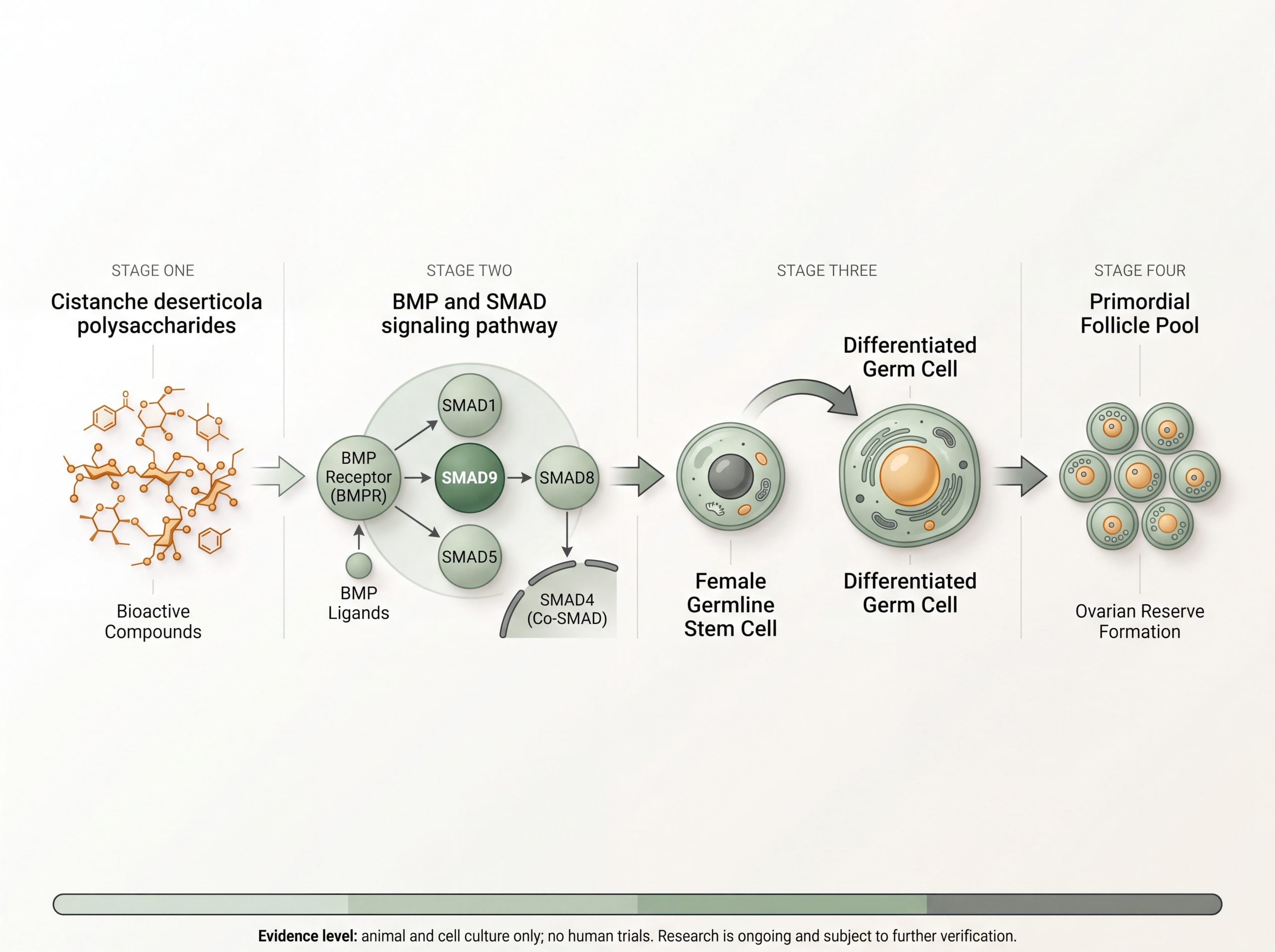
Cistanche, Ovarian Reserve, and the Fertility Research
This is the most active area of current Cistanche research for women, and it is the part most consumer articles skip. A woman is generally understood to be born with a finite primordial follicle pool. Premature ovarian insufficiency describes the situation where that pool is depleted earlier than expected. The question researchers have been asking is whether Cistanche compounds can influence the cells that replenish it.
In a 2025 study, Cistanche deserticola polysaccharides were applied to an animal model of premature ovarian failure and to female germline stem cells isolated in culture. The polysaccharides promoted differentiation of those germline stem cells, and the researchers traced the mechanism to the BMP/SMAD signaling pathway, identifying SMAD9 as a key factor through gene-modified cell models. Ovarian tissue structure and function improved in the treated animals (Qiu et al., 2025, International Journal of Biological Macromolecules, PMID: 39938839).
A broader 2024 review in Phytomedicine reached a similar structural conclusion, attributing the herb’s effects on ovarian and oocyte outcomes primarily to echinacoside, verbascoside, salidroside, polysaccharides, and betaine, acting through antioxidant and anti-apoptotic pathways. That same review closed by stating that high-quality clinical studies are still required to validate effectiveness (Li et al., 2024, PMID: 38718638).
Read that last sentence twice. The mechanism is documented in mice and in cell culture. The human trial does not exist yet. In our editorial review of this literature, that gap is the honest headline, and we would rather you hear it from us than from a supplement ad.
Libido and Sexual Wellness in Women: What the Evidence Actually Says
Cistanche is marketed heavily for libido, and almost all of that marketing is aimed at men. When we searched the literature for the female side of that claim, the picture was thinner than the marketing suggests.
The traditional basis is real. In Traditional Chinese Medicine, Rou Cong Rong has been used as a kidney-yang tonic for centuries, and historical texts apply it to women as well as men (Li et al., 2016, Frontiers in Pharmacology, PMID: 26973528). The modern mechanistic work, summarized in the 2024 Phytomedicine review, centers on antioxidant activity and sex-hormone regulation, and the strongest data in that review concerns male endpoints (PMID: 38718638).
What does not exist is a well-designed human trial showing that Cistanche improves libido in women. Not a weak one. None. Anyone quoting a number to you on this is quoting a rodent study or a men’s study and hoping you do not check. Our position: the traditional use is documented, the mechanism is plausible, and the female clinical evidence is absent. That is the whole truth as of this review.
Cognitive Function and Brain Health
Supporting brain health is a wellness priority at any age. The neuroprotective properties of Cistanche tubulosa are a key area of modern research. The compounds echinacoside and acteoside are believed to help protect brain cells from damage and support healthy blood flow to the brain. This can contribute to better memory, focus, and overall cognitive function.
Immune System Resilience
In TCM, Cistanche is well-regarded for its immune-modulating properties. For women, this can mean better resilience against common illnesses. A healthy immune system underpins overall well-being, and the anti-inflammatory and antioxidant effects of the herb may contribute to this supportive action.
The mechanism behind that traditional reputation has been mapped with reasonable clarity. Reviews of the herb’s active constituents identify immunomodulation as one of its most consistently reported pharmacological effects, alongside antioxidant and neuroprotective activity, and attribute it primarily to the phenylethanoid glycoside fraction (Zhou et al., 2023, Frontiers in Nutrition, PMID: 36992906). The earlier Frontiers in Pharmacology review reached the same conclusion, grouping antioxidation, neuroprotection, and antiaging as the herb’s three most studied bioactivities (PMID: 26973528).
Immunomodulation is worth understanding correctly. It does not mean boosting the immune system, which is a phrase that means very little biologically. It describes a compound that appears to help regulate immune signaling toward balance. For women in midlife, when immune function shifts alongside hormonal change, that regulatory framing is the more useful one.
Skin Health and Anti-Aging
The connection between internal health and external appearance is a core tenet of traditional medicine. Cistanche’s potent antioxidant compounds help combat free radical damage, which is a major contributor to the visible signs of aging. By protecting cells from oxidative stress, it may help promote a more radiant complexion.
Bone Health and Bone Density Support After Menopause
Bone density is a common health priority for women after menopause, when declining estrogen changes the rate of bone remodeling. The research on Cistanche here is real, but it is preclinical, and we want to be precise about that. In a controlled animal study, ovariectomized rats given Cistanches Herba extract at 100 or 200 mg/kg daily for three months showed dose-dependent increases in bone mineral density and bone mineral content, along with improved bone biomechanical measures and higher blood antioxidant enzyme activity, compared with untreated ovariectomized controls (Liang et al., 2011, International Journal of Molecular Sciences, PMID: 21954345).
That is a rodent model with surgically removed ovaries, not a human trial. It tells us there is a plausible mechanism worth studying. It does not tell us what Cistanche does for bone density in a postmenopausal woman, because that study has not been done. Anyone who tells you otherwise is reading past the evidence. For established guidance on bone health after menopause, the NIH Office of Dietary Supplements remains the appropriate reference, and Cistanche is not a substitute for it.
Energy and Vitality
The traditional use of Cistanche as a longevity and energy tonic is one of its most celebrated attributes. It offers a non-stimulant option for supporting sustained vitality. This can be particularly beneficial for managing fatigue and maintaining an active, energetic lifestyle.
This is the one area where human trial data exists, and it is worth walking through carefully. In a randomized, double-blind, placebo-controlled study, 190 adults aged 35 to 60 with chronic fatigue syndrome took a botanical product combining Cistanche and Ginkgo extracts daily for 60 days. Both dose groups showed statistically significant improvement in physical fatigue, mental fatigue, unrefreshing sleep, memory and concentration, and post-exertional malaise. Blood ammonia and lactic acid levels fell relative to placebo (Kan et al., 2021, Frontiers in Nutrition, PMID: 34901100).
Now the part the supplement ads omit. The study’s own authors wrote: “Considering the trivial effect size, the results may lack clinical significance.” The trial also combined Cistanche with Ginkgo biloba, so the benefit cannot be cleanly attributed to Cistanche alone, and it studied a chronic fatigue population rather than healthy women.
We are including this trial with its caveat intact because that caveat is the finding. A real randomized trial exists; it points in a favorable direction, and the researchers themselves consider the magnitude small. That is an honest place to leave it.
Digestive Regularity and Intestinal Function
Here is a use that gets almost no attention in the wellness press and yet sits at the top of the traditional record. Herba Cistanche has been applied in Traditional Chinese Medicine for senile constipation for centuries, and the classical framing is moistening the intestines rather than stimulating them (Li et al., 2016, Frontiers in Pharmacology, PMID: 26973528).
The distinction matters. Stimulant laxatives work by irritating the bowel wall. The traditional use of Cistanche describes something gentler, attributed to its oligosaccharide and polysaccharide fraction supporting normal bowel function rather than forcing it. For women who find that hormonal shifts through perimenopause bring changes in digestive regularity, this is a relevant part of the herb’s profile, and it is the one part of the traditional record with the longest continuous documentation.
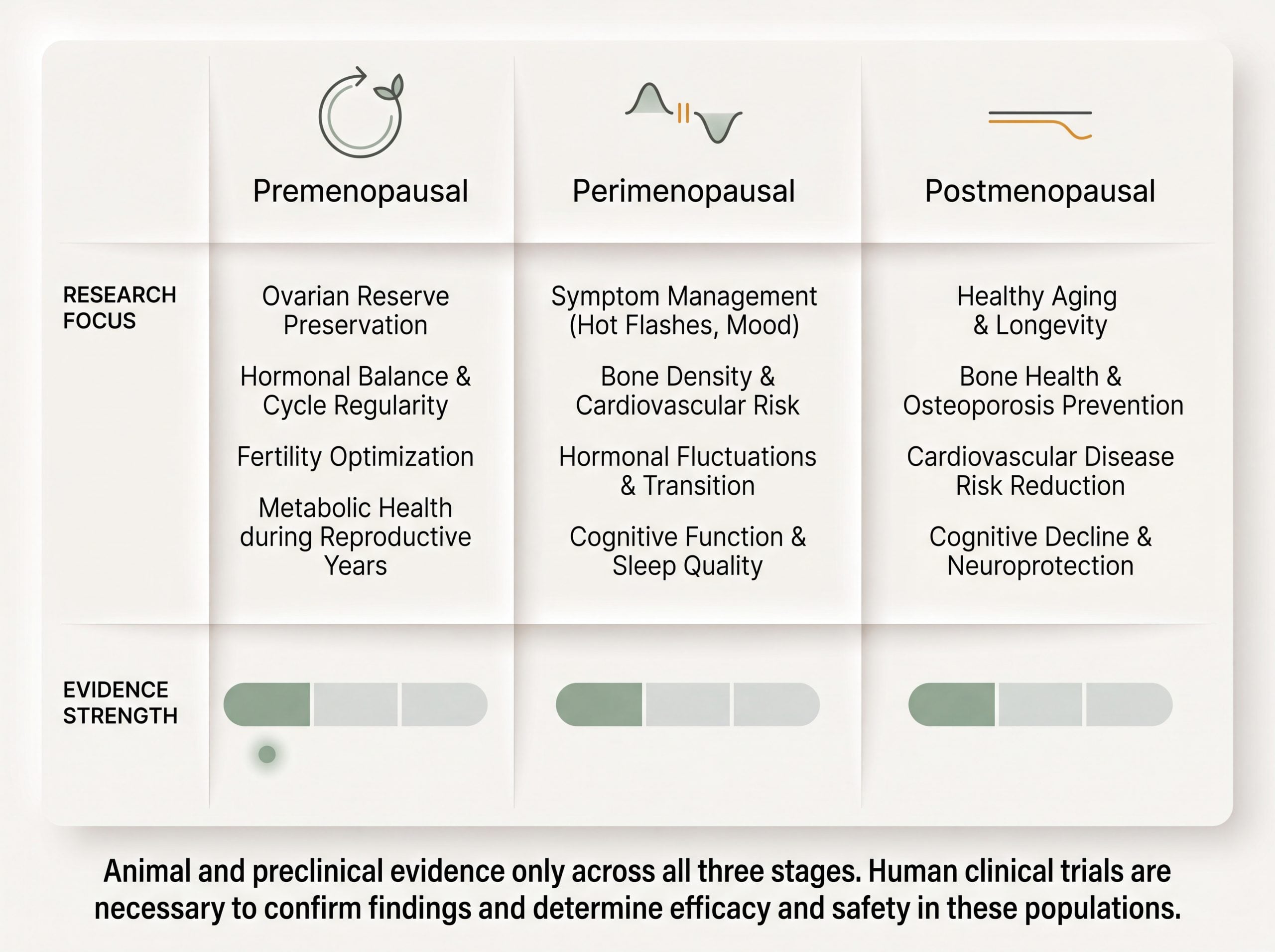
Premenopausal or Postmenopausal: Does the Answer Change?
Yes, and this is the question almost every article on this herb fails to ask. “Is Cistanche good for women?” is not one question. It is at least two, and the evidence base is lopsided between them.
| Life stage | What the research addresses | Strength of evidence |
|---|---|---|
| Premenopausal | Ovarian follicle pool, oocyte maturation, germline stem cell activity, energy | Animal and cell-culture only. No human trials. |
| Perimenopausal | Hormonal transition, fatigue, sleep, mood, digestive regularity | Traditional use plus indirect mechanistic data. No dedicated human trials. |
| Postmenopausal | Bone mineral density, immune aging, cognition | Ovariectomized-rodent models, which are the standard postmenopausal analogue. Still no human trials. |
| Sources: PMID 39938839, PMID 28579889, PMID 21954345, PMID 26973528. Assessment by the Back To Your Roots Herbs Editorial Team, July 2026. | ||
Notice the pattern in that right-hand column. Every row says the same thing. The animal work is genuinely interesting across all three life stages, and the human work has not been done in any of them. A woman at 34 asking about fertility and a woman at 58 asking about bone density are asking different questions, and the correct answer to both is currently “the mechanism looks plausible, and nobody has run the trial.”
Cistanche for Women vs. Cistanche for Men: What Is Actually Different
Search for Cistanche, and you will mostly find content written for men. That is not an accident of marketing. It reflects where the research money went, and it leaves women reading studies that were never about them.
The 2024 Phytomedicine review makes the imbalance visible. Its strongest and most detailed findings concern spermatogenic dysfunction, gonadal function, and erectile dysfunction. Its findings on premature ovarian failure, oocyte maturation, and ovarian tissue are present but comparatively thin (Li et al., 2024, PMID: 38718638). The compounds are identical. The plant is identical. The volume of research is not.
What this means in practice: the antioxidant, neuroprotective, immune, and bone-related mechanisms are not sex-specific and apply to women as they do to men. The testosterone-forward marketing that dominates this category is aimed at a male audience and tells a woman very little about what to expect. And the questions that matter most to women, meaning ovarian reserve, the menopausal transition, and interaction with hormone therapy, are precisely the questions with the least human data behind them.
A woman reading a men’s Cistanche article is reading a study about someone else. That is the honest summary, and it is why this page exists.
Incorporating Cistanche into Your Routine
Integrating this herb into a daily health regimen should be done thoughtfully and with professional guidance.
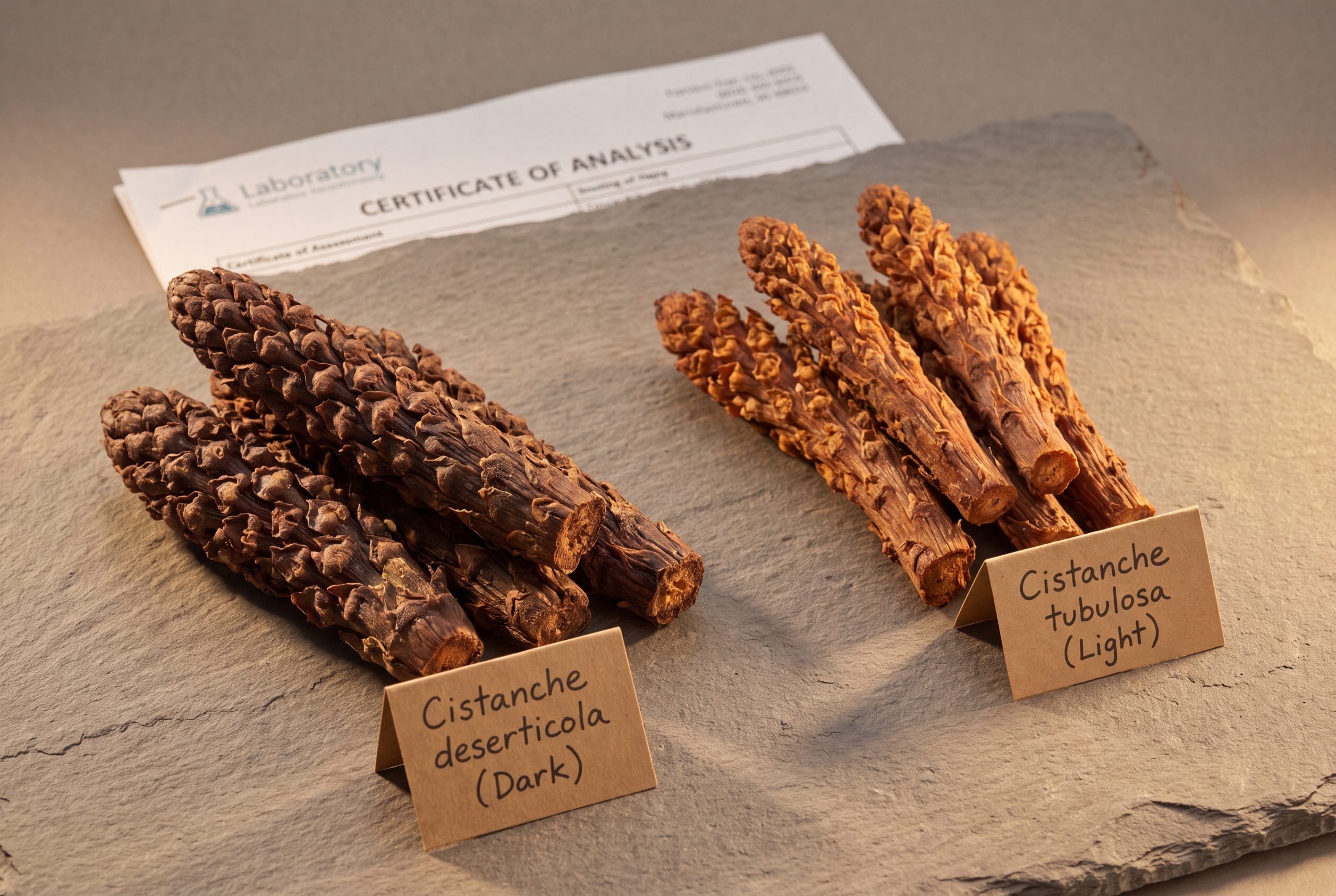
Cistanche deserticola vs. Cistanche tubulosa: Why the Species on the Label Matters
Two species dominate the supplement market, and the labels treat them as interchangeable. They are not quite the same plant, and in our sourcing experience, the distinction shows up in the certificate of analysis before it shows up anywhere else.
- Cistanche deserticola Y.C. Ma is the species named in most of the ovarian and bone research, including the 2025 germline stem cell work and the 2011 bone-density animal study. It is also the species facing the greatest conservation pressure, as it is an endangered wild plant native to the arid lands of northwestern China.
- Cistanche tubulosa (Schenk) Wight is the species most commonly cultivated for the Western supplement market and the one the EFSA safety dossier was filed on. It is the species you are most likely holding.
Both are holoparasitic desert plants, both are called Rou Cong Rong, and both are rich in phenylethanoid glycosides (Li et al., 2016, PMID: 26973528). But when a study is quoted to you, it is worth checking which species was actually tested, because the label in your hand may not be the plant in the paper. Our Cistanche extract powder and Cistanche capsules both state the species and the standardization percentage on the label, because we think you should not have to guess.
- Forms and Quality: Cistanche is available in various forms, including standardized extracts and capsules. Choosing a high-quality product from a reputable source is important for ensuring potency and purity. As the premier company for authentic traditional herbs, we prioritize sourcing and quality control.
- Dosage: It is always advisable to start with a lower dose to assess your body’s response. While dosage can vary, a common range is between 200mg and 500mg daily. This should be determined in consultation with a healthcare provider.
- Consistency: The supportive effects of adaptogenic and tonic herbs are often cumulative. Consistent, regular use is key to experiencing their full potential.
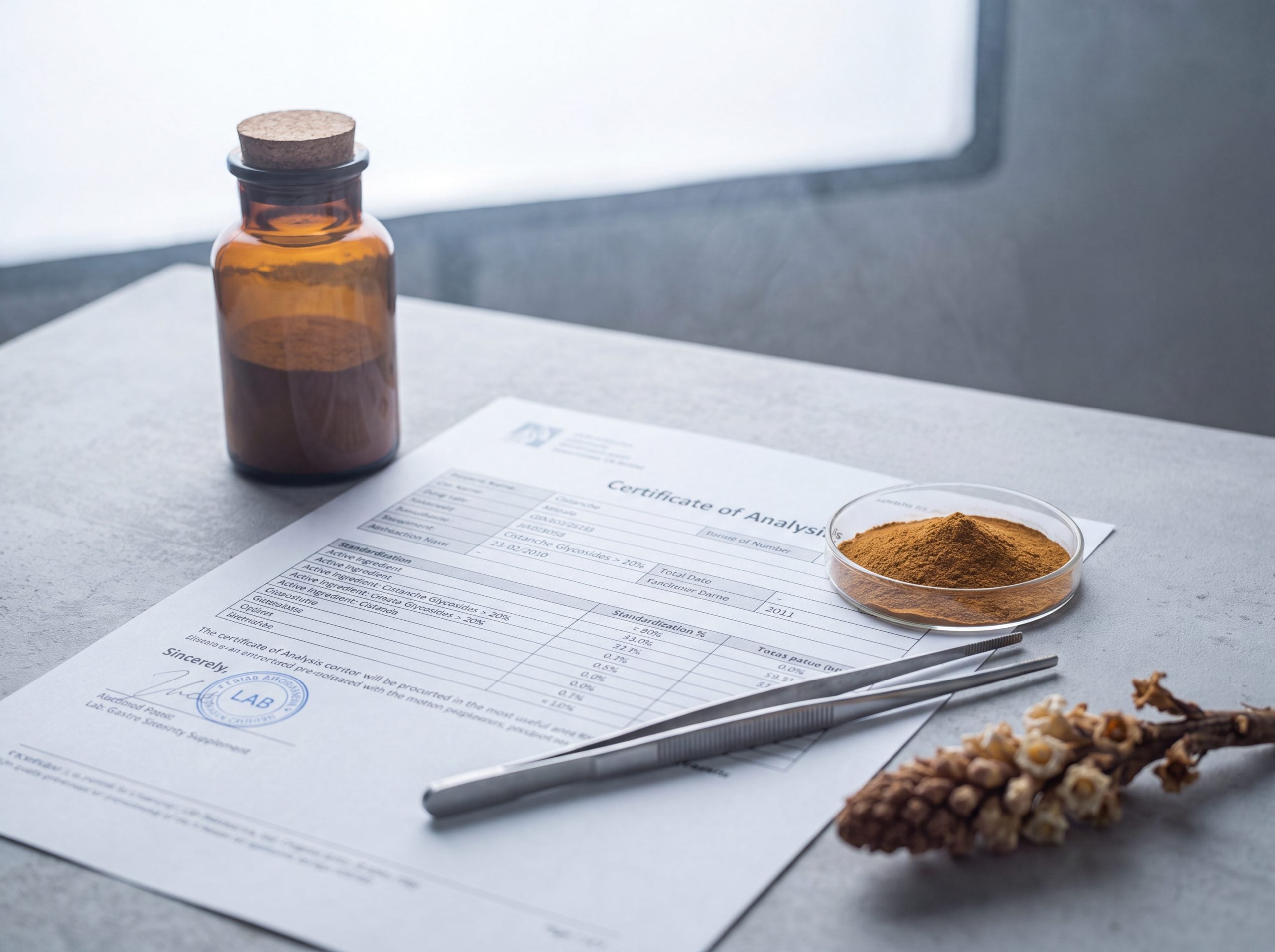
How to Choose a Quality Cistanche Supplement
Cistanche is a holoparasitic desert plant with no leaves and no chlorophyll, which makes visual identification of the raw material nearly impossible once it is dried and powdered. That single botanical fact is why the paperwork matters more here than it does with most herbs. In our sourcing work, three things separate a real Cistanche product from an expensive filler.
- Standardization to echinacoside and acteoside. Phenylethanoid glycosides are the compounds the research is actually about, and echinacoside is the marker compound. In the EFSA dossier, phenylethanoid glycosides made up at least 70 percent of the extract, with echinacoside alone at 25 to 45 percent (PMID: 33488809). If a label states no standardization percentage at all, you have no idea what you are buying.
- Species and part named on the label. The stem is the part used. The species should be stated as Cistanche deserticola or Cistanche tubulosa, not simply “Cistanche”.
- Third-party verification. Independent testing programs such as USP, NSF, or ConsumerLab confirm identity and screen for contaminants. Manufacture in a cGMP-compliant facility is a baseline, not a differentiator.
Because both Cistanche species are under conservation pressure as wild-harvested desert plants, sourcing transparency is also an ethical question and not only a quality one. We publish the species and standardization on our Cistanche capsules for this reason.
Potential Side Effects and Precautions
While Cistanche is generally well-tolerated, it is essential to be aware of potential side effects and necessary precautions.
Is Cistanche Safe for Daily, Long-Term Use? The EFSA Assessment
Most articles answer this with a reassuring sentence and move on. We are going to give you the part they leave out, because it is the most consequential piece of safety information published on this herb.
In 2021, the European Food Safety Authority’s Panel on Nutrition, Novel Foods and Food Allergens reviewed a water extract of Cistanche tubulosa stems for approval as a novel food. The Panel examined an integrated analysis of three studies covering 1,076 patients who had taken the extract at 1,800 mg daily. Twelve adverse events were classified as definitely, probably, or possibly related to the exposure. Two of those were severe: one cerebral haemorrhage and one case of epilepsy. The Panel also noted that the submitted toxicological studies did not comply with EFSA’s genotoxicity testing strategy or with good laboratory practice.
The Panel’s conclusion, quoted directly: “the safety of the NF has not been established” (EFSA NDA Panel, 2021, EFSA Journal, PMID: 33488809).
Some context matters here. That dose, 1,800 mg daily, is roughly three to nine times the 200 to 500 mg range typically used in supplements, and the population studied was vascular dementia patients, not healthy women. A finding at that dose in that group does not automatically transfer to a healthy 45-year-old taking 300 mg. But it is real, it is recent, it comes from a regulator rather than a competitor, and the target population EFSA specified explicitly excluded pregnant and lactating women.
Our editorial position: Cistanche has a long traditional record of use, and short-term tolerability in most reports is good. Long-term safety at supplement doses has not been formally established by any regulator, and the one regulator that looked closely declined to establish it. Use conservatively, use the lower end of the dose range, and talk to your healthcare provider. For general guidance on evaluating herbal supplement safety, the National Center for Complementary and Integrative Health maintains resources specific to women’s health.
- Hormone-sensitive conditions: Women with a history of hormone-sensitive conditions, including certain breast, uterine, or ovarian cancers, endometriosis, or uterine fibroids, should consult their physician before using Cistanche. Animal data showing shifts in estradiol, testosterone, luteinizing hormone, and follicle-stimulating hormone provide a real mechanistic reason for this caution (PMID: 28579889).
- Digestive effects: The most commonly reported side effects in short-term use are mild and gastrointestinal, which is unsurprising for an herb traditionally used to moisten the intestines. Starting at the low end of the dose range reduces the likelihood.
- Medication interactions: Cistanche may interact with hormonal therapies and immune-modulating drugs. See the dedicated section below on hormone therapy and birth control.
- Pregnancy and breastfeeding: Avoid. This is not a soft caution. The EFSA assessment explicitly excluded pregnant and lactating women from the target population, and there is no safety data in these groups (PMID: 33488809).
- Dose discipline: The adverse events flagged by EFSA occurred at 1,800 mg daily. Typical supplemental use sits between 200 and 500 mg daily. More is not better with this herb, and the gap between those two numbers is the reason.
Cistanche, Hormone Therapy, and Birth Control
This question comes up constantly and deserves a real answer rather than a shrug. The honest answer has two parts.
First, there is no published human interaction study between Cistanche and hormone replacement therapy, and none between Cistanche and hormonal contraceptives. That research does not exist. Any source giving you a confident yes or no is inventing it.
Second, the theoretical basis for caution is legitimate. In an ovariectomized mouse model, phenylethanoid glycosides of Cistanche measurably shifted serum hormone levels, raising estradiol and testosterone while lowering luteinizing hormone and follicle-stimulating hormone (Tian et al., 2017, Saudi Pharmaceutical Journal, PMID: 28579889). A compound that moves those four markers in an animal is a compound that could plausibly interact with a therapy designed to control those same markers in a human.
So the practical guidance is straightforward. If you take hormone replacement therapy, hormonal birth control, tamoxifen, an aromatase inhibitor, or any immune-modulating medication, do not add Cistanche without talking to the clinician who prescribed it. Not because we know it interferes. Because nobody has established that it does not, and the mechanism gives real reason to ask.
The path to health and vitality is personal. The decision to incorporate Cistanche should be made with care, knowledge, and in consultation with a professional who understands your unique health profile.
Frequently Asked Questions About Cistanche for Women
Is Cistanche safe for women to take daily?
Short-term use at typical supplemental doses of 200 to 500 mg daily is generally well tolerated in the available reports, with mild digestive effects being the most common complaint. Long-term daily safety has not been established by any regulator. The European Food Safety Authority reviewed the evidence in 2021 and concluded that safety had not been established, citing adverse events at a much higher dose of 1,800 mg daily (PMID: 33488809). Use the lower end of the range and consult your healthcare provider.
Does Cistanche affect female hormones or estrogen?
In animal models, it does. Phenylethanoid glycosides of Cistanche raised estradiol and testosterone and lowered luteinizing hormone and follicle-stimulating hormone in ovariectomized mice (PMID: 28579889). No equivalent human study has been published, so the effect on hormone levels in women is not established. Women with hormone-sensitive conditions should treat this mechanistic signal as a reason for medical consultation rather than reassurance.
Can Cistanche help with libido in women?
There is no well-designed human trial showing that Cistanche improves libido in women. The herb has a long traditional record as a kidney-yang tonic used by both sexes, and the modern mechanistic research on sexual function is overwhelmingly focused on male endpoints (PMID: 38718638). Claims about female libido are currently extrapolations from traditional use and from men’s data.
Does Cistanche interact with hormone therapy or birth control?
No human interaction studies exist for either. Because Cistanche compounds measurably shifted estradiol, testosterone, luteinizing hormone, and follicle-stimulating hormone in animal models (PMID: 28579889), a theoretical interaction with hormone replacement therapy, hormonal contraceptives, tamoxifen, or aromatase inhibitors is plausible. Consult the clinician who prescribed your therapy before adding Cistanche.
What are the side effects of Cistanche for women?
Mild gastrointestinal effects are the most frequently reported. Pregnant and breastfeeding women should avoid it entirely due to absent safety data. Women with hormone-sensitive conditions including certain breast, uterine, or ovarian cancers, endometriosis, or fibroids should consult a physician first. At high doses, the EFSA review documented severe adverse events including cerebral haemorrhage and epilepsy in a patient population taking 1,800 mg daily (PMID: 33488809).
Does Cistanche help with weight loss?
There is no reliable human evidence that Cistanche produces weight loss. Some animal research has examined effects on weight gain in high-fat-diet models, but these findings have not been reproduced in human trials and should not be treated as a weight-management recommendation. Cistanche is traditionally a vitality and kidney-yang tonic, not a weight-loss herb.
References
- Qiu Y, et al. (2025). Cistanche deserticola polysaccharides enhance female germline stem cell differentiation through BMP/SMAD signaling to mitigate premature ovarian failure. International Journal of Biological Macromolecules, 304(Pt 2):140848. PMID: 39938839
- Li Z, et al. (2024). The role of Cistanches Herba and its ingredients in improving reproductive outcomes: A comprehensive review. Phytomedicine, 129:155681. PMID: 38718638
- EFSA Panel on Nutrition, Novel Foods and Food Allergens (2021). Safety of water extract of Cistanche tubulosa stems as a Novel food pursuant to Regulation (EU) 2015/2283. EFSA Journal, 19(1):e06346. PMID: 33488809
- Tian S, et al. (2017). Phenylethanoid Glycosides of Cistanche on menopausal syndrome model in mice. Saudi Pharmaceutical Journal, 25(4):537-547. PMID: 28579889
- Kan J, et al. (2021). A Botanical Product Containing Cistanche and Ginkgo Extracts Potentially Improves Chronic Fatigue Syndrome Symptoms in Adults: A Randomized, Double-Blind, and Placebo-Controlled Study. Frontiers in Nutrition, 8:658630. PMID: 34901100
- Liang H, et al. (2011). Effect of Cistanches Herba aqueous extract on bone loss in ovariectomized rat. International Journal of Molecular Sciences, 12(8):5060-5069. PMID: 21954345
- Li Z, et al. (2016). Herba Cistanche (Rou Cong-Rong): One of the Best Pharmaceutical Gifts of Traditional Chinese Medicine. Frontiers in Pharmacology, 7:41. PMID: 26973528
- Zhou S, et al. (2023). Analysis of the active ingredients and health applications of cistanche. Frontiers in Nutrition, 10:1101182. PMID: 36992906
*These statements have not been evaluated by the Food and Drug Administration. This product is not intended to diagnose, treat, cure, or prevent any disease.