Key Takeaways
- Oregano oil is not a proven treatment for a urinary tract infection. Prescription antibiotics remain the only clinically established treatment for a confirmed bacterial UTI.
- Carvacrol and thymol, the two dominant phenols in oregano oil, reduced the motility of urinary-tract bacteria by 81 to 92 percent in laboratory testing (Sanchez Garcia et al., 2024, Antibiotics, PMID: 39061347).
- Most UTI-specific oregano research used Mexican oregano, Lippia graveolens, which is a different plant from Mediterranean oregano, Origanum vulgare. Almost no consumer article makes this distinction.
- Every published finding on oregano and urinary bacteria is in vitro. No human clinical trial has tested oregano oil as a UTI treatment.
- Fever, flank or back pain, vomiting, blood in the urine, or pregnancy means stop and seek medical care the same day.
Urinary tract infections send more than eight million people to a clinician every year in the United States, and a large share of them go looking for something to take before the appointment. Oregano oil comes up constantly in that search. Our editorial team reviewed the primary literature on oregano and urinary bacteria to answer a narrow question honestly: what has actually been measured, and what has not.
The short version is that the laboratory data is real and more specific than most articles report, and the human data does not exist. Both halves of that sentence matter. What follows separates the two, names the compounds and the organisms, cites the studies by PMID, and covers the safety details that get skipped when oregano oil is discussed as a home remedy.
Can oregano oil actually treat a UTI?
No. Oregano oil is not an established treatment for a urinary tract infection, and it should not be used in place of medical evaluation. Laboratory work does show that its principal compound, carvacrol, suppresses the growth and movement of uropathogenic bacteria, with motility reductions of 81 to 92 percent reported in fractionated Mexican oregano essential oil (Sanchez Garcia et al., 2024, Antibiotics, PMID: 39061347). None of that work has been repeated in people with an active infection.
That gap between test tube and human body is not a technicality. A compound that kills bacteria in a dish has to survive digestion, reach the urinary tract at a meaningful concentration, and do so without damaging the tissue it passes through. For oregano oil, no study has demonstrated any of those three steps in a person with a UTI.

What does the research actually say about oregano oil and UTIs?
Three studies carry most of the weight, and their findings are more specific than the general “has antimicrobial properties” framing that circulates online.
Motility inhibition. Sanchez Garcia and colleagues at the Universidad Autonoma de Nuevo Leon fractionated Mexican oregano essential oil and tested the fractions against three Gram-negative bacteria associated with urinary tract infections. Flagella-driven movement is a virulence factor. It is how these organisms travel toward the bladder and establish themselves. Treatment reduced motility by 92 to 81 percent in one species, 90 to 83 percent in a second, and across a wide 100 to 8.9 percent range in a third. Minimum bactericidal concentrations ranged from 0.002 to 23.7 mg/mL, and the authors attributed the effect to the combined action of carvacrol and thymol rather than either compound alone (2024, Antibiotics, PMID: 39061347).
Clinical isolates, not lab strains. Zapien-Chavarria and colleagues took a different approach. Rather than testing a reference strain, they collected 61 bacterial isolates from actual urinary tract infection cases. Twenty of those isolates were multidrug resistant, and six were strong biofilm formers. Mexican oregano essential oil was bactericidal against them, with minimum inhibitory and bactericidal concentrations spanning under 200 mg/L for the most susceptible organism to over 2,000 mg/L for the most resistant (2019, Antibiotics, PMID: 31618938). Testing against real clinical isolates is a meaningfully higher evidence tier than testing against a laboratory reference strain, and it is the single most useful number in this literature.
Mechanism at the gene level. Mith and colleagues at the University of Liege looked at what carvacrol does to bacterial gene expression rather than simply whether bacteria die. In Escherichia coli O157:H7, oregano essential oil and isolated carvacrol suppressed transcription of the ler gene, which regulates a cluster of virulence promoters, and reduced expression of Shiga toxin, fliC (the gene encoding flagellin, the protein flagella are built from), and luxS, which governs quorum sensing. The effects were dose-dependent (2014, FEMS Microbiology Letters, PMID: 25790499).
That last finding is the one almost nobody reports, and it explains the motility result at a level the other studies do not. Carvacrol is not only rupturing cells. It is turning down the genetic program bacteria use to build flagella and coordinate with each other.
Which bacteria has oregano oil been tested against?
Oregano essential oil has demonstrated bactericidal activity against Escherichia coli, including the O157:H7 serotype, along with Proteus mirabilis, Klebsiella pneumoniae, Enterococcus faecalis, Pseudomonas aeruginosa, and Staphylococcus aureus in laboratory conditions. E. coli accounts for the majority of uncomplicated urinary tract infections, which is why it dominates this research. Susceptibility varied widely by organism, with Pseudomonas proving the most resistant in clinical isolate testing at concentrations above 2,000 mg/L (PMID: 31618938).
None of this establishes that swallowing oregano oil clears any of these organisms from a human urinary tract. Every result above was produced in a controlled culture, where the compound reaches the bacteria directly at a known concentration.
How much oregano oil is used in antimicrobial research?
Published minimum bactericidal concentrations for oregano essential oil against urinary tract organisms range from 0.002 to 23.7 mg/mL for fractionated preparations (PMID: 39061347) and from under 200 mg/L to over 2,000 mg/L against clinical isolates (PMID: 31618938). Those are concentrations in a culture medium. They are not doses, and they cannot be converted into one.
We want to be direct about why. A concentration in a dish describes how much compound the bacteria are sitting in. A human dose has to account for absorption, distribution through the bloodstream, metabolism by the liver, and how much of the original compound survives to reach the urinary tract. No study has established that chain for oregano oil, which means no evidence-based oral protocol for UTI exists. Product labels that state one anyway are extrapolating past their data.

How do carvacrol and thymol work?
Research on Origanum species has identified five mechanisms of antibacterial action: direct damage to the cytoplasmic membrane, inhibition of bacterial enzymes, inhibition of efflux pumps (the structures bacteria use to expel antibiotics), depletion of cellular ATP, and interference with biofilm formation (Soltani et al., 2021, Iranian Journal of Pharmaceutical Research, PMID: 34567161).
Biofilm interference is the mechanism most relevant to urinary health. Bacteria including E. coli can assemble a protective polysaccharide matrix that shields them from both immune cells and antibiotics. Carvacrol has been shown to interfere with the formation of that matrix in culture. The distinction worth holding onto is that inhibiting a biofilm from forming is not the same as dissolving one that already exists, and the research addresses the former.
What are the key active compounds?
- Carvacrol. A monoterpenoid phenol and the dominant constituent of most oregano essential oils. It is responsible for the majority of measured antimicrobial activity. Commercial oils are commonly standardized to 60 to 80 percent carvacrol.
- Thymol. An isomer of carvacrol, meaning the two share a molecular formula but differ in structure. It contributes its own antibacterial and antifungal activity, and the 2024 fractionation study attributed the strongest results to carvacrol and thymol acting together rather than to either alone (PMID: 39061347).
- Rosmarinic acid. A polyphenolic antioxidant present in the water-soluble fraction of the herb rather than the essential oil. It contributes antioxidant capacity, not the antimicrobial effect.
- p-Cymene and gamma-terpinene. Precursor monoterpenes with modest activity of their own. Their main role appears to be increasing the permeability of bacterial membranes so carvacrol penetrates more readily.
Mediterranean oregano and Mexican oregano are different plants
This distinction is missing from nearly every consumer article on the subject, and it changes how the research should be read.
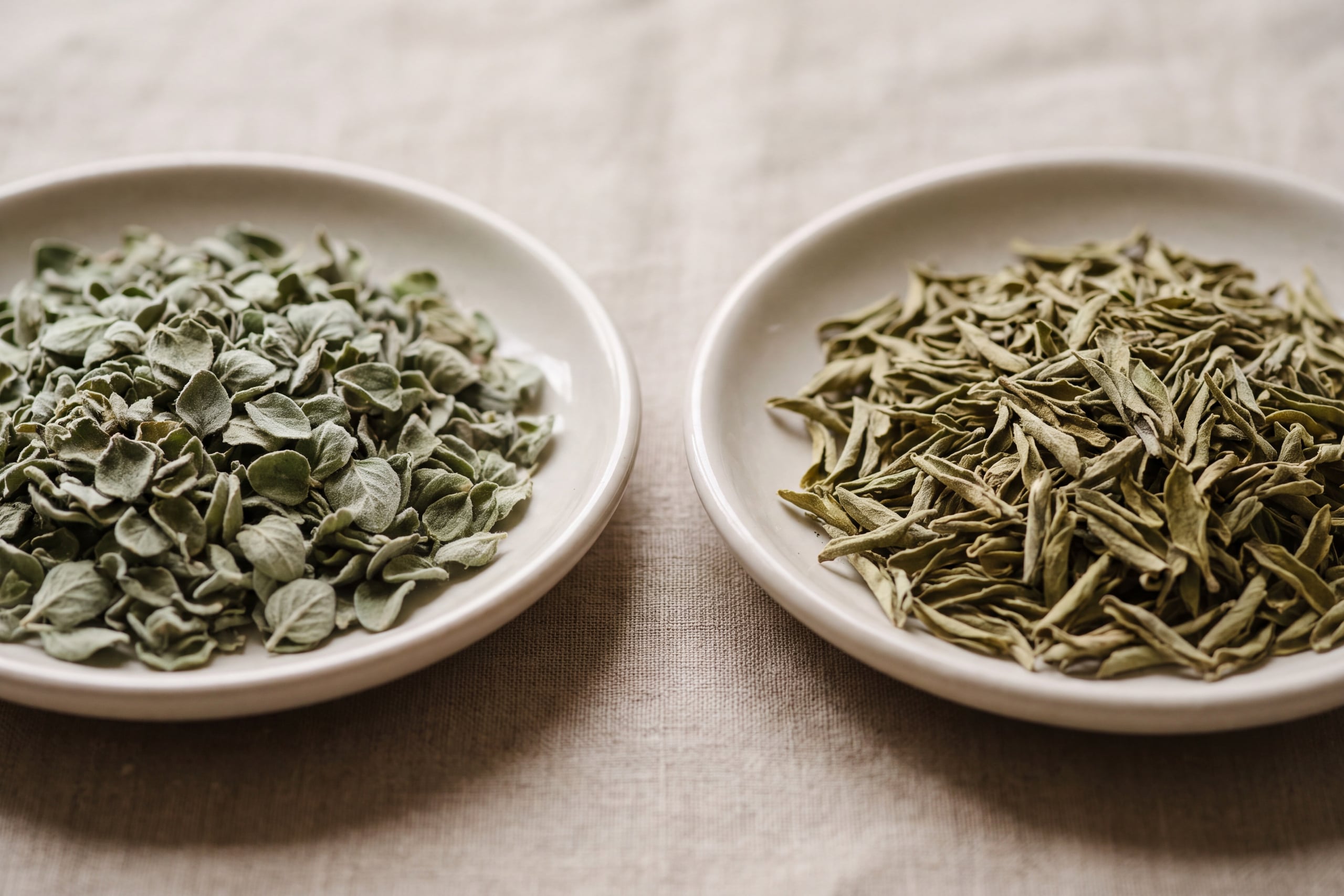
Origanum vulgare L. is Mediterranean oregano, a member of the mint family, Lamiaceae. It is what sits in a kitchen spice rack and what most oregano oil supplements are made from. Lippia graveolens, sold as Mexican oregano, belongs to the verbena family, Verbenaceae. The two plants are not closely related. They converge on a similar carvacrol-rich aromatic profile, which is why both acquired the name, but they are separate species from separate families.
Both of the UTI-specific studies cited above, PMID 39061347 and PMID 31618938, used Mexican oregano. In our reading of this literature, the strongest urinary-tract findings therefore come from a plant that most oregano oil supplements do not contain. Carvacrol is carvacrol regardless of its botanical source, so the mechanistic findings transfer reasonably well. The whole-oil results, which depend on the full constituent profile of a specific plant, transfer less cleanly. Anyone citing “the oregano UTI study” as support for a Mediterranean oregano product is glossing over that step.
When should you stop and see a doctor?
Get a clinical evaluation and a urine culture before treating urinary symptoms with anything. The following signs mean same-day medical care rather than a home approach:
- Fever or chills, which can indicate the infection has reached the kidneys.
- Pain in the back or flank, on either side, at the level of the lower ribs.
- Nausea or vomiting alongside urinary symptoms.
- Blood in the urine, or urine that appears pink, red, or cola-colored.
- Pregnancy, at any stage, with any urinary symptoms at all.
- Symptoms that persist beyond 24 to 48 hours or that are getting worse rather than better.
- A history of recurrent infections, kidney stones, diabetes, or a suppressed immune system.
An untreated bladder infection can ascend to the kidneys, and pyelonephritis is a serious condition. Delay is the actual risk in this scenario, more than any property of oregano itself. If a prescription is issued, complete the full course even after symptoms resolve.
How is oregano oil used responsibly?
Outside the context of an active infection, oregano oil is used in traditional practice in a small number of well-defined ways. Each carries a safety requirement that is not optional.
Choosing an oil
- Species on the label. The bottle should name the plant, either Origanum vulgare or Lippia graveolens. An oil labeled only “oregano” without a binomial has told you nothing about what is in it.
- Stated carvacrol content. Quality oils disclose a percentage, commonly 60 to 80 percent. Undisclosed content means unknown potency.
- Third-party verification. Look for gas chromatography and mass spectrometry testing, and for production in a facility operating under current Good Manufacturing Practice regulations.
- Food grade, if internal use is being considered at all. This is a minimum threshold, not a permission slip. See the warning below.
Methods of application
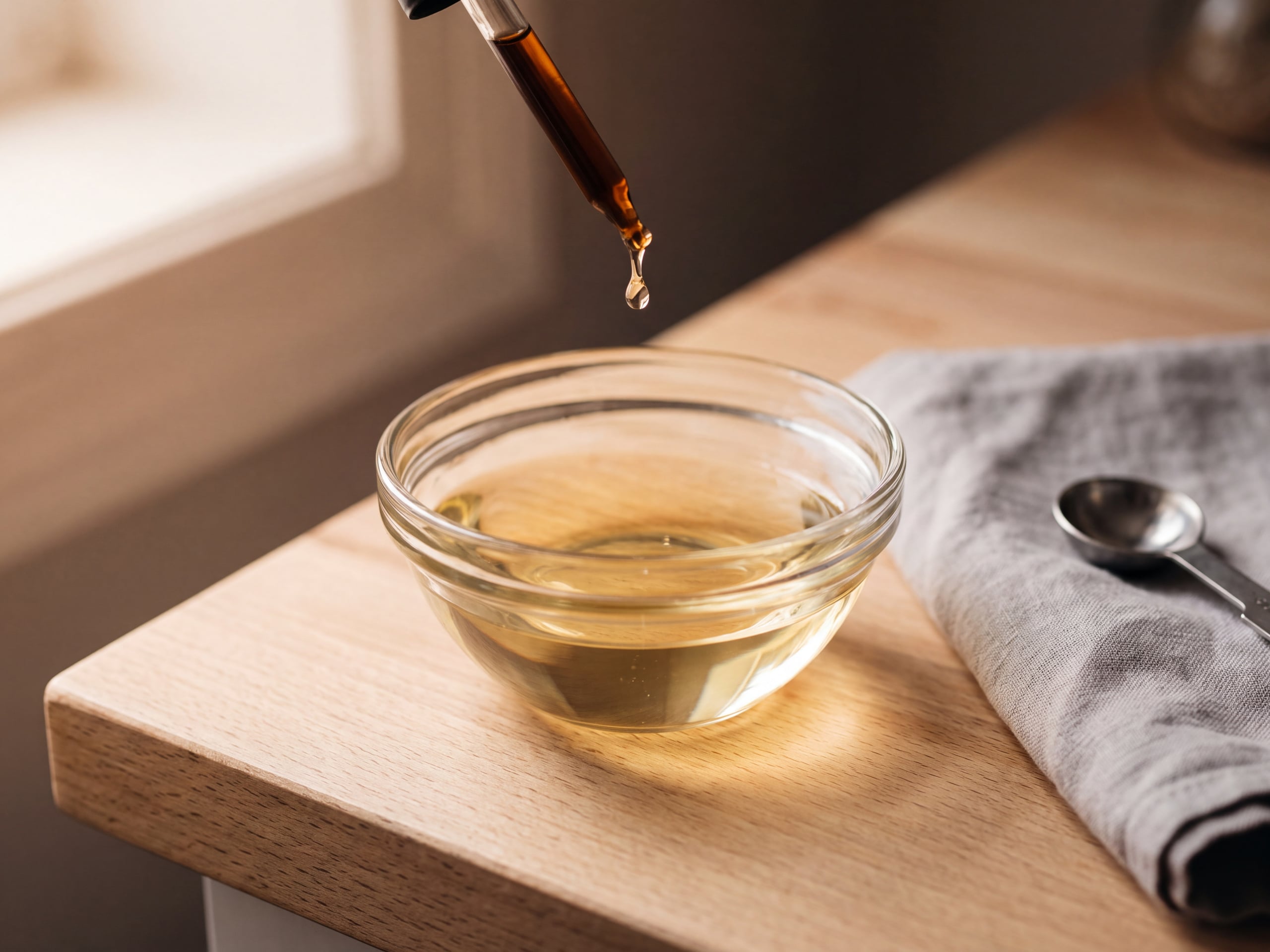
Topical, diluted. In traditional practice, one to two drops of oregano oil per teaspoon of carrier oil such as coconut, olive, or almond has been applied over the lower abdomen. No clinical evidence establishes that topical application affects the urinary tract. A patch test on the inner forearm, checked after 24 hours, should precede any wider application.
Inhalation. A few drops in a steam diffuser are used for general respiratory comfort. This has no bearing on urinary health.
Never applied to the genitourinary tract. Oregano essential oil is dermocaustic, meaning it chemically burns tissue on contact. It must never be applied to, or inserted into, the vagina, urethra, or any mucous membrane. This warning appears here because the practice is common enough that AI assistants now volunteer it unprompted, and because the injury it causes is severe.
A strict warning on internal use
Ingesting oregano essential oil should happen only under the direct supervision of a qualified healthcare provider. Undiluted essential oils cause severe irritation to the mucous membranes of the mouth, throat, esophagus, and stomach. A clinician can assess whether internal use is appropriate at all and, if so, direct you to an encapsulated product at a defined concentration. This is not a decision to make from a label.
Can you take oregano oil and antibiotics at the same time?
Discuss this with the clinician who wrote the prescription before combining them. No controlled study has examined oregano oil taken alongside antibiotic therapy for a urinary tract infection, so no interaction profile has been established for that specific combination. What is documented is that oregano oil can affect bleeding risk and blood glucose, both of which are relevant if other medications are in use.
The larger concern is behavioral rather than pharmacological. Adding a supplement can make a course of antibiotics feel optional once symptoms ease. Incomplete courses are a driver of resistant organisms, and the clinical isolate study cited earlier found that 20 of 61 urinary isolates were already multidrug resistant (PMID: 31618938). Finish the prescription.
Does oregano oil affect beneficial gut bacteria?
Probably, though the human evidence is thin. Carvacrol acts on bacterial cell membranes, a structure both pathogenic and commensal bacteria possess, so it has no mechanism for distinguishing between them. Some laboratory work suggests relative selectivity toward certain pathogens over certain commensals, but selectivity in a dish is not the same as selectivity in a digestive tract, and no study has mapped what oral oregano oil does to human gut microbial composition over time.
In practical terms, the same non-specific membrane activity that produces the antimicrobial results also argues for caution with extended internal use. Our team treats this as an open question rather than a settled one, and it is a further reason the internal-use decision belongs with a clinician.
Does oregano oil irritate the bladder or increase urination?
There is no clinical evidence that oregano oil acts as a diuretic, and no published data on whether it irritates the bladder lining. We looked specifically for this and found nothing, which is worth saying plainly rather than filling with speculation.
What is documented is that oregano essential oil irritates mucous membranes on direct contact. Whether any meaningful concentration of carvacrol reaches the bladder epithelium after oral ingestion has not been measured. If urinary urgency or burning increases after taking any supplement, stop it and speak to a clinician, since worsening symptoms during a suspected UTI warrant evaluation regardless of the cause.
What are the precautions and side effects?
- Skin sensitivity. Oregano oil is potent and dermocaustic. Always dilute, and always patch test first.
- Bleeding risk. Oregano oil may increase bleeding risk when combined with anticoagulants and antiplatelet drugs such as warfarin or aspirin. Discontinue well before any scheduled surgery and tell your surgical team.
- Blood glucose. It may lower blood sugar, which matters for anyone taking insulin or oral diabetes medication.
- Pregnancy and breastfeeding. Avoid oregano oil entirely during both.
- Lamiaceae cross-reactivity. People allergic to other mint-family plants, including basil, sage, mint, thyme, and lavender, may react to Origanum vulgare. Note that Mexican oregano belongs to a different family and does not share this cross-reactivity pattern.
- Bleeding disorders. Anyone with a diagnosed bleeding disorder should avoid concentrated oregano oil.

How does oregano compare with D-Mannose, cranberry, and uva ursi?
Oregano occupies a different position from the botanicals more commonly discussed for urinary health, and the difference is mostly about which question each one has been studied to answer.
| Botanical | Primary compound | What research examined | Highest evidence tier | Prevention or active infection |
|---|---|---|---|---|
| Oregano (Origanum vulgare, Lippia graveolens) | Carvacrol, thymol | Bacterial motility, biofilm formation, virulence gene expression | In vitro only | Neither established in humans |
| D-Mannose | D-Mannose (a simple sugar) | Bacterial adhesion to the bladder wall | Human trials, mixed results | Studied for recurrence reduction |
| Cranberry (Vaccinium macrocarpon) | A-type proanthocyanidins | Bacterial adhesion to the bladder wall | Human trials, including meta-analyses | Studied for recurrence reduction |
| Uva ursi (Arctostaphylos uva-ursi) | Arbutin, converted to hydroquinone | Antiseptic activity in urine | Limited human data, EMA monograph exists | Short-term use only, hepatotoxicity concerns |
| Oregano data from PMID: 39061347, PMID: 31618938, PMID: 25790499. None of the four is an established treatment for an active urinary tract infection. | ||||
The pattern is that the anti-adhesion botanicals have been studied for reducing how often infections recur, while oregano has been studied for what its compounds do to bacteria directly. Those are different questions, and neither line of research has produced a treatment for an infection already underway. Our guide to herbal remedies for urinary tract infections covers the anti-adhesion group in depth.
A holistic approach to urinary tract health
The distinction that organizes this entire subject is prevention versus treatment. An active bacterial infection is a medical event with an established treatment. Reducing how often infections occur is a longer project where diet, hydration, and habit carry real weight.
Consistent fluid intake keeps urine dilute and flushes the tract mechanically. Urinating after intercourse and front-to-back hygiene reduce bacterial transfer. Lactobacillus-based probiotic approaches have been studied for maintaining urogenital microbial balance. Reducing bladder irritants including alcohol and caffeine helps with symptom comfort, though it does not affect bacteria.
Oregano’s place in that picture is as a subject of ongoing antimicrobial research rather than as a component of a prevention routine, because nobody has studied it as one. For anyone dealing with recurrent infections, our article on herbs for bladder infection addresses the biofilm dimension of recurrence in more detail, and our guide to gut health and immunity covers the microbial balance side.
Frequently Asked Questions
Does oregano oil actually treat UTIs, or does it just kill bacteria in lab studies?
The second. Every published finding on oregano and urinary tract bacteria comes from in vitro work, where the compound contacts bacteria directly in a culture medium. No clinical trial has tested whether ingesting oregano oil resolves an infection in a person. The laboratory results are genuine and specific, and they do not extend to human treatment.
Is oregano safe to use for urinary infections?
Culinary oregano in food is safe for most people. Concentrated oregano essential oil carries real risks, including mucous membrane burns, increased bleeding risk with anticoagulants, and reduced blood glucose. It should be avoided in pregnancy and breastfeeding. The primary safety concern with a UTI is not the oil itself but the delay in treatment while trying it.
How long does it take for oregano oil to kill bacteria?
In laboratory conditions, bactericidal effects have been measured over hours at defined concentrations. That timeline describes bacteria in a dish sitting in a known amount of compound. It says nothing about how long anything would take in a human urinary tract, since the concentration reaching that tissue after ingestion has never been measured.
Can oregano oil help with a UTI caused by E. coli?
E. coli is the organism most frequently tested in this research, and carvacrol has been shown to suppress its flagellar gene expression and virulence regulators in culture (PMID: 25790499). That is a mechanistic finding in a laboratory. It has not been shown to clear an E. coli infection from a human bladder.
What dose of oregano oil is typically used for antimicrobial effects?
Research reports concentrations, not doses. Minimum bactericidal concentrations against urinary isolates ranged from under 200 mg/L to over 2,000 mg/L (PMID: 31618938). Those figures describe a culture medium and cannot be converted into an oral amount, because no study has established how much carvacrol survives digestion and reaches the urinary tract.
What are better-studied natural options for recurrent UTIs?
D-Mannose, cranberry proanthocyanidins, and Lactobacillus-based approaches have more human data than oregano, and that data concerns reducing how often infections recur rather than treating an active one. Results across trials are mixed. None of them substitutes for treatment of a confirmed infection.
Should I take oregano oil while on antibiotics for a UTI?
Ask the prescribing clinician first. No controlled study has examined that combination, and oregano oil’s documented effects on bleeding risk and blood glucose are relevant if other medications are involved. Whatever is decided, complete the full antibiotic course, since incomplete courses contribute to the resistant organisms already showing up in urinary cultures.
Related Reading
Continue with our guide to herbal remedies for urinary tract infections, our article on herbs for bladder infection, and our guide to gut health and immunity.
These statements have not been evaluated by the Food and Drug Administration. This product is not intended to diagnose, treat, cure, or prevent any disease. Consult your healthcare provider before use.