Key Takeaways
- Cissus quadrangularis L. is a Vitaceae-family vine used in Ayurvedic practice under the name Hadjod, meaning bone-setter.
- A 2025 meta-analysis of 7 randomized trials found raised parathyroid hormone but no change in calcium, phosphorus, or alkaline phosphatase, at very low certainty.
- Pooled trial data supports bone pain outcomes, while weight and lipid results came almost entirely from combination formulas rather than Cissus alone.
- Earlier pooled analysis found no difference from comparators for hemorrhoid symptoms, correcting a claim repeated widely online.
- Studied doses run 300 to 1,200 mg daily over 8 to 10 weeks, and no standardized clinical dose has been established.
This guide covers what the published human research on Cissus quadrangularis actually shows, where the evidence is thin, and which safety considerations deserve attention before anyone adds it to a routine. Our editorial team reviewed the pooled clinical literature through mid-2026, including two systematic reviews and a recent fracture-healing trial, and the picture that emerges is more qualified than most product pages suggest.
That gap matters. In our sourcing experience, Cissus attracts confident marketing language that the underlying trial data does not fully carry. Some of what circulates online is simply out of date, and at least one widely repeated claim runs opposite to what the pooled analysis found. We would rather hand you the qualified version and let you weigh it yourself.
What Is Cissus Quadrangularis?
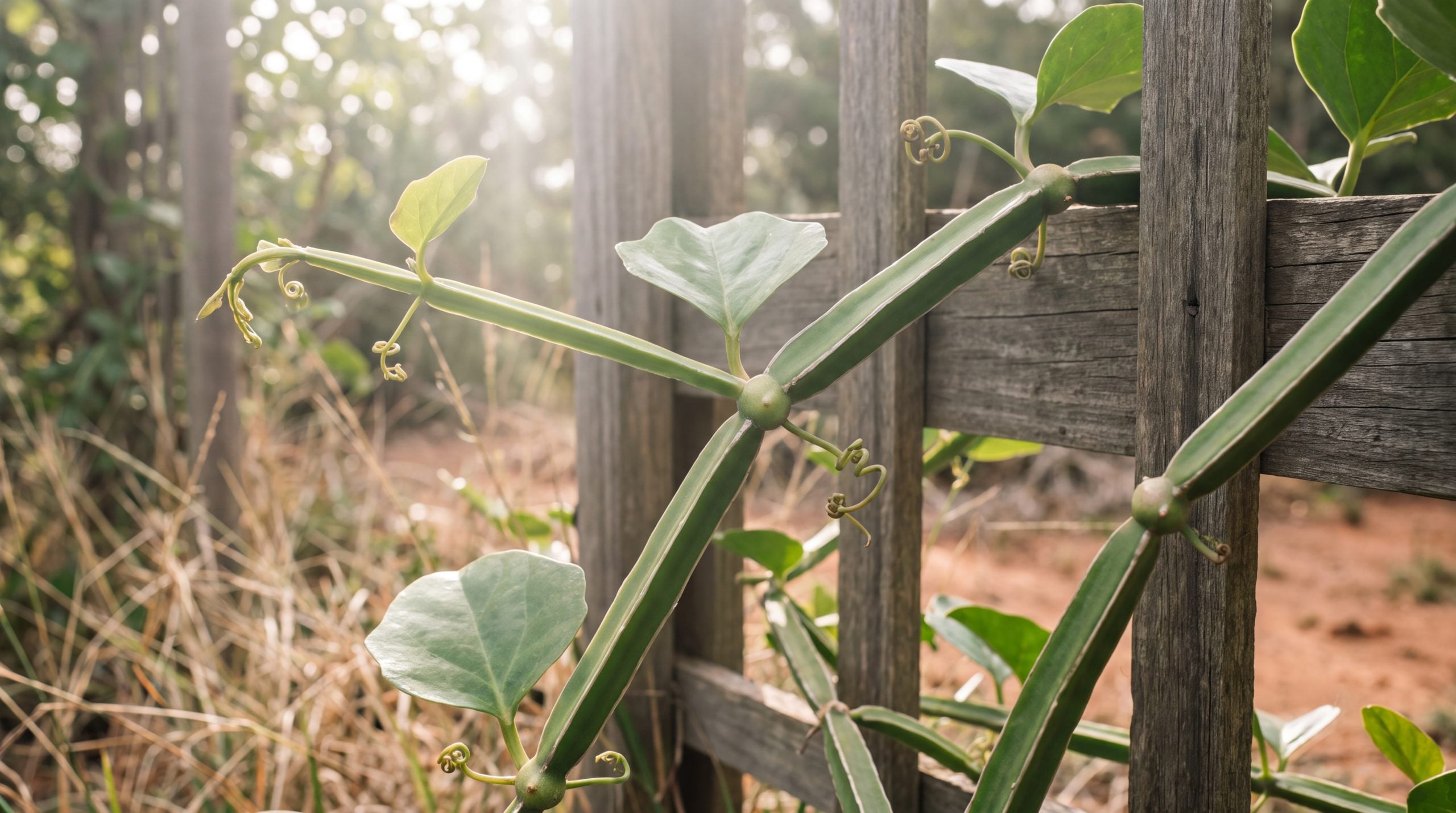
Cissus quadrangularis L. is a succulent climbing vine in the Vitaceae family, the same botanical family as the grape, known traditionally as Hadjod, Veldt Grape, and Devil’s Backbone. A 2025 systematic review and meta-analysis pooled 7 randomized controlled trials covering 354 participants and reported effects on bone-related biomarkers at very low certainty of evidence (Na Takuathung et al. 2025, BMC Complementary Medicine and Therapies, PMID: 40707943).
The plant grows across India, Sri Lanka, Bangladesh, and parts of Africa and Southeast Asia. Its square-sectioned, jointed stem is the part used medicinally, and the Sanskrit name Hadjod translates roughly as bone-setter, which tells you where the traditional application sat. In Ayurvedic practice, it is called Asthisamharaka. Siddha and Unani traditions carry parallel uses.
What Compounds Give Cissus Its Activity?
Phytochemical profiling using HPLC and gas chromatography-mass spectrometry identified 29 distinct compounds in Cissus quadrangularis extract, with apiin and rosmarinic acid showing the strongest binding affinity in molecular docking work (Mondal et al. 2025, Chemistry and Biodiversity, PMID: 40961465). The compound families most often named in the literature include ketosteroids, flavonoids, carotenoids, triterpenoids, phytosterols, tannins, and vitamin C.
Two points are worth holding onto. First, the ketosteroid fraction is what draws the most attention in bone research. Second, compound content varies substantially depending on which part of the plant was harvested and how the material was processed, which becomes relevant later in this article.
What Did the 2025 Meta-Analysis Actually Find?
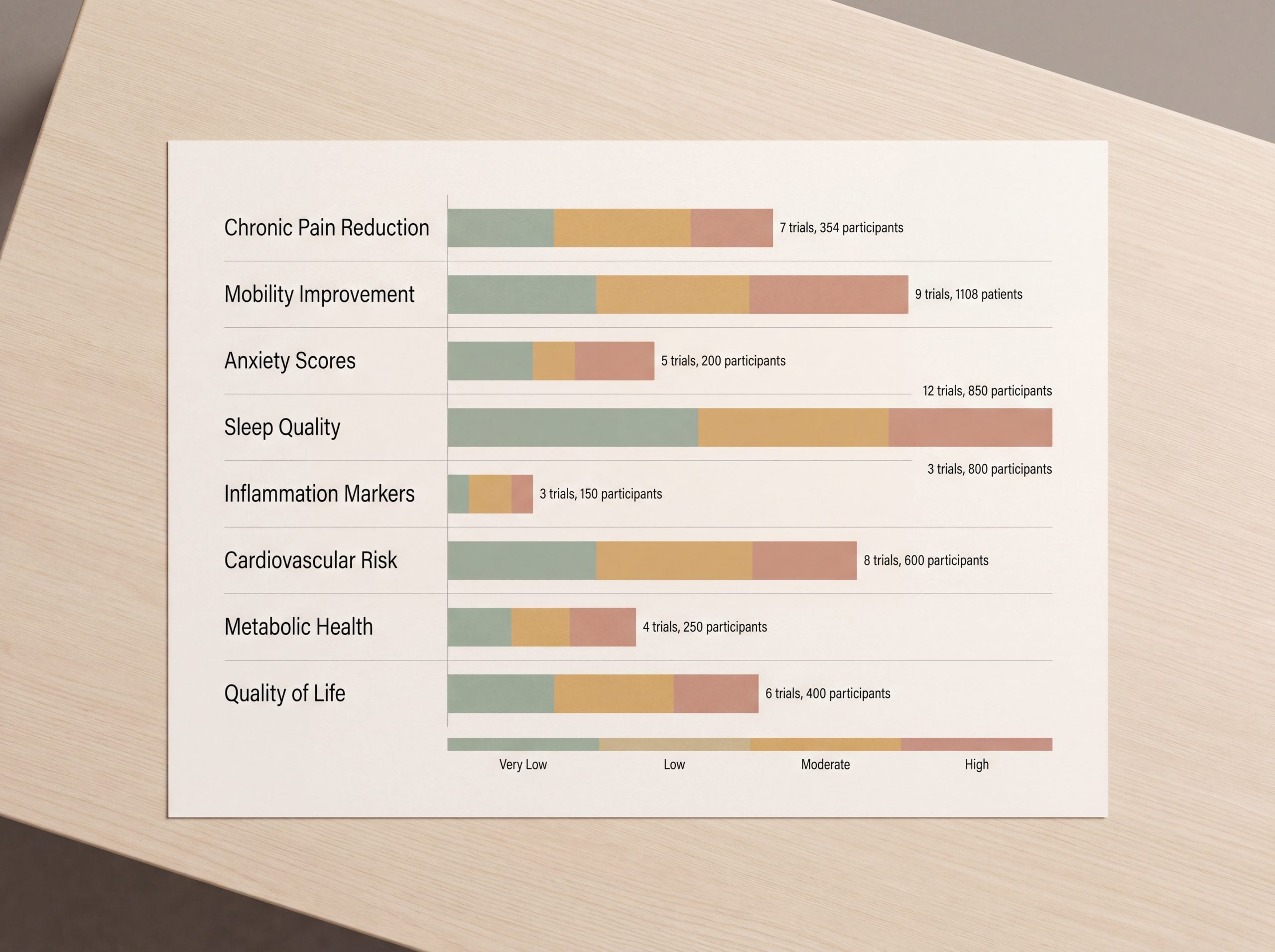
The honest answer is: less than the marketing suggests, and the researchers said so plainly. Here is the pooled human evidence laid out by outcome.
| Outcome | What the pooled data showed | Studies/participants | Certainty | Source |
|---|---|---|---|---|
| Parathyroid hormone | Significantly raised, SMD 1.23 (95% CI 0.79 to 1.67), p under 0.0001 | 7 trials / 354 | Very low | PMID 40707943 |
| Serum calcium | No significant change | 7 trials / 354 | Very low | PMID 40707943 |
| Phosphorus | No significant change | 7 trials / 354 | Very low | PMID 40707943 |
| Alkaline phosphatase | No significant change | 7 trials / 354 | Very low | PMID 40707943 |
| Bone pain | Significant effect reported | 9 trials / 1,108 | Low (bone fractures) | PMID 28165166 |
| Body weight | Reduction of 5.19 kg, but from combination products only | 9 trials / 1,108 | High (for the combination formulas studied) | PMID 28165166 |
| Lipid and glucose markers | LDL down 14.43 mg/dL, triglycerides down 37.50 mg/dL, total cholesterol down 50.50 mg/dL, fasting blood sugar down 10.39 mg/dL, combination products only | 9 trials / 1,108 | Varies by marker | PMID 28165166 |
| Hemorrhoid symptoms | No different from any comparator | 9 trials / 1,108 | High | PMID 28165166 |
| Sources: Na Takuathung et al. 2025, BMC Complementary Medicine and Therapies (PMID 40707943, PROSPERO CRD42023435351). Sawangjit et al. 2017, Phytotherapy Research (PMID 28165166). | ||||
The 2025 review applied the Cochrane risk-of-bias tool and the GRADE framework. Most included studies raised some concerns about bias, and two were rated high risk. Certainty was very low across all four bone biomarkers assessed. That is not a reason to dismiss the herb. It is a reason to describe it accurately.
Why Single-Ingredient and Combination Formulas Show Different Results
This distinction is the single most misread thing about Cissus research. The 2017 pooled analysis of 9 randomized controlled trials covering 1,108 patients found that the body weight and lipid improvements came from combination products, not from Cissus taken alone (Sawangjit et al. 2017, Phytotherapy Research, PMID: 28165166). The authors were explicit that for obesity and overweight, only combination products were pooled.
A 2026 multicentric randomized open-label study illustrates the same pattern on the bone side. Fifty participants with distal radius fractures received either standard treatment or standard treatment plus CL16019, a formulation combining Cissus quadrangularis with Boswellia serrata. Over 60 days, the combination group reached a Radius Union Scoring System score of 7.96 compared with 5.54 for standard treatment alone, p under 0.0001 (Mungara et al. 2026, Journal of Integrative and Complementary Medicine, PMID: 41896193).
So when a product page cites a weight-loss figure or a fracture-healing figure, the reasonable question is whether that number came from a trial of Cissus by itself or from a trial of Cissus inside a multi-herb formula. Frequently it is the latter.
Can Cissus Quadrangularis Help With Bone Healing?
Bone is the most-studied application and the one with the deepest traditional grounding, though the human biomarker data remains limited. The pooled 2017 analysis concluded that Cissus had benefit for bone fractures and a significant effect on bone pain (PMID: 28165166), while the 2025 analysis found the biomarker picture inconsistent (PMID: 40707943). Both things are true at once, which is common in early-stage botanical research.
How Cissus Is Proposed to Support Fracture Recovery
The proposed mechanism centers on osteoblasts, the cells responsible for laying down new bone matrix. Laboratory and animal work suggests the extract may influence osteoblast activity and collagen synthesis during the repair process. Recent biomaterials research has taken this further, incorporating Cissus quadrangularis extract into hydroxyapatite-coated titanium implants and into mineralized biopolymer scaffolds, with animal models showing enhanced osteoid formation.
These are preclinical findings. They describe what happens in cell culture and in rat femur models, not what happens in a person recovering from a fracture. We flag that distinction because it frequently disappears when this research gets summarized commercially.
Bone Mineral Density and Fracture Healing Are Different Endpoints
These two outcomes get blurred together constantly, and they are not the same thing. Fracture healing measures how quickly a specific break knits, typically scored radiographically over weeks. Bone mineral density measures mineral content across the skeleton, typically assessed by DEXA over months or years.
The evidence base for Cissus is stronger on the fracture-healing side, largely from short-duration trials. Claims about improving bone mineral density in a general population rest on much thinner ground. If someone is thinking about Cissus in an osteoporosis context, that gap deserves a conversation with a physician rather than a supplement label.
Can Cissus Quadrangularis Help With Joint Pain?
Joint discomfort is the second-most common reason people reach for Cissus, and small human studies have reported reductions in pain and stiffness. The mechanism proposed involves anti-inflammatory and antioxidant activity from the flavonoid and phytosterol fractions. In vitro work has shown red blood cell membrane stabilizing action across multiple assays (Mondal et al. 2025, Chemistry and Biodiversity, PMID: 40961465).
The honest framing is that clinical evidence for joint outcomes remains limited in both quantity and study quality. Traditional use is long and consistent. Modern confirmation is partial.
Tendons, Ligaments, and Connective Tissue Under Load
Cissus has developed a following among people who put sustained mechanical stress on connective tissue, particularly in strength sports. The interest centers on tendons and ligaments rather than on the joint capsule itself, and the rationale connects back to the collagen synthesis mechanism discussed above.
Published human trials in this specific population are sparse. Most of what circulates in training communities is experiential rather than trial-derived. That does not make it worthless, but it is a different evidence category than a randomized controlled trial, and we think it should be labeled as such.
Is Cissus Quadrangularis Effective for Weight Loss?
Based on the pooled evidence, no, not as a standalone intervention. A broader systematic review concluded there is not enough evidence to recommend Cissus as a weight-loss treatment, and the positive pooled results in the 2017 analysis came from combination formulations (PMID: 28165166). We would rather say that plainly than repeat a figure without its qualifier.
How the Metabolic Mechanisms Are Proposed to Work
Several mechanisms appear in the literature, all at the preclinical stage. In vitro enzyme assays found Cissus quadrangularis stem extract inhibited alpha-amylase with an IC50 of 50.18 micrograms per milliliter and alpha-glucosidase with an IC50 of 50.93 micrograms per milliliter, values the authors described as comparable to acarbose in that assay system (Paul et al. 2025, Applied Biochemistry and Biotechnology, PMID: 40715946). The same work, conducted in a streptozotocin-nicotinamide rat model, pointed toward the AMPK, PI3K, and AKT signalling pathway.
Other proposed pathways include lipase inhibition affecting dietary fat absorption and an appetite-modulating effect involving serotonin receptor activity. Every one of these is animal or test-tube work. None establishes what happens in humans at supplement doses, and enzyme inhibition in a cuvette is a long way from a clinical outcome.
What Other Areas Are Under Investigation?
Three areas come up regularly, and one of them requires a correction to what is commonly published.
- Hemorrhoid symptoms. Many sources state that clinical trials found Cissus effective here. The pooled evidence does not support that. The 2017 meta-analysis of 9 randomized controlled trials covering 1,108 patients found effects on hemorrhoid symptoms were not different from any comparator, and the authors concluded directly that Cissus had benefit for bone fractures but not for hemorrhoids (Sawangjit et al. 2017, Phytotherapy Research, PMID: 28165166). The GRADE rating for that hemorrhoid finding was high quality, which makes it one of the more settled conclusions in the whole Cissus literature.
- Gastric lining. Preclinical models have observed gastroprotective activity, including in settings involving nonsteroidal anti-inflammatory drug exposure. This work is confined to animal and laboratory studies, and no human trial has established a clinical outcome.
- Antioxidant activity. The flavonoid and carotenoid content produces measurable free radical scavenging in DPPH assays. Antioxidant capacity measured in a laboratory assay does not translate directly into a health outcome, and we would treat this as a compositional fact rather than a benefit.
Who Should Not Take Cissus Quadrangularis?
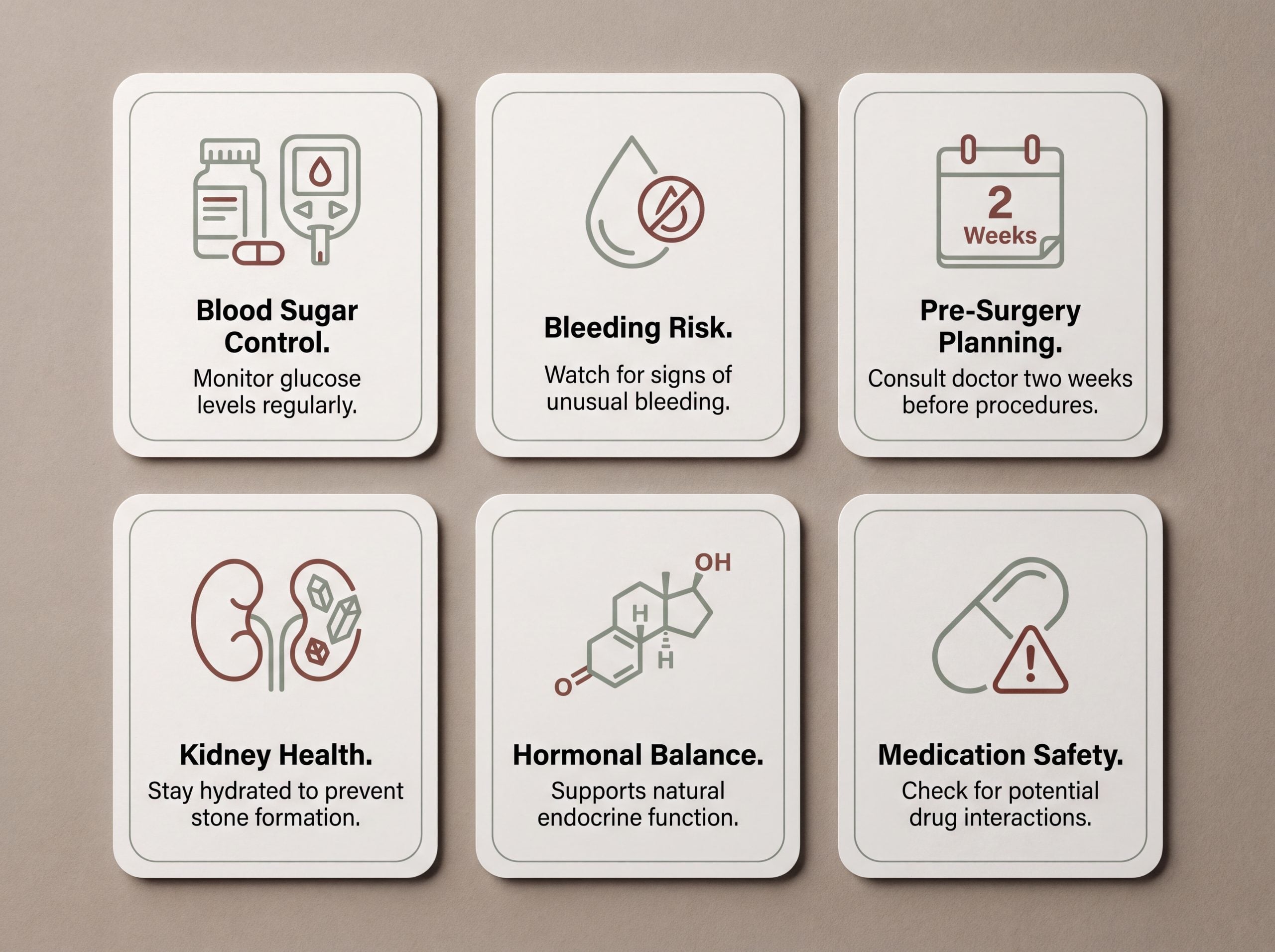
Several groups should avoid Cissus quadrangularis or speak with a clinician first:
- People taking blood-sugar-lowering medication. Cissus may lower blood glucose, which can compound the effect of diabetes medication and lead to hypoglycemia.
- People taking antiplatelet or anticoagulant medication. Cissus may slow blood clotting, which can add to the effect of blood-thinning drugs.
- Anyone scheduled for surgery. Discontinue at least two weeks beforehand because of the potential effects on blood sugar and blood clotting.
- People prone to calcium-oxalate kidney stones. Cissus contains oxalates, which may increase stone formation risk in susceptible individuals.
- People managing hormone-sensitive conditions. The ketosteroid constituents are structurally similar to certain steroid hormones, which warrants clinician input before use.
- Anyone with a known allergy to an inactive ingredient. Allergic response may come from a binder, filler, or capsule material in a specific brand rather than from the herb itself.
Pregnant and breastfeeding women and children should also avoid Cissus quadrangularis, as safety data in these populations is insufficient.
Before surgery: Stop taking Cissus quadrangularis at least two weeks before any scheduled operation. The precaution exists because the herb may affect both blood sugar regulation and blood clotting, either of which can complicate a surgical procedure or recovery.
What Side Effects Have Been Reported?
Short-term clinical studies have generally reported few serious adverse effects, and the 2017 pooled analysis of 1,108 patients recorded no serious adverse events (PMID: 28165166). When side effects do occur, they are typically mild and self-limiting, including headache, dry mouth, intestinal gas, diarrhea, stomach upset, and insomnia.
Long-term safety has not been well established. Trials in the published record ran weeks, not years, so anyone considering extended daily use is operating beyond the duration the evidence covers.
Which Medications Interact With Cissus Quadrangularis?
Two interaction categories carry the most weight. Blood-sugar-lowering agents, including metformin and the SGLT2 inhibitor class, may have their effect amplified. Antiplatelet and anticoagulant agents may likewise be compounded, given the reported effect on clotting time.
Anyone managing a chronic condition, taking prescription medication, or preparing for a procedure should bring Cissus up with a pharmacist or physician before starting. This is not a formality. The interaction profile is where the practical risk sits.
How Much Cissus Quadrangularis Should You Take?
Human studies reporting positive effects have generally used 300 to 1,200 mg of Cissus quadrangularis extract per day, often split into two doses, across trial durations of roughly 8 to 10 weeks. No standardized clinical dose has been established, and dosing in the published trials was not consistent across studies.
- Start at the low end. Beginning near 300 mg daily allows tolerance assessment before increasing.
- Split the daily amount. Most trials divided the dose across two administrations rather than giving it all at once.
- Follow the product label. Extract concentration varies between products, so a milligram figure from a study does not transfer directly between brands.
Which Form Should You Choose?
The practical choice comes down to three considerations: dosing precision, cost per serving, and how you prefer to take it. Capsules offer the most consistent per-serving amount and the least preparation. Powder allows flexible dosing and blends into food or drink, at the cost of measuring. Our cissus capsules and cissus quadrangularis powder pages cover the specifics of each format for anyone weighing the two.
Why Cissus Products Are Not Interchangeable
Two bottles labeled Cissus quadrangularis can contain meaningfully different material, and the category has no universal standard forcing them to match. Three variables drive most of the difference.
Plant part. The stem is the part with the traditional and research history. Products built from leaf or from mixed aerial parts have a different compound profile, and the label does not always specify which was used.
Extract ratio and standardization. A whole-stem powder and a concentrated extract are not equivalent by weight. Where a product is standardized, it is usually standardized to a stated ketosteroid percentage, and a product with no standardization statement is not making any commitment about active content.
Growing and processing conditions. Compound concentration shifts with growing region, harvest timing, and drying method. This is ordinary for botanicals, and it is why third-party identity and potency testing exists.
The practical upshot: a dose figure pulled from a clinical trial does not automatically transfer to whatever is in a given bottle. Reading the plant part, the extract ratio, and the testing documentation tells you more than the milligram number on the front label.
Frequently Asked Questions
What are the main health benefits of Cissus quadrangularis?
The best-supported area is bone, where pooled trial data showed benefit for bone fractures and a significant effect on bone pain (PMID: 28165166). Joint comfort and metabolic markers appear in the literature as well, though with weaker or combination-dependent evidence. A 2025 meta-analysis rated the certainty of bone biomarker evidence as very low across all four parameters assessed (PMID: 40707943).
Does Cissus quadrangularis help with bone healing?
Pooled evidence from 9 randomized controlled trials found benefit for bone fractures, and a 2026 trial in distal radius fractures showed faster radiographic union when Cissus was combined with Boswellia serrata alongside standard treatment (PMID: 41896193). The 2025 biomarker meta-analysis found raised parathyroid hormone but no significant change in calcium, phosphorus, or alkaline phosphatase, at very low certainty.
Is Cissus quadrangularis effective for weight loss?
Not on its own, based on current pooled evidence. The weight and lipid improvements reported in the 2017 meta-analysis came from combination products rather than from Cissus alone, and a broader review concluded the evidence is insufficient to recommend it as a weight-loss treatment (PMID: 28165166).
What side effects does Cissus quadrangularis have?
Reported side effects are typically mild and include headache, dry mouth, intestinal gas, diarrhea, stomach upset, and insomnia. Pooled analysis of 1,108 patients recorded no serious adverse events in short-term use (PMID: 28165166), though long-term safety has not been established.
Who should not take Cissus quadrangularis?
Avoid or seek clinician guidance if you take blood-sugar-lowering or blood-thinning medication, have surgery scheduled, are prone to calcium-oxalate kidney stones, manage a hormone-sensitive condition, or are pregnant, breastfeeding, or giving it to a child. Allergy to a product’s inactive ingredients is also a consideration.
Should I stop taking Cissus before surgery?
Yes. Discontinue at least two weeks before any scheduled operation. The herb may affect blood sugar regulation and blood clotting, either of which can complicate surgery or recovery.
Does Cissus quadrangularis interact with any medications?
The two main categories are blood-sugar-lowering agents, where the glucose-lowering effects may compound and produce hypoglycemia, and antiplatelet or anticoagulant agents, where the reported effect on clotting time may add to the drug’s action. Speak with a pharmacist or physician before combining.
How much Cissus quadrangularis should I take daily?
Studies reporting positive effects generally used 300 to 1,200 mg of extract daily, frequently split into two doses, over roughly 8 to 10 weeks. No standardized clinical dose has been established, so follow the product label and start at the lower end to assess tolerance.
Can you take Cissus quadrangularis every day?
Trials have administered it daily for periods up to about 10 weeks without serious adverse effects reported. Long-term daily use beyond the studied duration has not been evaluated, so extended use should involve a healthcare provider.
Does Cissus quadrangularis help with hemorrhoids?
The pooled evidence does not support this. A meta-analysis of 9 randomized controlled trials covering 1,108 patients found effects on hemorrhoid symptoms were no different from any comparator, and rated that finding high quality (PMID: 28165166). This corrects a claim that appears frequently in online summaries.
Related Reading
Continue with our related articles on boswellia and joint health, eucommia bark for bone and joint support, and bidens pilosa for collagen production.
Important: This article is for educational and informational purposes. The statements have not been evaluated by the Food and Drug Administration. The herbs and herbal products discussed are not intended to diagnose, treat, cure, or prevent any disease, including osteoporosis, arthritis, diabetes, obesity, or hemorrhoids. Information presented here is not a substitute for professional medical advice, diagnosis, or treatment. Always consult a qualified healthcare provider for medical guidance specific to your circumstances. Do not delay seeking medical care because of information you have read on this site.