Key Takeaways
- Ashwagandha is not a direct treatment or cure for ADHD, but it may help manage related symptoms like stress and anxiety.
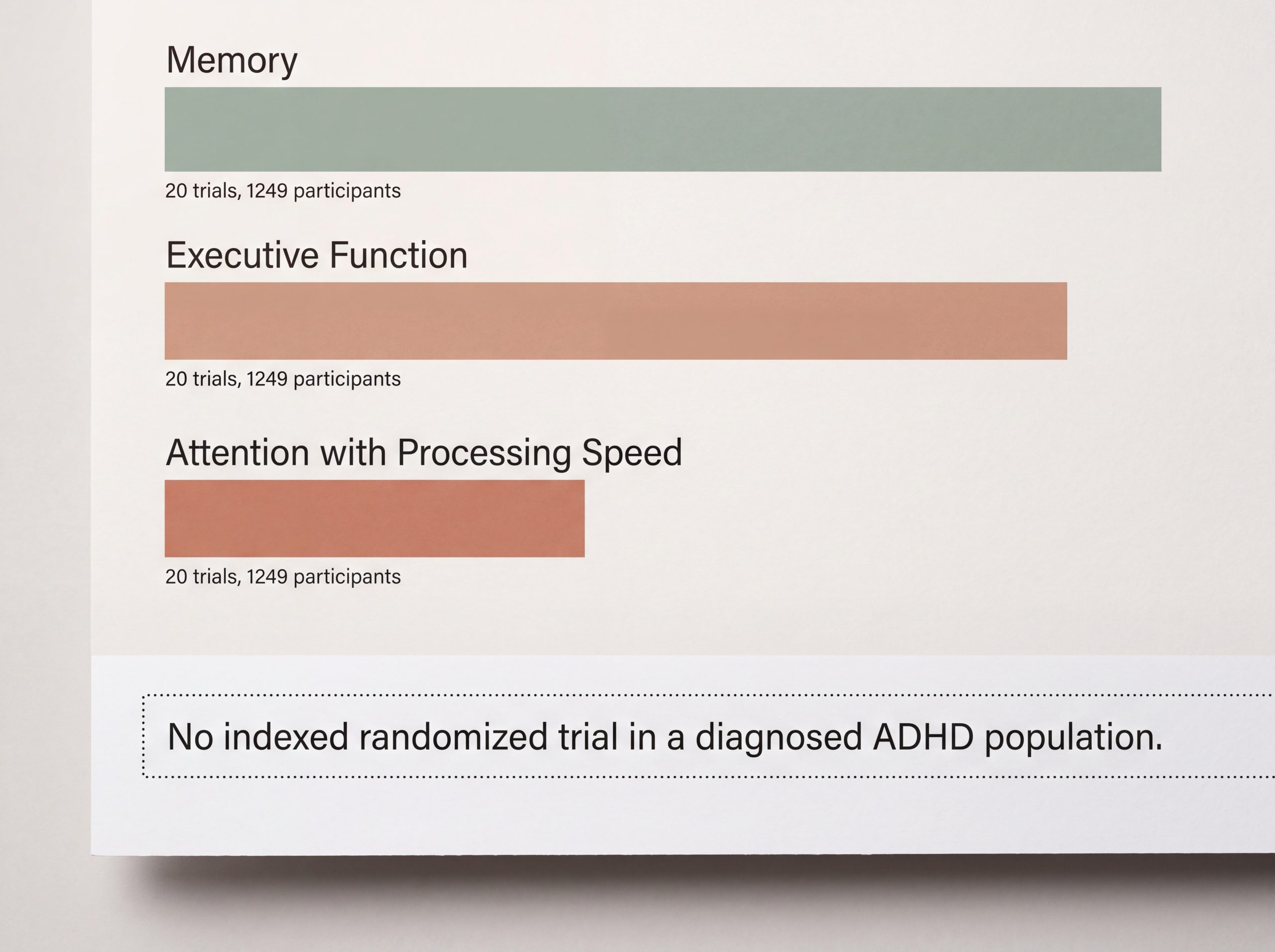
- A 2026 meta-analysis of 20 trials in adults found a small measured effect on attention and processing speed, and a larger one on memory.
- No randomized trial has yet tested ashwagandha in a diagnosed-ADHD population and been indexed in PubMed. The evidence remains indirect.
- A 2026 trial in children aged 6 to 12 measured cognition and sleep, but enrolled healthy children with parent-reported attention concerns, not diagnosed ADHD.
- Always consult a doctor before considering ashwagandha, especially regarding interactions with stimulant medication.
Attention-Deficit/Hyperactivity Disorder (ADHD) is a neurodevelopmental condition characterized by patterns of inattention, hyperactivity, and impulsivity that interfere with functioning or development. While conventional treatments are often effective, many individuals seek complementary approaches to help manage symptoms. Ashwagandha (Withania somnifera), a plant in the Solanaceae family used for centuries in Ayurvedic medicine as a rasayana or rejuvenative tonic, has gained attention for its potential to support some of the challenges associated with ADHD.
Its primary classification is as an adaptogen, a substance thought to help the body resist and adapt to physical, chemical, and biological stress. That classification is the whole reason this question keeps coming up, and it is also the reason the honest answer is more complicated than most pages admit.
Our editorial team reviewed the current clinical literature for this update in August 2026, including two systematic reviews and one pediatric trial published within the last six months. What follows separates what has actually been measured from what has been assumed.
Can Ashwagandha Help ADHD?
Ashwagandha (Withania somnifera) has not been shown to act directly on the core symptoms of ADHD. The measured effects sit upstream, on the body’s stress response. Research in adults has found improvements in memory, attention, and processing speed, but those trials enrolled healthy or stressed adults rather than people with an ADHD diagnosis. As of August 2026, no randomized controlled trial testing ashwagandha in a diagnosed-ADHD population appears in the PubMed index.
That distinction matters more than it might seem. A herb that reduces the stress load sitting on top of ADHD is doing something real and worth understanding. It is not the same thing as a herb that addresses the attention regulation itself, and the two claims get blurred together constantly in supplement marketing.
What Does the Research Actually Say About Ashwagandha and ADHD?
It is critical to approach the topic of ashwagandha for ADHD with a clear understanding of the current research status. As of now, there are no large-scale, long-term clinical trials that confirm ashwagandha as a standalone treatment for ADHD in adults or children. What does exist is a body of adjacent evidence that has grown substantially in the past year, and it is worth reading precisely.
What the 2026 adult meta-analysis measured
The strongest current evidence in adults comes from a systematic review and meta-analysis published in Frontiers in Pharmacology in May 2026 (Zhu et al., 2026, PMID: 42199854). Following PRISMA guidelines and registered with PROSPERO, the authors pooled 20 randomized controlled trials covering 1,249 participants.
The measured outcomes were specific. Memory showed a standardized mean difference of 0.52. Attention and processing speed showed a standardized mean difference of 0.29, a small but statistically significant effect with no observed heterogeneity between studies. Executive function showed a standardized mean difference of 0.42. Visuospatial ability improved after one heterogeneous study was excluded.
We want to be direct about what those numbers mean. The attention effect is the smallest of the cognitive outcomes measured, and every one of these trials was conducted in adults without an ADHD diagnosis. The authors themselves assessed evidence certainty using the GRADE system and rated most studies as high or moderate quality, which makes this a credible body of work. It is simply not a body of work about ADHD.
What the 2026 children’s trial administered and measured
In March 2026, a randomized, double-blind, placebo-controlled trial in children was published in Frontiers in Nutrition (Saxena et al., 2026, PMID: 41889719). It is the study most often misdescribed online, so the details are worth stating plainly.
The trial enrolled 85 healthy children aged 6 to 12 whose parents had reported concerns about attention, concentration, or memory. It did not enroll children with a formal ADHD diagnosis. Participants received either standardized ashwagandha root extract gummies or identical placebo gummies for 8 weeks, and 73 completed the study. Cognition was assessed using the Computerized Mental Performance Assessment System, with sleep measured separately using the Sleep Disturbance Scale for Children.
The authors reported improvements in speed of information processing, delayed word recall, Stroop task accuracy, Corsi block span, and choice reaction time accuracy. Parent-reported sleep quality also improved. No significant adverse events were reported over the 8 weeks.
The dose used in that protocol is a feature of the study design and is not a recommendation for any individual child. Ashwagandha is not established as appropriate for children, and no parent should give it to a child without direct pediatrician supervision. We are reporting what the researchers administered, not what anyone should do.
Where ADHD-specific evidence actually stands
Two peer-reviewed sources address ADHD directly rather than by inference. A clinical pharmacology review in Expert Review of Clinical Pharmacology (D’Cruz and Andrade, 2022, PMID: 36062480) concluded that ashwagandha may confer modest benefit in certain neuropsychiatric conditions including attention deficit hyperactivity disorder, while adding that reports of clinical benefit must be interpreted with caution given the paucity of randomized clinical trials. The authors called for greater methodological rigor before clinical recommendations can be confidently made.
A 2025 review of medicinal plants for child mental health in the journal Children (Rigillo et al., 2025, PMID: 41007011) identified 29 clinical trials of herbal products in young people, 18 of them targeting diagnosed conditions including ADHD. Withania somnifera appeared among the plants showing clinical promise, with the same caveat attached: evidence supports selected uses provided standardized preparations and clinical oversight are in place.
Read together, the picture is consistent. Reviewers who look specifically at ADHD find a signal worth investigating and a research base too thin to build a recommendation on. That is a more useful conclusion than either the enthusiasm or the dismissal that dominates most coverage of this question.
How Might Ashwagandha Affect the Brain?
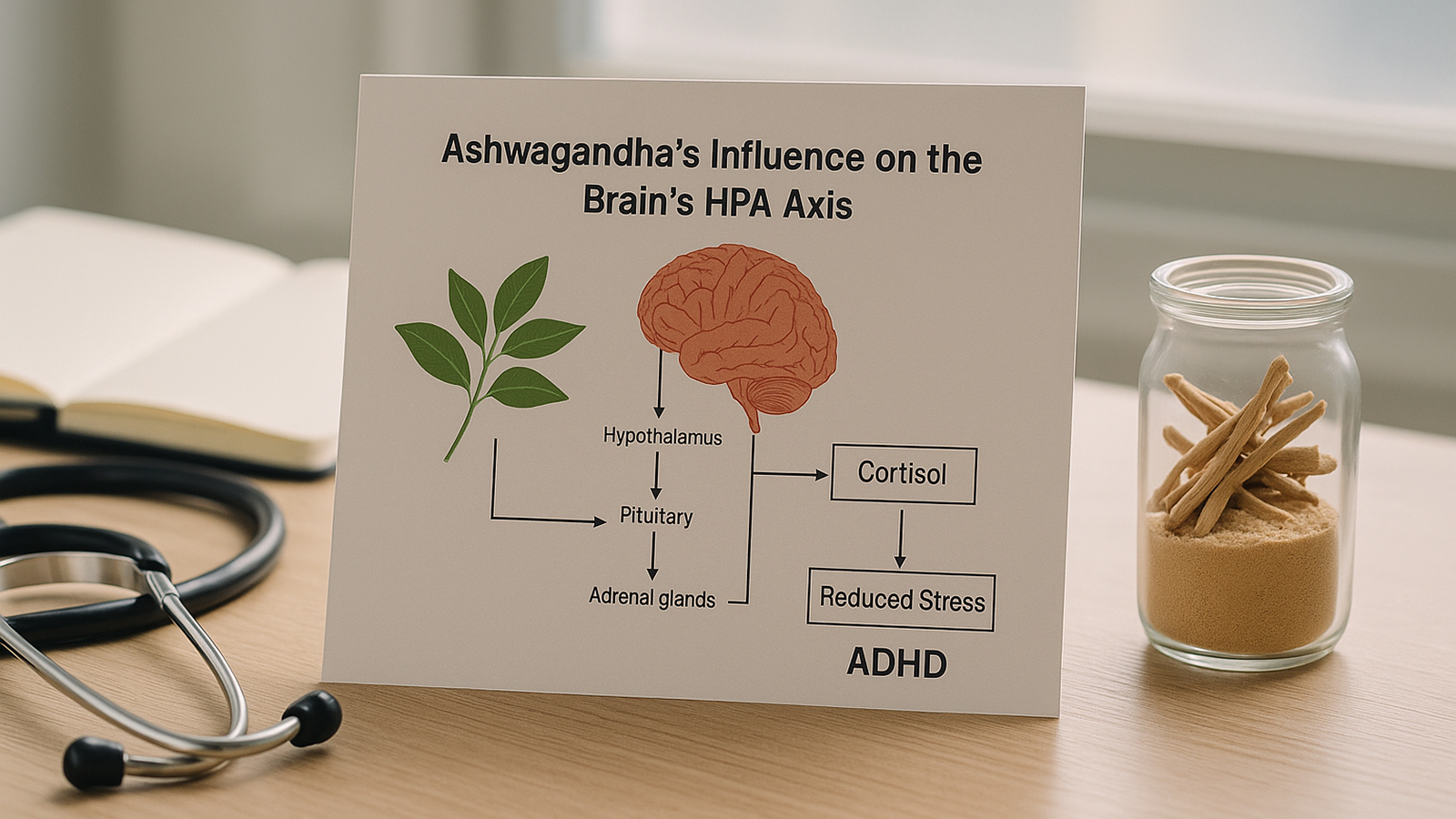
The potential influence of ashwagandha on ADHD symptoms is not direct but rather related to its effect on the body’s stress pathways. The primary mechanism involves modulating the hypothalamic-pituitary-adrenal (HPA) axis, which is the body’s central stress response system.
- Cortisol Regulation: Chronic stress can worsen ADHD symptoms. Ashwagandha has been shown in some studies to help lower levels of cortisol, the body’s main stress hormone. A 2019 randomized, double-blind, placebo-controlled trial (Lopresti et al., 2019, PMID: 31517876) reported greater reductions in morning cortisol against placebo over 60 days in stressed adults.
- GABAergic Activity: Ashwagandha may enhance the activity of GABA (gamma-aminobutyric acid), a neurotransmitter that produces a calming effect in the brain. This action could potentially help temper the feelings of restlessness and hyperactivity often seen in deficit hyperactivity disorder.
- Dopamine System Support: While not a stimulant, some research suggests ashwagandha may offer a protective effect on dopamine pathways in the brain. Since dopamine is a key neurotransmitter involved in focus, motivation, and reward, supporting this system could be relevant.
The specific cognitive endpoints researchers use to test these mechanisms are worth naming, because they are narrower than words like “focus” suggest. Trials measure choice reaction time, sustained attention, information processing speed, task-switching, and Stroop interference. A finding on any one of those is not the same as a finding on daily functioning.
Why Sleep Sits Between Stress and Daytime Attention in ADHD
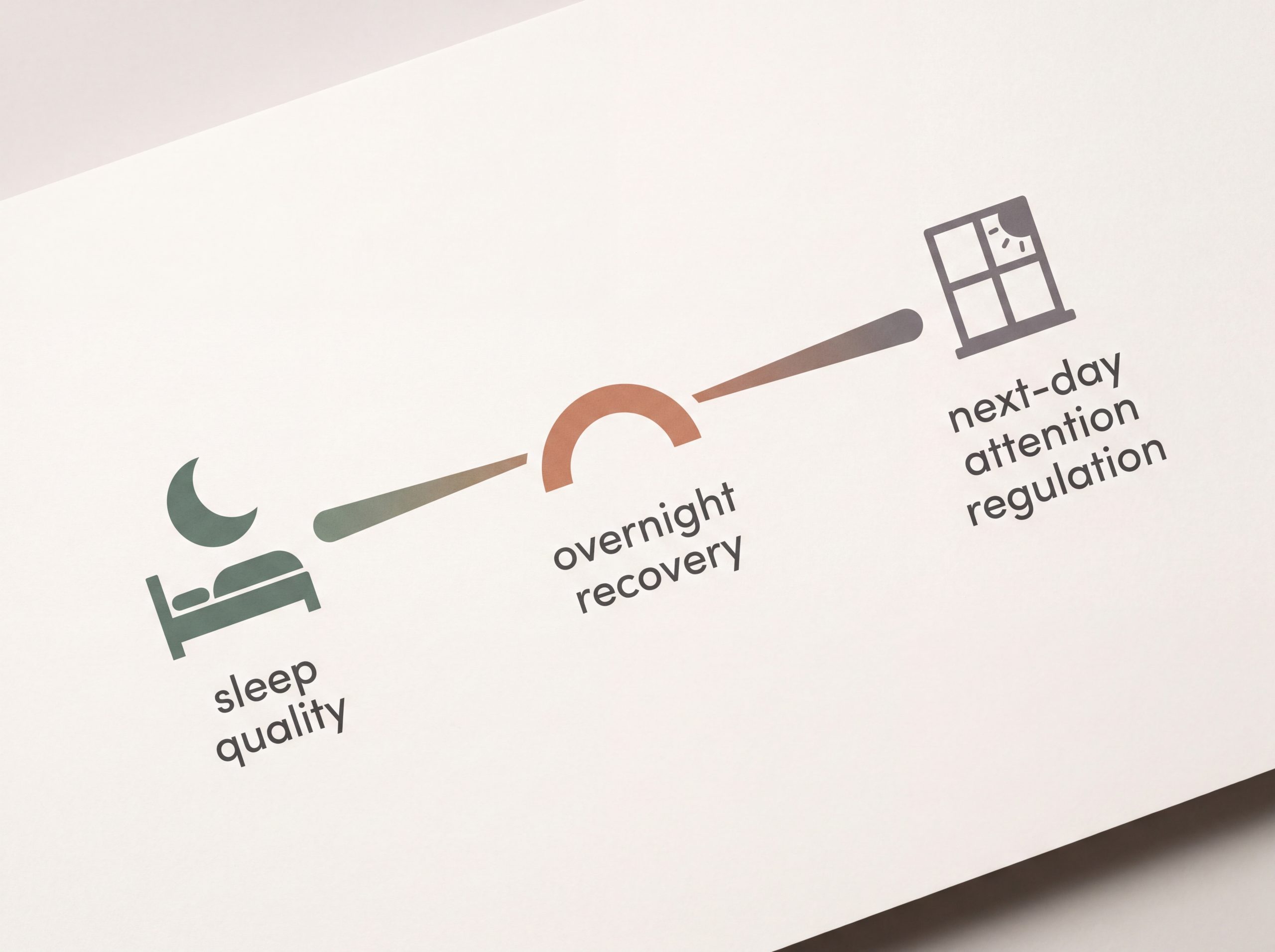
Sleep disruption is common in ADHD, and it operates in both directions. Poor sleep degrades next-day attention regulation, and difficulty settling at night is itself a frequently reported feature of the condition. Any effect a herb has on sleep therefore reaches daytime attention indirectly, through a pathway that has nothing to do with acting on attention itself.
This is the clearest mechanistic route from what ashwagandha has actually been measured to do toward what people with ADHD are actually asking about. The 2026 children’s trial measured both domains in the same participants and reported improvement in parent-rated sleep alongside the cognitive findings (PMID: 41889719). In adults, a systematic review and meta-analysis of ashwagandha and sleep found measurable effects on sleep parameters (Cheah et al., 2021, PMID: 34559859).
From our hands-on assessment of the literature, the sleep pathway is where the mechanism is most coherent and the least oversold. It is also the reason timing questions matter more for this herb than dose questions do for most people.
How Does Ashwagandha Compare to Other Botanicals Studied for Attention?
Two of the most common follow-up questions we see are whether other botanicals have stronger attention evidence, and whether ashwagandha is worth combining with them. The honest comparison is narrower than most rankings suggest, because the trials measured different things in different populations.
| Botanical | What trials measured | Population studied | Evidence maturity |
|---|---|---|---|
| Ashwagandha (Withania somnifera) | Processing speed, memory, executive function, stress markers | Healthy and stressed adults, healthy children with attention concerns | Moderate in adults, no diagnosed-ADHD trials indexed |
| Bacopa (Bacopa monnieri) | Attention, impulse control, cognitive performance | Includes children in ADHD-focused reviews | The most ADHD-specific of the three, still limited by trial size |
| Rhodiola (Rhodiola rosea) | Mental fatigue, stamina under sustained workload | Adults under fatigue or workload stress | No ADHD-specific trials, indirect evidence only |
| L-theanine | Attention under acute conditions, often paired with caffeine | Mostly healthy adults | Reasonable acute data, little on sustained use |
| Comparison reflects what outcome measures each trial set used, not a ranking of effectiveness. None of these botanicals is an established treatment for ADHD. | |||
We have written separately and in more depth on bacopa and ADHD and on rhodiola and ADHD, and on the broader question of herbs for clarity and focus. Those pages carry the mechanism and safety detail that this table only summarizes.
Potential Benefits for ADHD-Related Symptoms
Based on its known properties, here is how ashwagandha could theoretically relate to specific symptoms associated with ADHD. Each row describes a plausible mechanism, not a demonstrated clinical outcome in an ADHD population.
| Symptom Category | Potential Influence of Ashwagandha |
|---|---|
| Stress and Anxiety | This is the most supported area. By supporting a healthy cortisol response, it may reduce the feeling of being overwhelmed, which can make it easier to manage daily tasks. |
| Inattention | If a lack of focus is made worse by stress or anxiety, ashwagandha’s calming properties might help create a better mental environment for concentration. Trials measured processing speed and choice reaction time rather than day-to-day attention. |
| Emotional Dysregulation | By supporting the body’s stress-coping mechanisms, it may help smooth out emotional responses to frustrating or challenging situations. |
| Restlessness | The potential enhancement of GABA activity could help reduce internal feelings of restlessness and the physical need to be in constant motion. |
| Sleep-Related Daytime Fatigue | Improvements in sleep quality were measured alongside cognitive outcomes in the 2026 children’s trial, which is the most direct route from the herb’s known action toward daytime attention. |
Dosage and Forms of Ashwagandha Root Extract
There is no officially established dosage of ashwagandha for ADHD. Dosages used in clinical studies for stress and anxiety typically provide a general guideline.
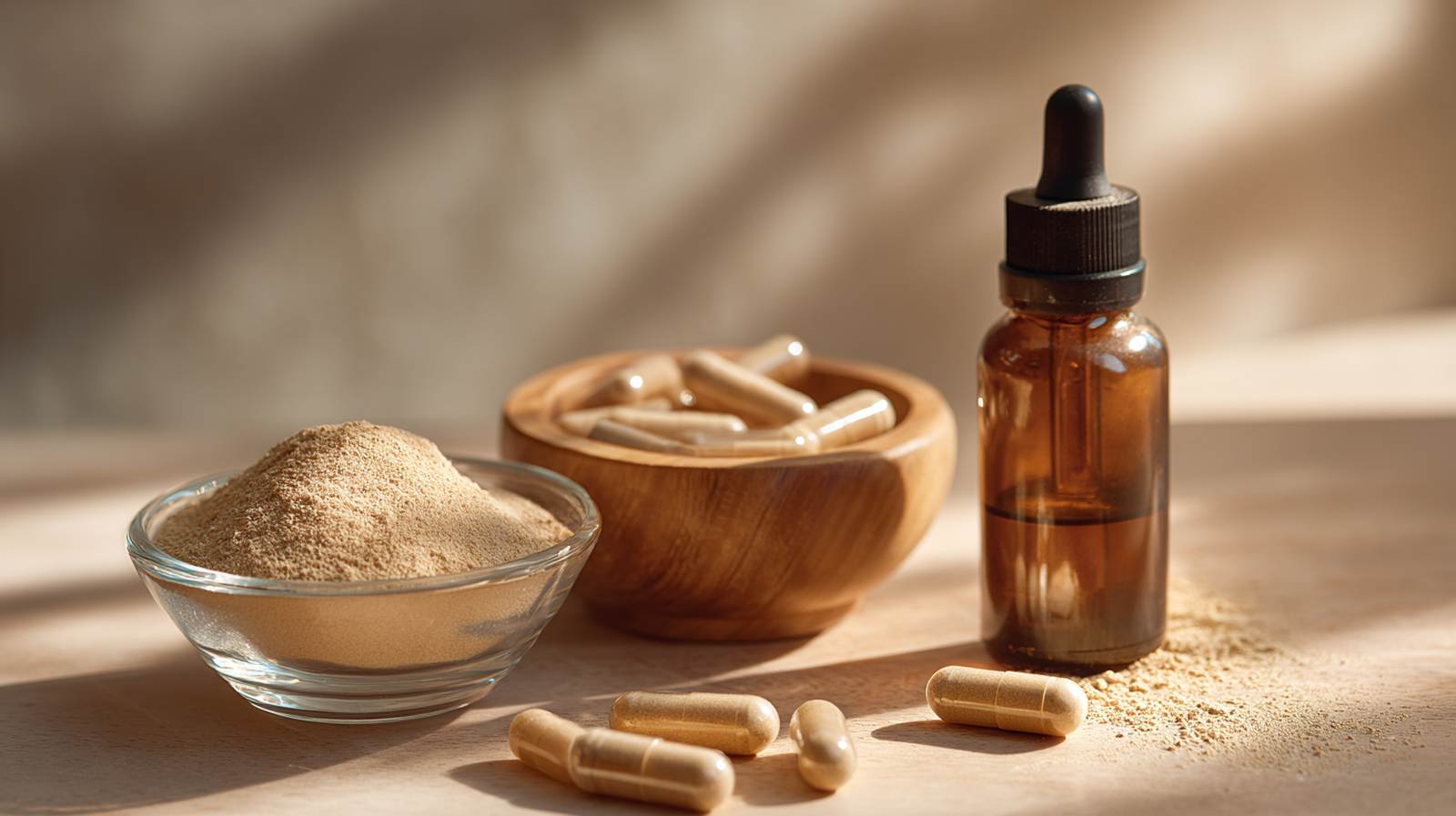
- Common Forms: Ashwagandha is available as a powder, in capsules, or as a liquid tincture. The most studied form is a standardized ashwagandha root extract, which contains a specific concentration of active compounds called withanolides.
- Standardization: Many of the cited cognitive trials used branded standardized extracts such as KSM-66, and we cover how root powder and standardized extract differ in our guide to ashwagandha root benefits.
- General Dosage Range: Most studies use dosages between 300 mg and 600 mg of a standardized root extract per day, often divided into two doses. The 2026 safety review found doses across the literature ranging from 125 to 600 mg daily (PMID: 42198398).
- Starting Point: It is generally recommended to start with a lower dose and gradually increase it to assess tolerance.
In our sourcing experience, the gap between a whole root powder and a withanolide-standardized extract is the single most misunderstood distinction in this category. They are not interchangeable, and most published cognitive research used the latter.
Safety, Side Effects, and Important Considerations
While generally considered well tolerated by most healthy adults, ashwagandha is not without potential side effects and contraindications.
Potential Side Effects:
- Drowsiness or sedation, especially at higher doses.
- Upset stomach, diarrhea, or nausea.
- Headache.
A systematic review of standardized root extract published in Pharmaceuticals in May 2026 pooled 23 studies covering 2,317 participants at doses of 125 to 600 mg daily for up to 180 days (Coope et al., 2026, PMID: 42198398). Across those trials, hepatic, renal, haematological, endocrine, and cardiovascular biomarkers remained within normal clinical ranges, and no serious adverse events attributable to standardized root extract were reported. The authors noted that recent safety case reports have primarily involved non-standardised or multi-ingredient formulations, and that long-term data beyond 180 days remains limited.
Who Should Speak With a Provider First:
- Pregnant or breastfeeding women: There is not enough research to confirm its safety.
- Individuals with autoimmune conditions: People with conditions like rheumatoid arthritis, lupus, or multiple sclerosis should avoid it, as it may stimulate the immune system.
- Those with thyroid disorders: Ashwagandha may increase thyroid hormone levels, which could interfere with medication.
- Anyone with liver disease or raised liver enzyme readings: Regulatory bodies have issued safety communications regarding rare reports of liver injury associated with ashwagandha products. Anyone with existing liver conditions should discuss this with a provider before use, and we cover the liver safety picture in more detail in our guide to ashwagandha for cortisol.
- Anyone who drinks alcohol regularly: Combined hepatic load is a reasonable reason to have the conversation with a clinician first.
- People scheduled for surgery: It may slow down the central nervous system, which could interact with anesthesia.
- Children: Ashwagandha is not established as appropriate for children outside a supervised clinical setting.
Interactions with ADHD Medications
Combining ashwagandha with prescribed ADHD medications like stimulants or non-stimulants requires caution and medical supervision. This is the single most important section on this page for anyone currently medicated.
- Stimulants: There is a theoretical risk that the calming effects of ashwagandha could counteract the intended effects of stimulant medication, or that the combination could lead to unforeseen side effects.
- Metabolic pathway considerations: Herbs can alter how some medications are metabolized by the liver, which can change circulating drug levels without any obvious warning sign. The National Center for Complementary and Integrative Health publishes guidance on how supplements can increase the effects and side effects of medications, and it is a worthwhile read before combining anything.
- Sedatives: Ashwagandha may add to the effect of medications with sedative properties.
- Non-Stimulants: The potential interactions are less understood but still warrant a discussion with a healthcare provider.
Never start, stop, or alter your prescribed medication regimen without consulting your doctor. The NIH Office of Dietary Supplements maintains a health professional fact sheet on ashwagandha that your provider can reference directly.

Frequently Asked Questions
Does ashwagandha actually help ADHD symptoms, or just anxiety?
Based on what has been measured, the anxiety and stress effects are far better supported than any effect on core ADHD symptoms. The 2026 adult meta-analysis found a small attention effect in adults without ADHD, and no randomized trial in a diagnosed-ADHD population is currently indexed in PubMed. Treating it as a stress-support herb rather than an attention herb matches the evidence.
How long does it take for ashwagandha to work for ADHD symptoms?
Effects are not immediate. Most clinical studies on stress and anxiety note changes after several weeks of consistent daily use, typically between 4 to 12 weeks. The 2026 children’s cognition trial ran for 8 weeks, and the adult trials pooled in the recent meta-analysis ran from a single dose up to 180 days.
What is the best form of ashwagandha for ADHD?
A standardized root extract is often preferred because it provides a consistent concentration of withanolides, the primary active compounds. This means the amount taken is consistent between doses, which is also why most published research uses standardized extract rather than raw powder.
Can ashwagandha be taken long term, or should it be cycled?
Published trials have generally run between 8 and 12 weeks, with the longest in the 2026 safety review reaching 180 days. Data beyond that window is limited, which is the honest answer to the long-term question. We discuss tolerance and cycling in more depth in our guide to ashwagandha for cortisol.
Can ashwagandha be taken alongside ADHD medication?
This is a question for the prescribing clinician, not for a supplement page. Herbs can alter medication metabolism, and stimulant regimens are dose-sensitive. Bring the specific product and its standardization figure to the appointment so the conversation can be concrete.
Can ashwagandha make ADHD worse?
While uncommon, some individuals may experience side effects like drowsiness that could be mistaken for worsened inattention. If you notice any negative changes, you should stop taking it and consult a health professional.
Is ashwagandha appropriate for children with attention difficulties?
Ashwagandha is not established as appropriate for children outside a supervised clinical setting. The 2026 trial in children aged 6 to 12 was conducted under medical supervision in healthy participants with parent-reported attention concerns, and its protocol is not a template for use at home. This is a pediatrician conversation.
Are there botanicals with more ADHD-specific evidence than ashwagandha?
Bacopa monnieri carries the most ADHD-specific research of the commonly discussed options, including reviews covering children. That does not make it an established treatment either. We cover it separately in our article on bacopa and ADHD.
A Balanced Perspective
Ashwagandha presents an interesting option for individuals looking to manage the stress and anxiety components that often accompany ADHD. Its strength lies in its adaptogenic properties, offering a way to support the body’s resilience rather than directly addressing the core neurological aspects of the condition.
However, the scientific evidence for its use in ADHD is still developing. It should never be seen as a substitute for proven medical treatments. The 2026 publications strengthened what we know about cognition and safety in general populations while leaving the ADHD-specific question essentially where it was. For those considering this path, sourcing high-quality herbs is a priority, a principle we follow at Back To Your Roots Herbs with our organic ashwagandha root powder. A conversation with a healthcare provider is the essential first step to determine if it is a safe and appropriate choice for your individual health needs.
Related Reading
Continue exploring this topic with our related articles on bacopa and ADHD, rhodiola and ADHD, herbs for clarity and focus, and ashwagandha for cortisol.
Important: This article is for educational and informational purposes. These statements have not been evaluated by the Food and Drug Administration. This product is not intended to diagnose, treat, cure, or prevent any disease, including ADHD. Consult your healthcare provider before use. Information presented here is not a substitute for professional medical advice, diagnosis, or treatment. Always consult a qualified healthcare provider for medical guidance specific to your circumstances. Do not delay seeking medical care because of information you have read on this site.