THE VERDICT (INTERNAL QUALITY SCORE):
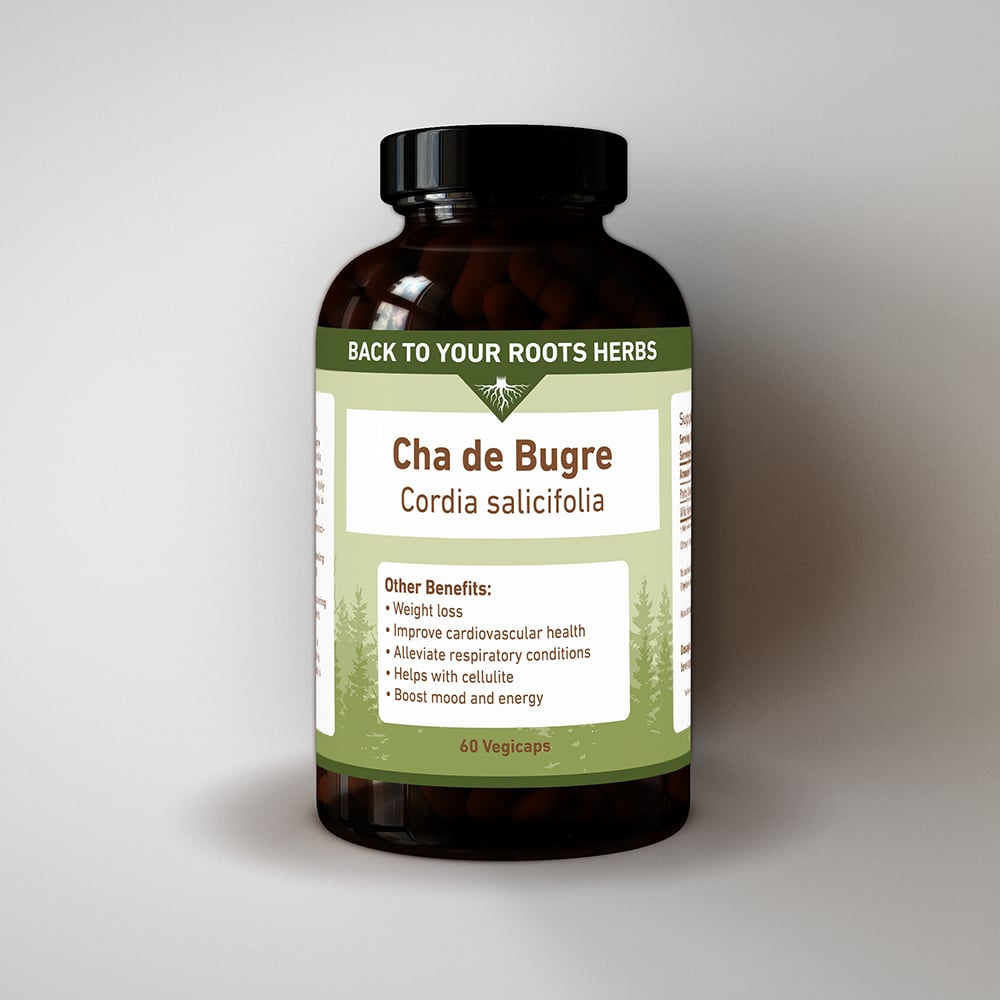
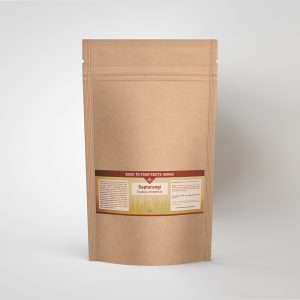
Grade A. Sourced from the tropical semi-deciduous forests of Minas Gerais, Brazil (-18.51, -44.55). This cha de bugre whole leaf powder retains the full spectrum of caffeine, allantoin, and potassium found in wild-harvested Cordia salicifolia. Batch-tested for heavy metals. Single-origin. No fillers. – Back To Your Roots Herbs Research Group
SENSORY ANALYSIS:
- Look: Fine olive-green to tan powder with consistent particle size. No clumping or discoloration.
- Smell: Earthy and faintly nutty. Carries a mild coffee-like aroma characteristic of authentic Brazilian cha de bugre leaf.
- Taste: Mildly bitter with a warm, roasted undertone. Distinct from generic herbal powders. The bitterness signals active tannin and caffeine content.
HOW DOES CHA DE BUGRE WORK?
Cha De Bugre Benefits for Healthy Weight Management
- The Herb: Cordia salicifolia (syn. Cordia ecalyculata) sourced from Minas Gerais, Brazil. This tree grows in the Atlantic Forest region and produces small red fruit that Brazilian communities have used as a coffee substitute for generations.
- The Mechanism: The leaf contains caffeine, allantoin, and allantoic acid that work together to support thermogenic activity and promote a healthy appetite response. Potassium content is traditionally associated with healthy fluid balance.
- The Evidence: A 2022 study in obese rats observed that a Cordia ecalyculata extract reduced weight gain and food intake at lower doses (Nunes et al., Acta Scientiarum Polonorum Technologia Alimentaria, PMID: 35174692). This is early animal evidence using an extract, not human proof. See What the Research Actually Says below.
Brazilian Cha De Bugre Extract and Appetite Support
In Brazil, cha de bugre has a long ethnobotanical history. Rural communities brew the leaf as a tea before meals. The caffeine content provides a natural energy lift without the jitters associated with synthetic stimulants. Allantoin, a compound also found in comfrey, supports cellular renewal. Tannins contribute to the herb’s mild astringent quality.
What Is Cha De Bugre Powder?
Cha de bugre powder is the dried, ground leaf of Cordia salicifolia. BTYRH uses whole leaf powder rather than a standardized extract. Whole powder preserves the full phytochemical profile, including flavonoids, phenolic acids, and trace minerals. No solvents. No concentration. Just the raw plant material in a vegetable capsule.
How Does Cha De Bugre Support Weight Management?
The caffeine in cha de bugre leaf promotes thermogenesis. Thermogenesis is the body’s natural heat production process, which uses stored energy. Combined with allantoin and potassium, the leaf supports a balanced metabolic response. This is not a stimulant-heavy formula. It is a single-herb whole food supplement.
Active Compounds in Cha De Bugre Leaf
Laboratory analysis of Cordia salicifolia leaf identifies caffeine, theobromine, potassium, allantoin, allantoic acid, tannins, flavonoids, and phenolic acids. Caffeine and theobromine are the leaf’s two naturally co-occurring methylxanthines. Together they give cha de bugre its smooth, jitter-light character and support the body’s natural energy. These compounds occur naturally in the raw plant material and are preserved through low-temperature drying.
Origin and Terroir
BTYRH sources cha de bugre from Minas Gerais, Brazil. This state in southeastern Brazil sits at approximately -18.51 latitude, -44.55 longitude. The tropical semi-deciduous forests of this region provide ideal growing conditions for Cordia salicifolia. The nutrient-rich laterite soils of the Atlantic Forest biome produce leaf material with higher concentrations of active phytochemicals than plantation-grown alternatives.
What the Research Actually Says About Cha De Bugre
Cha de bugre has a long traditional history in Brazil. Rural communities roasted the fruit as a coffee substitute and brewed the leaf as a satiety tea. Modern research is still early. The most cited study is a 2022 paper in Acta Scientiarum Polonorum Technologia Alimentaria (Nunes et al., PMID: 35174692). Researchers gave a Cordia ecalyculata dry extract to diet-induced obese rats. Lower doses reduced weight gain and food intake. The highest dose caused DNA damage in a genotoxicity test.
Two honest caveats follow. First, this was an animal model, not a human trial. Second, it tested a concentrated extract, not the whole leaf powder inside these capsules. The studied compounds still make biological sense. Caffeine and theobromine are mild methylxanthines. Allantoin is known mostly for its role in tissue and skin contexts. Antioxidant activity has been seen in laboratory models. None of this proves a medical benefit. It supports the traditional view of the leaf as a mild, appetite-supporting botanical that is best used in moderation.
Cha De Bugre Herbal Supplement Safety
Who Should Avoid Cha De Bugre
Pregnant and breastfeeding women should not use cha de bugre due to insufficient safety data. Children under 18 should avoid this supplement. Individuals sensitive to caffeine should start with a lower dose. Consult a healthcare provider if you take prescription medications, as caffeine may interact with certain drugs.
Does Cha De Bugre Cause Side Effects?
Cha de bugre contains natural caffeine. Possible effects include restlessness, increased heart rate, or difficulty sleeping if taken late in the day. These responses are dose-dependent. Taking capsules with food may reduce stomach sensitivity. No habit-forming properties have been identified in published research.
Is Cha De Bugre Safe for Long-Term Use?
Long-term human safety data for cha de bugre is limited. Most evidence comes from traditional use and short animal studies. For this reason, the leaf is best used in defined cycles rather than taken every day without a break. Because it contains natural caffeine and theobromine, avoid late-day dosing and do not stack it with other caffeine sources. Animal research points to benefit at lower doses and adverse effects only at very high doses, so more is not better. Talk to your healthcare provider before extended or daily use, especially if you take stimulant, blood-pressure, or other medications. Pregnant and breastfeeding women and anyone under 18 should not use this product.
CRITICAL USAGE:
Cha De Bugre Capsules Dosage
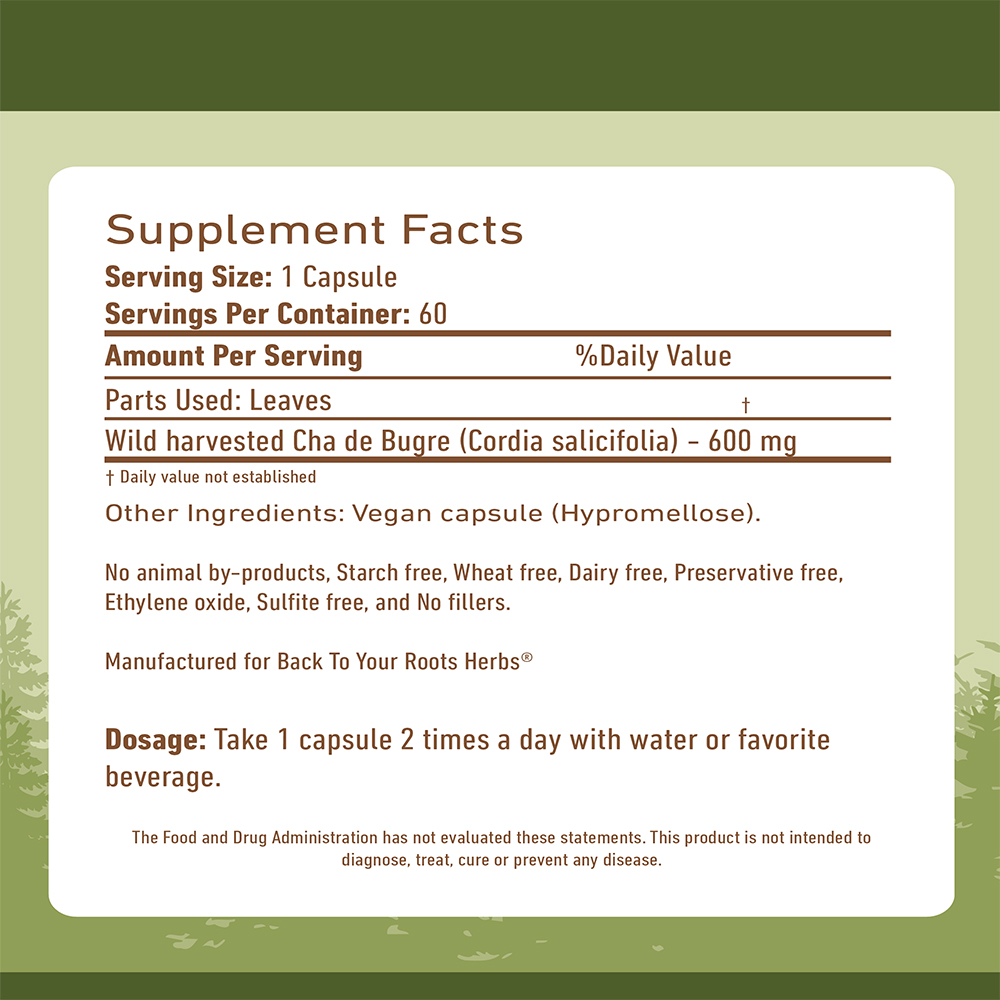
Recommended: Take 1 capsule twice daily with water, preferably 30 minutes before meals. Do not exceed 2 capsules per day. Start with 1 capsule for the first 3 days to assess tolerance.
Contraindications: Do not combine with other caffeine-containing products. Discontinue use if adverse reactions occur. Not for individuals under 18. Consult your physician if you have a medical condition or take prescription medication.
Cha De Bugre Uses and Traditional History
In the Minas Gerais region of Brazil, Cordia salicifolia is known locally as “cafe do mato” (coffee of the woods). The fruit resembles a small coffee bean and has been roasted as a coffee substitute. The leaf is brewed as a tea (cha) and has been part of Brazilian folk herbalism for appetite support and general vitality. This traditional use spans multiple generations in rural Brazilian communities.
Cha de Bugre Tea vs Cha de Bugre Capsules
Traditional cha de bugre tea requires steeping dried leaf in hot water for 5 to 10 minutes. Capsules deliver a pre-measured dose of whole leaf powder without the brewing step. Both forms contain the same active compounds. Capsules offer convenience and consistent potency per serving. Tea allows flexible dosing but varies in strength depending on steep time and water temperature.
CLINICAL SPECS:
| Spec | Detail |
|---|---|
| Serving Size | 1 Capsule (600 mg) |
| Frequency | 1-2 capsules daily, 30 min before meals |
| Active Marker | Caffeine, Allantoin, Potassium (naturally occurring) |
| Processing | Low-temperature dried, milled whole leaf powder |
| Safety | Heavy Metal Tested (Pass) |
| Ingredients | Cha De Bugre (Cordia salicifolia) Leaf Whole Powder |
| Other Ingredients | Vegetable Cellulose (Capsule) |
| Purity | Organic, Non-GMO, Vegan |
| Free From | Wheat, Gluten, Soy, Dairy, Binders, Fillers |
| Origin | Minas Gerais, Brazil (Atlantic Forest Biome, -18.51, -44.55) |
| Manufactured | Virginia Beach, VA, USA |
COMPARISON TABLE:
| Feature | BTYRH Cha de Bugre | Generic Cha De Bugre Supplement |
|---|---|---|
| Origin | Minas Gerais, Brazil (specified terroir) | Unspecified |
| Preparation | Whole Leaf Powder (Full Spectrum) | Standardized Extract or Blend |
| Taste | Mildly bitter, warm, coffee-like undertone | Neutral or masked with additives |
| Safety | Heavy Metal Tested, cGMP Facility | Unknown/Untested |
DISCLAIMER: *These statements have not been evaluated by the Food and Drug Administration. This product is not intended to diagnose, treat, cure, or prevent any disease. Consult your healthcare provider before use, especially if pregnant, nursing, or taking medication.
Reviews
There are no reviews yet.