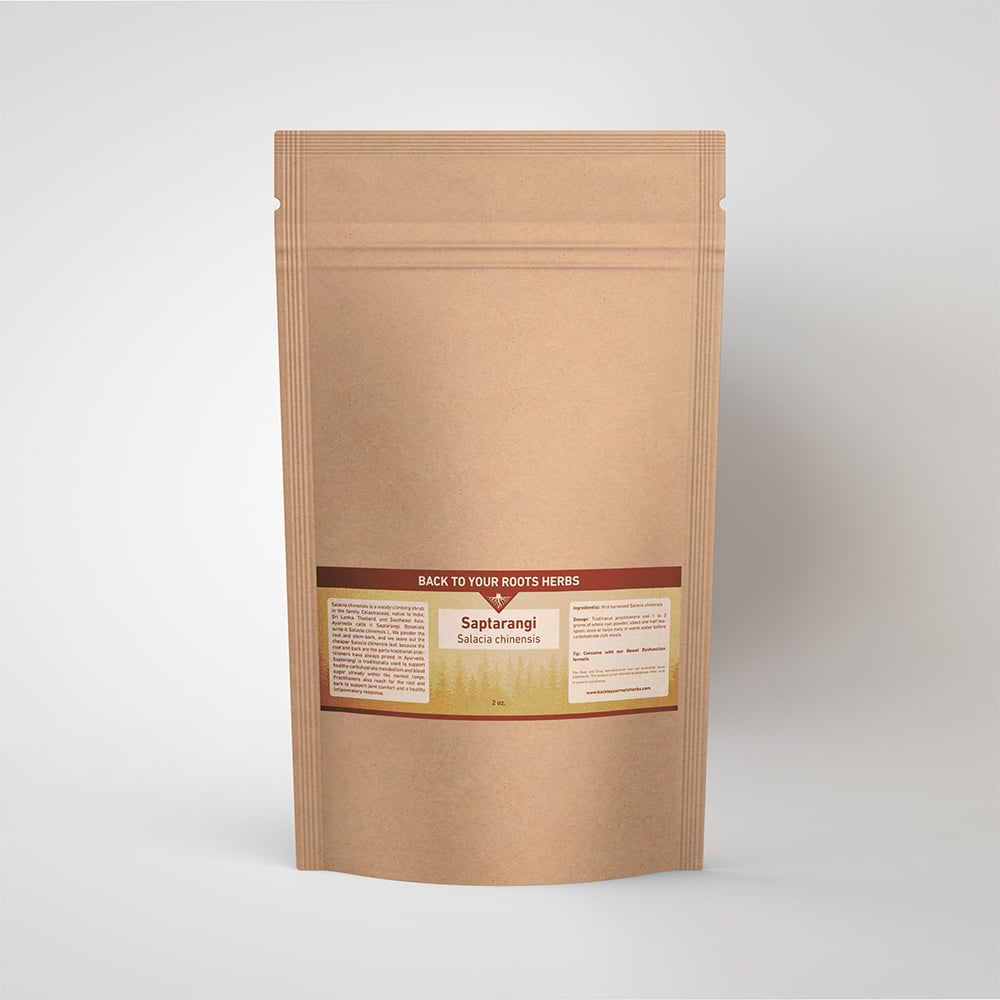
Salacia Chinensis Powder: Whole Root and Bark, Not an Extract
Grade A. Potency Score 9.2 of 10. This salacia chinensis powder is milled from whole root and stem-bark wild-harvested in the Western Ghats of Kerala, India (10.16 N, 77.06 E), the terroir where villagers call the vine Ponkoranti. We tested every lot for heavy metals and kept the full phytochemical profile intact. No standardized extract shortcuts. No fillers. Just the honest reddish-brown powder tradition points to.
– Back To Your Roots Herbs Research Group
Salacia chinensis is a woody climbing shrub in the family Celastraceae, native to India, Sri Lanka, Thailand, and Southeast Asia. Ayurveda calls it Saptarangi. Botanists write it Salacia chinensis L. We powder the root and stem-bark, and we leave out the cheaper Salacia chinensis leaf, because the root and bark are the parts traditional practitioners have always prized.
Sensory Analysis of the Raw Powder
A first-hand report from our bench.
- Look: A fine, faintly fibrous powder. Warm reddish-brown, closer to dried terracotta than to coffee.
- Smell: Dry and woody. A faint tannic note, like fresh bark and old tea leaves.
- Taste: Frankly bitter. Astringent up front, drying on the tongue, with a woody finish that lingers. This is not a pleasant powder. It is a working one.
How Does Salacia Chinensis Powder Work?
The character of Salacia traces back to an unusual set of molecules. Salacia chinensis carries two sulfonium thiosugars, salacinol and kotalanol, next to the polyphenol mangiferin and the rarer ponkoranol and salaprinol. Add triterpenoids, saponins, and tannins, and the phytochemical picture is broad.
The Compounds
Salacinol and kotalanol are sulfonium-type thiosugars that researchers have studied as alpha-glucosidase inhibitors. In plain words, these compounds have been examined for how they slow the enzymes that break starch into sugar. Mangiferin contributes antioxidant polyphenol support.
The Traditional Action
In Ayurveda, Saptarangi is traditionally used to support healthy carbohydrate metabolism and blood sugar already within the normal range. Practitioners also reach for the root and bark to support joint comfort and a healthy inflammatory response.
The Evidence
Human research on this species is specific. Kobayashi and colleagues (2020), in the Journal of Medicinal Food, ran two randomized, double-blind, placebo-controlled studies on Salacia chinensis extract, measuring postprandial blood glucose and HbA1c across single-dose and 12-week dosing (PMID 33370165). The better-known cousins, Salacia reticulata and Salacia oblonga, show similar patterns in the literature.
Salacia Chinensis Powder vs Standardized Extract
Most sellers ship a Salacia chinensis extract standardized to a single marker, or a Salacia reticulata root powder relabeled as chinensis. We do neither. Our Salacia powder is the whole plant part, so salacinol, mangiferin, and their companion compounds arrive in native ratio. Whole powder leaves your practitioner room to set dosage. An extract locks it in.
Critical Usage and Contraindications
Read this before your first spoon.
Suggested Use
Traditional practitioners use 1 to 2 grams of whole root powder, about one half teaspoon, once or twice daily in warm water before carbohydrate-rich meals. Start low. The taste will keep you honest.
Who Should Not Use It
Do not use during pregnancy or breastfeeding. If you take medication that affects blood sugar, talk with your healthcare provider first and monitor closely, because salacia may add to those effects and lead to low blood sugar. Stop use two weeks before scheduled surgery. Mild gas or bloating can occur as your gut adjusts to slower carbohydrate digestion.
Clinical Specs
| Spec | Detail |
|---|---|
| Serving Size | 1 to 2 g (about 1/2 teaspoon) |
| Frequency | Once or twice daily, before meals |
| Active Marker | Salacinol and kotalanol (sulfonium thiosugars) plus mangiferin |
| Processing | Air-dried and milled whole (root and stem-bark), no solvent extraction |
| Safety | Heavy Metal Tested (Pass) |
| Ingredients | 100% Salacia chinensis root and stem-bark powder |
| Other Ingredients | None (single-herb powder) |
| Purity | Organic, Non-GMO, Vegan |
| Free From | Wheat, Gluten, Soy, Dairy, Binders, Fillers |
| Origin | Western Ghats, Kerala, India (Specified Terroir) |
| Manufactured | Virginia Beach, VA, USA |
Comparison Table
| Feature | BTYRH Salacia Chinensis Powder | Generic Salacia Powder |
|---|---|---|
| Species | Verified Salacia chinensis (Celastraceae) | Often Salacia reticulata relabeled |
| Origin | Western Ghats, Kerala (10.16 N, 77.06 E) | Unspecified |
| Preparation | Whole root and stem-bark powder, no extract | Standardized extract or unknown |
| Taste | Genuinely bitter, astringent, woody | Generic |
| Safety | Heavy-metal tested (Pass) | Unknown/Untested |
DISCLAIMER: These statements have not been evaluated by the Food and Drug Administration. This product is not intended to diagnose, treat, cure, or prevent any disease. Consult your healthcare provider before use, especially if you are pregnant, nursing, taking medication, or have a medical condition.
Reviews
There are no reviews yet.