Key Takeaways
- Sutherlandia frutescens, also called cancer bush or kankerbos, is a South African legume traditionally used as a bitter tonic and an anti-stress remedy.
- Its traditional profile includes the non-protein amino acid L-canavanine, the cyclitol pinitol, GABA, and triterpenoid saponins known as sutherlandiosides.
- Most modern research on the plant is preclinical, meaning laboratory and animal studies rather than large human clinical trials.
- Cancer bush can interact with prescription medicines through liver-enzyme and drug-transporter pathways, so professional guidance matters before use.
- The common name reflects traditional use, not proven treatment. There is no reliable evidence that it can cure cancer in humans.
What is Sutherlandia frutescens? A Botanical Profile
Understanding the plant itself provides context for its use and study. Sutherlandia frutescens belongs to the Fabaceae family, the same family as peas and beans.
Appearance and Characteristics
It typically grows as a small shrub, reaching about 1 to 1.5 meters in height. The plant is easily recognizable by its silvery-grey-green leaves, which are compound (made up of smaller leaflets) and slightly hairy. One of its most striking features is its flowers, bright red-orange (though sometimes pink or purplish), shaped like those of a pea, and often appearing throughout the year, peaking in spring and summer. Following the flowers, the plant develops distinctive inflated, papery seed pods, resembling small balloons, which contain several small, dark seeds.
Habitat and Distribution
Sutherlandia frutescens is indigenous to the western part of South Africa and extends into Botswana and Namibia. It thrives in arid and semi-arid conditions, often found growing wild on rocky slopes, along roadsides, and in disturbed areas. Its ability to flourish in harsh, dry environments speaks to its hardy nature. There is some thought that geographic variations in growing conditions across South Africa might influence the specific balance of chemical compounds within individual plants.
Can You Grow Sutherlandia frutescens Outside South Africa?
Cancer bush is native to the dry, rocky scrublands of South Africa, Lesotho, southern Namibia, and southeastern Botswana, but gardeners outside that range can grow it with some care. It is a fast-growing, short-lived perennial legume that favors full sun, sharp drainage, and low humidity. In the United States, it does best planted outdoors in USDA hardiness zones 8 to 11, where winters stay mild. In colder zones it is usually kept in containers and moved indoors or into a greenhouse before the first frost, because the plant is frost-sensitive. Sandy or gravelly soil, sparing water once the plant is established, and good airflow help it mirror the arid terroir of its native range.
A Note on Botanical Names
While commonly known as Sutherlandia frutescens, the plant has undergone taxonomic reclassification. Botanists now often place it within the Lessertia genera, making Lessertia frutescens the currently accepted scientific name in many botanical databases. However, Sutherlandia frutescens remains widely used in research literature and traditional medicine contexts. The etymology of the name Sutherlandia honors James Sutherland, the first superintendent of the Edinburgh Botanic Garden.
Cultural Roots: Traditional Significance in Southern Africa
The use of Sutherlandia frutescens is deeply interwoven with the cultural heritage of various indigenous peoples in Southern Africa, including the Khoi, San, Nama, Zulu, Sotho, and Xhosa.
Names and Meanings
The plant carries different names reflecting its perceived effects. For instance, the Tswana name “Phetola” translates to “it changes,” suggesting a belief in its power to alter the course of illness. The North Sotho name “Lerumo-lamadi” means “spear for the blood,” pointing to its traditional use as a blood purifier or tonic. These names offer a sign of the plant’s importance and the roles it plays in traditional health systems.
Beyond these, the plant is known in Afrikaans as kankerbos or kankerbossie, meaning “cancer bush,” and in Sesotho as musa-pelo, “one that brings back the heart,” a name tied to its traditional use during grief and low mood. Zulu names include unwele and insiswa. Botanist Ben-Erik van Wyk and colleagues catalogued this wide vernacular range alongside the plant’s documented traditional uses (van Wyk and Albrecht, 2008, Journal of Ethnopharmacology, PMID: 18761068).
Role in Indigenous Medicine
For centuries, traditional healers have relied on this plant as a versatile remedy. It was often administered as a general health tonic to enhance well-being and resilience. Its applications spanned a broad range of ailments, making it one of the most significant medicinal plants in the region.
Ethnobotanical Applications: How Was It Traditionally Used?
Traditional use involved various parts of the plant, including leaves, stems, and sometimes roots, prepared in different ways depending on the intended purpose.
Internal Preparations and Ailments
Infusions, essentially teas made by steeping the leaves and stems in hot water, were commonly used. These preparations were administered for:
- Respiratory issues: Coughs, colds, influenza, asthma, and bronchitis.
- Fever reduction.
- Digestive complaints: Indigestion, heartburn, gastritis, and peptic ulcers.
- Liver and kidney support.
- Managing symptoms associated with rheumatism and arthritis.
- Alleviating anxiety and mild depression.
- Stimulating appetite, particularly in individuals experiencing wasting due to chronic illness.
- As a supportive remedy during tuberculosis treatment (though see critical safety interactions later).
- General wellness tonic and blood purifier.
External Preparations and Uses
Stronger preparations, known as decoctions (made by boiling plant material), were often used externally. Common external uses included:
- Washing wounds to cleanse them and potentially prevent infection.
- As an eyewash for infections (prepared carefully).
Preparation Methods
The primary methods involved water extraction:
- Infusion (Tea): Dried or fresh leaves and thin stems steeped in boiled water. Strength varied based on the amount of plant material and steeping time. Often consumed daily for general health or specific ailments.
- Decoction: Tougher plant parts (like roots or thicker stems) boiled in water for a longer duration to extract constituents. Used for more serious internal conditions or for external washes.
Dosages in traditional practice were not standardized and varied based on the healer, the specific condition, the individual’s constitution, and the plant material available.
Traditionally, the dried aerial parts are used to make a simple water infusion. To prepare cancer bush tea in the customary way, about one teaspoon of the dried leaf or milled powder is steeped in a cup of just-boiled water for roughly five to ten minutes, then strained. The result is markedly bitter, which is why the plant has long been described as a bitter tonic. Some households add honey or blend it with milder herbs to soften the taste. These notes describe the plant’s traditional preparation and are not a dosing recommendation. The amount, frequency, and suitability of any herbal preparation should be discussed with a qualified healthcare provider.
Forms and Sourcing: Powder vs. Capsules
Cancer bush reaches the modern market mainly in two forms, and the choice usually comes down to routine and taste. Loose powder and cut leaf suit anyone who wants to make the traditional bitter infusion or blend it into other herbal teas. Capsules suit those who prefer a pre-measured, taste-neutral option that travels easily. In our sourcing experience, the two questions that matter most are botanical identity and testing. Our editorial team works with whole-plant Sutherlandia frutescens and offers both formats: a milled cancer bush powder for tea and traditional preparations, and cancer bush capsules for convenience. Whichever form you consider, look for a clearly identified botanical source, listed as Sutherlandia frutescens or the accepted synonym Lessertia frutescens, and third-party quality testing.
Understanding the Chemistry: Key Bioactive Compounds
Modern research has identified several bioactive compounds in Sutherlandia frutescens that may contribute to its observed effects. The plant contains a complex mixture, and its activity likely results from the interplay of these components.
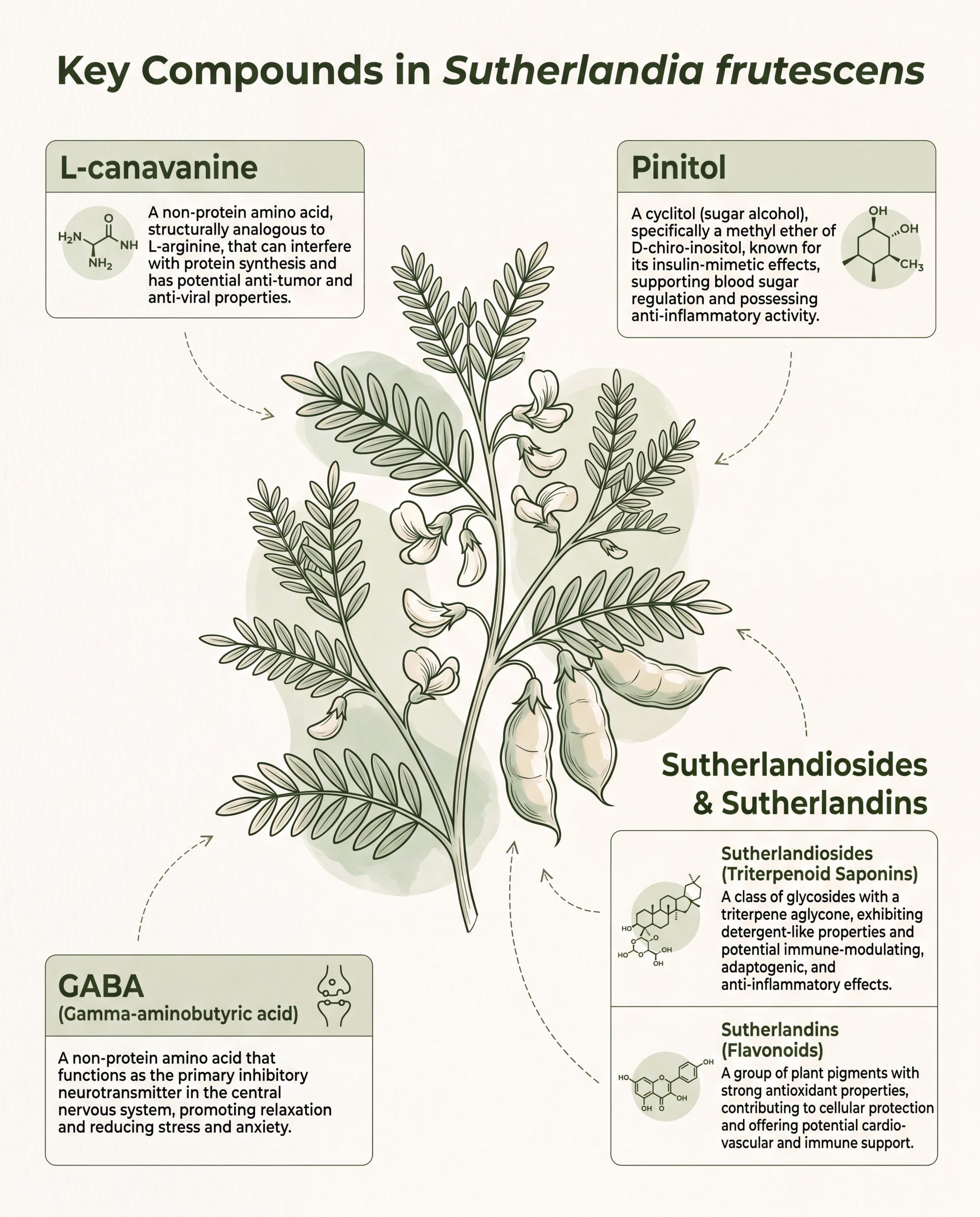
L-Canavanine
This is a non-protein amino acid, structurally similar to L-arginine. In vitro studies (experiments done in test tubes or on cell cultures) suggest it might have anticancer and antiviral properties. However, L-canavanine can also interfere with the body’s use of L-arginine, which is essential for processes like nitric oxide production. This potential for interference means L-canavanine could also have toxic effects, particularly at higher concentrations.
Pinitol
Pinitol is a type of cyclic sugar alcohol (a cyclitol), specifically a form of D-chiro-inositol. Research, mainly in animal models, suggests pinitol may have antidiabetic effects by potentially improving insulin sensitivity and helping to regulate blood sugar levels. It has also been investigated for a possible role in counteracting muscle wasting.
GABA (Gamma-Aminobutyric Acid)
GABA is the primary inhibitory neurotransmitter in the central nervous system, meaning it helps calm nerve activity. Its presence in Sutherlandia frutescens may relate to the plant’s traditional use for managing stress and anxiety and promoting a sense of calm.
Saponins (Sutherlandiosides A-D)
These are unique triterpenoid glycosides (complex molecules containing a steroid-like structure linked to sugars) found specifically in Sutherlandia genera plants. Research suggests these compounds may possess immunomodulatory (affecting the immune system), anti-inflammatory, and antioxidant properties.
Flavonoids (Sutherlandins A-D)
These compounds are glycosides of well-known flavonoids like quercetin and kaempferol. Flavonoids are widely recognized for their antioxidant and anti-inflammatory activities, and the sutherlandins likely contribute to these properties in the plant.
Examining the Science: What Does Research Suggest?
While traditional knowledge provides a valuable foundation, scientific studies are necessary to validate claims and understand how Sutherlandia frutescens might work. It is vital to differentiate between types of studies.
Approach to Evidence
- In Vitro Studies: Conducted in lab settings on isolated cells or tissues. Useful for identifying potential activity but cannot predict effects in a whole organism.
- In Vivo Studies: Conducted on living animals (e.g., rodents). Provide more complex biological data, but results do not always translate directly to humans.
- Human Studies: Include case reports, small pilot studies, and ideally, large randomized controlled trials (RCTs). RCTs are the gold standard for proving effectiveness and safety in humans, but high-quality RCTs on Sutherlandia frutescens are limited.
A note on the evidence that follows. Most published work on Sutherlandia frutescens comes from laboratory (in vitro) and animal (in vivo) studies, and human clinical trials are limited. A widely cited 2008 review summarized the plant’s chemistry and pharmacology and concluded that while the preclinical record is substantial, controlled clinical studies are still needed (van Wyk and Albrecht, 2008, Journal of Ethnopharmacology, PMID: 18761068). We read every finding below in that light.
Anti-inflammatory Activity
Several in vitro studies show that extracts from the plant can inhibit pathways and mediators involved in inflammation. Some animal studies (in vivo) have also reported reductions in swelling and other inflammatory markers in models of arthritis. This aligns with the traditional use for inflammatory conditions like rheumatism.
In cell-based research, ethanol extracts of Sutherlandia reduced markers of oxidative stress and inflammatory signaling in cultured neurons and microglial cells (Jiang et al., 2014, PLoS One, PMID: 24587007). A separate laboratory study reported that the plant and its compound sutherlandioside B influenced adrenal-hormone pathways and acted on inflammatory gene expression in cell models (Sergeant et al., 2017, Journal of Ethnopharmacology, PMID: 28323049). Both are preclinical findings.
Immune System Modulation
Laboratory studies suggest Sutherlandia frutescens extracts might stimulate certain immune cells, such as macrophages and natural killer (NK) cells, which are involved in fighting infections and potentially abnormal cells. Some animal studies also indicate enhanced immune responses. This provides a potential mechanism for its traditional use against infections.
Traditional accounts describe cancer bush as a tonic taken to support general wellbeing during illness, and modern immune-related research is mixed and preclinical. In our reading of the literature, cautionary findings deserve equal weight with promising ones. One laboratory study using a blood-brain-barrier model reported that the extract increased certain inflammatory signals relevant to HIV-associated neuroinflammation, and the authors advised against its use in that specific context (Africa and Smith, 2015, Journal of Negative Results in Biomedicine, PMID: 26187042). For a broader look at immune-supporting botanicals, see our guide to the best herbs for the immune system.
Antioxidant Properties
Lab assays confirm that extracts possess antioxidant capacity, meaning they can neutralize harmful free radicals. This activity is likely due, in part, to the flavonoid content (sutherlandins). Antioxidant effects could contribute to overall health benefits.
The same neuronal and microglial research noted above found that Sutherlandia ethanol extracts suppressed reactive oxygen species and nitric oxide production in laboratory cells (Jiang et al., 2014, PLoS One, PMID: 24587007), which is the cellular activity often described as antioxidant behavior.
Antidiabetic Potential
Research, primarily in vivo animal studies, indicates that extracts, possibly due to pinitol content, can improve glucose tolerance and insulin sensitivity in diabetic models. There is limited human research, though some small studies involving people with HIV showed potential benefits for blood sugar regulation. More research is needed here.
In a human liver-cell model of insulin resistance, an aqueous Sutherlandia extract helped preserve normal glucose handling and altered the expression of diabetes-related genes (Williams et al., 2013, Journal of Ethnopharmacology, PMID: 23376105). This is a cell-culture result, not a demonstration of blood-sugar effects in people. For context on how dietary supplements are studied and regulated, the U.S. National Institutes of Health Office of Dietary Supplements is a useful reference (ods.od.nih.gov).
Antiviral Research
Some in vitro studies have suggested potential activity against certain viruses. However, this research is preliminary, and robust evidence from human trials is currently lacking.
Adaptogenic Considerations
The term “adaptogen” refers to substances thought to help the body adapt to physical and mental stress. Sutherlandia frutescens is often described as an adaptogen in traditional and herbal medicine contexts, linked to its use for stress, anxiety, and overall well-being. The presence of GABA might contribute to this perception. However, the concept of adaptogens requires more rigorous scientific validation for specific plants like this one.
The plant’s traditional reputation as an anti-stress remedy, captured in the Sesotho name musa-pelo, has drawn interest in the adaptogen conversation. Laboratory work suggests its compounds interact with glucocorticoid and stress-hormone pathways (Sergeant et al., 2017, Journal of Ethnopharmacology, PMID: 28323049). In our assessment, cancer bush belongs in that conversation more by tradition than by clinical proof, a point the comparison below develops.
How Does Cancer Bush Compare to Other Adaptogens?
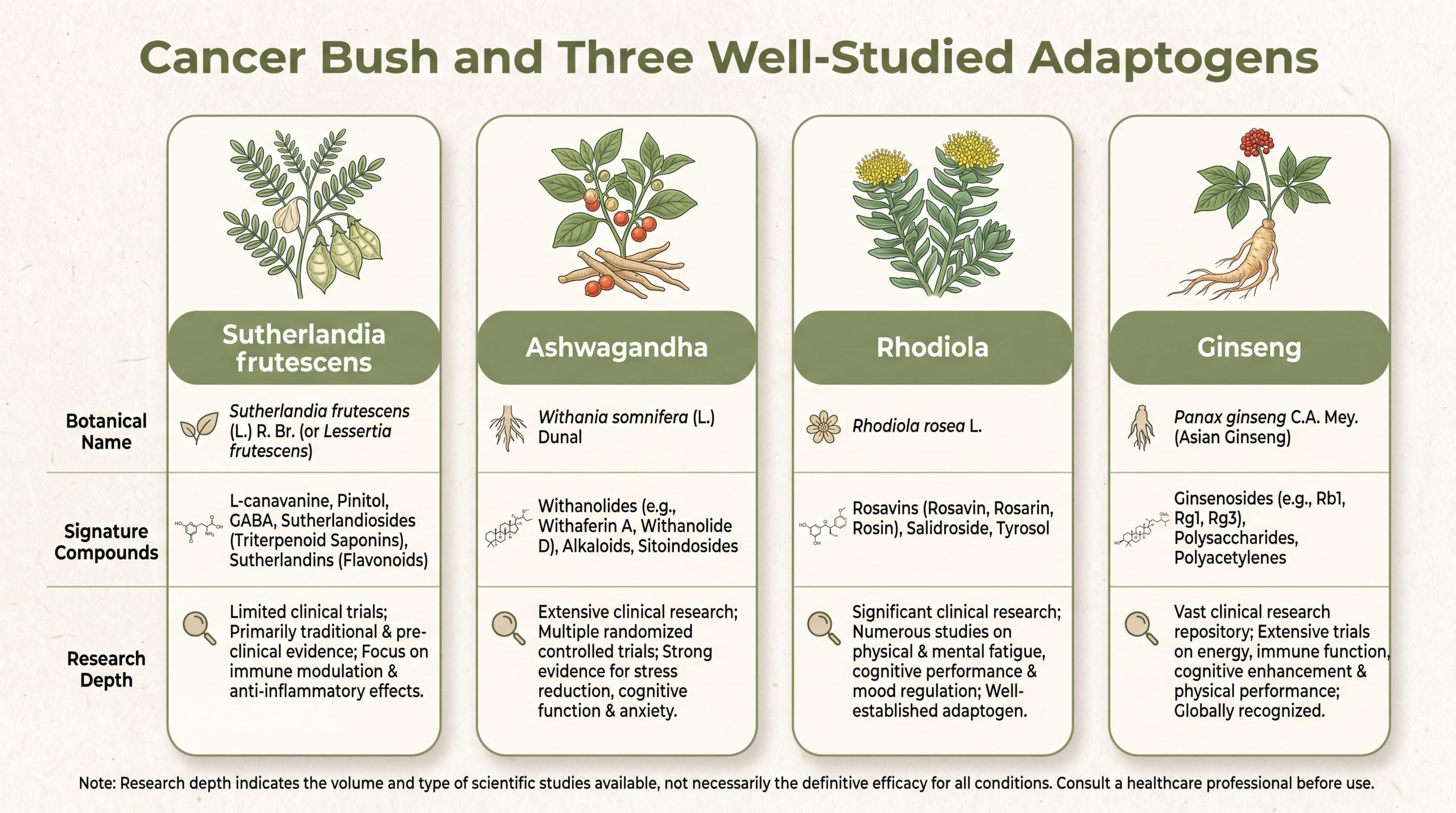
The word adaptogen describes plants traditionally used to support the body’s resilience to everyday stress. Cancer bush is sometimes grouped with better-known adaptogens, though its research base is smaller and its profile is distinct. The table below is a general orientation, not medical advice.
| Herb | Botanical name | Traditional stress-related use | Signature compounds | Research depth |
|---|---|---|---|---|
| Cancer bush | Sutherlandia frutescens | Bitter tonic, musa-pelo for grief and low mood | L-canavanine, pinitol, GABA, sutherlandiosides | Mostly preclinical |
| Ashwagandha | Withania somnifera | Ayurvedic rasayana for stress and sleep | Withanolides | Several human trials |
| Rhodiola | Rhodiola rosea | Traditional use for fatigue and endurance | Rosavins, salidroside | Some human trials |
| Ginseng | Panax ginseng | Traditional Chinese tonic for vitality | Ginsenosides | Extensive |
Compared with ashwagandha or ginseng, cancer bush has far fewer human studies, so its adaptogenic reputation rests more on tradition and preclinical signals than on clinical trials. For a fuller comparison of the best-studied options, see our guide to the strongest adaptogen.
Research on Cancer Cells
This area requires careful interpretation. The common name “cancer bush” stems from its traditional use, sometimes by individuals with cancer, often for symptoms like wasting or as a general tonic, not as a primary cure.
- Laboratory Evidence: The vast majority of anticancer research involves in vitro studies showing that extracts can inhibit the growth of various cancer cell lines (e.g., breast, colon, leukemia). Some in vivo animal studies have also shown potential reductions in tumor size.
- Human Evidence: Human data is very limited, consisting mainly of anecdotal reports or small, uncontrolled studies. These sometimes suggest improvements in quality of life or symptom management when used alongside conventional cancer treatments.
- Crucial Clarification: There is no reliable scientific evidence that Sutherlandia frutescens can cure cancer in humans. It should never be used as a replacement for standard medical cancer diagnosis and treatment. The research is preliminary and warrants further investigation, but does not support its use as a standalone cancer therapy.
In the laboratory, crude Sutherlandia extracts have been shown to trigger apoptosis, or programmed cell death, in cultured carcinoma cells, including cervical and Chinese-hamster-ovary cell lines (Chinkwo, 2005, Journal of Ethnopharmacology, PMID: 15763378) and in cultured MCF-7 breast cancer cells (Stander et al., 2007, Journal of Ethnopharmacology, PMID: 17433588). These are in vitro results in isolated cells. As stated above, there is no reliable scientific evidence that Sutherlandia frutescens can cure cancer in humans, and it should never be used as a replacement for conventional medical care. For herb information written specifically for people affected by cancer, Memorial Sloan Kettering Cancer Center maintains an About Herbs database (mskcc.org).
Important Safety Information: Risks and Interactions
While often used traditionally, Sutherlandia frutescens is not without potential risks, particularly concerning interactions with medications.
General Safety and Side Effects
When used appropriately, it appears relatively safe for many adults. Reported side effects are generally mild and may include:
- Diarrhea
- Dry mouth
- Slight dizziness. Rarely, at very high doses, sweating or vomiting have been reported.
Who Should Avoid Sutherlandia frutescens?
- Pregnancy and Lactation: Although some traditional use during pregnancy is mentioned historically, there is insufficient scientific data to confirm safety. Due to theoretical risks and the presence of compounds like L-canavanine, avoidance during pregnancy and breastfeeding is strongly recommended.
Critical Drug Interactions
This is the most significant safety concern. Sutherlandia frutescens can interfere with how the body processes certain medications, potentially making them less effective or increasing side effects. Key interactions include:
- Antiretroviral Medications (ARVs): Studies show Sutherlandia frutescens can significantly reduce the body’s absorption and levels of certain ARVs used to treat HIV, particularly those processed by the liver enzyme CYP3A4 (e.g., atazanavir, lopinavir/ritonavir). This interaction is serious and can lead to treatment failure and the development of drug-resistant HIV. Anyone taking ARVs should not use this plant without explicit medical approval.
- Other CYP3A4 Substrate Drugs: Because it affects the CYP3A4 enzyme, Sutherlandia frutescens has the potential to interact with a large number of other common medications that are metabolized by this pathway. This includes certain statins, calcium channel blockers, benzodiazepines, and many others.
- Isoniazid: A concerning interaction has been observed with isoniazid, a primary drug used to treat tuberculosis (TB). The plant may interfere with isoniazid’s effectiveness, potentially leading to TB treatment failure and drug resistance.
- P-glycoprotein (P-gP) Substrates: There is also potential for interaction with drugs transported by P-glycoprotein, another system involved in drug metabolism and distribution.
These interaction concerns are documented in the pharmacology literature. A review of African herbal remedies specifically flagged Sutherlandia frutescens for its potential to affect cytochrome P450 enzymes and P-glycoprotein drug transporters, the systems that process many prescription drugs (Cordier and Steenkamp, 2011, Drug Metabolism and Drug Interactions, PMID: 21756221). Researchers have also cautioned that the plant’s antioxidant activity could interfere with isoniazid, a first-line tuberculosis drug that depends on oxidative activation (Folk et al., 2016, NeuroMolecular Medicine, PMID: 27155670). Anyone taking antiretrovirals, tuberculosis medication, or other prescription drugs should consult their healthcare provider and can review general interaction guidance through the NIH National Center for Complementary and Integrative Health (nccih.nih.gov).
The Need for Professional Consultation
Given the potential for serious drug interactions and the lack of extensive human safety data, it is essential to consult a qualified healthcare professional (doctor, pharmacist, or clinical herbalist with interaction knowledge) before using Sutherlandia frutescens. This is particularly important for individuals:
- Taking any prescription or over-the-counter medications.
- With pre-existing health conditions (especially HIV, TB, diabetes, autoimmune diseases, or liver conditions).
- Planning surgery.
Frequently Asked Questions About Cancer Bush
What is cancer bush used for?
Cancer bush has been used in southern African tradition as a bitter tonic and an anti-stress remedy, and to support general wellbeing during illness and periods of poor appetite. These are traditional uses. Modern research is largely preclinical, and the plant is not a treatment for any disease.
Is cancer bush the same as Sutherlandia frutescens?
Yes. Cancer bush is the common English name for Sutherlandia frutescens, which is also accepted under the synonym Lessertia frutescens. In Afrikaans it is kankerbos or kankerbossie.
Can you grow cancer bush in the United States?
It can be grown outdoors in USDA hardiness zones 8 to 11, which offer the mild winters and dry conditions it prefers. In colder regions, it is usually grown in a container and brought indoors or into a greenhouse before frost.
How do you make cancer bush tea?
Traditionally, about one teaspoon of the dried leaf or powder is steeped in a cup of just-boiled water for five to ten minutes and then strained. The tea is distinctly bitter. This describes the traditional preparation and is not a dosing recommendation, so check with your healthcare provider first.
Does cancer bush have side effects or drug interactions?
It can affect liver enzymes (cytochrome P450) and the P-glycoprotein drug transporter, which means it may interact with medicines such as antiretrovirals and the tuberculosis drug isoniazid. Anyone on prescription medication, and anyone pregnant or nursing, should consult a healthcare provider before use.
How does cancer bush compare to ashwagandha?
Both are traditionally used to support the body’s response to stress, but ashwagandha has several human clinical trials while cancer bush is supported mainly by laboratory and animal research. Their active compounds also differ, with cancer bush carrying L-canavanine, pinitol, and sutherlandiosides rather than withanolides.
Related Reading
Continue with these related guides from our team:
- Best herbs for the immune system
- Adaptogens for stress
- The strongest adaptogen, compared
Final Considerations on Sutherlandia frutescens
Sutherlandia frutescens is a plant with a profound legacy in South African traditional medicine, valued for centuries as a versatile health tonic and remedy for numerous ailments. Modern science is beginning to investigate the compounds within the plant and explore potential mechanisms for its traditional uses, particularly regarding anti-inflammatory, antioxidant, and possibly immunomodulatory effects.
However, it is vital to maintain perspective. Much of the scientific evidence remains preliminary, especially concerning claims related to serious diseases like cancer. The plant is not a proven cure for any major illness. Furthermore, the potential for significant drug interactions, especially with life-saving medications like ARVs and isoniazid, cannot be overstated. Safety must be the primary consideration. Always seek guidance from a healthcare professional before incorporating Sutherlandia frutescens into your health regimen, particularly if you have underlying health conditions or are taking any medications.
Disclaimer
These statements have not been evaluated by the Food and Drug Administration. This product is not intended to diagnose, treat, cure, or prevent any disease. Consult your healthcare provider before use, especially if you are pregnant, nursing, taking medication, or have a medical condition.