Key Takeaways
- Icariin is a prenylated flavonol glycoside found in Epimedium species, and it is not interchangeable with whole horny goat weed on a supplement label.
- Laboratory work measured icariin inhibiting PDE5 at an IC50 of 0.432 micromol/L, but that is a test-tube figure rather than a human outcome.
- The one published human trial of oral icariin measured safety and blood levels in 24 adults and found icariin very low or undetectable at every dose tested.
- Roughly 91 percent of oral icariin is converted by gut bacteria into icariside II before reaching circulation, which is why absorption dominates the research conversation.
- No adequately powered randomized human trial of isolated icariin for erectile function has been published as of 2026.
Erectile difficulty affects roughly 30 million men in the United States, and a large share of them go looking for something other than a prescription before they ever speak to a clinician. Icariin sits at the center of that search. It is the compound most often named when people research horny goat weed, and it carries a real laboratory record behind it rather than pure marketing.
The distance between that laboratory record and what has been demonstrated in people is wide. Most of what is written about icariin closes that distance by implication rather than by evidence. Our editorial team pulled the primary literature directly from PubMed for this review, including the 2026 mechanism paper published in Sexual Medicine Reviews, and read the human safety trial in full rather than relying on secondary summaries of it.
What follows is an account of what the research on icariin and erectile function has established, what it has not, and where the honest boundaries sit. In our sourcing work with Epimedium material, we have found that the questions buyers most need answered are rarely the ones this category writes about.
What is icariin?
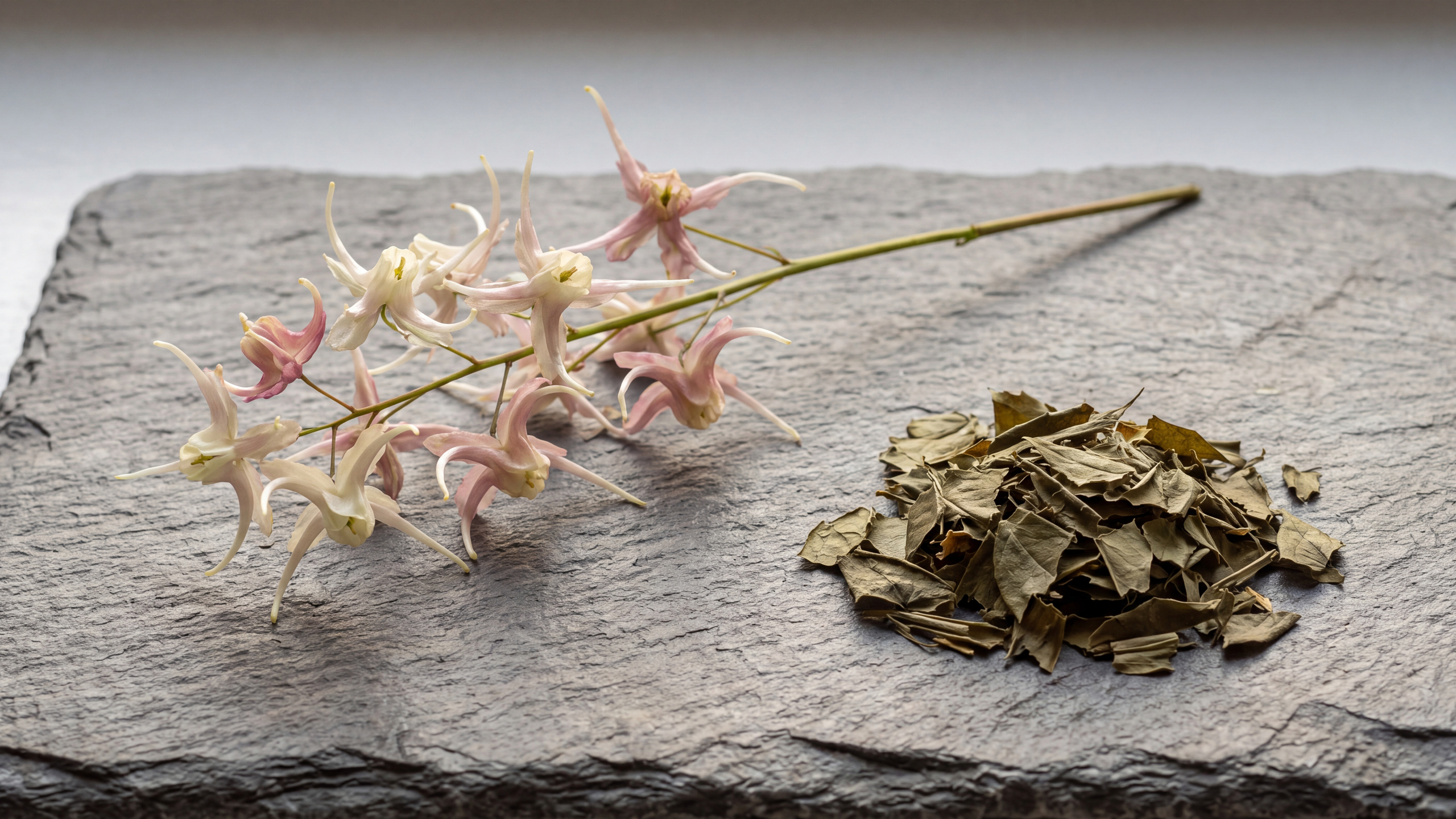
Icariin is a prenylated flavonol glycoside, a plant compound within the broader flavonoid family, produced by species in the genus Epimedium. The genus sits in the family Berberidaceae and includes Epimedium sagittatum, Epimedium grandiflorum, Epimedium brevicornum, and Epimedium koreanum, all of which reach the commercial supply chain under the common name horny goat weed.
The compound is the most studied constituent of the plant, which is why it dominates the research literature. It is not the only active molecule present. Epimedium leaf contains a family of related icariin-type flavonoids alongside other constituents, and a whole-leaf preparation delivers a mixture rather than a single compound.
Two points matter for anyone reading a label. Icariin is a specific named molecule with a measurable concentration. Horny goat weed is a plant. A product can carry either phrase on the front panel while delivering very different amounts of the compound the research is actually about.
Is horny goat weed the same as icariin?
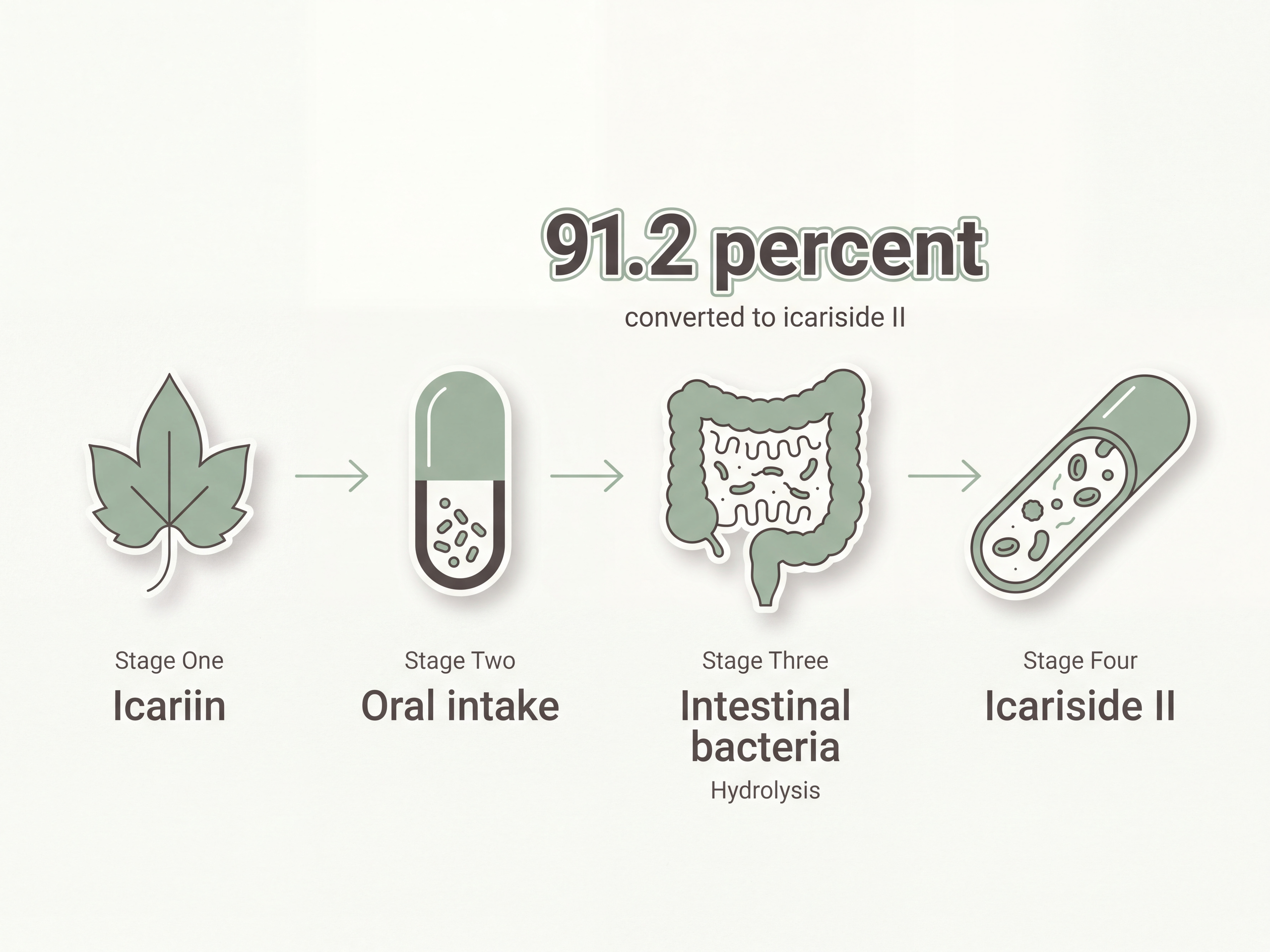
No. Horny goat weed is the common name for the whole Epimedium plant, while icariin is one isolated flavonoid glycoside inside it. After oral intake, roughly 91.2 percent of icariin is hydrolysed by intestinal bacteria into icariside II, the form that circulates and does most of the work described in the research (Niu et al. 2022, Translational Andrology and Urology, PMID: 35958901).
That conversion figure explains a great deal of confusion in this category. The compound named on the label is largely not the compound that reaches the bloodstream. Icariside II is the principal bioactive form in the body, a point the 2026 review in Sexual Medicine Reviews states directly (Meng and Jiang 2026, Sexual Medicine Reviews, PMID: 42476543).
The practical consequence shows up in label math. A capsule listing 500 mg of horny goat weed extract standardized to 10 percent icariin delivers 50 mg of icariin. A capsule listing 500 mg of icariin delivers ten times that amount. Both products can advertise the same headline number. In our own label audits across suppliers, the standardization percentage is the figure that actually varies, and it is the one most often buried or omitted.
Whole-plant preparations and isolated compounds also behave differently in the research. Nearly all of the mechanism work described below used purified icariin, not whole leaf. Findings from one do not transfer cleanly to the other. For the wider picture on the plant itself rather than the compound, our separate guide to horny goat weed covers traditional preparation, the female-use literature, and the broader constituent profile.
How does icariin work in the body?
Icariin acts on several signalling pathways at once rather than through a single mechanism. The 2026 Sexual Medicine Reviews paper catalogued eight distinct routes documented across the literature, and concluded that the compound may act through multi-target mechanisms in animal models of erectile dysfunction with different underlying causes. That same review ended on a caution worth carrying through this entire article. Clinical efficacy still requires confirmation in high-quality randomized controlled trials (Meng and Jiang 2026, Sexual Medicine Reviews, PMID: 42476543).
PDE5 inhibition and what the laboratory numbers actually say
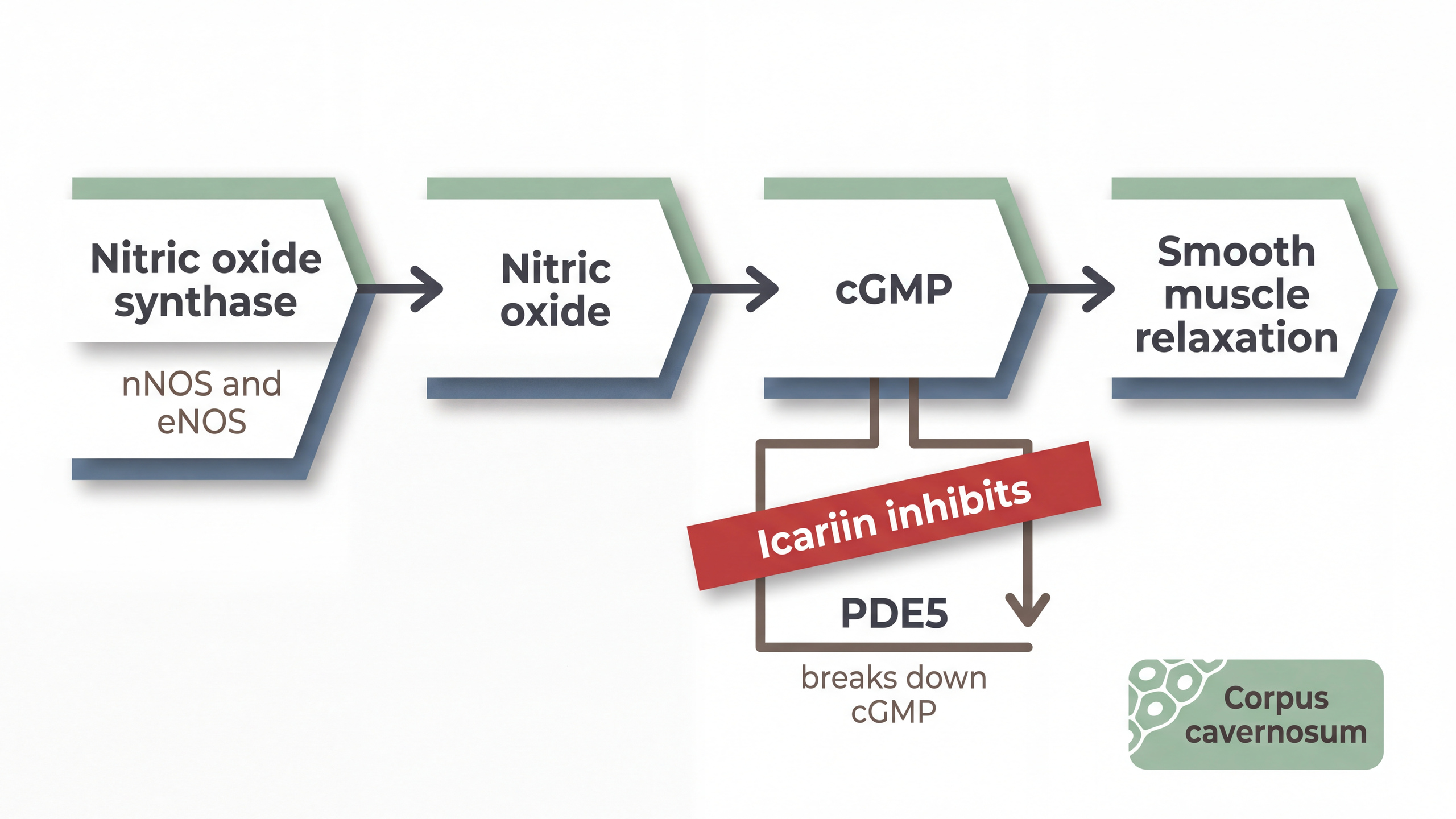
Phosphodiesterase type 5 is the enzyme that breaks down cyclic guanosine monophosphate, or cGMP, in penile tissue. Slowing that breakdown keeps cGMP available longer, which is the pathway prescription erectile medicines act on.
Icariin does inhibit PDE5 in isolated enzyme assays. Working with PDE5 purified from human platelets and PDE4 from rat liver, researchers measured an icariin IC50 of 0.432 micromol/L against PDE5, compared with 0.680 micromol/L for papaverine, the control drug. Icariin also showed markedly greater selectivity for PDE5 over PDE4, with a ratio of 167.67 against papaverine’s 4.54 (Xin et al. 2003, Asian Journal of Andrology, PMID: 12646997).
Those are real, published, replicable figures, and they are the reason icariin is studied at all. They are also isolated-enzyme measurements. An IC50 in a purified enzyme preparation describes what a molecule does when placed directly in contact with the enzyme at a known concentration. It does not describe what happens after a capsule passes through the stomach, the gut wall, and the liver. Numerous sources report that icariin is weaker than prescription options without citing any figure at all. The figures exist. What does not exist is a human study connecting them to an outcome.
The nitric oxide pathway
The second documented route runs through nitric oxide synthase. In castrated rats given oral icariin at 1 and 5 mg/kg daily for four weeks, researchers recorded increased intracavernosal pressure and a greater percentage of smooth muscle in trabecular tissue, alongside raised expression of neuronal and inducible nitric oxide synthase. Notably, changes in serum testosterone, endothelial nitric oxide synthase, and PDE5 expression were not statistically significant in that model (Liu et al. 2005, Asian Journal of Andrology, PMID: 16281085).
That last detail is routinely dropped from consumer summaries. The 2005 study is frequently cited as evidence that icariin raises testosterone. In that particular model, it did not.
What the 2026 research review added
The Meng and Jiang review is the most current synthesis available, and it widened the mechanism picture considerably. Beyond PDE5 inhibition and nitric oxide signalling, the authors documented inhibition of the RhoA/ROCK pathway, reduced autophagy in corpus cavernosum cells, suppression of advanced glycation end products, inhibition of programmed cell death in cavernous tissue, promotion of testosterone synthesis, and modulation of endogenous stem-cell-related markers associated with penile tissue repair.
The advanced glycation end product finding is relevant to diabetic models specifically, since those compounds accumulate in poorly controlled blood sugar. The stem-cell marker work connects to a longer-running research line on whether icariside II derivatives might support tissue repair rather than acute function. Both remain animal-model findings.
Icariin and the hypertension connection
Hypertension is one of the strongest risk factors for erectile difficulty, and two studies in spontaneously hypertensive rats examined whether icariin acts differently in that setting.
The first gave 10 mg/kg daily for four weeks and found increased interaction between endothelial nitric oxide synthase and heat-shock protein 90, decreased interaction between eNOS and caveolin-1, and a higher ratio of phosphorylated to total eNOS. Nitric oxide content rose to 2.16 micromol/g from 1.01 in untreated hypertensive controls, and cGMP concentration rose to 3.69 pmol/mg from 2.31 (Liu et al. 2021, Andrology, PMID: 33507631).
The second, published in 2025, examined the same model at the same dose and reported downregulation of GRK2 in penile cavernous tissue, upregulation of the AKT/eNOS/NO pathway, lower malondialdehyde, higher superoxide dismutase, and reduced apoptosis (Li et al. 2025, The Journal of Sexual Medicine, PMID: 39905744).
Both are rat studies. Neither establishes anything about people with high blood pressure. They are included here because they are the newest mechanism work in the field and because no consumer-facing page covering icariin currently mentions either one.
Antioxidant and tissue-level activity
Across several of the studies above, researchers recorded reduced oxidative stress markers and reduced apoptosis in cavernous tissue. In the nerve-injury work discussed further below, icariin also produced greater neurite outgrowth in cultured pelvic ganglia, which led the authors to describe a possible neurotrophic effect alongside the known PDE5 activity.
What has icariin actually been tested at in humans?
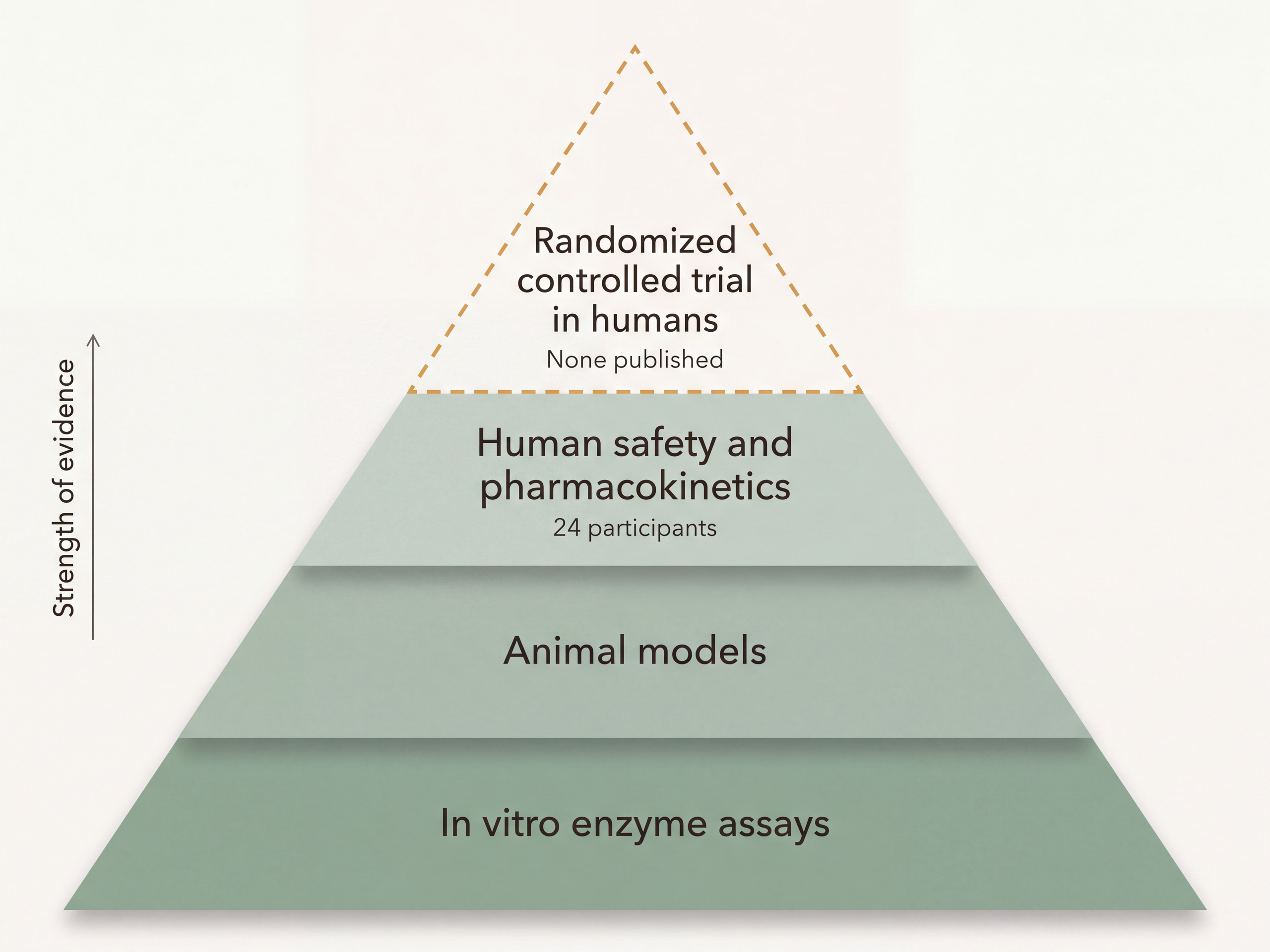
There is no established human dose of icariin for erectile function, because no adequately powered efficacy trial has been run. The one published human study of oral icariin was a randomized, double-blind, placebo-controlled safety and pharmacokinetics trial in 24 healthy adults, testing 100, 200, 400, 840, and 1,680 mg per day across five days. At every dose, blood levels of icariin were very low or undetectable, which demonstrated low oral bioavailability and prevented the researchers from determining pharmacokinetic properties at all (Brown et al. 2019, Natural Product Communications, DOI: 10.1177/1934578X19856789).
Several details from that trial deserve to be stated plainly, because they are usually compressed into a single misleading sentence elsewhere.
- It was not an efficacy study. Erectile function was not an endpoint. Participants were healthy adults, not men reporting erectile difficulty.
- Tolerability was described as generally good, with one exception. Two participants receiving the 1,680 mg dose discontinued because of gastrointestinal symptoms.
- A statistically significant but not clinically significant increase in self-reported depressive symptom severity was recorded with icariin relative to placebo.
- The headline finding was absorption, not effect. The compound largely did not show up in blood.
This is the single most useful dataset in the entire icariin literature for anyone deciding what to do, and it is the one most often left out. Consumer sources routinely publish bodyweight-scaled figures such as 900 mg for a 150-pound person or 1,500 mg daily. Those numbers do not trace back to any human trial measuring erectile outcomes. They are extrapolations.
Why animal doses cannot be converted into human doses
The animal literature generally used low doses in the range of 10 to 200 mg/kg, with the erectile-function studies clustering at the bottom of that range (Niu et al. 2022, Translational Andrology and Urology, PMID: 35958901). Scaling those figures to body weight produces gram-level numbers that appear in marketing copy and have no basis in human research.
Interspecies dose conversion requires allometric scaling that accounts for metabolic rate, and even when performed correctly, it produces a starting point for trial design rather than a recommendation. Rats also carry a different gut bacterial population, which matters enormously for a compound whose activity depends on bacterial conversion to icariside II.
What does the animal research show?
The animal work is the substantive part of the icariin record, and it is more interesting than the consumer coverage suggests.
The castrated rat model
Thirty-two adult male Wistar rats were divided into a sham-operated group and three castrated groups, then treated with oral icariin at 98.6 percent purity for four weeks at 1 or 5 mg/kg daily. Intracavernosal pressure, percentage of smooth muscle, and nNOS and iNOS expression all rose relative to untreated castrated animals. The authors concluded that oral icariin potentially improves erectile function in that model, correlated with the smooth muscle and nitric oxide synthase changes (Liu et al. 2005, Asian Journal of Andrology, PMID: 16281085).
The cavernous nerve injury model
Rats subjected to cavernous nerve injury received daily icariin at 1, 5, or 10 mg/kg for four weeks, with a separate group given a single 10 mg/kg dose two hours before testing. The low-dose daily groups showed significantly higher intracavernosal pressure relative to mean arterial pressure than both controls and the single-dose animals. Tissue analysis found greater nNOS and calponin expression, and cultured pelvic ganglia showed greater neurite length. The authors proposed that icariin may have neurotrophic effects in addition to its known PDE5 activity (Shindel et al. 2010, The Journal of Sexual Medicine, PMID: 20141584).
The comparison between daily dosing and single dosing in that study is the most practically interesting result in the animal record. The single pre-test dose did not perform like the four-week daily regimen. Whatever icariin does in these models, it does not appear to behave like an on-demand agent.
How does icariin compare with prescription PDE5 inhibitors?
The honest comparison is not about which works better, because the two categories have not been tested against each other in any way that would support such a claim. The meaningful comparison is between their evidence bases and their regulatory status.
| Category | Icariin | FDA-approved PDE5 inhibitors |
|---|---|---|
| What it is | A prenylated flavonol glycoside from Epimedium species, sold as a dietary supplement ingredient | Synthesized pharmaceutical molecules including sildenafil and tadalafil |
| Regulatory status | Regulated as a dietary ingredient under DSHEA. No FDA review of efficacy. No approved indication. | Approved prescription drugs with reviewed indications, labelling, and contraindications |
| Strongest available evidence | Isolated-enzyme assays and rodent models. One human safety and pharmacokinetics trial in 24 adults with no efficacy endpoint. | Multiple large randomized controlled trials with validated erectile function endpoints |
| Laboratory PDE5 activity | IC50 0.432 micromol/L against purified PDE5, selectivity ratio 167.67 over PDE4 (PMID: 12646997) | Characterized in the approval literature for each molecule |
| Dose standardization | None established for humans. Supplement content varies by standardization percentage. | Fixed, labelled strengths |
| What remains unknown | Whether oral intake produces any measurable change in erectile function in people | Long-term outcomes in specific subpopulations remain under study |
| Sources as cited. This table compares evidence and regulatory categories, not clinical outcomes. | ||
A widely cited trial that is not what it appears to be
One randomized controlled trial is frequently surfaced by AI assistants and supplement pages as evidence for icariin in erectile difficulty. Our editorial team read the full text, and the citation does not hold up the way it is presented.
The trial tested a nine-ingredient formulation across three groups over three months, comparing the mixture alone, the mixture with daily tadalafil 5 mg, and tadalafil 5 mg alone. The combination group recorded the largest IIEF-5 improvement at 7.4 points, against 4.1 for the mixture alone and 5.1 for tadalafil alone (Cai et al. 2024, Journal of Clinical Medicine, PMID: 38731094).
Each sachet contained L-citrulline 1,500 mg, L-carnitine 500 mg, Eruca vesicaria standardized to 5 percent icariin at 200 mg, Panax ginseng 150 mg, Tribulus terrestris 100 mg, Turnera diffusa 100 mg, taurine 50 mg, vitamin E 50 mg, and zinc 15 mg. Two things follow from that composition. The icariin content works out to roughly 10 mg per sachet, against 1,500 mg of L-citrulline, a well-characterized nitric oxide precursor present at 150 times the amount. And the icariin was attributed to Eruca vesicaria, a plant in the Brassicaceae family, not to Epimedium at all. The word Epimedium does not appear anywhere in the paper.
A nine-ingredient formulation cannot isolate the contribution of any single component, and this one cannot be read as evidence about Epimedium-derived icariin. We include it because it is repeatedly presented as though it can be.
Can icariin be taken with Viagra, Cialis, or nitrates?
Combining icariin with a prescription PDE5 inhibitor or with any nitrate medication is not something to attempt without a clinician’s direct involvement. Icariin shows PDE5 activity in the laboratory, and stacking two agents that act on the same enzyme pathway carries an additive blood-pressure risk that no one has characterized in people. Nitrates and PDE5-active compounds interact in ways that can drop blood pressure sharply.
The specific combinations that warrant a conversation with a healthcare provider before anything is taken:
- Prescription PDE5 inhibitors. Sildenafil, tadalafil, vardenafil, and avanafil act on the same enzyme that icariin engages in laboratory assays. The combined effect in humans is uncharacterized.
- Nitrates. Nitroglycerin and related medications for angina interact dangerously with PDE5-active compounds. This is the most serious item on the list.
- Antihypertensive medication. Additive vasodilation may lower blood pressure further than intended.
- Anticoagulants and antiplatelet drugs. Caution is generally advised with Epimedium preparations alongside blood-thinning medication.
- Hormone-sensitive conditions and medications. Given the testosterone-synthesis signalling described in the animal literature, disclosure to a prescriber is appropriate.
- Upcoming surgery. Disclose all supplement use to the surgical team well in advance.
Anyone with cardiovascular disease should treat this list as a starting point for a conversation rather than a checklist to self-clear. Erectile difficulty is itself sometimes an early signal of vascular or metabolic disease, which is a strong argument for a clinical evaluation before a supplement decision.
What are the side effects and safety considerations?
Reported effects in the available literature are generally mild and dose-related. Gastrointestinal upset, dry mouth, thirst, dizziness, and nosebleeds appear in the reporting, with gastrointestinal symptoms the specific reason two participants left the 1,680 mg arm of the human safety trial.
Beyond that trial, human safety data is thin. Long-term use has not been studied in controlled human conditions, and traditional use over centuries is a different category of evidence than modern safety monitoring. It tells us the plant has been consumed widely. It does not tell us what daily isolated-compound intake does over years.
Epimedium preparations are not appropriate during pregnancy or while nursing. People managing cardiovascular conditions, hormone-sensitive conditions, or bleeding disorders should not begin use without clinician involvement.
Why bioavailability is the central problem
Every mechanism finding in this article runs into the same wall. The compound is poorly absorbed when taken by mouth.
Two findings define the problem. Roughly 91.2 percent of oral icariin is hydrolysed to icariside II by intestinal bacteria before it circulates, so what enters the bloodstream is chemically not what was swallowed. And in the human trial, blood levels were very low or undetectable across a sixteen-fold dose range from 100 mg to 1,680 mg. Raising the dose did not solve the problem.
This reframes what the research community is actually working on. The active question is not whether icariin engages the pathways described above, because in isolated systems it clearly does. The question is whether any oral formulation can deliver a meaningful amount of the relevant molecule to the relevant tissue. That is why synthetic icariside II derivatives such as YS-10 appear throughout the newer literature. Researchers are attempting to bypass the absorption problem rather than dose around it.
How do you know a supplement contains what the label says?
This is where the practical risk in this category actually sits, and it receives less attention than it deserves.
The National Center for Complementary and Integrative Health has documented that supplements marketed for sexual enhancement have been found to contain undeclared prescription erectile dysfunction drugs and closely related analogues. That is a serious finding for anyone taking nitrates or blood-pressure medication, because the interaction risk they believed they were avoiding by choosing a botanical product is precisely the risk an adulterated product introduces. NCCIH also states that no herbal product has been definitively shown to be both safe and effective for erectile dysfunction.
From our experience vetting Epimedium suppliers, these are the label and documentation checks that separate a verifiable product from an unverifiable one.
- A stated standardization percentage. The label should say what percentage of the extract is icariin. Without that figure, the milligram number on the front panel describes plant material of unknown potency.
- A certificate of analysis tied to the lot. A generic certificate for the ingredient is not the same as one matched to the batch in the bottle. Ask which lot the document covers.
- Third-party identity and contaminant testing. Independent verification of botanical identity, heavy metals, and microbial limits, performed by a laboratory with no commercial stake in the result.
- Named species. The label should name which Epimedium species was used. Several species enter the supply chain and their constituent profiles differ.
- No proprietary blend hiding the dose. If icariin sits inside a blend with a single combined weight, the actual amount is undisclosed by design.
- Manufacturing under current Good Manufacturing Practice. Ask where the material was processed and whether the facility operates under cGMP.
Our own Epimedium Sagittatum Powder and Horny Goat Capsules are sourced and documented against these same checks, which is the standard we would apply to any supplier in this category regardless of who is selling it.
What foods contain icariin?
Effectively none. Icariin is a flavonoid characteristic of Epimedium species, and Epimedium is not a food crop. It does not appear in the ordinary diet in meaningful quantities the way quercetin appears in onions or catechins appear in tea.
Anyone encountering icariin is encountering it through a supplement or a traditional herbal preparation. There is no dietary strategy for increasing intake, and any source suggesting otherwise is describing something else.
How does icariin compare with other supplement ingredients used for erectile concerns?
A review in Sexual Medicine Reviews assessed the ten most common ingredients in erectile dysfunction supplements against the published literature. The authors reported that L-arginine is a safe supplement with clinical data supporting improved erectile function, while limited data exists on the efficacy of most other ingredients in that category (Srivatsav et al. 2020, Sexual Medicine Reviews, PMID: 32139335).
Icariin is among the ingredients with limited human data. That is a straightforward reading of where it sits. L-arginine and its precursor L-citrulline have a more developed human evidence base for this specific use, which is worth knowing regardless of what any individual product page says. The broader picture across botanical ingredients is covered in our guide to aphrodisiac herbs.
Traditional use of Epimedium
Epimedium has been used in Traditional Chinese Medicine for well over a thousand years under the name Yin Yang Huo, classified as a warming tonic and associated in that framework with kidney-yang support, a concept that does not map onto Western organ physiology. Traditional applications extended well beyond sexual function to fatigue, joint discomfort, and age-related decline.
Traditional preparation differs from modern supplementation in ways that matter for interpreting the record. Historical use involved whole-plant decoctions, typically in multi-herb formulas, rather than isolated high-dose compounds. A thousand years of formula use is meaningful cultural and empirical evidence about the plant. It is not evidence about a purified extract taken daily as a single agent.
Regulatory status in the United States
Icariin and Epimedium are regulated as dietary ingredients under the Dietary Supplement Health and Education Act. Products containing them are not reviewed by the FDA for efficacy before sale, and no approved indication exists for either.
Manufacturers may make structure and function statements about supporting normal body processes, but may not claim that a product diagnoses, treats, cures, or prevents any disease. Any product marketed as an erectile dysfunction treatment is making a drug claim it is not permitted to make, and that framing is itself a signal worth noting about the seller.
Where the research is heading
Three lines of work are active. Synthetic icariside II derivatives aim to solve the absorption problem at the molecule level. Delivery-system research targets the same problem from the formulation side. And the tissue-repair line, following the stem-cell-marker and neurotrophic findings, asks a different question altogether about whether these compounds might support recovery after nerve injury rather than acute function.
What has not happened, after two decades of mechanism work, is an adequately powered randomized controlled trial of isolated icariin in men with erectile difficulty. Until that exists, the honest position is that icariin is a well-characterized laboratory compound with an unresolved human question attached to it.
Frequently asked questions about icariin and erectile function
Does icariin actually help erectile dysfunction?
The evidence does not support a yes. Icariin inhibits PDE5 in isolated enzyme assays and improves erectile measures in several rat models, but no adequately powered randomized human trial has tested it for erectile function. The 2026 review in Sexual Medicine Reviews concluded that clinical efficacy still requires confirmation in high-quality randomized controlled trials (PMID: 42476543).
What dose of icariin has been studied in humans?
Only one human trial has been published, testing 100 to 1,680 mg per day over five days in 24 healthy adults. It measured safety and blood levels, not erectile outcomes, and found icariin very low or undetectable at every dose (Brown et al. 2019, DOI: 10.1177/1934578X19856789). There is no established human dose for erectile function, and consumer figures such as 900 mg or 1,500 mg daily do not trace to any efficacy trial.
Is horny goat weed the same thing as icariin?
No. Horny goat weed is the whole Epimedium plant, and icariin is one isolated flavonoid glycoside within it. About 91.2 percent of oral icariin is converted by gut bacteria to icariside II before circulating (PMID: 35958901). A label reading 500 mg of extract standardized to 10 percent icariin delivers 50 mg of the compound, not 500 mg.
How long does icariin take to work?
No human timeline exists because no human efficacy trial exists. The animal studies that recorded changes used four weeks of daily dosing, and one directly compared daily dosing against a single dose given two hours before testing, with the single dose not performing like the daily regimen (PMID: 20141584). Whatever icariin does in animals, it does not appear to act on demand.
Is icariin safe to take with sildenafil or tadalafil?
Not without a clinician’s direct involvement. Both act on the PDE5 pathway, and the combined blood-pressure effect in humans has not been characterized. The same caution applies more urgently to nitrate medications, where the interaction with PDE5-active compounds can cause a significant drop in blood pressure.
Can horny goat weed be taken with blood pressure medication?
This requires a conversation with the prescribing clinician first. Additive vasodilation may lower blood pressure further than intended, and Epimedium preparations also carry caution alongside anticoagulant medication. Anyone with diagnosed cardiovascular disease should not self-clear this combination.
What are the side effects of icariin?
Reported effects are generally mild and dose-related, including gastrointestinal upset, dry mouth, thirst, dizziness, and nosebleeds. In the human safety trial, two participants at the highest dose of 1,680 mg discontinued because of gastrointestinal symptoms. Long-term human safety has not been studied under controlled conditions.
How does icariin compare with Viagra?
They occupy different evidence and regulatory categories. Sildenafil is an approved prescription drug with multiple large randomized trials behind it. Icariin is a dietary ingredient whose record consists of enzyme assays, rodent studies, and one human safety trial with no efficacy endpoint. Laboratory assays measured icariin’s PDE5 IC50 at 0.432 micromol/L (PMID: 12646997), but that figure describes enzyme activity in a test tube, not an outcome in a person.
How does icariin compare with L-arginine?
A Sexual Medicine Reviews assessment of the ten most common ED supplement ingredients reported L-arginine as a safe supplement with clinical data supporting improved erectile function, while noting limited efficacy data for most other ingredients in the category, icariin included (PMID: 32139335).
What foods contain icariin?
Essentially none. Icariin is characteristic of Epimedium species, which are not food crops. It does not occur in the ordinary diet in meaningful amounts, so supplements and traditional herbal preparations are the only realistic sources.
Why do horny goat weed supplements vary so much in strength?
Because the standardization percentage varies and is often unstated. Two products can list the same milligram amount of extract while delivering very different quantities of icariin. Several Epimedium species also enter the supply chain with differing constituent profiles, and proprietary blends can obscure the actual amount entirely.
Are supplements marketed for sexual enhancement ever adulterated?
Yes. The National Center for Complementary and Integrative Health has documented sexual enhancement supplements found to contain undeclared prescription erectile dysfunction drugs and related analogues. This matters most for anyone taking nitrates or blood-pressure medication, since an adulterated product introduces exactly the drug interaction a botanical product was chosen to avoid.
Related reading
Continue with our guide to horny goat weed for the whole-plant picture, our review of aphrodisiac herbs for how the wider botanical category compares, and our article on epimedium for women for the female-use research.
Important: This article is for educational and informational purposes. The statements have not been evaluated by the Food and Drug Administration. The herbs and herbal products discussed are not intended to diagnose, treat, cure, or prevent any disease, including erectile dysfunction. Information presented here is not a substitute for professional medical advice, diagnosis, or treatment. Always consult a qualified healthcare provider for medical guidance specific to your circumstances. Do not delay seeking medical care because of information you have read on this site.