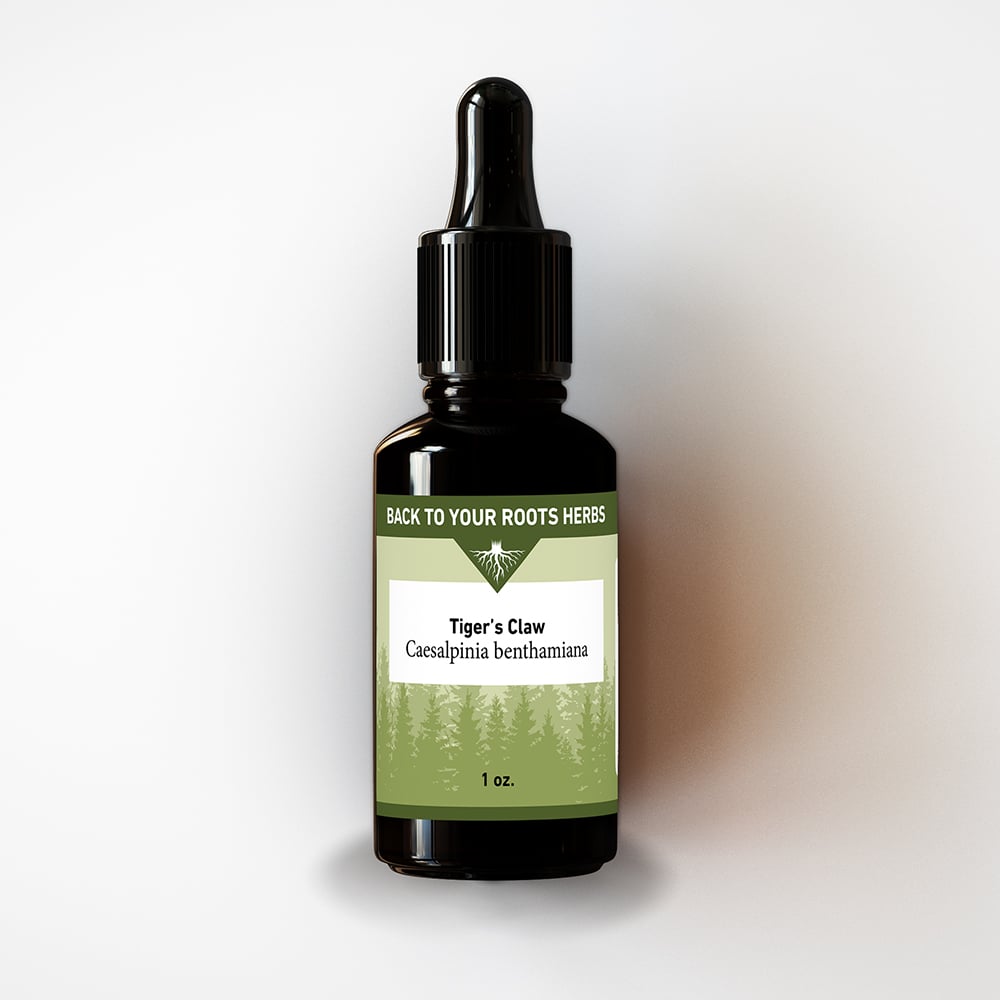
Caesalpinia Benthamiana Root Tincture: The Verdict
Grade A. Potency Score 9.1/10. This Caesalpinia benthamiana root tincture is pressed from whole dried root harvested in the Dubreka prefecture of coastal Guinea (9.783 N, 13.517 W), the same terroir documented by Loua and colleagues in their 2017 antimalarial field work on caesalpinia benthamiana. We macerate at a 1:3 ratio in 70 percent organic cane ethanol, mirroring the 70-degree ethanol percolation that Guinean practitioners have used for generations. Deep russet in the vial. Sharply astringent on the tongue. Nothing else in this bottle but root and menstruum.
– Back To Your Roots Herbs Research Group
Grade and Potency Score
We reject roughly one lot in four. Pale root fails. Dusty root fails. The root that passes is dense, fibrous, and stains the blade rust-orange when cut. That pigment is the tannin and gallic acid fraction, and it is the visual marker we grade on.
Sensory Analysis: Look, Smell, Taste
Benthamiana Root Tincture Bench Notes
This is our own bench report, written after handling the finished Caesalpinia benthamiana root tincture.
- Look: Deep russet-brown, slightly cloudy, with a faint sediment ring that settles after a week of stillness. Hold it to a window, and the edges glow amber.
- Smell: Wet bark and black tea. A thin line of ethanol on top. Underneath sits something closer to tamarind husk.
- Taste: Astringent first. It grips the sides of the tongue the way strong black tea does. Then a slow bitter finish with a mineral edge. It does not sweeten. It never does.
How Does Caesalpinia Benthamiana Root Tincture Work?
The Herb: Caesalpinia Benthamiana in the Fabaceae Family
- The Herb: Caesalpinia benthamiana, accepted synonym Mezoneuron benthamianum, family Fabaceae (listed as Caesalpiniaceae in older pharmacognosy literature). A climbing shrub of tropical West Africa, sourced here from Dubreka, Guinea.
- The Plant Part: Whole dried root only. Not root bark alone. Not leaf. The distinction matters because the pharmacognostic standardization work on this species treats leaf and root bark as separate drugs with separate profiles.
- The Menstruum: 70 percent organic cane ethanol and 30 percent distilled water. Ethanol pulls the cassane diterpenoids. Water pulls the tannins and phenolic acids. A single-solvent extract gets one or the other. This hydroethanolic preparation gets both.
The Mechanism: Nitric Oxide and Vasorelaxation
Root extracts of this species act on the endothelium. Published work reports vasorelaxing activity tied to increased expression of endothelial nitric oxide synthase, which raises nitric oxide availability in vessel walls. Nitric oxide relaxes smooth muscle. Relaxed smooth muscle widens the vessel. That is the circulatory pathway, stated plainly.
Phenolic Antioxidants: Gallic Acid and Resveratrol
The roots carry gallic acid, resveratrol, and a heavy tannin load. These phenolics are free radical scavengers, active against reactive oxygen species. Gallic acid derivatives were first isolated from Mezoneuron benthamianum and reported in Pharmaceutical Biology in 2000, which is why the antioxidant story on this plant predates most of the circulatory research.
Cassane Diterpenoids: Benthaminin 1 and Benthaminin 2
Root bark yields cassane-type furanoditerpenoids, including benthaminin 1, benthaminin 2, and deoxycaesaldekarin C. These are the compounds that distinguish Caesalpinia benthamiana from every other West African tonic root on the market. They are alcohol-soluble, which is precisely why a benthamiana root extract in ethanol carries a different profile than a water infusion or a dry capsule.
The Evidence: Peer-Reviewed Research on Benthamiana Root Extracts
- Vasoactivity and antioxidant work: Zamble and colleagues published Vasoactivity, antioxidant and aphrodisiac properties of Caesalpinia benthamiana roots in the Journal of Ethnopharmacology (2008). PMID 18164568. This remains the most cited primary source on the species.
- Reproductive toxicity screening: Baffoe, Koffuor, Baffour-Awuah and Sallah tested hydroethanolic root extracts of Caesalpinia benthamiana alongside Sphenocentrum jollyanum and Paullinia pinnata. Journal of Experimental Pharmacology, 2021, volume 13, pages 223 to 234. PMID 33707973.
- Antimalarial field research: Loua and colleagues, Evidence-Based Complementary and Alternative Medicine (2017), documented Guinean traditional use and ran a human parasitemia trial.
Reproductive Toxicity Findings You Should Know
We are going to tell you the uncomfortable part, because no competitor selling this plant will. In the 2021 Baffoe study, rats received 100, 300, or 1000 mg/kg of hydroethanolic Caesalpinia benthamiana root extract orally, every day, for 60 consecutive days. Serum follicle-stimulating hormone dropped significantly. Testicular testosterone dropped significantly across all treatment groups. Sperm count and motility both fell, and bent tails and midpieces were the dominant morphological abnormality.
Read the dosing carefully. Those are daily doses at 60 days without a break, at levels far above a normal human serving. The finding is not a reason to avoid this benthamiana root extract. It is a reason to cycle it. Our usage protocol below is built directly around that data.
Antimalarial and Antiprotozoal Research from Guinea
The Loua 2017 investigation reported a methanolic Caesalpinia benthamiana extract with an IC50 of 4 micrograms per milliliter against Plasmodium falciparum, 13 against Trypanosoma brucei, and 31 against Trypanosoma cruzi. Bioassay-guided subfractions reached an antiplasmodial IC50 of 2 micrograms per milliliter. Their traditional-preparation reference is the detail worth noting here: 70-degree ethanol, 48 hours, by percolation. That is a tincture. Guinean practice had the extraction method on record long before the supplement industry noticed the plant.
Benthamiana Root Extract Versus Whole Root Powder
We sell both. They are not the same product, and they do not behave the same way.
Root Decoction, Macerate, and Infusion Compared
A traditional root decoction simmers the plant in water. That preparation pulls tannins and water-soluble phenolics and leaves most of the diterpenoids behind. A water infusion pulls even less. Our macerate uses ethanol and water together, so both fractions come across into the same liquid. Capsules deliver the whole matrix undissolved and let your gut do the extraction work. The tincture arrives already extracted. Absorption starts under the tongue.
Extraction Ratio and Menstruum
One part dried Caesalpinia benthamiana root to three parts menstruum, by weight to volume. Menstruum is 70 percent organic cane ethanol, 30 percent distilled water. Percolation for 48 hours, then a 14-day maceration, then press and filter. We publish this ratio because almost nobody else does. If a benthamiana root tincture on the market will not tell you its ratio and its alcohol percentage, you cannot calculate what you are taking.
Caesalpinia Benthamiana Roots in West African Practice
Guinea: The Dubreka Terroir
Dubreka sits just north of Conakry on the Guinean coast, at 9.783 degrees north and 13.517 degrees west. Laterite soil, heavy monsoon, salt air off the Atlantic. Guinean traditional medicine uses Caesalpinia benthamiana as an antimalarial, and that is the documented use that carried the plant into the clinical literature.
Nigeria and Benin: Chewing Sticks and Oral Hygiene
In Nigeria, the stems serve as chewing sticks. Crude extracts of Caesalpinia benthamiana roots have been screened in the Benin Republic for oral hygiene applications, and separate work has examined the antimicrobial potential of ethanol extract and fractions of the root against organisms implicated in oral infections. Antimicrobial activity against skin and oral bacteria is one of the better-replicated findings on this plant.
Critical Usage, Dosage, and Contraindications
Suggested Use and Serving Size
Standard serving is 30 drops, roughly 1 ml, taken once or twice daily. Hold it under the tongue for 30 seconds, then swallow. Take it with food if the astringency is hard on an empty stomach. Shake before use.
Cycle it. Five days on, two days off. Eight weeks on, two weeks off. This is not a supplement to take continuously for a year, and the reproductive data above is exactly why.
Contraindications and Safety Warnings
Who Should Avoid This Preparation
- Men actively trying to conceive. The hormone and sperm findings in the 2021 study are unambiguous enough to sit this one out.
- Pregnancy and nursing. No safety data. Do not use.
- Anyone under 18.
- Blood pressure medication, nitrates, or PDE5 inhibitors. Vasorelaxant activity can stack. Talk to your prescriber first.
- Legume allergy. Fabaceae family. Proceed with caution.
- Alcohol avoidance. This is a 70 percent ethanol preparation, and it is not alcohol-free. If you need an alcohol-free liquid extract, a glycerite is the alternative, and we do not currently press one.
Storage and Shelf Life
Amber glass, capped tight, out of direct sun. Room temperature is fine. At 70 percent ethanol, this Caesalpinia benthamiana root tincture is self-preserving and holds for three years unopened. Sediment is normal and is not spoilage.
Third-Party Heavy Metal Tested
Every lot is tested for lead, arsenic, cadmium, and mercury before it is bottled. Certificates are available on request.
Clinical Specs
What the Label Must Tell You
Every number below appears on the bottle. A caesalpinia benthamiana root tincture that hides its ratio is asking you to guess at your own serving.
| Spec | Detail |
|---|---|
| Serving Size | 30 drops (approximately 1 ml) |
| Frequency | Once or twice daily. 5 days on, 2 days off. Cycle: 8 weeks on, 2 weeks off. |
| Active Marker | Gallic acid, resveratrol, tannins, cassane diterpenoids (benthaminin 1 and 2) |
| Processing | 1:3 hydroethanolic macerate. 70% organic cane ethanol, 30% distilled water. 48-hour percolation, 14-day maceration, pressed and filtered. |
| Safety | Heavy Metal Tested (Pass) |
| Ingredients | Caesalpinia benthamiana (whole dried root), organic cane ethanol, distilled water |
| Other Ingredients | None. No glycerin, no preservatives, no flavoring. |
| Purity | Non-GMO, Vegan, Gluten-Free |
| Free From | Wheat, Gluten, Soy, Dairy, Binders, Fillers, Glycerin |
| Origin | Dubreka Prefecture, Guinea, West Africa (9.783 N, 13.517 W) |
| Manufactured | Virginia Beach, VA, USA |
Why This Beats a Generic Benthamiana Tincture
Caesalpinia Benthamiana Root Extract Grades Compared
Three grades reach the US market. Cosmetic-grade benthamiana root extract is standardized for topical serums and is not made for ingestion. Bulk powder is cheap and unstandardized. A properly pressed Caesalpinia benthamiana root tincture sits at the top because the ratio is fixed, the solvent is stated, and the batch is traceable to one prefecture.
| Feature | BTYRH Caesalpinia Benthamiana Root Tincture | Generic Benthamiana Tincture |
|---|---|---|
| Origin | Dubreka Prefecture, Guinea (9.783 N, 13.517 W) | Unspecified “Central Africa” or blank |
| Preparation | 1:3 in 70% cane ethanol, 48 h percolation, published ratio | Ratio undisclosed, alcohol percentage undisclosed |
| Plant Part | Whole dried root, stated on label | “Root” unqualified, often root bark or aerial mix |
| Taste | Sharply astringent, black tea, mineral bitter finish | “Earthy” or no description given |
| Safety | Heavy metal tested. Reproductive toxicity data published on this page. | Unknown/Untested. Contraindications omitted. |
Caesalpinia Benthamiana Root Tincture: Common Questions
Answers to What Buyers Actually Ask
What is caesalpinia benthamiana root extract? It is a liquid concentrate drawn from the root of Caesalpinia benthamiana, a West African climbing shrub also catalogued as Mezoneuron benthamianum. Our version is a hydroethanolic tincture rather than a dry powder or a cosmetic root extract.
How is a Caesalpinia benthamiana root tincture different from the capsules? The capsules deliver 600 mg of whole root powder that your digestion has to break down. The tincture is already extracted, so the phenolics and diterpenoids are in solution before you swallow. Sublingual absorption starts immediately.
Why is the exact extraction ratio published? Because a benthamiana root tincture without a stated ratio and alcohol percentage cannot be dosed rationally. Ours is 1:3 in 70 percent ethanol.
Is Caesalpinia benthamiana safe to take every day indefinitely? No, and we say so plainly. Cycle it. The 60-day continuous-dosing study on hydroethanolic root extracts found significant reductions in FSH, testicular testosterone, sperm count, and motility.
Does the root decoction work as well? A water-only decoction or infusion pulls the tannin fraction but leaves most of the alcohol-soluble diterpenoids in the plant material.
DISCLAIMER: These statements have not been evaluated by the Food and Drug Administration. This product is not intended to diagnose, treat, cure, or prevent any disease. Consult your healthcare provider before use, particularly if you are pregnant, nursing, taking prescription medication, or planning to conceive.
Reviews
There are no reviews yet.