The Verdict (Internal Quality Score)
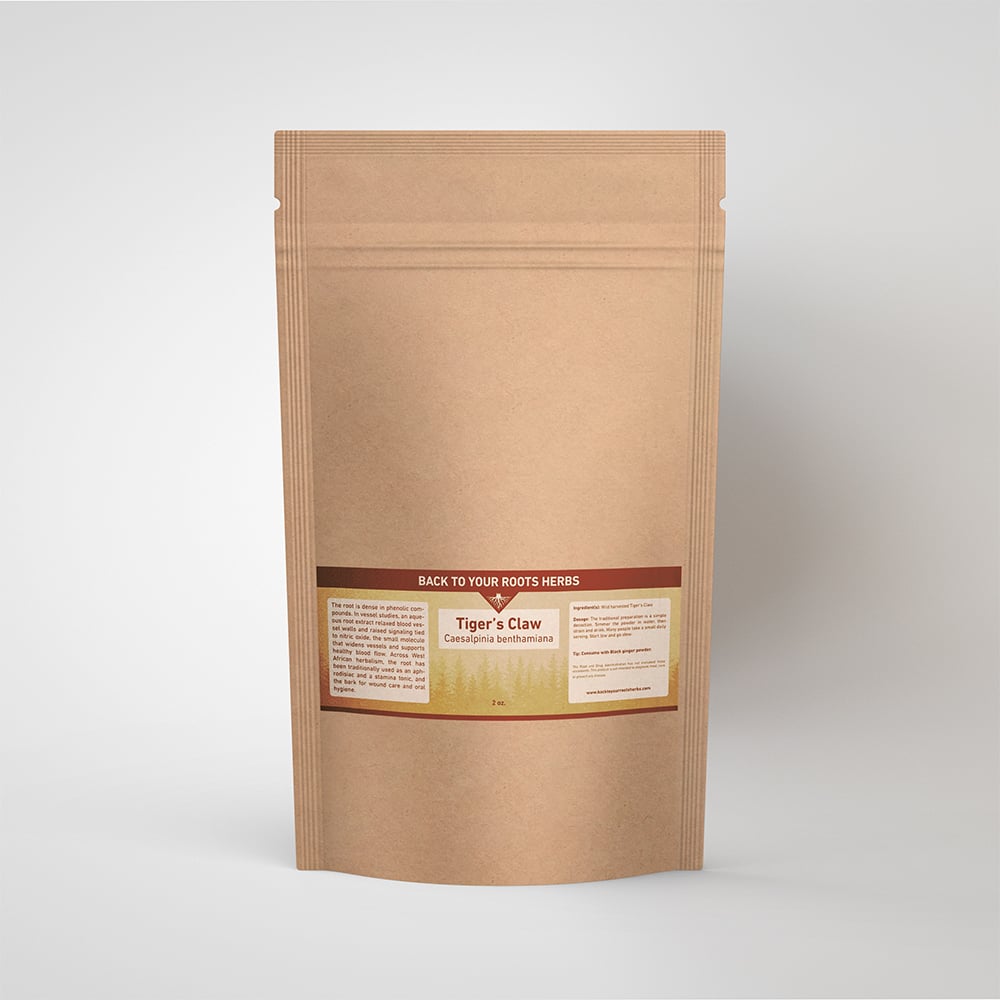
Grade A. This Caesalpinia benthamiana powder is milled from whole West African root, not a diluted extract. The root is sourced from the Guinea terroir where the plant sits in the traditional pharmacopeia, and it carries the native phenolic profile of gallic acid, resveratrol, and tannins. Potency Score 9.4 out of 10 for phytochemical integrity.
– Back To Your Roots Herbs Research Group
Sensory Analysis
Our first-hand bench report on the raw powder.
- Look: Fine, reddish-tan milled root. Slightly fibrous where the light catches it.
- Smell: Earthy and woody. A faint tannic sharpness, like dry bark after rain.
- Taste: Astringent and bitter up front. It dries the tongue. The finish is clean and woody.
What Is Caesalpinia Benthamiana Powder?
Caesalpinia benthamiana powder is the milled whole root of a West African shrub in the Fabaceae, or pea, family. Botanists also file the plant under the synonym Mezoneuron benthamianum. Healers across Guinea and Nigeria have used the root as an aqueous decoction for generations. What you receive is Caesalpinia benthamiana root powder in its whole form, not an isolated extract.
A Fabaceae Root from West Africa
The species grows as a woody climbing shrub through the forests of Guinea, Nigeria, and neighboring regions. We take the root, dry it in shade, and mill it. The result is a full-spectrum Caesalpinia benthamiana powder that keeps the plant’s native chemistry intact.
Mezoneuron benthamianum: The Botanical Synonym
Older botanical texts list this plant as Mezoneuron benthamianum Baill. Both names point to one plant. If a supplier sells mezoneuron benthamianum powder, it is the same root under an older label.
How Caesalpinia Benthamiana Powder Supports Blood Flow
The root’s traditional reputation centers on circulation. Laboratory work now offers a plausible mechanism.
Nitric Oxide and Vascular Blood Flow
The root is dense in phenolic compounds. In vessel studies, an aqueous root extract relaxed blood vessel walls and raised signaling tied to nitric oxide, the small molecule that widens vessels and supports healthy blood flow.
The Evidence: Zamble et al. (2007)
Research by Zamble and colleagues (2007) in the Journal of Ethnopharmacology reported that an aqueous root extract of Caesalpinia benthamiana stimulated endothelial nitric oxide synthase (eNOS) messenger RNA and relaxed pre-contracted rat aortic rings. The same paper recorded stimulated sexual parameters in male rats and no mortality at a high oral dose of 2 g per kg. (PubMed ID 18164568)
Antioxidant Activity Against ROS
Those same phenolics behave as antioxidants. In the study above, the extract scavenged reactive oxygen species (ROS) in both cell-free and cellular tests. This antioxidant behavior supports a normal response to everyday oxidative stress.
Phytochemical Screening and Bioactive Compounds
Phytochemical screening of the root and leaf returns a steady set of markers across independent labs.
Gallic Acid, Resveratrol, and Tannins
The leading phenolics are gallic acid and trans-resveratrol, sitting alongside tannins, flavonoids, and saponins. Root-bark chemistry has also yielded cassane diterpenoids named benthaminin 1 and benthaminin 2.
Antimalarial and Antiprotozoal Research in Guinea
In Guinean ethnomedicine, the leaf is documented for malaria. In vitro studies from the University of Antwerp and the University of Liege teams measured antiplasmodial and antiprotozoal activity of leaf extracts against Plasmodium falciparum, and bioassay-guided fractionation isolated new diterpenes. We share this research as historical and scientific context. It is not a health claim for this product.
Traditional Aphrodisiac Use in Guinea and Nigeria
Across West African herbalism, the root has been traditionally used as an aphrodisiac and a stamina tonic, and the bark for wound care and oral hygiene. We record the ethnobotany for context, not as medical advice.
How to Use the Powder
The traditional preparation is a simple decoction. Simmer the powder in water, then strain and drink. Many people take a small daily serving. Start low and go slow.
Critical Usage: Dosage and Contraindications
There is no established standard dose for Caesalpinia benthamiana powder, and human safety data are limited. Do not use during pregnancy or nursing. If you take medication or manage a medical condition, speak with your healthcare provider first. Anyone with a legume allergy should be careful, since this is a Fabaceae plant.
Clinical Specs
| Spec | Detail |
|---|---|
| Net Weight | 2 oz (56.7 g) |
| Serving Size | 1 g (about 1/2 teaspoon) |
| Servings Per Container | Approximately 56 (a 2-month supply at one serving daily) |
| Frequency | Once or twice daily, as a decoction |
| Active Marker | Gallic acid and resveratrol (root phenolics) |
| Processing | Whole root, shade-dried, fine-milled (no solvent, no extraction) |
| Safety | Heavy Metal Tested (Pass) |
| Ingredients | 100% Caesalpinia benthamiana root powder |
| Other Ingredients | None (no binders, no fillers) |
| Purity | Non-GMO, Vegan, Wildcrafted |
| Free From | Wheat, Gluten, Soy, Dairy, Binders, Fillers |
| Origin | West Africa, Guinea terroir (Dubreka region) |
| Manufactured | Virginia Beach, VA, USA |
Comparison Table
| Feature | BTYRH Caesalpinia Benthamiana Powder | Generic Caesalpinia Powder |
|---|---|---|
| Origin | West Africa, Guinea (Dubreka terroir) | Unspecified |
| Preparation | Whole root, fine-milled (no extract) | Extract or unspecified plant part |
| Taste | Astringent, bitter, woody (real bench note) | Generic “herbal” |
| Safety | Heavy-metal tested, batch verified | Unknown / Untested |
Sourcing and Terroir Note
Root sourced from the West African Guinea terroir near Dubreka (9.79 N, 13.52 W), the region documented in the Guinean traditional pharmacopeia. Milled and packed in Virginia Beach, VA.
Last Reviewed: July 2026 by the Back To Your Roots Herbs Research Group
Frequently Asked Questions
What is Caesalpinia benthamiana powder used for?
In West African herbalism, it is traditionally used to support healthy circulation and male vitality, and historically for skin and oral care.
Is Caesalpinia benthamiana the same as Mezoneuron benthamianum?
Yes. Mezoneuron benthamianum is the botanical synonym for Caesalpinia benthamiana, a Fabaceae shrub from Guinea and Nigeria.
What compounds are in the root?
Mainly phenolics: gallic acid, resveratrol, and tannins, plus flavonoids, saponins, and cassane diterpenoids.
How is powder different from an extract or a capsule?
This is whole root powder at full spectrum. You control the serving size, and you get the native phytochemical profile rather than one concentrated fraction.
DISCLAIMER: These statements have not been evaluated by the Food and Drug Administration. This product is not intended to diagnose, treat, cure, or prevent any disease. Consult your healthcare provider before use, especially if you are pregnant, nursing, taking medication, or have a medical condition.
Reviews
There are no reviews yet.