THE VERDICT (INTERNAL QUALITY SCORE):
Grade A Clinical-Grade Mukombero Root. Potency Score 9.4 / 10. Terroir: Kakamega Forest edge, Western Kenya (0.3414° N, 34.8715° E), with a secondary small-lot terroir in the Eastern Highlands of Zimbabwe. Air-dried under 45°C to preserve the volatile vanilla compound 2-hydroxy-4-methoxybenzaldehyde (HMB). Sifted across a 6 mm screen, hand-inspected for stone, sand, and foreign fibre. Aroma, chew, and brew integrity verified piece-by-piece.
– Back To Your Roots Herbs Research Group
The mukombero root is the rhizome and lower bark of Mondia whitei, a tropical perennial climber native to forest edges across Kenya, Uganda, Tanzania, Malawi, Zimbabwe, and parts of West Africa. In Luhya communities of western Kenya, the mukombero plant is chewed like African Chewing Gum for its vanilla-licorice aroma. In Shona country in Zimbabwe, the mukombero bark is brewed as a tonic tea. The common name mukombero root describes the woody lower climber section most cultures have used for centuries as a food-adjacent herb, a daily tea, and an ethnobotanical aphrodisiac in traditional use.
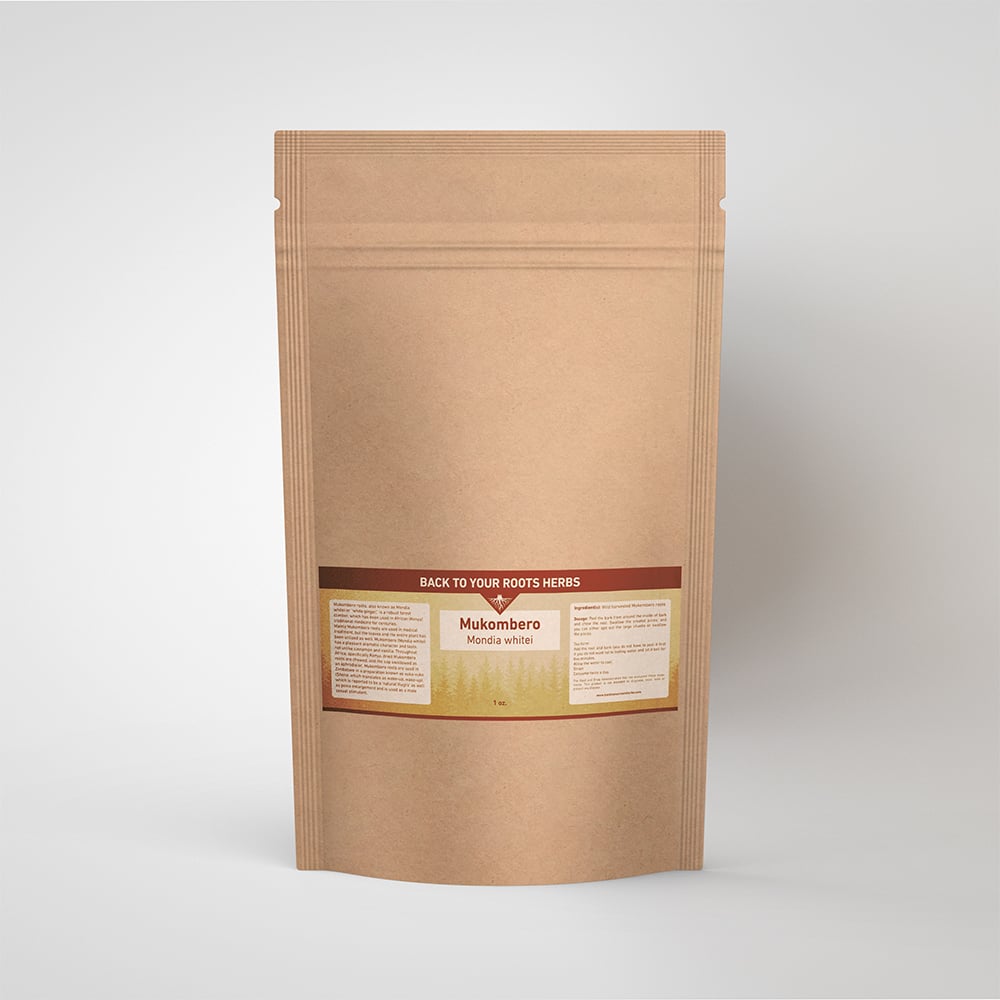
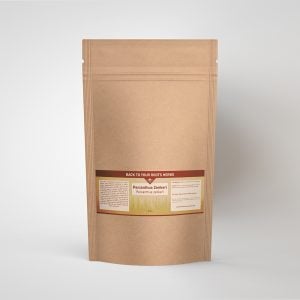
The cut & sifted mukombero root supplied by Back To Your Roots Herbs is a small-lot grade selected for chewability and brew strength. Every mukombero root batch is air-dried at low heat to preserve the volatile 2-hydroxy-4-methoxybenzaldehyde (HMB) compound that produces the vanilla note, then sifted across a 6 mm screen to remove dust. Customers can chew the mukombero plant pieces directly or brew the root as a warm tonic tea. The cut format is favoured over mukombero powder when the buyer wants to see every piece of the root for themselves.
SENSORY ANALYSIS:
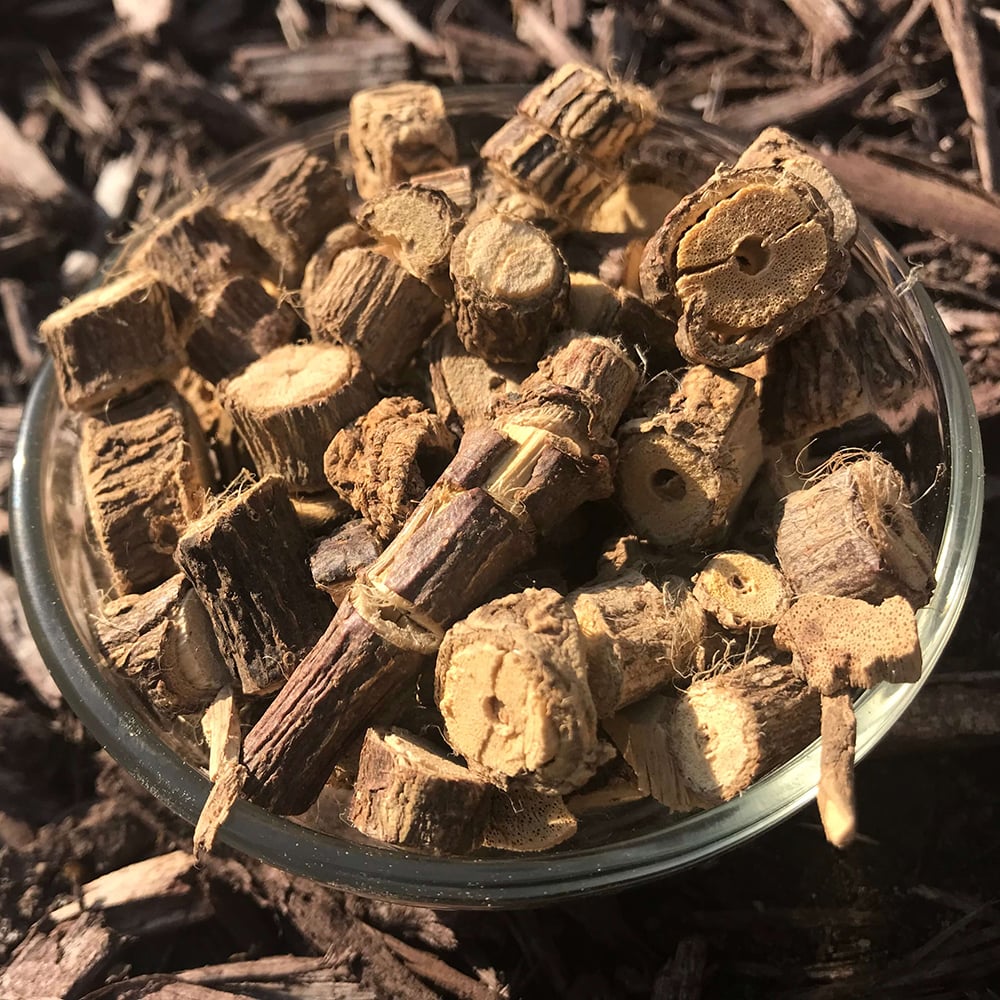
- Look: Pale tan outer bark, cream-coloured fibrous core. 4 mm to 20 mm cut & sifted pieces. Snaps cleanly when bent, does not flex like old bark.
- Smell: Unmistakable vanilla on first opening, a cool licorice-sarsaparilla middle note, and a faint forest-floor woodiness underneath. Sweeter than curcuma longa, less pungent than ginger root.
- Taste: Sugar-sweet vanilla in the first twenty seconds of chew, extending into a licorice-sarsaparilla note over the following minute. A single mukombero plant piece keeps delivering aroma for five to ten minutes.
Every mukombero root piece in the cut & sifted grade is between 4 mm and 20 mm, pale tan on the outside, cream on the split, with a dense fibrous core. The first impression when the bag opens is unmistakable vanilla. Cooks who work with curcuma longa or ginger root will notice the mukombero aroma is sweeter and less pungent than either. Behind the vanilla, there is a cool licorice-sarsaparilla note and a faint forest-floor woodiness. A well-dried mukombero root snaps when bent rather than bending like old bark. The chew is slow. The first twenty seconds release sugar-sweet vanilla; over the next minute, the fibre softens, and the licorice note extends. A single mukombero plant piece can keep delivering aroma for five to ten minutes, which is why it is nicknamed African Chewing Gum.
Brewed Tea Profile
Brewed at 95°C for eight to ten minutes, the mukombero root steeps into a pale amber tonic tea. The aroma travels above the cup as a warm vanilla herb note. Many drinkers combine the mukombero plant with rooibos, ginger root, or turmeric for layered tonic tea blends. The root does not become bitter on long steeps; it becomes rounder.
Blend Ideas With Other Herbs
A teaspoon of cut mukombero plant, a thumb of ginger root, and a pinch of turmeric powder make a warming daily tonic. Add a cinnamon bark or a single clove to round the tea. Some customers add the mukombero root to a cold-brew jar overnight to extract the vanilla note without heat.
HOW DOES MUKOMBERO ROOT WORK?
- The Herb: Mondia whitei (Apocynaceae), a woody perennial climber, sourced from the Kakamega Forest edge in Western Kenya with a secondary terroir in the Eastern Highlands of Zimbabwe. The mukombero plant is a tuber-producing climber, not a ginger-family rhizome.
- The Mechanism: Chewing or brewing the cut mukombero root releases 2-hydroxy-4-methoxybenzaldehyde (HMB), the vanilla-scented compound responsible for the aroma. In African ethnobotanical practice, the mukombero plant is used as a traditional aphrodisiac and tonic tea herb, alongside other tuber and climber herbs such as ginger root and turmeric.
- The Evidence: In vitro research by Lampiao, Krom, & du Plessis (2008) reported a time-dependent effect of Mondia whitei on human sperm motility parameters in a laboratory dish (PMID 18570264). This is a research citation, not a clinical outcome claim.
- The Comparison Herbs: Where ginger root and turmeric powder (curcuma longa) are used as warming culinary herbs, the mukombero plant is used as a vanilla-aromatic chewing herb and a daily tonic tea ritual.
- The Diet: 100% plant material, vegan, non-GMO by source, single-herb, no animal ingredient touches the mukombero root during drying, cutting, or sifting.
Mukombero Root vs. Ginger Root, Turmeric Powder, and Curcuma Longa
Buyers shopping for traditional African herbs often compare mukombero to ginger root (Zingiber officinale) and turmeric (Curcuma longa). Ginger and turmeric powder bring warm rhizome heat and a citrus-pepper edge. The mukombero root is different. It is a climber tuber, not a ginger-family rhizome, and the aroma profile is sweet vanilla-licorice, closer to a sarsaparilla tea than to curcuma longa. Where ginger root and turmeric powder are used as culinary herbs and daily wellness tea ingredients, the mukombero plant is used in African ethnobotany as a vitality herb and a mouth-freshening chew.
Perennial Climber, Tuber, and Seed Biology of the Mukombero Plant
Mondia whitei is a woody perennial climber in the Apocynaceae family. The mukombero plant sends twining stems up into the tree canopy, produces small star-shaped purple-red flowers, and develops a seed pod that splits open to release wind-dispersed seed. The harvested root system includes a thickened taproot and subordinate tubers. Each mukombero tuber can reach the length of a forearm in mature plants. The seed germinates slowly, which is one reason wild mukombero populations decline quickly where harvesting pressure is heavy. Every mukombero root lot from Back To Your Roots Herbs is sourced from smallholders who replant seed and coppice the climber rather than clear the tree line.
Sourcing Note
Every mukombero root lot from Back To Your Roots Herbs is sourced from smallholders who replant seed and coppice the climber rather than clear the tree line. This keeps the Kakamega Forest habitat intact and protects the Luhya community land that has tended this plant for generations.
A Note on the Seed
We do not sell mukombero seed. Our cut format is root and lower bark only. If a buyer is building a living collection of African perennial climber herbs, the seed must be sourced from nursery stock that was raised rather than wild-dug.
Cut Grade Note
The cut & sifted grade is distinct from the whole bark or the finely milled powder grade. Cut & sifted is the middle format: large enough to chew, small enough to measure by the teaspoon.
Vegan, Plant-Only, and Daily-Use Friendly
The cut mukombero root is 100% plant material. It is vegan, non-GMO by source, and suitable for buyers building a tea cabinet of vegan tonic herbs alongside ginger root, turmeric, and other perennial climber or tuber herbs. No animal ingredient touches the mukombero plant during drying, cutting, or sifting.
CRITICAL USAGE:
- Chew Method: Place one small mukombero root piece on the molars. Chew slowly for five to ten minutes. Spit or swallow the spent fibre, buyer’s choice.
- Hot Brew: 1 to 2 teaspoons of cut mukombero plant in 250 ml of water at 95°C. Steep for eight to ten minutes. Blend with ginger root, turmeric, rooibos, or cinnamon for a layered tonic tea.
- Cold Brew: 2 teaspoons of cut mukombero root in 500 ml of filtered cold water. Refrigerate for 8 to 12 hours. Strain.
- Contraindications: Not offered as a treatment for any disease. Not evaluated by the FDA. Buyers who are pregnant, nursing, taking prescription medication, or managing a medical condition should consult a qualified health professional before use.
- Storage: Cool, dark, dry. Amber glass or foil-lined pouch. 24-month shelf life when sealed.
Method 1. Chew the Mukombero Plant Piece
Place one mukombero root piece (about the size of a pinky fingernail) on the molars. Chew slowly. The vanilla note arrives in ten to twenty seconds. Continue for five to ten minutes. Spit out the spent fibre when the flavour flattens, or swallow the soft fibre, buyer’s choice.
Method 2. Brew as a Tonic Tea
Place 1 to 2 teaspoons of cut mukombero plant in a tea infuser. Pour 95°C water over the herb. Steep for eight to ten minutes. Strain and serve. Blend with ginger root, turmeric, rooibos, or cinnamon if the buyer wants a layered tonic tea.
Method 3. Cold Brew the Mukombero Root
Place 2 teaspoons of mukombero root in 500 ml of filtered cold water. Steep in the refrigerator for 8 to 12 hours. Strain. The vanilla compound extracts well at low temperature and retains a rounder aroma than hot brew.
CLINICAL SPECS:
Every mukombero root lot Back To Your Roots Herbs brings into the United States is drawn from small cooperatives in western Kenya and sustainably harvested plots in Zimbabwe. The primary terroir is the Kakamega Forest edge in western Kenya, coordinates 0.3414° N, 34.8715° E, an indigenous equatorial rainforest fragment that is the last major remnant of the central African Guineo-Congolian forest belt east of the Congo. A secondary terroir sits in the Eastern Highlands of Zimbabwe, where the mukombero climber grows in cooler forest shade.
| Spec | Detail |
|---|---|
| Serving Size | 1 to 2 teaspoons cut mukombero root, or 1 small chew piece |
| Frequency | 1 to 2 times daily |
| Active Marker | 2-hydroxy-4-methoxybenzaldehyde (HMB) |
| Botanical Name | Mondia whitei (Hook.f.) Skeels |
| Common Names | Mukombero, Mulondo, Mundondo, White’s Ginger, African Ginger, African Chewing Gum |
| Plant Family | Apocynaceae (subfamily Periplocoideae) |
| Growth Form | Perennial climber, woody twiner to 6 m in canopy tree cover |
| Part Supplied | Root and lower bark, cut & sifted, 4 mm to 20 mm pieces |
| Processing | Air-dried under 45°C, cut, 6 mm sifted, metal-detected, hand-inspected |
| Safety | Heavy Metal Tested (Pass) |
| Ingredients | 100% Mukombero Root and Lower Bark (Mondia whitei), Cut & Sifted |
| Other Ingredients | None (single-herb, no fillers, no binders) |
| Purity | Non-GMO, Vegan |
| Free From | Wheat, Gluten, Soy, Dairy, Binders, Fillers |
| Traditional Use | Chewed or brewed as a tonic tea, an ethnobotanical aphrodisiac, and a vanilla breath-freshener |
| Harvest Method | Smallholder coppice of climber tuber, replant seed, no clear-tree harvest |
| Published Reference | Lampiao F, Krom D, du Plessis SS. The in vitro effects of Mondia whitei on human sperm motility parameters. Phytother Res. 2008. PMID: 18570264 |
| Origin | Kakamega Forest edge, Western Kenya (0.3414° N, 34.8715° E); secondary: Eastern Highlands, Zimbabwe |
| Manufactured | Virginia Beach, VA, USA |
COMPARISON TABLE:
Buyers often ask whether to buy the cut mukombero plant, a fine mukombero powder, or to blend the mukombero root with ginger root and turmeric powder for a wider tonic tea. The table below summarises how the BTYRH cut format compares to a generic mukombero powder supply.
| Feature | BTYRH Mukombero Roots (Cut & Sifted) | Generic Mukombero Powder |
|---|---|---|
| Origin | Kakamega Forest edge, Kenya (0.3414° N, 34.8715° E) + Eastern Highlands, Zimbabwe | Unspecified |
| Preparation | Air-dried under 45°C, 6 mm sifted, chewable or brewable mukombero plant pieces | Finely milled, can be adulterated, aroma fades faster |
| Taste | Vanilla, sweet licorice, forest wood (a chew that lasts five to ten minutes) | Generic vanilla note, no chew experience |
| Safety | Heavy Metal Tested, hand-inspected, buyer sees every piece of the mukombero plant | Unknown/Untested |
Extended Comparison: Raw Root, Powder, and Three-Herb Blends
Beyond the two-way BTYRH-vs-generic comparison above, buyers often ask how the cut mukombero plant compares to a fine mukombero powder and to a three-herb ginger-and-turmeric tonic blend. The raw root wins on sensory verification because the buyer sees every piece of the mukombero plant before it goes into the cup. The powder wins on capsule-making convenience. The three-herb blend wins on warming culinary breadth when ginger root and turmeric powder are added to the mukombero base. Shelf life sits at 24 months for the cut mukombero root, 18 months for fine powder, and 18 to 24 months for blended tonic tea jars, depending on how the other herbs are stored.
Frequently Asked Questions About Mukombero
What is Mondia whitei used for?
In African ethnobotany, the mukombero plant is used as a vanilla-aromatic chewing herb, a tonic tea, and a traditional aphrodisiac. It has a long folk history as a men’s vitality herb and a mouth-freshening daily chew. The mukombero root is cited alongside other African tonic herbs like mulondo, bangalala, and xanthoparmelia in ethnobotanical literature.
How can a buyer use the mukombero root?
Chew one small piece directly, brew 1 to 2 teaspoons as a tonic tea, or cold-brew overnight. Some buyers blend mukombero with ginger root and turmeric powder for a three-herb warming tea. The cut mukombero plant pieces can also be ground at home in a spice mill to produce a small batch of fresh mukombero powder.
Is the mukombero plant addictive?
No known addictive compound has been identified in peer-reviewed literature. The mukombero root contains the vanilla-smelling compound 2-hydroxy-4-methoxybenzaldehyde (HMB), along with fibre and plant sugars. No caffeine, no nicotine, no habit-forming alkaloid has been reported in standard reference databases. Chewing the mukombero plant is a ritual, not a dependency.
Does Mondia whitei have research support?
One in-vitro laboratory study (Lampiao F, Krom D, du Plessis SS, Phytother Res. 2008, PMID 18570264) reported a time-dependent effect on human sperm motility parameters in a laboratory dish. The paper does not constitute a claim about human disease or clinical outcomes. Buyers should read the paper themselves and consult a qualified health professional before using any herb for a health goal.
What does the mukombero plant taste like?
Sweet vanilla first, then licorice-sarsaparilla, then a mild forest woodiness. It is less pungent than ginger root and sweeter than Curcuma longa. A single cut mukombero piece will keep delivering aroma for five to ten minutes of slow chewing.
Is this mukombero vegan?
Yes. The cut mukombero plant is single-herb, 100% plant material, vegan, and non-GMO by source. No animal ingredient touches the mukombero root during drying, cutting, or sifting. It fits cleanly into a vegan tea cabinet alongside ginger root, turmeric, rooibos, and other perennial climber or tuber herbs.
DISCLAIMER:
These statements have not been evaluated by the Food and Drug Administration. This product is not intended to diagnose, treat, cure, or prevent any disease. Statements on this page describe traditional African ethnobotanical use and published laboratory research. Buyers who are pregnant, nursing, taking prescription medication, or managing a medical condition should consult a qualified health professional before use.
Reviews
There are no reviews yet.