THE VERDICT (INTERNAL QUALITY SCORE)
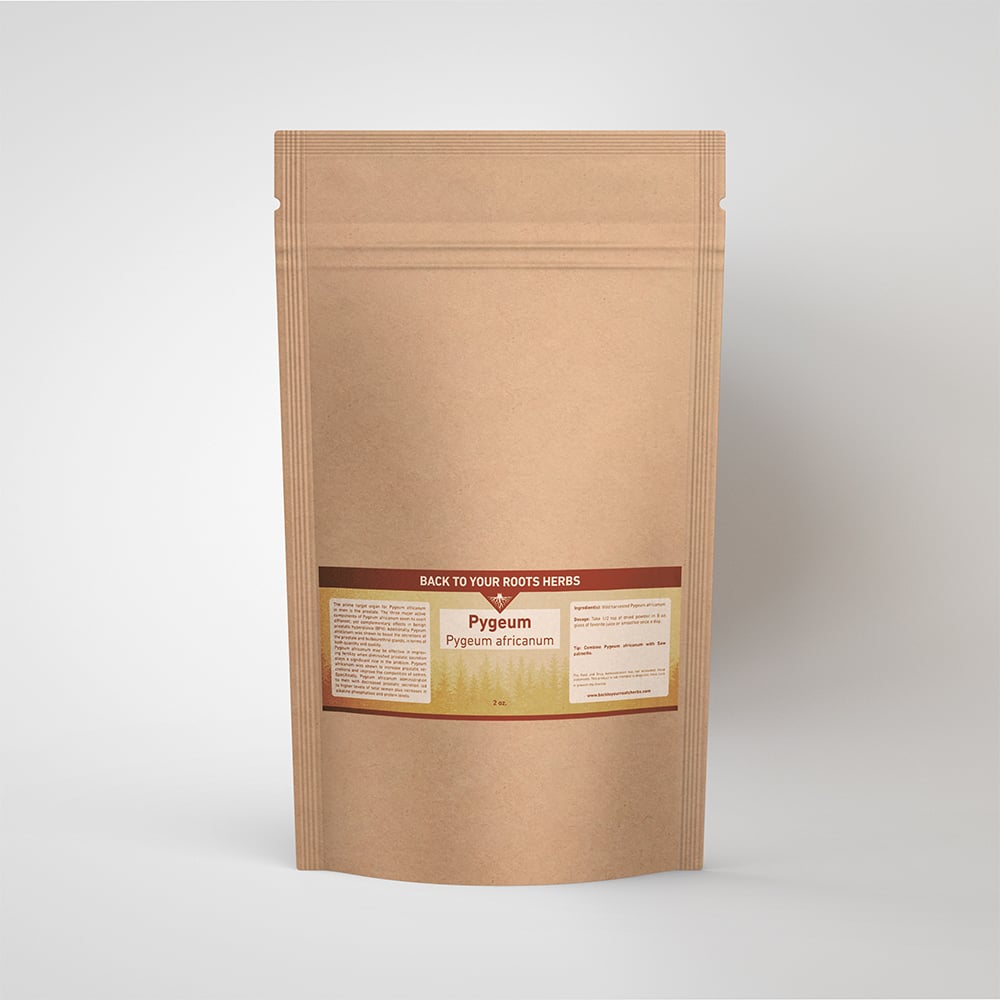
Grade A (Whole-Bark Integrity). This is wild-harvested Prunus africana inner bark from the volcanic Cameroon Line, cold-milled into a uniform pygeum bark powder. Unlike pygeum africanum extract preparations that strip phytochemicals with solvents, this whole pygeum powder retains the natural ratio of phytosterols, triterpenes, lignans, and ferulic acid esters. Independent chemical analysis (Komakech et al., 2018) confirms raw Prunus africana bark contains roughly four times the ferulic acid of standardized pygeum extracts.
– Back To Your Roots Herbs Research Group.
Pygeum Bark Quality Grade and Sourcing
The bark grade earns “A” status because the wood is wild, not plantation-grown, and arrives traceable to the South West region of Cameroon. The bark is ring-stripped on a sustainable rotation under CITES Appendix II quotas, which Cameroon has enforced for Prunus africana since 1995.
Why Whole Pygeum Powder Outperforms a Pygeum Extract
A pygeum extract concentrates one or two markers and discards the rest. Whole pygeum bark powder keeps the entourage matrix: free and esterified beta-sitosterol, n-docosanol, ferulic acid esters, ursolic and oleanolic triterpenes, and isolariciresinol-class lignans. A solvent-based pygeum bark extract concentrates beta-sitosterol but reduces ferulic acid roughly fourfold. The whole bark is the original signal.
SENSORY ANALYSIS (FIRST-HAND)
How Pygeum Africanum Powder Looks
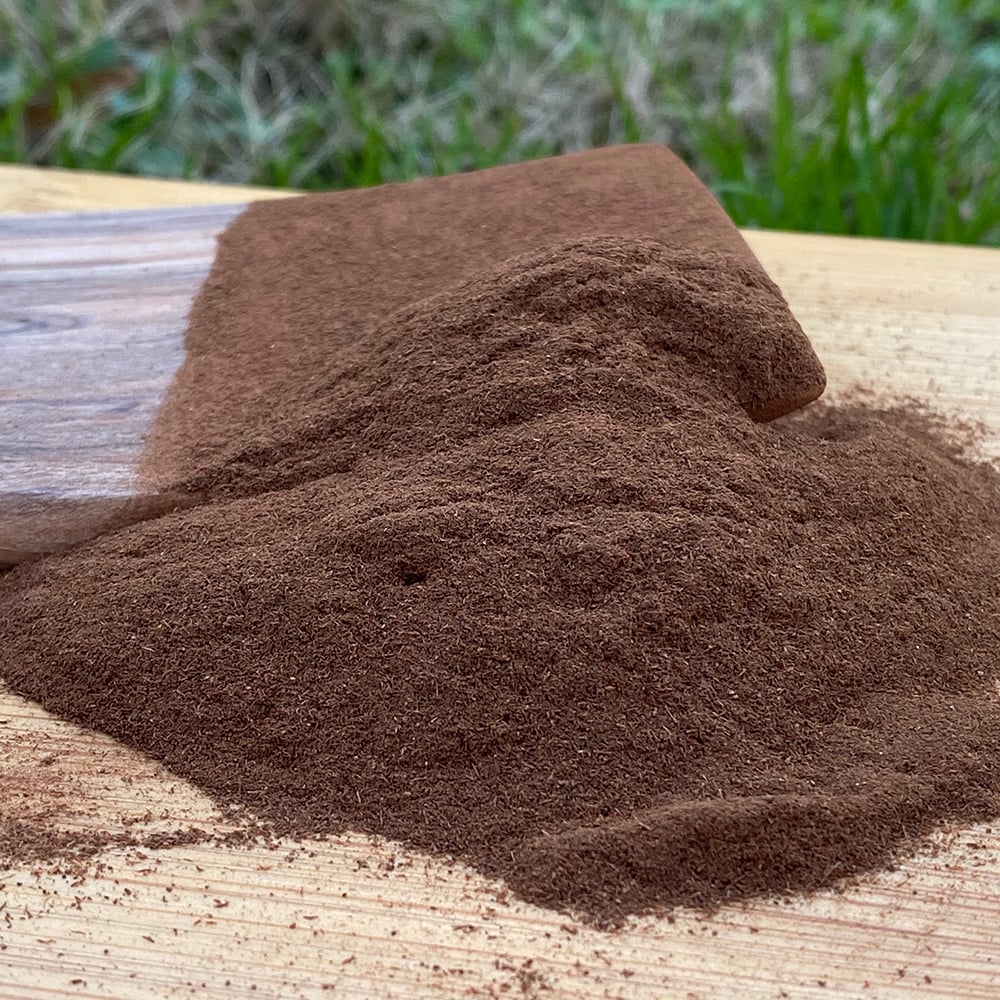
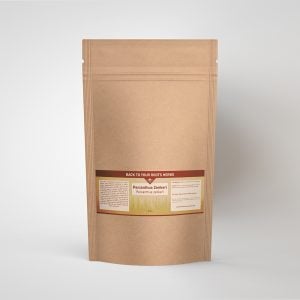
Speckled reddish-brown and tan. Not uniform. The fibrous lignin striations of the inner bark remain visible under a 10x loupe. Pygeum bark powder feels like fine sawdust, not flour. It will not fully dissolve in cold water and behaves much like a fine-ground cinnamon when stirred.
How Pygeum Bark Powder Smells
Mild and woody. A faint resinous note in the back of the nose. Some users describe an undertone closer to dried wild cherry pit than to bark, which tracks with the genus Prunus.
How Pygeum Powder Tastes
Mildly bitter. Astringent on the front of the tongue. Slight gritty mouthfeel from intact fiber. It is a true herbal pygeum powder taste, not a sweetened or processed extract flavor.
HOW DOES PYGEUM POWDER WORK?
The Pygeum Africanum Plant: Prunus Africana Bark Source
The Herb: Prunus africana, historically catalogued as Pygeum africanum, is an evergreen montane tree of the rose family. Common names include African Cherry and Red Stinkwood. The species was first described in Western botany by Gustav Mann in the Cameroon Range in 1861, which is also where this powder originates.
Pygeum Powder Mechanism: Phytosterols, Ferulic Acid, and Triterpenes
The Mechanism: Whole pygeum bark delivers a fat-soluble blend of phytosterols (beta-sitosterol, beta-sitosteryl glucoside, beta-sitostenone), pentacyclic triterpenoid acids (ursolic and oleanolic), n-docosanol-class fatty alcohols, and ferulic acid esters. These constituents act on lipid signaling pathways involved in normal prostate cell turnover and bladder smooth-muscle tone, which is the documented structure-function rationale for pygeum’s traditional use in supporting healthy male urinary comfort.
Pygeum Africanum and Prostate Inflammation
One reason men ask about pygeum is prostate inflammation. The bark’s beta-sitosterol and ferulic acid esters are the constituents most studied for supporting a healthy inflammatory response in prostate and bladder tissue, which is the structure-function basis for pygeum’s traditional role in urinary comfort. To be clear, pygeum bark powder is a food-grade botanical, not a treatment for prostatitis or any prostate disease. Men with diagnosed prostate inflammation should work with a clinician and treat pygeum as supportive, not curative.
The Evidence: Pygeum Africanum Research Background
The Evidence: A systematic review by Ishani, MacDonald, Nelson, Rutks, and Wilt (2000) in The American Journal of Medicine pooled 18 randomized trials of Pygeum africanum across 1,562 men and concluded the herb modestly but significantly improved urologic flow markers compared with placebo, with a tolerability profile comparable to placebo (PMID 11099686). A separate 2018 chemical comparison (PMID 30316061) documented the four-to-one ferulic acid advantage of raw bark over pygeum extracts.
What Did Wilt et al. (2000) Conclude About Pygeum?
The Wilt team reported a pooled standardized mean difference of -0.8 across symptom and flow measures, with adverse events comparable to placebo. The review noted study heterogeneity, which is why we sell the whole bark – research lots vary widely in extract ratio, but raw bark powder is the substrate from which all of those preparations were derived.
CRITICAL USAGE
Pygeum Africanum Powder Dosage
Start at 100 mg of pygeum bark powder once daily with food. Adjust gradually to 100 mg twice daily as tolerated. This is a whole-bark dose, not an extract dose. Do not directly translate pygeum capsules dosing from a standardized extract product onto whole-bark powder – the ratios are different.
How Long Until You Notice Results From Pygeum?
Pygeum is a slow botanical, not an overnight one. The randomized trials pooled in the Ishani and Wilt (2000) review generally ran from about 30 to 120 days, and most used an evaluation window near 6 to 8 weeks of daily use. Traditional use follows the same rhythm. Take pygeum bark powder consistently for several weeks before you judge it. Individual responses vary, and results are not guaranteed.
How To Take Pygeum Bark Powder
Pygeum’s active markers are fat-soluble, so pair this powder with dietary fat for absorption.
Pygeum Powder Tea Preparation
Simmer 100 mg (about 1/8 teaspoon) of pygeum bark powder in 8 oz of water for 8 minutes, strain, and add a splash of coconut milk or whole milk. This is the classic method to brew herbal pygeum powder as a tea.
Pygeum Powder Smoothie Method
Blend pygeum powder into a smoothie with avocado, flaxseed, or a tablespoon of nut butter. The fat carrier helps the phytosterols partition into the aqueous phase.
Pygeum Powder Side Effects and Contraindications
Pygeum is generally well tolerated in research literature. Mild gastrointestinal sensations have been reported and are typically transient. Discontinue and consult a qualified clinician if any unexpected reaction occurs.
Who Should Avoid Pygeum Africanum Powder
Not for use during pregnancy or while breastfeeding. Not intended for children. Speak with a clinician before combining pygeum bark powder with prescription medications, particularly anticoagulants or hormonal therapies.
CLINICAL SPECS
| Spec | Detail |
|---|---|
| Serving Size | 100 mg (Adjustable to 200 mg) |
| Frequency | 1 to 2 times daily, with food |
| Active Marker | Whole-Spectrum (beta-sitosterol, ferulic acid esters, triterpenes, lignans at native bark ratio) |
| Processing | Cold-Milled, no solvents, no heat extraction |
| Safety | Heavy Metal Tested (Pass) |
| Ingredients | 100% wild Prunus africana inner bark powder (formerly Pygeum africanum) |
| Other Ingredients | None |
| Purity | Non-GMO, Vegan, Gluten Free |
| Free From | Wheat, Gluten, Soy, Dairy, Binders, Fillers |
| Origin | Mount Cameroon, South West Region, Cameroon (4.20°N, 9.17°E — Volcanic Cameroon Line) |
| Manufactured | Virginia Beach, VA, USA |
COMPARISON TABLE
Pygeum bark sits within the men’s prostate-support herb category, alongside saw palmetto, isolated beta-sitosterol, and stinging nettle root. Men often reach for these botanicals while managing the urinary changes associated with benign prostatic hyperplasia (BPH), the age-related prostate enlargement common after 50. The table below shows how BTYRH whole bark powder differs from the generic pygeum extract capsules that dominate this category.
BTYRH Whole Pygeum Bark Powder vs Generic Pygeum Capsules
| Feature | BTYRH Pygeum Africanum Powder | Generic Pygeum Capsules / Pygeum Extract |
|---|---|---|
| Origin | Mount Cameroon, traceable | Unspecified, often blended |
| Preparation | Cold-milled whole bark, no solvents | Solvent extraction, often n-hexane or alcohol |
| Phytochemical Profile | Native ratio of phytosterols, ferulic acid esters, triterpenes, lignans | Concentrated beta-sitosterol; ferulic acid is roughly 4x lower than raw bark |
| Taste | Earthy, woody, mildly bitter (true bark) | Tasteless capsule shell; flavor masked |
| Sustainability | CITES Appendix II compliant, Cameroon ANAFOR quota tracked | Often unverified; many extract suppliers do not disclose source country |
| Safety Testing | Heavy metal panel (Pass) | Variable, often unstated |
SOURCING AND SUSTAINABILITY: Pygeum Africanum from Cameroon
Mount Cameroon Terroir Profile
Cameroon supplies roughly 72.6% of the global Prunus africana bark trade. The volcanic Cameroon Line – Mount Cameroon, the Bamenda Highlands, and the Adamaoua Plateau – sits at 600 to 3,000 meters and produces the densest concentration of African plum bark in the world. Mount Cameroon National Park has tree densities at least 1.5 times higher than the land outside the park, which is where our pygeum is collected under permit.
CITES Appendix II Status of Prunus Africana
Prunus africana has been listed on CITES Appendix II since February 1995. The European Union suspended imports between 2007 and 2011 due to overharvest concerns, which forced the trade to professionalize. Cameroon’s national management plan, run by ANAFOR, now sets regional quotas – for example, an annual ceiling of nearly 502 tons in the Adamaoua region.
BTYRH Sustainable Wild-Harvest Standards
Our bark is collected on a strip-and-rotate cycle that allows the cambium to regenerate. We do not buy bulk from undocumented brokers. Every lot of pygeum africanum bark powder ships with origin paperwork tied to a CITES export permit number.
Traditional Use of Pygeum Bark in Africa
Long before Western study, communities across the African highlands prepared decoctions of Prunus africana bark for men’s wellness and bladder comfort, and the practice passed down across generations. French researcher Jacques Debat patented a bark extract in 1966, which carried pygeum into European clinical use and built the commercial bark trade that the CITES rules now govern. The bark’s documented use therefore spans both deep African folk tradition and roughly six decades of modern supplement history.
PYGEUM AFRICANUM AND HAIR: PHYTOSTEROLS, DHT, AND 5-ALPHA-REDUCTASE
A growing number of men ask about pygeum bark for hair, not only for the prostate. The reason is mechanistic. The same phytosterol chemistry behind pygeum’s traditional role in urinary comfort – led by beta-sitosterol – is the chemistry that hair researchers study in the context of 5-alpha-reductase, the enzyme that converts testosterone into dihydrotestosterone (DHT). To be clear up front: pygeum africanum powder is a food-grade botanical, and the direct clinical evidence for pygeum in hair loss is limited and preliminary. This section explains what the research has actually examined so you can weigh it honestly.
How Pygeum’s Phytosterols Interact With 5-Alpha-Reductase
DHT is the androgen most associated with androgenetic hair thinning at the follicle and with age-related prostate changes. Both sterols share one enzyme: 5-alpha-reductase. In laboratory research, a Pygeum africanum bark extract (PY102), studied alongside a stinging nettle extract, was observed to inhibit 5-alpha-reductase and aromatase activity in a concentration-dependent way (PMID 23194959). Beta-sitosterol, the marker phytosterol concentrated in pygeum bark, has been examined in the same pathway. This is a plausible biological rationale, not proof of a hair outcome.
What the Research Says About Pygeum, Beta-Sitosterol, and Hair
The honest summary is short. No large clinical trial has tested pygeum bark for scalp hair. The most cited human signal comes from a small randomized, placebo-controlled trial of botanically derived 5-alpha-reductase inhibitors – a saw palmetto plus beta-sitosterol combination – in men with androgenetic alopecia, where a majority of the treated group was rated improved by blinded investigators (Prager et al., 2002, PMID 12006122). That trial tested beta-sitosterol, the phytosterol class pygeum supplies, but it was small, and it did not test pygeum directly. Treat pygeum’s hair connection as mechanistic and traditional, not as an established treatment.
Pygeum for Hair: What a Realistic Timeline Looks Like
Hair biology is slow. The follicle cycle runs in months, not days, so any phytosterol approach is judged over a long horizon, much like pygeum’s prostate research windows of roughly 6 to 8 weeks and longer. If you use pygeum bark powder as part of a routine, give it consistent daily use across several months before drawing conclusions. Individual responses vary, and results are not guaranteed.
Combining Pygeum With Saw Palmetto and Nettle for the Phytosterol Pathway
The research itself is informative about stacking. The two studies that touch the 5-alpha-reductase pathway both used combinations – pygeum with nettle in the laboratory work, and saw palmetto with beta-sitosterol in the human alopecia trial. Traditional men’s herbal practice mirrors this: pygeum bark powder is paired with saw palmetto and stinging nettle root, three botanicals that approach the same pathway from different chemistry. The pairing is additive rather than redundant. Speak with a clinician before stacking, especially alongside hormonal therapies or anticoagulants.
Is Pygeum Suitable for Women Concerned About Hair Thinning?
Pygeum is traditionally a men’s prostate and urinary-support botanical, and the hair research above was conducted in men. It is not intended for use during pregnancy or while breastfeeding. A woman experiencing hair thinning has a different set of likely causes – thyroid, iron, and hormonal among them – and should start with a healthcare provider rather than a men’s-wellness bark. We make no claim that pygeum addresses female hair loss.
PYGEUM FAQ: Common Questions About Pygeum Africanum Powder
How does pygeum compare to other men’s wellness herbs?
Pygeum bark is most often paired with saw palmetto extract and stinging nettle root in traditional men’s herbal stacks. Pygeum contributes to the phytosterol-and-ferulic-acid axis that the other two herbs do not duplicate. Some users also stack pygeum with ashwagandha or maca root for general vitality, though those are unrelated mechanism families.
Can I combine pygeum powder with saw palmetto?
Yes, pygeum powder and saw palmetto extract are commonly used together. They are different botanicals with different active markers, so the combination is additive rather than redundant. As always, run the stack by a clinician if you take prescription drugs.
What is the difference between pygeum powder and pygeum capsules?
Most pygeum capsules on the market are filled with a standardized pygeum extract concentrated to roughly 13% beta-sitosterol. Pygeum bark powder is the raw, whole-bark substrate at the native ratio. Capsules are convenient. Whole pygeum powder gives you the full chemistry, including the ferulic acid esters that solvent extracts deplete.
Can pygeum help with erectile dysfunction?
Pygeum africanum is traditionally used for prostate and urinary comfort, not as a remedy for erectile dysfunction. Some clinical trials in men with benign prostatic hyperplasia did track sexual-function and quality-of-life scores as secondary measures, but pygeum is not established as an ED treatment and we make no such claim. If erectile dysfunction is your main concern, talk with a healthcare provider, because it can be an early signal of a cardiovascular or hormonal condition that deserves real evaluation.
Can women take pygeum africanum powder?
Pygeum is traditionally a men’s prostate and urinary-support herb, so the vast majority of use is by men. It is not intended for use during pregnancy or while breastfeeding. A woman considering pygeum for any reason should check with her healthcare provider first.
Does pygeum africanum help with hair loss?
Pygeum is traditionally a prostate and urinary-support herb, and its possible link to hair is mechanistic, through the phytosterols beta-sitosterol and the enzyme 5-alpha-reductase that produces DHT. Laboratory work has observed pygeum extract inhibiting that enzyme (PMID 23194959), and a small human trial of beta-sitosterol with saw palmetto reported improvement in androgenetic alopecia (PMID 12006122). The evidence for pygeum bark specifically is limited, so treat it as supportive and traditional, not as a proven hair-loss treatment. Talk with a healthcare provider about a hair plan.
Can pygeum be used together with other DHT-pathway herbs?
Yes. Pygeum bark powder is traditionally combined with saw palmetto and stinging nettle root, and the small body of 5-alpha-reductase research has tested pygeum with nettle and beta-sitosterol with saw palmetto. The botanicals carry different active markers, so the pairing is additive. Run any stack by a clinician if you take prescription medication.
A note on pygeum africanum variations and uses across Africa
Beyond Cameroon, Prunus africana grows on highland slopes in Nigeria, Kenya, Madagascar, Ethiopia, and South Africa. Local names vary — African plum, African cherry, Red Stinkwood. The bark, the leaves, and occasionally the root are all used in traditional African ethnobotany. The powder you are looking at is bark, the most studied tissue.
Reviewed by the Back To Your Roots Herbs Editorial Team. Last reviewed: June 2026. For general guidance on dietary supplements, see the NIH Office of Dietary Supplements.
DISCLAIMER: These statements have not been evaluated by the Food and Drug Administration. This product is not intended to diagnose, treat, cure, or prevent any disease.
Reviews
There are no reviews yet.