The quest for healthy, vibrant hair is timeless, leading many to investigate natural remedies. One such botanical that has garnered attention is Boswellia serrata, commonly known as Indian frankincense. This ancient herb, with a rich history in Ayurvedic medicine, is increasingly being examined for its potential benefits beyond traditional uses, including its role in supporting hair and scalp wellness.
What is Boswellia Serrata?
Boswellia serrata is a moderate-sized, branching tree native to the dry, hilly regions of India, Northern Africa, and the Middle East. The part of the plant that is used medicinally is the resin, a gummy oleoresin extracted from incisions made in the tree’s bark. This resin, often referred to as Indian frankincense or Salai guggal, has been a cornerstone of Ayurvedic, traditional Chinese, and African folk medicine for centuries.
Traditionally, it has been employed for a wide array of conditions, primarily those with an inflammatory component, such as arthritis, asthma, and inflammatory bowel conditions. Its historical applications also extend to skin health and, anecdotally, to support hair vitality and address scalp issues.
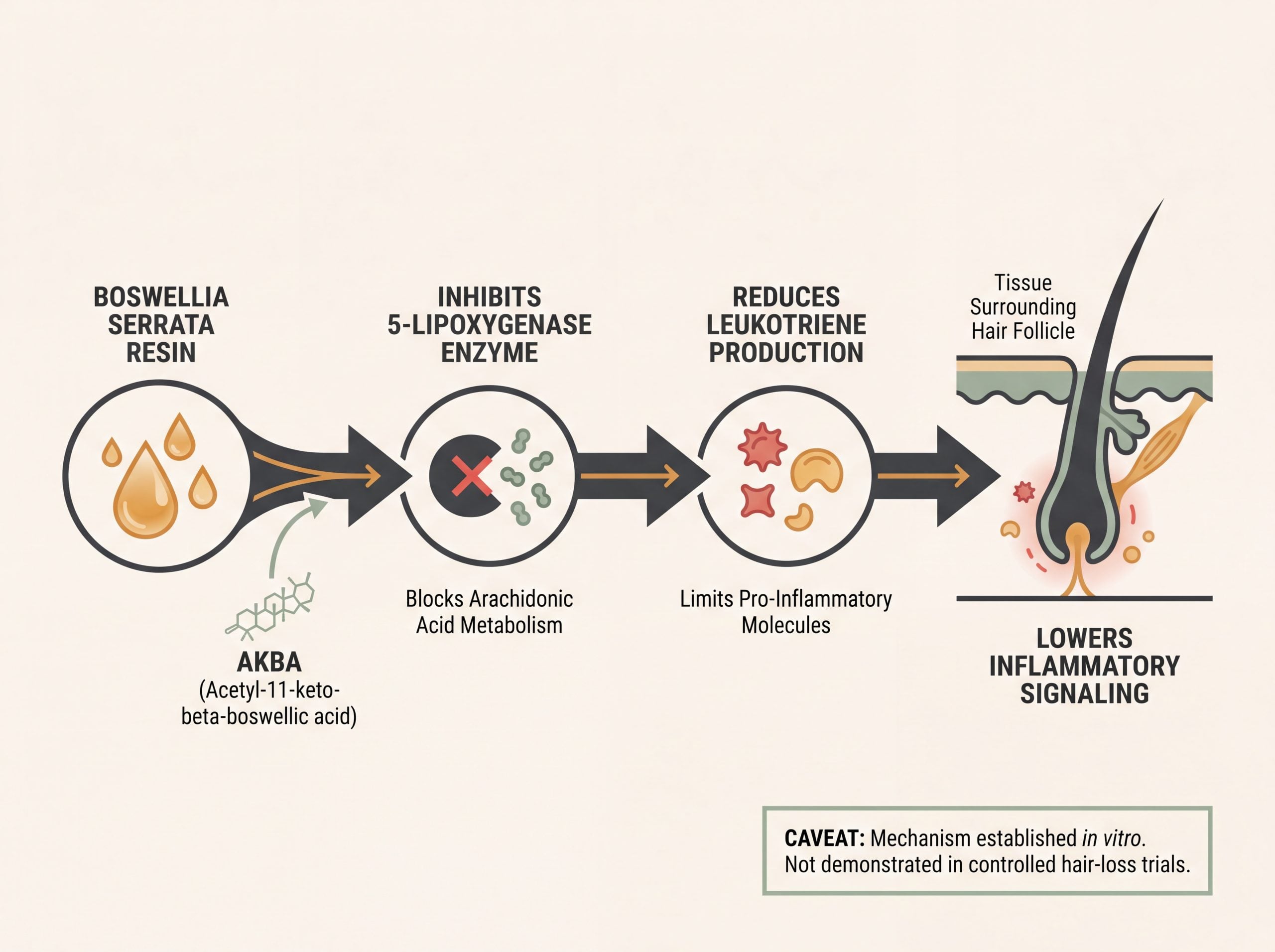
The primary active constituents responsible for the biological activity of Boswellia serrata extract are a group of triterpenoid compounds known as boswellic acids. Among these, acetyl-11-keto-β-boswellic acid (AKBA) is considered one of the most potent. These compounds are thought to exert their effects through various biochemical pathways, particularly those involved in inflammation.
Potential Mechanisms for Hair and Scalp Benefits
The connection between Boswellia serrata and hair health is primarily theorized through its well-documented biological activities, especially its impact on inflammation and oxidative stress, which are known contributors to various scalp and hair problems.
Anti-inflammatory Action on the Scalp
Inflammation of the scalp can arise from various conditions, including dermatitis, psoriasis, folliculitis, or even persistent low-grade irritation. This inflammation can disrupt the normal hair growth cycle, damage hair follicles, and contribute to hair shedding and thinning. For instance, inflammation around the hair follicle can push it prematurely into the catagen (transitional) or telogen (resting) phase, leading to increased hair fall.
Boswellic acids, the key active compounds in Boswellia serrata, have been shown to inhibit pro-inflammatory enzymes. A significant mechanism is the inhibition of 5-lipoxygenase (5-LOX). The 5-LOX enzyme is crucial for the biosynthesis of leukotrienes, which are potent inflammatory mediators. By reducing leukotriene production, Boswellia serrata can help temper the inflammatory response. A reduction in scalp inflammation may create a more favorable environment for hair follicles to function optimally, potentially supporting healthier hair growth and reducing loss associated with inflammatory scalp conditions.
Antioxidant Properties
Oxidative stress, resulting from an imbalance between free radicals and antioxidants in the body, can damage cellular structures, including those of the hair follicles. This damage can accelerate hair aging, contribute to hair thinning, and impair hair growth. Some research suggests that Boswellia serrata possesses antioxidant properties, which could help neutralize free radicals and protect hair follicles from oxidative damage. This protective effect on cells can be beneficial for maintaining overall scalp and hair vitality.
Scalp Microbiome and Soothing Effects
A balanced scalp microbiome is essential for healthy hair. While not its primary mode of action, some components of frankincense, from which Boswellia serrata resin is derived, are noted for antimicrobial properties. The anti-inflammatory effects of Boswellia serrata can also contribute to soothing an irritated scalp, reducing symptoms like itching, redness, and discomfort that often accompany inflammatory scalp conditions. This soothing action can improve overall scalp comfort and health.
Sebum Balance and Scalp Circulation
Two further mechanisms come up frequently in discussions of frankincense for hair, and both deserve a careful qualifier.
Sebum. An over-oiled scalp can trap debris around the follicular opening and support overgrowth of Malassezia yeast, which is the organism implicated in seborrheic scalp irritation. Traditional use of frankincense preparations for oily skin is well documented, and the logic carries over to the scalp. What does not yet exist is a controlled trial measuring sebum output before and after topical Boswellia application in people with hair loss. The mechanism is plausible. The measurement has not been taken.
Circulation. Scalp massage with any diluted carrier oil increases local blood flow, and the mechanical action of the massage accounts for much of that effect on its own. Claims that frankincense oil specifically drives follicular circulation are, in our reading, running ahead of the evidence. The massage is doing real work. Attributing that work to the oil is a step the research has not supported.
We flag both of these because you will see them stated as established fact on pages selling frankincense oil. They are hypotheses with traditional support, not trial findings.
Boswellia Serrata for Hair Thinning Concerns
The question of whether Boswellia serrata can directly treat or reverse hair loss, particularly common forms like androgenetic alopecia (pattern baldness), is complex. Traditional systems of medicine have utilized Indian frankincense for hair-related issues, but robust, direct scientific evidence specifically demonstrating hair regrowth from Boswellia serrata alone is still emerging.
Much of the interest in Boswellia hair loss applications stems from its potential to address underlying factors that contribute to certain types of hair shedding, such as telogen effluvium. Telogen effluvium is a form of diffuse hair thinning that occurs when a large number of hair follicles prematurely enter the telogen (resting) phase, leading to increased shedding. This can be triggered by various stressors, including physiological stress, illness, nutritional deficiencies, and inflammation.
One observational study investigated the effects of a dietary supplement containing Boswellia serrata extract, Curcuma longa (turmeric) extract, and Vitis vinifera (grape seed) extract in individuals experiencing telogen effluvium. The researchers reported subjective improvements in hair thinning and suggested the supplement might have an eutrophic effect on scalp hair, potentially through antioxidant, angiogenic (promoting new blood vessel formation), and hair-stimulating properties. However, it is important to highlight that these results were not statistically significant, the study was observational (not a controlled trial), and it involved a combination of ingredients, making it difficult to attribute the effects solely to Boswellia serrata. The authors themselves noted the need for larger, placebo-controlled studies to confirm these preliminary findings. The NCBI (National Center for Biotechnology Information), which hosts PubMed (a database of biomedical literature from NLM – National Library of Medicine at NIH – National Institutes of Health), is a resource where such studies, like the one by Di Maira, G et al., can be found.
Therefore, while Boswellia serrata may not be a standalone “cure” for all types of hair loss, its role in reducing scalp inflammation and oxidative stress suggests it could be a valuable component of a holistic approach to managing hair thinning, especially when inflammation is a contributing factor. Its benefits appear to be more related to creating a healthy scalp environment rather than directly stimulating new hair growth in the way some pharmaceutical treatments do.
One point deserves to be stated plainly: Boswellia does not block DHT. Androgenetic alopecia, the pattern thinning that accounts for most long-term hair loss in both men and women, is driven by follicle sensitivity to dihydrotestosterone. Nothing in the boswellic acid family has been shown to interrupt that pathway. In our editorial team’s review of the available literature, we found no controlled trial testing Boswellia serrata against androgenetic alopecia at all. Any page telling you otherwise is ahead of the evidence.
That makes the first question the most important one, and it is not a question about Boswellia. It is a question about you.
Which Kind of Hair Loss Are You Actually Dealing With?
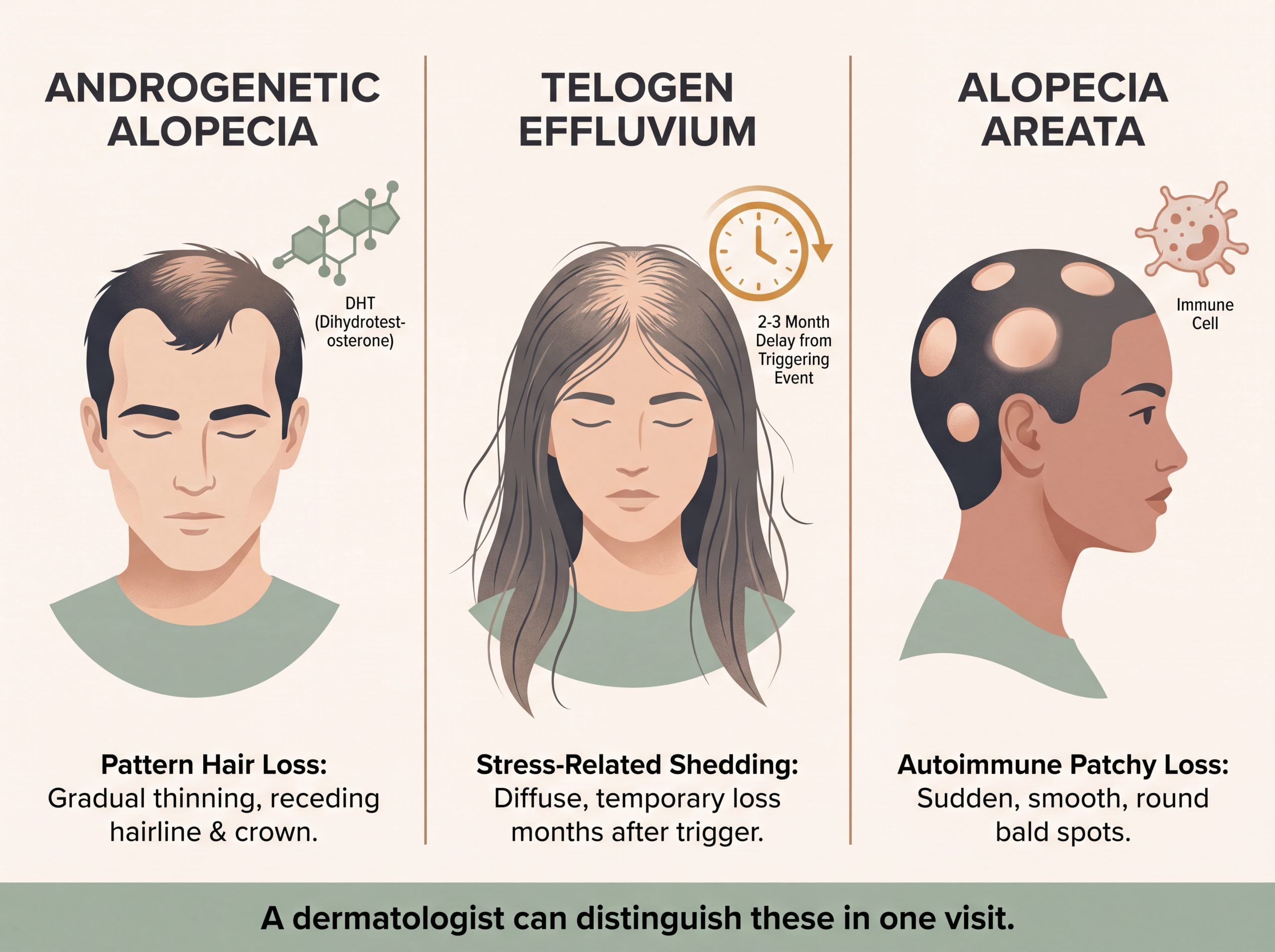
- Androgenetic alopecia (pattern thinning). Gradual, patterned, hereditary. Receding hairline or crown thinning in men, diffuse widening of the part in women. Driven by DHT sensitivity. Boswellia has no established role here.
- Telogen effluvium (diffuse shedding). Sudden, all over the scalp, usually two to three months after a trigger such as illness, surgery, childbirth, crash dieting, iron deficiency, or thyroid disruption. This is the one category where an anti-inflammatory has a plausible supporting role, and it is where the small amount of Boswellia hair research sits.
- Alopecia areata (patchy loss). Autoimmune. Smooth, round, coin-shaped bald patches. See the American Academy of Dermatology’s guidance on diagnosis and treatment. Boswellia has no evidence base here, and we cover that below.
- Scarring (cicatricial) alopecias. Follicles are permanently destroyed. Time matters. This needs a dermatologist now, not a supplement.
A dermatologist can tell these apart in a single visit, often with a pull test and a scalp examination. Buying a supplement before you know which one you have is a way to lose months.
Postpartum and Stress-Related Shedding
The most common telogen effluvium any of us will see is postpartum shedding. Estrogen falls after delivery, a large cohort of follicles that had been held in the growth phase releases at once, and the shed arrives around month three. It is dramatic, it is frightening, and in most cases it resolves on its own within six to twelve months without any intervention at all.
The same mechanism applies to shedding that follows a severe illness, a hospitalization, a period of sustained undereating, or an acute stressor. In each case, the hair loss is a lagging indicator. The event that caused it happened months ago and is often already over.
This is worth understanding before you evaluate any supplement, Boswellia included. Telogen effluvium tends to recover on its own, which means anything taken during the recovery window will appear to have worked. That is not evidence. It is timing. We would rather you know that than sell you a bottle on the strength of it.
Can Boswellia Cause Hair Shedding?
We are going to answer this the way we would want it answered for us, which means publishing the number that does not help us.
A phase-IV adverse-event analysis compiled by eHealthMe from FDA post-marketing reports found that among 407 people reporting side effects while taking Boswellia, roughly 5 percent listed hair loss among them. The reports skewed toward women, toward people over 60, and toward people taking several other supplements or medications at the same time.
Now here is what that number is worth, and it is less than it looks.
- It is self-reported. Nobody verified these reports. There was no examination, no scalp biopsy, no clinician confirming that hair loss actually occurred.
- There is no control group. Without one, there is no way to know whether 5 percent is higher than the background rate of hair loss in the same population. Women over 60 experience hair thinning at a substantial baseline rate regardless of what they take.
- It is confounded by co-medication. The cohort was taking vitamin D3, potassium, fish oil, and prescription drugs alongside Boswellia. Any of those, or the underlying condition that prompted them, could account for the signal.
- Correlation is not causation, and a phase-IV database cannot establish it. These datasets are designed to generate hypotheses for investigation, not to prove that a substance caused an outcome.
Our honest read: there is no controlled evidence that Boswellia serrata causes hair loss, and there is no controlled evidence that it reverses it. Both claims are running out ahead of the data. What we can say is that the adverse-event signal exists, that it is weak, and that you deserve to hear about it from a company that sells the herb rather than discover it somewhere else.
If you begin taking Boswellia and notice increased shedding, stop and talk to your healthcare provider. That is true of any supplement, and it is especially true if you are already taking other medications.
Boswellia and Alopecia Areata: What the Evidence Does Not Show
Alopecia areata is an autoimmune condition. The immune system attacks the hair follicle directly, producing the smooth, round, coin-shaped patches that distinguish it from every other form of hair loss. Because the condition is inflammatory, an anti-inflammatory botanical sounds like a natural fit. It is a reasonable hypothesis, and it has not been tested.
There are no randomized controlled trials of Boswellia serrata in alopecia areata. Not positive ones, not negative ones. The question has not been asked in a way that would produce an answer. Anti-inflammatory does not mean immunomodulatory, and the pathways that drive an autoimmune attack on the follicle are not the pathways that boswellic acids act on.
Established treatment for alopecia areata is corticosteroid therapy, topical immunotherapy, or in selected cases JAK inhibitors, all under dermatological supervision. If you have patchy hair loss, that is the conversation to have, and it is worth having early. We would rather lose the sale than have you delay it.
Overall Hair Wellness with Indian Frankincense
Beyond addressing hair loss, Boswellia serrata may offer broader benefits for overall hair wellness:
- Supporting Follicle Health (Indirectly): By mitigating inflammation and oxidative stress in the scalp environment, Boswellia serrata can indirectly support the health and resilience of hair follicles. Healthy follicles are the foundation of strong, healthy hair.
- Improving Hair Appearance: A calm, healthy scalp is less prone to issues like flaking or excessive oiliness, which can detract from hair’s appearance. By promoting scalp balance, Boswellia serrata may contribute to hair that looks and feels healthier, potentially with improved shine and texture.
- Supporting a Calmer Scalp Environment: Because boswellic acids act on inflammatory signaling, Boswellia serrata is traditionally used to support scalp comfort where irritation, itching, or redness are present. It is not a substitute for a dermatologist’s evaluation, and anyone with a diagnosed scalp condition should follow the treatment plan their clinician has prescribed. Herbal support sits alongside medical care, never in place of it.
Incorporating Boswellia into Hair Care
There are a few ways Boswellia serrata or its derivatives, like frankincense essential oil, can be incorporated into a hair care regimen, though it’s important to proceed with awareness and caution.
Topical Applications
- Frankincense Essential Oil: Derived from the resin of Boswellia trees (often Boswellia carterii, sacra, frereana, or serrata), frankincense essential oil is valued for its aroma and its long history of traditional use. For scalp application, it must be diluted in a carrier oil (e.g., coconut, jojoba, or almond oil) before use – typically a few drops of essential oil per tablespoon of carrier oil. This diluted oil can be massaged into the scalp. A patch test on a small area of skin is recommended 24 hours before widespread use to check for sensitivity.
- Commercial Hair Products: Some shampoos, conditioners, scalp serums, or hair masks may include Boswellia serrata extract or frankincense oil in their formulations for their soothing and anti-inflammatory benefits. Check ingredient lists for these components.
Frankincense Essential Oil and Boswellia Extract Are Not the Same Thing
This distinction gets collapsed constantly, and collapsing it produces bad advice.
Frankincense essential oil is steam-distilled from the resin. Distillation carries over the volatile aromatic fraction, the monoterpenes and sesquiterpenes that give the oil its scent. Boswellic acids are not volatile. They are large triterpenoid molecules, and they largely do not survive into the distillate. That means the essential oil you massage into your scalp contains very little of the AKBA that the entire anti-inflammatory mechanism described earlier in this article depends on.
The boswellic acids live in the resin and in the solvent or CO2 extracts made from it. If your interest in Boswellia is specifically its 5-LOX activity, the oral standardized extract is the form that delivers it, and a CO2-extracted resin preparation is the topical form worth seeking. A steam-distilled essential oil is a legitimate aromatic with a long traditional record, and it is not a boswellic acid delivery system.
A Practical Topical Protocol
- Patch test first. Apply the diluted mixture to the inner forearm and wait 24 hours. Do this before the scalp, every time, with any new preparation.
- Dilute properly. Two to three drops of frankincense essential oil per tablespoon of carrier oil such as jojoba, coconut, or almond. Undiluted essential oil on the scalp is how people get contact dermatitis, which is the opposite of the goal.
- Massage for two to three minutes. The mechanical action is doing real work here, independent of the oil.
- Leave 30 to 60 minutes, then wash out with a gentle shampoo.
- Two to three times weekly. More is not better and increases sensitization risk.
- Stop at the first sign of irritation. Redness, burning, or increased itching means discontinue, not push through.
Oral Supplementation
Boswellia serrata extract is widely available as an oral dietary supplement, usually in capsule or tablet form, standardized to a certain percentage of boswellic acids. Oral intake aims to provide systemic anti-inflammatory effects, which could theoretically extend to the scalp. These supplements are more commonly used for conditions like joint pain associated with arthritis. If considering oral supplements for hair health, it is a good idea to discuss this with a healthcare professional.
If you are sourcing the herb itself, our Boswellia resin powder is the whole-resin form, and our Boswellia capsules deliver a measured dose without the taste of the resin, which is genuinely bitter and which most people do not enjoy twice.
Stacking Boswellia for Scalp Support
If your working theory is that inflammation is contributing to your shedding, Boswellia is one lever, and it is not the only one. In our editorial team’s reading of the trial literature, the combinations worth understanding are these.
- Boswellia with an antiandrogenic botanical. If pattern thinning is in the picture alongside scalp irritation, the antiandrogenic side is the side with evidence. Saw palmetto is the botanical the 2025 systematic review actually supported, and it addresses a mechanism Boswellia does not touch.
- Boswellia within the studied combination. The only hair-loss study involving Boswellia used it alongside Curcuma longa and Vitis vinifera grape seed extract. That combination has one small observational study behind it, not a controlled trial, and the results were not statistically significant. It is the honest ceiling of what is known.
- Correcting deficiencies first. Iron, ferritin, vitamin D, and thyroid function are the boring answers that resolve more shedding than any botanical on this page. Get the bloodwork before the supplements. We say this knowing exactly what it costs us.
A caution on stacking: Boswellia may interact with anticoagulant and anti-inflammatory medication. Adding botanicals to an existing medication regimen is a conversation to have with your healthcare provider, not a decision to make from an article.
Important Safety Information for Boswellia
While Boswellia serrata is generally considered safe for many people when used appropriately, it is important to be aware of potential side effects, precautions, and drug interactions.
Potential Side Effects
Oral consumption of Boswellia serrata supplements may cause:
- Digestive Upset: This is the most common category of side effects and can include stomach pain, nausea, acid reflux, heartburn, and diarrhea.
- Headache: Some individuals may experience headaches.
- Allergic Reactions: Though less common, allergic reactions can occur.
Topical application of frankincense oil or products containing Boswellia serrata can sometimes lead to:
- Skin Irritation: Redness, itching, or a rash may occur, especially with undiluted essential oil or in sensitive individuals. Always perform a patch test.
Precautions and Contraindications
- Pregnancy and Breastfeeding: There is insufficient reliable information about the safety of using Boswellia serrata in medicinal amounts during pregnancy and breastfeeding. Some sources suggest it may stimulate blood flow in the uterus and pelvis, potentially accelerating menstrual flow or, theoretically, increasing the risk of miscarriage. It is best to avoid use beyond amounts typically found in food.
- Allergies: Individuals with a known allergy or hypersensitivity to Boswellia serrata, frankincense, or any of its components should avoid its use.
Drug Interactions
Boswellia serrata may interact with certain medications. This is a critical consideration, and consultation with a healthcare provider is essential if you are taking any prescription drugs.
| Drug Category | Potential Interaction with Boswellia Serrata |
|---|---|
| Anti-inflammatory Drugs (NSAIDs) | Boswellia serrata has anti-inflammatory effects. Combining it with NSAIDs (e.g., ibuprofen, naproxen, aspirin) could potentially alter effects or increase side effects. Some evidence suggests it might decrease the effects of certain anti-inflammatory medications. |
| Anticoagulant/Antiplatelet Drugs | Boswellia serrata might affect blood clotting and could potentially increase the risk of bleeding if taken with drugs that slow blood clotting (e.g., warfarin, clopidogrel, aspirin). |
| Immunosuppressants | Because Boswellia serrata can modulate immune system activity, it might interfere with the action of immunosuppressive medications. |
| Liver-Metabolized Drugs (Cytochrome P450 Substrates) | Boswellia serrata may affect how the liver breaks down certain medications, particularly those metabolized by enzymes like CYP1A2, CYP2C19, CYP2C9, and CYP3A4. This could alter the efficacy or toxicity of these drugs. |
| P-Glycoprotein (P-Gp) Substrates | In vitro studies suggest boswellic acids may inhibit P-Gp activity, a protein that transports many drugs. This could potentially affect the absorption and levels of drugs that are P-Gp substrates. Clinical significance is not yet fully established. |
| OATP1B3 and MRP2 Transporters | Boswellic acids (KBA and AKBA) have been shown in vitro to modulate the activity of these drug transporters. The clinical relevance of this finding needs further investigation. |
This table is not exhaustive. Always discuss all supplements and medications with your healthcare provider.
Understanding Boswellia Dosages
There is no universally established standard dosage for Boswellia serrata extract, especially for hair and scalp concerns. Dosages used in clinical studies for other conditions, such as osteoarthritis or inflammatory bowel disease, typically range from 300 mg to 1000 mg of the extract (often standardized to contain 30-65% boswellic acids) daily, sometimes divided into multiple doses. For example, some studies on arthritis have used 333 mg of Boswellia serrata extract taken three times a day.
If considering oral supplementation, it is generally advisable to start with a lower dose and observe for any effects or side effects. Consulting with a healthcare professional or a qualified herbalist is recommended to determine an appropriate approach for your individual needs and health status. For topical use of frankincense essential oil, proper dilution is key to safety.
Is There a Dose For Hair Specifically? No.
We want to be exact about this, because vagueness here is how people end up overdosing on a botanical.
No hair-specific dose of Boswellia serrata has been established in any controlled trial. The dose ranges you will see quoted, generally in the region of 300 to 500 mg of standardized extract taken two or three times daily and studied at up to roughly 1,000 mg per day for periods up to six months, come from the osteoarthritis and inflammatory-condition literature. They tell you what has been used safely for joints. They do not tell you what does anything for hair, because that study has not been run.
The one hair study that exists (Nisticò et al., 2019, Dermatologic Therapy, PMID: 30693615) used a combination supplement, so even its dose cannot be attributed to Boswellia alone.
Why the AKBA Percentage Matters More Than the Milligram Count
In our sourcing experience, this is the number most buyers never check and the one that most determines whether two products are comparable at all.
Boswellic acids are the active fraction, and acetyl-11-keto-β-boswellic acid (AKBA) is the most potent of them for 5-LOX inhibition. Raw Boswellia resin typically carries AKBA in the low single digits as a percentage of total content. Standardized extracts are concentrated to a stated percentage, most commonly 65 percent total boswellic acids with a declared AKBA fraction. A 500 mg capsule of unstandardized resin powder and a 500 mg capsule standardized to a high AKBA fraction are not the same product and will not behave the same way, regardless of what the front label says.
When comparing Boswellia products, the question to ask is not how many milligrams. It is what percentage of what, and does the label say so?
Boswellia Compared With Minoxidil, Finasteride, and the Herbs That Cleared Trials
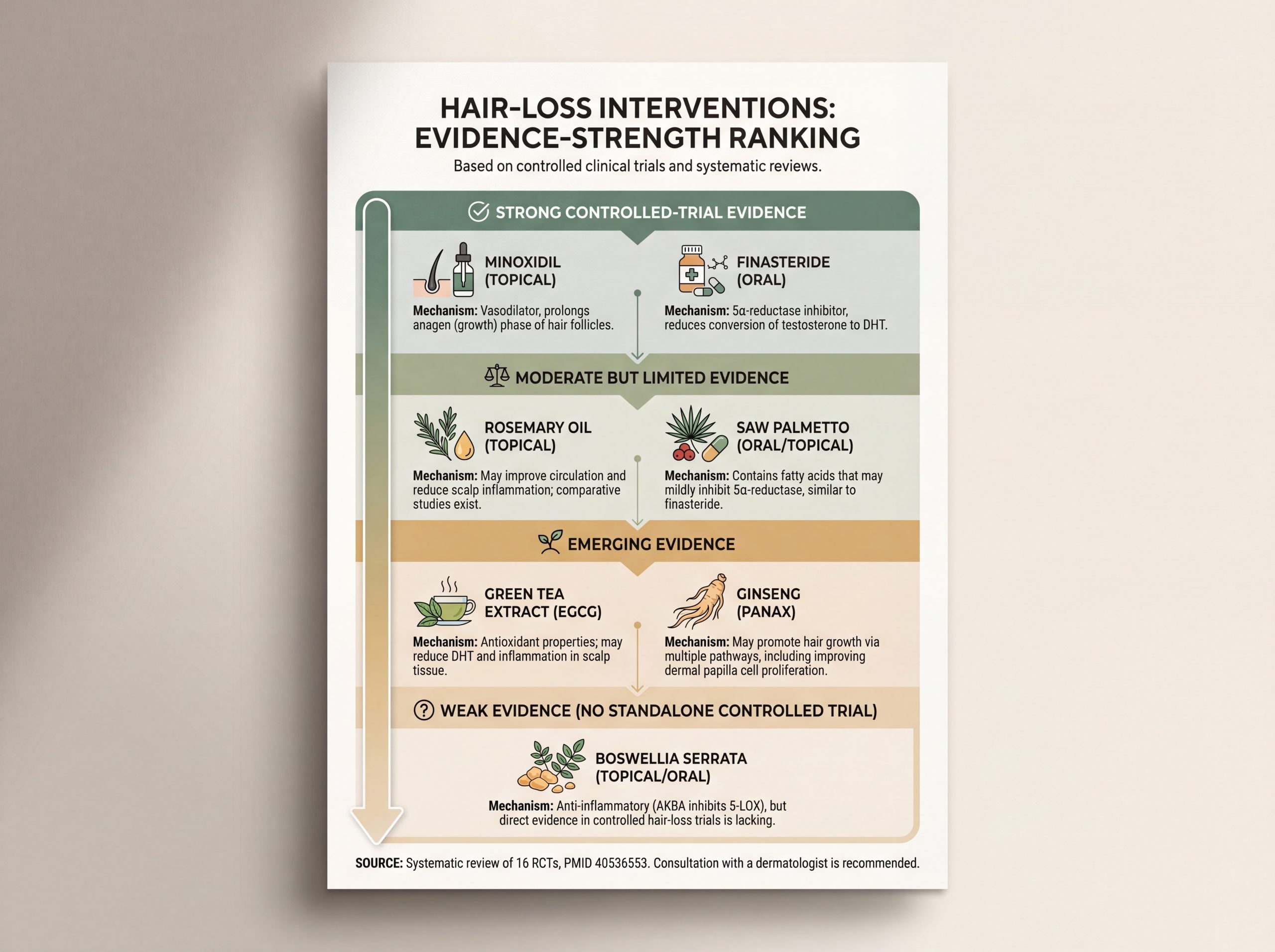
A 2025 systematic review in Naunyn-Schmiedeberg’s Archives of Pharmacology examined sixteen randomized controlled trials of herbal remedies for hair loss (Allam et al., 2025, PMID: 40536553). The botanicals that showed measurable results were rosemary, green tea, ginseng, Aloe vera, olive, and saw palmetto. Boswellia serrata does not appear among them, because no controlled trial has tested it as a standalone treatment for hair loss.
We think you should see that in a table rather than have it buried in a paragraph.
| Intervention | Evidence strength | Best supported for | Primary mechanism |
|---|---|---|---|
| Topical minoxidil | Strong. FDA-cleared, decades of trial data. | Androgenetic alopecia, telogen effluvium | Prolongs the anagen growth phase, increases follicular blood flow |
| Finasteride (oral, prescription) | Strong, in appropriate patients only. | Male pattern hair loss | Inhibits 5-alpha-reductase, lowering DHT |
| Rosemary (Salvia rosmarinus) | Moderate. Included in the 2025 RCT review. | Androgenetic alopecia | Circulatory and anti-inflammatory action on the scalp |
| Saw palmetto (Serenoa repens) | Moderate but limited. Five RCTs and two cohort studies reviewed (Evron et al., 2020, PMID: 33313047). | Androgenetic alopecia, telogen effluvium | Antiandrogenic, partial 5-alpha-reductase inhibition |
| Green tea, ginseng, Aloe vera, olive | Emerging. Present in the 2025 RCT review. | Varies by botanical | Antioxidant, hormonal, and circulatory pathways |
| Boswellia serrata | Weak. No standalone controlled trial in hair loss. One small observational study in combination. | Scalp inflammation as a contributing factor, not hair loss itself | 5-LOX inhibition via boswellic acids, antioxidant activity |
Sources: Allam et al. (2025), Naunyn-Schmiedeberg’s Archives of Pharmacology, PMID 40536553. Evron et al. (2020), Skin Appendage Disorders, PMID 33313047.
Read the bottom row honestly. Boswellia is the weakest entry on a table published by a company that sells Boswellia. We would rather you place it correctly than place it high. If your goal is regrowth from pattern thinning, minoxidil has the evidence, and Boswellia does not. If inflammation, itching, and scalp discomfort are part of your picture, that is where a boswellic acid extract has a defensible supporting role, and where our saw palmetto capsules and nettle root capsules are the more evidence-aligned choices for the androgenic side of the equation.
How Long Would It Take to Notice Anything?
Hair does not respond quickly to anything. This is a biological constraint, not a product limitation, and understanding it will protect you from a great deal of wasted money.
The hair cycle runs on a fixed clock. A follicle pushed into the resting phase today will not shed for two to three months, and a follicle that re-enters the growth phase produces visible hair at roughly one centimetre per month after that. Any intervention aimed at the scalp environment therefore has a minimum feedback delay of three to six months before it could produce a visible change. Anyone promising results in weeks is describing something other than hair growth.
For Boswellia specifically, there is no established hair timeline, because there is no controlled trial to derive one from. What we can offer is the inference from the adjacent literature: in the osteoarthritis meta-analysis (Yu et al., 2020, BMC Complementary Medicine and Therapies, PMID: 32680575), a minimum of four weeks of consistent use was needed before anti-inflammatory effects registered on any outcome measure. If a scalp effect exists at all, four weeks is the floor for the inflammatory mechanism, and the hair cycle then adds its own three to six months on top of that.
A reasonable trial period would be three to six months of consistent use, with photographs taken under identical lighting at the start, and with the understanding that telogen effluvium frequently resolves on its own inside that same window. Which means even a genuine improvement will be difficult to attribute. That is an uncomfortable thing to write on a page that sells the herb. It is also true.
Research Landscape and What’s Next
The majority of scientific research on Boswellia serrata has concentrated on its efficacy for inflammatory conditions like osteoarthritis, rheumatoid arthritis, asthma, and inflammatory bowel disease (e.g., Crohn’s disease and ulcerative colitis). These studies generally support its anti-inflammatory and immunomodulatory effects. Reviews of Boswellia serrata often highlight its potential as an anti-inflammatory agent, with some noting its traditional use for skin and hair health. For instance, a review published in the Indian Journal of Pharmaceutical Sciences by S. Basnet et al. mentions Boswellia serrata as being effective for hair and scalp health and anti-hair loss within a broader discussion of its cosmetic uses.
However, high-quality, large-scale, placebo-controlled clinical trials specifically investigating the direct effects of Boswellia serrata (as a standalone agent) on hair growth, different types of alopecia (like androgenetic alopecia or alopecia areata), or even telogen effluvium are limited. More rigorous research is needed to fully understand its specific benefits for hair, optimal application methods, and long-term efficacy and safety in this context. Future studies could explore standardized extracts in both topical and oral forms for various hair concerns.
Considering Boswellia for Your Hair
Boswellia serrata, or Indian frankincense, presents an interesting natural option with a long history of traditional use and a growing body of scientific evidence supporting its potent anti-inflammatory properties. For hair health, its primary promise appears to lie in its ability to soothe the scalp, reduce inflammation, and combat oxidative stress, thereby creating a healthier environment for hair follicles to thrive.
It is best viewed as a supportive or complementary natural approach, particularly if scalp inflammation is a suspected contributor to hair issues. It is not a substitute for medical diagnosis and treatment, especially for significant or persistent hair loss. Identifying the underlying cause of any hair loss with a dermatologist or healthcare professional is a vital first step.
They can provide an accurate diagnosis and discuss all appropriate treatment options. When considering Boswellia serrata, especially as an oral supplement, a discussion with your healthcare provider is important to ensure it is appropriate for you, considering your health status and any medications you may be taking. Prioritizing safety and making informed choices is paramount when incorporating any natural supplement or herbal treatment into your wellness routine.
Frequently Asked Questions
What dose of Boswellia is used for hair loss?
No hair-specific dose has been established in any controlled trial. The commonly cited ranges, roughly 300 to 500 mg of standardized extract two to three times daily and studied at up to about 1,000 mg per day for up to six months, are drawn from the osteoarthritis literature, not from hair research. The AKBA standardization percentage matters more than the raw milligram count when comparing products.
Can Boswellia cause hair shedding?
A phase-IV analysis of FDA post-marketing reports found that about 5 percent of 407 Boswellia users who reported side effects listed hair loss among them. That signal is self-reported, has no control group, and is confounded by co-medication, so it does not establish causation. There is no controlled evidence that Boswellia causes hair loss, and equally no controlled evidence that it reverses it. If you notice increased shedding after starting it, stop and speak with your healthcare provider.
Is Boswellia better than minoxidil for hair loss?
No. Minoxidil has decades of controlled trial evidence for androgenetic alopecia and telogen effluvium. Boswellia has no standalone controlled trial in hair loss at all, and it does not block DHT. Boswellia’s defensible role is supporting a calmer scalp environment where inflammation is a contributing factor, which is a different job from regrowing hair.
Does Boswellia help alopecia areata?
There is no evidence that it does. Alopecia areata is autoimmune; no randomized controlled trial of Boswellia serrata has been conducted in it, and anti-inflammatory activity is not the same as immunomodulatory activity. Established care for alopecia areata is corticosteroid therapy, topical immunotherapy, or JAK inhibitors under dermatological supervision.
How long before Boswellia would show any effect on hair?
The hair cycle imposes a minimum three to six month delay before any scalp intervention could produce a visible change, and the anti-inflammatory literature suggests at least four weeks of consistent use before the mechanism itself registers. A realistic trial period is three to six months. Bear in mind that telogen effluvium often resolves on its own in that same window, which makes attribution genuinely difficult.
References and Further Reading
- Allam, A.T. et al. (2025). Pathophysiology, conventional treatments, and evidence-based herbal remedies of hair loss with a systematic review of controlled clinical trials. Naunyn-Schmiedeberg’s Archives of Pharmacology, 398(12), 16311-16354. PMID: 40536553. DOI
- Nisticò, S. et al. (2019). Treatment of telogen effluvium using a dietary supplement containing Boswellia serrata, Curcuma longa, and Vitis vinifera: Results of an observational study. Dermatologic Therapy, 32(3), e12842. PMID: 30693615. DOI
- Yu, G. et al. (2020). Effectiveness of Boswellia and Boswellia extract for osteoarthritis patients: a systematic review and meta-analysis. BMC Complementary Medicine and Therapies, 20(1), 225. PMID: 32680575. DOI
- Ernst, E. (2008). Frankincense: systematic review. BMJ, 337, a2813. PMID: 19091760. Verdict: the evidence is “encouraging but not compelling.”
- Evron, E. et al. (2020). Natural Hair Supplement: Friend or Foe? Saw Palmetto, a Systematic Review in Alopecia. Skin Appendage Disorders, 6(6), 329-337. PMID: 33313047.
- National Center for Complementary and Integrative Health: Boswellia, Usefulness and Safety.
- American Academy of Dermatology: Hair loss, diagnosis and treatment.
Related Reading
Continue with these related articles from our editorial team:
- A scientific review of pygeum for hair health
- Alchornea cordifolia for healthy hair growth
- Hanging from Heaven hair mineral formula
Disclaimer
These statements have not been evaluated by the Food and Drug Administration. This product is not intended to diagnose, treat, cure, or prevent any disease. Consult your healthcare provider before use, particularly if you are pregnant, nursing, taking anticoagulant or anti-inflammatory medication, or managing a diagnosed medical condition. Hair loss can be a sign of an underlying medical issue. If your hair loss is sudden, patchy, or persistent, see a dermatologist.