What is Berberine?
This alkaloid is known for its ability to activate AMP-activated protein kinase (AMPK), an enzyme that plays a vital role in energy metabolism. By stimulating AMPK, berberine may enhance insulin sensitivity and improve glucose metabolism, making it a valuable supplement for those managing metabolic conditions.
Potential Health Benefits
Research has identified several promising health benefits associated with berberine. Below are some key advantages supported by scientific studies:
| Health Benefit | Description | Research Findings |
|---|---|---|
| Blood Sugar Regulation | Berberine has been shown to effectively lower blood glucose levels in individuals with type 2 diabetes. | Clinical studies report significant reductions in fasting blood glucose and HbA1c levels. |
| Weight Management | This compound may assist in weight loss by enhancing metabolic processes and reducing fat accumulation. | Research indicates that participants taking berberine experienced notable weight loss. |
| Cholesterol Improvement | Berberine can help lower LDL cholesterol and triglyceride levels, contributing to cardiovascular health. | Studies demonstrate improvements in lipid profiles among users. |
| Anti-Inflammatory Properties | It exhibits anti-inflammatory effects that may benefit various health conditions. | Research suggests a decrease in inflammatory markers with berberine supplementation. |
Berberine and the Gut Microbiome
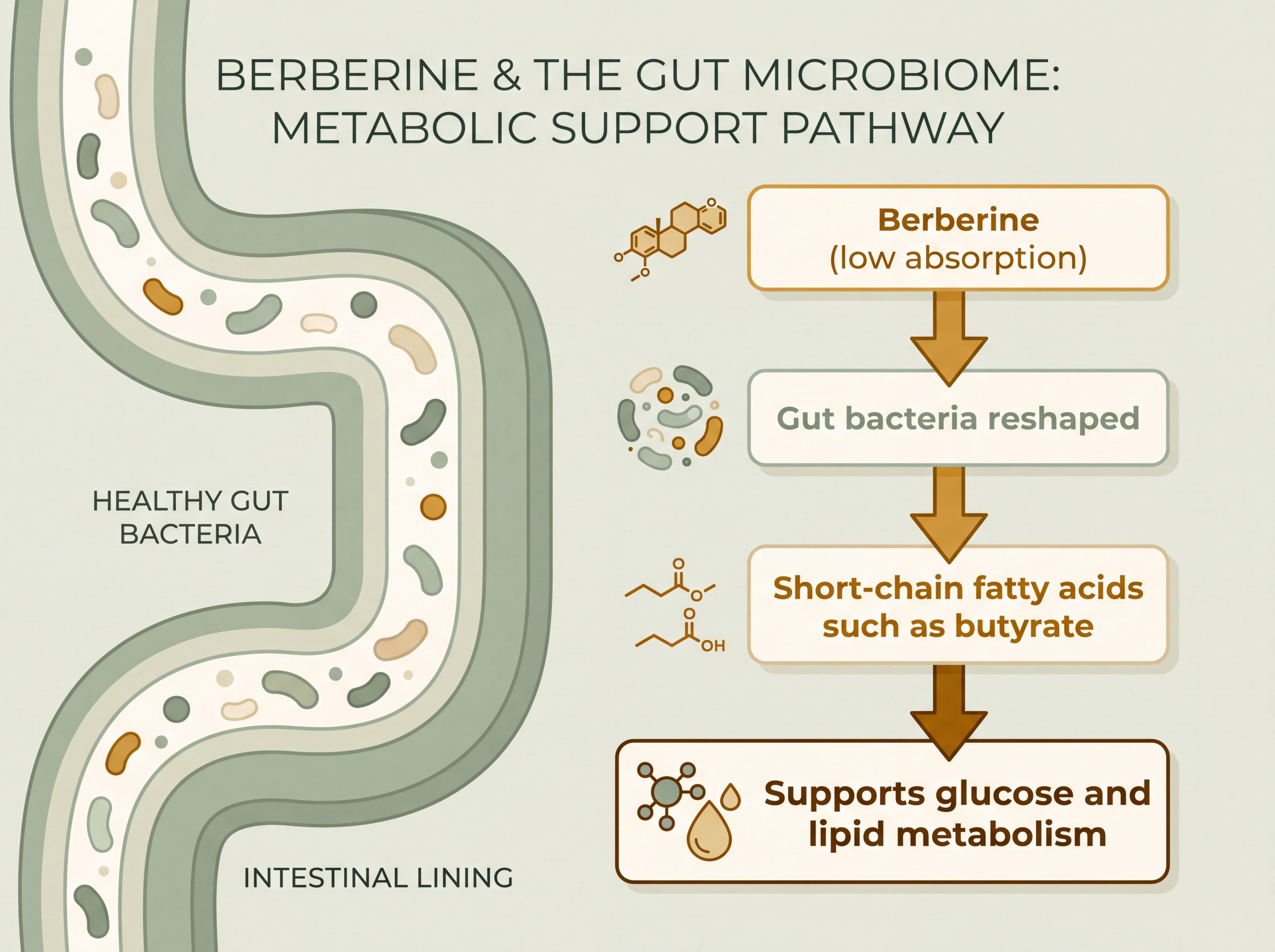
One of the most active areas of berberine research has moved from the bloodstream to the gut. Berberine is an isoquinoline alkaloid with notably low oral absorption, so a large share of any oral dose stays in the digestive tract and interacts directly with gut bacteria. In our review of the recent literature, this gut-level activity looks less like a side note and more like a primary route through which berberine may support healthy metabolic function.
Research suggests berberine can reshape the makeup of the gut microbiota and raise microbial production of short-chain fatty acids such as butyrate, signaling molecules tied to the gut lining and to glucose handling (Modulation of Gut Microbiota and Metabolites by Berberine, 2022, Frontiers in Cellular and Infection Microbiology, PMID: 35721198). Berberine also interacts with bile acid pathways, and gut microbes in turn convert part of it into dihydroberberine, a more absorbable metabolite. This two-way relationship between the compound and the microbiome is detailed in a dedicated review on berberine and the gastrointestinal microbiota hosted by the National Library of Medicine.
For readers weighing supplements, this is the mechanism that helps explain why berberine may support balanced blood sugar and lipid metabolism even though so little of it reaches circulation intact. The compound does much of its work in the place where it is least absorbed.
How Berberine Compares to Metformin
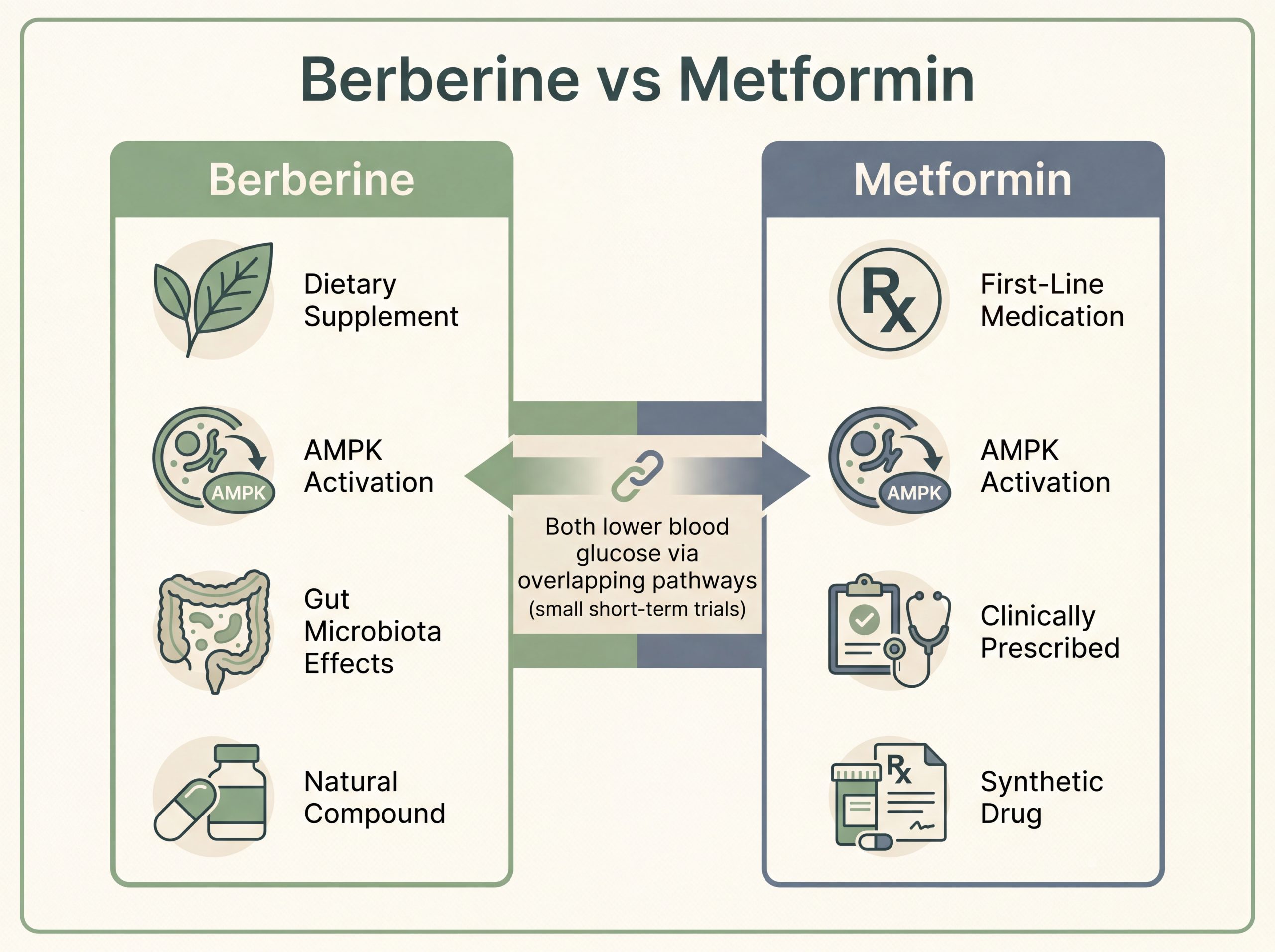
Because berberine influences blood sugar partly through AMP-activated protein kinase (AMPK), it is often discussed alongside metformin, the standard first-line medication for type 2 diabetes. The two are not interchangeable, and berberine is a dietary supplement rather than a prescription drug, but the research comparison is worth understanding.
In a widely cited pilot study, adults with newly diagnosed type 2 diabetes were randomly assigned to either berberine or metformin for three months. The researchers reported that berberine produced reductions in fasting glucose, post-meal glucose, and hemoglobin A1c that were broadly comparable to metformin over that window (Yin et al., 2008, Metabolism, PMID: 18442638). A later overview of the two compounds noted that they share several metabolic pathways, including AMPK activation and effects on the gut microbiota (Metformin and Berberine, Two Versatile Drugs, National Library of Medicine).
From our editorial vantage point, the practical takeaway is restraint rather than excitement. The comparison data is encouraging, but the trials are small and short, and berberine has well-documented interactions with glucose-lowering drugs. Anyone already taking metformin or another prescribed medication should raise berberine with their healthcare provider first, not handle it as a substitution they manage on their own.
Safety Considerations
While berberine is generally regarded as safe for most individuals, it is essential to use it judiciously. Here are some important safety considerations:
- Recommended Dosage: Typical dosages range from 900 mg to 1500 mg per day, divided into multiple doses. It is advisable to start with a lower dose and gradually increase it as needed.
- Drug Interactions: Berberine may interact with certain medications, particularly those for diabetes and hypertension. Consulting a healthcare professional before starting any new supplement is crucial.
- Pregnancy and Lactation: Due to limited research on its safety during pregnancy and breastfeeding, it is recommended to avoid berberine during these periods.
Comprehensive Side Effects of Berberine
Even though berberine is a natural supplement, it can still produce side effects. While many people experience no issues or only mild discomfort, some individuals may encounter more pronounced reactions. Here is a more detailed overview of potential side effects:
- Gastrointestinal Disturbances
- Diarrhea or Constipation: Berberine can disrupt the digestive system’s normal function in some users, leading to diarrhea or constipation.
- Stomach Cramps and Gas: Berberine may cause mild to moderate stomach cramps, bloating, or gas, particularly when first starting supplementation.
- Nausea: Some individuals report feeling nauseated, especially if berberine is taken on an empty stomach.
- Hypoglycemia (Low Blood Sugar)
- In Individuals on Diabetes Medications: Because berberine can help regulate blood sugar, it may lower blood glucose levels even further when combined with antidiabetic drugs, raising the risk of hypoglycemia. Monitoring blood sugar levels is crucial in such cases.
- Hypotension (Low Blood Pressure)
- Possible Interaction with Blood Pressure Medications: Berberine’s blood-pressure-lowering potential might amplify the effect of antihypertensive drugs. This can lead to dizziness, fainting, or fatigue in some individuals.
- Headaches or Dizziness
- Although less common, some people have reported mild headaches or episodes of dizziness, particularly if berberine is taken at higher doses or in combination with other herbal supplements.
- Allergic Reactions
- Rare but Possible: Individuals with plant allergies should exercise caution. Symptoms may include rashes, itching, or even swelling of the lips, tongue, or throat.
- Liver Enzyme Alterations
- Potential Impact on Liver Function: While most studies suggest berberine is safe for the liver at standard dosages, individuals with pre-existing liver conditions should monitor their liver function tests when using berberine regularly.
Who Should Avoid or Use Caution with Berberine
In addition to understanding side effects, it is important to know who should avoid berberine or be extremely cautious:
- Pregnant or Breastfeeding Women
- As noted, there is limited research on the safety of berberine in pregnancy and lactation. To err on the side of caution, it is recommended to avoid berberine during these periods.
- Individuals with Low Blood Pressure or Low Blood Sugar
- If you already have a tendency toward hypotension or hypoglycemia, berberine’s blood sugar– and blood pressure–lowering effects may exacerbate these conditions.
- Those with Chronic Conditions (Liver or Kidney Disease)
- Anyone with severe liver or kidney disease should consult a healthcare professional before starting berberine, as there may be less margin for error if side effects occur.
- Children and Adolescents
- The safety profile of berberine is not well-established in those under 18. Children and teens should only use Berberine under the supervision of a qualified healthcare provider.
- Individuals Scheduled for Surgery
- Berberine can influence blood sugar and blood pressure. It is wise to discontinue use at least two weeks before scheduled surgeries to avoid potential complications with anesthesia or blood sugar control.
Potential Interactions with Medications and Other Substances
Berberine’s interactions are an essential consideration given its potent effects on metabolism:
- Diabetes Medications
- Increased Risk of Hypoglycemia: Berberine may enhance the glucose-lowering effect of drugs like metformin or sulfonylureas, requiring careful blood sugar monitoring and possible dosage adjustments.
- Blood Pressure Medications
- Risk of Excessive Blood Pressure Reduction: If you are taking ACE inhibitors, ARBs, or beta-blockers, adding berberine might result in an unexpected drop in blood pressure.
- Anticoagulants (Blood Thinners)
- Possible Additive Effects: There is some concern that berberine could affect platelet function or coagulation pathways, though conclusive evidence is limited. Nevertheless, individuals on warfarin, heparin, or similar medications should be cautious.
- Statins and Other Cholesterol Medications
- Potential Liver Enzyme Interaction: Berberine may affect the metabolism of certain statins, possibly altering their effectiveness or increasing side effects. Monitoring liver enzyme levels could be prudent.
- Other Herbal Supplements
- Synergistic or Additive Effects: Some herbal products (like curcumin, milk thistle, or St. John’s wort) share metabolic pathways. Combining them with berberine may either enhance or diminish berberine’s effects or increase side-effect risks.
- Alcohol
- Impact on Liver and Blood Sugar: Alcohol can also affect blood sugar and liver health. Combining excessive alcohol consumption with berberine might strain the liver or lead to erratic blood glucose levels.
How to Incorporate Berberine into Your Routine
For those interested in adding berberine to their health regimen, here are some practical tips on how to do so effectively:
- Consult a Healthcare Provider: Before starting any new supplement, it’s essential to discuss it with a healthcare professional, especially if you have existing health conditions or are taking medications.
- Choose Quality Supplements: Look for berberine supplements that are third-party tested for purity and potency. This ensures you are getting a high-quality product.
- Monitor Your Body’s Response: Keep track of how your body reacts to berberine, especially in the initial weeks. Adjust the dosage as needed under professional guidance.

Why Absorption Matters: Berberine Bioavailability and Dihydroberberine
Berberine carries a built-in limitation the label rarely mentions. Its absolute oral bioavailability has been measured at roughly 0.68 percent, meaning under one percent of a standard dose reaches circulation intact. The reason is structural. Berberine has a quaternary ammonium group that is strongly water-loving and crosses the intestinal wall poorly. That single fact is why most protocols split the daily amount into two or three doses taken with meals rather than one large dose, a point echoed in the dosing notes at Examine.com.
Dihydroberberine, a reduced form of berberine, tackles the same problem from a different angle. In a controlled pharmacokinetic comparison, dihydroberberine produced substantially higher blood levels of berberine than a larger dose of the standard form (Comparative Pharmacokinetics of Berberine and Dihydroberberine, 2018, PMID: 29579096). In our hands-on look at the supplement aisle, dihydroberberine is the form most often marketed as enhanced-absorption, and that pharmacokinetic data gives the label a real basis.
The practical lesson is that the dose on the label is not the same as the dose in the body. When you evaluate a berberine product, the absorption form and the dosing schedule matter as much as the milligram count printed on the front.
Additional Dosage Guidance and Timing
- Starting Low and Slow
- A good initial approach is to start with around 300 mg two to three times daily and observe how your body responds. If no side effects occur, you can gradually work up to the typical 900–1500 mg daily range.
- Taking Berberine with Meals
- Minimizing GI Discomfort: Consuming berberine with meals can reduce stomach upset and improve absorption. Many users find that taking berberine just before or during a meal yields better tolerance.
- Cycling and Long-Term Use
- While not universally required, some practitioners suggest cycling berberine (e.g., 8 weeks on, 2 weeks off) to maintain effectiveness and possibly support healthy gut flora. However, long-term safety studies are still ongoing.
- Monitoring Blood Sugar and Blood Pressure
- If you’re taking berberine for metabolic benefits, regularly monitor blood glucose and blood pressure to gauge effectiveness and adjust dosage in consultation with a healthcare provider.
Pros and Cons of Berberine
Understanding the advantages and disadvantages of berberine can help you make an informed decision:
| Pros | Cons |
|---|---|
| May effectively lower blood sugar levels. | Possible gastrointestinal side effects, such as diarrhea or constipation. |
| Supports weight loss and metabolic health. | Interactions with certain medications may occur. |
| Can improve cholesterol levels and heart health. | Limited research on long-term safety during pregnancy and breastfeeding. |
| Natural and derived from plants. | Requires consistent use for optimal results. |
Key Points to Remember
Here are some essential takeaways regarding berberine:
- Berberine is a potent natural compound with a variety of health benefits, particularly for metabolic health.
- It is crucial to use berberine responsibly and under the guidance of a healthcare professional.
- Quality matters; choose supplements that are verified for purity and potency.
- Monitor your health and any changes you experience while taking berberine.
Research and Studies on Berberine
Numerous studies have explored the effects of berberine on health. Here are some notable findings:
| Study | Findings |
|---|---|
| Effects of Berberine on Blood Sugar Control | Participants showed a significant reduction in fasting blood glucose levels after 12 weeks of supplementation. |
| Berberine and Weight Loss | Subjects experienced an average weight loss of 5 pounds over 3 months while taking berberine. |
| Impact on Cholesterol Levels | Berberine supplementation led to a 20% reduction in LDL cholesterol levels in participants. |
Frequently Asked Questions (FAQ)
Below are some frequently asked questions to address quick queries about berberine:
- Is berberine safe for long-term use?
- Studies suggest that berberine is generally safe when used in recommended doses, but there is limited research on its long-term safety, particularly beyond 12 to 16 weeks. If you plan to use berberine for longer durations, consult a healthcare provider.
- What are the most common side effects of berberine?
- The most commonly reported side effects include gastrointestinal issues such as diarrhea, constipation, or cramps. Some users also report mild headaches or dizziness.
- Can berberine cause low blood sugar?
- Yes. Berberine can lower blood sugar levels, which is beneficial for individuals with hyperglycemia. However, those on diabetes medications may experience hypoglycemia if dosages aren’t adjusted properly.
- Who should avoid taking berberine?
- Pregnant or breastfeeding women, children, and individuals with certain chronic conditions (like severe liver or kidney disease) should avoid berberine unless directed otherwise by a healthcare professional.
- How soon can I see results from taking berberine?
- Many users report noticing improvements in their blood sugar or cholesterol levels within the first few weeks. However, results vary based on factors like dosage, lifestyle, and individual health conditions.
- Can I combine berberine with other supplements?
- In some cases, berberine pairs well with other supplements like milk thistle or curcumin. Nonetheless, synergy can also increase the risk of side effects. Always consult your healthcare provider when stacking supplements.
- Do I need to cycle berberine?
- Some practitioners suggest cycling to prevent tolerance buildup and support gut flora balance (e.g., 8 weeks on, 2 weeks off). Evidence is not conclusive, so talk to a professional for personalized advice.
Final Thoughts
Berberine is a promising natural supplement that offers a range of health benefits, particularly for those looking to manage blood sugar levels and improve metabolic health. While it is generally safe for most individuals, it is essential to approach its use with caution and under the guidance of a healthcare provider. By understanding its benefits, potential side effects, and how to incorporate it into your routine, you can make an informed decision about whether berberine is right for you.
Medical Disclaimer
The information provided in this article is for educational and informational purposes only and is not intended as a substitute for professional medical advice, diagnosis, or treatment. Always seek the advice of your physician or other qualified healthcare professionals regarding any medical condition or before starting any new supplement, including berberine.
By combining traditional knowledge with modern research, berberine continues to captivate the interest of those seeking natural alternatives or supportive supplements in their health journey. Always remember to personalize your supplement choices in consultation with a healthcare professional to ensure they align with your unique needs and health profile.
Supplement Disclaimer
These statements have not been evaluated by the Food and Drug Administration. This product is not intended to diagnose, treat, cure, or prevent any disease. Berberine is a dietary supplement, not a medication. Consult your healthcare provider before use, especially if you are pregnant, breastfeeding, managing a chronic condition, or taking prescription medication such as blood sugar or blood pressure drugs.