Key Takeaways
- Ashwagandha (Withania somnifera) is an adaptogen traditionally used in Ayurvedic medicine to help the body respond to physiological and psychological stress.
- Clinical research links standardized ashwagandha root extract to reduced stress and cortisol, better sleep, and support for thyroid and blood sugar balance, with PMID-cited studies throughout this guide.
- Whole root powder and standardized extracts such as KSM-66 are prepared differently and dosed differently, and root-only sourcing is the traditional, more conservative choice amid an evolving 2026 regulatory review of ashwagandha leaf in India.
- Most side effects are mild and cluster in the first one to two doses, though rare liver injury has been documented and warrants specific stop-and-consult guidance.
- This guide is educational and not a substitute for medical advice. See the FDA disclaimer at the end of this article.
Ashwagandha (Withania somnifera), also referred to as Indian ginseng or winter cherry, is a small shrub indigenous to India and Southeast Asia. This potent plant has been a foundational element of Ayurvedic medicine for centuries, celebrated for its adaptogenic qualities. Adaptogens are substances that aid the body in resisting both physiological and psychological stress. This article offers a thorough examination of the evidence-based benefits of ashwagandha root, its operational mechanisms, safety aspects, and practical application guidelines.
Our editorial team reviewed the primary clinical research behind every claim in this guide and cites the underlying studies directly, rather than asking you to take our word for it.
Understanding Ashwagandha
Ashwagandha is categorized as an adaptogen, signifying its role in helping the body adapt to stress. The key active components in ashwagandha are withanolides, compounds believed to be responsible for its wide-ranging medicinal attributes. These withanolides function by interacting with various bodily pathways. It is regarded as a superior natural herbal supplement, boasting a rich profile of iron, antioxidants, and amino acids, making it a compelling addition to a daily supplement routine.
For a shorter, mechanism-and-safety-focused companion piece, see our guide to how ashwagandha affects the body.
How Ashwagandha Functions: Mechanisms of Action
To appreciate the full scope of ashwagandha’s advantages, it’s vital to understand its underlying mechanisms. Ashwagandha doesn’t merely alleviate symptoms. It operates at a foundational level, supporting balance and resilience.
HPA Axis Regulation
The hypothalamic-pituitary-adrenal (HPA) axis serves as the body’s primary stress response system. This complex network involves interactions between the hypothalamus (a brain region), the pituitary gland (another brain structure), and the adrenal glands (situated atop the kidneys). Upon encountering stress, the hypothalamus secretes corticotropin-releasing hormone (CRH), prompting the pituitary gland to release adrenocorticotropic hormone (ACTH). ACTH, in turn, triggers the adrenal glands to synthesize cortisol, the principal stress hormone.
Ashwagandha plays a regulatory role in this HPA axis. It appears to curtail excessive cortisol secretion during periods of chronic stress, mitigating the adverse effects of sustained cortisol elevation. This HPA axis modulation is a significant factor in ashwagandha’s efficacy in stress management and promoting tranquility. Consider it analogous to a thermostat: when cortisol levels surge, ashwagandha assists in restoring them to a healthy equilibrium.
Influence on Neurotransmitters
Ashwagandha also exerts influence on various neurotransmitters, the chemical messengers facilitating communication between nerve cells. Notably, it has been demonstrated to impact:
- GABA (Gamma-Aminobutyric Acid): GABA, an inhibitory neurotransmitter, exerts a calming influence on the nervous system. Ashwagandha may potentiate GABA activity, contributing to its anxiolytic and sleep-enhancing effects.
- Serotonin: Serotonin, a neurotransmitter, is involved in regulating mood, sleep, and appetite. Ashwagandha may modulate serotonin levels, potentially contributing to its mood-stabilizing properties.
Antioxidant and Anti-inflammatory Actions
Ashwagandha exhibits strong antioxidant and anti-inflammatory capabilities. Oxidative stress, resulting from an imbalance between free radicals and antioxidants, can inflict cellular damage and contribute to various health ailments. Ashwagandha aids in neutralizing free radicals, shielding cells from oxidative harm. This antioxidant action is particularly crucial for brain health, given the brain’s high susceptibility to oxidative stress.
Persistent inflammation is also implicated in numerous health problems. Ashwagandha’s anti-inflammatory effects assist in reducing inflammation throughout the body, contributing to its benefits in alleviating joint pain, bolstering immune function, and promoting overall well-being. Withania somnifera accomplishes this by modulating diverse inflammatory pathways, including those involving cytokines (immune system signaling molecules).
Nitric Oxide Enhancement
Withania somnifera may increase nitric oxide synthesis, leading to vasodilation and improved blood flow to various organs.
The Wide-Ranging Benefits of Ashwagandha Root
Ashwagandha’s varied actions give rise to a broad spectrum of benefits across various bodily systems.
Managing Stress and Anxiety
Multiple clinical studies have substantiated ashwagandha’s effectiveness in diminishing stress and anxiety symptoms, even in individuals diagnosed with anxiety disorders. A 2012 randomized, double-blind, placebo-controlled study published in the Indian Journal of Psychological Medicine found that a high-concentration full-spectrum ashwagandha root extract significantly reduced participants’ stress scores compared to placebo, with serum cortisol levels dropping as well (Chandrasekhar et al., 2012, PMID: 23439798).
How Ashwagandha Compares to Other Adaptogens
Ashwagandha is one of several herbs classified as adaptogens, alongside rhodiola (Rhodiola rosea) and Asian ginseng (Panax ginseng), among others. All three are traditionally used to help the body adapt to stress, but they are not interchangeable. Ashwagandha is generally considered more calming and is often taken in the evening or alongside a stressful stretch of the day. Rhodiola and Asian ginseng are generally considered more stimulating, and are more often taken in the morning for sustained energy. Readers who find ashwagandha’s calming effect too sedating for daytime use, or who want an energizing adaptogen instead, may find rhodiola or ginseng a better fit for that specific goal.
Enhancing Cognitive Abilities
Ashwagandha provides several advantages for cognitive health. Its antioxidant and neuroprotective properties contribute to safeguarding brain cells from damage, thereby supporting optimal brain function. Research has demonstrated that ashwagandha can enhance:
- Memory: Both short-term and long-term memory may improve.
- Focus and Attention: Ashwagandha can aid in improving concentration and attention span.
- Reaction Time: Studies have documented enhancements in reaction time and cognitive processing speed.
- Executive Function: This encompasses skills such as planning, problem-solving, and decision-making.
A 2017 study in the Journal of Dietary Supplements reported that ashwagandha extract improved cognitive and psychomotor performance in men.
Promoting Better Sleep
Ashwagandha’s calming and stress-reducing attributes can significantly enhance sleep quality. It aids in regulating the sleep-wake cycle, supporting restful and restorative sleep. This is especially valuable for individuals grappling with insomnia or sleep disruptions.
- A 2020 study in the Journal of Ethnopharmacology determined that ashwagandha root extract improved sleep quality in individuals with insomnia.
- Another clinical trial revealed positive benefits on sleep.
Boosting Energy and Stamina
In contrast to stimulants that offer a transient energy surge followed by a decline, ashwagandha provides sustained energy support. It nurtures the adrenal glands, facilitating their optimal function and preventing adrenal fatigue. This translates to improved energy levels, diminished fatigue, and enhanced physical performance.
Strengthening the Immune System
Ashwagandha acts as a potent immunomodulator, regulating and supporting the immune system. It stimulates the activity of immune cells, including lymphocytes and macrophages, which are vital for defending the body against pathogens. Its anti-inflammatory properties further contribute to a healthy immune response.
Regulating Blood Sugar
Emerging research indicates that ashwagandha may offer benefits for blood sugar management. It appears to increase insulin sensitivity, rendering the body’s cells more responsive to insulin, the hormone governing blood sugar levels. This can be particularly advantageous for individuals with insulin resistance or type 2 diabetes. A 2020 systematic review and meta-analysis in Phytotherapy Research, drawing on 24 combined in-vitro, pre-clinical, and clinical studies, concluded that ashwagandha treatment significantly restored altered blood glucose levels with no major safety concerns identified (Durg et al., 2020, PMID: 31975514). It is imperative to emphasize that ashwagandha is not a substitute for diabetes medication, and anyone on blood sugar or diabetes medication should read the dosage-adjustment caution in the Interactions section below before combining the two.
Supporting Thyroid Health
Ashwagandha may exert a positive influence on thyroid function, particularly in individuals with subclinical hypothyroidism (mildly underactive thyroid). A 2018 double-blind, randomized, placebo-controlled trial in the Journal of Alternative and Complementary Medicine found that 600 mg of ashwagandha root extract daily for eight weeks improved serum thyroid-stimulating hormone (TSH) and thyroxine (T4) levels in adults with subclinical hypothyroidism, compared to placebo (Sharma et al., 2018, PMID: 28829155). It is of utmost importance to underscore that ashwagandha is contraindicated in hyperthyroidism (overactive thyroid), as it could exacerbate the condition, and that anyone already taking thyroid hormone medication should review the dosage-adjustment note in the Interactions section below, since ashwagandha’s effect on thyroid hormone levels can carry through to prescription thyroid treatment.
Promoting Cardiovascular Health
Ashwagandha presents several potential benefits for cardiovascular well-being. Its capacity to alleviate stress, reduce blood pressure, and enhance cholesterol profiles can contribute to a healthier cardiovascular system. Its antioxidant and anti-inflammatory properties provide additional protection against heart disease.
Alleviating Joint Pain and Arthritis
Ashwagandha’s anti-inflammatory properties can aid in mitigating joint pain and stiffness associated with arthritis. It diminishes inflammation within the joints, affording relief and improving mobility.
Supporting Muscle Growth and Strength
Ashwagandha is a favored supplement among athletes and bodybuilders owing to its potential to increase muscle growth and strength. It may raise testosterone levels, particularly in men, thereby supporting muscle protein synthesis. It also contributes to cortisol reduction, establishing a more conducive anabolic (muscle-building) environment.
- A 2015 study in the Journal of the International Society of Sports Nutrition reported that ashwagandha supplementation was linked to significant gains in muscle mass and strength in men engaged in resistance training.
Enhancing Libido and Sexual Function
Ashwagandha has a historical use as an aphrodisiac. It can increase libido and improve sexual function in both men and women. In men, it may increase testosterone levels and enhance sperm quality. In women, it can contribute to hormonal balance and stress reduction, leading to improved sexual desire and satisfaction. Ashwagandha’s potential to increase nitric oxide production may further support blood flow, contributing to arousal. It can also help with reproductive health.
- A 2011 study in Fertility and Sterility demonstrated that ashwagandha improved semen quality in infertile men.
- Studies from 2022 indicated positive effects on sexual health.
Benefits for Women’s Health
Ashwagandha offers specific advantages for women’s health:
- Menopause: It can aid in managing menopausal symptoms such as hot flashes, mood fluctuations, and sleep disturbances by balancing hormones and mitigating stress. A 2021 randomized, double-blind, placebo-controlled study in the Journal of Obstetrics and Gynaecology Research found that an ashwagandha root extract improved climacteric symptom scores in perimenopausal women compared to placebo (Gopal et al., 2021, PMID: 34553463).
- PCOS (Polycystic Ovary Syndrome): Ashwagandha can assist in addressing hormonal imbalances, insulin resistance, and stress associated with PCOS, potentially improving menstrual regularity and alleviating symptoms like acne and hirsutism (excessive hair growth).
- Ashwagandha has a traditional use in supporting and improving fertility in women, and has a traditional use in supporting reproductive health and hormonal balance more broadly.
Supporting Healthy Skin
Ashwagandha’s antioxidant properties can contribute to healthy skin by protecting it from damage caused by free radicals.
Supporting Weight Management
Ashwagandha’s stress-reducing properties may offer indirect support for healthy weight management. Chronic stress and elevated cortisol are associated with increased appetite, cravings, and abdominal fat storage. By lowering cortisol, ashwagandha may help mitigate these factors.
- A 2016 double-blind, randomized, placebo-controlled trial in the Journal of Evidence-Based Complementary and Alternative Medicine found that adults under chronic stress who took ashwagandha root extract saw significant body weight reduction compared to placebo (Choudhary et al., 2016, PMID: 27055824).
- A 2019 randomized, double-blind, placebo-controlled study published in Medicine found that participants taking an ashwagandha extract reported lower perceived stress and showed reduced serum cortisol compared to placebo (Lopresti et al., 2019, PMID: 31517876).
The world of botanicals is vast and full of wonders, and one herb stands out as an all-rounder: the Ashwagandha root. This therapeutic plant is improving people’s lives.
Ashwagandha: Dosage and Available Forms
The ideal dosage of ashwagandha can fluctuate based on individual requirements, the specific condition being addressed, and the supplement’s form.
- Standardized Extract: A prevalent dosage range is 300-600 mg daily of a standardized extract, split into one or two doses. Standardized extracts ensure a consistent concentration of withanolides (typically ranging from 1.5% to 5%).
- Higher Doses: Certain studies have employed higher doses (up to 1250mg daily) under medical guidance. It’s generally recommended to commence with a lower dose and gradually escalate it as necessary, while carefully observing your body’s response.
- Forms:
- Capsules: The most user-friendly form, delivering a precise dose.
- Powder: Can be incorporated into smoothies, drinks, or food. It possesses a slightly bitter, earthy flavor.
- Tinctures: Liquid extracts that undergo rapid absorption.
- Tea: Prepared by steeping the root in water.
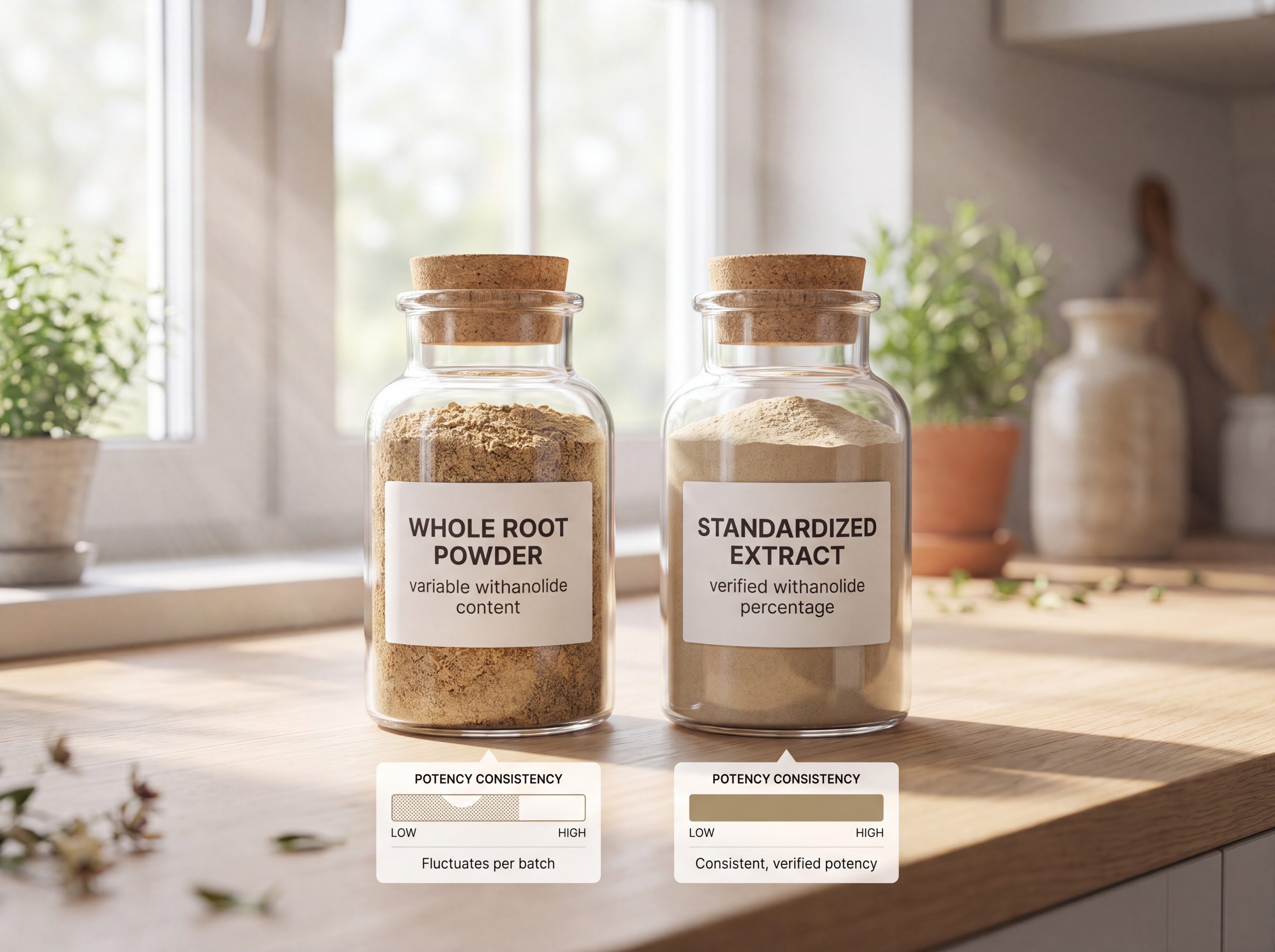
Ashwagandha Root Powder vs. KSM-66 Extract: What’s the Difference
Two different things get called “ashwagandha” on a supplement label, and they are not interchangeable. Whole root powder is the dried, ground root itself, with a naturally variable withanolide content typically in the 0.2 to 1 percent range depending on growing conditions and harvest. KSM-66 is a specific, patented, standardized root extract, concentrated and tested to verify a consistent withanolide percentage, most commonly in the 1.5 to 5 percent range, batch after batch.
“Standardized to a given withanolide percentage” means a laboratory has measured the concentration of withanolides, the compound class believed to drive most of ashwagandha’s adaptogenic activity, and verified the extract meets that percentage every time. This matters because whole root powder’s potency can drift from harvest to harvest, while a standardized extract’s potency stays predictable, which is why most of the clinical trials cited throughout this article, including the stress, thyroid, and weight-management studies above, used standardized extracts rather than raw powder.
In practical terms: whole root powder suits readers who want the traditional, minimally processed form and are comfortable with some natural variability, often used in cooking, smoothies, or traditional preparations. A standardized extract like KSM-66 suits readers who want a measured, research-aligned dose in a smaller capsule. Neither form is inherently superior. The right choice depends on whether traditional preparation or dose consistency matters more to you.

Root-Only vs. Root-and-Leaf: A Quality and Safety Note
Traditional Ayurvedic use of ashwagandha centers on the root. Some modern supplement manufacturers have introduced leaf-derived extracts or root-and-leaf blends, marketed as a lower-cost source of withanolides.
This distinction has become a live regulatory question. In April 2026, India’s Food Safety and Standards Authority (FSSAI) issued an advisory restricting the use of ashwagandha leaf, in any form, in food and supplement products sold in India, citing safety dossier findings that leaf tissue can carry higher concentrations of certain reactive withanolides, including withaferin A, than root tissue does. In May 2026, the Karnataka High Court granted supplement manufacturers a temporary stay on that restriction pending further proceedings, so the final regulatory outcome in India is still unsettled as of this writing.
Back To Your Roots Herbs sources ashwagandha as root only, consistent with the traditional Ayurvedic use this article describes throughout, and consistent with the more conservative sourcing choice regardless of how the Indian regulatory question ultimately resolves. When comparing ashwagandha products, checking whether a label specifies “root extract” or “root powder,” versus an unspecified “ashwagandha extract” that may include leaf, is a reasonable quality check for any buyer. Our own organic ashwagandha root powder is sourced exclusively from root, in keeping with that same traditional standard.
- Timing: Ashwagandha can be consumed at any time of day. Some individuals favor morning intake for energy and stress management, whereas others find evening consumption more conducive to relaxation and sleep. Taking it with meals may enhance absorption and minimize potential gastrointestinal discomfort.
- Duration: It may require 4-12 weeks of consistent use to observe the full range of benefits.
Potential Side Effects, Contraindications, and Interactions
While ashwagandha is generally deemed safe for most individuals when used judiciously, it’s crucial to be cognizant of potential side effects, contraindications, and interactions.
Side Effects
- Common: Mild gastrointestinal distress (nausea, stomach upset, diarrhea) and drowsiness. These effects cluster most in the first one to two doses as the body adjusts and are typically transient. Taking ashwagandha with food and starting at a lower dose, such as 300 mg rather than 600 mg, tends to reduce first-dose discomfort and usually resolves within a few days of consistent use.
- Rare: Liver issues (see the expanded note below), allergic reactions (skin rash, itching, breathing difficulties).
- When to stop and consult a healthcare provider: Yellowing of the skin or eyes, dark urine, unusual fatigue beyond mild first-dose drowsiness, or any sign of an allergic reaction such as swelling or difficulty breathing warrant discontinuing ashwagandha and contacting a healthcare provider promptly.
Liver injury from ashwagandha is rare given how widely the herb is used, with roughly two dozen published case reports as of the most recent literature review from the National Institutes of Health’s LiverTox database. When it does occur, it typically presents two to twelve weeks after starting the supplement, most often as a cholestatic or mixed pattern of liver injury with jaundice and itching, and it is usually self-limited, resolving within one to four months of stopping the supplement (NIH LiverTox, Ashwagandha). Anyone with pre-existing liver disease should avoid ashwagandha entirely, as noted in the Contraindications section below, and anyone taking ashwagandha who develops jaundice, dark urine, or unusual fatigue should stop and consult a healthcare provider.
Contraindications
- Pregnancy and Breastfeeding: Ashwagandha is not advised during pregnancy or breastfeeding due to a paucity of safety data.
- Autoimmune Diseases: Individuals with autoimmune conditions (e.g., rheumatoid arthritis, lupus, Hashimoto’s thyroiditis) should generally refrain from ashwagandha use, as it may stimulate the immune system and potentially worsen symptoms.
- Hyperthyroidism: Ashwagandha is contraindicated in hyperthyroidism (overactive thyroid) due to its potential to raise thyroid hormone levels.
- Scheduled Surgery: Ashwagandha should be discontinued a minimum of two weeks prior to scheduled surgery, as it may depress the central nervous system.
- Liver disease: Individuals with this ailment should abstain from ashwagandha use.
Interactions
Ashwagandha may interact with specific medications, including:
- Sedatives (Benzodiazepines and CNS Depressants): Ashwagandha may potentiate the sedative effects of these medications, resulting in excessive drowsiness.
- Alcohol: Because ashwagandha carries a mild sedative, CNS-depressant-adjacent effect of its own, combining it with alcohol may compound drowsiness in the same way combining it with prescription sedatives can. As a precaution, limiting alcohol intake while starting ashwagandha, particularly during the first-dose adjustment period described in the Side Effects section above, is reasonable.
- Immunosuppressants: Ashwagandha may antagonize the effects of immunosuppressants.
- Thyroid Hormone Medications (including levothyroxine): Ashwagandha may influence thyroid hormone levels, as described in the Supporting Thyroid Health section above, potentially necessitating adjustments in levothyroxine or other thyroid medication dosages. Anyone on thyroid medication should discuss ashwagandha with the prescribing provider before starting it.
- Medications for Diabetes (Antidiabetes Drugs): Ashwagandha may lower blood sugar levels, potentially requiring alterations in medication dosages.
- Medications for High Blood Pressure (Antihypertensive Drugs): Ashwagandha may decrease blood pressure, potentially necessitating modifications in medication dosages.
- Anti-seizure medications: It may interfere with anti-seizure medication, stimulating the central nervous system.
- Medications that can harm the liver (Hepatotoxic drugs): Given the rare liver-injury reports described above, combining ashwagandha with other hepatotoxic medications warrants added caution.
It is imperative to seek consultation with a healthcare provider prior to commencing ashwagandha use, particularly if you have any pre-existing health conditions or are concurrently taking any medications. For a broader review of these interaction categories, see the National Center for Complementary and Integrative Health’s guidance on ashwagandha usefulness and safety.
Long-Term Use and Quality Considerations
The long-term safety of ashwagandha (exceeding 3 months) remains incompletely understood. While numerous studies have employed it for several weeks or months without significant adverse events, further research is warranted to ascertain its long-term safety profile. Some sources advocate for periodic breaks from ashwagandha consumption, although a definitive consensus on this matter is lacking.
In our own sourcing reviews, we prioritize suppliers who can document both a verified withanolide percentage and root-only sourcing, the same two factors covered above. When selecting an ashwagandha supplement, prioritize quality:
- Standardized Extract or Whole Root: Seek products standardized to contain a defined percentage of withanolides (e.g., KSM-66), or, if choosing whole root powder, a supplier transparent about sourcing. See the Root Powder vs. KSM-66 Extract and Root-Only vs. Root-and-Leaf sections above for the difference between these choices and why root-only sourcing is the more traditional, conservative option.
- Reputable Brands: Opt for supplements from trustworthy brands that adhere to good manufacturing practices (GMP).
- Third-Party Testing: Choose products that have undergone testing by independent laboratories to verify purity, potency, and the absence of contaminants.
Frequently Asked Questions (FAQ)
- How long does it take for ashwagandha to exert its effects? Many individuals observe changes within two to four weeks of consistent use, but this timeline can fluctuate. Some may feel improvements in stress and mood earlier, while others may require more time.
- Can ashwagandha induce weight gain? Ashwagandha is not typically linked to weight gain. Its primary function is to assist the body in managing stress, and by reducing cortisol levels, it may indirectly support healthy weight management.
- Is Ashwagandha safe for women? Ashwagandha is generally regarded as safe for women when used appropriately. However, women with hormone-sensitive conditions should consult a healthcare provider before initiating use. It is not recommended during pregnancy or breastfeeding.
- What’s the best form of ashwagandha to use? There is no “best” form. Capsules are convenient and have standardized dosages. Powders can be added to food and beverages. The best form is dependent on the user’s needs.
- What is the best time of day to take ashwagandha? There’s no universally optimal time. It hinges on individual preferences. Some individuals favor morning intake for an energy boost, while others prefer evening consumption for relaxation and sleep promotion. Splitting the dose throughout the day is also a viable approach.
- Can I take ashwagandha in conjunction with other supplements? Many people combine it with other herbs and vitamins without encountering issues. Nevertheless, consulting a healthcare professional is advisable to preclude potential interactions.
- Is ashwagandha root powder the same as KSM-66 extract? No. Root powder is the whole dried root with naturally variable potency, while KSM-66 is a specific standardized extract verified to a consistent withanolide percentage. Both come from the same plant, but they are prepared differently and dosed differently. See the Root Powder vs. KSM-66 Extract section above for a full comparison.
- Should I choose ashwagandha root over ashwagandha leaf products? Traditional Ayurvedic use of ashwagandha centers on the root, and root-only sourcing is currently the more conservative choice given an evolving regulatory review in India regarding leaf-derived withanolide concentrations. Back To Your Roots Herbs sources root only. See the Root-Only vs. Root-and-Leaf section above for the current regulatory context.
These statements have not been evaluated by the Food and Drug Administration. This product is not intended to diagnose, treat, cure, or prevent any disease. Consult your healthcare provider before use, especially if you are pregnant, nursing, taking medication, or have a medical condition.