This article examines the potential role of Astragalus membranaceus in the context of asthma and lung health, looking at traditional use, scientific understanding of its mechanisms, potential benefits, and essential safety considerations.
Important Disclaimer: The information presented here is for educational purposes only and does not constitute medical advice. Asthma is a serious condition requiring professional medical management. Do not use astragalus or any herbal supplement to replace prescribed asthma medications. Always consult with your primary healthcare provider, pulmonologist, or a qualified herbal practitioner before considering astragalus, especially if you have asthma or other chronic health conditions, or are taking any medications.
Understanding Astragalus Membranaceus and Its Relevance to Lung Health
Astragalus membranaceus is a plant whose root has been utilized for centuries, primarily in Chinese herbal traditions. It’s classified as an adaptogen, meaning it’s thought to help the body adapt to various stressors. Its traditional reputation centers on strengthening the body’s protective energy (Wei Qi) and supporting vital organs, including the lungs. From a modern perspective, several properties of the Astragalus root are relevant to respiratory health:
- Immune System Modulation: Astragalus contains complex polysaccharides and saponins (like astragalosides) that appear to influence immune system function. This is significant because asthma involves complex immune responses in the airways.
- Anti-inflammatory Action: Chronic airway inflammation is central to asthma. Compounds in astragalus have demonstrated anti-inflammatory effects in various studies, which could theoretically be beneficial for inflamed airways.
- Antioxidant Properties: Oxidative stress contributes to lung tissue damage and airway hyperresponsiveness. Astragalus is rich in antioxidants that help neutralize harmful free radicals, potentially offering protection to lung cells.
- Traditional Lung Support: In TCM, Astragalus membranaceus is often included in formulas aimed at tonifying Lung Qi, enhancing respiratory resilience, and reducing susceptibility to external pathogens that can trigger respiratory issues.
Potential Mechanisms: How Might Astragalus Influence Asthma?
Understanding how Astragalus membranaceus might affect asthma involves looking at its interaction with the underlying processes of the disease:
- Modulating Airway Inflammation: Research suggests compounds from the astragalus root may inhibit the production and release of certain pro-inflammatory cytokines involved in the allergic inflammation seen in many types of asthma (e.g., IL-4, IL-5, TNF-alpha). By potentially reducing these inflammatory signals, it might help lessen airway inflammation.
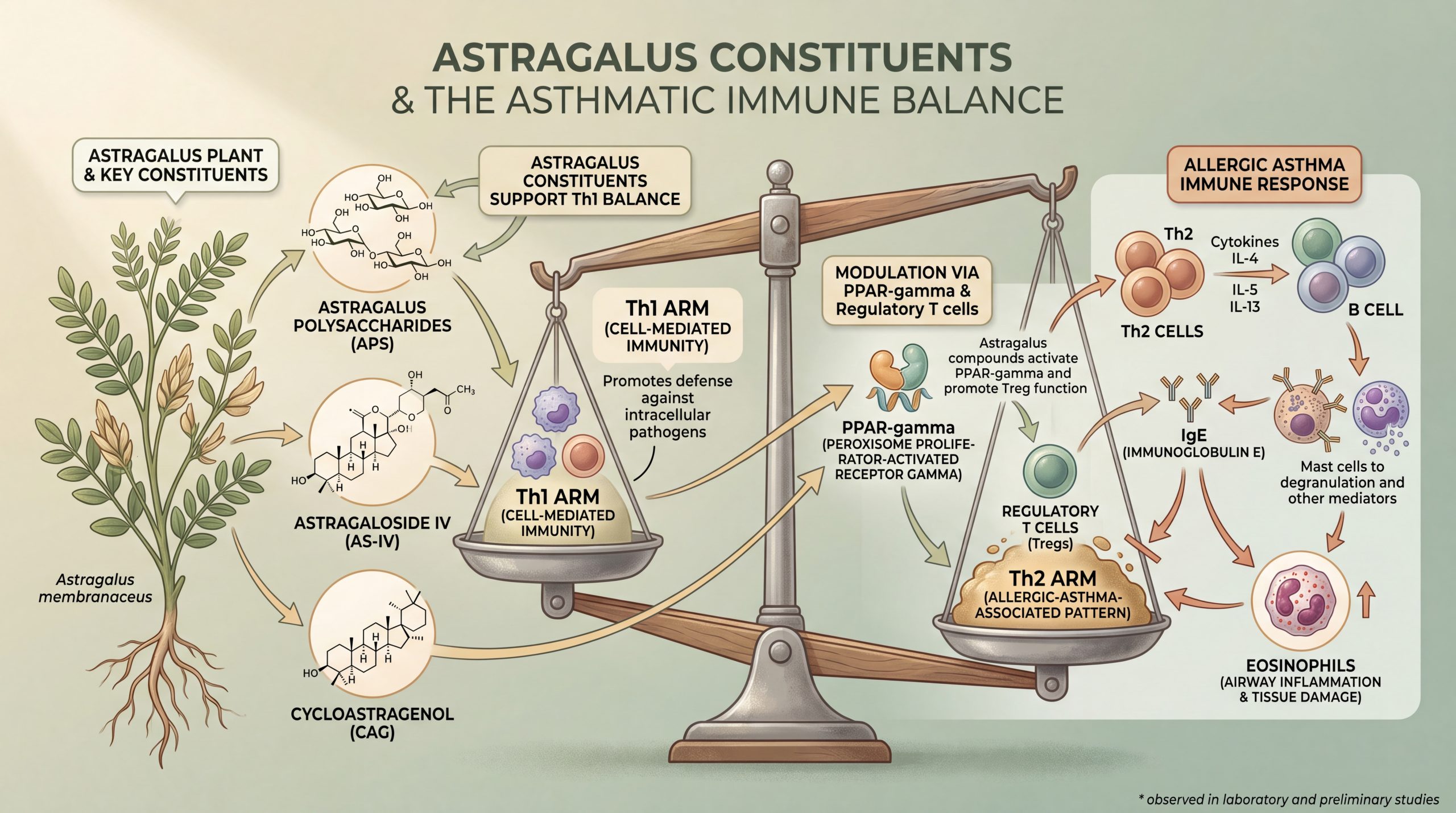
- Influencing Allergic Immune Responses: Allergic asthma is driven by a specific immune pathway involving IgE antibodies, mast cells, and eosinophils. Some preliminary research indicates Astragalus membranaceus might help modulate parts of this allergic cascade, potentially influencing the Th1/Th2 immune balance, although its precise effect within the complex asthmatic immune response needs more specific investigation.
- Combating Oxidative Stress: The antioxidant effects of astragalus could help protect the bronchial tissues from damage caused by inflammation and environmental irritants, potentially reducing airway sensitivity over time.
- Supporting Immune Defense Against Triggers: By potentially enhancing certain aspects of the immune system, astragalus might help reduce the frequency or severity of respiratory infections (like colds and flu), which are common triggers for asthma exacerbations in many patients.
A Closer Look at the Constituents Researchers Study
Astragalus membranaceus (huang qi) carries several constituent groups that laboratory researchers have examined in the setting of airway inflammation. Astragalus polysaccharides, often abbreviated APS, are the most studied. In cell and animal work, researchers report that APS appears to influence the balance between Th1 and Th2 helper-cell activity. That balance matters because a tilt toward Th2 is a defining feature of allergic asthma. Investigators track this through the transcription factors T-bet, which favors Th1, and GATA3, which favors Th2, along with cytokines such as IL-4, IL-5, and IL-13.
Beyond the polysaccharides, saponins known as astragalosides, including astragaloside A and the related compound cycloastragenol, have drawn research interest for anti-inflammatory activity. In one animal model, an astragalus extract activated PPAR-gamma, a receptor involved in calming inflammation, alongside lower IgE and fewer eosinophils (Chen et al., 2014, Biochemistry and Cell Biology, PMID: 25264079). Separate laboratory work connected astragalus polysaccharide to reduced endoplasmic reticulum stress and lower airway mucus markers such as MUC5AC in a severe-asthma model (Lu et al., 2016, International Journal of Biological Macromolecules, PMID: 27645929). From our editorial reading of this literature, these are mechanisms observed in laboratory and animal systems. They describe how researchers think astragalus behaves, and they are not proof of a treatment effect in people. The United States National Center for Complementary and Integrative Health notes that astragalus has not been well studied for most health conditions in humans.
Scientific Evidence Regarding Astragalus for Asthma
The scientific investigation into Astragalus for asthma is still developing. Much of the evidence comes from laboratory studies (in vitro), animal models of asthma, or studies using traditional Chinese herbal formulas where Astragalus membranaceus is one component among several herbs.
- Laboratory and Animal Studies: Research in cell cultures and animal models often shows that astragalus extract or its isolated compounds can reduce markers of airway inflammation, decrease airway hyperresponsiveness (the tendency of airways to constrict easily), and modulate immune cell activity relevant to asthma. For example, some studies indicate effects on eosinophil levels or specific cytokine profiles in induced asthma models.
- Human Studies: High-quality clinical trials focusing solely on Astragalus membranaceus for treating asthma in humans are limited. Some studies have examined traditional formulas containing astragalus, like Yu Ping Feng San, showing potential benefits in reducing respiratory infection frequency, which could indirectly benefit asthma patients. Research by Wang and others has sometimes been cited by astragalus membranaceus studies in relation to immune function or inflammation, but direct, large-scale trials for asthma treatment are scarce. One study noted that astragalus injection (a preparation used in China) combined with standard treatment showed some positive effects in asthmatic children, but this form and application differ significantly from oral supplements commonly available elsewhere.
- Related Conditions: Research on Astragalus membranaceus for allergic rhinitis (hay fever), which shares underlying allergic mechanisms with asthma, has shown some promise in reducing symptoms. This suggests potential relevance for allergic airway inflammation.
While preliminary findings are interesting, they are not sufficient to confirm the efficacy or safety of Astragalus membranaceus as a standalone treatment for asthma. More rigorous human clinical trials are needed.
What the Studies Actually Measured
When we reviewed the published research on astragalus and asthma, we found two very different tiers of evidence, and it matters which one any claim rests on. The larger tier is preclinical. That means cell cultures and ovalbumin-sensitized mouse models rather than people. In these models, researchers have reported reduced airway hyperresponsiveness, lower IgE, fewer eosinophils, and less airway remodeling after treatment with astragalus extract or astragalus polysaccharide (D’Avino et al., 2023, International Journal of Molecular Sciences, PMID: 37446131). A 2025 analysis pointed to the PI3K/AKT signaling pathway in an allergic-asthma model (Hu et al., 2025, Combinatorial Chemistry and High Throughput Screening, PMID: 40304344).
The smaller and more meaningful tier is human, and it is modest. A six-month pediatric study of an astragalus oral solution reported improved forced expiratory volume in one second, known as FEV1, and better scores on a pediatric asthma quality-of-life questionnaire, alongside changes in regulatory T cells (Wang et al., 2018, Frontiers in Pediatrics, PMID: 30294594). An earlier study in adults with asthma described a shift away from Th2 dominance through increased T-bet expression and interferon-gamma (Wang et al., 2006, Chinese Journal of Integrative Medicine, PMID: 17361521). A randomized study in children during the remission phase reported higher peak expiratory flow rate, or PEFR, when astragalus was added to standard care (Lin et al., 2011, PMID: 21910341). From our vantage point, the honest summary is this. The human studies are small, several come from integrative-medicine settings, and none of them establish astragalus as a stand-alone asthma therapy. Together they point to an immune-modulating signal that deserves larger and more rigorous trials.
| Evidence tier | What was measured | Reported direction | Reference (PMID) |
|---|---|---|---|
| Human, pediatric | FEV1, quality-of-life score, regulatory T cells | Improved vs. control | 30294594 |
| Human, adults | T-bet, interferon-gamma, Th1/Th2 balance | Shift away from Th2 | 17361521 |
| Human, pediatric (randomized) | Peak expiratory flow rate (PEFR) | Higher with add-on astragalus | 21910341 |
| Preclinical (animal/cell) | Airway hyperresponsiveness, IgE, eosinophils, remodeling | Reduced in model | 37446131 |
| Preclinical (animal/cell) | ER stress, airway mucus (MUC5AC) | Reduced in model | 27645929 |
| Source: peer-reviewed studies indexed on PubMed. Preclinical findings are from cell and animal models and do not establish effects in people. | |||
Potential Beneficial Effects of Astragalus for People with Asthma
Based on its properties and the limited available research, the potential beneficial effects of astragalus for individuals with asthma might include:
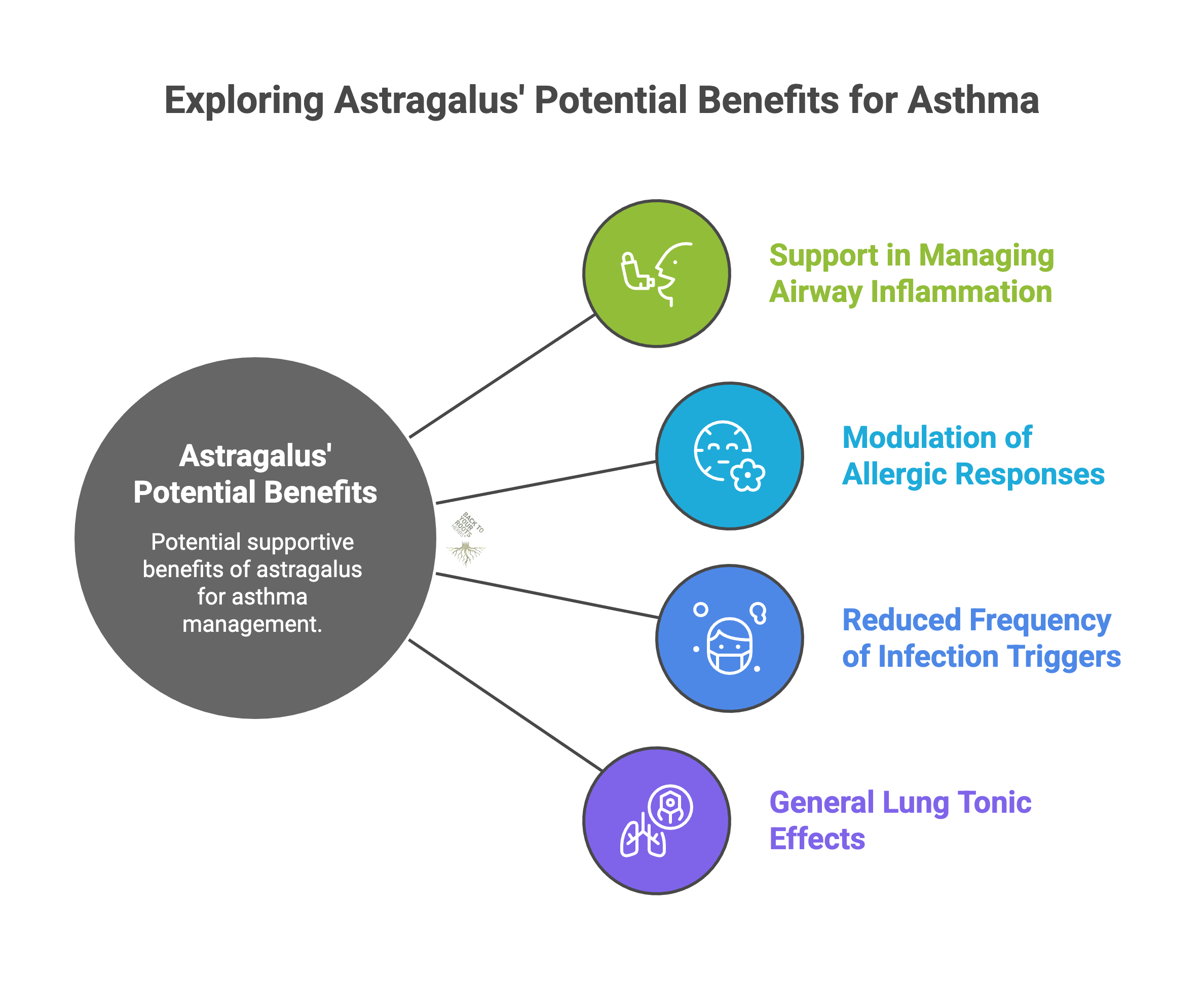
- Support in Managing Airway Inflammation: Its anti-inflammatory properties could contribute to reducing chronic bronchial inflammation.
- Modulation of Allergic Responses: May help in managing symptoms related to allergic asthma, potentially complementing standard therapies.
- Reduced Frequency of Infection Triggers: Its immune-supportive role could decrease the likelihood of respiratory infections that often worsen asthma symptoms.
- General Lung Tonic Effects: Aligning with its traditional use, it might support overall lung resilience.
These remain potential benefits requiring further validation. Astragalus should be viewed as a possible supportive measure, not a primary treatment.
Safety, Usage, and Interactions: Critical Considerations for Asthma
Using any herbal supplement requires careful consideration, especially with a chronic condition like asthma. Safety must be the priority.
General Safety and Side Effects
Astragalus membranaceus is generally considered safe for most adults when used appropriately. Potential side effects are usually mild but can include:
- Mild digestive upset (e.g., bloating, diarrhea)
- Rash or itching (possible allergic reaction)
- Nasal symptoms
Specific Safety Concerns in Asthma
- Allergic Reactions: Astragalus is in the legume family. Individuals with known legume allergies should avoid it. People with asthma often have multiple allergies, increasing the theoretical risk of reacting to a new substance.
- Immune System Stimulation: This is a key consideration. While often beneficial, stimulating the immune system could theoretically be problematic in certain types of asthma or autoimmune conditions. The precise effect of Astragalus membranaceus on the specific immune pathways driving different asthma phenotypes (e.g., eosinophilic vs. neutrophilic) is not fully understood. Use with caution and professional guidance is essential.
- Autoimmune Diseases: Astragalus is generally not recommended for individuals with autoimmune diseases (like lupus, rheumatoid arthritis, and multiple sclerosis) without explicit medical approval, as it might exacerbate symptoms by stimulating immune activity. Some asthma patients may have co-existing autoimmune conditions.
Drug Interactions
Astragalus membranaceus may interact with various medications. This is particularly important for asthma patients who are often on multiple treatments:
| Medication Type | Potential Interaction | Relevance to Asthma Patients |
|---|---|---|
| Immunosuppressants | Astragalus may counteract the effects of drugs designed to suppress the immune system (e.g., Cyclophosphamide, Tacrolimus, Corticosteroids). | High Relevance. Many asthma patients use inhaled or oral corticosteroids. Those with severe asthma may use systemic immunosuppressants or biologics. Interaction is a significant concern. |
| Diabetes Medications | Astragalus might lower blood sugar levels, potentially increasing the risk of hypoglycemia when taken with diabetes drugs. | Relevant if the patient has comorbid diabetes. Blood sugar monitoring is needed. |
| Anticoagulants/Antiplatelets | May potentially affect blood clotting (theoretical risk). | Relevant if the patient is taking blood thinners for other conditions. |
| Lithium | Astragalus might affect how the body eliminates lithium. | Relevant if the patient takes lithium. |
Always inform your doctor and pharmacist about any herbs or supplements you are taking, including astragalus.
Because asthma is so often managed with prescription medication, interaction awareness matters more here than it would for a casual supplement. In our review of pharmacology references, three categories stand out. First, astragalus may add to the effect of immunosuppressant drugs such as cyclophosphamide, and because it can nudge immune activity, anyone taking immunosuppressants should involve their prescriber before use. Second, some references note a theoretical interaction with anticoagulant and antiplatelet medicines such as warfarin, where bleeding risk could be affected, so monitoring is sensible. Third, astragalus has traditionally been described as having a mild diuretic quality, which could in theory add to the effect of prescription diuretics. Most important of all, astragalus should be viewed as a possible complement to, and never a replacement for, inhaled corticosteroids, bronchodilators, or other controller medication. Keep taking every prescribed asthma medication exactly as directed, and treat any herbal addition as a conversation to have with the clinician who manages your asthma. Memorial Sloan Kettering Cancer Center maintains an accessible About Herbs summary for astragalus covering interactions and precautions.
Contraindications
- Pregnancy and Breastfeeding: Safety is not established. Avoid use unless approved by a healthcare professional. Some animal research raised concerns.
- Known Autoimmune Diseases: Avoid unless under strict medical supervision.
- Organ Transplant Recipients: Avoid due to potential interference with anti-rejection medications.
Dosage and Forms
There is no established standard dose of astragalus specifically for asthma management. Dosages used in research or traditional practice vary widely.
- General Ranges: Studies have used doses ranging from 9-30 grams of the dried root per day (often as a decoction – simmered in water) or standardized extracts typically providing 250-500 mg per dose, taken multiple times daily. Astragalus root powder dosages might range from 1-30 grams daily, often starting lower.
- Forms: Available as dried root slices (for tea/decoction), powder, capsules, and tinctures (liquid extract). Decoctions are a traditional method for extracting water-soluble compounds. Standardized extracts ensure a consistent level of active compounds like astragalosides.
- Recommendation: If considering astragalus, start with a very low dose to assess tolerance. Consult a qualified healthcare professional (doctor or herbalist knowledgeable about asthma and herbs) to discuss appropriate forms and dosage for your individual situation. Do not exceed recommended dosages on product labels unless advised by a professional; very high doses (above ~28g/day) might paradoxically suppress immune function. Use in children should only be under professional guidance.
Choosing and Using Astragalus Supplements
If you and your healthcare provider decide that incorporating Astragalus membranaceus is appropriate:
- Quality Matters: Choose products from reputable manufacturers that perform quality testing for identity, purity, and contaminants. Look for organic certification if possible. Ensure the product specifies Astragalus membranaceus or Astragalus mongholicus (often used interchangeably).
- Preparation: Dried root slices can be simmered in water for 30-60 minutes to make a decoction (tea). Powder can be added to smoothies, soups, or warm water. Capsules and tinctures offer convenience. Follow product instructions.
Quality Markers Worth Checking
In our own sourcing work, we have found that astragalus supplement quality varies widely, and a few checks separate a considered product from a commodity one. Look for manufacturing in a facility that follows current Good Manufacturing Practices, often shown as cGMP, which speaks to batch consistency and contamination control. Look for standardization, meaning the label states a defined percentage of active constituents such as astragalus polysaccharides or astragalosides rather than only listing raw root weight. Look for third-party or independent laboratory testing covering identity, heavy metals, and microbial contamination, since astragalus is a root crop and roots concentrate whatever is in their soil. Species and origin verification matter too. The plant studied for the properties discussed on this page is Astragalus membranaceus, now often classified as Astragalus mongholicus, and unrelated Astragalus species do not carry the same constituent profile.
Frequently Asked Questions
Can astragalus treat asthma?
No. Astragalus is not a treatment for asthma, and it should never replace prescribed inhalers or controller medication. The research to date is mostly from laboratory and animal studies, with a few small human studies that suggest an immune-modulating effect. Anyone with asthma should keep managing it under medical supervision.
Is there scientific evidence that astragalus helps with asthma?
There is preliminary evidence, not proof. Preclinical studies report reduced airway inflammation, IgE, and eosinophils, and small human studies report improved FEV1 or peak expiratory flow when astragalus was added to standard care (Wang et al., 2018, PMID: 30294594; Lin et al., 2011, PMID: 21910341). The human evidence base is small and is not enough to draw firm conclusions.
How might astragalus influence the immune response in asthma?
In laboratory models, astragalus polysaccharides appear to shift the Th1 and Th2 balance away from the Th2 pattern linked with allergic asthma, and to lower some inflammatory signals. These are mechanisms observed in research settings, and they are not established clinical effects in people.
Are there side effects of using astragalus if I have asthma?
Astragalus is generally well tolerated in traditional use, but it can stimulate immune activity, which is a specific consideration for asthma that has an allergic or autoimmune component. Some people notice digestive upset. Talk with your healthcare provider before use, especially if your asthma is moderate or severe.
Can I take astragalus with my asthma medications?
That is a question for your prescriber. Astragalus may interact with immunosuppressant drugs, with anticoagulants such as warfarin, and possibly with diuretics. It should be used alongside your prescribed asthma controllers, never instead of them. Do not stop or reduce any prescribed medication to try an herb.
What dose of astragalus is used, and in what form?
Traditional and study contexts vary widely, from decoctions of dried root to standardized extracts, capsules, powders, and tinctures. There is no established asthma-specific dose. Because forms and concentrations differ so much, follow the product-specific guidance and confirm with your healthcare provider before starting.
Final Thoughts on Astragalus and Asthma Management
Astragalus membranaceus is an intriguing herbal tonic with recognized anti-inflammatory, antioxidant, and immune-modulating properties. Traditional use and preliminary scientific findings suggest it might offer supportive benefits for lung health and potentially play a role in managing aspects of chronic airway inflammation seen in conditions like asthma and potentially COPD.
However, its use in asthma requires significant caution. The evidence for its specific efficacy in treating asthma is limited. More importantly, its potential to interact with essential asthma medications (especially corticosteroids and immunosuppressants/biologics) and its theoretical effects on the immune system mean it should never be used as a replacement for conventional asthma treatment.
Any consideration of using astragalus supplements for asthma must involve a thorough discussion with healthcare providers who understand both asthma management and herbal medicine. Safety, potential interactions, and the lack of strong clinical evidence must be carefully weighed against any potential benefits. Astragalus may hold promise as part of a holistic approach for some individuals, but only when used responsibly and under professional guidance as a complement to, not a substitute for, standard medical care for asthma.
These statements have not been evaluated by the Food and Drug Administration. This product is not intended to diagnose, treat, cure, or prevent any disease. This article is for educational purposes only and is not medical advice. Asthma is a serious medical condition. Always consult your healthcare provider before using any herbal supplement, and never change or stop prescribed asthma medication without medical guidance.