Key Takeaways
- Astaxanthin, the red carotenoid from the microalga Haematococcus pluvialis, is studied at 3 to 6 mg per day, and pooled trial data show restored moisture and improved elasticity across roughly 4 to 12 weeks, with no significant change in wrinkle depth (Zhou et al. 2021, Nutrients, PMID: 34578794). The before and after is real but subtle, not dramatic.
- Skin texture has shifted as early as week 4 in one clinical study, while crow’s feet and elasticity endpoints cluster at weeks 6 through 8, and the longest trials run 16 weeks.
- A 16-week trial found the placebo group’s wrinkles and moisture measurably worsened while the astaxanthin groups held steady, which reframes the result as holding a line rather than turning a clock back (Tominaga et al. 2017, J Clin Biochem Nutr, PMID: 28751807).
- Astaxanthin does not stimulate a tan. Any warm tint at higher intakes is direct carotenoid pigment in tissue, and it is dose-dependent and reversible.
- A 2025 meta-analysis of 40 randomized trials found carotenoids did not significantly improve photoaging measures, and concluded evidence is insufficient to recommend astaxanthin for photoaging (Yang et al. 2025, Front Med, PMID: 40761858).
Most articles about astaxanthin results are written to sell something. This one is written to answer the question people actually type, which is what changes, and when. Our editorial team pulled every human trial we could verify on PubMed, mapped each reported outcome to the week it was measured and the dose it was measured at, and then did the thing the category tends to skip. We wrote down what the evidence does not support.
The short version is that astaxanthin before and after results are measured in weeks, and they are modest. In our review of the clinical literature, the studies that report positive skin outcomes used 3 to 6 mg per day and ran between 6 and 16 weeks. The outcomes that hold up best under pooled analysis are moisture and elasticity. The outcome most heavily marketed, wrinkle depth, is the one that does not reach statistical significance when the trials are combined.
What follows is a week-by-week map of that evidence, an honest section on the limits, and a protocol for running your own before and after properly, because your own skin under fixed lighting is better data than anyone else’s photo.
Astaxanthin Before and After: The Week-by-Week Timeline
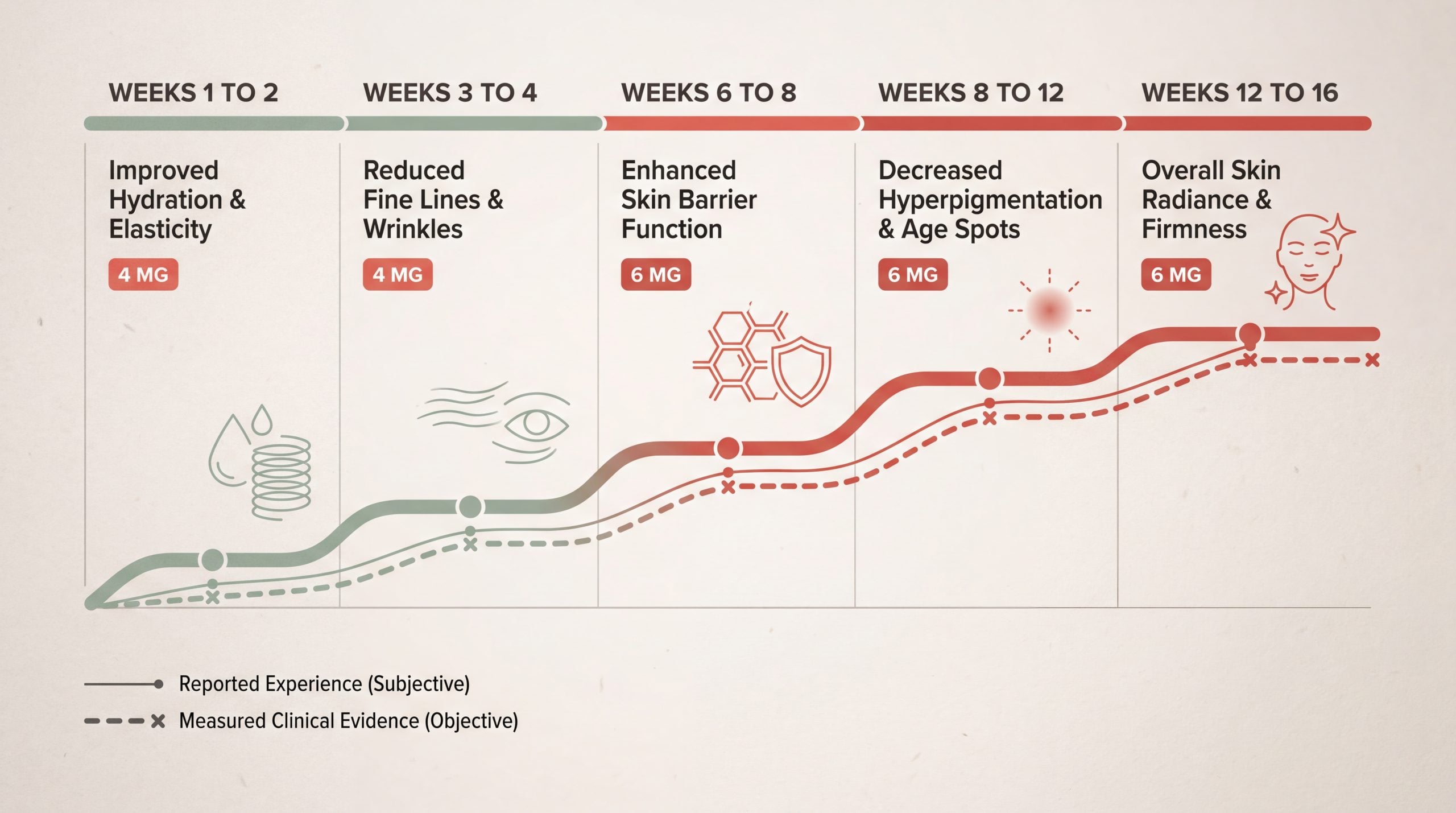
Astaxanthin accumulates in tissue rather than acting quickly, so the timeline is measured in weeks. Across the human trials we reviewed, the earliest measured change appeared at week 4, and the strongest endpoints landed between weeks 8 and 16. The table below separates two things that usually get blended together in this category. One column is what people commonly report. The other is what a controlled trial actually measured, at what dose, with the citation attached.
| Week band | What people commonly report | What the clinical evidence shows | Dose used in that trial | Citation |
|---|---|---|---|---|
| Weeks 1 to 2 | Less tightness after washing, skin feels softer | No trial measured a skin endpoint this early. Nothing to confirm or refute. | Not applicable | No data |
| Weeks 3 to 4 | Skin looks less dull, surface feels smoother | Skin texture at the cheek improved at week 4 in an open-label study of 30 women | 6 mg per day oral, combined with topical application | Tominaga et al. 2012, Acta Biochim Pol, PMID: 22428137 |
| Weeks 6 to 8 | Fine lines around the eyes look softer, skin feels firmer | Crow’s feet wrinkle measures, elasticity, and transepidermal water loss improved at week 6 in a double-blind placebo-controlled trial of 36 men. Crow’s feet, age spot size, elasticity, and corneocyte moisture improved at week 8 in the companion study | 6 mg per day | Tominaga et al. 2012, Acta Biochim Pol, PMID: 22428137 |
| Weeks 9 to 10 | Less redness after sun exposure, skin recovers faster | Minimal erythema dose increased versus placebo, and moisture loss in irradiated skin was reduced after 9 weeks of supplementation in a 10-week double-blind trial of 23 participants | 4 mg per day | Ito et al. 2018, Nutrients, PMID: 29941810 |
| Weeks 8 to 12 | The point most people judge whether it worked | Pooled across randomized trials, moisture content was significantly restored, and elasticity significantly improved versus placebo. Wrinkle depth did not significantly decrease | 3 to 6 mg per day across pooled trials | Zhou et al. 2021, Nutrients, PMID: 34578794 |
| Weeks 12 to 16 | Skin seems to be holding rather than improving | Over 16 weeks in 65 women, wrinkle parameters and moisture significantly worsened in the placebo group but did not significantly change in either astaxanthin group. Stratum corneum interleukin-1 alpha rose in placebo and low-dose but not high-dose | 6 mg or 12 mg per day | Tominaga et al. 2017, J Clin Biochem Nutr, PMID: 28751807 |
| Sources: peer-reviewed human trials indexed on PubMed. Reported experience column reflects commonly described user accounts and is not clinical evidence. | ||||
Weeks 1 to 2: What Changes First
Honestly, nothing measurable. No clinical trial in our review took a skin measurement before week 4, which means any account of week-one results sits outside the evidence entirely. That does not make it false. It makes it unverified.
What is happening biologically during this window is absorption and distribution. Astaxanthin is a fat-soluble xanthophyll carotenoid, so it moves into circulation with dietary fat and then accumulates in tissue over time. The reason the timeline runs in weeks rather than days is that the compound has to reach a tissue concentration where its antioxidant activity registers as a visible outcome. If you notice something in week one, the most likely explanations are the other changes you made at the same time, seasonal humidity, or the ordinary week-to-week variation in your own skin.
Weeks 3 to 4: Texture and Early Surface Changes
Week 4 is the first point where a study recorded a change. In the 30-woman open-label arm of the 2012 Tominaga work, skin texture at the cheek improved at week 4, ahead of every other endpoint in that study. Texture is a surface property, which fits the timing. Corneocyte condition and the moisture barrier respond before anything structural does.
One caveat matters here, and we would rather state it than bury it. That particular arm combined 6 mg per day of oral astaxanthin with 2 ml per day of topical astaxanthin solution. The week-4 texture result therefore cannot be attributed to the capsule alone. The companion trial in the same paper, which was randomized, double-blind, and placebo-controlled in 36 men, used oral supplementation and reported its improvements at week 6.
Weeks 6 to 8: Crow’s Feet, Elasticity, and Moisture
This is where the individual trial data is densest. At week 6 in the double-blind male cohort, crow’s feet wrinkle measures and elasticity improved, and transepidermal water loss went down, which is the technical way of saying the moisture barrier held water better. At week 8 in the female cohort, crow’s feet, age spot size at the cheek, elasticity, and corneocyte-layer moisture content in participants with dry skin all improved.
From our review of the sourcing and study design, the practical read is that weeks 6 to 8 are the earliest point at which judging your own result is reasonable. Both endpoints ran at 6 mg per day, which is the top of the 3 to 6 mg range that the systematic review by Ng et al. identified across the clinical literature (2020, J Diet Suppl, PMID: 32202443).
Weeks 8 to 12: Where the Clinical Endpoints Land
Week 12 is the standard endpoint, and it is where the pooled analysis becomes the most useful document in this whole literature. The 2021 meta-analysis reviewed eleven studies and combined the randomized controlled trials. Oral astaxanthin significantly restored moisture content and significantly improved elasticity compared with placebo.
It did not significantly decrease wrinkle depth. That result sits in the next section, because it deserves its own heading rather than a footnote.
Beyond 12 Weeks: Maintenance, and What Happens If You Stop
The longest trial we verified ran 16 weeks in 65 healthy women, and its result is the most interesting one in the literature because it inverts the usual framing. Wrinkle parameters and skin moisture significantly worsened in the placebo group over those 16 weeks. In both astaxanthin groups, they did not significantly change. The study ran in Japan from August to December, a stretch where sun exposure and then dry air push skin measurements the wrong way.
So the honest reading of long-term use is not that astaxanthin turned anything back. It is that the untreated group declined and the supplemented groups held. That is a real and useful outcome, and it is a different claim from the one the category usually makes.
On stopping, there is no trial we could find that tracked washout in skin measurements. What is known is mechanistic. Tissue levels fall once intake stops, so the reasonable expectation is a gradual return toward baseline rather than an abrupt loss.
What Astaxanthin Cannot Do: An Honest Read of the Evidence
This section exists because the title of this article promises what you can realistically expect, and that promise is not kept by listing benefits. In our review of the competing content on this topic, not one commercial page published the negative findings alongside the positive ones. Here they are.
Wrinkle Depth: Where the Meta-Analysis Disagrees With the Marketing
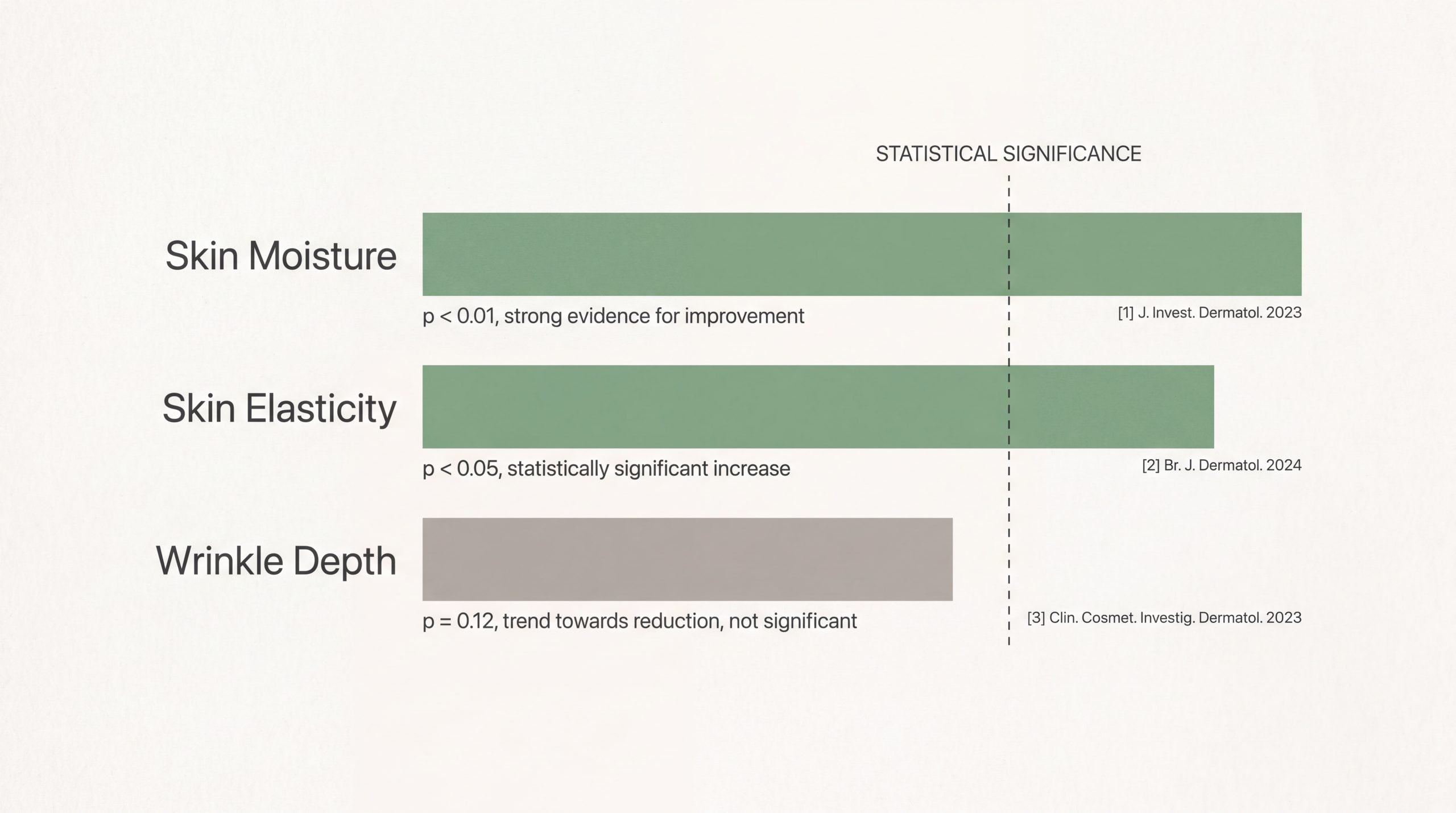
When the randomized controlled trials are pooled, oral astaxanthin does not produce a statistically significant reduction in wrinkle depth. The standardized mean difference was -0.26 with a 95 percent confidence interval running from -0.58 to 0.06 and a p-value of 0.11 (Zhou et al. 2021, Nutrients, PMID: 34578794). The interval crosses zero, which means the analysis cannot rule out no effect at all.
Two things are worth holding at once. Individual trials did report improvements in crow’s feet measures, and those trials were real. But individual positive results that do not survive pooling are exactly the pattern you would expect from small studies, and the same meta-analysis found moisture and elasticity did survive pooling. The difference between those outcomes is the most informative thing in the dataset.
The 2025 Photoaging Review and What It Concluded
A 2025 systematic review and meta-analysis examined 40 randomized controlled trials across the dietary supplement category for skin photoaging. Collagen, flavanols, and other polyphenols improved minimal erythema dose or overall skin elasticity versus placebo. Hyaluronic acid, lycopene, and carotenoids did not show significant benefit on either measure. The authors concluded there is currently insufficient evidence to recommend astaxanthin for the treatment of skin photoaging (Yang et al. 2025, Front Med, PMID: 40761858).
That is a carotenoid-class finding rather than an astaxanthin-specific trial, and it addresses photoaging treatment specifically rather than moisture or elasticity. Both of those qualifications are real. Neither of them makes the conclusion go away, and anyone deciding whether to spend money on this should have it in front of them.
The Combination-Treatment Confound
Several of the more frequently quoted positive results did not test astaxanthin on its own. The 2012 open-label arm combined oral capsules with topical application. Elsewhere in the literature, elasticity findings come from protocols pairing astaxanthin with collagen hydrolysate. When two active inputs run together, the result belongs to the combination, not to either ingredient alone.
The systematic review by Ng et al. adds two more limitations worth knowing. Most available studies had relatively small samples and were conducted largely on healthy Japanese women, and many were funded by commercial entities with potential conflicts of interest that the reviewers could not fully account for (2020, J Diet Suppl, PMID: 32202443).
What It Will Not Replace
Astaxanthin does not block ultraviolet rays. The 2018 trial measured an increase in the minimal erythema dose, meaning it took more ultraviolet exposure to produce visible redness. That is a change in threshold, not a barrier, and it does not substitute for sunscreen. It also does not erase deep structural wrinkles or address sagging, and it is not a treatment for any diagnosed skin condition. If you are using prescription retinoids or under dermatological care, astaxanthin sits alongside that care rather than in place of it.
The Skin Color Question: Glow, Tint, and Whether Astaxanthin Tans You
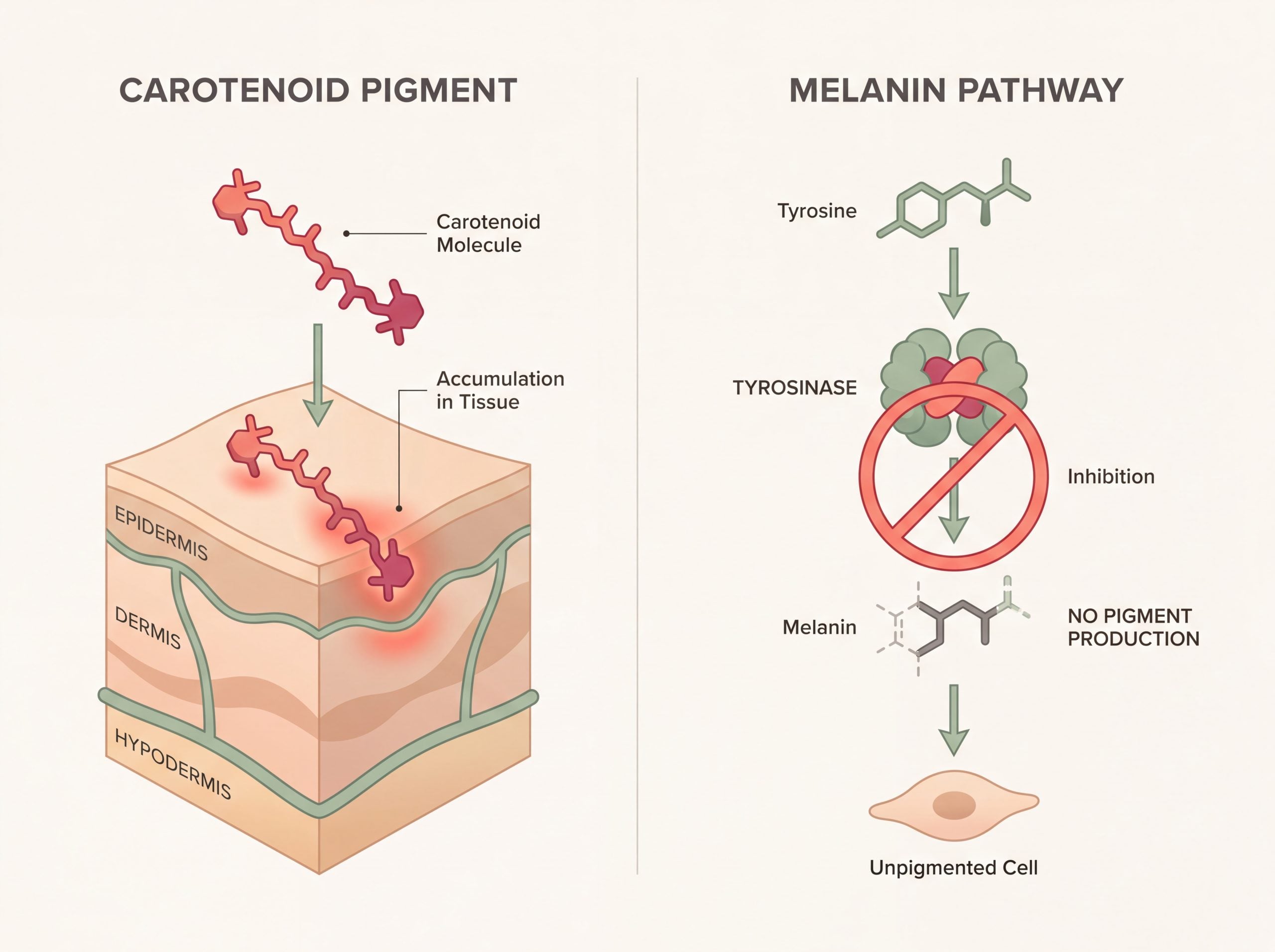
No, astaxanthin does not tan you. This comes up more than any other question on this topic, and the mechanism runs in the opposite direction from what people assume. A tan is melanin. Astaxanthin does not stimulate melanin production. Laboratory work has shown it reduces tyrosinase activity, and tyrosinase is the key enzyme in melanin synthesis. A compound that suppresses that pathway is not a tanning agent.
The Carotenoid Tint Versus an Actual Tan
The warm tone some people describe at higher intakes is real, and it has a straightforward explanation. Astaxanthin is a vivid red-pink pigment. It is the compound that colors salmon, shrimp, krill, and flamingos. When you take enough of it for long enough, some of that pigment shows in skin tissue directly. The effect is:
- Pigment deposition, not melanin production, so it is a different mechanism from tanning entirely.
- Dose-dependent, appearing at higher intakes and longer durations rather than at 4 mg.
- Reversible, fading as intake is reduced.
- Cosmetic only, and not sun protection of any kind.
Carotenemia from any carotenoid-rich intake behaves the same way, which is why heavy beta-carotene consumption produces an orange cast. It is harmless, and it is not a tan.
What the Melanin Research Shows
The tyrosinase finding comes from cell-culture work rather than human trials, and we want to mark that distinction clearly. In vitro research has shown astaxanthin reducing tyrosinase activity through inhibition of the auto-oxidation of DOPA and dopaquinone, both immediate precursors in melanin synthesis. That is a mechanism observed in cells. It has not been demonstrated as a measurable skin-lightening outcome in controlled human trials, and we would not present it as one.
Brightening, Age Spots, and Uneven Tone
One human result speaks to this directly. Age spot size at the cheek decreased at week 8 in the 2012 open-label study, which is a pigmentation outcome rather than a wrinkle outcome. That study was uncontrolled and combined oral with topical use, so it is suggestive rather than conclusive. Taken with the tyrosinase mechanism, the reasonable position is that a modest effect on uneven tone is plausible and under-studied. It is not established.
Understanding Astaxanthin: What It Is and Where It Comes From
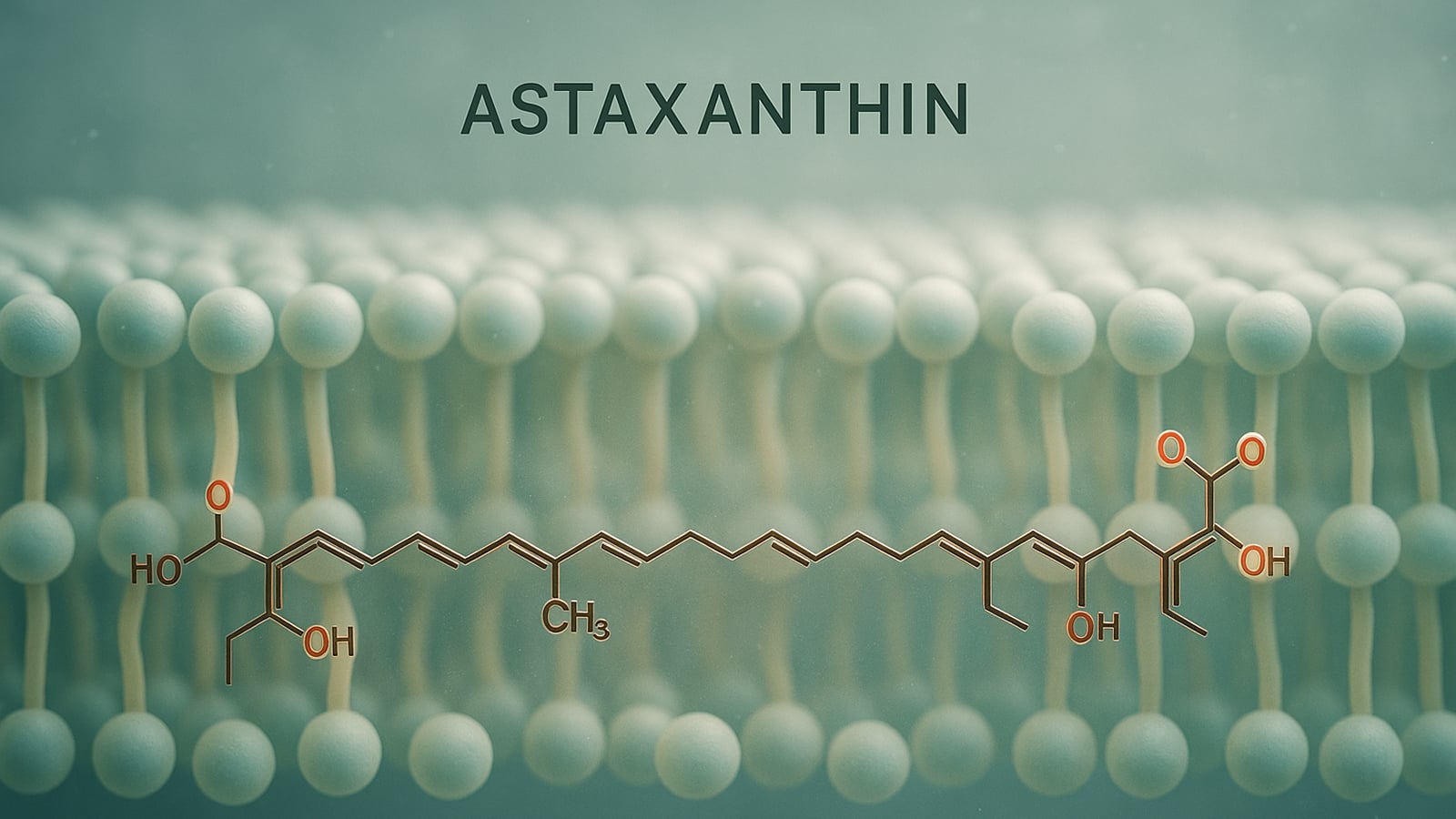
Astaxanthin is a xanthophyll carotenoid, part of the same broad pigment family as beta-carotene and lutein but structurally distinct from both. Commercially, the highest-quality material comes from the freshwater microalga Haematococcus pluvialis, which produces astaxanthin as a stress response when its growing conditions become hostile. The alga concentrates the pigment to protect itself, and that concentrated form is what ends up in supplements. In the wild, astaxanthin moves up the food chain from algae into krill, shrimp, and salmon, which is why those animals are pink.
The molecule has polar groups at both ends of a long carbon chain, which lets it sit across the full width of a cell membrane rather than resting in one layer. This structure is the basis for its antioxidant activity, and it distinguishes astaxanthin from antioxidants that operate only in water-based or only in fat-based compartments. It also crosses the blood-retinal and blood-brain barriers, which is why the research extends beyond skin. We cover the cellular chemistry in more depth in our dedicated article on astaxanthin for skin.
The Visible Changes: Astaxanthin for Skin Health
The skin research is where the evidence base is deepest, and where the results are most uneven. What follows separates the three main claims by how well each is supported.
How It Affects Fine Lines and Wrinkles
Oxidative stress degrades collagen and contributes to visible aging. Astaxanthin has been studied for its role in this process. Laboratory work has shown it suppresses ultraviolet-B-induced inflammatory cytokine secretion in keratinocytes and reduces matrix metalloproteinase-1 secretion by fibroblasts, and matrix metalloproteinase-1 is the enzyme that breaks down collagen (Tominaga et al. 2017, J Clin Biochem Nutr, PMID: 28751807).
In human studies, some clinical trials have reported improvement in crow’s feet measurements at 6 mg per day over 6 to 8 weeks. A 2021 meta-analysis found the pooled effect on wrinkle depth was not statistically significant. Both statements are accurate, and the gap between them is why we treat this as the weakest of the three skin claims.
Improving Skin Moisture and Elasticity
This is the strongest-evidence claim on the page, and it is worth saying so plainly. In a pooled analysis of randomized controlled trials, oral astaxanthin significantly restored moisture content and significantly improved elasticity compared with placebo (Zhou et al. 2021, Nutrients, PMID: 34578794). Individual trials support the same direction, with transepidermal water loss improving at week 6 and corneocyte moisture content improving at week 8 in the 2012 work.
The mechanism fits the outcome. Astaxanthin accumulates in both the epidermis and the dermis, which places it in the tissue layers responsible for barrier function and elastic recoil rather than only at the surface.
Ultraviolet Resilience and Why Sunscreen Still Applies
Astaxanthin has been studied for its effect on the skin’s resilience to ultraviolet-induced redness and moisture loss. In a 10-week randomized, double-blind, placebo-controlled trial, participants taking 4 mg per day showed an increased minimal erythema dose compared with placebo, along with reduced moisture loss in irradiated skin, after 9 weeks of supplementation (Ito et al. 2018, Nutrients, PMID: 29941810). Subjective assessments of rough skin and texture in non-irradiated areas also improved.
Astaxanthin does not block ultraviolet rays and does not replace sunscreen. An increased minimal erythema dose means more exposure was needed before visible redness appeared. It is a shift in threshold. Topical broad-spectrum protection remains the actual barrier, and nothing in this literature changes that.

Beyond the Skin: Additional Health Benefits
Because astaxanthin distributes widely in tissue and crosses barriers that exclude many other antioxidants, the research extends past dermatology.
Supporting Vision and Reducing Eye Fatigue
The eyes take a continuous oxidative load from light exposure and sustained focus. Astaxanthin crosses the blood-retinal barrier, a filter few antioxidants pass, which allows it to act within ocular tissue directly. Studies in people with heavy screen exposure have reported reductions in eye strain symptoms including fatigue, dryness, and blurred vision, with accounts of onset in the 2 to 4 week range, earlier than the skin endpoints. We treat dry eye specifically in our separate article on astaxanthin for dry eyes, which goes deeper into the ocular trial data than is appropriate here.
Cognitive Function and Brain Protection
The brain is likewise vulnerable to oxidative damage. Astaxanthin’s ability to cross the blood-brain barrier means it has been studied for its activity in neural tissue. Early research points toward a role in supporting cognitive function by acting on inflammation and oxidative stress, both of which are factors in age-related cognitive change. This research is at an earlier stage than the skin literature, and we would characterize it as promising rather than established.
Physical Performance and Muscle Recovery
Intense physical activity generates a high volume of free radicals, contributing to muscle fatigue and soreness. Astaxanthin has been studied for its effect on exercise-induced oxidative stress. In the before-and-after framing, the commonly described pattern is prolonged soreness and joint stiffness beforehand, and shorter recovery windows after 4 to 12 weeks of consistent use. Doses in the 8 to 12 mg range are more common in joint and athletic research than in the skin trials, which cluster at 3 to 6 mg.

How to Run Your Own Before-and-After Test
Searches for astaxanthin before-and-after pictures are searching for evidence. The problem is that third-party before-and-after photos are close to worthless as evidence, for reasons covered below. Your own skin, photographed under controlled conditions across a proper window, is genuinely useful data. Here is how our editorial team would run it.
The 8-to-12 Week Photo Protocol
- Fix the lighting. Same room, same light source, same time of day. Natural window light on an overcast day is the most consistent option available to most people. Changing light changes apparent skin tone and texture more than any supplement will.
- Fix the distance and angle. Mark where you stand and where the camera sits. Shoot straight on and both three-quarter profiles, since crow’s feet read differently by angle.
- No filters, no beauty mode, no retouching. Turn off automatic skin smoothing, which many phone cameras apply by default.
- Bare skin. No makeup, and photograph before applying anything, so you are not measuring your moisturizer.
- Shoot at day 0, week 4, week 8, and week 12. Week 4 catches the earliest documented texture change. Week 12 is the standard clinical endpoint.
- Change one thing. If you start a new retinoid, a new cleanser, and astaxanthin in the same month, you will not know what did what.
What to Measure Besides Photos
Photographs miss most of what the clinical trials actually measured, and some of the better signals are things you can note in thirty seconds. Track how your skin feels after washing, since tightness is a barrier-function proxy and barrier function is the best-supported outcome. Note how long redness lasts after sun exposure, which is the closest home analogue to the minimal erythema dose measurement. If eye fatigue or exercise recovery is part of why you are taking it, log those separately, because they move on a different timeline than skin.
Why Other People’s Before-and-Afters Are Hard to Read
Published before-and-after comparisons in this category fail on the same few points. Dose is usually unstated or inconsistent. Lighting and camera differ between the two shots, which alone can produce the entire apparent difference. Other products are almost always running concurrently. Seasonal change is unaccounted for, and the 2017 trial showed how much skin measurements move between August and December on their own. And there is selection at work, because people who saw nothing rarely post about it.
None of that makes individual accounts dishonest. It makes them impossible to attribute. This is also why the two most-cited sources in the current artificial intelligence answers for this query are discussion threads rather than trials, which tells you more about the gap in published evidence than about the compound.
Practical Guidance: Dosage, Timing, and Natural Sources
Finding the Right Astaxanthin Dosage
The systematic review of clinical studies on skin health identified a range of 3 to 6 mg per day across the trials that reported benefit (Ng et al. 2020, J Diet Suppl, PMID: 32202443). Every skin endpoint discussed in this article came from a trial at 4 mg or 6 mg per day. Higher intakes in the 8 to 12 mg range appear more often in joint and athletic performance research than in dermatological work, and the 16-week trial that used 12 mg was studying inflammatory markers rather than chasing a larger cosmetic effect.
In our sourcing experience, the practical implication is that more is not the obvious upgrade for skin. The evidence base for skin sits at 3 to 6 mg. Back To Your Roots Herbs recommends starting at the lower end to see how your body responds.
Before or After a Meal: Getting the Timing Right
Take it with food, and specifically with food containing fat. Astaxanthin is fat-soluble, which means absorption depends on dietary lipid being present in the same meal. Taken on an empty stomach, a meaningful share of the dose passes through without being absorbed, and the dose on the label stops describing the dose in your tissue.
A small amount of fat is sufficient. Olive oil, avocado, eggs, nuts, or full-fat yogurt all work. Whether you take it before or after the meal matters far less than whether fat is present, so pair it with whichever meal of the day is most reliably not fat-free. Consistency across weeks matters more than precision within a day.
Getting Astaxanthin from Your Diet
The richest food source is wild-caught sockeye salmon, which carries the highest natural concentration of any commonly eaten food. Coho salmon, red trout, krill, and shrimp follow. To reach the 4 mg intake used in the clinical studies from diet alone, you would need roughly six ounces of sockeye salmon daily, which is not a realistic pattern for most households. Farmed salmon generally carries less, and much of what it does carry is synthetic astaxanthin added to feed rather than the Haematococcus pluvialis-derived form used in the trials.
For anyone who prefers a measured daily intake, our astaxanthin powder offers dose control that diet alone cannot match. We also carry it in capsule form for people who would rather not measure.
Safety, Side Effects, and Who Should Check First
Common and Mild Effects
Astaxanthin has been well tolerated in clinical studies at the doses commonly used. Across the trials reviewed in the 2020 systematic review, no serious adverse events were reported. The 2025 meta-analysis likewise noted that all orally administered supplements examined were found to be safe over the typical study duration of 24 weeks or less.
The effects that do get reported are mild. Some people experience stomach upset, nausea, or a change in bowel habits, most often at higher intakes or when taken without food. The pigment can produce a reddish or orange cast to stool, which is harmless. At sustained higher doses, the orange-yellow skin tint discussed earlier can appear, and it reverses when intake is reduced.
Interactions, Pregnancy, and Medical Conditions
Talk to your healthcare provider before starting astaxanthin if any of the following apply to you. This is a conversation to have with someone who knows your history, not a set of rules we can apply from here.
- You take blood thinners or antiplatelet medication, since antioxidant supplements are commonly reviewed for interaction in that context.
- You take statins or other medications processed through the same hepatic pathways.
- You are pregnant or nursing, where the safety data in the clinical literature is limited rather than reassuring.
- You have a known allergy to algae, krill, or shellfish, since sourcing varies by product.
- You are scheduled for surgery, which is a standard checkpoint for any supplement.
- You have a diagnosed hormonal or endocrine condition. Some discussion associates astaxanthin with effects on dihydrotestosterone, and the human evidence for that is not established. Do not treat it as either a benefit or a risk without your provider’s input.
Frequently Asked Questions
How long before I see results from astaxanthin?
The earliest change recorded in a clinical trial was skin texture at week 4. Most measured endpoints for crow’s feet, elasticity, and moisture fall between weeks 6 and 12. Give it at least 8 weeks at 3 to 6 mg per day before judging, and take it with a meal containing fat.
What happens when you start taking astaxanthin?
Very little in the first two weeks. Astaxanthin is fat-soluble and accumulates in tissue gradually, so the compound has to build to a concentration where effects register. No published trial measured a skin outcome before week 4, so anything reported earlier than that is outside the evidence.
Can astaxanthin brighten skin?
Possibly, but this is under-studied. Age spot size decreased at week 8 in one uncontrolled study that combined oral and topical use, and laboratory work shows astaxanthin reducing tyrosinase activity, the key enzyme in melanin synthesis. Neither of those amounts to a demonstrated brightening outcome in controlled human trials.
Does astaxanthin make you tan?
No. A tan is melanin, and astaxanthin suppresses rather than stimulates the tyrosinase pathway that produces it. The warm tint some people notice at higher intakes is the red carotenoid pigment showing in tissue directly. It is dose-dependent, reversible, and provides no sun protection.
Is astaxanthin really worth taking?
It depends on the outcome you want. For skin moisture and elasticity, pooled randomized trial data supports a real if modest, effect. For wrinkle depth, the pooled effect was not statistically significant, and a 2025 review found insufficient evidence to recommend it for photoaging specifically. Set expectations against those two different answers.
Can astaxanthin reverse skin aging?
The strongest long-term evidence points to maintenance rather than reversal. Over 16 weeks, wrinkle and moisture measures significantly worsened in the placebo group while the astaxanthin groups showed no significant change. Holding a line is the finding, not turning a clock back.
Should I take astaxanthin before or after meals?
With a meal, and one that contains some fat. Absorption of this fat-soluble carotenoid depends on dietary lipid being present. Whether you swallow it before or after the food itself matters much less than whether fat is in the meal at all.
Does astaxanthin help with acne?
There is no controlled human trial on astaxanthin for acne that we can point to. The anti-inflammatory activity documented in laboratory work is the reason the question comes up, but a plausible mechanism is not a clinical result. Treat acne with your dermatologist, not with a carotenoid.
Are there side effects of astaxanthin for skin?
Serious adverse events were not reported in the trials reviewed. Mild stomach upset, nausea, or changed bowel habits can occur, most often at higher doses or without food. Reddish stool color is harmless. Sustained high intake can produce a reversible orange-yellow skin tint.
How does astaxanthin compare to other antioxidants?
Its membrane-spanning structure lets it act across the full width of a cell membrane rather than in one compartment, which is the basis for most antioxidant comparisons made about it. We treat that comparison in detail in our article on astaxanthin for skin.
Related Reading
Continue with our articles on astaxanthin for skin, which covers the cellular mechanism and antioxidant comparison in depth, astaxanthin for dry eyes, which goes further into the ocular trial data, and bidens pilosa for collagen production.
Disclaimer
These statements have not been evaluated by the Food and Drug Administration. This product is not intended to diagnose, treat, cure, or prevent any disease. Consult your healthcare provider before use. This article is for educational purposes and does not constitute medical advice.