Key Takeaways
- Of the roughly twelve plants sold as aphrodisiacs, only a handful have been tested in randomized human trials, and the measured effects are modest.
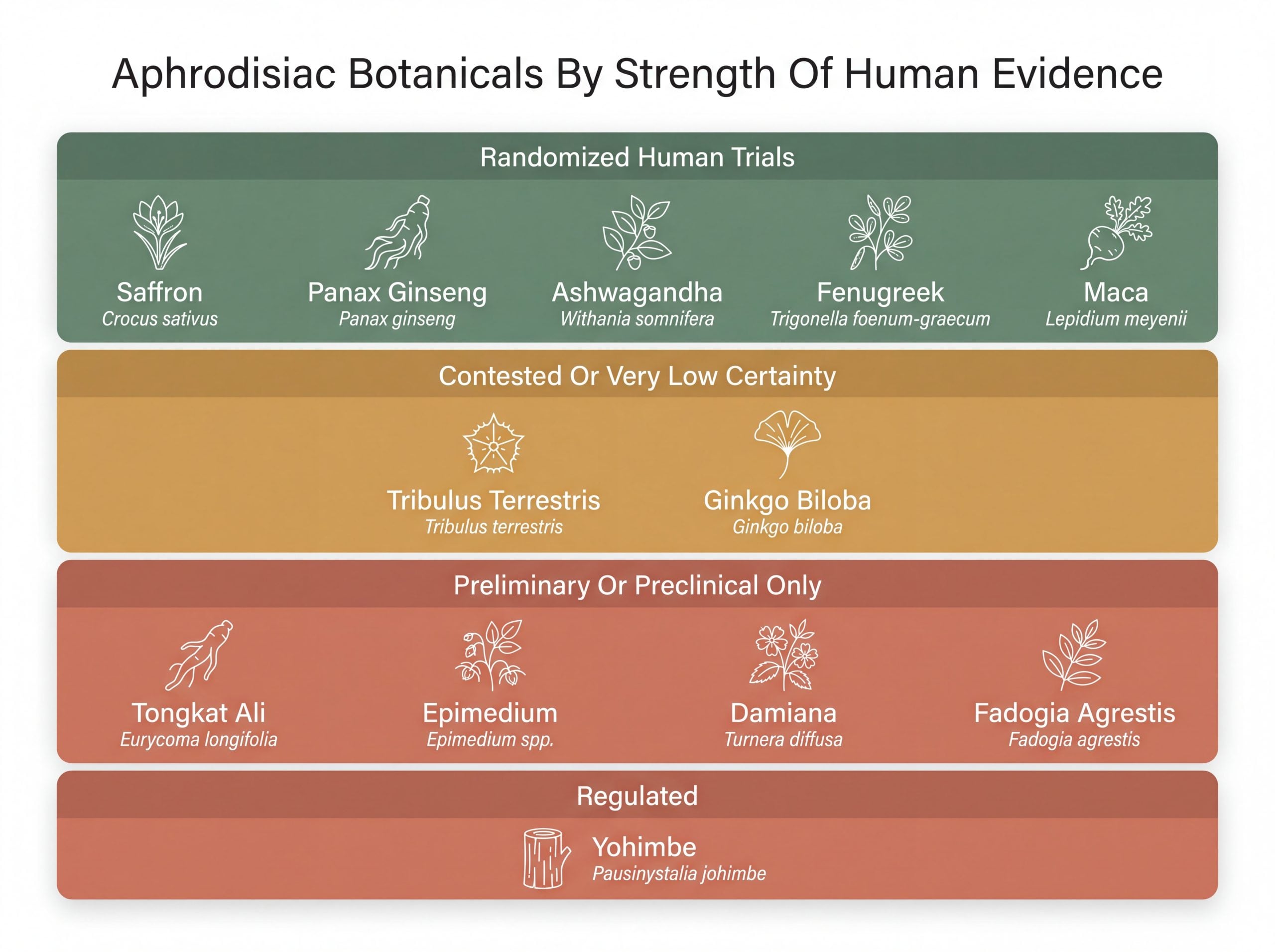
- Saffron, Panax ginseng, ashwagandha, fenugreek, and maca carry the strongest trial records. Damiana, epimedium, and Fadogia agrestis have preclinical data only.
- Maca improved self-reported desire in a 12-week trial without changing serum testosterone or estradiol, so the pathway is not hormonal.
- A review of eleven Tribulus terrestris studies concluded the plant does not raise testosterone in humans, despite decades of marketing that says otherwise.
- Regulators have found sexual-enhancement supplements spiked with undeclared prescription compounds, making verification more important than plant selection.
For centuries, cultures have turned to the plant kingdom for vitality and desire. These plants are called aphrodisiac herbs, named after Aphrodite. Most articles on the subject list the same eight and describe all of them as effective. Our editorial team has reviewed the primary literature behind each, and the picture is more uneven. Some have randomized controlled trials. Several have only rodent studies. One of the most heavily marketed has a systematic review concluding it does not do what the labels claim.
This guide sorts them by strength of human evidence, names what researchers measured, and explains how to verify what is in the bottle you are holding.
Important Disclaimer: The information here is for educational purposes only. It is not a substitute for professional medical advice. Always consult with a qualified healthcare provider before starting any new herbal supplement.
What Are Aphrodisiac Herbs, and Which Ones Have Real Evidence?
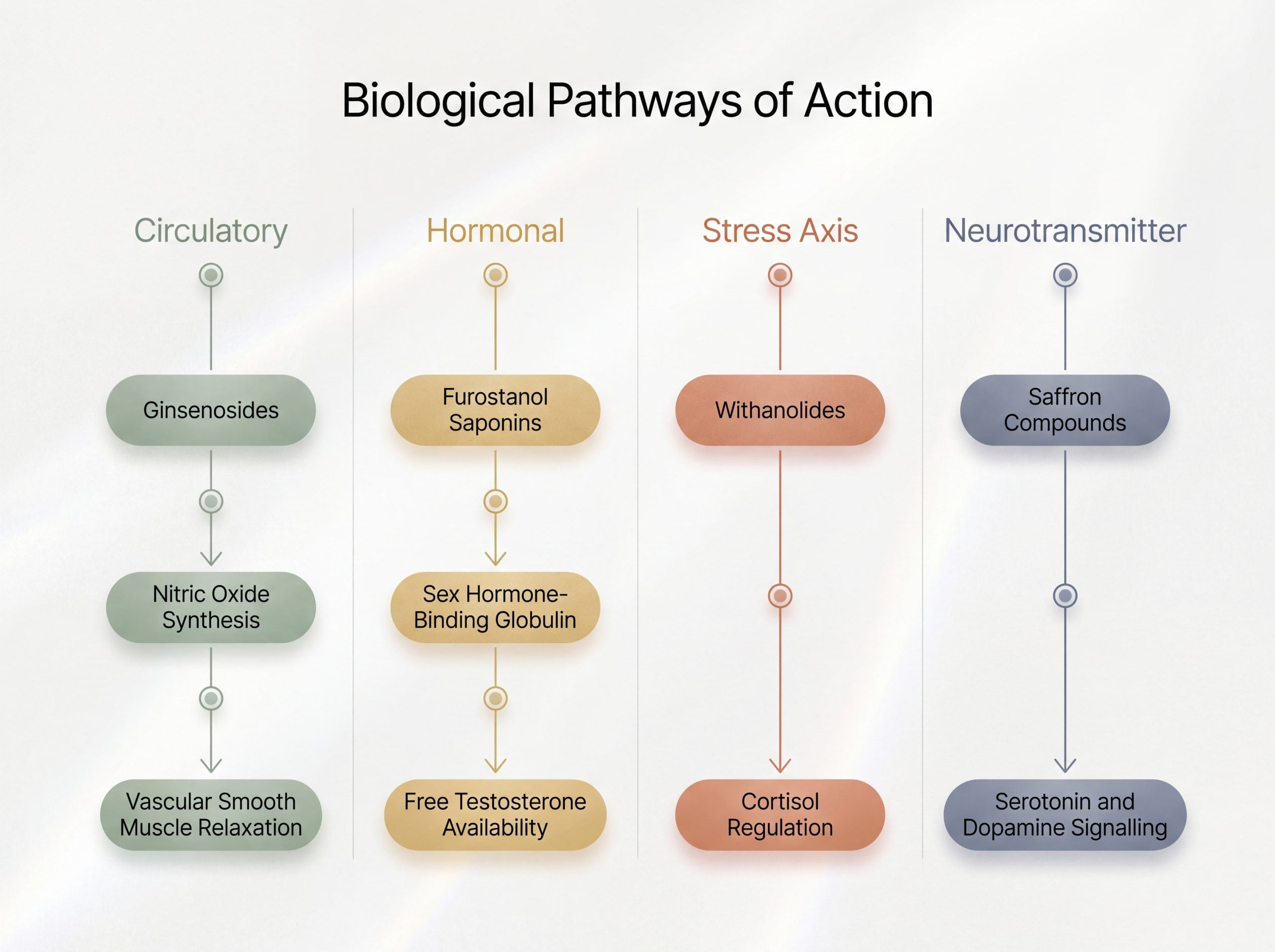
Aphrodisiac herbs are botanicals traditionally used to support sexual desire and vitality, named for Aphrodite and documented across Ayurveda, Traditional Chinese Medicine, and Western herbalism. Research groups their proposed activity into three pathways: circulatory support through nitric oxide signaling, hormonal modulation through sex hormone-binding globulin, and stress-axis support through cortisol regulation. In the literature indexed on PubMed, human clinical data clusters around a small number of species while most traditionally named aphrodisiacs have been tested only in animals, per Kotta, Ansari and Ali (2013), Pharmacognosy Reviews, PMID: 23922450.
The table below sorts by evidence strength rather than popularity, and names the instrument each trial used, because a plant that moved a validated questionnaire score is telling you something different than a plant that changed a rat’s behavior.
| Botanical | Proposed pathway | Human evidence tier | What trials measured |
|---|---|---|---|
| Saffron (Crocus sativus) | Serotonin and dopamine modulation | Randomized trials, pooled | Pooled effect size across 5 studies, 173 participants |
| Panax ginseng | Ginsenosides, nitric oxide synthesis | Randomized trials, mixed quality | Validated function questionnaires across 65 RCTs reviewed |
| Ashwagandha (Withania somnifera) | Withanolides, cortisol response | Randomized, placebo-controlled | DISF-M questionnaire, serum testosterone, 8 weeks |
| Fenugreek (Trigonella foenum-graecum) | Furostanol saponins, SHBG modulation | Randomized, placebo-controlled | DISF-SR scores, plasma and saliva testosterone |
| Maca (Lepidium meyenii) | Non-hormonal, mood and energy | Randomized, placebo-controlled | Self-reported desire at 8 and 12 weeks |
| Tribulus terrestris | Nitric oxide release, not androgenic | Contested, very low certainty | Female function scores across 5 RCTs, 279 participants |
| Ginkgo biloba | Vasodilation, circulatory | Contested, failed replication | Function scores at 2, 4 and 8 weeks against placebo |
| Tongkat ali (Eurycoma longifolia) | Androgen availability | Preliminary human data | Small trials, heterogeneous extracts |
| Epimedium (horny goat weed) | Icariin, PDE5-adjacent signaling | Preclinical, mechanism only | In vitro and animal models |
| Damiana (Turnera diffusa) | Not established | Preclinical only | Animal and in vitro studies, no human trials identified |
| Fadogia agrestis | Proposed androgenic, unconfirmed | Rodent data only | No human trial identified in the indexed literature |
| Yohimbe | Alpha-2 adrenergic blockade | Studied, but regulated | Restricted or banned as a supplement in several jurisdictions |
| Sources: PMID 23922450, 21485695, 31516855, 22969004, 35873404, 21312304, 39288153, 12472620, 32736394, 24559105, 12404672. Tier reflects volume and quality of human data, not a recommendation. | |||
How Do These Plants Actually Work?
Researchers test one of four pathways. It is worth attaching a specific plant to each.
- Circulatory support. Ginsenosides in Panax ginseng are studied for their effect on nitric oxide synthesis, which relaxes vascular smooth muscle. Ginkgo biloba has been examined on the same premise.
- Hormonal availability. Furostanol saponins in fenugreek are proposed to modulate sex hormone-binding globulin, changing how much testosterone circulates free rather than protein-bound.
- Stress-axis regulation. Withanolides in ashwagandha are studied for their effect on cortisol. Chronic stress suppresses desire, so an adaptogen may act indirectly rather than on the reproductive system.
- Neurotransmitter modulation. Saffron influences serotonin and dopamine pathways, which is why most of its trial evidence sits in the context of mood-related difficulty.
Maca is the exception. It improved self-reported desire while leaving serum hormones unchanged, meaning it is not working through the endocrine route most people assume.
A Closer Look at the Best-Studied Botanicals
Maca (Lepidium meyenii)
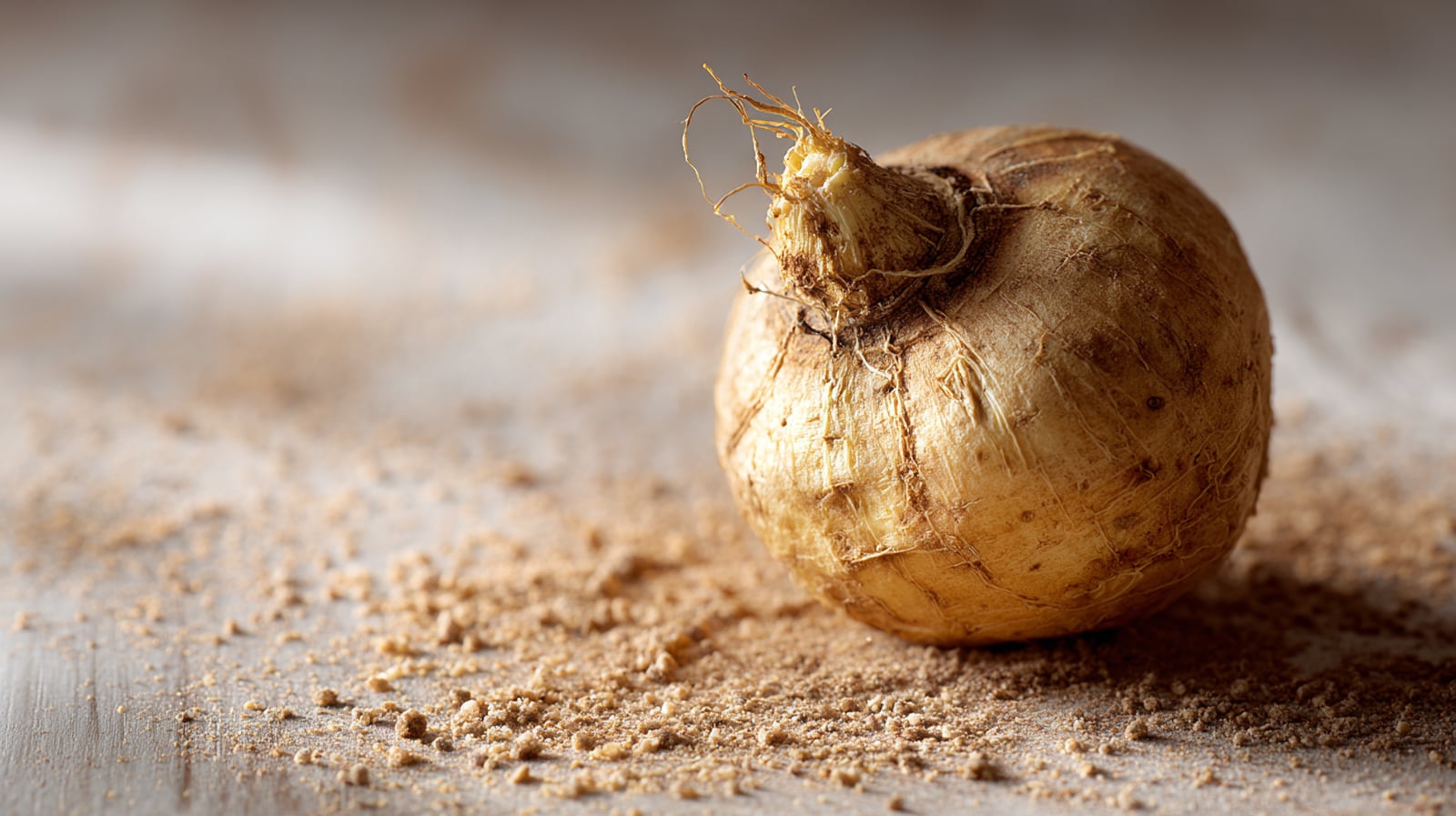
Maca is a cruciferous root native to the Peruvian Central Andes, cultivated between 4,000 and 4,500 meters. In a 12-week trial, men aged 21 to 56 taking 1,500 mg or 3,000 mg reported improved desire beginning at week 8, while serum testosterone and estradiol remained no different from placebo, per Gonzales et al. (2002), Andrologia, PMID: 12472620. A later review notes black, red, and yellow maca behave differently in animal models, so the color variant on a label is not cosmetic, per Gonzales et al. (2009), PMID: 20090350. Those with thyroid conditions may wish to speak with their doctor first.
Panax Ginseng
Often called Asian or Korean ginseng, this adaptogenic root is a cornerstone of Traditional Chinese Medicine, and its ginsenosides are studied for promoting nitric oxide production. A systematic review screening 475 studies and including 65 randomized controlled trials found risk of bias unclear in most, with four examining sexual function, per Shergis et al. (2012), Phytotherapy Research, PMID: 22969004. A Korean review covers the same ground with more detail on preparation, per Shin et al. (2015), PMID: 26331122. Ginseng interacts with blood thinners and diabetes medications, and insomnia is commonly reported.
Tribulus Terrestris
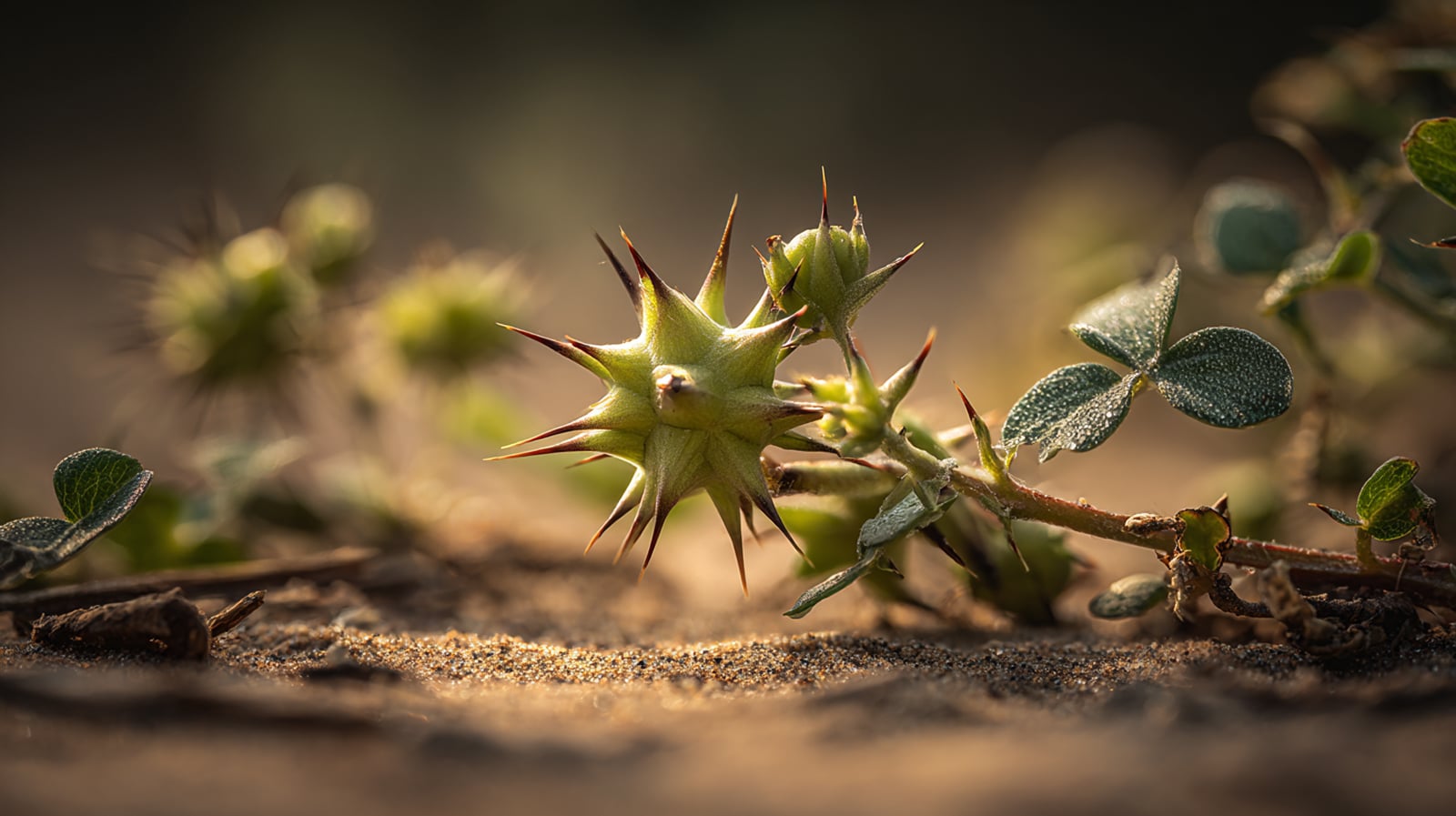
Also known as puncture vine, Tribulus has a long history in Traditional Chinese Medicine and Ayurveda, where it is called gokshura. Here, the evidence points somewhere other than the marketing. A systematic review of eleven studies concluded Tribulus is ineffective for increasing testosterone in humans and that marketing claims to that effect are unsubstantiated, while noting a nitric oxide release effect may explain the responses people report, per Qureshi, Naughton and Petroczi (2014), PMID: 24559105. A separate review of five trials in 279 women found improved function scores but graded that evidence very low certainty, per Martimbianco et al. (2020), PMID: 32736394. Tribulus is the clearest case of a plant whose reputation and evidence base have drifted apart.
Ginkgo Biloba
Ginkgo leaf extract is best known for circulatory and cognitive research. Its reputation here rests on an early positive finding regarding antidepressant-associated sexual difficulty. That finding did not hold up. A placebo-controlled trial of 19 participants on ginkgo and 18 on placebo found no significant difference at weeks 2, 4, or 8, and the authors noted both groups improved, which they read as evidence for how large the placebo response is here, per Kang et al. (2002), Human Psychopharmacology, PMID: 12404672. We kept ginkgo because it is widely discussed, not because the human data supports the reputation. Ginkgo has a blood-thinning effect and should not be combined with anticoagulant medication.

The Other Botanicals Worth Knowing
These plants appear constantly in aphrodisiac lists. Here is where each stands.
Ashwagandha (Withania somnifera). In an 8-week randomized placebo-controlled study, 50 adult men taking 300 mg of standardized root extract twice daily showed significant improvement in total DISF-M scores and serum testosterone against placebo, per Chauhan, Srivastava, and Pathak (2022), Health Science Reports, PMID: 35873404. Its pathway runs through cortisol, not the reproductive system directly.
Saffron (Crocus sativus). A meta-analysis of five studies covering 173 participants reported a significant pooled effect on sexual function, with a standardized difference in means of 0.811 and a 95% confidence interval of 0.356 to 1.265, per Ranjbar and Ashrafizaveh (2019), PMID: 31516855. On pooled effect size, saffron has the strongest signal in this category, which is not what most lists tell you.
Fenugreek (Trigonella foenum-graecum). A placebo-controlled study of 60 healthy men aged 25 to 52 taking 600 mg of standardized extract for 6 weeks found significant increases in the arousal and orgasm subdomains of the DISF-SR, with testosterone and prolactin staying within the reference range, per Steels, Rao and Vitetta (2011), Phytotherapy Research, PMID: 21312304. A larger 12-week trial in 95 men aged 40 to 80 found increased saliva testosterone against placebo only at the highest dose tested, per Lee-Ødegård et al. (2024), PLoS One, PMID: 39288153.
Damiana (Turnera diffusa). Long traditional use in Mesoamerican herbalism, and essentially no human clinical trials. We stock damiana because the traditional record is genuine, and we would rather say plainly that the clinical file is empty than imply otherwise.
Epimedium, or horny goat weed. Its constituent icariin is studied for signaling activity in the same enzyme family targeted by certain pharmaceuticals, which is why it appears in so many discussions. That work is preclinical. The mechanism is interesting, and the human evidence is not there yet.
Tongkat ali (Eurycoma longifolia). Preliminary human research exists. Extract standardization varies widely, making trial results hard to generalize to whatever sits on a given shelf.
Fadogia agrestis. The available data is from rodents, and those studies raised organ-toxicity signals at higher doses. No human trial appears in the indexed literature. We carry Fadogia, and we still think that sentence belongs here.
Yohimbe. Yohimbine, from West African tree bark, acts on alpha-2 adrenergic receptors. It has genuine pharmacological activity and is the entity here most subject to regulatory restriction, including prohibition in food supplements across the European Union. We do not stock it.
Aphrodisiac Herbs for Men Versus for Women
Most of the trial literature splits along this line. Male-focused work concentrates on ashwagandha, fenugreek, and Panax ginseng, typically measuring the DISF-M instrument. Female-focused work concentrates on Tribulus, saffron, and maca, typically measuring the Female Sexual Function Index. Female trials often report changes in desire and lubrication domains, while male trials more often report arousal and satisfaction.
The female evidence base deserves more room than a section here allows, so we have written a separate and considerably longer guide covering aphrodisiac options for women, including botanicals not listed above such as cacao and red clover. Readers focused on the stress and cortisol pathway will find our dedicated guide on ashwagandha and libido more useful than the summary above.
How Do You Tell a Real Botanical Supplement From a Marketed One?
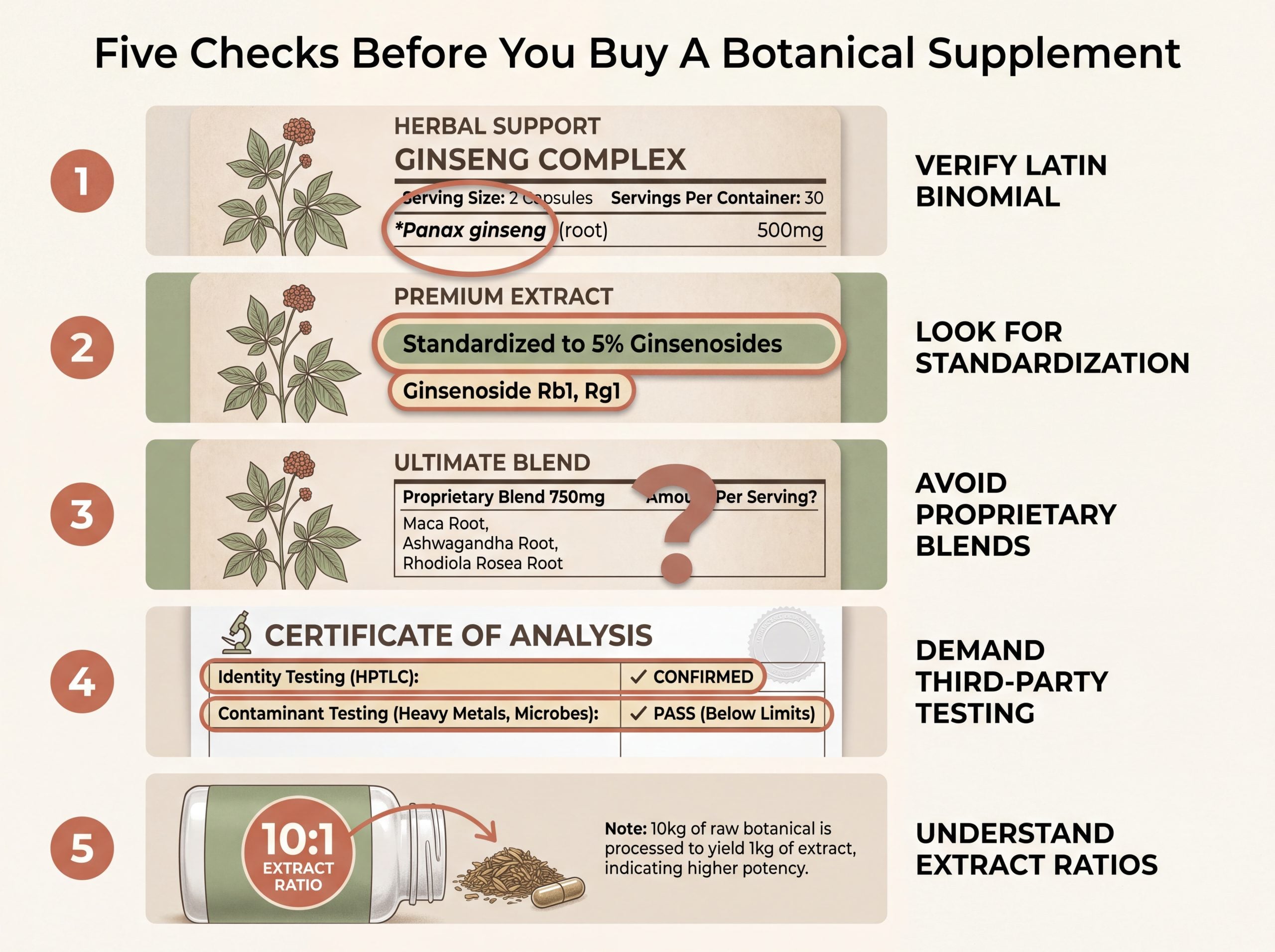
This question matters more than which plant you choose. The United States National Center for Complementary and Integrative Health has documented that products marketed for sexual enhancement are among the most frequently adulterated supplement categories, sometimes containing undeclared prescription compounds that appear nowhere on the label. A plant with excellent trial data is worth nothing if the capsule contains something else. Here is what we check, and what we suggest you check on any brand, including ours.
- The label names one species, with its Latin binomial. “Maca” is a marketing word. Lepidium meyenii is a species. If the binomial is absent, the manufacturer may not want to say which plant material was used.
- A standardization figure is tied to a named marker compound. Trials that produced results used extracts specified by active markers, such as ginsenosides or withanolides. Without a marker figure, a product cannot be compared to the studies people cite when selling it.
- The dose per ingredient is disclosed. A proprietary blend lists ingredients without amounts, which permits a trace of an expensive studied ingredient purely so the name appears on the panel.
- Third-party identity and contaminant testing exists. Identity testing confirms the species. Contaminant testing screens for heavy metals, microbial load, and pharmaceutical adulterants. These are different tests, and a brand should say which it runs.
- Extract ratios are explained rather than displayed. A ratio such as 10:1 describes processing concentration, not potency of any compound. Alone it tells you less than a standardization figure does.
Our editorial team applies sensory analysis and third-party quality testing to every herb profiled on this site, and we would rather a reader use this checklist to interrogate us than take a claim on trust.
How Long Do These Botanicals Take to Show an Effect?
Across every trial cited here, the answer is weeks rather than hours. The maca trial detected an effect at week 8 of a 12-week protocol. The ashwagandha study ran 8 weeks. The fenugreek studies ran 6 and 12 weeks. Any product promising an immediate effect is describing something other than what the research measured.
What About the Placebo Effect?
The connection between mind and sexual response is powerful, and the placebo effect is unusually large in this research area. The ginkgo trial above is the clearest illustration: both treatment and placebo groups improved, and the authors concluded that this was itself the finding worth reporting.
This is why measurement instruments matter. Researchers use validated questionnaires such as the Derogatis Interview for Sexual Functioning and the Female Sexual Function Index because self-report needs structure to be interpretable. Many studies here are small, short, and use non-standardized plant material, and those limitations appear in nearly every review of the topic. That does not invalidate traditional use, and it does call for a measured approach.
Common Questions About These Herbs
What is the most powerful aphrodisiac herb?
No single plant holds that position on the evidence. Ranked by pooled effect size in published meta-analysis, saffron currently has the strongest signal. Ranked by volume of randomized trials, Panax ginseng has been studied most. Popularity and evidence do not track each other closely in this category.
Which herb is called natural Viagra?
Panax ginseng is the plant that phrase most often attaches to in popular writing, largely because of its studied relationship with nitric oxide signaling. The nickname is a media convention, not a description of equivalence. Herbal preparations and prescription medications are different categories of product with different regulatory standards and different magnitudes of measured effect.
Do aphrodisiac herbs raise testosterone?
Mostly not, and this surprises people. Maca improved desire while leaving serum testosterone unchanged. Tribulus was found ineffective for raising testosterone in humans across eleven reviewed studies. Ashwagandha and fenugreek are the two here with trial evidence of measurable hormonal change, and even there the effect sizes are modest.
Is ashwagandha working on libido or on stress?
The proposed mechanism is stress. Withanolides are studied for cortisol regulation, and chronic stress is a well-documented suppressor of desire. A plant that reduces a suppressor is doing something real without acting on the reproductive system directly, which is a meaningful distinction when comparing options.
Does Fadogia agrestis boost testosterone?
There is no human trial in the indexed literature demonstrating that it does. The available evidence comes from rodent studies, which also flagged organ-toxicity signals at higher doses. Anyone telling you the human answer is known is going beyond the published record.
Safety First: A Practical Approach
Natural does not mean universally suitable. Ginkgo has a blood-thinning effect relevant to anticoagulant users. Panax ginseng has documented interactions with blood thinners and diabetes medications. Some of these plants are inappropriate during pregnancy or with particular health conditions. Start with your doctor or a qualified healthcare provider, and bring the specific product with its full ingredient panel, because the plant name on the front of a bottle is the least informative thing about it.
Related Reading
Continue with our guides on aphrodisiacs for women, ashwagandha and libido, the science of Tribulus terrestris, and natural testosterone support.
These statements have not been evaluated by the Food and Drug Administration. This product is not intended to diagnose, treat, cure, or prevent any disease. Consult your healthcare provider before use.