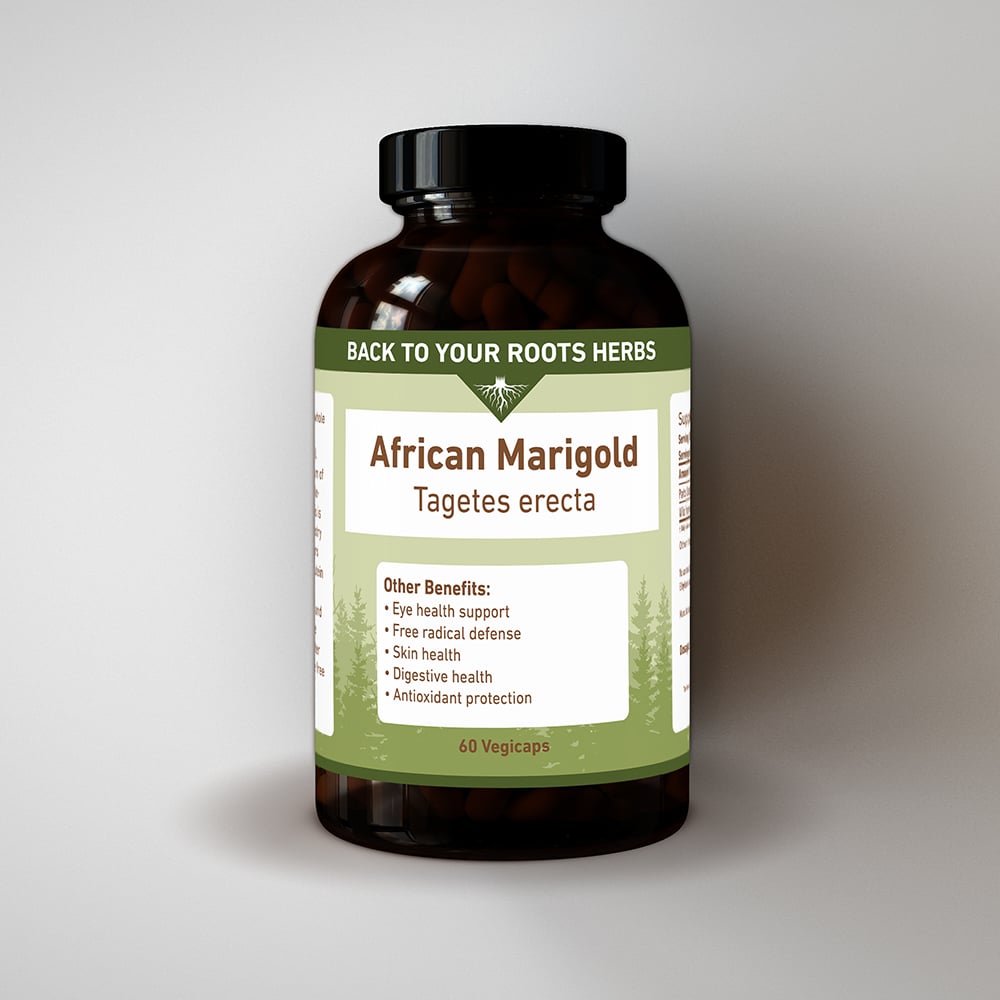
What Are African Marigold Capsules?
African Marigold Capsules hold the whole flower of Tagetes erecta, the orange bloom the Aztecs called cempasuchil. Each capsule carries the full spectrum of the marigold flower, not a single-molecule extract. No synthetic isolate. This is the same botanical the pigment industry depends on, because marigold flowers are the main commercial source of lutein and zeaxanthin, the two carotenoids that gather in the human eye.
The Verdict (Internal Quality Score)
Grade A. Potency Score 9.4 of 10. This African marigold is whole-flower Tagetes erecta grown in the Oaxaca Valley of Mexico (17.0732 N, 96.7266 W), the plant’s native terroir. Petals are low-temperature milled to protect the native carotenoid matrix, then third-party assayed for heavy metals. Lutein can reach up to 90 percent of the identified pigments in marigold petals, which is why this flower, not a lab, remains the world’s lutein workhorse. – Back To Your Roots Herbs Research Group
Sensory Analysis
This is our first-hand report on the raw milled flower.
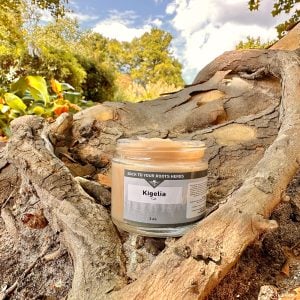
- Look: Deep marigold gold, almost saffron orange, flecked with dried petals.
- Smell: Warm and resinous. A green, faintly peppery marigold note over dried hay.
- Taste: Earthy and floral first, with a light bitter finish typical of a true carotenoid-rich flower.
How Do African Marigold Capsules Work?
Lutein and Zeaxanthin, the Macular Carotenoids
- The Herb: Tagetes erecta, whole flower, sourced from Oaxaca, Mexico.
- The Mechanism: Lutein and zeaxanthin settle in the macula of the eye, where these carotenoids help filter high-energy blue light and neutralize free radicals as antioxidants.
- The Evidence: Research by Madhavan et al. (2018) reported that a marigold-derived lutein and zeaxanthin supplement raised antioxidant enzyme levels and macular pigment measures in a dose-dependent way (PMID 29720843).
Eye Health Support
The eye cannot make lutein or zeaxanthin on its own. It has to pull them from the diet. African marigold is one of the richest food sources of both, which is why marigold-sourced carotenoids sit behind most eye health supplements on the shelf.
Antioxidant and Free Radical Defense
As antioxidants, the carotenoids in this marigold flower help quench free radicals produced by daily light exposure. This is the same phytonutrient activity that supports a healthy inflammatory response across the body.
Skin Health
The carotenoids and phytonutrients in Tagetes erecta are also studied for skin vitality and “beauty-from-within” wellness, a second reason marigold sits in so many botanical formulas.
Tagetes erecta vs Calendula (Pot Marigold)
Do not confuse the two marigolds. African marigold (Tagetes erecta) is the lutein and vision flower. Pot marigold (Calendula officinalis) is the skin-salve flower used in creams and oils. This dietary supplement is Tagetes erecta, the carotenoid source, not calendula.
Marigold Flower Terroir, Oaxaca, Mexico
Despite the “African” name, Tagetes erecta is native to Mexico and Central America, where the Aztecs grew it as cempasuchil. Marigold is not a lab molecule. Because lutein is not made synthetically at scale, this flower is the main industrial source of natural lutein, a market worth roughly 233 million dollars worldwide. Commercial hybrid petals average near 20 milligrams of lutein per gram on a dry-weight basis, and our whole-flower capsules keep that carotenoid matrix intact rather than stripping it down to a single lutein extract.
Critical Usage and Contraindications
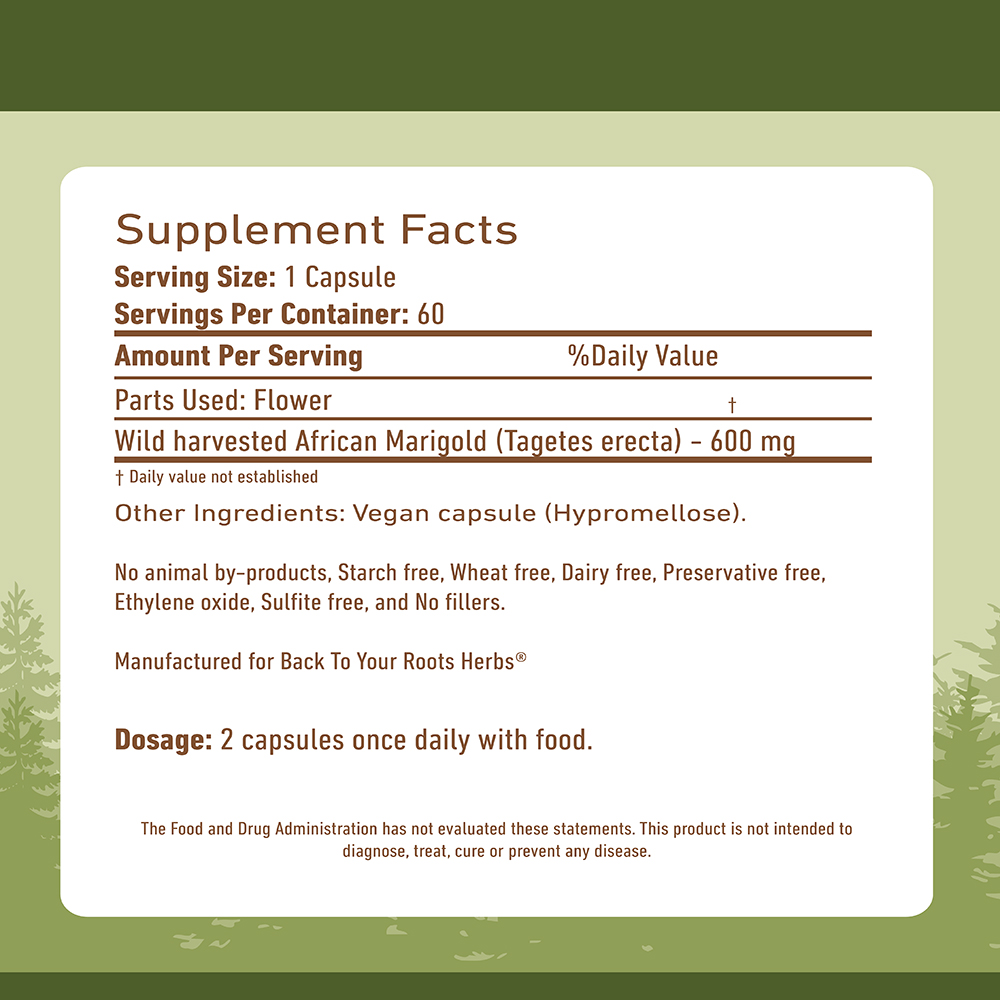
Suggested use: 2 capsules once daily with food, or as directed by your healthcare provider.
Who Should Avoid African Marigold
- Asteraceae allergy: If you react to ragweed, daisies, chrysanthemum, or marigolds, avoid this botanical.
- Pregnancy and nursing: Tagetes species have traditionally been noted to affect uterine tone, so avoid use if pregnant or nursing.
- Medication and surgery: Discuss drug interactions with your provider, and pause supplements about two weeks before scheduled surgery.
- High intake: Very high long-term lutein intake may tint the skin harmlessly. Keep to the label serving.
Clinical Specs
| Spec | Detail |
|---|---|
| Serving Size | 2 Capsules |
| Frequency | Once daily with food |
| Active Marker | Naturally occurring lutein and zeaxanthin (full-spectrum, whole flower) |
| Processing | Low-temperature milled whole flower (no synthetic isolate) |
| Safety | Heavy Metal Tested (Pass) |
| Ingredients | Organic African Marigold flower (Tagetes erecta) |
| Other Ingredients | Vegetable Cellulose (Capsule) |
| Purity | Organic, Non-GMO, Vegan |
| Free From | Wheat, Gluten, Soy, Dairy, Binders, Fillers |
| Origin | Oaxaca Valley, Mexico (native Tagetes erecta terroir) |
| Manufactured | Virginia Beach, VA, USA |
African Marigold Capsules vs Generic Lutein Pills
| Feature | BTYRH African Marigold Capsules | Generic Lutein Pill |
|---|---|---|
| Origin | Oaxaca Valley, Mexico (specified) | Unspecified |
| Preparation | Whole-flower full spectrum (native lutein, zeaxanthin, carotenoids) | Synthetic or isolated lutein only |
| Taste | Earthy, floral, faintly bitter (real flower) | None / generic |
| Safety | Heavy-metal tested, third-party assayed | Unknown/untested |
Third-Party Tested
Every batch is assayed for heavy metals and microbials by an independent lab before it is capsuled.
Batch Notes
Whole-flower marigold, single-origin lot, milled and encapsulated in a cGMP-compliant facility in Virginia Beach.
African Marigold Capsules FAQ
What are African Marigold Capsules used for?
They are a dietary supplement traditionally used to support eye health, antioxidant status, and skin vitality, drawing on the lutein and zeaxanthin naturally present in the Tagetes erecta flower.
Why is Tagetes erecta such a rich lutein source?
Lutein can make up as much as 90 percent of the identified pigments in marigold petals, so the African marigold flower is the primary natural source of lutein for the food and supplement industry.
Do African Marigold Capsules help with blue light?
Lutein and zeaxanthin concentrate in the macula, where these carotenoids help filter high-energy blue light. This is a structure and function role of the pigments, not a treatment claim.
Is this the same as calendula?
No. This is African marigold (Tagetes erecta), the carotenoid and vision flower. Calendula officinalis is the separate pot-marigold used mainly in topical skin care.
DISCLAIMER: These statements have not been evaluated by the Food and Drug Administration. This product is not intended to diagnose, treat, cure, or prevent any disease. Consult your healthcare provider before use, especially if you are pregnant, nursing, taking medication, or have a medical condition.
Reviews
There are no reviews yet.