What is Tribulus Terrestris?
Tribulus terrestris is a flowering plant that thrives in warm temperate and tropical regions worldwide. Also known as puncture vine and Gokshura, it has been used for centuries in traditional medicine systems like Ayurveda and Traditional Chinese Medicine, primarily to address vitality and sexual health concerns. The plant produces a spiny fruit, and various parts, including the fruit, leaves, and roots, have been utilized traditionally.
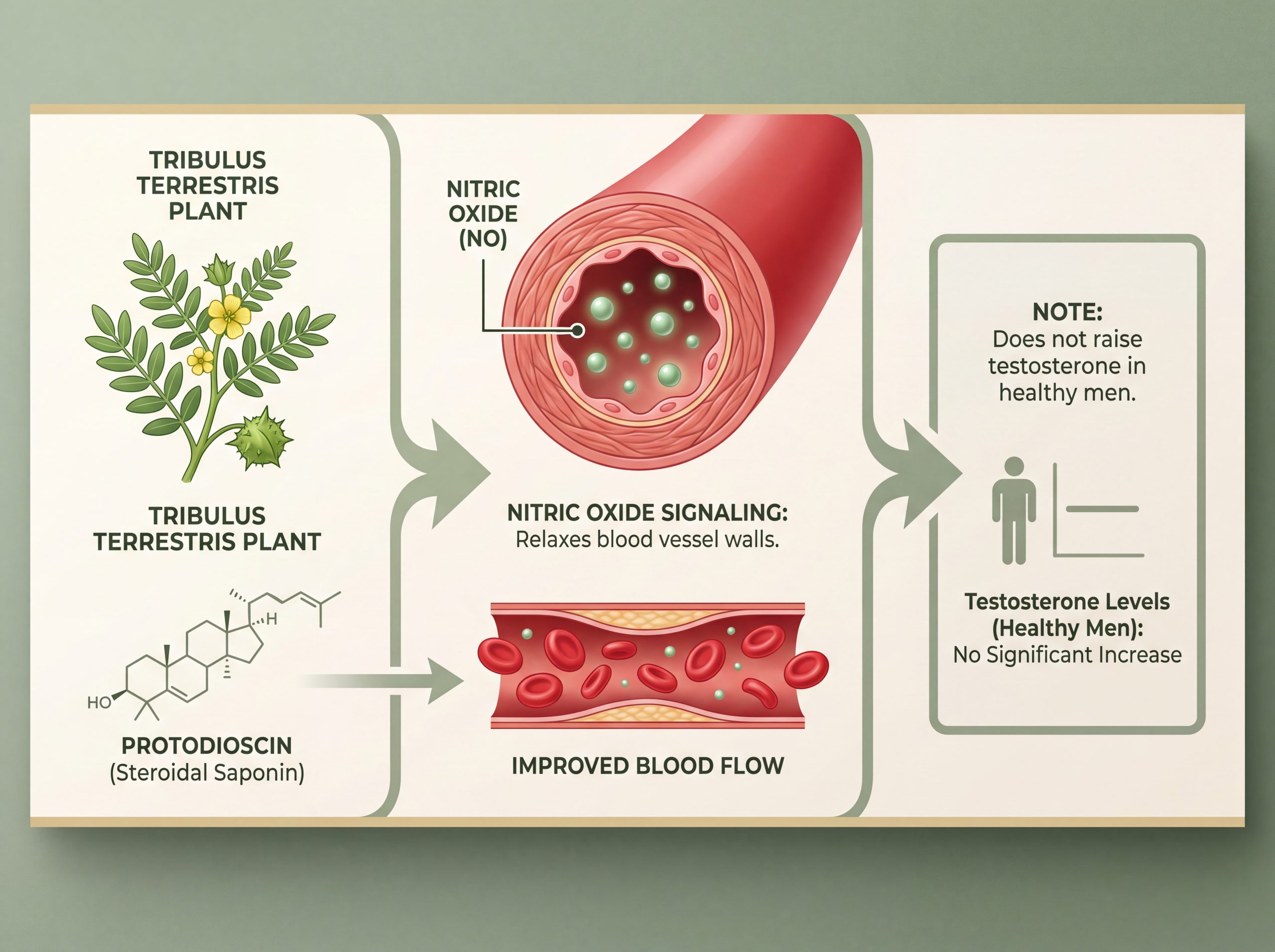
The primary active compounds in Tribulus terrestris are steroidal saponins, particularly furostanol saponins. Protodioscin is a well-studied saponin and is often considered a key indicator of Tribulus quality.
How Might Tribulus Terrestris Affect Sex Drive?
While Tribulus terrestris is often marketed as a testosterone booster, the scientific evidence supporting that claim is, for the most part, weak and inconsistent, especially in healthy individuals. Research does suggest it may positively influence libido and sexual function through several other mechanisms.
Enhanced Nitric Oxide (NO) Production
Nitric oxide (NO) is a vital molecule that acts as a vasodilator, meaning it helps relax blood vessels and improve blood flow. Think of NO as a signal that tells your blood vessels to widen, allowing more blood to circulate. Tribulus terrestris may enhance the activity of an enzyme called nitric oxide synthase (NOS), leading to increased NO production. This improved blood flow can be particularly relevant for erection quality in men and sexual arousal in women.
Androgen Receptor Modulation
Androgen receptors are proteins found in cells throughout the body, including the brain. They bind to androgens (like testosterone), triggering various physiological effects. Although Tribulus terrestris may not substantially increase testosterone levels, research indicates it might influence the sensitivity or density of androgen receptors. This could enhance the effects of existing androgens and contribute to improved libido.
Adaptogenic Properties
Tribulus terrestris is sometimes classified as an adaptogen. Adaptogens are substances that may help the body cope with stress. Since stress is a known libido killer, any stress-reducing effect of Tribulus could indirectly support sexual desire and function.
Hormonal Influence
The herb may assist in supporting balanced testosterone levels. This can be relevant for both men and women who are experiencing hormonal fluctuations, and keeping hormone levels in a healthy balance matters for sexual well-being.
Scientific Evidence: Tribulus Terrestris and Sexual Function
Research into the effects of Tribulus terrestris on sexual function has yielded mixed results, but several controlled trials show promise, particularly for people experiencing specific sexual health concerns. The studies below are drawn from PubMed-indexed, peer-reviewed sources.
Tribulus Terrestris for Men
Erectile Dysfunction (ED)
Some studies suggest Tribulus terrestris supplementation can improve erection function, sexual satisfaction, and overall sexual well-being in men with mild to moderate ED, though the evidence is not unanimous.
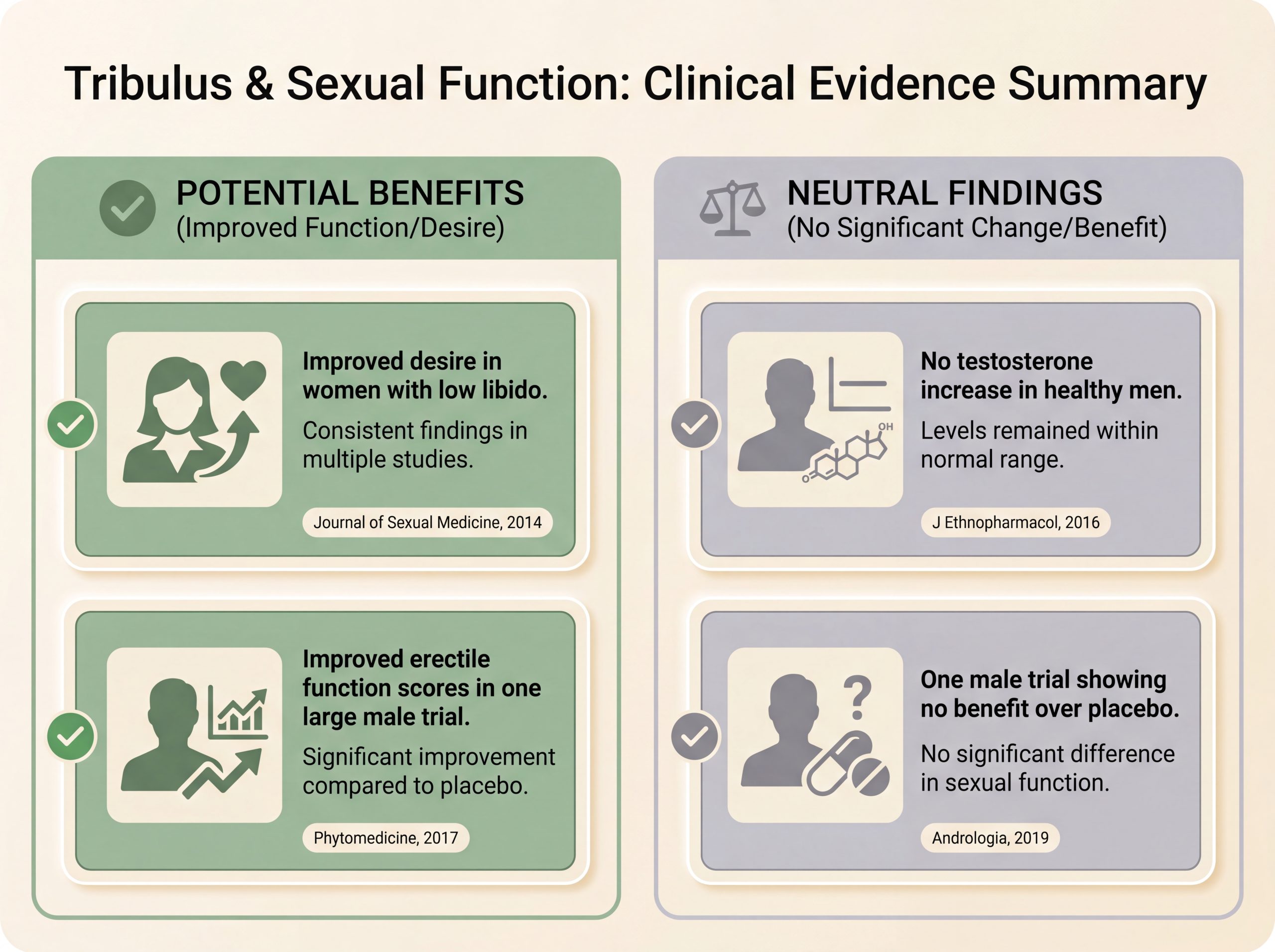
- A prospective, randomized, double-blind, placebo-controlled trial in 180 men with mild-to-moderate ED found that a standardized Tribulus extract taken for 12 weeks produced statistically significant improvements in International Index of Erectile Function scores and in the sexual-desire domain compared with placebo (Kamenov et al., 2017, Maturitas, PMID 28364864).
- Not every trial agrees. A smaller 30-day randomized study found Tribulus was no more effective than placebo for erectile function or serum testosterone (Santos et al., 2014, Actas Urol Esp, PMID 24630840), which is why extract quality and treatment length likely matter.
Libido
Beyond erectile function, the 180-man trial above also recorded a significant gain in the sexual-desire domain, suggesting Tribulus may support libido even where its effect on circulating hormones is negligible.
Tribulus Terrestris for Women
Hypoactive Sexual Desire Disorder (HSDD)
Research indicates Tribulus terrestris may benefit women experiencing low sexual desire. Trials have reported improvements in desire, arousal, lubrication, and satisfaction in women taking Tribulus.
- A randomized, double-blind, placebo-controlled trial in 67 women of reproductive age with HSDD found that a standardized Tribulus extract significantly improved total Female Sexual Function Index scores, including desire and arousal, over four weeks compared with placebo (Akhtari et al., 2014, Daru, PMID 24773615).
Postmenopausal Women
Tribulus terrestris may help ease some of the sexual difficulties associated with menopause, such as decreased libido and vaginal dryness.
- A prospective, randomized, double-blind, placebo-controlled trial in 60 postmenopausal women reported significant improvements in desire, arousal, and lubrication after 90 days of Tribulus compared with placebo (Postigo et al., 2016, Rev Bras Ginecol Obstet, PMID 26902700).
General Libido Enhancement
Some studies suggest Tribulus terrestris can increase sexual desire and satisfaction in women with low libido even without a specific diagnosis like HSDD. While these findings are encouraging, further research is needed to fully understand the long-term effects and optimal use of Tribulus terrestris.
Tribulus, Women’s Hormones, and Fertility
Two questions come up repeatedly about women and Tribulus: how it affects hormones, and whether it touches fertility. On hormones, the picture in women is not well mapped. The trials that reported benefit measured subjective desire and satisfaction rather than serum hormone panels, so the effect may act more on sexual-response pathways than on measurable estrogen or testosterone. On fertility, human evidence specific to Tribulus and conception in women is limited and preliminary, and it should not be treated as a fertility aid. Anyone who is trying to conceive, pregnant, or breastfeeding should avoid Tribulus unless a healthcare provider advises otherwise, because its effects in these situations have not been established.
What the Clinical Trials Show
Reading the trial record as a whole, one point is consistent: Tribulus does not appear to raise testosterone in healthy men. A controlled study in young men found no change in testosterone, androstenedione, or luteinizing hormone (Neychev and Mitev, 2005, J Ethnopharmacol, PMID 15994038), and a 2019 review concluded the evidence does not support Tribulus as a testosterone booster, though it may influence sperm parameters (Santos et al., 2019, J Ethnopharmacol, PMID 30790614). Any libido-related effect is therefore more plausibly linked to the herb’s steroidal saponins, chiefly protodioscin, acting on nitric oxide signaling than to a rise in circulating androgens.
References
- Akhtari E, et al. (2014). Daru, 22(1):40. doi.org/10.1186/2008-2231-22-40
- Postigo S, et al. (2016). Rev Bras Ginecol Obstet, 38(3):140-6. doi.org/10.1055/s-0036-1571472
- Kamenov Z, et al. (2017). Maturitas, 99:20-26. doi.org/10.1016/j.maturitas.2017.01.011
- Santos CA, et al. (2014). Actas Urol Esp, 38(4):244-8. doi.org/10.1016/j.acuro.2013.09.014
- Neychev VK, Mitev VI (2005). J Ethnopharmacol, 101(1-3):319-23. doi.org/10.1016/j.jep.2005.05.017
- Santos HO, et al. (2019). J Ethnopharmacol, 235:392-405. doi.org/10.1016/j.jep.2019.02.033
Other Potential Health Benefits (Preliminary Research)
Beyond sexual health, Tribulus terrestris has been traditionally used, and preliminary research suggests potential benefits in other areas. It is important to emphasize that the research supporting these additional benefits is often preliminary, involving in vitro (test tube) studies, animal studies, or small human trials. More rigorous clinical research is needed to confirm these effects. These potential benefits include:
- Blood Sugar Management: Some studies, primarily in individuals with type 2 diabetes, indicate Tribulus terrestris may help support blood sugar control and insulin sensitivity.
- Cholesterol Levels: There is some evidence that Tribulus terrestris may help support healthy total cholesterol and LDL cholesterol levels.
- Urinary Tract Health: Tribulus terrestris has been traditionally used to support urinary tract health and may have diuretic properties.
- Anti-inflammatory Properties: Tribulus terrestris contains compounds with potential anti-inflammatory effects.
Side Effects, Contraindications, and Drug Interactions
Tribulus terrestris is generally well tolerated for most people when taken at recommended dosages for short periods (for example, up to 90 days). Even so, it is essential to be aware of potential side effects, contraindications, and drug interactions.
Common Side Effects
- Gastrointestinal Issues: The most common side effects are mild digestive upset, including stomach pain, cramping, nausea, diarrhea, or constipation. Taking Tribulus terrestris with food can often minimize these effects.
- Sleep Disturbances: Some individuals may experience insomnia, restlessness, or vivid dreams, especially when taking Tribulus later in the day.
More Serious Concerns (Rare but Important)
- Hormonal Disruptions: Although rare, there is a potential for hormonal imbalance with long-term use, especially in individuals with pre-existing hormonal conditions.
- Gynecomastia: There has been at least one report of gynecomastia linked to Tribulus.
- Kidney and Liver Concerns: There have been isolated case reports of potential kidney or liver toxicity associated with Tribulus use, particularly at high doses or with prolonged use. These cases are rare, and the causal link is not definitively established.
- Rhabdomyolysis: There is documentation of rhabdomyolysis occurring from an interaction between Tribulus terrestris and atorvastatin.
Drug Interactions
Tribulus terrestris may interact with certain medications, including:
- Antidiabetic Drugs: Tribulus may enhance the blood-sugar-lowering effect of antidiabetic medications, potentially leading to hypoglycemia.
- Antihypertensives: Tribulus may have a mild blood-pressure-lowering effect, which could add to antihypertensive drugs and lead to excessively low blood pressure.
- Anticoagulants and Antiplatelets: Tribulus may have mild blood-thinning effects, potentially increasing bleeding risk with drugs such as warfarin or aspirin.
- Lithium: Tribulus can affect how lithium is eliminated, which could lead to a buildup of lithium in the body.
- Statins: Note the potential interaction with atorvastatin and the risk of rhabdomyolysis.
- Diuretics, beta-blockers, digoxin, calcium channel blockers, and nitrates may also interact.
Contraindications
Tribulus terrestris is not recommended for certain individuals:
- Pregnant or Breastfeeding Women: Due to a lack of safety data and potential harm to fetal development, Tribulus should be avoided during pregnancy and lactation.
- Individuals with Hormone-Sensitive Conditions: People with hormone-sensitive conditions such as prostate cancer, breast cancer, or uterine fibroids should avoid Tribulus due to its potential effects on hormone levels.
- People with Kidney or Liver Disease: Individuals with pre-existing kidney or liver problems should exercise caution and consult a healthcare professional before using Tribulus.
- Children: Tribulus is not recommended for use in children.
It is essential to consult a healthcare professional before using Tribulus terrestris, especially if you take any medications or have any underlying health conditions.
Dosage and Usage Recommendations
If you choose to use Tribulus terrestris, following safe dosage guidelines and selecting a high-quality supplement is critical.
Standardized Extracts
Look for Tribulus supplements standardized to contain a specific percentage of saponins, typically 40 to 45 percent or higher. Protodioscin is a particularly important saponin to look for. Standardized extracts help ensure a consistent level of active compounds.
Dosage Ranges
- General Health and Libido: 250 to 750 mg per day, divided into two or three doses.
- Sexual Health: 500 to 1500 mg per day.
Start low and go slow. Always begin with the lowest recommended dose and increase gradually if needed, while monitoring for any side effects.
Cycling
Many practitioners recommend cycling Tribulus terrestris, taking it for a period (for example, 8 weeks) followed by a break (for example, 2 weeks). This may help keep the body from adapting to the herb’s effects and may reduce the risk of long-term side effects.
Timing
Taking Tribulus terrestris with meals can help reduce the risk of gastrointestinal upset. Avoid taking it close to bedtime if you experience sleep disturbances.
Duration
Most studies on Tribulus use it for a limited time (for example, up to 90 days). The long-term safety of Tribulus terrestris is not well established, so prolonged use should be discussed with a healthcare professional.
Can You Combine Tribulus With Other Supplements?
People often ask whether Tribulus terrestris works better alongside other botanicals. In traditional practice, it is frequently paired rather than taken alone. Common companions include maca root (Lepidium meyenii), ashwagandha (Withania somnifera), and zinc, each traditionally used to support vitality and hormonal balance. Some users also combine it with L-arginine or L-citrulline, amino acids the body uses to make nitric oxide, on the theory that this complements the saponin-driven nitric oxide pathway described above.
There is no strong clinical trial data on any specific Tribulus stack for sex drive, so treat combinations as traditional practice rather than proven protocols. Introduce one supplement at a time so you can tell what is doing what, keep each within its own recommended dose, and give any new stack several weeks before judging it. If you take prescription medication, especially blood-pressure, blood-sugar, or hormone-related drugs, review any combination with your healthcare provider first because additive effects are possible.
Choosing a Quality Tribulus Terrestris Supplement
When selecting a Tribulus terrestris supplement, consider the following:
- Third-Party Testing: Choose supplements independently tested by a reputable third-party organization for purity, potency, and the absence of contaminants.
- Reputable Brands: Research brands and look for Good Manufacturing Practices (GMP) certification and positive customer reviews.
- Avoid Additives: Opt for supplements without unnecessary fillers, binders, artificial colors, flavors, or preservatives.
- Forms: Tribulus terrestris comes in capsules, powders, and tinctures.
Tribulus vs Other Supplements for Libido
| Supplement | Primary Claimed Benefit | Evidence for Testosterone Boost | Evidence for Libido / Sexual Function | Potential Side Effects |
|---|---|---|---|---|
| Tribulus Terrestris | Testosterone boost, libido, athletic performance | Weak and inconsistent | Moderate, even without a testosterone boost | Gastrointestinal upset, sleep disturbances |
| Ashwagandha | Stress reduction, testosterone, improved sleep | Moderate, particularly in stressed individuals | Some evidence for improved libido | Generally well tolerated, may cause drowsiness |
| Fenugreek | Testosterone, libido, blood sugar control | Moderate | Good evidence for libido | Gastrointestinal upset, body odor |
| D-Aspartic Acid | Testosterone, muscle growth | Some positive, but inconsistent | Limited evidence | Potential for hormonal imbalance at high doses |
| Zinc | Testosterone support if deficient, immune function | Effective if deficient | May improve if zinc-deficient | Nausea, vomiting at high doses |
| This table is a simplified comparison. Research each supplement individually and consult a healthcare professional. | ||||
Frequently Asked Questions
Does Tribulus actually increase sex drive?
Results are mixed. Randomized trials in women with low desire and in men with erectile dysfunction reported improvements in sexual desire and satisfaction versus placebo, while at least one trial in men found no benefit over placebo. Tribulus is traditionally used to support libido, but it is not a guaranteed or universal effect.
Does Tribulus raise testosterone?
In healthy men, the evidence says no. A controlled study in young men found no change in testosterone or luteinizing hormone, and a 2019 review concluded Tribulus is not scientifically supported as a testosterone booster. Any effect on libido appears to work through nitric oxide signaling from its saponins rather than through raising hormones.
Is Tribulus effective for both men and women?
Both have been studied. The most consistent positive findings are in women with hypoactive sexual desire disorder, including postmenopausal women, and in men with mild-to-moderate erectile dysfunction. Effects vary by individual and by the extract used.
How long does Tribulus take to work?
Most clinical trials ran for four to twelve weeks before measuring results. In traditional use, it is taken consistently over several weeks rather than as a single dose, so allow at least a month of daily use before judging whether it helps you.
Can Tribulus be combined with other supplements?
It is traditionally paired with botanicals like maca and ashwagandha, or with nitric-oxide precursors such as L-arginine. There is no strong trial data on specific stacks, so add one item at a time, stay within each product’s dose, and check with your healthcare provider if you take prescription medication.
Can Tribulus help with fertility?
Human evidence for Tribulus and fertility in women is limited and preliminary, so it should not be used as a fertility aid. If you are trying to conceive, pregnant, or breastfeeding, avoid Tribulus unless your healthcare provider advises otherwise.
What form and dose of Tribulus is best for libido?
Trials that reported benefit generally used standardized extracts labeled for saponin content rather than raw powder, at doses set by the specific study. Choose a product that states its saponin standardization, follow the label, and see the dosage section above for typical ranges and cycling guidance.
Conclusion
Tribulus terrestris is a plant with a rich history in traditional medicine. While it is often marketed as a testosterone booster, the scientific evidence for that claim is weak and inconsistent, particularly in healthy individuals. Tribulus terrestris may offer more promise for supporting libido and sexual function in both men and women, potentially through mechanisms unrelated to significant testosterone increases. It may also have other potential benefits, but more research is needed.
If you are considering Tribulus terrestris, it helps to have realistic expectations, choose a high-quality standardized extract, start with a low dose and monitor for side effects, cycle your usage, and consult a healthcare professional, especially if you have any underlying health conditions or take medications. By approaching Tribulus terrestris with informed caution and prioritizing safety, you can make an educated decision about whether it is right for you.
Related Reading
Continue exploring this topic with these guides from our team:
- Tribulus and testosterone: what the research actually shows
- Tribulus terrestris benefits for women
- The full range of Tribulus terrestris benefits
Ready to try it? Explore our Tribulus terrestris capsules and Tribulus terrestris powder.
Disclaimer: These statements have not been evaluated by the Food and Drug Administration. This product is not intended to diagnose, treat, cure, or prevent any disease. The information in this article is for educational purposes only and is not medical advice. Consult your healthcare provider before use, especially if you are pregnant, breastfeeding, taking medication, or managing a health condition.