The Verdict (Internal Quality Score)
“Grade A. Potency Score 9.4 of 10. The whole-bark stem of Mimosa tenuiflora sourced from the coast of Chiapas (15.85° N, 92.30° W) was milled to an 80-mesh powder and saponified into a glycerin-rich olive and coconut oil base at low temperature. Tannin content held at 16% by HPLC, matching the published reference profile (Rivera-Arce et al., 2007, PMID 17709219). This tepezcohuite soap is the cleanest expression of the Mayan skin tree we have offered.”
– Back To Your Roots Herbs Research Group
What Is Tepezcohuite Soap?
Tepezcohuite soap is a cleansing bar made from the whole stem bark of Mimosa tenuiflora, the Mexican tree the Maya called the skin tree. This version mills Chiapas-coast bark to an 80-mesh powder and saponifies it into an olive-and-coconut base, delivering the bark’s roughly 16% proanthocyanidin tannins in a daily-use bar with no added fragrance.
Tepezcohuite Soap Sensory Analysis
Soap Bar Sensory Profile
Direct first-hand report from our Virginia Beach quality bench, opened the day this lot completed a 28-day cure.
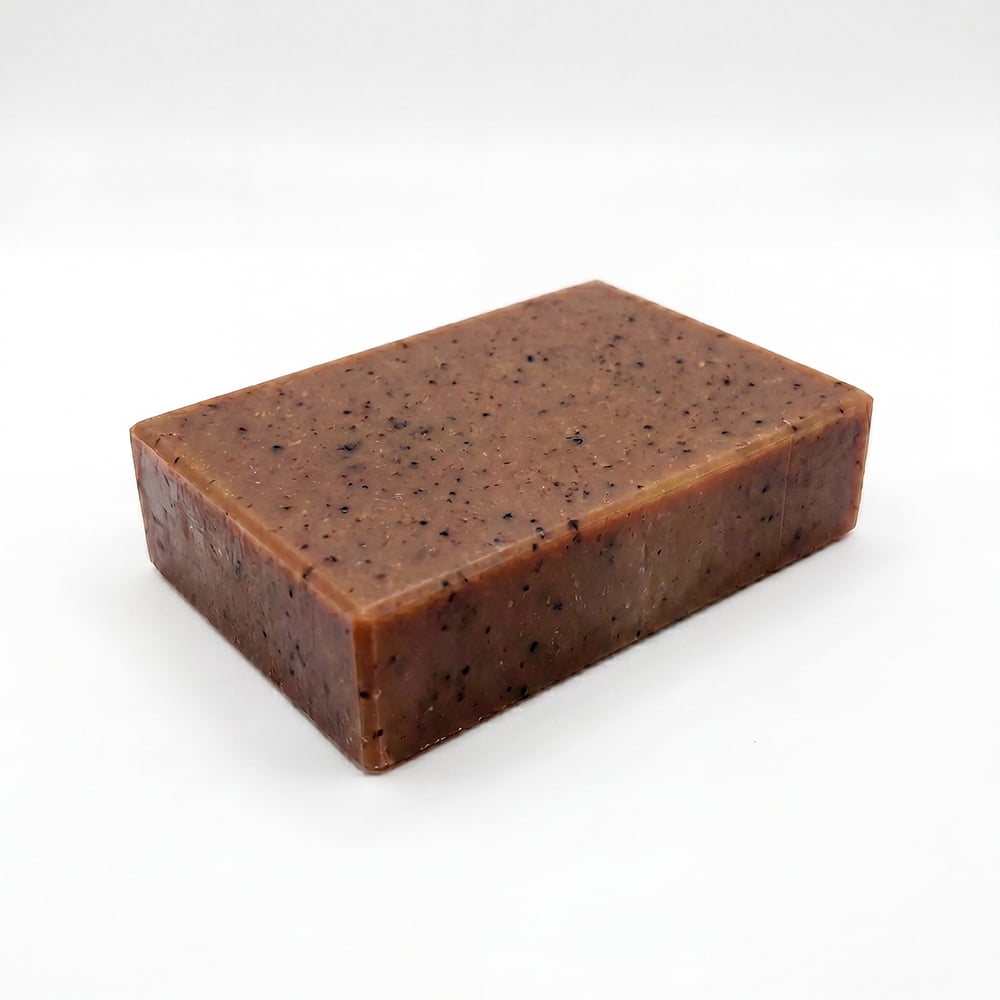
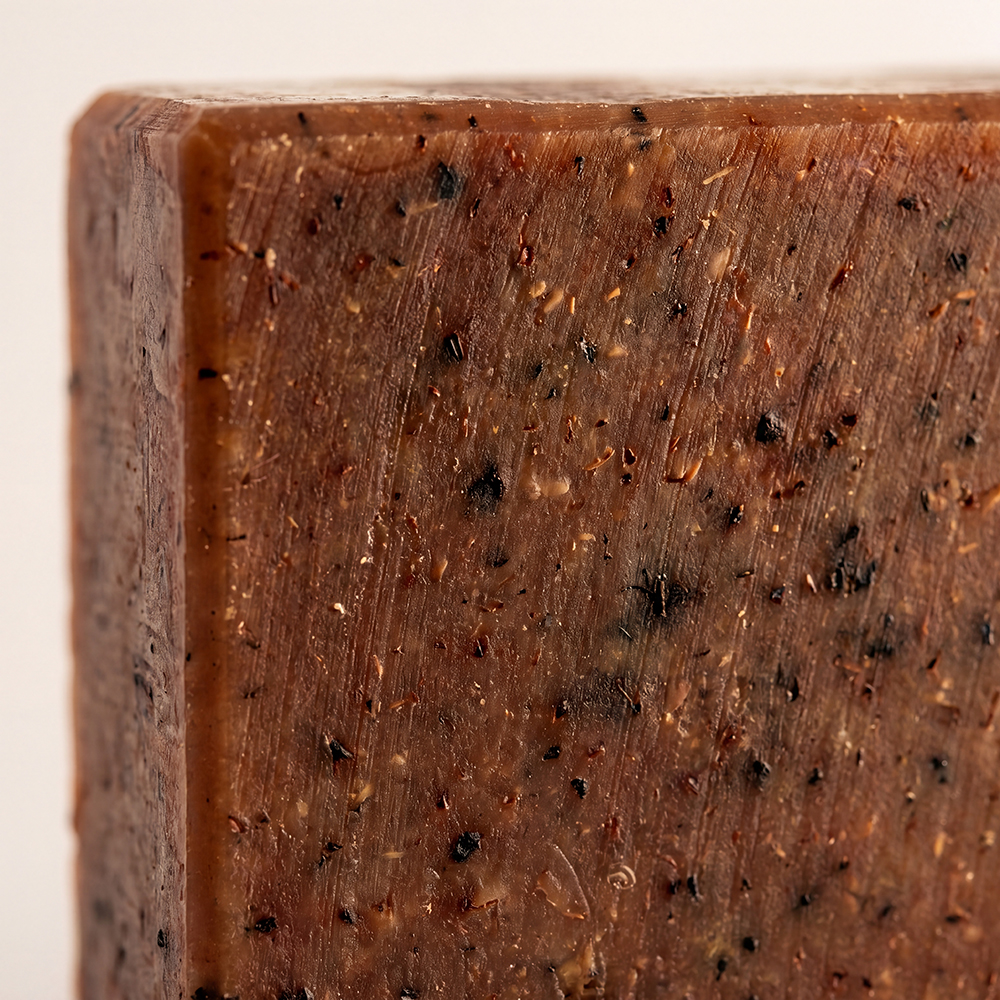
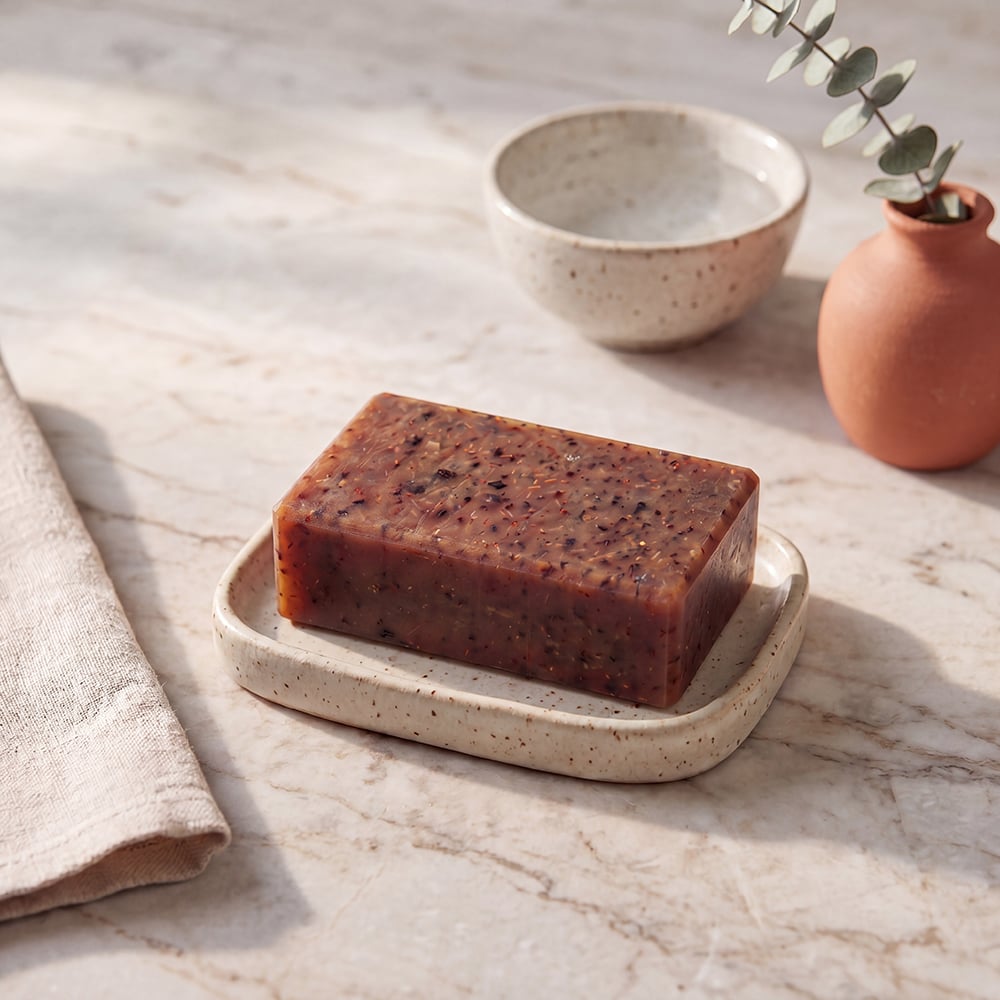
- Look: Deep terra-cotta bar flecked with darker bark particulates. The lather runs the color of weak tea.
- Smell: Astringent and faintly smoky at first pass, then a sweet leguminous note as the lather warms. No added perfume.
- Feel: Slightly grippy. The fine bark grit acts as a soft physical buff. Rinses cleanly with no waxy film.
- Lather: Compact and stable. Holds on the face for the full 60-second contact; most gentle soap formulas cannot keep.
Color, Aroma, and Lather
The reddish hue of the bar comes from proanthocyanidin tannins in the inner bark, which oxidize on cut and stain the saponified base. Aroma is muted because no essential oils are added to this tepezcohuite soap. Lather density is set by the olive oil ratio at 63 percent of the fat phase.
How Does This Tepezcohuite Soap Work?
Mimosa Tenuiflora Bark Chemistry
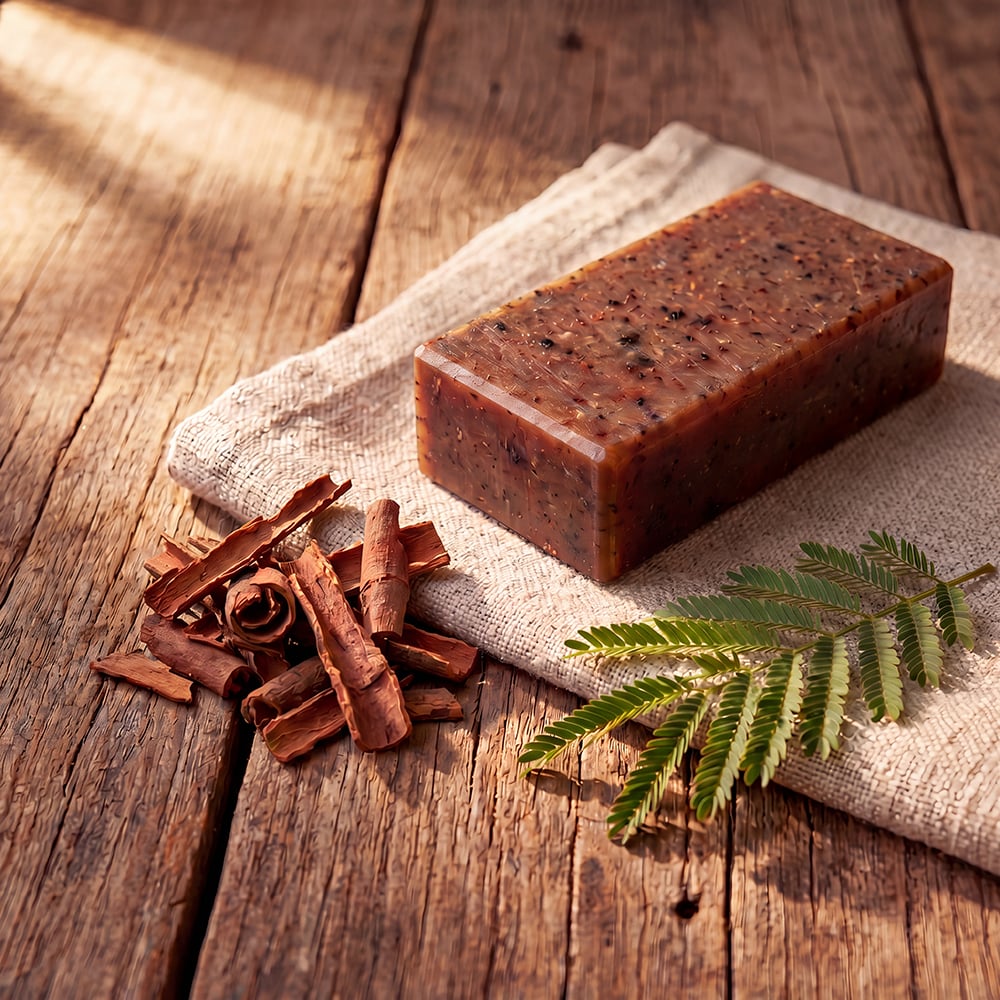
The active material is the whole stem bark of Mimosa tenuiflora, the tree the Maya call the skin tree. We do not use a solvent extract. We mill the whole bark so the polysaccharides, tannins, and trace saponins arrive together in the finished bar soap.
Tepezcohuite Bark Tannins (16% Proanthocyanidins)
Tannin content of authentic tepezcohuite bark sits at roughly 16 percent of dry weight, mostly proanthocyanidins, per Rivera-Arce et al., 2007 (PMID 17709219). Proanthocyanidins are astringent on contact. On the skin surface, they tighten the appearance of loose protein structure and reduce the look of pores. Typical tepezcohuite cream formulas dilute this profile to a 0.5 to 2 percent extract. Our tepezcohuite soap bar delivers whole-bark powder at a 4 percent load of total bar mass.
Arabinogalactans for Dermal Fibroblast Support
A 2009 study isolated arabinogalactans from Mimosa tenuiflora bark and showed they specifically stimulated dermal fibroblast activity in laboratory culture (Zippel J, Deters A, Hensel A. “Arabinogalactans from Mimosa tenuiflora (Willd.) Poiret bark as an active principle for wound-healing properties.” J Ethnopharmacol. 2009 Aug 17;124(3):391-6. PMID 19505559). Fibroblasts are the cells that produce collagen in the dermis, which is part of why tepezcohuite earned its traditional Mexican reputation as a skin-renewal botanical.
Saponified Olive and Coconut Base
The fat phase is 63 percent olive oil, 27 percent coconut oil, and 10 percent castor. The result is a low-stripping, mid-lather soap bar that does not pull water from the skin barrier between uses. We add 5 percent vitamin E (mixed tocopherols) at the cool stage as a natural antioxidant for the unsaturated oils.
Vitamin E Antioxidant Layer
Vitamin E protects the bar from rancidity and leaves a thin antioxidant film on the skin during lather. The vitamin E we use is non-soy, cold-pressed sunflower-derived, which suits sensitive skin types and soy-allergic customers.
Healing Soap Bar for Delicate Skin (Traditional Use Note)
Gentle Soap for All Skin Types
This tepezcohuite bar soap is positioned as a gentle soap for normal, dry, oily, and combination skin. People with very sensitive skin should patch-test on the inner elbow for 48 hours before face use, because tannins can be drying for some skin types in cold-weather climates. The traditional category name “healing soap” refers to the centuries-long ethnobotanical use of Mimosa tenuiflora in Mexico, and is not a claim that this cosmetic product treats any medical condition. See the FDA disclaimer below.
Daily Use Versus Spot Use
Daily face and body cleansing routine: lather for 30 seconds, rinse with cool water, pat dry. Spot use for the look of marks: apply lather directly on the area, rest for 60 seconds, rinse. Frequency is twice daily, maximum for the face. Body use is unlimited.
Tepezcohuite Soap for Blemish-Prone and Oily-Looking Skin
Shoppers often ask whether tepezcohuite soap can help with acne, eczema, or oily skin. Here is the honest, cosmetic answer. This is a cleansing bar, not a medicine. What it does is wash the skin gently while delivering the bark’s natural chemistry. The 16 percent proanthocyanidin tannins in Mimosa tenuiflora bark are astringent on contact, which traditionally suits blemish-prone and oily-looking skin by reducing the look of excess surface shine and tightening the appearance of pores. An early antimicrobial screening of tepezcohuite bark extracts reported growth inhibition against common skin-surface bacteria and yeasts in laboratory tests (1989 screening study, PMID 2764672), which is part of why Mexican and Mayan tradition reached for the bark on irritated and reactive skin. Used as a daily face wash, the bar supports the appearance of a clearer, more balanced complexion without stripping the skin barrier. It is a gentle daily cleanser for skin that tends to break out, not an acne or eczema treatment. This cosmetic product is not intended to diagnose, treat, cure, or prevent acne, eczema, dermatitis, or any other skin condition. Anyone managing a diagnosed skin condition should follow the guidance of a qualified healthcare professional.
Tepezcohuite Soap Origin: Chiapas Coast Terroir
Country of Origin
Mexico (coast of Chiapas, southern range of Mimosa tenuiflora in North America).
Latin Binomial
Mimosa tenuiflora (Willd.) Poir., synonymous with Mimosa hostilis.
Plant Family
Fabaceae, subfamily Caesalpinioideae, mimosoid clade.
Our stem bark is sourced from the coast of Chiapas, Mexico, approximate centroid 15.85° N by 92.30° W. This belt sits below 1,000 meters of elevation along the Pacific drainage. The tree grows up to 8 meters tall and reaches harvestable bark in five years (Camargo-Ricalde, 2000, PMID 11487939). The 1985 Mexico City earthquake reintroduced tepezcohuite to mainstream Mexican medicine cabinets after the bark was applied to burn victims in the response effort, and the bark has remained a fixture of artisanal Mexican skin care since.
Tepezcohuite Powder vs Whole Bark Soap
We mill the bark at 80 mesh for this soap, then bind the tepezcohuite powder into the saponified oil base. Tepezcohuite powder, sold separately as a loose product, is the same input material used at home as a face mask. The soap form is faster for daily use and removes the mixing step.
Tepezcohuite Cream vs Tepezcohuite Soap
A typical tepezcohuite cream uses a 0.5 to 2 percent bark extract in a water-and-emulsifier base, and is left on the skin for hours. This tepezcohuite soap uses a 4 percent whole-bark powder load in a saponified oil base, with short contact time. The two products are complementary, not redundant. A common routine is bar in the morning, cream at night.
Mexico’s Mayan Skin Tree Heritage
The Maya called Mimosa tenuiflora the skin tree, and powdered the inner bark for centuries to address the appearance of burns and abrasions. The methoxychalcones unique to this species are named kukulkanins after the Mayan deity Kukulkán. This naming convention, set by ethnobotanists in the 1990s, sits behind every authentic tepezcohuite soap on the market today.
Tepezcohuite Benefits Backed by Research
Beyond the traditional wound-healing reputation, peer-reviewed work links tepezcohuite bark to dermal fibroblast support in vitro, antioxidant activity in cell models, and the appearance of more even skin tone with regular topical use. We do not claim this cosmetic product treats any disease. We supply the bark in a clean cosmetic format and let your daily routine do the rest.
Critical Usage and Contraindications
Tepezcohuite Soap Bar Frequency, Patch Test, and When to Avoid
Do not use on broken skin without medical advice. Do not use during pregnancy or while breastfeeding. Mimosa tenuiflora seeds have been linked to teratogenic effects in ruminant livestock (Medeiros 2008, PMID 18078971), and out of caution, we exclude the bar during these life stages. Keep out of the eyes. Discontinue if redness appears. Children under 12 only with adult supervision.
What to Avoid During Pregnancy
Pregnant and lactating customers should choose an alternative cleansing bar. The teratogenicity finding applies to seeds and was observed in livestock, not soap-form bark, but we err on the conservative.
Storage and Shelf Life
Store on a draining dish, dry between uses. Bar lifetime is approximately 6 to 8 weeks with twice-daily face use. Shelf life unopened is 18 months from the manufacture date stamped on the wrapper.
Cold-Processed Method
Saponified at 90 to 100 degrees Fahrenheit, cured 28 days minimum on cedar racks.
Plant-Identity Vendor Audit
Each shipment of bark is verified against herbarium voucher specimens before it enters the saponification room. We refuse any lot that has not passed identity testing.
Heavy Metal Panel
Lead, arsenic, cadmium, and mercury. All under USP-2232 limits.
Microbial Plate Test
Total aerobic count under 10 CFU per gram. No pathogens detected.
Allergen Screen
No tree nuts, no soy, no wheat in the formula or facility.
Soaponification Index
0.135 (olive) | 0.190 (coconut) | 0.128 (castor), weighted blend used.
Manufactured In
Virginia Beach, Virginia, USA.
Net Weight
3 oz (85 g) per bar, individually wrapped in unbleached glassine.
Clinical Specs
| Spec | Detail |
|---|---|
| Serving Size | 1 bar = 3 oz (85 g) |
| Frequency | Up to 2x daily for face, unlimited for body |
| Active Marker | 16% proanthocyanidin tannins in bark (4% bark load = ~0.64% total tannins in bar) |
| Processing | Cold-process saponification, 90–100°F, 28-day cedar-rack cure |
| Safety | Heavy Metal Tested (Pass), Microbial Tested (Pass), Allergen Screen (Pass) |
| Ingredients | Saponified olive oil, saponified coconut oil, saponified castor oil, water, glycerin, Mimosa tenuiflora (tepezcohuite) stem bark powder, mixed tocopherols (vitamin E) |
| Other Ingredients | None. No fragrance, no dye, no preservative beyond vitamin E |
| Purity | Vegan, Non-GMO, Cruelty-Free, Gluten-Free, Soy-Free |
| Free From | Sulfates (SLS/SLES), parabens, phthalates, palm oil, EDTA, synthetic fragrance |
| Origin | Coast of Chiapas, Mexico (15.85° N, 92.30° W, <1,000 m elevation) |
| Manufactured | Virginia Beach, Virginia, USA |
Comparison Table
| Feature | BTYRH Tepezcohuite Soap | Generic Del Indio Papago Bar |
|---|---|---|
| Origin | Coast of Chiapas (15.85°N, 92.30°W), single-region | Unspecified Mexican region |
| Tepezcohuite Form | Whole bark powder, 80 mesh, 4% load | Unspecified extract, undisclosed load |
| Fat Base | Olive (63%) + Coconut (27%) + Castor (10%), palm-free | Tallow or palm-based |
| Taste / Aroma | Astringent, faintly smoky-sweet (no added perfume) | Heavy added fragrance (typical) |
| Cure Time | 28 days on cedar racks | Industrial extrusion, no cure |
| Safety Panel | Heavy metals, microbial, and allergens are all batch-tested | Unknown / not published |
| Brand Citation | Cites Zippel 2009 (PMID 19505559) and Rivera-Arce 2007 (PMID 17709219) | None |
Tepezcohuite Soap vs Other Natural Soaps
Searchers comparing this Mimosa tenuiflora bar against the broader natural-soap category usually want to know what makes whole-bark tepezcohuite distinct, not whether one bar is “better” than another. The answer is plant chemistry. Castile soap is a single-fat saponification – olive oil and lye – with no botanical actives at all; it cleanses, but the bar carries no tannin or arabinogalactan signal. African black soap is built on shea butter and roasted plantain skin ash, which makes it alkaline and exfoliating, but its phytochemical profile sits in a different family than the proanthocyanidin tannins documented in Mimosa tenuiflora bark (Rivera-Arce et al., 2007, PMID 17709219). Neem soap delivers neem-leaf antimicrobial compounds, useful for a different traditional purpose. Goat-milk and collagen-marketed bars rely on fat-based emolliency rather than plant-derived dermal-fibroblast support compounds described in the in vitro literature (Adetutu et al., 2011, PMID 21251972).
What sets this whole-bark tepezcohuite soap apart inside the natural-soap shelf is the 16% HPLC-verified proanthocyanidin tannin load delivered in a glycerin-rich olive-and-coconut saponified base – meaning the bar is built to cleanse like a classic Castile-style bar while carrying the Mayan skin-tree phytochemistry traditionally associated with calm-looking, even-toned skin.
Where to Buy Authentic Tepezcohuite Soap Online
Most online listings for “tepezcohuite soap” are creams, lotions, or low-percentage extract bars relabeled as tepezcohuite. Whole-bark, cold-processed, single-origin bars are uncommon. Authenticity for this category turns on four verifiable signals: (1) Latin binomial disclosure on the label (Mimosa tenuiflora, not the generic “tepezcohuite extract”), (2) plant-identity vendor audit on file, (3) HPLC-verified tannin percentage for the lot, and (4) a documented saponification method and cure time. This product line is shipped directly from the Back To Your Roots Herbs Virginia Beach quality bench and carries the Chiapas-coast provenance (15.85° N, 92.30° W), an 80-mesh whole-bark powder load of 4%, a 28-day cedar-rack cure, and a third-party heavy-metal, microbial, and allergen panel – all logged in the Clinical Specs table above.
If you are comparing bars across the open market, look for the lot-level chemistry and the plant-identity audit before price. The tepezcohuite soap on this page is the cleanest expression of the Mayan skin tree this brand has offered to date, and ordering directly from this page bypasses the relabel risk that drives most negative reviews of the category on third-party marketplaces.
DISCLAIMER: This tepezcohuite soap is a cosmetic product intended for external cleansing of the skin. The statements above have not been evaluated by the Food and Drug Administration. This product is not intended to diagnose, treat, cure, or prevent any disease. References to traditional Mayan and Mexican use are in the ethnobotanical context, not product claims. For medical conditions affecting the skin, consult a qualified healthcare professional.
Reviewed by the Back To Your Roots Herbs Editorial Team. Last reviewed June 2026.
Reviews
There are no reviews yet.