What are Adaptogens? Understanding the Basics
Adaptogens are herbs known for their ability to promote balance and resilience within the body. These natural substances work by supporting your body’s stress response system, helping to combat fatigue and enhance mental clarity. Unlike stimulants that provide a temporary jolt of energy, adaptogens work by subtly modulating the body’s stress response, leading to a more sustained and balanced state.
The Hypothalamic-Pituitary-Adrenal (HPA) Axis and Adaptogens
To understand how the strongest adaptogen works, it’s essential to understand the Hypothalamic-Pituitary-Adrenal (HPA) axis. The HPA axis is a complex neuroendocrine system responsible for regulating the body’s response to stress. When faced with a stressor (physical, emotional, or environmental), the hypothalamus (a region in the brain) releases corticotropin-releasing hormone (CRH). CRH signals the pituitary gland to release adrenocorticotropic hormone (ACTH), which then stimulates the adrenal glands to produce cortisol, the primary stress hormone.
Cortisol plays a vital role in the fight-or-flight response, increasing blood sugar, suppressing the immune system, and altering metabolism to provide the body with energy to deal with the perceived threat. However, chronic stress can lead to prolonged activation of the HPA axis and elevated cortisol levels, which can have negative consequences for health, including fatigue, anxiety, impaired cognitive function, and weakened immunity.
Adaptogens help modulate HPA axis activity, preventing overstimulation and promoting a more balanced stress response. They don’t eliminate stress but rather help the body adapt to it more effectively.
The Strongest Adaptogens: A Closer Look at the Top Contenders
While many adaptogenic herbs are known for their stress-support qualities, some are consistently highlighted as the most potent regarding their impact on energy, mood, and overall resilience. Here are some of the top contenders, with a deeper understanding of their mechanisms:
Ashwagandha (Withania somnifera)
- Mechanism: Ashwagandha’s strength lies in its ability to modulate cortisol receptors, making them more efficient at managing stress hormones. Its primary active compounds, withanolides, are believed to interact with GABA receptors in the brain, promoting relaxation and reducing anxiety.
- Benefits: Known for balancing stress levels by influencing cortisol production. It is often recommended for individuals experiencing consistent fatigue and tension. It can also be very beneficial for sleep quality.
- Other names: Indian Ginseng, Winter Cherry
What makes ashwagandha potent: the root’s adaptogenic activity is attributed to a group of steroidal lactones called withanolides. In our sourcing experience, a potency claim on a label is only meaningful when the withanolide percentage is stated. Whole-root powders carry naturally occurring withanolide levels, while standardized extracts concentrate them for a consistent dose. Two widely studied standardized extracts are standardized ashwagandha root extract types such as KSM-66 (a root-only extract standardized to roughly 5 percent withanolides) and Sensoril (a root-and-leaf extract standardized to about 10 percent). In a randomized, double-blind, placebo-controlled trial, a standardized ashwagandha extract lowered morning serum cortisol relative to placebo (Lopresti et al., 2019, Medicine, PMID: 31517876). An earlier controlled trial using a high-concentration root extract reported significant reductions in perceived stress and serum cortisol (Chandrasekhar et al., 2012, Indian J Psychol Med, PMID: 23439798).
Panax Ginseng (Korean Ginseng)
- Mechanism: Panax Ginseng’s energizing effect is linked to its ginsenosides, compounds that improve cellular energy production and enhance neurotransmitter function. It can act as a mild stimulant on the central nervous system, but without the jitters or crash associated with caffeine.
- Benefits: Often praised for its invigorating effects on the mind and body. It may assist with mental clarity and help reduce mental exhaustion. Many athletes incorporate it into their routines for sustained performance.
- Other Names: Red Ginseng, Asian Ginseng
Rhodiola Rosea
- Mechanism: Rhodiola Rosea’s adaptogenic power comes from its rosavins and salidroside, which help protect neurons from stress-induced damage and optimize neurotransmitter levels (serotonin, dopamine, and norepinephrine).
- Benefits: Has long been recognized in parts of Europe and Asia for its potential to support stamina. Often selected by those looking to maintain focus through long work hours or demanding tasks. Recommended for those who want to address mood stability and energy dips.
- Other Names: Golden Root, Arctic Root
Reading rhodiola potency: the adaptogenic activity of Rhodiola rosea is linked to two marker compounds, rosavins and salidroside. The traditional standard used by quality manufacturers calls for a 3 to 1 ratio of rosavins to salidroside, most often expressed as 3 percent rosavins and 1 percent salidroside. Our editorial team looks for that ratio before treating a standardized Rhodiola rosea product as a true extract rather than plain powder. Reviews of the plant’s phytochemistry attribute its effects on fatigue and cognitive function to these constituents alongside tyrosol (Nabavi et al., 2016, Phytotherapy Research, PMID: 27059687).
Holy Basil (Ocimum sanctum or Ocimum tenuiflorum)
- Mechanism: Holy Basil contains compounds like eugenol, caryophyllene, and ursolic acid that contribute to their adaptogenic effects. Helps support immune health and reduce anxiety.
- Benefits: Supports immune function, reduces anxiety, and promotes mental clarity.
- Other Names: Tulsi
Schisandra Berry (Schisandra chinensis)
- Mechanism: The active compounds in Schisandra, known as schisandrins, are believed to support liver function, enhance detoxification processes, and improve mental performance.
- Benefits: May protect against stress-related damage, enhance mental clarity, and support liver health. It’s often used to improve endurance and reduce fatigue.
Cordyceps (Cordyceps sinensis or Cordyceps militaris)
- Mechanism: Cordyceps is a medicinal mushroom (not technically an herb, but often grouped with adaptogens) that contains adenosine and cordycepin. These compounds are thought to improve cellular energy production (ATP) and enhance oxygen utilization.
- Benefits: Often used to improve athletic performance, increase energy levels, and support respiratory health.
Licorice (Glycyrrhiza glabra)
- Mechanism: Supports adrenal function, which might have an effect on cortisol levels.
- Benefits: Helps regulate cortisol levels, combats fatigue, and soothes the digestive tract. It is often used to support adrenal function, especially in cases of adrenal fatigue.
Eleuthero (Eleutherococcus senticosus)
- Mechanism: Often used in traditional Eastern systems for vitality and energy. Preliminary research indicates the potential for supporting alertness without causing jitters.
- Benefits: Can enhance the body’s resistance to stressors, reduce fatigue, and improve mental performance.
- Other Names: Siberian Ginseng
Eleuthero’s marker compounds: Eleuthero (Eleutherococcus senticosus), sometimes called Siberian ginseng, is standardized to a family of constituents known as eleutherosides, most commonly eleutheroside B and eleutheroside E. Because eleuthero contains no ginsenosides, it is chemically distinct from Panax ginseng despite sharing part of a common name. When we evaluate an eleuthero supplement, the stated eleutheroside content is the potency signal that matters.
Shatavari (Asparagus racemosus)
- Mechanism: Commonly used in certain traditional practices for hormone balance in women. It can be found as a powder or capsule.
- Benefits: Can support hormonal balance, particularly in women, and promote overall reproductive health.
Maca Root (Lepidium meyenii)
- Mechanism: Cultivated in high-altitude regions. Often linked to endurance support and hormonal health.
- Benefits: Can improve energy, stamina, and libido. It is also believed to support hormonal balance, particularly in women.
Adaptogen Rankings: Which is “Strongest” for What?
While individual responses vary, a clearer ranking based on specific criteria can help users make more informed decisions.
- For Overall Stress Reduction and Cortisol Management: Ashwagandha is often considered the top choice due to its well-researched effects on cortisol modulation.
- For Boosting Energy and Cognitive Function: Panax Ginseng consistently ranks highest due to its ginsenoside content and impact on cellular energy.
- For Physical Endurance and Combating Fatigue: Rhodiola Rosea is a leading contender, prized for its ability to enhance stamina and reduce the effects of physical stress.
- For Immune Support and Anxiety: Holy Basil is frequently recommended for its dual action on the immune system and its calming properties.
It’s important to remember that the “strongest” adaptogen is subjective and depends on individual needs and goals. The best approach is to consider your specific concerns and choose an adaptogen (or a combination) that aligns with those needs.
Head-to-Head Adaptogen Comparisons:
Ashwagandha vs. Rhodiola Rosea: Which is Better for Stress and Energy?
| Feature | Ashwagandha | Rhodiola Rosea |
|---|---|---|
| Primary Action | Cortisol regulation, calming | Stamina enhancement, energizing |
| Best For | Chronic stress, anxiety, sleep | Acute stress, physical fatigue |
| Mechanism | Modulates cortisol receptors | Protects neurons, optimizes neurotransmitters |
| Energy Impact | Indirectly improves energy by reducing stress | Directly boosts energy and stamina |
Ashwagandha is generally better for individuals dealing with chronic stress, anxiety, and sleep difficulties. Its primary action is to regulate cortisol levels and promote relaxation. Rhodiola Rosea, on the other hand, is better suited for those experiencing acute stress, physical fatigue, and a need for increased stamina. It directly enhances energy and mental performance.
Panax Ginseng vs. Ashwagandha: Cognitive Enhancement and Stress Relief
| Feature | Panax Ginseng | Ashwagandha |
|---|---|---|
| Primary Action | Cognitive enhancement, energizing | Stress reduction, calming |
| Best For | Mental fatigue, focus, memory | Chronic stress, anxiety, sleep |
| Mechanism | Improves cellular energy and neurotransmitter function | Modulates cortisol receptors |
| Stress Impact | May help manage stress indirectly | Directly targets stress hormones |
Panax Ginseng is primarily focused on boosting cognitive function and improving focus, memory, and mental energy. Ashwagandha, while also beneficial for mental clarity, has a broader stress-management focus, addressing both the physical and psychological aspects of stress.
Holy Basil vs. Ashwagandha: Comparing Effects on Anxiety
| Feature | Holy Basil | Ashwagandha |
|---|---|---|
| Primary Action | Immune Support & Anxiety Reduction | Stress Reduction & Anxiety Reduction |
| Best For | Individuals with anxiety & immune concerns | Individuals with general anxiety & stress management |
| Mechanism | Contains compounds like eugenol | Modulates cortisol receptors |
Key Benefits of Adaptogens
Research indicates that adaptogens may offer a range of health benefits, including:
- Stress Relief: Adaptogens can help lower cortisol levels, the hormone linked to stress.
- Increased Energy: Many adaptogens are believed to enhance energy levels and combat fatigue.
- Mood Enhancement: Some studies suggest that adaptogens may alleviate symptoms of anxiety and depression.
- Immune Support: Certain adaptogens may bolster the immune system’s response to illness.
Popular Adaptogenic Herbs
Here’s a closer look at some of the most effective adaptogenic herbs and their unique properties:
| Herb | Benefits | Common Uses |
|---|---|---|
| Ginseng | Ginseng is one of the herbs known for its ability to boost energy and cognitive function. This herb has been used for centuries to improve mental clarity, focus, and overall brain function. Ginseng can help support your body’s natural response to stress and fatigue. | Tea, capsules, tinctures |
| Ashwagandha | Ashwagandha is known for its ability to reduce stress and improve sleep. This herb has been used for centuries in traditional medicine to help the body cope with the demands of daily life. By supporting the body’s natural response to cortisol levels, Ashwagandha can provide relief from anxiety. | Powder, capsules, teas |
| Rhodiola Rosea | Rhodiola, known for its ability to increase stamina and combat fatigue, is one of the herbs for improving energy levels. This herb has been used for centuries to support the body in times of stress and fatigue. | Capsules, extracts |
| Holy Basil | Holy Basil, also known as Tulsi, is a herb that supports immune health and reduces anxiety. This herb has been used for centuries to improve overall health and well-being. | Tea, capsules, extracts |
Incorporating Adaptogens into Your Daily Life
Integrating adaptogens into your routine can be both simple and enjoyable. Here are some practical tips:
- Start with Herbal Teas: Many adaptogenic herbs can be enjoyed as soothing herbal teas.
- Add to Smoothies: Powders like ashwagandha can be blended into smoothies for a nutritious boost.
- Use in Cooking: Incorporate adaptogenic herbs into soups, stews, or other dishes for added health benefits.
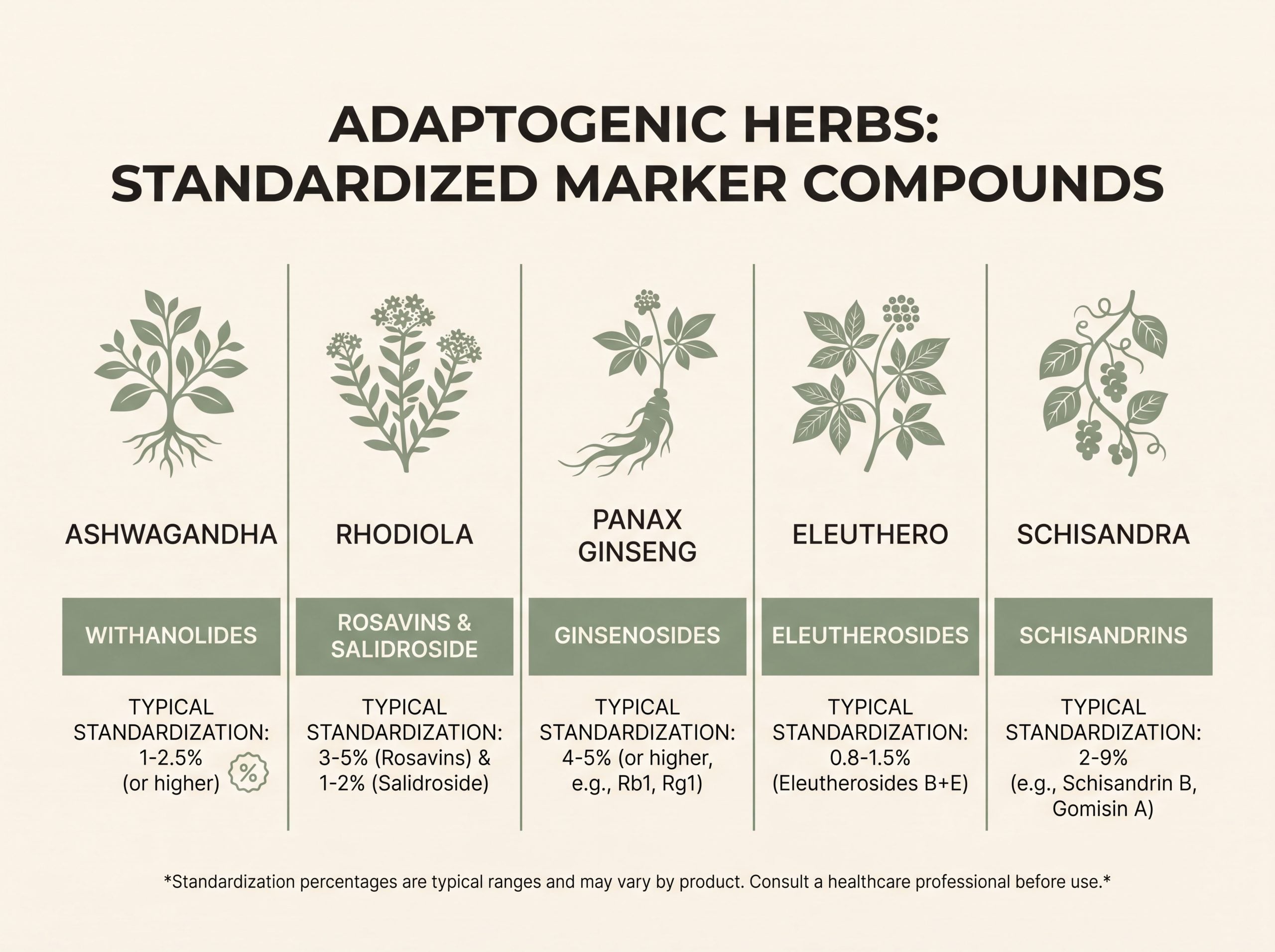
Standardized Extracts vs. Whole-Root Powder: How to Read a Potency Label
When people ask which adaptogen is strongest, the honest answer depends less on the herb’s name and more on how the product is standardized. Strength in adaptogens comes from the concentration of active marker compounds, not from the raw plant alone. A whole-root powder delivers the full profile of the plant at naturally occurring levels. A standardized extract concentrates a specific marker compound to a guaranteed percentage, so the dose stays consistent from batch to batch. Neither format is automatically better. Powders suit people who want a food-like, minimally processed herb, while standardized extracts suit people who want a precise, research-aligned dose. In our hands-on assessment, the single most useful thing on any adaptogen label is a stated marker-compound percentage.
| Adaptogen | Marker compound(s) | Commonly standardized to |
|---|---|---|
| Ashwagandha (Withania somnifera) | Withanolides | 2.5 to 10 percent (KSM-66 about 5 percent, Sensoril about 10 percent) |
| Rhodiola rosea | Rosavins, salidroside | 3 percent rosavins / 1 percent salidroside (3 to 1) |
| Panax ginseng | Ginsenosides | 3 to 7 percent total ginsenosides |
| Eleuthero (Eleutherococcus senticosus) | Eleutherosides B and E | about 0.8 percent eleutherosides |
| Schisandra chinensis | Schisandrins (lignans) | 2 to 9 percent schisandrins |
| Source: manufacturer standardization norms and the NIH Office of Dietary Supplements herb fact sheets (ods.od.nih.gov). | ||
A practical rule from our editorial reviews: if a label states only a milligram amount with no marker-compound percentage and no extract ratio, you cannot fairly compare its strength to a standardized competitor. Look for the percentage first, the extract ratio second, and third-party tested whole-root options third when a food-form herb is what you want.
Adaptogen Dosages and Potential Side Effects
| Adaptogen | Key Benefits | Potential Side Effects | Recommended Dosage |
|---|---|---|---|
| Ginseng | Enhances energy, improves cognitive function, supports immune health | Insomnia, headaches, digestive issues (especially at high doses) | 200–400 mg per day |
| Ashwagandha | Reduces stress, improves sleep, enhances mood | Gastrointestinal upset, drowsiness (rarely, may interact with thyroid medications) | 300–500 mg per day |
| Rhodiola Rosea | Increases stamina, reduces fatigue, enhances mental performance | Dry mouth, dizziness, jitteriness (generally well-tolerated) | 200–600 mg per day |
| Holy Basil | Supports immune function, reduces anxiety, promotes mental clarity | Low blood sugar, nausea (generally well-tolerated) | 300–2,000 mg per day |
Important Note: Dosages can vary based on the form of the adaptogen (extract, powder, whole herb), the concentration of active compounds, and individual factors. It’s always best to start with a lower dose and gradually increase as needed, while monitoring your body’s response.
Scientific Evidence Supporting Adaptogens:
Here are some specific examples of scientific studies supporting the benefits of adaptogens:
- Ashwagandha and Stress: A study published in the Indian Journal of Psychological Medicine (2012) found that participants taking a high-concentration ashwagandha root extract experienced a significant reduction in serum cortisol levels (27.9%) compared to the placebo group. The study also reported improvements in self-assessed stress scores.
- Rhodiola Rosea and Fatigue: Research featured in Phytomedicine (2009) highlighted that individuals taking Rhodiola rosea extract (SHR-5) reported less fatigue and a boost in performance during stressful work periods. The study used a randomized, double-blind, placebo-controlled design.
- Ginseng and Cognitive Function: A review of studies published in the Journal of Ginseng Research (2018) suggests that ginseng may support attention span, memory, and cognitive performance, particularly in older adults or those dealing with work-related stress. The review highlighted the role of ginsenosides in these effects.
- Holy Basil and Stress/Anxiety: A study published in Nepal Medical College Journal (2008) found that holy basil significantly reduced stress and anxiety-related symptoms in individuals compared to a placebo.
Addressing Study Limitations: It’s important to note that while the research on adaptogens is promising, some studies have limitations, such as small sample sizes, varying methodologies, or the use of specific adaptogen extracts. More large-scale, rigorous clinical trials are needed to fully confirm the benefits and establish optimal dosages for various populations.
Potential Drug Interactions and Contraindications:
Adaptogens, while generally safe, can interact with certain medications and may not be suitable for everyone.
- Drug Interactions:
- Ginseng: May interact with blood thinners (warfarin), MAOIs (antidepressants), diabetes medications (insulin, metformin), and immunosuppressants.
- Ashwagandha: May interact with thyroid medications (levothyroxine), sedatives (benzodiazepines, barbiturates), and immunosuppressants.
- Rhodiola: May interact with antidepressants (SSRIs, SNRIs) and some anti-anxiety medications.
- Holy Basil: May interact with blood-thinning medication.
- Contraindications:
- Pregnant or Nursing Women: Due to limited research on the safety of adaptogens during pregnancy and breastfeeding, it’s generally recommended to avoid them or consult a healthcare professional before use.
- Individuals with Autoimmune Disorders: Some adaptogens, like ginseng and ashwagandha, can stimulate the immune system, which could potentially worsen autoimmune conditions like lupus, rheumatoid arthritis, or multiple sclerosis. Consult a healthcare professional before use.
- People with Hormone-Sensitive Cancers: Some adaptogens may have hormonal effects, so individuals with hormone-sensitive cancers (breast, ovarian, uterine, prostate) should consult their doctor before use.
- Individuals with Bipolar Disorder: Should avoid adaptogens without consulting their healthcare provider.
Adaptogens for Weight Management and Metabolism
One of the fastest-growing questions our team sees is whether adaptogens help with weight. The framing matters here for both accuracy and safety. Adaptogens are not fat burners and do not cause weight loss on their own. What some adaptogens may do is support the body’s normal stress response, and ongoing stress is closely tied to elevated cortisol, disrupted appetite signaling, and stress-related eating. In a randomized, double-blind, placebo-controlled trial, adults under chronic stress who took a standardized ashwagandha root extract showed improvements in perceived stress, food cravings, and body-weight measures compared with placebo (Choudhary et al., 2016, J Evid Based Complementary Altern Med, PMID: 27055824). Rhodiola rosea is often discussed for the stress-linked fatigue that can undermine consistent activity, though direct human weight-loss evidence is limited. The realistic takeaway from our editorial review of adaptogens and weight management is simple. Adaptogens may support a weight-management routine indirectly by helping the body cope with stress, and they work alongside diet, sleep, and movement, not instead of them.
Pros and Cons of Using Adaptogens
| Pros | Cons |
|---|---|
| A natural approach to stress management | Effects may vary from person to person |
| Can enhance overall well-being and energy levels | Possible side effects, especially at high doses or with certain medications |
| Supports mental clarity and cognitive function | Not a substitute for professional medical treatment |
| Wide variety of herbs to choose from | Quality and potency can vary between products |
How to Combine and Cycle Adaptogens, and How Long They Take to Work
Because adaptogens act on the same stress-response system, people often ask whether they can take more than one at a time. In our experience, thoughtful pairing is common and can be complementary rather than redundant. A frequent approach is a stimulating adaptogen in the morning, such as Rhodiola rosea or Panax ginseng, paired with a calming adaptogen in the evening, such as ashwagandha or holy basil (Ocimum sanctum). Start with one herb, learn how your body responds over two to three weeks, then add a second rather than starting several at once.
How long until you notice effects? Adaptogens generally work on two timelines. Some effects, such as the acute mental-performance response reported for a single dose of standardized Panax ginseng, can appear within hours (Reay et al., 2005, J Psychopharmacol, PMID: 15982990). The stress and cortisol adaptation most people are seeking is cumulative and is typically studied over 4 to 12 weeks of daily use, matching the ashwagandha cortisol trials cited above. Many herbalists also recommend cycling adaptogens, meaning periodic breaks such as five days on and two days off, or six to eight weeks on followed by a one to two-week pause, so the body keeps responding to them over the long term. Physically active readers exploring endurance support can review the controlled-trial evidence for Cordyceps and exercise performance (Chen et al., 2010, J Altern Complement Med, PMID: 20804368).
Key Considerations When Choosing Adaptogens
- Quality of the Product: Look for reputable brands that provide third-party testing for purity and potency. Certifications like USP (United States Pharmacopeia), NSF International, or ConsumerLab.com can be indicators of quality.
- Form of Adaptogen: Adaptogens are available in various forms, including powders, capsules, teas, and tinctures. Choose the form that best fits your lifestyle and preferences.
- Consult with a Healthcare Professional: If you have existing health conditions, are taking medications, or are pregnant or breastfeeding, consult with a healthcare provider before starting any new supplement, including adaptogens.
- Start with Lower Doses: Begin with a lower dosage to assess your body’s response before gradually increasing it.
- Long-Term Use and Cycling: Some practitioners recommend “cycling” adaptogens (taking breaks) to prevent the body from becoming desensitized to their effects. While not all healthcare professionals agree on this method, a common approach is to take an adaptogen for several weeks, then take a break for a week or two before resuming. This can also help you assess which adaptogen is most effective for you.
Additional Uses of Adaptogens
- Physical Performance: Athletes sometimes incorporate ginseng or Rhodiola rosea to support endurance and reduce recovery time.
- Hormone Balance: Certain adaptogens, like ashwagandha and maca, may play a role in supporting thyroid and adrenal function, and promoting hormonal balance, particularly in women.
- Sleep Support: Herbs that are known to reduce tension, like ashwagandha and holy basil, can sometimes contribute to an improvement in overall sleep quality.
User Experiences with Adaptogens
Many people share positive experiences with adaptogens:
- Athletic Performance: Some endurance runners report feeling less fatigued during long-distance events when adding Rhodiola rosea to their regimen.
- Stress Management: Office workers often mention Ashwagandha’s calming effect on hectic days, sometimes noticing reduced irritability over time.
- Sleep Quality: Users who deal with restlessness at night occasionally mention holy basil or ashwagandha as part of their evening routine.
It’s essential to remember that individual responses vary. Keeping a journal or tracking changes can help determine which adaptogen works best for specific needs.
Practical Tips for Using Adaptogens:
- Recipe Ideas:
- Ashwagandha Latte: Blend warm milk (dairy or plant-based) with ashwagandha powder, a pinch of cinnamon, and a little sweetener (like honey or maple syrup).
- Holy Basil Infusion: Steep holy basil leaves (fresh or dried) with lemon balm for 5-7 minutes to create a soothing, aromatic drink.
- Adaptogen Smoothie Bowl: Combine frozen berries, spinach, a scoop of protein powder, and a pinch of Rhodiola rosea powder or ashwagandha powder. Blend until smooth and top with nuts, seeds, or fresh fruit.
- Mindful Rotation: Consider trying a specific herb for 4-6 weeks, then switching to another if you’re not seeing the desired results or if you want to explore different benefits. This can help identify which adaptogen is most effective for your individual needs.
- Pairing with other supplements: Adaptogens can sometimes work in conjunction with other supplements like B-complex vitamins or minerals.
Word on Quality and Purity
Adaptogens can vary in potency based on:
- Geographic Origin: Soil composition, altitude, and climate can affect the concentrations of beneficial compounds.
- Harvesting Practices: Ethically sourced and properly harvested herbs often contain higher levels of active constituents. Sustainable harvesting practices are also important for the long-term availability of these herbs.
- Manufacturing Standards: Third-party testing and Good Manufacturing Practices (GMP) certifications are indicators of a reputable brand. Look for products that have been tested for heavy metals, pesticides, and other contaminants.
Purchasing from recognized suppliers helps ensure that the product is free from harmful contaminants. Reading label information and product reviews can guide consumers toward the highest-quality choices.
Frequently Asked Questions: The Strongest Adaptogens
What is the single most potent adaptogen?
There is no one strongest adaptogen for everyone. Potency depends on the standardized marker-compound content and on your goal. For stress and cortisol, ashwagandha standardized to withanolides has the most human-trial support. For acute mental energy, standardized Panax ginseng is well studied. For stress-linked fatigue, Rhodiola rosea standardized to rosavins and salidroside is a common choice.
How long do adaptogens take to work?
Some acute effects can appear within hours, but the cortisol and stress-resilience benefits most people want are cumulative and are typically studied over 4 to 12 weeks of daily use. Consistency matters more than a large single dose.
Can you take more than one adaptogen at once?
Yes. Many people pair a stimulating adaptogen in the morning with a calming one at night. Introduce them one at a time so you can tell how each affects you, and talk to your healthcare provider first if you take medications.
Which adaptogen is strongest for anxiety?
Ashwagandha (Withania somnifera) has the most consistent human-trial evidence for lowering perceived stress and anxiety scores. Holy basil is a traditional alternative often used for stress-related tension.
Which adaptogen is best for energy?
For quick mental energy, standardized Panax ginseng is well studied. For physical endurance, Cordyceps has controlled-trial support for exercise performance. Rhodiola rosea is frequently used for stress-related fatigue.
Are adaptogens safe to take every day long-term?
Many adaptogens are well tolerated for daily use, and cycling with periodic breaks is a common traditional practice. Because some adaptogens interact with thyroid, blood-sugar, blood-pressure, immune, and sedative medications, consult your healthcare provider before long-term use, especially if you are pregnant, breastfeeding, or managing a health condition.
Final Thoughts
Adaptogens have attracted attention because of their potential for stress management and general well-being assistance. When selecting which herbs are stronger, it is important to determine your specific goals—whether it’s reducing stress, increasing mental focus, or sustaining energy. Certain herbs are suitable for their overall range of uses, and others do an outstanding job of addressing niche needs.
Selecting well-known products, talking to healthcare professionals when needed, and monitoring individual responses are ways many individuals can find these herbs to be a beneficial addition to their daily routines. Every person is unique, so some experimenting might be necessary to find what adaptogen is most beneficial for their lifestyle.
These statements have not been evaluated by the Food and Drug Administration. This product is not intended to diagnose, treat, cure, or prevent any disease. Consult your healthcare provider before using any herbal supplement, especially if you are pregnant, breastfeeding, taking medication, or managing a medical condition.