Maral root is known by several names. Its accepted botanical name is Rhaponticum carthamoides, and it is also widely cataloged as Leuzea carthamoides. In everyday use you will see it called maral root, Russian leuzea, or maral flower, all referring to the same Asteraceae-family plant native to the mountains of southern Siberia and Central Asia.
History and Traditional Use of Rhaponticum carthamoides
The use of Rhaponticum carthamoides dates back centuries in Siberian, Mongolian, and Eastern European folk medicine. Traditional applications include combating fatigue, aiding recovery from illness, improving overall vitality, and enhancing work capacity. It was also reportedly used by warriors to increase stamina and resilience. While much of the historical evidence is anecdotal, it provides a foundation for modern scientific investigation. Traditionally, the root was prepared as a tea or decoction.
Understanding Adaptogens: The Role of Rhaponticum carthamoides
Adaptogens are a class of plants that help the body resist a wide range of stressors, both physical and mental. They are characterized by their non-specific action, normalizing effect on physiological function, and lack of toxicity at typical doses. Rhaponticum carthamoides fits this definition by enhancing the body’s resistance to stress and promoting overall homeostasis. This means it can help the body adapt to various challenging conditions, from intense physical exertion to periods of mental strain.
Chemical Composition and Pharmacology of Maral Root
The medicinal properties of Rhaponticum carthamoides are attributed to its diverse array of bioactive compounds. The primary active constituents are ecdysteroids, a group of plant steroids with significant biological activity.
Key Bioactive Compounds
The primary bioactive compound in maral root is 20-hydroxyecdysone, commonly sold and searched for under the name ecdysterone. The two terms refer to the same phytoecdysteroid, and you will see both used interchangeably on supplement labels and in the research literature.
- Ecdysteroids: The most studied ecdysteroid in Maral Root is 20-hydroxyecdysone (often referred to as 20E). Other ecdysteroids present include turkesterone and ecdysone. The concentration of 20-hydroxyecdysone in extracts can vary, with standardization typically ranging from 0.1% to 2.2% in dry plant matter, or higher in concentrated extracts.
- Flavonoids: These compounds contribute to the plant’s antioxidant activity, protecting cells from damage caused by free radicals.
- Phenolic Acids: These compounds also possess antioxidant properties and contribute to the overall therapeutic effects.
- Saponins: Saponins have diverse biological properties.
- Polyacetylenes: Further contribute to the plant pharmacology.
- Essential oils: Add to the overall activity.
Mechanism of Action: How Maral Root Works
Research suggests several key mechanisms through which Rhaponticum carthamoides exerts its effects. It’s important to note that research is still ongoing, and a complete understanding of all mechanisms is not yet available.
- Protein Synthesis: Ecdysteroids, particularly 20-hydroxyecdysone, are believed to stimulate muscle protein synthesis. They may interact with cellular receptors to influence this process, potentially affecting pathways like mTOR (mammalian target of rapamycin), although more research is needed to confirm specific interactions. This increased protein synthesis can contribute to muscle growth, strength, and recovery.
- Hormonal Modulation: Rhaponticum carthamoides appears to have a modulating effect on the endocrine system. Studies suggest it may influence cortisol levels by interacting with the hypothalamic-pituitary-adrenal (HPA) axis, helping to regulate the body’s stress response. While some research indicates a potential increase in testosterone levels (both total and free), the exact mechanism is not fully elucidated. It’s unclear whether it directly stimulates testosterone production or affects related hormones like LH or FSH. It does not appear to interact significantly with aromatase or 5-alpha-reductase.
- Metabolic Effects: R. carthamoides may improve glucose utilization and lipid metabolism. The precise pathways are still under investigation, but potential interactions with metabolic regulators like AMPK and PPARs are being explored. This could contribute to improved blood sugar control and a healthier lipid profile.
- Antioxidant Activity: The flavonoids and phenolic acids present in the form of leuzea carthamoides act as antioxidants. The activity helps neutralize free radicals, reducing oxidative stress and supporting cellular health. This contributes to its overall protective and revitalizing effects.
Research-Backed Benefits of Rhaponticum carthamoides
Extensive research, combining both traditional knowledge and modern scientific methods, has identified a range of potential benefits associated with Rhaponticum carthamoides.
Physical Performance and Athletic Enhancement
- Increased Endurance: Studies suggest that R. carthamoides can improve endurance capacity. The mechanisms likely involve enhanced oxygen utilization and reduced recovery time between training sessions.
- Muscle Growth and Strength: The stimulation of protein synthesis by ecdysteroids is believed to contribute to muscle growth and strength gains.
- Faster Recovery: R. carthamoides may promote faster recovery after exercise by reducing muscle protein breakdown and supporting cellular regeneration.
- Peak Performance Support: Athletes may find Rhaponticum carthamoides helps in maximizing output.
Muscle recovery deserves its own mention here, because it is one of the most common reasons people reach for maral root. The recovery interest traces back to the plant’s phytoecdysteroids and their studied relationship with protein synthesis. Early isolation work on ecdysterone from Rhaponticum carthamoides itself described anabolic activity in animal models (Syrov, 1976, Farmakologiia i Toksikologiia, PMID: 1030669), and later research reported effects on muscle fiber size and protein metabolism (Gorelick-Feldman et al., 2008, PMID: 18585021). Traditionally, maral root is used to support the body’s recovery between demanding training sessions rather than to override the need for rest and adequate protein.
Cognitive Function and Mental Clarity
- Improved Memory and Concentration: Research indicates potential benefits for cognitive function, including improvements in memory, concentration, and overall mental performance. Possible mechanisms include modulation of neurotransmitters and neuroprotective effects.
- Reduced Mental Fatigue: As an adaptogen, R. carthamoides can help combat mental fatigue and promote sustained cognitive function, especially under stress.
Immune System Modulation
- Immunomodulatory Effects: Beyond general immune support, research suggests that R. carthamoides may have specific immunomodulatory effects. This may involve influencing cytokine production and immune cell activity.
Other Potential Benefits
- Skin Health: Rhaponticum carthamoides is being explored for its potential applications in skin care.
- Additional Uses: Some research exists to support the use of Maral Root in helping with depression, sexual function, and even alcohol addiction.
Ecdysteroids and Skin: The Cosmetic Research Angle
A question that comes up often is whether maral root has any place in skin care. The interest is not random. The plant’s main ecdysteroid, 20-hydroxyecdysone, has been studied beyond sports nutrition, and reviews of the compound now cover a range of applications from plant extracts through to early clinical work (Dinan et al., 2021, Biomedicines, PMID: 33947076). Some of that literature discusses ecdysteroids in the context of skin and connective tissue biology, which is why the compound has drawn attention from formulators.
We want to be measured here. The strongest human data on ecdysterone still sits in the performance and body-composition space, not dermatology, and cosmetic use of maral root is best described as an area of ongoing research rather than a settled benefit. If you are curious about layering a maral root product into an existing routine alongside other topical or ingestible botanicals, treat it as experimental, introduce one variable at a time, and consult your healthcare provider first, especially if you use prescription skincare actives.
Dosage, Administration, and Forms of Rhaponticum carthamoides
Rhaponticum carthamoides is available in various forms, including capsules, powders, tinctures, and teas. The optimal dosage can vary depending on the individual, the form of the extract, and the intended use. There isn’t sufficient scientific evidence to determine a universally optimal dose.
Dosage Guidelines (Based on Available Research and Traditional Use):
- Capsules: Commonly, dosages range from 500-1000mg per day, often divided into two or three doses.
- Powder: 1-2 teaspoons per day, often added to smoothies, protein shakes, or other beverages.
- Tincture: 30-60 drops, two to three times daily.
- Tea: ½ teaspoon of dried root per 1-2 cups of hot water, steeped for 3-4 minutes.
- Standardized Extracts: Extracts standardized to a specific ecdysteroid content (e.g., 2.2% 20-hydroxyecdysone) may be used at lower doses, typically 200-500mg per day.
Timing and Administration
- For Athletic Performance: Taking a dose 30-60 minutes before exercise and/or within 30 minutes after training is often recommended. On rest days, a morning dose may support recovery.
- For General Wellness: A morning dose is generally recommended for energy and focus. An afternoon dose may be taken if needed, but evening use is generally discouraged due to potential stimulatory effects that could interfere with sleep.
Cycling
Cycling adaptogens is a common practice to maintain their effectiveness and prevent the potential downregulation of receptors. A typical cycle might involve 8 weeks of use followed by a 2-week break.
How Long Until You Notice Effects? Onset and Realistic Timeframes
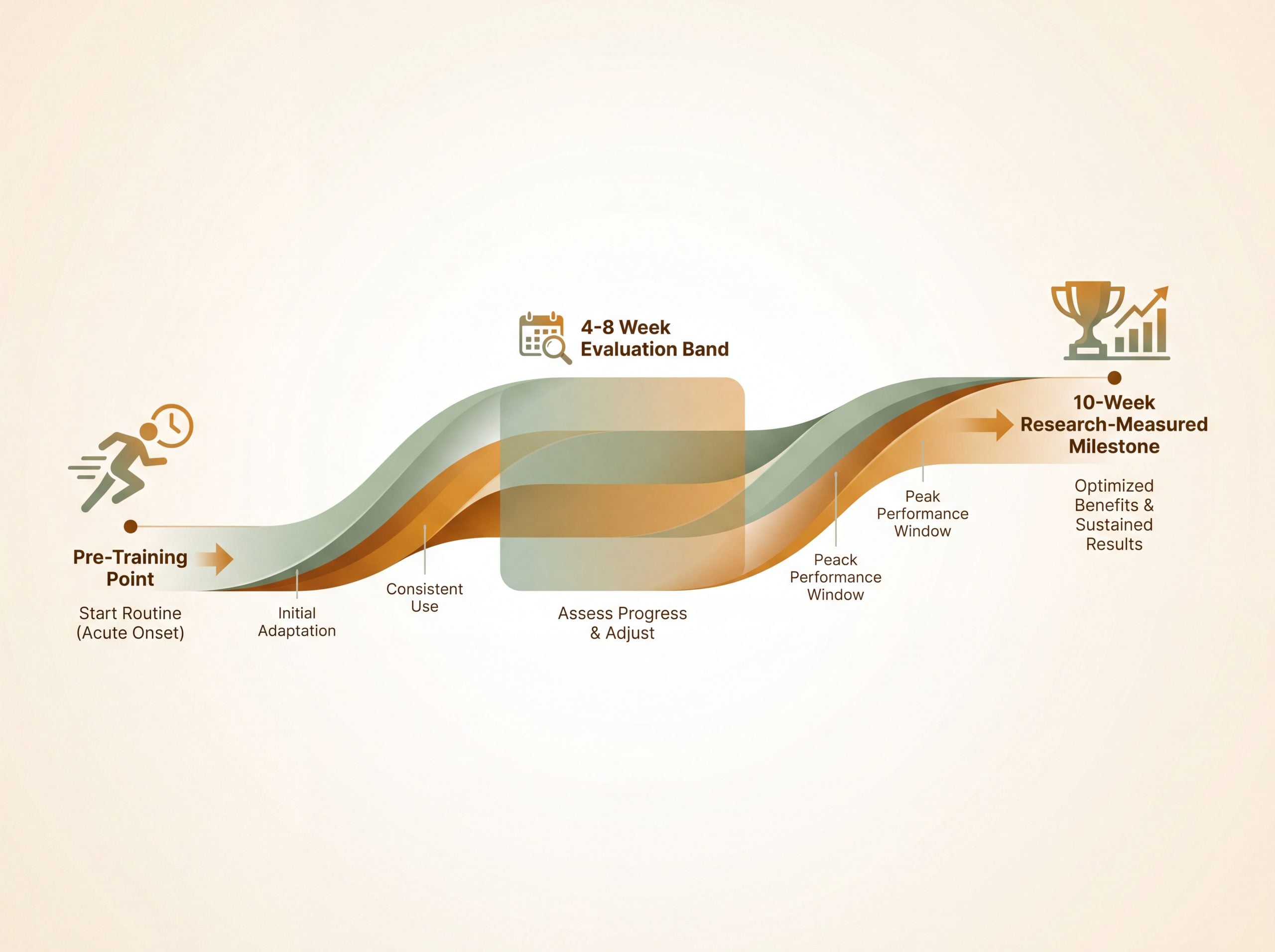
There is no single answer, and anyone promising an exact day is overselling. Based on how ecdysteroids are studied and how traditional users describe them, it helps to separate two timelines. Some people report an acute, same-session sense of readiness before training, tied to taking maral root shortly beforehand. The more meaningful changes that researchers actually measure, such as shifts in muscle mass, are cumulative and show up over weeks of consistent use paired with training, not overnight.
The clearest reference point is the ten-week human strength-training study, in which the group receiving ecdysterone-containing supplementation showed greater gains in muscle mass than the control group over that full period (Isenmann et al., 2019, Archives of Toxicology, PMID: 31123801). Ten weeks is a reasonable window to judge whether a maral root routine is doing anything for you. In our experience, giving any adaptogen at least four to eight weeks of daily, consistent use before evaluating it produces a fairer read than a few scattered doses. These statements describe general structure and function and are not a promise of any specific result.
Stacking Maral Root With Other Adaptogens
Maral root is frequently combined with other adaptogens rather than taken alone. The most common pairing follows the traditional logic of matching complementary compound families. Maral root brings phytoecdysteroids, so people often pair it with a rosavin-and-salidroside adaptogen like Rhodiola rosea when the aim is supporting training output and perceived stamina together, or with ashwagandha (Withania somnifera) when the goal leans toward supporting a calm baseline. Preclinical work has already looked at Rhaponticum carthamoides and Rhodiola rosea used together with resistance exercise, which is part of why that particular stack is popular (Roumanille et al., 2020, PMC7670727).
A few practical principles from our editorial team. Start each botanical on its own so you can tell what is doing what. Keep total daily amounts within the ranges given for each individual herb rather than adding them on top of one another. And because adaptogens can interact with medications and with each other, talk to your healthcare provider before building a stack, particularly if you take prescription drugs or manage a health condition (see the NCCIH overview of herbs and their safety considerations). General wellness support is the frame here, not treatment.
Safety, Side Effects, and Contraindications
Rhaponticum carthamoides is generally considered safe when used appropriately. However, like any supplement, it can have potential side effects and interactions.
Common Side Effects
- Mild Digestive Upset: Some individuals may experience mild digestive discomfort, such as nausea or stomach upset, especially when starting supplementation.
- Sleep Disturbances: Due to its potential stimulatory effects, R. carthamoides can interfere with sleep if taken too close to bedtime.
- Headache: Mild headache is possible, especially when initiating use.
Potential Risks and Contraindications
- Bleeding Disorders: R. carthamoides may increase the risk of bleeding, particularly in individuals with bleeding disorders or those taking anticoagulant or antiplatelet medications (e.g., warfarin, aspirin, clopidogrel). It is crucial to discontinue use at least two weeks before any scheduled surgery.
- Pregnancy and Breastfeeding: Due to a lack of safety data, R. carthamoides should be avoided during pregnancy and breastfeeding.
- Hormone-Sensitive Conditions: Individuals with hormone-sensitive conditions (e.g., breast cancer, prostate cancer) should consult a healthcare professional before using R. carthamoides due to its potential hormonal effects.
- Allergies: Individuals with allergies to plants in the Asteraceae family (ragweed, chrysanthemums, marigolds, daisies) should exercise caution, as allergic reactions are possible.
- Blood Pressure: While R. carthamoides may slightly increase blood pressure with continued use, it doesn’t generally affect those with existing high blood pressure.
Drug Interactions
- Anticoagulants/Antiplatelets: (e.g., warfarin, aspirin, clopidogrel) – High risk of interaction due to increased bleeding potential.
- Diabetes Medications: Potential interaction due to effects on blood sugar levels. Close monitoring of blood sugar is advised.
- Hormone Therapy: Potential interaction due to effects on hormone levels.
- Immunosuppressants: Potential interactions.
- Blood pressure Medications: Potential interactions.
- Thyroid Medications: Potential Interactions
- Steroids: Potential interactions.
- Anti-anxiety Medications: Potential interactions.
Comparing Rhaponticum carthamoides to Other Adaptogens
| Adaptogen | Key Compounds | Primary Benefits | Optimal Usage | Potential Side Effects |
|---|---|---|---|---|
| Maral Root | Ecdysteroids, Flavonoids | Athletic performance, hormonal balance, muscle growth | 500-1000mg daily (or lower for standardized extracts) | Mild digestive upset, sleep disturbances |
| Rhodiola Rosea | Rosavins, Salidroside | Mental fatigue reduction, stress resilience, cognitive function | 200-600mg daily | Insomnia, irritability |
| Ashwagandha | Withanolides | Anxiety relief, stress reduction, improved sleep, strength | 300-600mg daily | Drowsiness |
| Holy Basil | Eugenol, Rosmarinic acid | Inflammation, immunity | 300-2000mg daily | Blood sugar changes |
| Ginseng | Ginsenosides | Energy, cognition | 200-400mg daily | Headaches, insomnia |
| Schisandra | Lignans | Liver health, stamina | 500-2000mg daily | Digestive upset |
Maral Root vs. Siberian Ginseng and Rhodiola: How the Adaptogens Differ
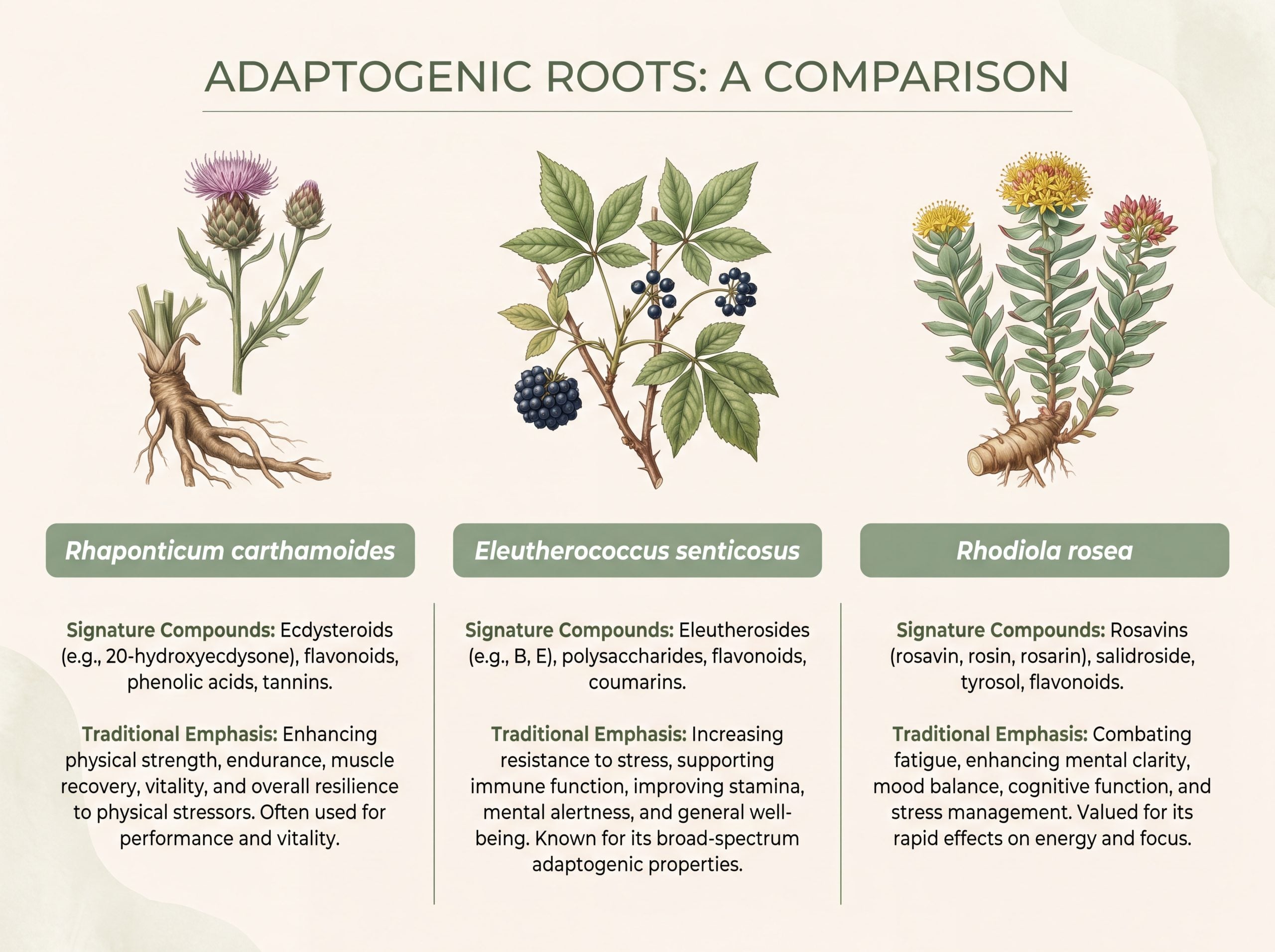
People researching maral root often ask how it stacks up against the two adaptogens it is most compared to, Siberian ginseng (Eleutherococcus senticosus) and Rhodiola rosea. The clearest difference is chemical. Maral root is defined by its phytoecdysteroids, principally 20-hydroxyecdysone, while Siberian ginseng is driven by eleutherosides and Rhodiola by rosavins and salidroside. Those different compound families act on different pathways, which is why herbalists have traditionally reached for each one for a slightly different purpose.
In our editorial review of the literature, the most useful head-to-head data comes from a rat study that paired Rhaponticum carthamoides and Rhodiola rosea extracts with resistance exercise. The researchers reported effects on muscle protein synthesis and mechanical power, with each botanical contributing differently to the outcome (Roumanille et al., 2020, Journal of the International Society of Sports Nutrition, PMC7670727). Traditionally, maral root has been favored where the goal is supporting physical output and recovery, whereas Rhodiola has a longer folk record for supporting a sense of mental stamina under fatigue. Siberian ginseng sits between them as a general endurance tonic in Eastern European practice.
| Adaptogen | Signature compounds | Traditional emphasis |
|---|---|---|
| Maral root (Rhaponticum carthamoides / Leuzea carthamoides) | Phytoecdysteroids, chiefly 20-hydroxyecdysone (ecdysterone) | Traditionally used to support physical performance and recovery |
| Siberian ginseng (Eleutherococcus senticosus) | Eleutherosides | Traditionally used as a general endurance and stamina tonic |
| Rhodiola (Rhodiola rosea) | Rosavins, salidroside | Traditionally used to support mental stamina during fatigue |
Quality Considerations and Sourcing
When choosing a Rhaponticum carthamoides supplement, it’s important to prioritize quality and purity.
- Standardization: Look for extracts standardized to a specific ecdysteroid content (e.g., 20-hydroxyecdysone). This ensures consistent potency.
- Third-Party Testing: Choose products that have been tested by an independent laboratory for purity, potency, and the absence of contaminants (heavy metals, pesticides).
- Reputable Suppliers: Purchase from trusted suppliers who adhere to Good Manufacturing Practices (GMP).
- Storage: Keep in an airtight container, and away from excessive light, and humidity.
A Buyer’s Checklist for High-Quality Maral Root
Because ecdysteroid content varies widely between roots and extracts, the label matters more than the price. In our sourcing experience, these are the signals worth checking before you buy.
- Standardization. Look for a product that states its ecdysteroid or 20-hydroxyecdysone percentage. Analytical work confirms that ecdysteroid levels in Rhaponticum carthamoides differ by plant part and preparation, so a stated percentage is a meaningful quality marker (chromatographic profiling, 2018, PMID: 30303602).
- Correct species and synonym. The label should read Rhaponticum carthamoides, also written Leuzea carthamoides. Both names refer to the same plant, and a vendor that knows the synonym usually knows the material.
- Third-party testing. A certificate of analysis for identity, heavy metals, and microbial safety is the baseline you should expect.
- cGMP manufacturing. Products made in a cGMP-compliant facility follow documented quality controls from intake through packaging.

Future Research Directions
While significant research has been conducted on Rhaponticum carthamoides, many areas warrant further investigation:
- Long-Term Safety Studies: More long-term studies are needed to fully assess the safety of prolonged use.
- Mechanistic Studies: Further research is needed to elucidate the precise mechanisms of action, particularly regarding interactions with specific cellular receptors and pathways.
- Clinical Trials: Larger and more rigorous clinical trials are needed to confirm the benefits observed in smaller studies and to determine optimal dosages for various conditions.
- Drug Interactions: More research is needed to fully understand potential interactions with medications.
- Specific Populations: Studies focusing on specific populations (e.g., older adults, and individuals with specific health conditions) would be valuable.
- Synergistic effects: More studies are needed to confirm the synergistic effects when using it with other adaptogens.
This comprehensive review demonstrates that Rhaponticum carthamoides offers a range of potential benefits, supported by both traditional use and scientific research. However, it’s essential to use it responsibly, paying close attention to dosage, potential side effects, and interactions. Always consult with a healthcare professional before starting any new supplement regimen, especially if you have pre-existing health conditions or are taking medications. This is not medical advice, and further research is always ongoing.
Disclaimer
These statements have not been evaluated by the Food and Drug Administration. This product is not intended to diagnose, treat, cure, or prevent any disease. The information in this article is for educational purposes only and is not a substitute for professional medical advice. Consult your healthcare provider before use, especially if you are pregnant, nursing, taking medication, or managing a health condition.