Polygala tenuifolia, commonly known as Yuan Zhi (and sometimes referred to as Chinese senega root), is a valued herb in traditional Chinese medicine (TCM), recognized for its wide-ranging therapeutic properties. Recent research highlights its potential to enhance cognitive function and mental well-being, making it a subject of interest for researchers and those seeking natural approaches to brain health.
Traditional Chinese Medicine and Polygala tenuifolia
In Traditional Chinese Medicine, Polygala tenuifolia, or Yuan Zhi, is highly regarded. The name “Yuan Zhi” translates roughly to “high aspirations” or “will strengthener,” reflecting its traditional use in supporting mental clarity, focus, and emotional stability. It’s believed to balance the qi (vital energy) of the heart and kidneys, a key concept in TCM for promoting emotional well-being.
Yuan Zhi is often used in TCM to address conditions described as “phlegm misting the mind,” a concept that relates to symptoms like mental fogginess, difficulty concentrating, and impaired memory. It is also traditionally utilized for insomnia, palpitations, and anxiety. Polygala tenuifolia is frequently used in the combination of other herbs within TCM formulas, for example with Fu Shen, Ren Shen, and Bai Jie Zi, to enhance its effects and address specific imbalances.
Traditional Respiratory and Expectorant Use (Yuan Zhi)
Beyond its reputation for supporting the mind, Yuan Zhi holds a long traditional place in the respiratory category of Chinese herbalism. Classical practitioners used Polygala tenuifolia root as a phlegm-resolving, expectorant herb to support clear breathing and a productive cough response. That traditional role tracks with the root’s triterpenoid saponin content, notably polygalacic acid. According to PubMed, a 2024 study in Phytomedicine described Polygala tenuifolia as a traditional medicine with strong expectorant properties and examined polygalacic acid as an anti-inflammatory constituent in a lung-injury model (Guo et al., 2024, Phytomedicine, PMID: 38972239, DOI). Traditionally, the root is simmered as a decoction, often processed with licorice, when used for respiratory support.
Key Active Compounds and Their Mechanisms
Polygala tenuifolia contains a variety of bioactive compounds that contribute to its therapeutic effects. These compounds work through several mechanisms to influence brain function and overall health:
- Tenuigenin (Senegenin): This compound is known for its neuroprotective properties. Studies suggest it may enhance cognitive function, improve learning and memory, and offer protective effects against neuronal damage. It is also being investigated for its potential in treating spinal cord injuries.
- Onjisaponins: These saponins exhibit neuroprotective and cognitive-enhancing effects. They are believed to contribute to the herb’s ability to improve memory and protect brain cells from damage.
- Tenuifolin: Research indicates that tenuifolin has rapid antidepressant-like effects. It’s thought to work by modulating neuroinflammatory cytokines and potentially activating the mTOR pathway, similar to some fast-acting antidepressant medications.
- Polygalasaponins: These compounds are being studied for their role in counteracting cognitive impairment and supporting memory function.
- 3,6′-Disinapoyl Sucrose (DISS): Research indicates that this compound inhibits MAO-A and MAO-B, may help reduce cortisol levels, and shows antioxidant properties.
Neurotransmitter Modulation and Cognitive Enhancement
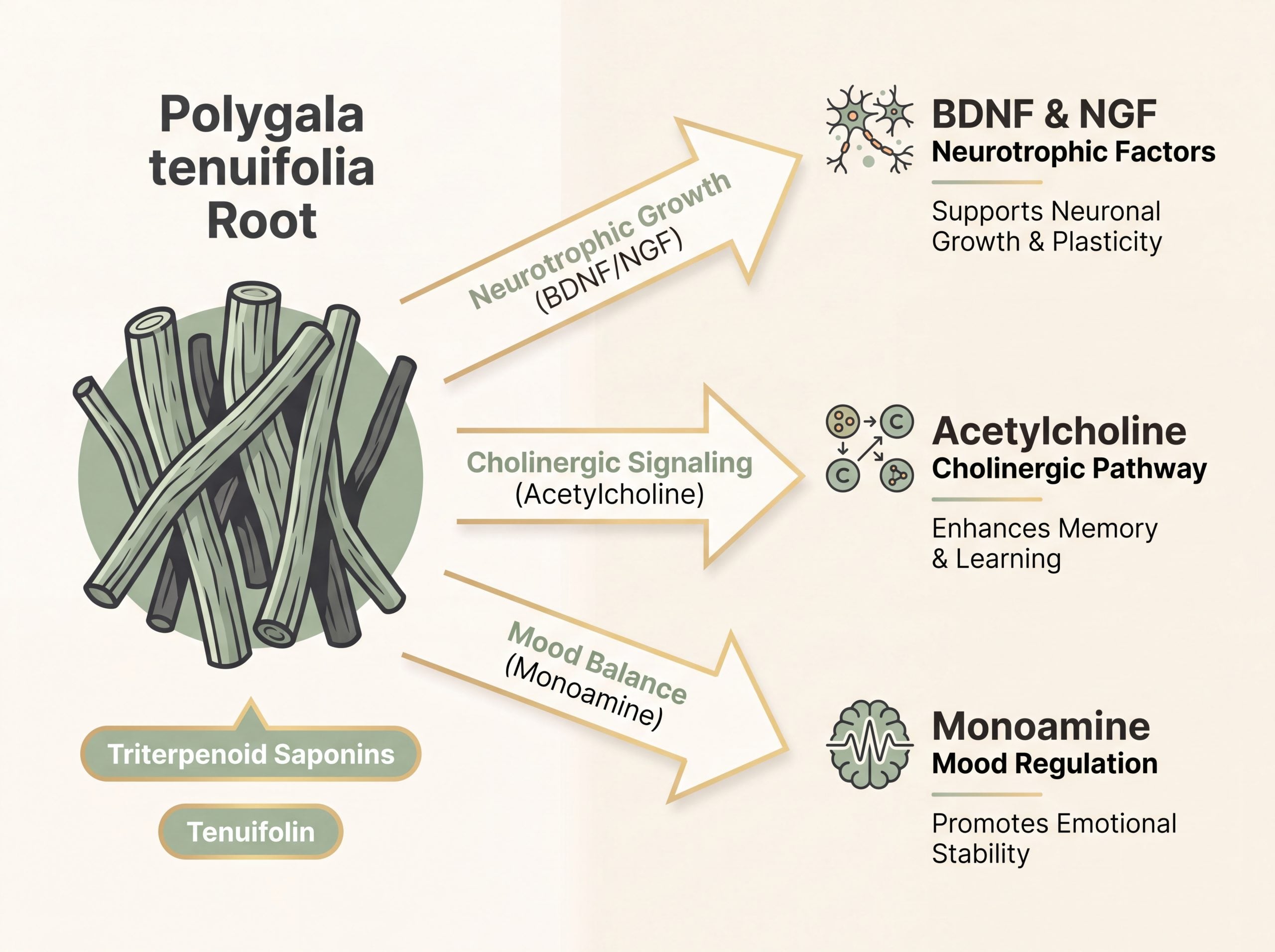
Polygala tenuifolia influences several key neurotransmitter systems in the brain, contributing to its nootropic and mood-regulating effects. It acts as a monoamine oxidase (MAO) inhibitor, which means it helps prevent the breakdown of neurotransmitters like dopamine and norepinephrine. Higher levels of these neurotransmitters are associated with improved mood, motivation, and cognitive function. The herb has also been shown to influence acetylcholine levels, a neurotransmitter crucial for learning and memory.
This cholinergic activity is part of why Polygala tenuifolia is traditionally associated with focus and sustained attention rather than sedation. According to PubMed, a 2020 study in Biomedical Reports reported that a Polygala tenuifolia preparation raised acetylcholine and choline acetyltransferase while lowering acetylcholinesterase in a scopolamine-impaired memory model, alongside higher BDNF (Wang et al., 2020, Biomed Rep, PMID: 32874571, DOI). Readers sometimes ask whether the root can help with focus or attention concerns such as ADHD. Polygala tenuifolia is not a treatment for any diagnosed condition and should not replace care from a qualified provider, yet its traditional use as a will-strengthening, concentration-supporting root is consistent with these cholinergic and neurotrophic actions.
Impact on BDNF, NGF, and Neuroplasticity
One of the most significant ways Polygala tenuifolia supports brain health is by influencing Brain-Derived Neurotrophic Factor (BDNF) and Nerve Growth Factor (NGF). These proteins are essential for neuroplasticity – the brain’s ability to reorganize itself by forming new neural connections throughout life. BDNF and NGF promote the survival, growth, and differentiation of neurons, contributing to learning, memory, and overall cognitive resilience. Research suggests that Polygala tenuifolia can increase the expression of BDNF and NGF, supporting these vital brain processes.
Anti-inflammatory and Antioxidant Properties
Chronic inflammation and oxidative stress are implicated in various neurological and mood disorders. Polygala tenuifolia exhibits both anti-inflammatory and antioxidant properties, helping to protect brain cells from damage.
- Anti-inflammatory Effects: Polygala tenuifolia has been shown to modulate inflammatory pathways in the brain. Specifically, it can reduce the levels of pro-inflammatory cytokines, such as TNF-α, IL-1β, IL-6, and IL-8, particularly in the hippocampus, a brain region critical for memory. It is believed to inhibit the NF-κB and MAPK pathways, which are involved in the inflammatory response.
- Antioxidant Effects: The herb combats oxidative stress by reducing the levels of reactive oxygen species (ROS) and enhancing the expression of Nrf2 and HO-1, which are key players in the body’s antioxidant defense system.
Effects on Amyloid-β, Tau, and Glutamate Receptors
Research is exploring Polygala tenuifolia’s potential in addressing the underlying mechanisms of Alzheimer’s disease. Studies suggest it may help reduce the aggregation of amyloid-β (Aβ) plaques, a hallmark of Alzheimer’s. Additionally, it may influence the phosphorylation of Tau protein, another factor contributing to the disease. Polygala tenuifolia also regulates glutamate AMPA receptors, which play a vital role in synaptic plasticity and brain function. Dysregulation of glutamate receptors can contribute to excitotoxicity, a process that damages neurons.
mTOR and cAMP Pathways
Tenuifolin, a component found in Polygala tenuifolia, exhibits antidepressant effects. Research suggests it activates the mammalian target of the rapamycin (mTOR) pathway, a signaling pathway involved in cell growth and survival, and is implicated in the rapid antidepressant effects of some medications. Furthermore, Polygala tenuifolia is shown to enhance the expression of proteins involved in the cyclic adenosine monophosphate (cAMP) pathway. The cAMP pathway plays a role in various cellular processes, and its enhancement is associated with improved cognitive function and may help counteract cognitive decline.

Gut Microbiota and Polygala tenuifolia
Emerging research suggests a connection between the gut microbiome and brain health. Polygala tenuifolia has been shown to have a positive impact on gut microbiota composition, increasing beneficial bacteria and reducing harmful bacteria. This modulation of the gut microbiome may contribute to its overall effects on mental well-being.
Medicinal Applications and Mental Health
This versatile herb is associated with various health benefits, particularly concerning mental wellness:
- Stress Relief: Known for its calming properties, this herb can help reduce feelings of anxiety and promote relaxation.
- Mood Enhancement: Traditionally used to alleviate symptoms of depression, it promotes a sense of emotional balance and well-being.
- Improvement in Sleep Quality: Many individuals use this herb to enhance sleep quality and combat insomnia, making it a popular choice for those experiencing sleep disturbances.
- Cognitive Support: Research suggests that it may aid in memory retention and cognitive clarity, making it beneficial for individuals experiencing cognitive decline or forgetfulness.
Impact on Mental Health
Emerging studies highlight the positive effects of this herb on mental health:
| Health Benefit | Description | Supporting Research |
|---|---|---|
| Alleviates Anxiety | Helps to reduce anxiety levels and promote a sense of calm. | A Garg, 2023 |
| Enhances Mood | May improve mood and alleviate depressive symptoms. | July 12, 2024 |
| Boosts Cognitive Function | Supports memory and cognitive clarity, beneficial for mental sharpness. | X Deng, 2020 |
| Improves Sleep Quality | Facilitates better sleep and helps combat insomnia. | CC Wang, 2017 |
Polygala tenuifolia and Stimulant Stacking: Caffeine and Nootropic Combinations
A frequent question from readers who build nootropic stacks is whether Yuan Zhi can be combined with caffeine or other stimulants. In our editorial review of the traditional and pharmacological literature, Polygala tenuifolia sits in the calming, focus-supporting category rather than the stimulant category. Because it engages monoamine and cholinergic pathways, as described in the mechanism section above, taking it alongside high-dose caffeine, pre-workout, or energy blends can layer several overlapping neuroactive effects at once. People who are sensitive to stimulants should try Polygala tenuifolia on its own first, at a low amount, to gauge their individual response before combining it with caffeine. As with any supplement pairing, talk with your healthcare provider before stacking, particularly if you take prescription medication.
Dosage and Administration
When considering Polygala tenuifolia, understanding the appropriate dosage and administration methods is important. Here are some common forms and recommended dosages:
| Form | Recommended Dosage | Notes |
|---|---|---|
| Powder | 1-3 grams per day | Can be mixed with water or added to smoothies. |
| Capsules | 200-500 mg, 1-2 times daily | Follow manufacturer instructions for specific products. |
| Tincture | 1-2 ml, 2-3 times daily | Can be taken directly or diluted in water. |
| Tea | 1-2 cups per day | Steep 1-2 grams of dried root in hot water for 10-15 minutes. |
It’s important to note that the effects of raw, processed, and honey-stir-baked Polygala tenuifolia may vary. Processing methods can influence the herb’s chemical composition and, consequently, its therapeutic properties.
Readers often ask how a standardized extract differs from capsules, powder, or a traditional decoction. The root decoction and raw powder deliver the whole-root profile, while modern capsules and extracts are commonly standardized to marker saponins such as tenuifolin, senegenin, or total onjisaponins, and to concentration ratios such as 10:1 or 20:1. A higher extract ratio means more concentrated actives per gram, so an effective amount of a standardized extract is usually smaller than the raw-powder amounts shown above. Because standardization differs between manufacturers, follow the specific product label rather than converting between forms yourself, and start at the low end of any range.
Potential Side Effects and Safety Considerations
While generally considered safe, Polygala tenuifolia can have potential side effects, and certain precautions should be taken:
- Gastrointestinal Issues: Some individuals may experience gastrointestinal discomfort, such as nausea, vomiting, or diarrhea, especially with raw Polygala tenuifolia. Processed forms, such as those boiled with licorice, are often better tolerated.
- Dosage: Start with a lower dosage and gradually increase as needed to assess tolerance.
- Drug Interactions: Polygala tenuifolia may interact with certain medications, particularly those affecting the central nervous system, sedatives, antidepressants, and anticoagulants. Consult a healthcare professional before use, especially if you are taking any medications.
- Pregnancy and Breastfeeding: Due to a lack of safety data, it is generally recommended to avoid using Polygala tenuifolia during pregnancy and breastfeeding.
- Underlying health conditions: If pre-existing conditions are present, consult a healthcare professional.
Two further safety notes round out the picture. First, raw Polygala tenuifolia is known to irritate the throat and gastrointestinal tract, especially at higher amounts or with long-term use, and the saponins are the primary irritant. According to PubMed, a 2020 review in Fitoterapia notes that the root is usually processed, or paired with licorice, specifically to reduce this gastrointestinal irritation (Zhao et al., 2020, Fitoterapia, PMID: 33069838, DOI). A separate preclinical safety evaluation in rats and dogs reported no serious treatment-related toxicity at the oral doses tested, though mild vomiting appeared in some animals (Shin et al., 2014, Evid Based Complement Alternat Med, PMID: 25431613, full text). Second, Polygala tenuifolia is traditionally avoided during pregnancy and nursing, and by people with active gastritis or stomach ulcers. When in doubt, choose a processed (zhi yuan zhi) form and consult your healthcare provider.
Quality and Sourcing
The quality and potency of Polygala tenuifolia products can vary considerably. It’s essential to source products from reputable suppliers who adhere to good manufacturing practices. Wild-harvested sources are often preferred for their purity.
Interactions With Heart and Blood-Pressure Medications
One question our team sees often is whether Polygala tenuifolia interacts with cardiovascular or blood-pressure medications. The safety guidance above already flags possible interactions with central nervous system agents, sedatives, antidepressants, and anticoagulants. Because the root’s saponins can affect how the gut absorbs other substances, and because its monoamine activity overlaps with several drug classes, anyone taking heart-rhythm medication, blood-pressure medication, or blood thinners should treat Yuan Zhi as a supplement that needs medical clearance first. Separating the herb from prescription doses by a couple of hours is a reasonable precaution, but the most important step is talking with the prescribing clinician before starting. This is general educational information, not medical advice.
Research Gaps and Future Directions
While research on Polygala tenuifolia is promising, more studies are needed to fully understand its benefits and mechanisms of action. Many existing studies are preclinical (conducted on animals or in vitro), and more large-scale, well-designed human clinical trials are necessary. Further research is also warranted to investigate long-term effects, optimal dosages, and specific interactions with other medications or supplements.
Pros and Cons of Polygala Tenuifolia
| Pros | Cons |
|---|---|
| May reduce anxiety and stress levels. | Possible side effects include gastrointestinal discomfort. |
| Supports cognitive function and memory retention. | Limited research on long-term effects. |
| Promotes better sleep quality. | Interactions with certain medications may occur. |
| Widely used in traditional medicine with a long history. | Quality and potency can vary between products. |
Key Points to Consider
- Consult with a healthcare professional before starting any new herbal supplement, especially if you are pregnant, nursing, or taking medications.
- Start with a lower dosage to assess tolerance and gradually increase as needed.
- Look for high-quality products from reputable sources to ensure safety and efficacy.
- Monitor your body’s response and discontinue use if you experience any adverse effects.
Recent Research Insights: Studies indicate that the roots of this plant possess pharmacological properties that may help reduce inflammatory markers, provide neuroprotective effects, and combat disease (A Garg, 2023). It is recognized for its ability to alleviate anxiety and stress, contributing to improved mood and restful sleep (July 12, 2024). Users have reported noticeable enhancements in focus, calmness, and overall cognitive performance after incorporating this herb into their routines (August 22, 2024). In traditional practices, it has been utilized to address insomnia, memory issues, and neurasthenia, showcasing its long-standing role in mental health (X Deng, 2020). Key compounds known as Polygala saponins are believed to play a significant role in its neuroprotective effects, potentially benefiting those with neurological disorders (CC Wang, 2017).

Frequently Asked Questions
What is the recommended dose of Polygala tenuifolia, and does it differ for capsules and extract?
Common traditional forms and general ranges are powder at 1 to 3 grams daily, capsules at roughly 200 to 500 mg once or twice daily, tincture at 1 to 2 ml a few times daily, and a decoction of 1 to 2 grams of dried root. Standardized extracts are more concentrated than raw powder, so effective amounts are usually smaller. Always follow the specific product label and start at the lower end of any range.
What are the potential side effects of Polygala tenuifolia?
The most commonly reported effects are gastrointestinal, such as nausea, an unsettled stomach, or throat irritation, and these are more likely with raw root or higher amounts. According to PubMed, the saponins are the primary irritant, which is why the root is often processed or combined with licorice (Zhao et al., 2020, Fitoterapia, PMID: 33069838). Starting low and choosing a processed form can improve tolerance.
Is Polygala tenuifolia safe to take with caffeine?
Polygala tenuifolia is traditionally a calming, focus-supporting root rather than a stimulant, but it does act on monoamine and cholinergic pathways. Combining it with high-dose caffeine or other stimulants layers several neuroactive effects at once, so it is sensible to try the root on its own first at a low amount. Consult your healthcare provider before combining it with stimulants or prescription medication.
Does Polygala tenuifolia interact with heart medications?
It may. Traditional and pharmacological sources flag possible interactions with central nervous system agents, sedatives, antidepressants, and anticoagulants, and its saponins can affect absorption. Anyone taking heart-rhythm medication, blood-pressure medication, or blood thinners should get medical clearance from the prescribing clinician before use. This is general information, not medical advice.
Can Polygala tenuifolia help with focus or ADHD?
The root is traditionally associated with concentration and mental clarity, and research describes cholinergic and neurotrophic activity that supports learning and memory pathways (Wang et al., 2020, Biomed Rep, PMID: 32874571). It is not a treatment for ADHD or any diagnosed condition and should not replace professional care. People exploring focus support should speak with a qualified provider.
How is Polygala tenuifolia extract typically used, and how does it differ from the whole root?
The whole root is traditionally simmered into a decoction or used as a raw powder, delivering the full root profile. Modern extracts and capsules are often standardized to marker saponins such as tenuifolin or total onjisaponins and to ratios like 10:1 or 20:1, making them more concentrated per gram. Because standardization varies by manufacturer, follow the product label rather than converting between forms.
Selected Research References
This article’s claims are supported by peer-reviewed research indexed on PubMed:
- Xue W et al. (2009). Polygalasaponin XXXII improves hippocampal-dependent learning and memory. Acta Pharmacol Sin. PMID: 19684611
- Wang X et al. (2020). Neuroprotective effects on scopolamine-induced memory impairment. Biomed Rep. PMID: 32874571
- Hu Y et al. (2010). Antidepressant effects of extract YZ-50 in chronic mild stress. Pharm Biol. PMID: 20645779
- Guo S et al. (2024). Polygala tenuifolia extract and expectorant activity in acute lung injury. Phytomedicine. PMID: 38972239
- Zhao X et al. (2020). Polygalae Radix: traditional uses, pharmacology, and toxicology review. Fitoterapia. PMID: 33069838
These statements have not been evaluated by the Food and Drug Administration. This product is not intended to diagnose, treat, cure, or prevent any disease. Consult your healthcare provider before use, especially if you are pregnant, nursing, taking medication, or managing a health condition.