Understanding the Hypothalamus: A Key Regulator
The hypothalamus, though only about the size of an almond, is crucial for maintaining a stable internal environment. It produces hormones directly and controls the pituitary gland (often referred to as the “master gland”). The pituitary then regulates other endocrine glands throughout the body.
Hormones Directly Influenced by the Hypothalamus
- Thyrotropin-releasing hormone (TRH): Stimulates the pituitary to release thyroid-stimulating hormone (TSH), which regulates thyroid function and metabolism.
- Gonadotropin-releasing hormone (GnRH): Stimulates the pituitary to release luteinizing hormone (LH) and follicle-stimulating hormone (FSH). These are vital for reproduction, puberty, and the production of sex hormones, including testosterone in men and estrogen and progesterone in women.
- Corticotropin-releasing hormone (CRH): Stimulates the pituitary to release adrenocorticotropic hormone (ACTH). This is a key component of the stress response, leading to cortisol release from the adrenal glands. This whole interaction is part of the hypothalamic-pituitary-adrenal (HPA) axis (see StatPearls: Physiology, Hypothalamus for a detailed review of this pathway). Because this axis governs the adrenal glands directly, herbs formulated to support adrenal function, such as our Adrenal Support Capsules and Adrenal Function Formula, are often discussed alongside HPA-axis-focused adaptogens.
- Growth hormone-releasing hormone (GHRH): Stimulates the pituitary to release growth hormone, important for growth, cell regeneration, and metabolism.
- Somatostatin: Inhibits the release of growth hormone and TSH, serving as a regulatory counterbalance.
- Dopamine (as a hormone): Inhibits the release of prolactin (involved in lactation) from the pituitary. It also functions as a neurotransmitter associated with pleasure and motivation.
- Oxytocin: The hypothalamus makes oxytocin, and the posterior pituitary gland stores and releases it. It plays a role in social bonding, sexual reproduction, childbirth, and breastfeeding.
- Vasopressin (Antidiuretic hormone/ADH): The hypothalamus makes vasopressin, and the posterior pituitary gland stores and releases it. ADH regulates water balance and blood pressure by controlling water reabsorption in the kidneys.
Recognizing Hypothalamic Dysfunction: Signs and Symptoms
Because of its broad hormonal influence, problems with the hypothalamus can have widespread effects. Symptoms vary depending on which hormones are affected and whether hormone production is too high or too low.
- Unexplained Weight Changes: Significant weight gain or loss without changes in diet or physical activity.
- Sleep Disturbances: Insomnia, excessive sleepiness, or disrupted sleep-wake cycles. The pineal gland, which is influenced by the hypothalamus, is also deeply involved in sleep via melatonin production.
- Chronic Fatigue: Persistent tiredness that is not relieved by rest.
- Mood Swings, Anxiety, Depression: The hypothalamus influences neurotransmitters and hormones related to mood regulation.
- Low Libido: Decreased sex drive.
- Menstrual Irregularities (in women): Absent or irregular periods.
- Infertility: Difficulty conceiving.
- Body Temperature Regulation Problems: Feeling constantly cold or hot, or experiencing unexplained temperature changes.
- Excessive Thirst or Urination: Can indicate issues with vasopressin (ADH) regulation.
- Headaches: Particularly if a tumor is present.
- Delayed or Early Puberty: In children.
- Poor Bone Health: Hormonal imbalances can affect bone density.
Potential Causes of Hypothalamic Dysfunction
While stress, poor nutrition, and insufficient sleep are major contributors, a broader range of factors can impact hypothalamic function:
- Head Trauma/Injury: Even seemingly minor head injuries can affect the hypothalamus.
- Brain Tumors: Tumors in or near the hypothalamus, though uncommon, can disrupt its function.
- Genetic Disorders: Conditions such as Kallmann syndrome (affects GnRH production and sense of smell) and Prader-Willi syndrome (affects appetite regulation and growth).
- Eating Disorders: Anorexia nervosa and bulimia can severely disrupt hormonal balance and hypothalamic function due to nutritional deficiencies and stress.
- Autoimmune Diseases: Conditions where the immune system attacks the body can potentially affect the hypothalamus.
- Infections: Brain infections can impact hypothalamic function.
- Surgery: Brain surgery in the area of the hypothalamus.
- Radiation Therapy: Radiation treatment to the brain.
- Blood Vessel Problems: Aneurysms or other conditions affecting blood flow to the brain.
- Inflammation: Diseases that cause brain inflammation, such as multiple sclerosis and neurosarcoidosis.

Natural Approaches to Hypothalamic Support: Herbs and Lifestyle
A comprehensive approach is most effective for supporting hypothalamic health. This includes addressing lifestyle factors, making informed dietary choices, and, in some cases, incorporating specific herbs known for their adaptogenic and hormone-balancing properties.
Adaptogens and Herbs for Hypothalamic Function
Adaptogens are a class of herbs that help the body adapt to stress and support overall resilience, a category the National Center for Complementary and Integrative Health (NCCIH) has reviewed for usefulness and safety. Many of the herbs below are considered adaptogens. For a broader look at this herb category, see our guides to the strongest adaptogens and to herbs that regulate hormones.
| Herb | Potential Benefits | Proposed Mechanism of Action | Cautions & Considerations |
|---|---|---|---|
| Ashwagandha (Withania somnifera) — see our Ashwagandha Root Capsules and Organic Ashwagandha Root Powder | Reduces stress and anxiety, supports adrenal health, and may improve sleep. In a randomized, double-blind, placebo-controlled study, a high-concentration ashwagandha root extract significantly reduced serum cortisol compared to placebo (Chandrasekhar et al., 2012, Indian Journal of Psychological Medicine, PMID: 23439798). | May lower cortisol levels by influencing the HPA axis, a mechanism reviewed in the NIH Office of Dietary Supplements health professional fact sheet. Some research suggests it may modulate CRH production. May also influence GABA, a neurotransmitter. For more on this herb specifically for cortisol, see our Ashwagandha, Cortisol, and Weight guide. | Can interact with thyroid medications, sedatives, and immunosuppressants. Start with a low dose. |
| Rhodiola Rosea — see our Rhodiola Rosea Capsules and Rhodiola Powder | Combats fatigue, enhances mental performance, and may improve mood. A randomized, placebo-controlled study in subjects with stress-related fatigue found a standardized Rhodiola rosea extract improved cortisol response to awakening stress compared to placebo (Olsson et al., 2009, Planta Medica, PMID: 19016404). | May increase levels of serotonin, dopamine, and norepinephrine. May help modulate the body’s response to stress through the HPA axis. We cover this mechanism in more depth, including for thyroid-related fatigue, in our Rhodiola and Hashimoto’s guide. | Generally well-tolerated, but some may experience dizziness, dry mouth, or sleep disturbances. |
| Holy Basil (Tulsi) (Ocimum tenuiflorum) — see our Holy Basil Powder and Holy Basil Capsules | Regulates cortisol levels, reduces stress and anxiety, and may improve sleep. A study on Ocimum sanctum examined its effects on the hypothalamic-pituitary-adrenal axis specifically and found anti-stress activity consistent with its traditional use (Jothie Richard et al., 2016, Phytotherapy Research, PMID: 26899341). | Shown to reduce stress and impact the HPA axis. May help lower cortisol and improve stress responses. May also act on CRF1 receptors. | Can thin the blood; use caution with blood thinners. May also lower blood sugar. |
| Mucuna Pruriens | Supports dopamine production, may improve mood and libido, and may influence prolactin levels. | Contains L-DOPA, a precursor to dopamine. Dopamine inhibits prolactin release. | Should not be taken with MAOIs (a type of antidepressant). Can cause nausea or abdominal discomfort. Start with a low dose. |
| Vitex (Chasteberry) | Supports hormonal balance, especially in women; may help with PMS and irregular cycles. | Influences the hypothalamus-pituitary-gonadal axis. May decrease prolactin levels and increase progesterone. | May interact with birth control pills and hormone replacement therapy. Can cause mild digestive upset. |
| Maca (Lepidium meyenii) | May improve energy, libido, and mood; may support hormonal balance. | Research on its mechanism is ongoing, but it’s thought to act as an adaptogen, supporting hormonal balance. May influence the HPA axis. | Generally well-tolerated, but some may experience digestive upset or jitteriness. |
| Ginseng (Panax) | Adaptogenic effects may improve energy, cognitive function, and stress response. | May modulate the HPA axis and cortisol levels. Can improve the body’s response to stress. May also have antioxidant and anti-inflammatory effects. | Can interact with blood thinners, diabetes medications, and MAOIs. May cause insomnia or nervousness. American ginseng is often less stimulating. |
| Epimedium (Horny Goat Weed) | Traditionally used for centuries to help with fatigue and to stimulate libido. | Epimedium contains icariin, which research shows can raise testosterone levels. Icariin has also been identified as a phytoestrogen, and was shown to prevent bone loss. | Should not be taken with MAOIs or with blood thinners. |
| Licorice Root (Glycyrrhiza glabra) | Use with extreme caution. Affects cortisol; may be helpful in specific cases of adrenal insufficiency, but can cause serious side effects. | Inhibits the enzyme 11β-hydroxysteroid dehydrogenase (11β-HSD2), leading to a buildup of cortisol, which can mimic aldosterone effects. | Can cause high blood pressure, low potassium, and other serious side effects. Use only under the strict supervision of a qualified healthcare professional. |
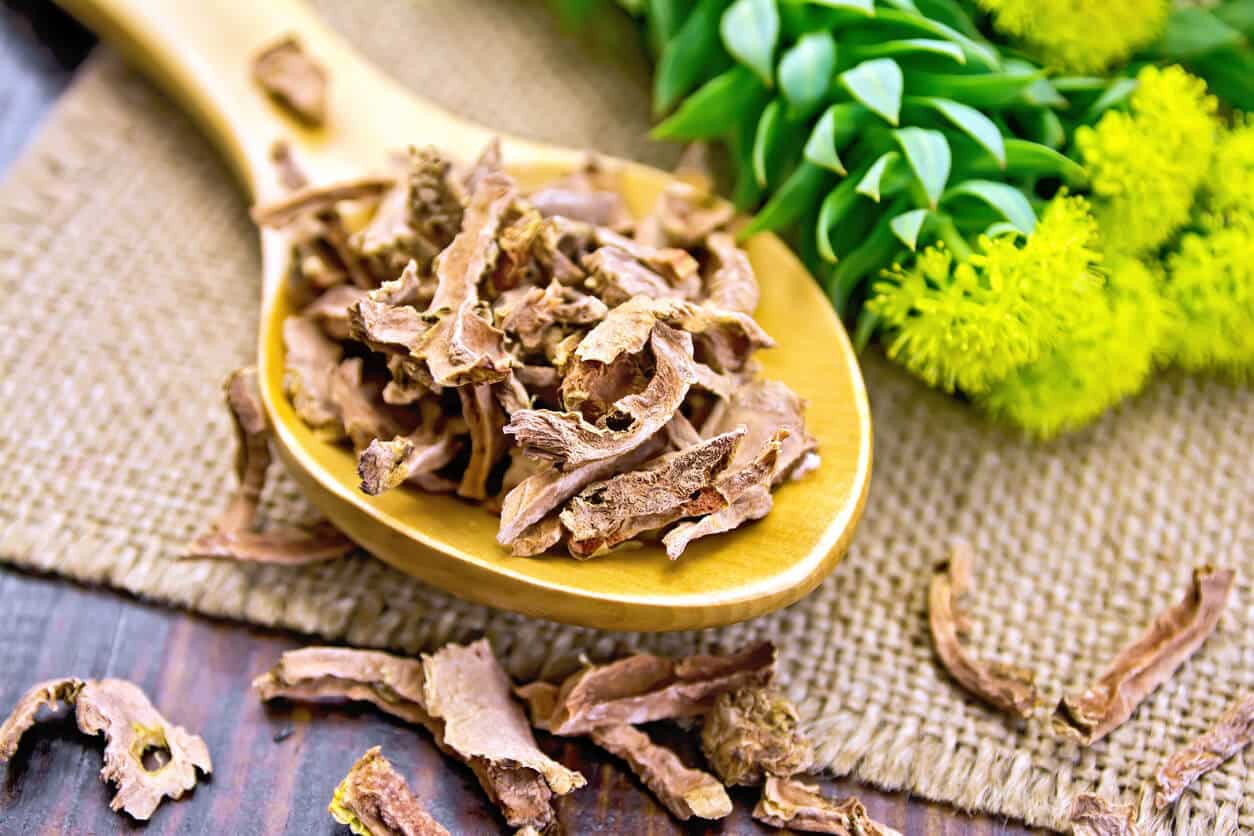
Herbal Teas for Brain and Hypothalamic Support
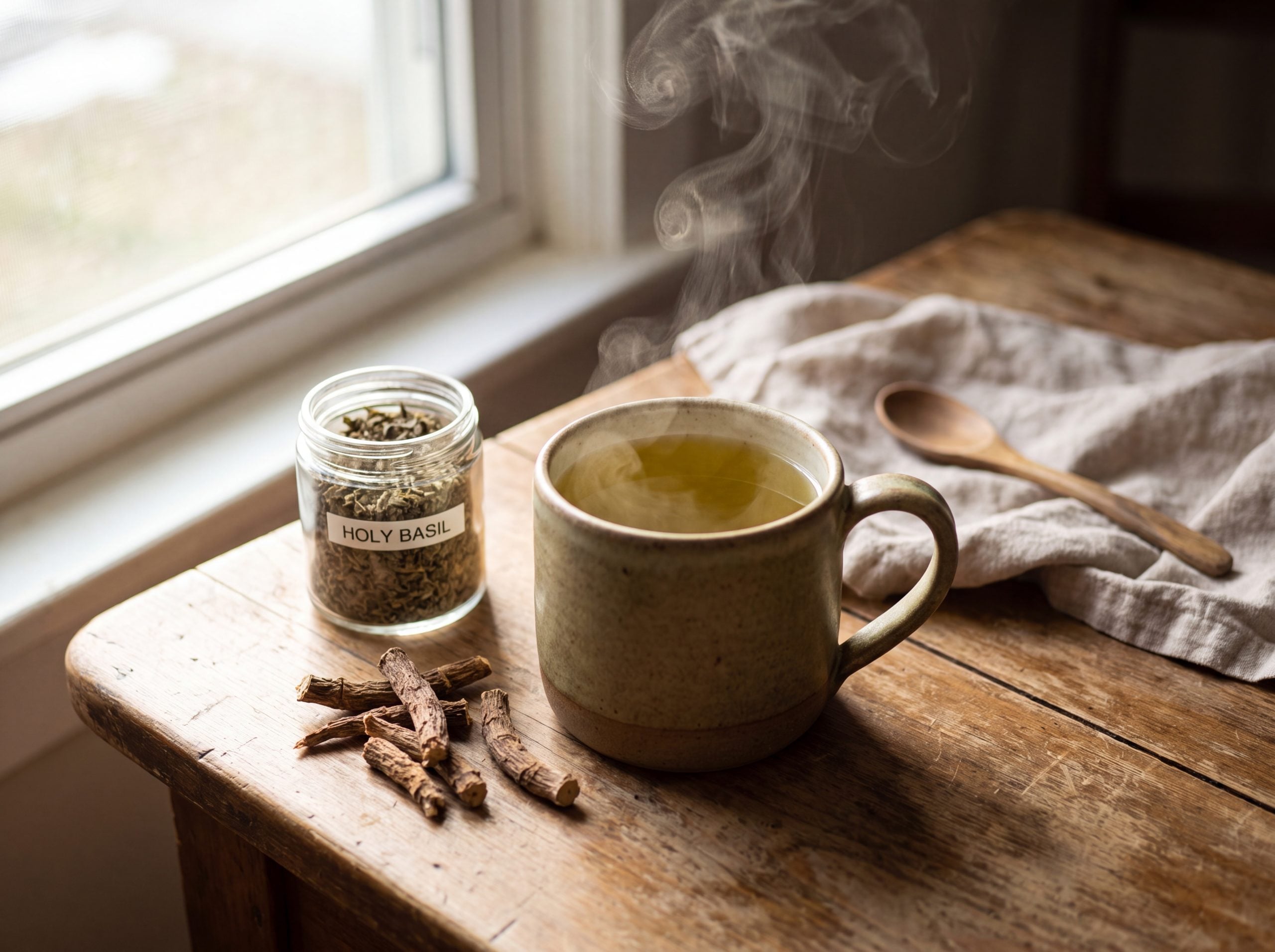
Several of the adaptogens above are also traditionally prepared as teas rather than capsules or tinctures, which is worth knowing if you would rather sip your way toward hypothalamic support than take a supplement.
- Holy Basil (Tulsi) tea: Tulsi is one of the most common brewed adaptogens, traditionally steeped as a daily tea in Ayurvedic practice. The same cortisol and CRF1-receptor mechanisms discussed above apply in principle, though the extract-based study cited in the table used a standardized concentration higher than a cup of tea typically provides.
- Rhodiola tea: Dried Rhodiola rosea root can also be steeped as a tea, though most of the clinical research on fatigue and stress response, including the study referenced above, used standardized root extracts rather than brewed tea.
Herbal teas are generally well-tolerated, but the same cautions listed in the table above still apply to their tea forms. As with any adaptogen, talk to your healthcare provider before adding a new herbal tea to a daily routine, especially if you are pregnant, nursing, or taking medication.
Essential Lifestyle Strategies for a Healthy Hypothalamus
- Diet:
- Nutrient-Dense, Whole Foods: Emphasize unprocessed foods: fruits, vegetables (especially leafy greens), lean protein, and whole grains.
- Healthy Fats: Include omega-3 fatty acids (fatty fish, flaxseeds, walnuts) and other healthy fats (avocados, olive oil, nuts, seeds).
- Adequate Protein: Crucial for neurotransmitter and hormone synthesis.
- Fiber: Supports gut health, which indirectly influences hormonal balance.
- Limit Processed Foods, Sugar, and Excessive Caffeine/Alcohol: These can disrupt hormonal balance and increase stress.
- Key Nutrients: B vitamins (especially B1 and B12), vitamin C, zinc, and selenium are important for hypothalamic function.
- Stress Management:
- Mindfulness and Meditation: Proven to reduce stress.
- Yoga and Tai Chi: Combine physical movement with mindfulness.
- Deep Breathing Exercises: Can calm the nervous system.
- Time in Nature: Spending time outdoors can reduce stress.
- Social Connection: Strong social support is important for stress resilience.
- Therapy/Counseling: Provides tools for managing stress.
- Sleep Hygiene:
- Consistent Sleep Schedule: Go to bed and wake up around the same time daily.
- Dark, Quiet, Cool Bedroom: Optimize your sleep environment.
- Avoid Screens Before Bed: Blue light can interfere with melatonin production.
- Limit Caffeine and Alcohol Before Bed: These can disrupt sleep.
- Regular Physical Activity: Exercise benefits the hypothalamus and general well-being.
The Gut-Brain Connection and Hormonal Balance
Research increasingly shows a link between gut health and hormonal balance. A healthy gut microbiome can influence hormone regulation. Supporting gut health through diet (probiotics, prebiotics, fiber) and lifestyle can indirectly benefit hypothalamic function.
Important Considerations and Actionable Steps
- Consult a Healthcare Professional: Before starting any new supplements, especially if you have a pre-existing condition, are on medication, or are pregnant/breastfeeding, always consult a qualified healthcare provider (doctor, naturopathic doctor, functional medicine practitioner, or registered herbalist).
- Individualized Approach: What benefits one person might not benefit another. Monitor your body’s responses and adjust accordingly.
- Quality of Herbs: Choose good, high-quality supplements from reputable sources to ensure purity and potency.
- Holistic View: Remember to always have a comprehensive lifestyle that addresses diet, stress, sleep, and other factors to ensure overall well-being.
These statements have not been evaluated by the Food and Drug Administration. This product is not intended to diagnose, treat, cure, or prevent any disease. Consult your healthcare provider before use, especially if you are pregnant, nursing, taking medication, or have a medical condition.