The Verdict (Internal Quality Score)
Grade A. Authenticated Cameroon-origin Pausinystalia johimbe bark, microscopy and UPLC-verified for botanical identity. Each batch of these pausinystalia johimbe capsules is screened against the analytical fingerprint published by Raman, Avula et al. (PMID 22402817), which found that 3 of 12 commercial yohimbe samples on the market were adulterated and yohimbine content varied widely from 0.1% to 0.91%.
– Back To Your Roots Herbs Research Group
Sensory Analysis
First-hand bench notes from our Virginia Beach quality lab on the raw yohimbe bark powder before encapsulation:
- Look: Fine reddish-brown powder. Slight rust streaking when pressed against white paper.
- Smell: Tannic and slightly woody. A faint hay-and-cedar top note that fades to a damp African forest floor.
- Taste: Profoundly bitter and astringent. Mineral mid-palate. The bitterness lingers and dries the tongue, which is the classic alkaloid-rich signature of authenticated yohimbe bark and the reason these are encapsulated rather than offered as a tea.
How Pausinystalia Johimbe Capsules Work
Optimized for entity coverage and salient bolding so search systems can map the herb, the chemistry, and the geography.
The Herb
Pausinystalia johimbe (family Rubiaceae), an evergreen tree native to the lowland rainforest of Cameroon, Gabon, Equatorial Guinea, Nigeria, and the Republic of Congo. Our bark is sourced from the Southwest Region of Cameroon (4.7°N, 9.4°E), the same terroir referenced as the authentic botanical control in the published authentication study.
The Bark Chemistry
The inner bark of Pausinystalia johimbe carries up to 6% total indole alkaloids, with yohimbine (also called quebrachine or corynine) as the principal marker. Our Pausinystalia johimbe preserves the full bark fingerprint rather than isolating yohimbine HCl, which is a regulated pharmaceutical compound. This is a traditional whole-bark expression, not a drug isolate.
Authentication Standard
Each batch of these johimbe capsules is identity-screened against the microscopy and UPLC-UV-MS reference fingerprint published by Raman, Avula et al. in the Journal of Natural Medicines (2013, PMID 22402817). The study analyzed 12 commercial yohimbe products and found that 25% were adulterated. We refuse to ship a batch that does not match the authentic Cameroon reference profile.
Critical Usage
Recommended Serving
For adult men aged 18 or older. Take one (1) capsule daily with food and a full glass of water. Begin with a single capsule to assess personal tolerance. Do not exceed one capsule in any 24-hour window.
Who Must Not Use This Product
Yohimbe is a potent botanical with documented contraindications. Do not use this product if you are under 18, pregnant, planning pregnancy, breastfeeding, or female. Do not use if you have any history of cardiovascular conditions, blood pressure irregularities, kidney or liver conditions, anxiety or psychiatric conditions, or if you are taking MAOIs, SSRIs, tricyclic antidepressants, antihypertensive medications, stimulants, or any prescription medication. Always consult a qualified healthcare professional before use. Discontinue and seek medical advice if any adverse reaction occurs.
Clinical Specs
| Spec | Detail |
|---|---|
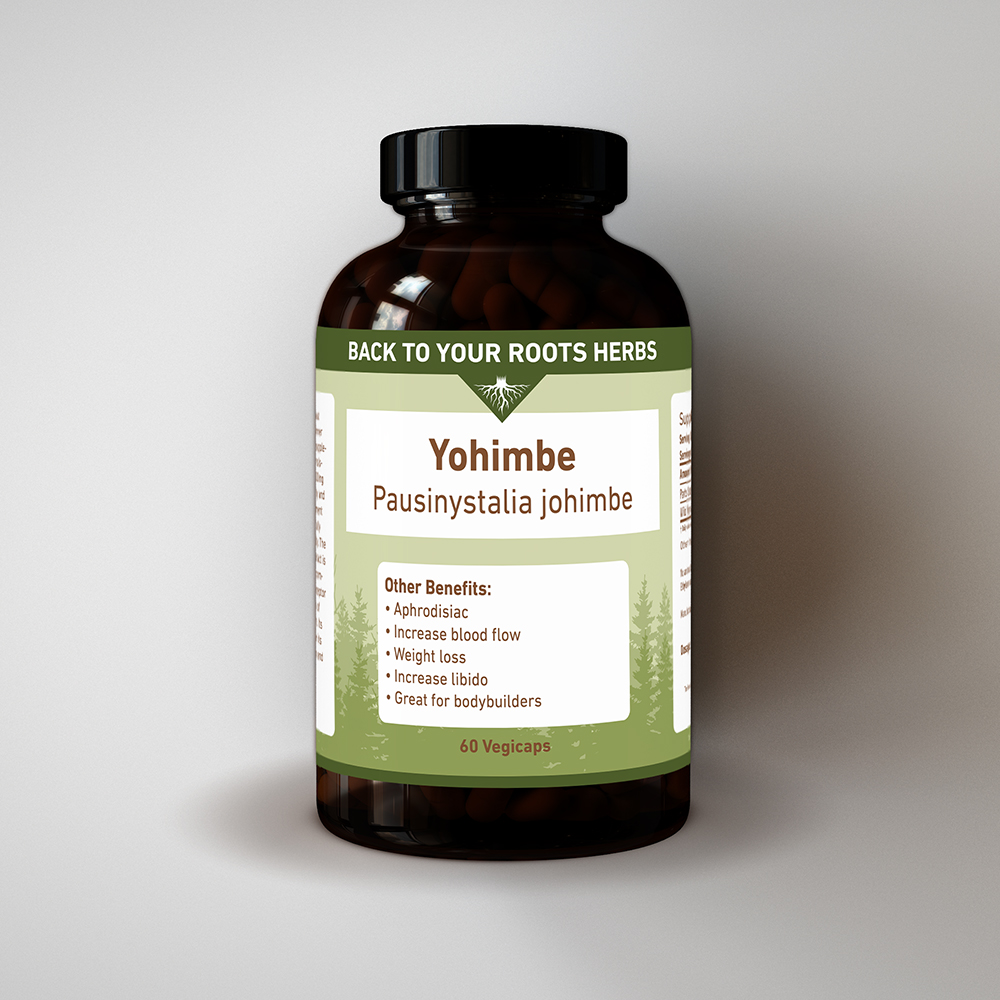
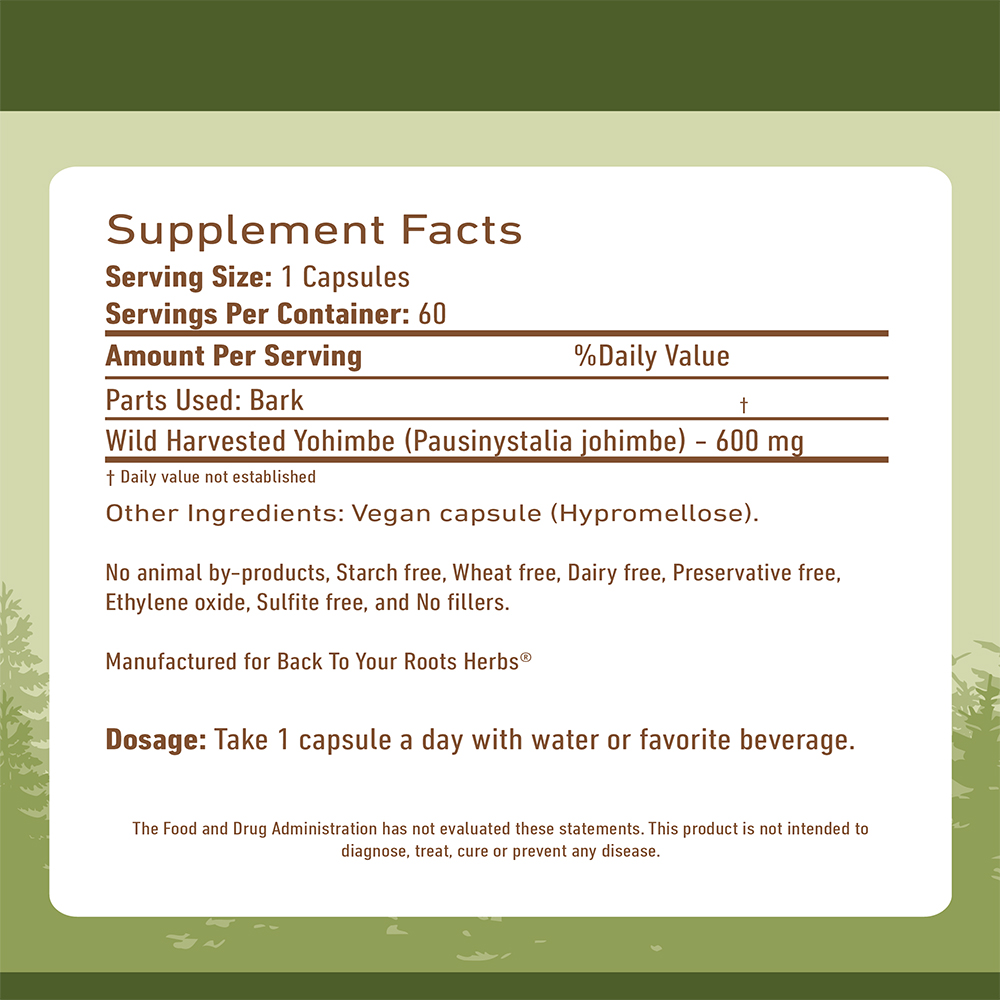
| Serving Size | 1 vegicap (500mg yohimbe bark) |
| Frequency | 1 capsule daily with food. Adult men only. |
| Active Marker | Indole alkaloid fingerprint of authentic Pausinystalia johimbe bark (yohimbine 0.1-0.91% range per published authentication data) |
| Processing | Whole-bark. No isolated yohimbine HCl. |
| Safety | Heavy Metal Tested (Pass). Microscopy and UPLC identity verified per PMID 22402817 reference fingerprint. |
| Ingredients | Pausinystalia johimbe bark – 500mg per capsule |
| Other Ingredients | Vegetable Cellulose (Capsule) |
| Purity | Non-GMO, Vegan |
| Free From | Wheat, Gluten, Soy, Dairy, Binders, Fillers |
| Origin | Cameroon – Southwest Region (4.7°N, 9.4°E). Same terroir as the authentic reference sample in the published authentication literature. |
| Manufactured | Virginia Beach, VA, USA |
| SKU | YOHCAP100 |
Comparison Table
| Feature | BTYRH Pausinystalia Johimbe Capsules | Generic Yohimbe Capsules |
|---|---|---|
| Origin | Cameroon Southwest Region (4.7°N, 9.4°E), wildcrafted | Unspecified (often blended or origin-undeclared) |
| Preparation | Whole-bark preserving full alkaloid fingerprint | Often, isolated yohimbine HCl powder is filled into capsules |
| Authentication | Microscopy + UPLC-UV-MS matched against the PMID 22402817 reference profile | Identity testing typically not disclosed. Raman & Avula 2013 found 25% of commercial samples adulterated. |
| Taste Profile | Astringent, mineral, deeply bitter (authentic alkaloid signature) | Often near-flavorless (indicates dilution or non-bark filler) |
| Safety | Heavy metal tested. Adult men-only labeling. Full contraindication disclosure on-label. | Unknown / Untested. Variable potency flagged in published yohimbe analytical literature. |
Traditional Context for Pausinystalia Johimbe
West African Herbal Heritage
In Cameroon and the broader Congo Basin, Pausinystalia johimbe bark has been part of the traditional ethnobotanical record for generations. Our Pausinystalia johimbe capsules carry that heritage forward in a standardized form for adult-only herbal study.
Why “Bark Capsules” Instead of Loose Bark
Yohimbe bark is intensely bitter, and dosing accuracy matters. Capsules give a fixed 500mg of yohimbe bark per serving, which is meaningful given the 0.1-0.91% yohimbine variance documented across commercial yohimbe bark capsules in the published market survey. Our johimbe bark capsules sit inside the authentic, mid-range fingerprint.
What Pausinystalia Johimbe Is Not
This is yohimbe bark from the named Pausinystalia johimbe tree. It is not isolated yohimbine HCl, not a synthetic, and not the pooled “bark” of unidentified species. The single-species Pausinystalia johimbe is the entire reason the product exists.
Frequently Asked Questions
What is the difference between yohimbe and yohimbine?
Yohimbe is the bark of the Pausinystalia johimbe tree, a whole-plant herbal material containing dozens of indole alkaloids. Yohimbine is one specific alkaloid extracted from yohimbe bark. Our Pausinystalia johimbe capsules contain whole bark, not the isolated yohimbine HCl molecule.
Where does this yohimbe bark come from?
From the Southwest Region of Cameroon (4.7°N, 9.4°E), the same lowland rainforest terroir that has supplied the authentic botanical reference samples used in published yohimbe authentication studies. Pausinystalia johimbe is also native to Gabon, Nigeria, Equatorial Guinea, and the Republic of Congo.
How is the identity of the yohimbe bark verified?
Each lot is identity-tested using bark microscopy (anatomy of the inner bark) and UPLC-UV-MS chemical fingerprinting. The fingerprint is matched against the authenticated Cameroon reference profile published by Raman, Avula, and colleagues in the Journal of Natural Medicines (2013, PMID 22402817).
Who should avoid this product?
Anyone under 18, all women, anyone with cardiovascular, blood pressure, kidney, liver, anxiety, or psychiatric conditions, anyone taking prescription medication, anyone pregnant or nursing, and anyone who has not first consulted a licensed healthcare professional. This is an adult-male-only herbal product with documented contraindications.
Disclaimer
These statements have not been evaluated by the Food and Drug Administration. This product is not intended to diagnose, treat, cure, or prevent any disease. Always consult a qualified healthcare professional before beginning any herbal supplement, particularly if you have a medical condition or are taking prescription medication. Adults aged 18 or older only. Keep out of reach of children. Do not use if pregnant, nursing, or attempting to conceive.
Reviews
There are no reviews yet.