Understanding Different Types of Headaches
To effectively address head pain, it is essential to recognize the various types of headaches and their specific triggers. Common categories include:Tension Headaches
Often caused by stress, anxiety, or muscle strain, these headaches typically present as a dull, aching sensation across the forehead or the back of the head and neck.Migraines
Characterized by intense, throbbing pain, migraines can be accompanied by nausea, vomiting, and sensitivity to light (photophobia) and sound (phonophobia). Migraines often affect only one side of the head but can affect both.Cluster Headaches
These are severe headaches that occur in cyclical patterns or clusters, often affecting one side of the head, and may be accompanied by a watery eye and/or runny nose on the affected side. Cluster headaches are relatively rare but are one of the most painful types of headaches.Sinus Headaches
Caused by inflammation or congestion in the sinus cavities (often due to sinusitis or allergies), sinus headaches present as pain and pressure around the forehead, cheeks, and eyes. They often worsen when bending over.Caffeine Withdrawal Headaches
These headaches occur when someone who regularly consumes caffeine abruptly stops. Symptoms can include a throbbing headache, fatigue, and irritability. Gradual reduction of caffeine intake is a natural way to avoid these.Rebound Headaches (Medication-Overuse Headaches)
Paradoxically, overuse of pain medication (both over-the-counter and prescription) can lead to more headaches. This is known as a rebound or medication-overuse headache. Natural headache remedies can be a key part of breaking this cycle.Natural Strategies for Managing Head Pain
Here are several holistic methods that have shown promise in reducing discomfort associated with headaches:| Natural Treatment | Description | Application Method |
|---|---|---|
| Butterbur (Petasites hybridus) | A herbal remedy recognized for its anti-inflammatory and antispasmodic properties, particularly effective for migraine prevention. | Take as directed on the product label, typically in capsule form. Consult a healthcare provider before use. |
| Essential Oils | Natural oils such as peppermint and lavender can provide soothing relief and help reduce headache symptoms. | Inhale directly, diffuse, or mix with a carrier oil (e.g., coconut, jojoba) and apply to the temples and neck (2-3% dilution). |
| Acupressure | A technique from traditional Chinese medicine that involves applying pressure to specific points to relieve tension. | Use your fingers to press firmly on points like LI4 (between thumb and index finger), GB20 (base of skull), or GV24.5 (Third Eye). |
| Hydration | Staying hydrated is essential, as dehydration is a common headache trigger. | Drink plenty of water throughout the day, aiming for at least 8 glasses. Consider electrolyte balance. |
| Magnesium | This mineral may help decrease the frequency of migraines and tension headaches. | Incorporate magnesium-rich foods (spinach, nuts, seeds, whole grains) or consider supplements (citrate or glycinate forms are often recommended). Consult a healthcare provider for dosage. |
Peppermint earns its place here through chemistry. Its main constituent, menthol, activates the skin’s TRPM8 cooling receptors, which is why diluted peppermint oil massaged into the temples produces that calming cool wash. In a placebo-controlled crossover study, a 10 percent peppermint oil solution applied to the forehead and temples eased tension-type headache episodes as effectively as a standard analgesic (Gobel et al. (1996), Nervenarzt, PMID: 8805113).
There is a reason magnesium keeps appearing in headache research. People who get frequent migraines often run low on this mineral, according to the NIH Office of Dietary Supplements. In a randomized placebo-controlled trial, 600 mg of oral magnesium daily for 12 weeks cut migraine attack frequency by 41.6 percent, versus 15.8 percent with placebo (Peikert et al. (1996), Cephalalgia, PMID: 8792038).
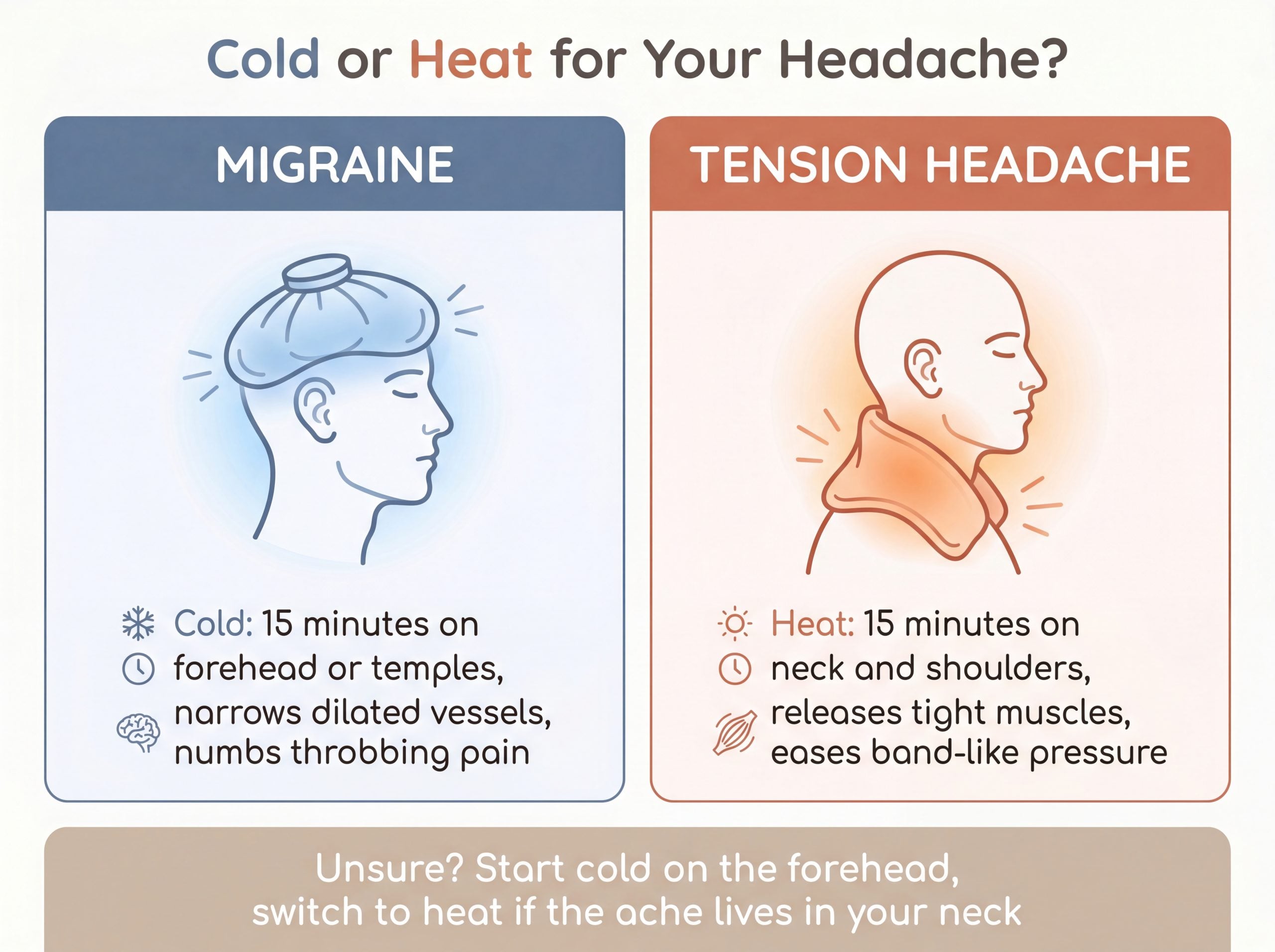
Cold or Heat? Matching the Compress to Your Headache
The fastest free remedy in this guide depends on which headache you have. Cold works best for migraines and heat works best for tension headaches.
- Migraine: Wrap an ice pack or cold gel pack in a thin towel and rest it on your forehead or temples for 15 minutes. The cold narrows dilated blood vessels and dulls throbbing pain signals, an approach supported by the American Migraine Foundation.
- Tension headache: Place a warm compress, heating pad, or warm towel across the back of your neck and shoulders for 15 minutes. Warmth loosens the tight neck and scalp muscles that drive the band-of-pressure feeling. A warm shower does the same job.
- Not sure which you have? Start cold on the forehead. If the ache sits in your neck and shoulders instead, switch to heat. Both are safe to alternate.
Additional Natural Remedies for Headaches
Beyond the remedies listed above, several other natural options can provide relief:- Ginger (Zingiber officinale): Known for its anti-inflammatory properties, ginger can help reduce migraine pain. Studies suggest ginger powder may be as effective as some prescription medications in reducing migraine severity. Consider ginger tea, capsules, or fresh ginger in meals.
- Feverfew (Tanacetum parthenium): This herb has a long history of traditional use among Western herbalists for easing head discomfort. Research summarized by the National Center for Complementary and Integrative Health suggests it may help reduce migraine frequency when taken regularly. Capsules or teas are common forms. Be aware of potential side effects, like mouth sores.
- Coenzyme Q10 (CoQ10): This antioxidant is vital for cellular energy production. Some studies show that CoQ10 supplementation can reduce migraine frequency and severity. Consult a healthcare professional for appropriate dosage.
- Riboflavin (Vitamin B2): High doses of riboflavin (around 400mg daily) have shown promise in migraine prevention. A clinical trial demonstrated that this dosage could reduce migraine frequency significantly.
- Omega-3 Fatty Acids: These essential fats possess anti-inflammatory properties that may help reduce headache frequency and intensity. Fatty fish (salmon, mackerel, tuna) are excellent sources or consider fish oil supplements.
- Herbal Teas: Chamomile, peppermint, and ginger teas can provide soothing relief and help with hydration.
Lifestyle Changes for Headache Management
Lifestyle modifications can play a significant role in preventing and managing headaches:Exercise
Regular, moderate exercise may help reduce how often headaches occur by easing stress and supporting overall health. Aim for at least 30 minutes of moderate activity (walking, swimming, cycling) most days of the week. Be mindful that very intense exercise can trigger migraines in some individuals.Diet Modifications
Certain foods and food intolerances can trigger headaches. Common culprits include:- Aged cheeses
- Processed meats
- Chocolate
- Artificial sweeteners
- MSG (monosodium glutamate)
- Alcohol (especially red wine)
- Tyramine-containing food.
Stress Management Techniques
Chronic stress is a major headache trigger. Effective techniques include:- Meditation: Regular meditation practice reduces stress and headache frequency.
- Progressive Muscle Relaxation: Tensing and relaxing different muscle groups reduces overall body tension.
- Deep Breathing Exercises: Practicing deep, diaphragmatic breathing alleviates stress-induced headaches.
- Biofeedback: This technique teaches you to control bodily functions (like heart rate and muscle tension) that are often affected by stress. It can be particularly helpful for tension headaches and migraines.
Sleep Hygiene
Getting enough quality sleep is essential. Establish a consistent sleep schedule, going to bed and waking up around the same time each day. Create a relaxing bedtime routine:- Ensure a dark, quiet, and cool bedroom.
- Avoid screens (phones, tablets, computers) for at least an hour before bed.
- Consider a warm bath or relaxing music.
Alternative Therapies for Headache Relief
Acupuncture
This traditional Chinese medicine technique has shown promise in reducing migraine frequency and intensity. A systematic review indicated that acupuncture may be as effective as prophylactic drug treatment for migraine prevention.Massage Therapy
Regular massage can help reduce tension headaches by promoting relaxation and improving circulation. Focus on the neck, shoulders, and scalp for maximum benefit.Yoga
Practicing yoga regularly can help reduce stress, improve flexibility, and potentially decrease headache frequency. Research has found that yoga practice can reduce migraine intensity and frequency.Chiropractic Care
Chiropractic adjustments, particularly of the upper cervical spine, may be helpful for some types of headaches, especially tension headaches and cervicogenic headaches (those originating from the neck).Naturopathic Approaches
A naturopathic doctor may take a very in depth review of your lifestyle, health history and current concerns, to help come up with a holistic plan to manage your headache pain.Insights from Health Experts
Dr. Jane Smith, a leading expert in headache management, states, “Integrating natural remedies into one’s daily routine can not only alleviate symptoms but also reduce the frequency of headaches over time.” It is advisable to consult with a healthcare professional before starting any new treatment, especially if you have existing health conditions or are on medication.Evaluating Natural Remedies: Pros and Cons
| Natural Treatment | Pros | Cons |
|---|---|---|
| Butterbur | Effective for migraine prevention; generally well-tolerated. | May cause digestive upset; not recommended for pregnant women or those with liver problems. |
| Essential Oils | Easy to use; pleasant aroma; can promote relaxation. | May cause skin irritation if not diluted; effectiveness varies; some oils are not safe for everyone. |
| Acupressure | Non-invasive; can be performed at home; promotes relaxation. | Requires practice; may not provide immediate relief for everyone. |
| Hydration | Simple and effective; promotes overall health. | Requires consistent effort; may not address underlying causes. |
| Magnesium | May reduce the frequency of migraines; and support overall health. | Excessive intake can lead to diarrhea; consult a doctor before supplementation. |
| Ginger | Anti-inflammatory; may be as effective as some medications for migraines. | May interact with blood thinners; and can cause mild heartburn. |
| Feverfew | May reduce migraine frequency. | Can cause mouth sores; not recommended for pregnant women. |
| CoQ10 | May reduce migraine frequency and severity. | Generally safe, but can cause mild digestive upset in some people. |
| Riboflavin | High doses may reduce migraine frequency. | May cause urine to turn bright yellow (harmless). |
| Omega-3s | Anti-inflammatory; may reduce headache frequency and intensity. | Can cause mild digestive upset; and may interact with blood thinners. |
Top Points to Consider When Choosing a Remedy
- Identify Triggers: Keep a headache diary to track potential causes, such as stress, foods, or lack of sleep.
- Consult a Healthcare Professional: Always discuss new treatments with a provider, especially with existing conditions or medications.
- Start Slowly: Introduce one remedy at a time to monitor effectiveness and side effects.
- Be Patient: Natural remedies may take time to show results; consistency is key.
- Combine Approaches: A combination of remedies may work best.
When to Seek Medical Help
While natural remedies can be effective, certain symptoms warrant immediate medical attention:- Sudden, severe headache (“thunderclap” headache)
- Headache with fever, stiff neck, confusion, vision changes, or numbness/weakness
- Headache after a head injury
- Chronic headaches that worsen or don’t respond to treatment
- New headaches after age 50
Potential Interactions and Side Effects
- Butterbur: May interact with blood thinners and anti-anxiety medications. Always choose PA-free butterbur (pyrrolizidine alkaloids can damage the liver).
- Magnesium: High doses can cause diarrhea and interfere with some antibiotics.
- Feverfew: May interact with blood thinners.
- Ginger: May increase the risk of bleeding if you’re on blood thinners.
- Essential Oils: Some can interact with medications or be harmful during pregnancy.
Hydration and Headache Prevention
Dehydration can cause the brain to temporarily contract, triggering pain receptors. Tips for Staying Hydrated:- Drink water consistently, not just when thirsty.
- Monitor urine color (pale yellow is ideal).
- Increase intake during hot weather or activity.
- Eat water-rich foods (cucumbers, watermelon).
- Consider a hydration tracking app.
- Maintain electrolyte balance, especially during prolonged sweating.
Frequently Asked Questions
- Q: How long does it take for natural remedies to work? A: Varies. Essential oils might provide immediate relief, while supplements may take weeks.
- Q: Are natural remedies safe during pregnancy? A: Many are not recommended. Always consult your doctor.
- Q: Can children use natural headache remedies? A: Some are safe, but dosages vary. Consult a pediatrician.
- Q: How do I know if my headaches are serious? A: Consult a provider for severe, frequent, or unusual headaches.
- Q: What is the best natural treatment for headaches? A: There isn’t one best remedy, it is best to consult with a healthcare provider to find what is right for you.
Comparison with Conventional Treatments
| Treatment Type | Pros | Cons |
|---|---|---|
| Natural Remedies | Fewer side effects; may address underlying causes | Can take longer; less regulated |
| Over-the-Counter Medications | Quick relief; widely available | Potential for overuse/rebound headaches; may not address root causes |
| Prescription Medications | Targeted treatment; is often very effective | Potential for side effects; may require ongoing use; can be expensive |
Cultural Perspectives on Headache Remedies
- Traditional Chinese Medicine (TCM): Uses acupuncture, herbal remedies (like Chuan Xiong), and dietary adjustments to restore balance.
- Ayurveda: This ancient Indian system uses herbs (like Ashwagandha), diet, yoga, and lifestyle changes based on individual doshas (body types).
- Native American Traditions: Some tribes used willow bark (containing salicin, similar to aspirin).
- European Folk Medicine: Herbs like feverfew and butterbur have a long history of use.
Long-Term Prevention Strategies
- Stress Management: Mindfulness meditation, tai chi, or other relaxation techniques.
- Sleep Hygiene: Consistent schedule, relaxing bedtime routine.
- Regular Exercise: At least 150 minutes of moderate-intensity exercise per week.
- Dietary Changes: Eliminate trigger foods; incorporate anti-inflammatory foods.
- Posture Improvement: Good posture and ergonomics, especially with desk work.
- Regular Check-ups: Monitor headache patterns and adjust treatments with your healthcare provider.
- Supplements: Taking the correct supplements consistently, that your healthcare provider suggests.
Conclusion
Natural headache remedies offer a viable option for those seeking relief without solely relying on pharmaceuticals. Understanding headache types, identifying triggers, and utilizing holistic strategies allow for proactive symptom management. Consulting with healthcare professionals and considering personal preferences are key to finding the best approach. A combination of lifestyle changes and natural treatments can reduce headache frequency and intensity, leading to a better quality of life.These statements have not been evaluated by the Food and Drug Administration. This product is not intended to diagnose, treat, cure, or prevent any disease. Consult your healthcare provider before use.