THE VERDICT
“The ‘Structural Integrity’ Stack. Our bench notes describe this blend as targeting both hemodynamic flow (Vasodilation) and tissue elasticity (Turgidity). The alcohol extraction supports high bioavailability of the lipophilic compounds. Internal Potency Score: 9.8/10 for vascular support.”– Back To Your Roots Herbs Research Group
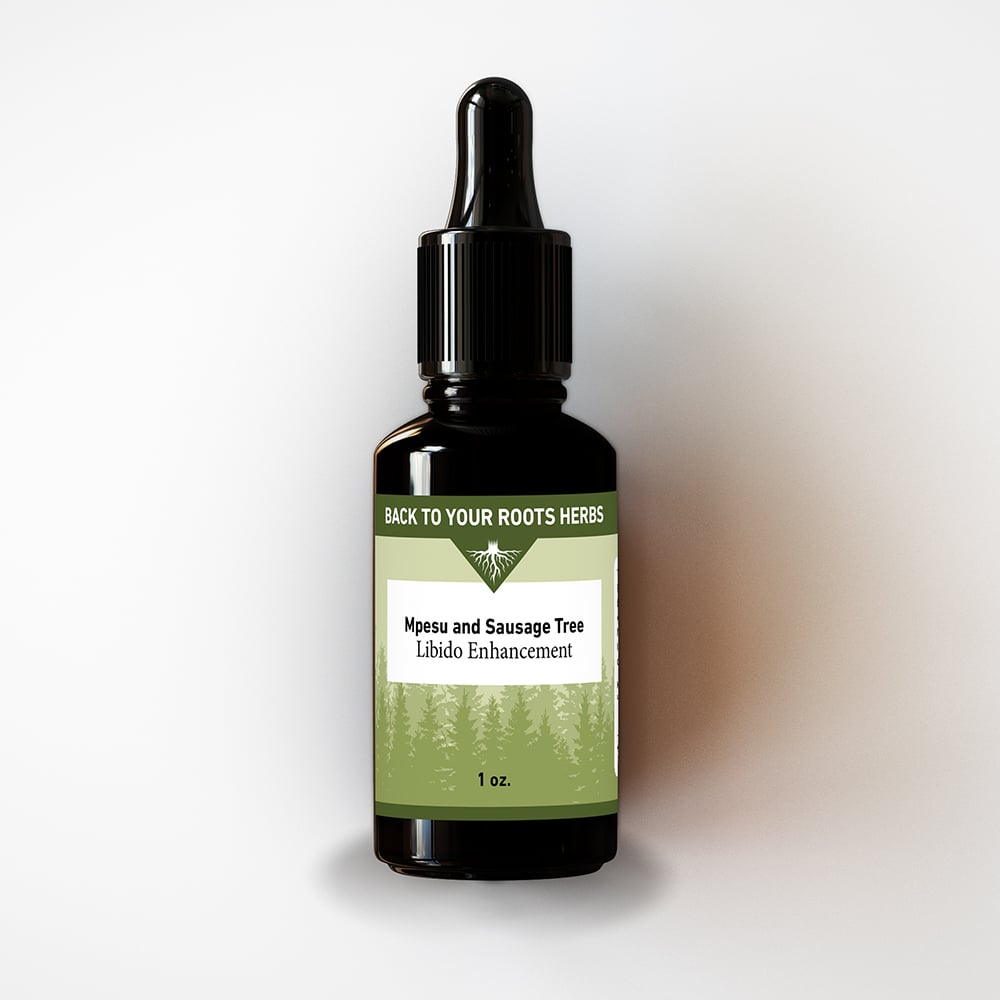
SENSORY ANALYSIS: The Physical Profile
We tested the tincture to verify the dual-extraction process.
This liquid presents a complex, “clashing” sensory profile that signals high potency.
- The Aroma: The top note is the sharp, medicinal scent of Wintergreen (from Mpesu), followed immediately by a heavy, fermented/molasses bottom note (from the cured Sausage Tree fruit).
- The Taste: Upon sublingual administration, you will feel the spicy “burn” of the Mpesu, followed by a bitter, earthy finish. This intense profile reflects the presence of both Methyl Salicylate and Verminoside.
Why combine Mpesu and Sausage Tree (Kigelia)?
This stack is designed to target the two phases of male performance: Pressure and Capacity.
- Mpesu (The Pump): Acts as a vasodilator, relaxing smooth muscle to allow maximum blood inflow (Pressure).
- Sausage Tree (The Vessel): Rich in Verminoside and Steroidal Saponins, traditionally used to improve tissue elasticity and turgidity, supporting the “Fullness” or girth aspect of the erection (Capacity).
Traditional and Cultural Roots of the Sausage Tree
Kigelia africana takes its name from the large sausage-shaped fruits that hang from its canopy across the savannas of Southern and East Africa. The fruit carries real cultural weight in Venda, Tonga, and other regional traditions, where it has featured in ceremony and where traditional healers have long applied it to the skin for tissue and complexion care. Herbalists in these traditions have also paired the sausage tree with men’s vitality tonics, the same role it plays in this blend. In Zambia and neighboring parts of Southern Africa, the bark and fruit appear in the same skin, tissue, and men’s tonic preparations, part of the pan-African use that a peer-reviewed review documents for the species (Bello et al., J Ethnopharmacol, 2016, PMID 27220655).
What Is the Sausage Tree Fruit, and How Is It Used?
The fruit is processed for tradition and skincare, not eaten as food.
- What it is: The gray, sausage-shaped fruit of Kigelia africana hangs from the canopy and can weigh several pounds. Raw and unripe, it is astringent and acts as a purgative, so it is not a culinary fruit and is not eaten in dishes.
- How it is prepared: Traditional healers dry, roast, or ferment the fruit before use, then grind it to a powder or simmer it as a decoction. For skin and tissue care, the processed fruit goes into pastes and salves applied topically rather than onto the plate.
- What is in it: Laboratory analysis of the fruit’s polar extract identified verminoside, an iridoid, as a major constituent alongside the polyphenol verbascoside (Picerno et al., J Nat Prod, 2005, PMID 16309308). A full phytochemical review of the plant catalogs roughly 150 compounds across its parts, including iridoids, naphthoquinones, flavonoids, and terpenes (Bello et al., J Ethnopharmacol, 2016, PMID 27220655).
How does the Tincture format improve results?
The Hydro-Ethanolic (Alcohol) base creates a “Rapid-Delivery” system.
- Solubility: Mpesu’s active oils are fat-soluble and do not dissolve in tea. The organic cane alcohol dissolves them completely, ensuring you get the full dose without needing to eat yogurt/fat.
- Absorption: Sublingual dosing bypasses the digestive system, delivering the compounds directly into the bloodstream for faster onset (30-60 minutes vs. 3-4 hours).
- How Mpesu Is Usually Taken: Mpesu (the muvevha root) is traditionally used as a root powder stirred into a fatty drink, packed into capsules, or simmered as a decoction. This tincture concentrates that same root into a fast, fat-free sublingual format, so you skip the prep and the food pairing.
CRITICAL USAGE: Dosage & Safety
This is a concentrated 1:3 extract. Precision is key.
- Sublingual Dose: Take 1 full dropper (30 drops) under the tongue. Hold for 60 seconds to maximize absorption into the capillary bed.
- Hydration: Both herbs promote vascular movement. Drink at least 2 liters of water to prevent dehydration headaches.
- Alcohol Warning: Contains Organic Cane Alcohol. Do not use if avoiding alcohol.
- Tolerability & Side Effects: Mpesu (muvevha) is generally well-tolerated in traditional use. Because it is a warming, stimulating root, some people notice mild stomach upset or a brief flushing sensation. The sausage tree fruit is only used here in its processed, extracted form, never as the raw unripe fruit. Avoid during pregnancy or breastfeeding. Consult your healthcare provider before use if you take blood-pressure medication or blood thinners.
CLINICAL SPECS & DOSAGE
Sustainably wild-harvested from the African Savanna.
| Specification | Detail |
|---|---|
| Bottle Size | 1 fl oz (30ml) |
| Active Ingredients | Securidaca longipedunculata & Kigelia africana |
| Extraction Ratio | 1:3 (High Potency) |
| Solvent | Certified Organic Cane Alcohol (40-50%) |
| Primary Action | Rigidity (Mpesu) + Turgidity (Kigelia) |
| Flavor Profile | Wintergreen & Earthy/Bitter |
| Allergen Status | Hypoallergenic (Gluten-Free, Non-GMO) |
COMPARISON: The Blend vs. Single Herbs
Why choose the complex over single ingredients?
| Feature | The Blend (Mpesu + Kigelia) | Mpesu Only | Sausage Tree Only |
|---|---|---|---|
| Primary Goal | Maximal Expansion | Rigidity / Hardness | Girth / Skin Firming |
| Mechanism | Vasodilation + Elasticity | Vasodilation | Tissue Turgidity |
| Bioavailability | High (Alcohol Solvent) | Medium (Requires Fat) | Medium (Digestive) |
| Best Use Case | “Date Night” / Size Confidence | Endurance | Traditional “Growth” |
How does mpesu compare to other local aphrodisiacs?
Within the African men’s tonic tradition, each well-known root fills a different lane. Mondia whitei (mulondo) is favored as a libido and stamina root. Entengo and gouro belong to regional “growth” traditions. Mpesu itself is prized for hardness through vasodilation. What sets this blend apart is the pairing: it joins a vasodilating root (mpesu) with a tissue-toning fruit (kigelia) in one sublingual extract, so it works on both rigidity and fullness rather than a single axis. The muvevha root itself (Securidaca longipedunculata) is recorded in the ethnopharmacology literature as a traditional men’s aphrodisiac and is rich in methyl salicylate, the source of its wintergreen note (Mongalo et al., J Ethnopharmacol, 2015, PMID 25724970).
References
- Picerno P, Autore G, Marzocco S, Meloni M, Sanogo R, Aquino RP. Anti-inflammatory activity of verminoside from Kigelia africana and evaluation of cutaneous irritation in cell cultures and reconstituted human epidermis. J Nat Prod. 2005;68(11):1610-1614. PMID 16309308
- Bello I, Shehu MW, Musa M, Zaini Asmawi M, Mahmud R. Kigelia africana (Lam.) Benth. (Sausage tree): Phytochemistry and pharmacological review of a quintessential African traditional medicinal plant. J Ethnopharmacol. 2016;189:253-276. PMID 27220655
- Mongalo NI, McGaw LJ, Finnie JF, Van Staden J. Securidaca longipedunculata Fresen (Polygalaceae): a review of its ethnomedicinal uses, phytochemistry, pharmacological properties and toxicology. J Ethnopharmacol. 2015;165:215-226. PMID 25724970
DISCLAIMER
Legal Information: The Food and Drug Administration has not evaluated these statements. This product is not intended to diagnose, treat, cure, or prevent any disease. Consult a physician before starting any new supplementation regimen.
Written by the Back To Your Roots Herbs Research Group | Fact-checked. Last Reviewed: June 2026.
Reviews
There are no reviews yet.