Oruwo, scientifically known as Morinda lucida, is a tropical plant that has held a revered place in traditional West African medicine for generations. This plant, native to humid environments, is recognized for its diverse therapeutic applications and has been gaining attention for its potential health-promoting effects. This article details the traditional uses, and medicinal advantages, and supporting scientific research concerning Morinda lucida
Understanding Morinda lucida
This useful plant thrives in humid environments, and its leaves, bark, and root are all valued for their medicinal properties. Historically, Morinda lucida has been employed to address a wide range of ailments, including fever, inflammation, and digestive problems. Modern scientific research is beginning to validate these traditional applications, revealing a wide range of potential health benefits.
Morinda lucida is native to tropical West and Central Africa, where it grows as a shrub or small tree in humid forest and savanna regions from Senegal to Cameroon and into parts of East Africa. It belongs to the coffee family, Rubiaceae, the same botanical family as Morinda citrifolia (Noni) and the quinine-yielding Cinchona genus discussed later in this article. Regional names reflect how widely the plant is known across West Africa: Oruwo among the Yoruba, Eze-ogu among the Igbo, and Konkron in parts of Ghana.
Traditional Uses and Cultural Significance of Morinda lucida
Morinda lucida holds a prominent place in the traditional medicine of various West African cultures.
- Yoruba (Nigeria): Known as “Oruwo,” it’s used for treating fevers (including malaria and yellow fever), jaundice, and digestive issues. Traditional preparations often involve boiling the leaves or bark to create a decoction.
- Igbo (Nigeria): Referred to as “Eze-ogu,” it shares similar uses with the Yoruba tradition, particularly for fevers and malaria. It has also traditionally been used as a general tonic and as part of nighttime herbal routines intended to promote rest.
- Other Regions: Across West Africa, M. lucida is used in diverse ways, often reflecting local knowledge and available resources. Some communities use the leaf for wrapping food for storage and for medicinal benefits.
Beyond its medicinal applications, Morinda lucida also has other uses:
- Dyeing: The bark and roots contain pigments used traditionally for dyeing textiles, producing colors ranging from yellow to reddish-brown.
- Charcoal: The wood can also be used to produce charcoal.
The specific methods of preparing Morinda lucida vary across communities. Leaves may be used fresh, dried, or boiled. The bark is often dried and ground into a powder. Roots can be used similarly. Some traditional remedies combine M. lucida with other medicinal plants to enhance its effects or address specific conditions. These combinations, however, require further scientific investigation to confirm their safety and efficacy.
Phytochemical Composition of Morinda lucida
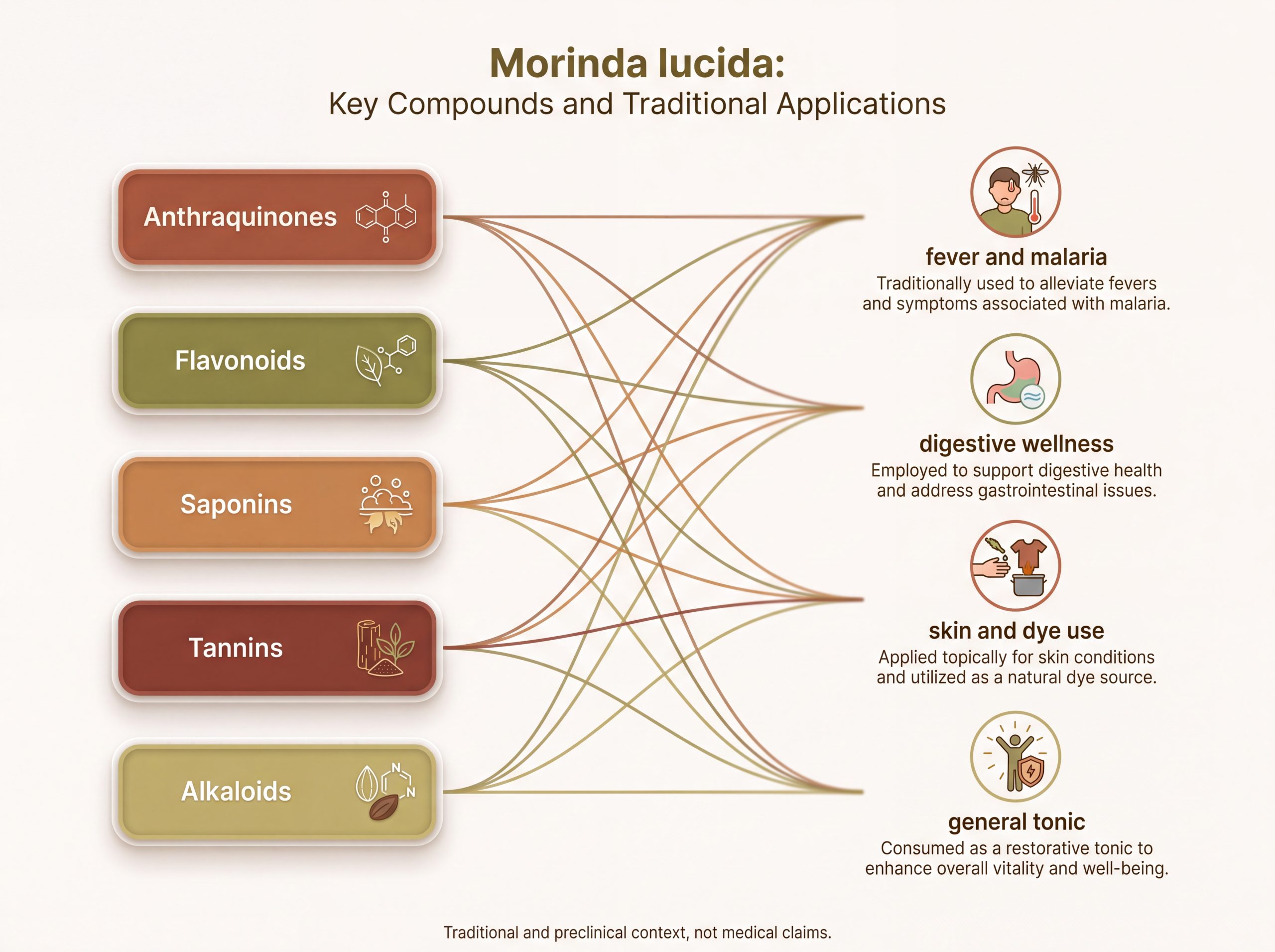
The medicinal properties of Morinda lucida are attributed to its rich and diverse phytochemical composition. These compounds work synergistically to produce the various health effects associated with the plant. Key phytochemicals include:
- Anthraquinones: These are a class of naturally occurring phenolic compounds. Specific anthraquinones identified in M. lucida include rubiadin, lucidin, and damnacanthal. These compounds are known for their laxative and antimicrobial properties. Rubiadin, for instance, has shown potential anti-inflammatory activity.
- Flavonoids: These are potent antioxidants that help protect cells from damage caused by free radicals. While the specific flavonoids in M. lucida require further identification, flavonoids as a compound class are widely studied for antioxidant, anti-inflammatory, and cardiovascular support properties.
- Saponins: These compounds are studied for their potential role in supporting healthy cholesterol levels already within a normal range and for their interaction with immune system pathways. Saponins as a compound class are also studied for antioxidant and anti-inflammatory activity.
- Tannins: These compounds have astringent properties, which can be beneficial for wound healing and treating diarrhea. They can also contribute to the plant’s antimicrobial effects.
- Alkaloids: Many alkaloids have significant pharmacological effects. Some alkaloids found in Morinda species have demonstrated antimalarial, anticancer, and analgesic properties.
- Vitamins: Morinda lucida contains vitamins A, E, and K.
Traditional Applications and Areas of Scientific Interest
Morinda lucida has been used across several traditional health contexts in West Africa. Recent laboratory and animal-model research has begun to explore some of these traditional applications, though it is important to note that most of this research is preclinical, and human clinical trials are needed to confirm findings and establish safe, effective use in people. None of the research below should be read as evidence that Morinda lucida diagnoses, treats, cures, or prevents any disease.
Fever and Traditional Antimalarial Use
Morinda lucida has a long history of traditional use for fevers, including malaria, across West Africa. In laboratory research, extracts of the plant have shown antimalarial activity in a mouse model of Plasmodium berghei infection (Obih, Makinde, & Laoye, 1985, African Journal of Medicine and Medical Sciences, PMID: 2994438), and anthraquinone compounds isolated from the plant showed antimalarial and antileishmanial activity in vitro (Sittie et al., 1999, Planta Medica, PMID: 10232074). A cysteine-stabilised peptide extract of the leaf was also reported to show antimalarial activity while supporting the body’s antioxidant defenses in a P. berghei mouse model (Adebayo, Adewole, & Krettli, 2017, Journal of Ethnopharmacology, PMID: 28645782), and later work identified synergistic antimalarial activity among the plant’s secondary metabolites (Chithambo, Noundou, & Krause, 2017, Journal of Ethnopharmacology, PMID: 28153468). These are laboratory and animal-model findings, not evidence that Morinda lucida treats or cures malaria in people. Malaria is a serious, potentially life-threatening disease that requires prompt diagnosis and treatment from a qualified medical provider.
Blood Sugar: Traditional Use and Preclinical Research
In animal studies, extracts of Morinda lucida stem bark have been associated with lower blood glucose readings in streptozotocin-induced diabetic rat models (Domekouo, Longo, Tarkang, et al., 2016, Pakistan Journal of Pharmaceutical Sciences, PMID: 27166555). One proposed mechanism involves the leaf extract’s inhibition of alpha-amylase and alpha-glucosidase, digestive enzymes that break down carbohydrates into absorbable sugars, a pathway conceptually similar to how some prescription diabetes medications work (Kazeem, Adamson, & Ogunwande, 2013, BioMed Research International, PMID: 24455701). Separate preliminary research has also looked at effects on pancreatic beta-cell function in animal models of diabetes, an active but early area of study. In our editorial team’s reading, this is a promising but still preclinical body of research. It has not been confirmed in human clinical trials, and Morinda lucida is not a substitute for prescribed diabetes medication or medical monitoring of blood sugar.
Cardiovascular Wellness: Traditional Use, Pending Species-Specific Research
Traditional healers in West Africa have included Morinda lucida among the plants used for general tonic and wellness purposes, including cardiovascular wellness. Vasodilatory and blood-pressure research does exist within the broader Morinda genus, but during this review our editorial team found that the strongest published evidence for vasodilatory and antihypertensive activity involves Morinda citrifolia (Noni), a related but distinct species, rather than Morinda lucida specifically. We have chosen to report that distinction plainly rather than imply a level of species-specific evidence that does not yet exist. Anyone managing blood pressure should continue working with their healthcare provider and prescribed treatment.
Cell-Culture Research on Cancer Cell Lines
A small number of early-stage, cell-culture (in vitro) studies have examined how Morinda lucida extracts interact with specific cancer cell lines in the laboratory, including proposed mechanisms such as apoptosis (programmed cell death) and effects on angiogenesis (the formation of new blood vessels that feed a tumor). This research is preliminary and, to our editorial team’s knowledge, has not progressed to the animal or human trial stage. Morinda lucida is not a proven or approved cancer treatment. Anyone with a cancer diagnosis should rely on guidance from their oncology care team.
Liver Wellness: Traditional Use and Preclinical Research
Morinda lucida holds a place in traditional practice related to liver wellness. In animal research, a stem bark extract was reported to reduce the pattern and extent of liver injury caused by lead nitrate exposure in rats (Adeyemi, Jolayemi, & Awoniran, 2023, Morphologie, PMID: 35691788), a finding our editorial team reads as a preclinical, antioxidant-related signal rather than a treatment claim. As covered in the Safety and Precautions section below, anyone with an existing liver condition should speak with a healthcare provider before using Morinda lucida in any form.
Iron Content
Morinda lucida leaves contain iron, a mineral the body needs to make healthy red blood cells. Traditional use includes preparing the leaves as a dietary source of iron. This is a nutritional observation about the leaf’s mineral content, not a claim that Morinda lucida diagnoses or treats anemia, which is a medical condition that should be evaluated and managed by a healthcare provider.
Notable Health Advantages and Supporting Research
| Health Benefit | Description | Supporting Research |
|---|---|---|
| Anti-inflammatory Effects | Morinda lucida may help reduce inflammation, beneficial for conditions like arthritis. | Adeneye, A. A., & Agbaje, E. O. (2008). Pharmacological evaluation of orally administered extracts of Morinda lucida leaf in males, Nigerian Journal of Physiological Sciences, 23 (1-2): 5-10. |
| Antioxidant Activity | Rich in antioxidants, helping to combat oxidative stress and potentially reduce disease risk. | Oduola, T., Adeniyi, F. A. A., Ogunyemi, E. O., Bello, I. S., & Idowu, T. O. (2010). Antioxidant properties of, Morinda lucida as a Journal of Pharmacognosy and Phytotherapy Vol. 2 (6), pp. 85-91. |
| Digestive Health Support | Traditionally used to alleviate digestive issues, potentially improving gut health. | Further research is needed to provide specific citations and confirm mechanisms. |
| Antimicrobial Properties | Extracts show effectiveness against various pathogens, acting as a natural antimicrobial. | F.C. Nweze, J.I. Okafor & O. Njoku (2004). Antimicrobial Activities of Methanolic Extracts of Trema guineensis (Schumm and Thorn) and, Morinda lucida Benth, Journal of Biological Research and Biotechnology. |
| Improved Digestibility | Assists with breaking down of food. | Further research is needed. |
| Antifungal Activity | Extracts of the leaf and root have shown inhibitory activity against several fungal strains in laboratory testing. | Multiple laboratory screening studies report antifungal activity for Morinda lucida extracts. Species-specific clinical citations are still emerging as of this writing. |
| Pain and Discomfort Support | Traditional use includes the leaf for general discomfort. Some related anti-inflammatory compound classes in the plant may play a supporting role. | Traditional use reference. Dedicated human clinical research specific to Morinda lucida analgesic activity is still needed to confirm this application. |
| Immune System Support | The plant’s saponin content is studied for potential interaction with immune system pathways, supporting general wellness. | Linked to phytochemical research on saponins as a compound class (see Phytochemical Composition section above). Morinda-lucida-specific human immune studies are still needed. |
Traditional Applications and Areas of Scientific Interest
Morinda lucida has been used across several traditional health contexts in West Africa. Recent laboratory and animal-model research has begun to explore some of these traditional applications, though it is important to note that most of this research is preclinical, and human clinical trials are needed to confirm findings and establish safe, effective use in people. None of the research below should be read as evidence that Morinda lucida diagnoses, treats, cures, or prevents any disease.
Fever and Traditional Antimalarial Use
Morinda lucida has a long history of traditional use for fevers, including malaria, across West Africa. In laboratory research, extracts of the plant have shown antimalarial activity in a mouse model of Plasmodium berghei infection (Obih, Makinde, & Laoye, 1985, African Journal of Medicine and Medical Sciences, PMID: 2994438), and anthraquinone compounds isolated from the plant showed antimalarial and antileishmanial activity in vitro (Sittie et al., 1999, Planta Medica, PMID: 10232074). A cysteine-stabilised peptide extract of the leaf was also reported to show antimalarial activity while supporting the body’s antioxidant defenses in a P. berghei mouse model (Adebayo, Adewole, & Krettli, 2017, Journal of Ethnopharmacology, PMID: 28645782), and later work identified synergistic antimalarial activity among the plant’s secondary metabolites (Chithambo, Noundou, & Krause, 2017, Journal of Ethnopharmacology, PMID: 28153468). These are laboratory and animal-model findings, not evidence that Morinda lucida treats or cures malaria in people. Malaria is a serious, potentially life-threatening disease that requires prompt diagnosis and treatment from a qualified medical provider.
Blood Sugar: Traditional Use and Preclinical Research
In animal studies, extracts of Morinda lucida stem bark have been associated with lower blood glucose readings in streptozotocin-induced diabetic rat models (Domekouo, Longo, Tarkang, et al., 2016, Pakistan Journal of Pharmaceutical Sciences, PMID: 27166555). One proposed mechanism involves the leaf extract’s inhibition of alpha-amylase and alpha-glucosidase, digestive enzymes that break down carbohydrates into absorbable sugars, a pathway conceptually similar to how some prescription diabetes medications work (Kazeem, Adamson, & Ogunwande, 2013, BioMed Research International, PMID: 24455701). Separate preliminary research has also looked at effects on pancreatic beta-cell function in animal models of diabetes, an active but early area of study. In our editorial team’s reading, this is a promising but still preclinical body of research. It has not been confirmed in human clinical trials, and Morinda lucida is not a substitute for prescribed diabetes medication or medical monitoring of blood sugar.
Cardiovascular Wellness: Traditional Use, Pending Species-Specific Research
Traditional healers in West Africa have included Morinda lucida among the plants used for general tonic and wellness purposes, including cardiovascular wellness. Vasodilatory and blood-pressure research does exist within the broader Morinda genus, but during this review our editorial team found that the strongest published evidence for vasodilatory and antihypertensive activity involves Morinda citrifolia (Noni), a related but distinct species, rather than Morinda lucida specifically. We have chosen to report that distinction plainly rather than imply a level of species-specific evidence that does not yet exist. Anyone managing blood pressure should continue working with their healthcare provider and prescribed treatment.
Cell-Culture Research on Cancer Cell Lines
A small number of early-stage, cell-culture (in vitro) studies have examined how Morinda lucida extracts interact with specific cancer cell lines in the laboratory, including proposed mechanisms such as apoptosis (programmed cell death) and effects on angiogenesis (the formation of new blood vessels that feed a tumor). This research is preliminary and, to our editorial team’s knowledge, has not progressed to the animal or human trial stage. Morinda lucida is not a proven or approved cancer treatment. Anyone with a cancer diagnosis should rely on guidance from their oncology care team.
Liver Wellness: Traditional Use and Preclinical Research
Morinda lucida holds a place in traditional practice related to liver wellness. In animal research, a stem bark extract was reported to reduce the pattern and extent of liver injury caused by lead nitrate exposure in rats (Adeyemi, Jolayemi, & Awoniran, 2023, Morphologie, PMID: 35691788), a finding our editorial team reads as a preclinical, antioxidant-related signal rather than a treatment claim. As covered in the Safety and Precautions section below, anyone with an existing liver condition should speak with a healthcare provider before using Morinda lucida in any form.
Iron Content
Morinda lucida leaves contain iron, a mineral the body needs to make healthy red blood cells. Traditional use includes preparing the leaves as a dietary source of iron. This is a nutritional observation about the leaf’s mineral content, not a claim that Morinda lucida diagnoses or treats anemia, which is a medical condition that should be evaluated and managed by a healthcare provider.
Notable Health Advantages and Supporting Research
| Health Benefit | Description | Supporting Research |
|---|---|---|
| Anti-inflammatory Effects | Morinda lucida may help reduce inflammation, beneficial for conditions like arthritis. | Adeneye, A. A., & Agbaje, E. O. (2008). Pharmacological evaluation of orally administered extracts of Morinda lucida leaf in males, Nigerian Journal of Physiological Sciences, 23 (1-2): 5-10. |
| Antioxidant Activity | Rich in antioxidants, helping to combat oxidative stress and potentially reduce disease risk. | Oduola, T., Adeniyi, F. A. A., Ogunyemi, E. O., Bello, I. S., & Idowu, T. O. (2010). Antioxidant properties of, Morinda lucida as a Journal of Pharmacognosy and Phytotherapy Vol. 2 (6), pp. 85-91. |
| Digestive Health Support | Traditionally used to alleviate digestive issues, potentially improving gut health. | Further research is needed to provide specific citations and confirm mechanisms. |
| Antimicrobial Properties | Extracts show effectiveness against various pathogens, acting as a natural antimicrobial. | F.C. Nweze, J.I. Okafor & O. Njoku (2004). Antimicrobial Activities of Methanolic Extracts of Trema guineensis (Schumm and Thorn) and, Morinda lucida Benth, Journal of Biological Research and Biotechnology. |
| Improved Digestibility | Assists with breaking down of food. | Further research is needed. |
| Antifungal Activity | Extracts of the leaf and root have shown inhibitory activity against several fungal strains in laboratory testing. | Multiple laboratory screening studies report antifungal activity for Morinda lucida extracts. Species-specific clinical citations are still emerging as of this writing. |
| Pain and Discomfort Support | Traditional use includes the leaf for general discomfort. Some related anti-inflammatory compound classes in the plant may play a supporting role. | Traditional use reference. Dedicated human clinical research specific to Morinda lucida analgesic activity is still needed to confirm this application. |
| Immune System Support | The plant’s saponin content is studied for potential interaction with immune system pathways, supporting general wellness. | Linked to phytochemical research on saponins as a compound class (see Phytochemical Composition section above). Morinda-lucida-specific human immune studies are still needed. |
Dosage and Administration of Morinda Lucida
While traditional usage provides some guidance, standardized dosages for Morinda lucida have not been firmly established due to the need for more clinical research. The following guidelines are based on common traditional practices and should be approached with caution:
- Tea: 1-2 teaspoons of dried leaves steeped in hot water for 10-15 minutes, consumed 2-3 times daily.
- Powder: 1-2 grams of powdered bark or root mixed with water, taken 2-3 times daily. The benth can be added to food.
- Extract: Follow the manufacturer’s instructions, as potency can vary significantly between products. It’s confirmed that liquid extracts are often more concentrated than the whole plant.
It’s crucial to start with a low dose and gradually increase it while monitoring for any adverse effects. Always consult with a healthcare professional before starting any new herbal treatment, especially if you have pre-existing health conditions or are taking medications.
Potential Side Effects and Precautions
While Morinda lucida is generally considered safe when used appropriately, it is important to be aware of potential side effects and take necessary precautions:
- Allergic Reactions: Some individuals may experience allergic reactions, including skin rashes, itching, or respiratory issues. If you experience any signs of an allergic reaction, discontinue use immediately and seek medical attention.
- Gastrointestinal Disturbances: High doses may cause nausea, vomiting, or diarrhea. Start with a low dose to assess your tolerance.
- Drug Interactions: Morinda lucida may interact with certain medications, particularly those used to treat diabetes, and high blood pressure, and those metabolized by the liver. Discuss the use of M. lucida with your doctor if you are taking any medications.
- Pregnancy and Breastfeeding: Due to limited research on safety during pregnancy and breastfeeding, women who are pregnant, planning to become pregnant, or breastfeeding should avoid using Morinda lucida.
- Antispermatogenic Effects: Some research suggests that M. lucida may have antispermatogenic effects (reducing sperm production). Men who are trying to conceive should exercise caution and consult with a healthcare professional before using M. lucida.
- Liver and Kidney Concerns: Individuals with pre-existing liver and kidney conditions should speak with a healthcare provider before using.
Comparison with Related Plants
Morinda lucida belongs to the Rubiaceae family, which includes several other plants with known medicinal properties. Here’s a brief comparison:
- Morinda citrifolia (Noni): Like M. lucida, Noni is known for its antioxidant and anti-inflammatory properties. However, Noni is more commonly promoted for its potential immune-boosting effects, and its flavor profile is distinct. Research on Noni is also more extensive than on M. lucida.
- Cinchona officinalis: Another member of the Rubiaceae family, Cinchona is the source of quinine, a well-established antimalarial drug. While both plants have antimalarial properties, Cinchona (and its derivative, quinine) has been far more extensively studied and is a clinically proven treatment for malaria.
- Coffea arabica (Coffee plant): While both are in the Rubiaceae family, coffee is primarily known for its stimulant effects due to caffeine, whereas Morinda lucida is valued for its broader range of medicinal properties.
Sustainability and Conservation of Morinda Lucida
As the demand for Morinda lucida increases due to its medicinal properties, concerns about its sustainability are growing. Overharvesting from the wild has led to a decline in populations in some areas. To ensure the long-term availability of this valuable plant, several conservation efforts are underway:
- Promoting Cultivation: Encouraging the cultivation of Morinda lucida in agroforestry systems and home gardens can reduce pressure on wild populations.
- Sustainable Harvesting Practices: Educating local communities about sustainable harvesting methods, such as taking only a limited amount of leaves or bark from each plant, can help preserve wild populations.
- Protected Areas: Establishing protected areas where Morinda lucida can thrive without the threat of overharvesting is crucial.
- Research: Further research into propagation techniques and optimal growing conditions can improve cultivation efforts.
Future Research Directions for Morinda Lucida
While existing research on Morinda lucida is promising, numerous areas require further investigation:
- Clinical Trials: Well-designed clinical trials on humans are needed to confirm the efficacy and safety of M. lucida for various health conditions. These trials should establish standardized dosages and assess potential long-term effects.
- Mechanism of Action: While some proposed mechanisms have been identified, more detailed research is needed to fully understand how M. lucida exerts its effects at the molecular level.
- Phytochemical Identification: Further research is needed to identify and isolate all the active compounds in M. lucida and determine their individual and synergistic effects.
- Drug Interactions: A thorough investigation of potential drug interactions is crucial, particularly with commonly used medications.
- Sustainable Cultivation: Research into optimal cultivation practices, including propagation methods, soil requirements, and pest management, can support sustainable production.
Cultivation and Propagation
Morinda lucida is a relatively easy plant to cultivate, making it a good candidate for agroforestry and home gardens. Here’s a guide for both home gardeners and potential commercial growers:
For Home Gardeners:
- Climate: Morinda lucida thrives in tropical and subtropical climates with high humidity and warm temperatures. It can tolerate some shade but prefers full sun.
- Soil: Well-drained soil is essential. The plant can tolerate a range of soil types, but it prefers slightly acidic to neutral pH.
- Propagation: Can be propagated from seeds or stem cuttings.
- Seeds: Sow seeds in a nursery bed or seed tray with a well-draining potting mix. Keep the soil moist but not waterlogged. Germination can take several weeks.
- Stem Cuttings: Take semi-hardwood cuttings (about 15-20 cm long) from a healthy plant. Dip the cut end in rooting hormone (optional) and plant in a well-draining potting mix. Keep the cuttings moist and in a shaded location until roots develop.
- Watering: Water regularly, especially during dry periods. The plant is relatively drought-tolerant once established but benefits from consistent moisture.
- Pruning: Prune to maintain the desired shape and size. Regular pruning can also encourage bushier growth.
For Commercial Growers:
- Site Selection: Choose a site with well-drained soil, adequate sunlight, and access to water for irrigation.
- Land Preparation: Prepare the land by clearing weeds and tilling the soil. Consider soil testing to determine nutrient levels and adjust accordingly.
- Planting Density: Optimal planting density will depend on the intended use (e.g., leaf production, wood production). Consult with agricultural extension services for recommendations.
- Irrigation: While M. lucida is relatively drought-tolerant, irrigation may be necessary during dry periods, especially in the early stages of growth.
- Fertilization: Depending on soil fertility, fertilization may be beneficial. Organic fertilizers, such as compost or manure, are generally preferred.
- Pest and Disease Management: Monitor for pests and diseases and take appropriate action if necessary. Integrated pest management (IPM) strategies are recommended.
- Harvesting: Leaves can be harvested as needed, typically starting 6-12 months after planting. Bark and roots are usually harvested from older plants (several years old).
Legal Status and Regulations
The legal status of Morinda Lucida varies by country:
- West Africa: In most West African countries, where it is traditionally used, M. lucida is freely available and not subject to specific regulations.
- Other Countries: In many other countries, including the United States and European Union members, M. lucida is generally considered a dietary supplement and is not regulated as a drug. However, regulations can change, and it’s always best to check the specific rules in your country or region.
- Import/Export: Some countries may have restrictions on the import or export of Morinda lucida products. Check local regulations before importing or exporting.
Conclusion
Morinda lucida is a remarkable plant with a rich history of traditional use and a growing body of scientific evidence supporting its potential health benefits. From its traditional use in treating malaria and fever to its potential antioxidant and anti-inflammatory properties, this plant offers a wide array of potential applications. Further research, particularly human clinical trials, is essential to fully understand its therapeutic potential and establish safe and effective usage guidelines. As with any herbal remedy, it is vital to consult a qualified healthcare professional before using Morinda lucida, especially if you have pre-existing health conditions or are taking medications. The ongoing research and conservation efforts highlight the importance of preserving traditional knowledge while embracing modern scientific approaches to understand and utilize nature’s medicinal resources responsibly.