THE VERDICT
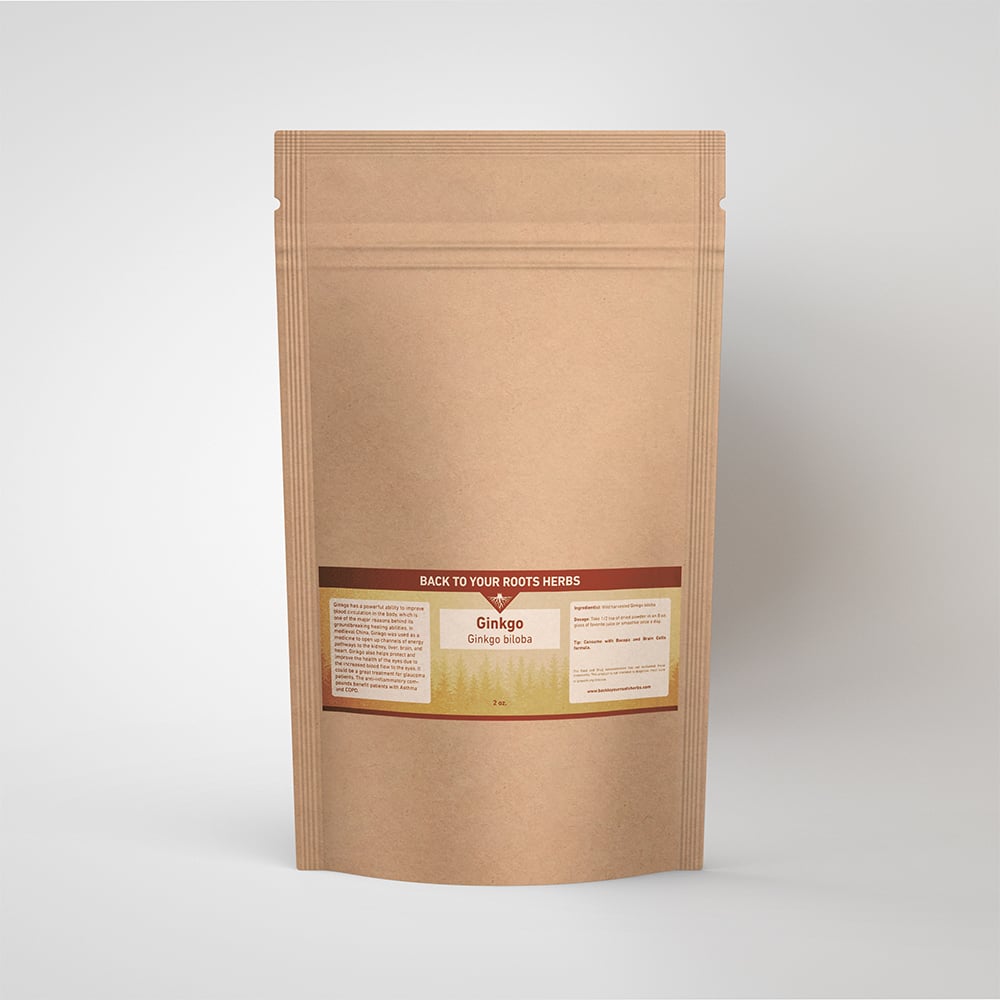
“Ginkgo biloba stands alone in botanical medicine as the singular surviving species of the Ginkgoales order, a lineage stretching back 290 million years. This particular ginkgo leaf powder derives from the Chiang Mai Highlands of Northern Thailand (18.7°N, 98.98°E), a region known for deep volcanic soils and mineral-rich growing conditions that concentrate flavonoid and terpene trilactone production. The mellow-resinous profile speaks to careful cultivation practices that preserve the herb’s native complexity without extraction processing. This is clinical-grade ginkgo biloba powder at its most complete form.”
– Back To Your Roots Herbs Research Group
SENSORY ANALYSIS
What Does Ginkgo Biloba Powder Look, Smell, and Taste Like?
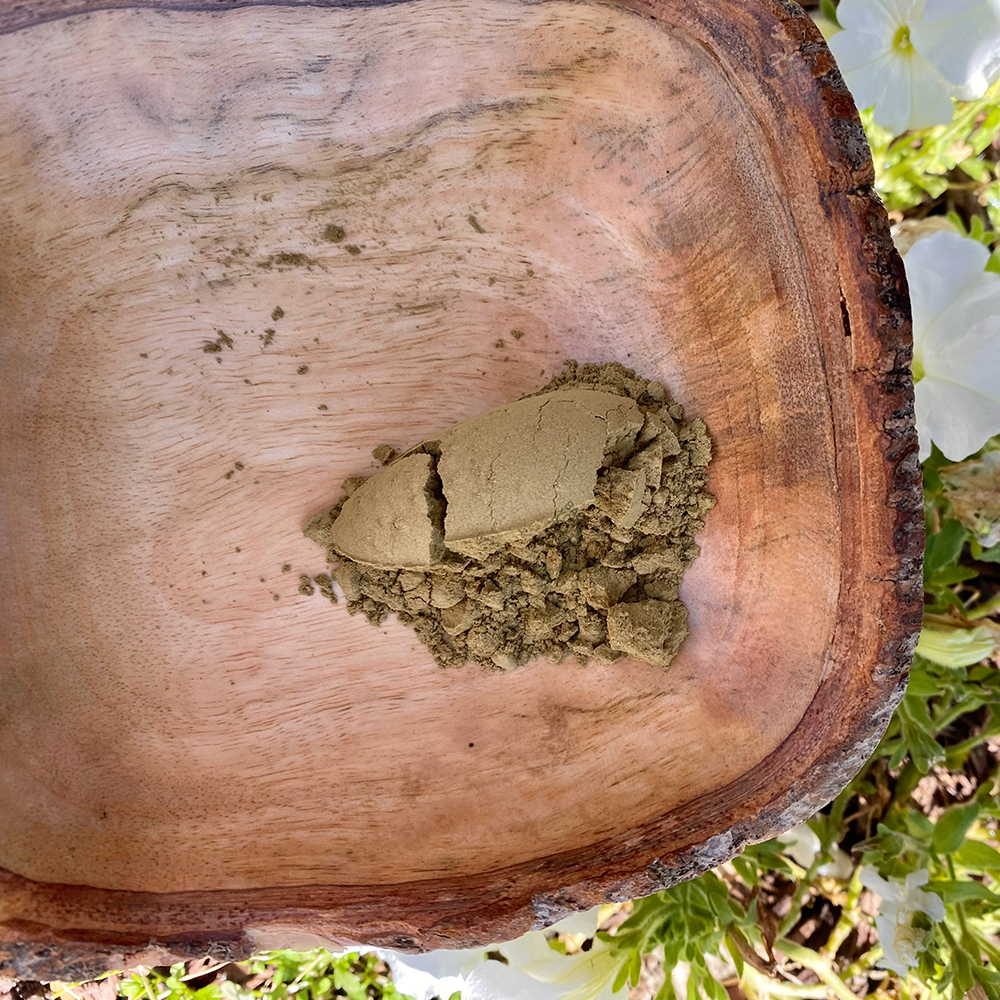
This ginkgo leaf powder presents as a pale dusty olive-green material that clumps slightly when compressed. The texture is fine-milled and light, dispersing readily in liquid.
The aroma carries a strong dried hay character with subtle sweet acidity reminiscent of aged plant material. No off-notes or mustiness present.
The taste profile is mellow, earthy sweetness followed by mild tea-like bitterness and a clean finish with a hint of pine. The flavor intensity is moderate and not astringent.
HOW DOES GINKGO BILOBA POWDER WORK?
Key Benefits of Whole-Leaf Ginkgo Biloba Powder
Whole-leaf ginkgo biloba powder is traditionally used to support several body systems at once. The main benefits people look for in this ginkgo leaf powder are:
- Memory and cognitive support: traditionally used to support memory, focus, and mental clarity.
- Circulatory support: terpene trilactones may support healthy blood flow and normal micro-capillary function.
- Antioxidant flavonol content: 110+ flavonoids across seven chemical classes contribute broad antioxidant activity.
- Full-spectrum whole leaf: no extraction, no fillers – the native constituent balance is preserved.
- Precision microdosing: loose powder allows a customizable 250mg serving rather than a fixed capsule size.
These structure and function benefits reflect traditional herbalist use and the compound profile described below. Ginkgo is generally well-tolerated. Consult your healthcare provider before use.
The Herb: Ginkgo biloba from Chiang Mai Highlands, Northern Thailand
Ginkgo biloba leaf powder contains a unique constellation of bioactive compounds found nowhere else in nature. This particular ginkgo leaf powder, sourced from the Chiang Mai Highlands (18.7°N, 98.98°E), grows in tropical highland conditions that increase compound concentration. The whole leaf preparation preserves all native constituents without extraction processing, maintaining the full spectrum of flavonol glycosides, terpene trilactones, and supporting compounds.
The Mechanism: How Terpene Trilactones Support Circulation and Memory
The distinctive terpene trilactones in ginkgo biloba powder (specifically ginkgolides A, B, C, J, and M, plus bilobalide) operate through a well-characterized mechanism. These compounds antagonize platelet-activating factor (PAF), a molecule involved in blood viscosity and inflammatory response. By modulating PAF activity, ginkgo leaf powder helps support healthy blood flow and helps maintain normal micro-capillary function.
Bilobalide, a trilactone unique to ginkgo biloba, preserves mitochondrial ATP synthesis at the cellular level. This mechanism helps cells maintain energy production efficiency, which is particularly relevant for memory-intensive brain tissue.
The 110+ flavonoids distributed across seven chemical classes provide broad antioxidant activity. The proanthocyanidin ratio in this ginkgo powder (85% prodelphinidin to 15% procyanidin) creates a potent free-radical scavenging profile that protects cellular membranes and mitochondrial structures.
The Evidence: Clinical Research on Ginkgo Biloba for Memory and Cognitive Function
Kaschel (2011) documented memory function improvements in healthy volunteers receiving ginkgo biloba leaf extract (PMID: 21802920). Ge et al. (2024) identified the PI3K/Akt neuroprotective pathway activation mechanism, showing how ginkgo compounds cross the blood-brain barrier and interact with cellular survival pathways.
A meta-analysis (PMID: 25506211) on ginkgo biloba supplement efficacy across multiple clinical trials found consistent support for age-related cognitive function. A separate double-blind, placebo-controlled trial of EGb 761 in cognitively intact older adults reported neuropsychological findings of interest (PMID: 12404671). The PubMed database contains over 2,000 articles on ginkgo extract research alone, reflecting decades of investigation into this ginkgo leaf powder’s mechanisms.
The WHO Monograph (1999, Vol. 1, ISBN 92-4-154517-8, pages 154-167) provides an authoritative regulatory assessment. The EMA has published detailed assessment reports recognizing ginkgo biloba’s evidence base. For a consumer-level overview of the evidence and safety, the NIH National Center for Complementary and Integrative Health (NCCIH) maintains a current summary.
Ginkgo Biloba Powder and Traditional Use: A 290-Million-Year Legacy
Ginkgo biloba is the sole surviving member of the Ginkgoales order, a lineage dating back over 290 million years in Earth’s fossil record. The species appears continuously in geological deposits from the Middle Jurassic period forward (170+ million years). This extreme evolutionary persistence speaks to the herb’s biological resilience and the deep adaptive chemistry it has developed.
In traditional use, Chinese monks cultivated ginkgo biloba for over 2,000 years, specifically for meditation focus and mental clarity. Traditional Chinese Medicine has documented ginkgo leaf powder use since the 11th century CE for supporting memory and healthy aging. The ginkgo tree itself survived glaciation events that eliminated thousands of other plant species, suggesting deep biochemical resilience.
Wild ginkgo biloba now survives only in the West Tianmushan mountains of Zhejiang Province, China, making cultivated sources like this Chiang Mai ginkgo leaf powder vital for global access to this ancient herb.
What Makes This Ginkgo Leaf Powder Different from Generic Ginkgo Supplements?
This ginkgo biloba powder is a whole leaf powder – fine-milled from 100% Northern Thailand ginkgo leaf without extraction processing. Competing ginkgo supplements typically use standardized extracts that strip away compounds to achieve 24% flavonol glycosides and 6% terpene trilactones.
By preserving the full spectrum, this ginkgo leaf powder retains rare terpene trilactones like ginkgolides J and M that are often lost in extraction. The whole powder approach means zero fillers, zero binders, and zero flow agents. Just pure ginkgo biloba. This whole leaf processing maintains the native biochemical balance that millions of years of evolution produced.
Precision dosing is possible with whole powder. A 250mg dose (1/8 teaspoon) provides consistent microdosing without fixed capsule sizes, allowing customization for individual response.
Ginkgo Powder vs. Capsules, Tincture, and Standardized Extract
Shoppers often ask how ginkgo biloba powder compares to other forms of ginkgo. Each delivery form serves a different need:
- Whole-leaf powder (this product): full-spectrum, no extraction, and fully adjustable dosing. Best when you want the complete native compound profile and control over serving size.
- Capsules: the same botanical in a pre-measured, taste-free, travel-friendly format. If you prefer convenience over loose powder, see the BTYRH Ginkgo Capsules.
- Tincture: a liquid extract taken by the dropper, favored for fast dispersion in water.
- Standardized extract (24/6): concentrated to fixed marker percentages, which raises specific markers but strips away the supporting compounds a whole-leaf powder keeps.
The whole-leaf powder and standardized extract represent two different philosophies: full-spectrum completeness versus concentrated markers. This product is built on the full-spectrum approach.
CRITICAL USAGE INFORMATION
Dosage and Frequency
Standard Serving: 250mg (approximately 1/8 teaspoon), 1-2 times daily. Start with one daily serving and observe the response before increasing.
How to take it: Stir the powder into water, juice, or a smoothie, ideally with food. The fine-milled texture disperses readily in liquid.
Ginkgo Biloba Powder Side Effects: What to Expect
Ginkgo leaf is generally well-tolerated in moderate amounts. According to the NIH National Center for Complementary and Integrative Health, the most commonly reported side effects are mild and self-limiting:
- Mild digestive or stomach upset
- Headache
- Occasional dizziness
- Less commonly, nausea or an allergic skin reaction
These effects are typically minor. Memorial Sloan Kettering’s About Herbs database also notes that, because ginkgo can affect bleeding, it should be used with extra care alongside the blood-thinning medications and surgical timing described in the sections below. Do not use raw or roasted ginkgo seeds, which are a different part of the plant and are not the same as this leaf powder. Discontinue use and consult your healthcare provider if you notice any unexpected reaction. Ginkgo is generally well-tolerated, but it is not suitable for everyone – review the interactions and precautions that follow before use.
Blood-Thinning Interactions: Important Precautions
Ginkgo biloba powder has blood-thinning properties due to its platelet-activating factor (PAF) antagonism. Do not use this ginkgo supplement if you are taking:
- Warfarin (Coumadin) or other anticoagulants
- Aspirin or NSAIDs at therapeutic doses
- Clopidogrel (Plavix) or other antiplatelet medications
Ginkgo biloba has interacted with these medications in clinical observations. If you are on blood-thinning therapy, consult your healthcare provider before adding ginkgo leaf powder to your routine.
Other Drug Interactions and Precautions
This ginkgo powder may interact with:
- Anticonvulsants: Phenytoin, carbamazepine (ginkgo may reduce seizure threshold)
- Antidepressants: SSRIs, SNRIs (additive serotonergic effects possible)
- Diabetes medications: Ginkgo may affect glucose metabolism
- CYP1A2 and CYP3A4 substrate medications: Ginkgo is a mild enzyme modulator
Surgical Considerations
Stop using this ginkgo supplement 2 weeks before any scheduled surgery. The blood-thinning properties and potential enzyme modulation warrant pre-operative discontinuation.
Pregnancy and Nursing
Do not use this ginkgo biloba powder if you are pregnant or nursing. Consult your healthcare provider before using during these periods.
CLINICAL SPECS:
| Spec | Detail |
|---|---|
| Serving Size | 250mg (approximately 1/8 teaspoon) |
| Frequency | 1-2 times daily |
| Active Marker | Flavonol Glycosides, Terpene Trilactones (Ginkgolides A, B, C, J, M and Bilobalide) |
| Processing | Fine-Milled Whole Leaf Powder (No Extraction) |
| Safety | Heavy Metal Tested (Pass) |
| Ingredients | Ginkgo biloba Leaf Powder (100%) |
| Other Ingredients | None |
| Purity | Non-GMO, Vegan |
| Free From | Wheat, Gluten, Soy, Dairy, Binders, Fillers |
| Origin | Chiang Mai Highlands, Northern Thailand (18.7°N, 98.98°E) |
| Manufactured | Virginia Beach, VA, USA |
COMPARISON TABLE:
| Feature | BTYRH Ginkgo Biloba Powder | Generic Ginkgo Supplements |
|---|---|---|
| Origin | Chiang Mai Highlands, Northern Thailand (18.7°N, 98.98°E) | Unspecified |
| Preparation | Fine-Milled Whole Leaf (Full Spectrum, No Extraction) | Standardized Extract (Stripped to 24%/6%) |
| Taste | Mellow-Resinous (Earthy/Sweet with Pine Finish) | Bitter or Flavorless (Capsule) |
| Safety | Heavy Metal Tested (Pass), Non-GMO, Zero Fillers | Unknown/Untested |
RELATED GINKGO BILOBA TOPICS
Ginkgo biloba is traditionally explored for several areas of wellness. These companion guides cover the research and traditional context in more depth:
- Ginkgo Biloba and Cognitive Aging – the evidence around memory and age-related cognitive function.
- Ginkgo Biloba and Libido – circulation-linked vitality and what the studies say.
- Ginkgo Biloba and Female Fertility – traditional use and current research in reproductive wellness.
- Ginkgo Capsules – the same botanical in a pre-measured capsule format.
FDA DISCLAIMER
These statements have not been evaluated by the Food and Drug Administration. This product is not intended to diagnose, treat, cure, or prevent any disease.
Author: Back To Your Roots Herbs Editorial Team. Last Reviewed: June 2026. Sources cited: NIH NCCIH, Memorial Sloan Kettering About Herbs, PubMed (PMIDs 21802920, 25506211, 12404671), WHO Monograph Vol. 1.
Reviews
There are no reviews yet.