Key Takeaways
- Clavo huasca is Tynanthus panurensis, a woody Amazonian vine in the Bignoniaceae family whose bark carries a strong clove aroma.
- That aroma comes from an eugenol glycoside measured at 19.5 mg per gram of dried bark, the most abundant phenylpropanoid glycoside in the plant.
- Clavo huasca is not ayahuasca. The two share a Quechua word meaning rope, nothing more, and belong to different botanical families.
- Two peer-reviewed studies exist on this species. Both are preclinical, covering antioxidant and anti-inflammatory activity in cell and rodent models.
- A second, unrelated Mandevilla species is sold under the same common name, which makes species verification the single most important sourcing question.
Clavo huasca has been traded out of the Peruvian and Brazilian Amazon for generations, and almost everything written about it in English traces back to the same handful of ethnobotanical field notes. Our editorial team went looking for the primary literature behind the claims and found something worth reporting plainly: the research base is two papers deep, and a great deal of what circulates online cites studies that cannot be located. This article separates what has been measured from what has been repeated.
Clavo Huasca vs Ayahuasca: Two Different Amazonian Vines
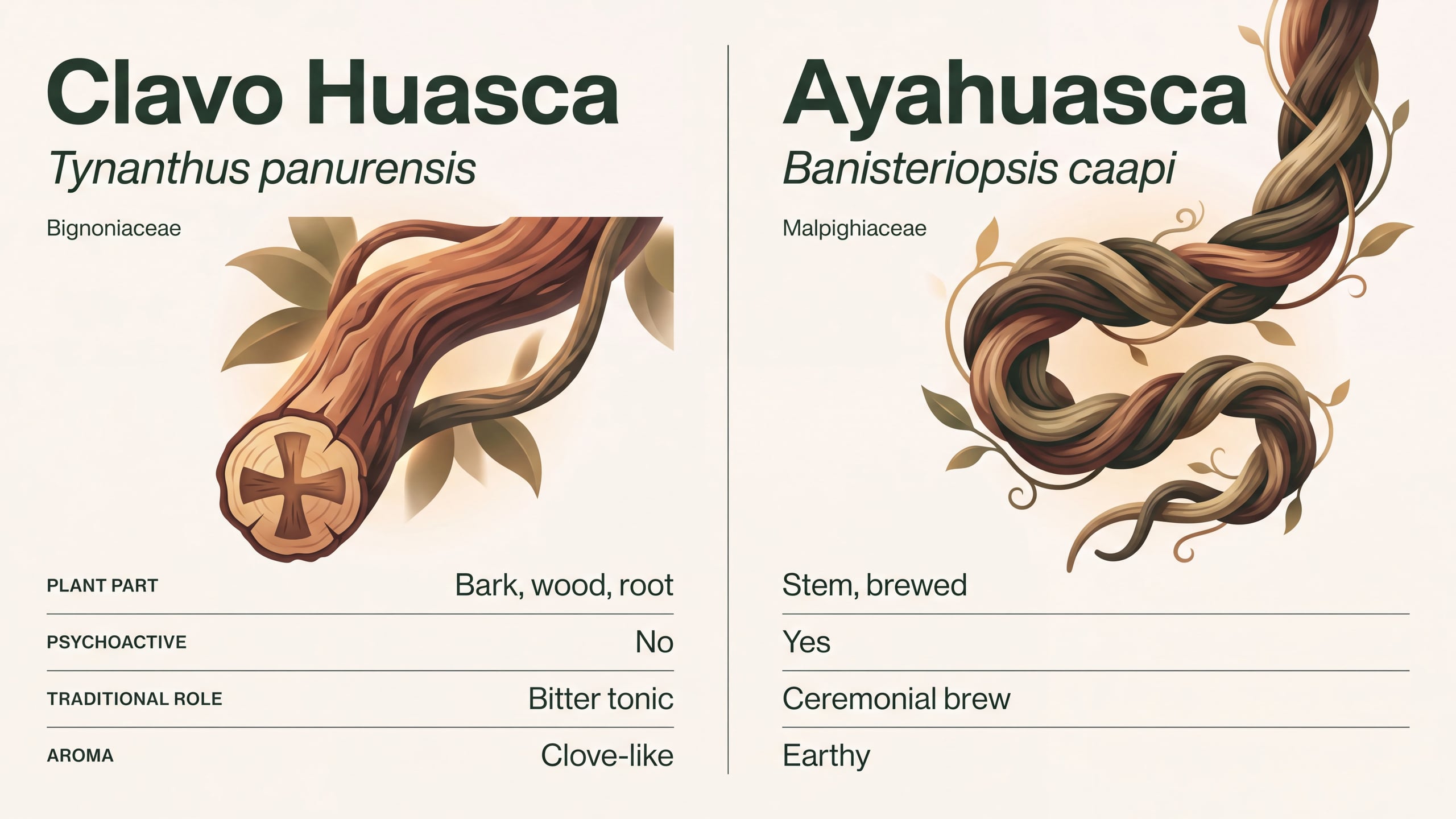
Clavo huasca and ayahuasca are not the same plant, are not related, and do not do the same thing. They share the Quechua word huasca, meaning rope or vine, which is applied across dozens of unrelated Amazonian lianas. Clavo huasca is Tynanthus panurensis, a non-psychoactive bark and root used as a bitter tonic. Ayahuasca refers to a brew whose defining component is Banisteriopsis caapi, a psychoactive preparation from an entirely different plant family.
The confusion is not merely academic. Search engines routinely merge the two, and buyers looking for a clove-scented digestive bitter sometimes land on material about a psychoactive ceremonial brew. The distinction is easy to hold once the taxonomy is laid out.
| Attribute | Clavo Huasca | Ayahuasca |
|---|---|---|
| Latin binomial | Tynanthus panurensis | Banisteriopsis caapi, typically combined with a DMT-containing admixture plant |
| Botanical family | Bignoniaceae | Malpighiaceae |
| Plant part used | Bark, inner wood, root | Stem, boiled into a brew with other species |
| Psychoactive | No | Yes |
| Traditional role | Everyday bitter tonic, digestive support, libido formulas such as Siete Raices | Ceremonial and ritual preparation guided by a trained practitioner |
| Aroma and taste | Strongly clove-like, warming, woody | Bitter, earthy, not clove-scented |
| US regulatory status | Sold as a dietary supplement ingredient under DSHEA | Contains scheduled compounds when combined with DMT-bearing admixtures |
One genuine point of contact exists. In some Amazonian traditions, clavo huasca bark is added to an ayahuasca brew, or taken alongside it, specifically to settle the stomach and reduce the purging that the brew provokes. That is a supporting culinary and digestive role, not a psychoactive one, and it is the likely origin of the naming overlap in the first place.
What Is Clavo Huasca and Where Does It Grow?
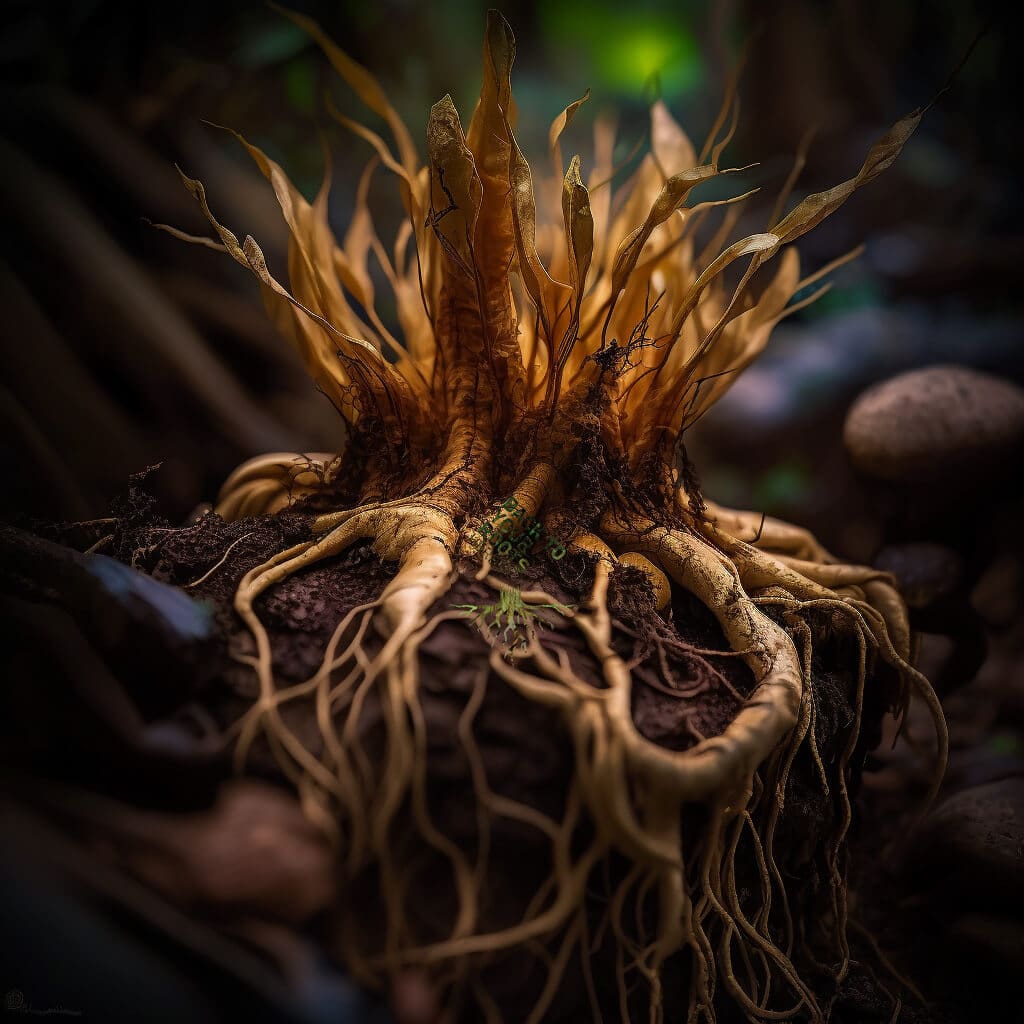
Tynanthus panurensis is a large woody liana native to the western Amazon basin, with the bulk of commercial material coming out of Peru’s Loreto region and adjacent northern Brazil. The vine climbs canopy trees using tendrils and can run to 80 metres in length. It produces small white flowers and flat, elongated, bean-like fruits.
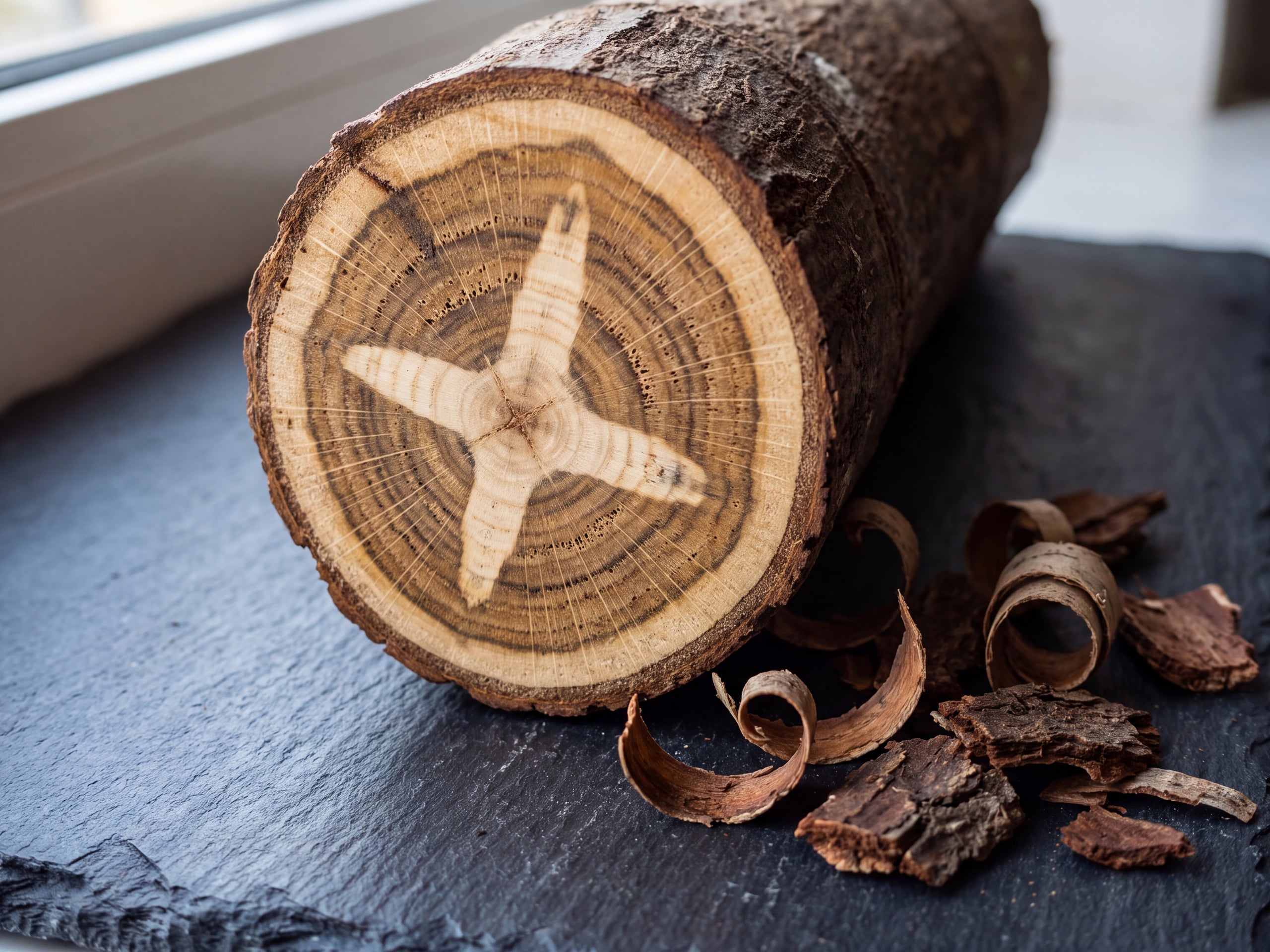
The identifying feature that no photograph of the leaves will give you sits inside the stem. Cut a mature vine in cross-section, and the xylem shows a distinct four-armed pattern that traders across Peru call the Maltese cross. Combined with the clove aroma released the moment the bark is scraped, it is the field test that has been used for generations.
Other Names for Clavo Huasca
The plant travels under several names. In the English-language herb trade, it appears as clove vine or white clove. In Brazil it is cipo cravo. In Peru and Ecuador, clavo huasca is the standard term, and the literal translation is clove vine, from Spanish clavo for clove and Quechua huasca for vine.
The Species Substitution Problem Nobody Talks About
This is the part of the clavo huasca story that gets left out of almost every article on the subject, and in our sourcing experience it matters more than any other single factor.
Two botanically unrelated plants are sold under the name clavo huasca. The one described in the ethnobotanical record and in both published studies is Tynanthus panurensis, family Bignoniaceae. A Mandevilla species, family Apocynaceae, is also marketed under the same common name in some supply chains. They are not interchangeable. They have different chemistry, different traditional applications, and no shared research base.
From our hands-on assessment of incoming bark lots, the practical checks are straightforward. Authentic Tynanthus panurensis bark releases a pronounced clove scent when scraped or freshly milled, driven by its eugenol content. Cross-sectioned wood shows the Maltese cross figure. Material that arrives with a faint or absent clove aroma warrants a species question before anything else. Any supplier should be able to name the binomial on the specification sheet rather than the common name alone.
What Does the Research Actually Show?
Two peer-reviewed studies on Tynanthus panurensis are indexed in PubMed. That is the complete published record for this species as of this review. Both are preclinical, meaning laboratory and animal work rather than human trials. We are stating that plainly because a considerable amount of writing on clavo huasca cites studies that cannot be located in any database, and our team could not verify them either.
What Are the Active Compounds in Clavo Huasca?
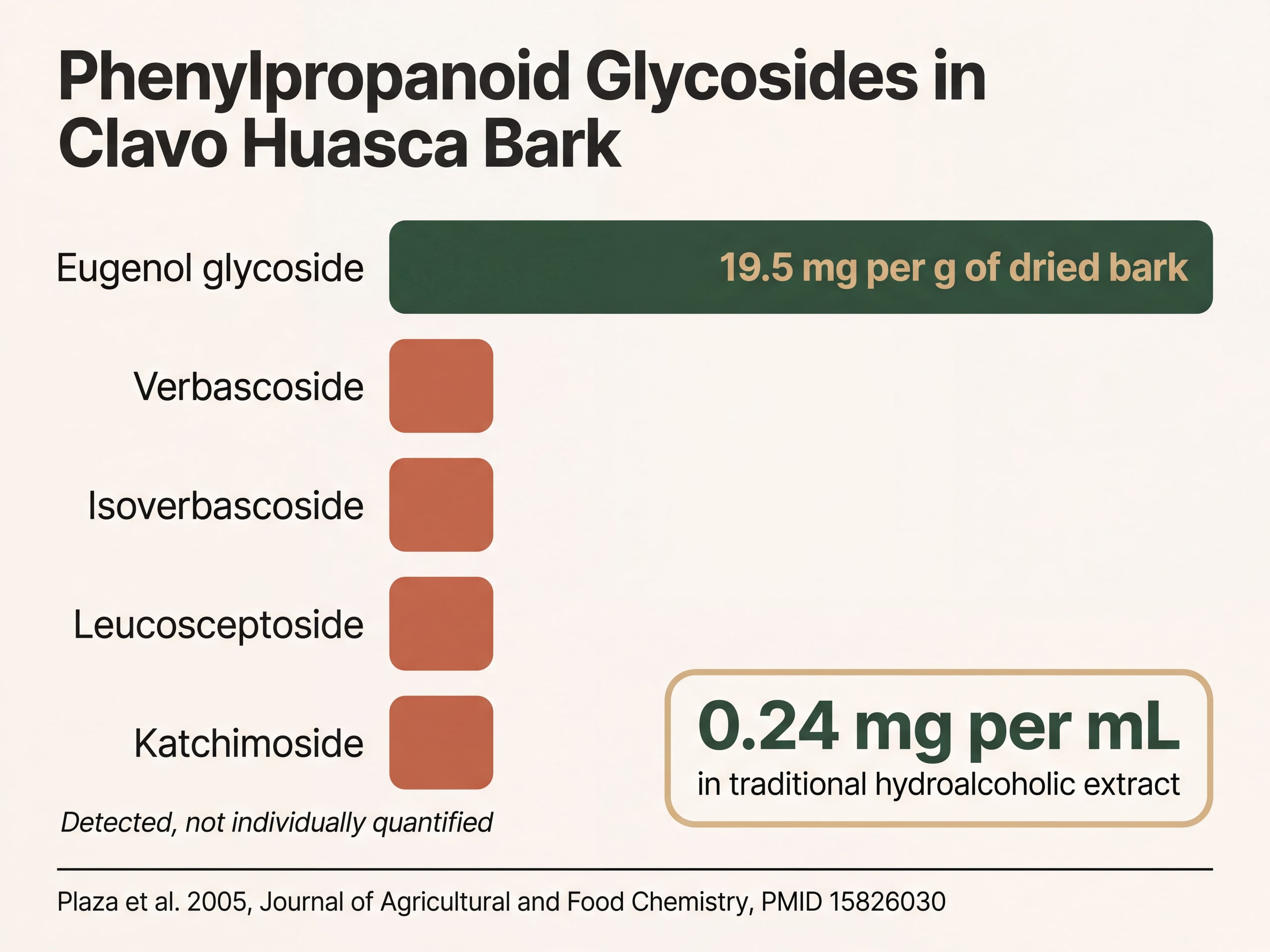
The dominant compound class in clavo huasca bark is phenylpropanoid glycosides. Plaza et al. (2005), Journal of Agricultural and Food Chemistry, PMID: 15826030, isolated a previously undescribed eugenol glycoside from the bark and quantified it by liquid chromatography with mass spectrometry. It measured 19.5 mg per gram in dried bark and 0.24 mg per millilitre in a hydroalcoholic extract prepared by the traditional method, making it the most abundant phenylpropanoid glycoside in both preparations.
The same analysis characterised several accompanying compounds:
- Eugenol-O-glycoside (phenylpropanoid glycoside), the compound responsible for the clove aroma and the most abundant of the group
- Verbascoside and isoverbascoside (phenylpropanoid glycosides), widely studied plant phenolics with antioxidant activity in laboratory assays
- Leucosceptoside (phenylpropanoid glycoside)
- Katchimoside, an apigenin 8-C-glycoside (flavonoid)
One correction is worth making here, because it circulates widely. Some retail listings attribute D-tubocurarine to clavo huasca. That compound is a curare alkaloid from Chondrodendron tomentosum, a plant in a different family altogether, and it does not appear in the characterised chemistry of Tynanthus panurensis. When a product page lists it, that is a signal to verify what the supplier is actually working from.
Antioxidant and Anti-Inflammatory Activity in Preclinical Models
Morales et al. (2011), Journal of Medicinal Food, PMID: 21488753, examined a bark extract across a series of laboratory assays and one animal model. Phytochemical screening showed saponins alongside a high concentration of phenols and flavonoids. In vitro, the extract scavenged free radicals and reduced microsomal lipid peroxidation, uric acid synthesis by xanthine oxidase, and tumor necrosis factor alpha production. The anti-inflammatory finding was then reproduced in vivo in a rat carrageenan edema model, where the extract showed potent activity.
What that does and does not establish is worth being precise about. It supports the plausibility of the plant’s long-standing traditional use for inflammatory discomfort and rheumatic complaints. It does not demonstrate an effect in humans, because no human trial has been run. Cell and rodent results frequently fail to reproduce in people, and readers deserve to know which side of that line a finding sits on.
On the aphrodisiac reputation specifically, our editorial team found no controlled study in humans or animals measuring sexual function outcomes for this species. The reputation rests entirely on ethnobotanical documentation, which is genuine and well recorded but is a different category of evidence from a clinical trial.
Traditional Uses of Clavo Huasca
Indigenous Amazonian communities, including the Shipibo-Conibo, Kayapo, and Assurini, have used clavo huasca bark and root as a tonic, a digestive bitter, and a libido preparation. In Peru, the vine is well enough known that it functions as both a household remedy and a kitchen spice, occasionally standing in where cinnamon might be used. Two named regional formulas carry it as a signature ingredient: Siete Raices, meaning seven roots, and Rompe Calzon, a rum-based maceration whose name translates about as bluntly as it reads.
Clavo Huasca for Libido and Sexual Vitality
Traditional use records describe clavo huasca as supporting sexual vitality in both men and women, which distinguishes it from many botanicals documented for one sex only.
For women. Amazonian practice has traditionally reserved clavo huasca preparations for pre-menopausal women, where it is used to support libido and sexual responsiveness. It appears in this role across the Peruvian herbal formulas mentioned above.
For men. Traditional application centres on supporting erectile function and sexual stamina, and clavo huasca is one of the named components of Siete Raices and Rompe Calzon, both of which are prepared and sold throughout the Peruvian Amazon for this purpose. We want to be direct about the evidence status: no human clinical trial supports a claim about erectile function for this plant. The traditional record is substantial, and the clinical record is empty, and both facts belong in the same paragraph.
Digestive Support
Clavo huasca has a long record as a digestive bitter. It is traditionally used to stimulate appetite, support digestive comfort, and help move intestinal gas. Its role alongside ayahuasca preparations, reducing the nausea the brew produces, falls into this same category of use.
Joint and Muscle Comfort
Traditional use for muscle aches and rheumatic discomfort is among the most consistently documented applications across sources, and it is the traditional use that the 2011 preclinical anti-inflammatory work aligns with most directly.
Oral Comfort and the Eugenol Connection
The traditional use of clavo huasca sap and bark for toothache is not a folklore coincidence. It is the same chemistry that puts clove oil in dental practice. Eugenol has well-documented local anaesthetic and antibacterial properties, and it is the compound that gives clavo huasca bark its clove aroma. The plant was traditionally applied for oral discomfort by Amazonian herbalists, and the eugenol glycoside content quantified by Plaza et al. gives that practice a plausible chemical basis.
General Tonic Use
Beyond specific applications, clavo huasca is used across Amazonian herbalism as a general tonic, taken to support overall energy and body function rather than to address any single complaint.
How to Use Clavo Huasca
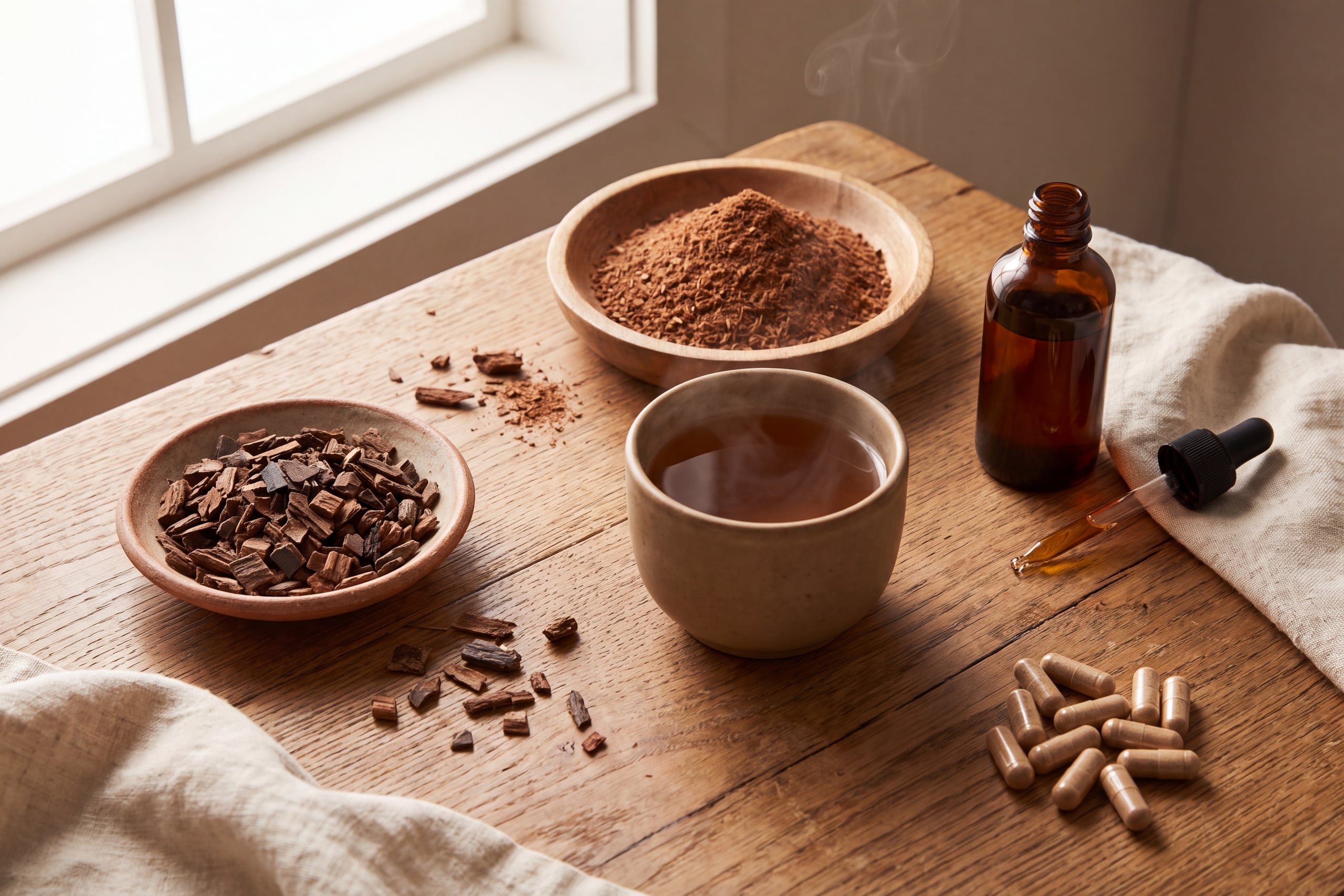
Clavo huasca is prepared as a tea, a tincture, or taken in capsule form.
Tea
Steep 1 to 2 teaspoons of dried bark or wood in hot water for 10 to 15 minutes. The result is warming and distinctly clove-forward.
Tincture
The traditional preparation soaks bark in alcohol, classically sugar cane rum or aguardiente, for several weeks. A 4:1 ratio is typical, meaning four parts alcohol to one part plant material.
Capsules
For anyone who would rather skip the taste, clavo huasca is available in capsule form. Follow the dosage on the product label. Our clavo huasca bark powder and clavo huasca capsules are both milled from verified Tynanthus panurensis material.
Dosage Recommendations
Dosage varies with preparation and with the individual. The figures below reflect traditional use rather than clinically established dosing, because no dose-finding trial exists for this species. As a general guide, tea is taken as 1 to 2 teaspoons of dried bark steeped in 8 oz of hot water for 10 to 15 minutes, 1 to 2 cups daily, with a single cup being typical for digestive use. Tincture is traditionally taken at 3 to 4 mL of a 4:1 preparation twice daily. Capsules generally fall in the range of 500 to 1000 mg per day divided across 2 to 3 doses.
Start at the low end and increase gradually. Follow the instructions on any commercial product, and speak with a healthcare provider for guidance specific to your situation.
What Are the Side Effects of Clavo Huasca?
No controlled human safety trial has been conducted on clavo huasca, so its side effect profile is drawn from traditional use and anecdotal reports rather than clinical data. Reported effects are generally mild and digestive in character, including stomach upset, nausea, loose stools, dizziness, and headache, most often at higher doses or with continuous daily use.
Some sources state flatly that no side effects are known for this plant. We would not characterise it that way. The absence of documented adverse events in a species with no clinical safety study is an absence of data, not a demonstration of safety, and those are different things.
Who Should Avoid Clavo Huasca
- Pregnancy and breastfeeding. Avoid. Safety during pregnancy and lactation has not been established.
- Anticoagulant medication or bleeding disorders. Speak with your healthcare provider first, given reported blood-thinning potential.
- Blood pressure or blood sugar medication. Consult your provider before use, as interactions have been reported.
- Known Bignoniaceae allergy. Clavo huasca belongs to this family. Begin with a small test dose.
- Digestive sensitivity. Begin at a low dose. Some people experience stomach upset on first use even though the plant is traditionally taken as a digestive aid.
Traditional practice cycles the herb rather than taking it continuously, commonly 5 days on and 2 days off, to reduce the likelihood of tolerance building. Some traditional accounts also note increased assertiveness with sustained daily use.
How Does Clavo Huasca Compare to Other Libido Botanicals?
Clavo huasca is regularly grouped with better-known botanicals in the same category. The grouping obscures the more interesting point, which is that these plants operate through entirely different compound classes. We have added a mechanism column below because that is where the actual differences sit.
| Botanical | Primary compound class | Traditional use | Origin | Common forms |
|---|---|---|---|---|
| Clavo huasca (Tynanthus panurensis) | Phenylpropanoid glycosides, chiefly a eugenol glycoside at 19.5 mg/g of dried bark | Libido support for men and women, digestive bitter, joint comfort | Western Amazon, chiefly Peru and Brazil | Bark powder, tea, tincture, capsules |
| Maca (Lepidium meyenii) | Glucosinolates and macamides | Libido and stamina support | Peruvian Andes, high altitude | Powder, capsules |
| Tribulus (Tribulus terrestris) | Steroidal saponins, chiefly protodioscin | Athletic performance and male vitality support | Mediterranean basin and southern Asia | Capsules, tea, extract |
| Ginseng (Panax ginseng) | Ginsenosides (triterpene saponins) | Energy and cognitive support | East Asia and North America | Tea, capsules, extract |
| Damiana (Turnera diffusa) | Flavonoids and volatile oils | Libido and mood support | Central and South America | Tea, tincture, capsules |
| Clavo huasca compound data from Plaza et al. (2005), Journal of Agricultural and Food Chemistry, PMID: 15826030. | ||||
The practical read: clavo huasca is the only entry in this group built on phenylpropanoid chemistry rather than saponins or glucosinolates, and the only one that carries a documented digestive and oral-comfort tradition alongside its libido reputation.
Sourcing, Sustainability, and Quality
Clavo huasca is wild-harvested rather than cultivated at commercial scale, which puts real weight on how a supply chain operates. We’ve observed in our own supplier assessments that the questions worth asking are consistent: does the specification sheet name Tynanthus panurensis rather than the common name alone, is harvest managed so vines regenerate rather than being stripped, and are the communities holding the traditional knowledge compensated as suppliers rather than treated as a collection point.
That last point has a formal framework behind it. The Nagoya Protocol on Access and Benefit-sharing under the Convention on Biological Diversity sets out obligations around genetic resources and associated traditional knowledge, and it applies squarely to Amazonian botanicals traded internationally.
On finished-product quality, the baseline expectations are cGMP-compliant manufacturing, identity verification against the correct binomial, and testing for heavy metals and microbial load. The clove aroma remains the fastest field indicator of both correct species and reasonable freshness. Bark that has lost its scent has usually lost potency along with it.
Frequently Asked Questions About Clavo Huasca
Is clavo huasca the same as ayahuasca?
No. Clavo huasca is Tynanthus panurensis, a non-psychoactive bark in the Bignoniaceae family. Ayahuasca is a psychoactive brew built around Banisteriopsis caapi, family Malpighiaceae. They share only the Quechua word huasca, meaning vine, which is applied to many unrelated Amazonian lianas.
How long does it take to feel the effects of clavo huasca?
Onset varies by preparation and individual. Teas and tinctures are typically reported to be felt within 30 to 60 minutes because the compounds are already in solution. Capsules take longer, since the material must break down in the digestive tract first.
Is clavo huasca legal to buy in the United States?
Yes. Clavo huasca is not a controlled substance in the United States and is sold as a dietary supplement ingredient under the Dietary Supplement Health and Education Act of 1994. Under DSHEA, supplement ingredients are not pre-approved by the FDA before sale, which places the burden of quality verification on the manufacturer and, in practice, on the buyer. Regulations differ by country, so check local rules if you are ordering internationally.
What are the active compounds in clavo huasca?
The characterised chemistry is dominated by phenylpropanoid glycosides. A eugenol glycoside is the most abundant, measured at 19.5 mg per gram of dried bark, alongside verbascoside, isoverbascoside, leucosceptoside, and the flavonoid katchimoside. Source: Plaza et al. (2005), Journal of Agricultural and Food Chemistry, PMID: 15826030.
Can clavo huasca be combined with other herbs?
It traditionally is. Clavo huasca appears as one component of multi-herb Amazonian formulas such as Siete Raices rather than as a standalone preparation. That said, combining supplements raises interaction questions that traditional use does not answer, so speak with a knowledgeable herbalist or your healthcare provider before stacking it with other botanicals or with medication.
Does clavo huasca have side effects?
No controlled human safety study exists. Reported effects are mild and mostly digestive, including stomach upset, nausea, dizziness, and headache. Avoid during pregnancy and breastfeeding, and consult your provider first if you take anticoagulants, blood pressure medication, or blood sugar medication.
What does clavo huasca taste like?
Warming, spicy, and woody, very close to cloves. That is not a coincidence of flavour; it is the eugenol glycoside content showing up on the palate.
Is clavo huasca a hallucinogen?
No. It has no psychoactive activity. It is sometimes taken alongside ayahuasca specifically to reduce the nausea that brew causes, which is a digestive role rather than a psychoactive one.
How can I tell if I am buying real clavo huasca?
Three checks. The specification sheet should name Tynanthus panurensis, not just the common name, because an unrelated Mandevilla species is sold under the same name. Fresh bark or powder should release a pronounced clove aroma when scraped or opened. Cross-sectioned wood shows the distinctive Maltese cross figure in the xylem.
Related Reading
Continue with our guide to natural libido-enhancing botanicals, our review of natural aphrodisiacs for women, and our article on damiana for a Central American botanical with a comparable traditional profile.
Important: This article is for educational and informational purposes. The statements have not been evaluated by the Food and Drug Administration. The herbs and herbal products discussed are not intended to diagnose, treat, cure, or prevent any disease. Speak with a qualified healthcare provider before starting any new herbal regimen, especially if you are pregnant, nursing, taking medication, or managing a health condition.