A Bangalala plant extract is a concentrated preparation of the Eriosema kraussianum rootstock, made by drawing its pyrano-isoflavone compounds out of the fibrous root with water, alcohol, or another solvent. An extract is not the same thing as the raw dried root. The extraction method used determines which compounds actually end up in the finished product, and with Bangalala that distinction matters more than usual, because two of its most-studied compounds, kraussianone-1 and kraussianone-2, are only modestly soluble in water and extract more efficiently into alcohol.
Key Takeaways
- A Bangalala extract concentrates specific rootstock compounds through a solvent, so the extraction method shapes potency as much as the plant material itself does.
- Traditional Zulu preparation uses a water and milk decoction, while modern tinctures use alcohol extraction, which pulls out more of the poorly water-soluble pyrano-isoflavones.
- Published research has isolated five distinct pyrano-isoflavones from the rootstock, and they do not all act the same way. Two relax smooth muscle tissue in laboratory models, and two others cause it to contract.
- The most-cited data point is a laboratory bioassay in which the most active isolated compound reached about 75 percent of sildenafil’s effect in a rabbit tissue model, a pre-clinical result, not a human clinical trial.
- The same extraction chemistry that concentrates Bangalala’s studied compounds also concentrates a measured blood-sugar-lowering effect, a real consideration for anyone on diabetes medication.
- Extraction transparency, knowing the solvent, the plant part, and the species, is the most reliable way to judge whether a Bangalala extract is likely to deliver what the label implies.
Bangalala plant extracts turn Eriosema kraussianum’s woody rootstock into a form that concentrates its most-studied compounds instead of relying on the whole dried root. This matters more with Bangalala than with many herbs, because the plant’s chemistry is not uniform. Some of its compounds relax vascular tissue in laboratory models and others contract it, and which ones dominate a finished extract depends heavily on how that extract was made. Our editorial team reads the primary extraction and isolation literature directly, rather than repeating generic “plant extract” marketing copy, and that is the approach this guide takes. It covers how Bangalala extracts are actually produced, from the traditional milk decoction to laboratory-grade solvent extraction, what the extraction method changes about potency, and what the published research says about the compounds involved.
What Is a Bangalala Plant Extract?
Eriosema kraussianum, known as Bangalala or uBangalala in Zulu, is a perennial legume native to the grasslands of KwaZulu-Natal, South Africa. Traditional healers use the woody rootstock rather than the leaves or flowers, most often prepared as a decoction to support male vitality, stamina, and circulation. A plant extract differs from the raw root in one specific way: it isolates and concentrates the rootstock’s compounds using a solvent, whether that is the water and milk of a traditional preparation or the ethanol behind a modern tincture. For the plant’s full traditional history and its broader traditional-use record across Zulu and Xhosa practice, our team’s companion guide on Bangalala’s traditional benefits and modern research covers that ground in depth. This guide stays focused on the extract itself, how it is made, what the extraction method changes, and what the published research says about potency and safety.
How Bangalala Extracts Are Made: Traditional and Modern Extraction Methods
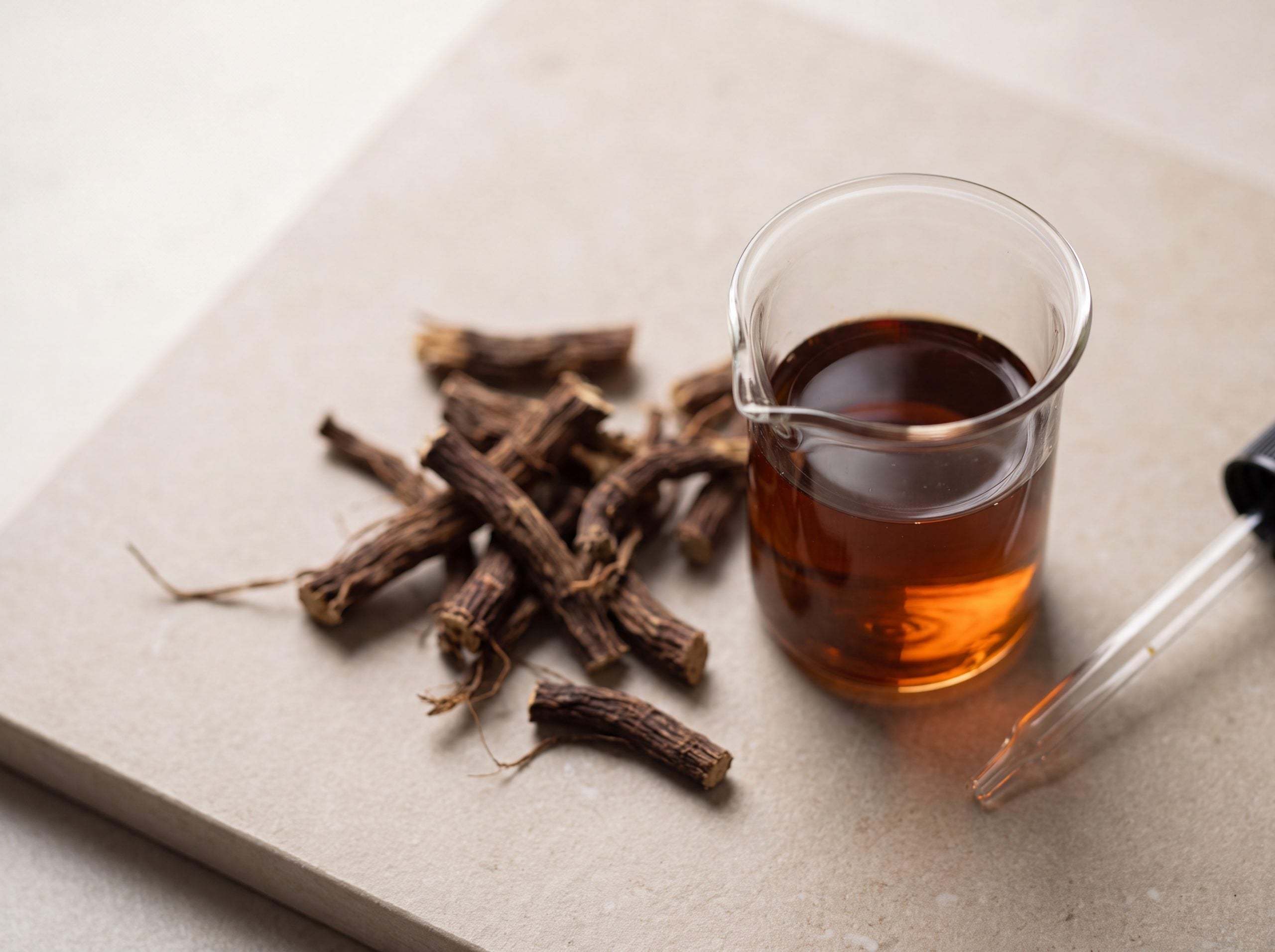
Extraction is the process of drawing a plant’s active compounds out of its fibrous structure and into a usable form. With Bangalala, the method chosen has a real effect on what ends up in the finished product, because the rootstock is tough and fibrous, and its key compounds do not dissolve in water as readily as they dissolve in alcohol or other solvents.
Traditional Zulu preparation uses decoction, the method described throughout the traditional record. The dried, ground rootstock is simmered in water or milk, typically for 15 to 20 minutes, long enough for the tough root material to release its constituents into the liquid. Milk is a frequent traditional addition, and while that detail is an ethnobotanical observation rather than a tested pharmacokinetic finding, it is at least chemically plausible, since fats can improve the absorption of poorly water-soluble compounds. A shorter infusion, closer to steeping tea, suits leaf and flower material generally but is a poor fit for a woody root like Bangalala, which does not release its compounds in a brief steep.
Beyond traditional preparation, several extraction methods appear across the herbal industry more broadly, each with a specific role:
- Maceration soaks the ground root in a solvent, water, alcohol, or a mixture, for an extended period, letting the solvent slowly draw out compounds without heat.
- Percolation passes the solvent through the plant material continuously, which extracts more efficiently than a single soak.
- Soxhlet extraction is a laboratory technique that repeatedly evaporates and condenses the solvent through the plant material, used in research settings rather than home or commercial production.
- Supercritical CO2 extraction uses carbon dioxide held at a pressure and temperature where it behaves as both a liquid and a gas, pulling out compounds without leaving solvent residue behind. It is a newer, more resource-intensive method than the others.
The foundational research on Bangalala’s isolated pyrano-isoflavones used a laboratory-grade version of this same principle. Researchers milled the dried rootstock and extracted it with dichloromethane over several days, then re-extracted the remaining material with a dichloromethane-ethanol mixture, before separating the individual compounds and confirming their structures with single-crystal X-ray analysis (Drewes et al., 2002, Phytochemistry, PMID: 11909631). That is a research-grade process, not something replicated in a home kitchen or most commercial facilities, but it is the reason Bangalala’s chemistry is understood as specifically as it is. In our own sourcing work, this is exactly why we ask suppliers which extraction method was used before we trust a stated potency claim. A powder labeled simply “extract,” with no solvent or method named, tells you almost nothing about what it actually contains.
Solvents Used and Why They Matter for Potency
The solvent used to make a Bangalala extract is not a minor detail. It determines which compounds actually make it into the finished product, and Bangalala’s chemistry makes this more consequential than it would be for many herbs.
- Water extracts water-soluble compounds efficiently and is the base of the traditional decoction, but Bangalala’s two most-studied pyrano-isoflavones are only modestly water-soluble, meaning a water-only preparation likely extracts less of them than an alcohol-based method does.
- Ethanol (alcohol) is the solvent behind tincture production, and it suits the pyrano-isoflavone class of compounds well precisely because they dissolve more readily in alcohol than in water alone. This is a plausible chemical explanation, not a tested clinical claim, for why a tincture may deliver a more concentrated dose of these specific compounds than an equivalent amount of powder steeped in water.
- Glycerin sometimes serves as an alcohol-free alternative for tinctures, though it generally extracts a narrower range of compounds than ethanol.
- Vinegar (acetic acid) sees occasional traditional and small-batch use, though it is not the solvent behind any of the published Bangalala research.
- Supercritical CO2 leaves no residual solvent in the finished extract and appears in more specialized, higher-cost production, though we are not aware of any published research applying it specifically to Eriosema kraussianum.
The practical takeaway is not that one solvent is universally superior. It is that the solvent changes what you are actually getting, and a label that names the extraction solvent is telling you something a label that just says “root extract” is not.
What the Research Says About Extract Potency
Quick answer: Bangalala’s rootstock contains at least five distinct pyrano-isoflavones, and they do not all behave the same way. Kraussianone-1 and kraussianone-2 relax vascular smooth muscle tissue in laboratory models, while two related compounds, kraussianones 3 and 5, cause contraction instead. A Bangalala extract’s effect depends on which of these compounds a given extraction method actually captures, not simply on how much root went into the batch.
This is the single most important fact for anyone evaluating a Bangalala extract’s potency, and it is the one most product listings leave out entirely. A 2021 review of the wider Eriosema genus catalogued 107 distinct compounds isolated from just eight studied species, with flavonoids accounting for close to 70 percent of the total (Ateba et al., 2021, Frontiers in Pharmacology, PMID: 34025412), so Bangalala’s compound complexity is not unusual for its genus. What is unusual is how well-characterized its specific compounds are.
The foundational research isolated five pyrano-isoflavones from the rootstock using the dichloromethane extraction described above, then tested them on isolated rabbit corpus cavernosum tissue, benchmarked directly against sildenafil. The most active compound reached roughly 75 percent of sildenafil’s effect in that isolated-tissue assay (Drewes et al., 2002, Phytochemistry, PMID: 11909631). That is an in-vitro laboratory result, not a human clinical outcome, and it says nothing about what any given extract, at any given dose, will do in a person. What it does establish is that this compound class is pharmacologically active in a measurable way.
A 2004 follow-up complicates the simple story further. Researchers isolated two additional minor pyrano-isoflavones, kraussianones 3 and 5, and found they caused contraction of the same tissue type rather than the relaxation the earlier compounds produced (Drewes et al., 2004, Phytochemistry, PMID: 15280002). An extract that concentrates the wrong ratio of compounds, whether through the plant material used, the extraction method, or the specific root population harvested, could plausibly behave differently from one that does not. This is exactly why extraction method and sourcing transparency matter more with Bangalala than with a botanically simpler herb.
A separate 2006 study examined this same compound class specifically as extractives, the paper’s own term, testing hydro-ethanol extracts of the rootstock in rat models. The extracts produced measurable vasorelaxation in isolated portal vein tissue along with a dose-dependent drop in blood glucose across a 20 to 80 mg/kg range, an effect pronounced enough that researchers benchmarked it against glibenclamide, a conventional blood-sugar medication (Ojewole et al., 2006, Phytochemistry, PMID: 16434072). That second finding is not a side note. It is one of the more practically important facts in the entire Bangalala literature, and it applies specifically to extracted preparations, not just the whole root.
Kraussianone-1’s structure was independently confirmed by total synthesis in 2010, a process that rebuilt the molecule from simpler starting materials rather than isolating it from the plant, validating the structure originally proposed from plant-derived material and producing the related isoflavones eriosemaone D and genistein along the way (Selepe et al., 2010, Journal of Natural Products, PMID: 20718472). Total synthesis is also, in principle, a route to producing standardized quantities of a specific compound without depending on wild-harvested root, though we are not aware of any commercially available Bangalala extract made this way today.
None of this research involved a human clinical trial. Every study cited here is laboratory, animal, or isolated-tissue work. That is the honest ceiling of what the published literature currently supports, and any extract marketed with a specific, guaranteed human effect is extrapolating past the evidence.
Extract Forms Compared: Powder, Capsules, and Tincture
Bangalala reaches the market as root powder, encapsulated powder, or alcohol tincture, and the extraction method behind each form differs enough to affect both potency and how quickly it takes hold.
| Form | Extraction method | Reported onset | Trade-off |
|---|---|---|---|
| Root powder | Water and milk decoction, simmered at home | 45 to 60 minutes | Closest to traditional use. Likely extracts less of the poorly water-soluble compounds than an alcohol method. |
| Capsules | Encapsulated dried root or powder extract, method varies by manufacturer | 60 to 90 minutes | Consistent serving size, no preparation needed. Extraction method is often unstated on the label. |
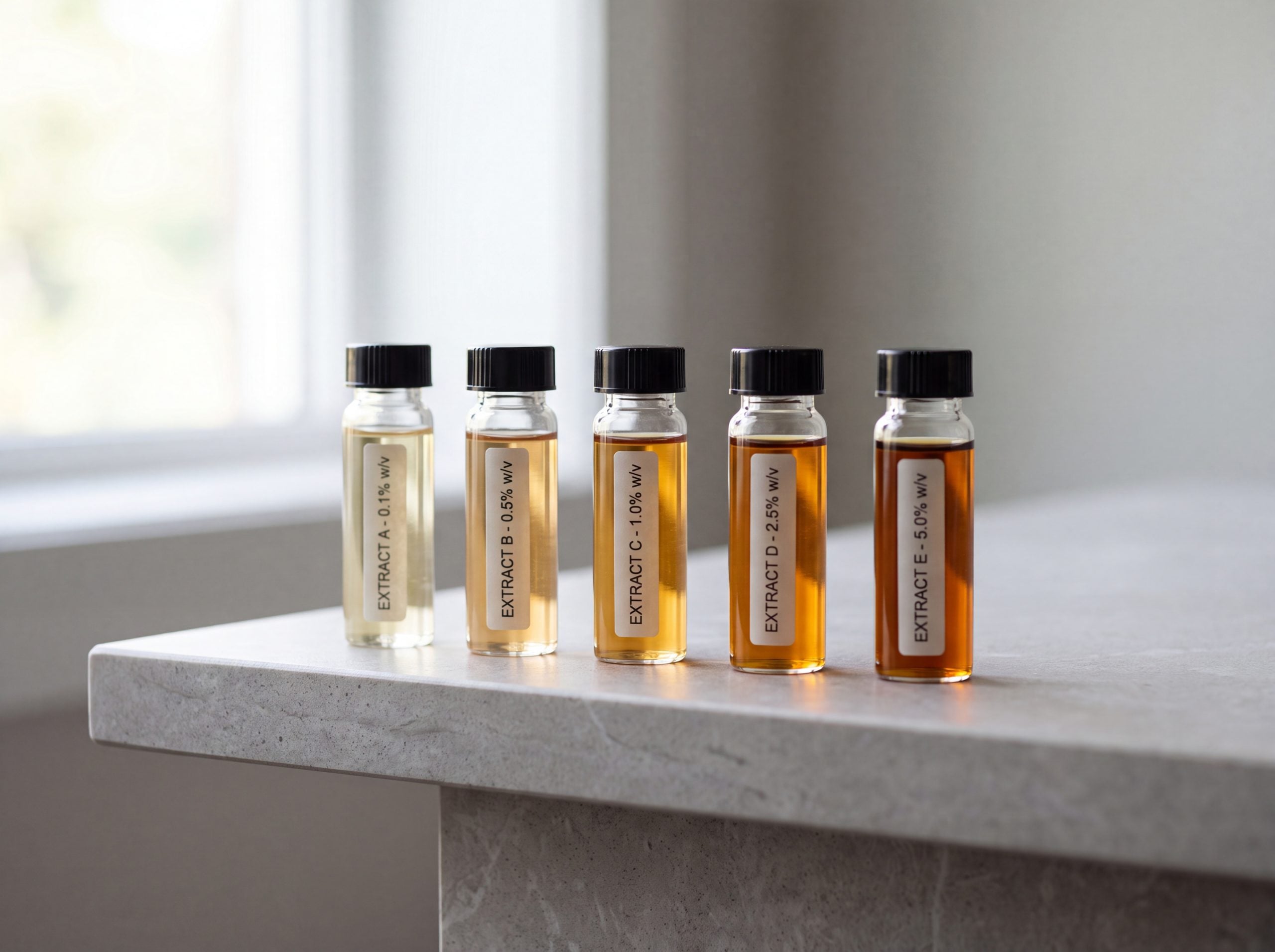
| Tincture | Ethanol extraction, typically a 1:3 hydro-ethanolic ratio in cane alcohol | 15 to 20 minutes | Alcohol suits the poorly water-soluble compounds better than water. Not suitable for anyone avoiding alcohol. |
| Onset figures reconciled to current BTYRH product labeling, not a clinically established finding. | |||
Reconciled to current product labeling, a typical serving is 1 level teaspoon (about 5 grams) of powder simmered into warm milk for 5 minutes, 2 to 4 capsules (about 1 to 2 grams) taken with milk or a light meal, or 1 to 2 full droppers (30 to 60 drops) of tincture held under the tongue for about 60 seconds before swallowing, with product guidance to take the tincture 20 to 30 minutes ahead of when the effect is wanted. These are the serving sizes printed on product labels, not a clinically established dose. No human dosing trial exists for Eriosema kraussianum in any form.
In our own sourcing and testing work, the tincture’s faster reported onset lines up with what the chemistry predicts. Alcohol extraction reaches the poorly water-soluble pyrano-isoflavones more efficiently than a water-based preparation, and sublingual administration bypasses first-pass digestion. That is a mechanistic explanation, not a controlled head-to-head comparison, since no study has directly measured onset time across these three forms against each other.
Applications of Bangalala Extracts
Once extracted, Bangalala’s compounds are used in a few practical formats. Capsules and powders serve as everyday dietary supplements. Traditional infusions and decoctions remain the most common preparation across Southern African practice. Tinctures offer a concentrated, fast-acting liquid dose with a long shelf life, since alcohol itself acts as a preservative. Isolated compounds, kraussianone-1 in particular, also continue to serve as research subjects, most recently as a template for total synthesis studies rather than as a consumer product ingredient (Selepe et al., 2010, Journal of Natural Products, PMID: 20718472).
Side Effects and Precautions of Concentrated Extracts
A concentrated extract delivers more of a plant’s compounds, by design, than the equivalent amount of raw root. That is the entire purpose of extraction, and it is also why safety guidance for an extract deserves particular attention.
Reported effects in traditional and consumer use are generally mild. Powder and capsules are most often associated with nausea or stomach discomfort at higher doses or on an empty stomach. Tincture users most often report a brief, sharp sensation under the tongue on application, a sign of the high-proof alcohol solvent, along with a mild warming sensation as circulation shifts, both typically brief. No formal human safety or toxicology study has been published on Eriosema kraussianum in any form, which means the absence of documented severe adverse effects reflects the absence of formal study as much as it reflects genuine safety. Treat that as a reason for care, not as reassurance.
A few precautions apply specifically to concentrated extract forms:
- Blood sugar. The same 2006 study that documented vasorelaxant activity in Bangalala’s hydro-ethanol extractives also found a dose-dependent drop in blood glucose (Ojewole et al., 2006, Phytochemistry, PMID: 16434072). Anyone taking medication for diabetes or blood sugar should speak with their doctor before using any Bangalala extract, since a concentrated preparation delivers more of this effect than the whole root would.
- Cardiovascular medication, nitrates, and prescription erectile-function medication. Bangalala’s vasoactive compounds have never been studied alongside a vasoactive prescription drug in humans. That combination is unstudied, not established as safe, and current product labeling flags it directly.
- Blood thinners and liver or kidney conditions. Speak with a healthcare provider before use if you take a blood thinner or manage a liver or kidney condition, since no interaction data exists either way.
- Upcoming surgery. Current product guidance recommends pausing use in the two weeks before a scheduled surgery, consistent with general caution around vasoactive supplements.
- Alcohol content. Tinctures are not appropriate for anyone avoiding alcohol for medical, personal, or religious reasons. Powder or capsules are the alcohol-free alternative.
Bangalala extracts, in any form, are not recommended during pregnancy or breastfeeding, and traditional use is specifically male-directed. This is a firm precaution, not a cautious hedge, and it holds regardless of extraction method. The NIH Office of Dietary Supplements publishes general guidance on evaluating supplement safety that applies well beyond this one herb.
Choosing a Quality Bangalala Extract
Because extraction method genuinely changes what ends up in a Bangalala product, the questions worth asking a supplier go beyond the standard botanical checks.
- Ask which extraction method was used. A supplier who can name the solvent and process is treating extraction as a real specification, not an afterthought. One who cannot has told you something too.
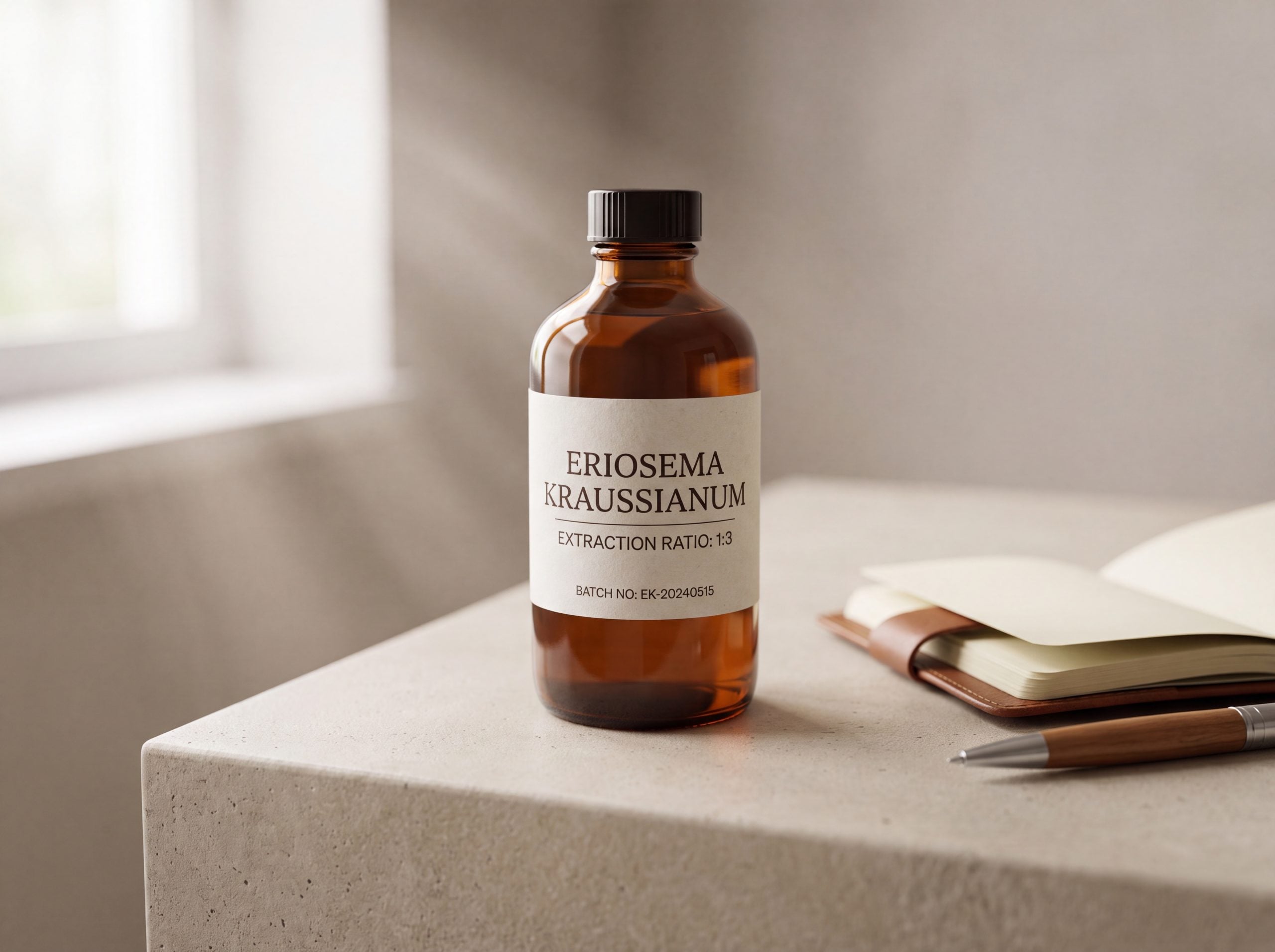
- Confirm the Latin binomial and plant part. The label should say Eriosema kraussianum and specify rootstock or root. Galangal (Alpinia officinarum) and bangle (Zingiber montanum) are both sold under the “bangalala” name often enough that this check matters.
- Look for a stated extraction ratio, if claimed. A tincture labeled with a ratio, such as 1:3, is telling you something concrete about concentration. A label with no ratio, no solvent, and no plant part named is not.
- Prioritize third-party testing. Wild-harvested root powders carry a genuine adulteration and heavy-metal risk, and testing is the only real check against it.
Our own Bangalala material is wild-harvested in KwaZulu-Natal, South Africa, and reviewed in our Virginia Beach, Virginia facility before it reaches a customer. You can see how we apply these standards on our Bangalala root powder, Bangalala capsules, and Bangalala tincture product pages, and in our broader guide to Bangalala’s traditional benefits and traditional use. Botanical names can also be independently verified against Kew’s Plants of the World Online.
Frequently Asked Questions About Bangalala Plant Extracts
What is the difference between raw Bangalala root and a Bangalala extract?
Raw root is the dried, ground rootstock itself. An extract is what results after that root has been processed with a solvent, water, alcohol, or another liquid, to concentrate specific compounds and remove the bulk plant fiber. A powder can be either the ground raw root or a dried extract, so the label should specify which one you are buying.
Which extraction method produces the most potent Bangalala extract?
No published study has directly compared extraction methods for potency. What the chemistry supports is that alcohol-based extraction pulls out more of the poorly water-soluble pyrano-isoflavones than a water-only method does, which is the mechanistic reason tinctures are associated with a faster reported onset than powder.
Is Bangalala tincture stronger than Bangalala powder?
It depends on what “stronger” means. A tincture concentrates the alcohol-soluble compounds more efficiently and acts faster, with a reported onset around 15 to 20 minutes versus 45 to 60 minutes for a simmered powder decoction. Neither form has been tested against the other in a controlled study, so this is a chemistry-based inference rather than a measured comparison.
What solvents are used to make Bangalala plant extracts?
Traditional preparation uses water, often combined with milk. Commercial tinctures use ethanol, typically in a hydro-ethanolic ratio such as 1:3. Laboratory isolation research has used dichloromethane and dichloromethane-ethanol mixtures to isolate individual pyrano-isoflavones. Glycerin and vinegar see occasional smaller-scale use as alcohol-free alternatives.
Do all Bangalala extracts contain the same active compounds?
No. Published research has isolated five distinct pyrano-isoflavones from the rootstock, and they do not all act the same way. Two, kraussianone-1 and kraussianone-2, relax vascular smooth muscle tissue in laboratory models. Two others, kraussianones 3 and 5, cause contraction instead. Which compounds dominate a given extract depends on the plant material and extraction method used.
Are Bangalala extracts standardized for potency?
Not in any way verified by independent, published testing that we are aware of. Some commercial extracts state a compound percentage or extraction ratio, which is a meaningful specification worth looking for, but no regulatory standard governs Bangalala extract potency the way one might govern a pharmaceutical ingredient.
Can extraction method affect Bangalala’s side effects?
Plausibly, yes. Because extraction concentrates specific compounds, including the one linked to a measured drop in blood glucose in animal studies, a more concentrated extract could deliver more of that effect than an equivalent amount of raw root. This has not been directly tested, but it follows from how extraction works.
How should I evaluate the quality of a Bangalala extract before buying?
Confirm the Latin binomial, Eriosema kraussianum, the plant part, rootstock or root, the extraction method or solvent used, and whether the product has undergone third-party testing. A supplier who cannot answer these questions is not able to vouch for what is actually in the product.
Related Reading
Continue with these related guides from our editorial team:
- Bangalala benefits: the full traditional-use and modern-research guide
- Mulondo and Bangalala powder, our traditional two-root blend
- Mpesu benefits, another traditional Southern African stamina root
- What Congo Dust is and how men use it for control and stamina
- Gouro root (Turraea heterophylla), a West African circulation root
- Traditional herbs used to support male stamina
Important: This article is for educational and informational purposes. The statements have not been evaluated by the Food and Drug Administration. The herbs and herbal products discussed are not intended to diagnose, treat, cure, or prevent any disease. Speak with a qualified healthcare provider before starting any new herbal regimen, especially if you are pregnant, nursing, taking medication, or managing a health condition.