In the pursuit of natural health remedies, Juglans nigra, commonly known as black walnuts, have gained attention for their potential medicinal properties, particularly in addressing parasitic infections. Walnuts, especially the black variety, are valued not just for nutritional content but also for their reported ability to combat parasites.
What are Parasites?
Parasites are organisms that live on or within a host organism, deriving nutrients at the host’s expense. These organisms can range from microscopic single-celled entities like Giardia lamblia and Entamoeba histolytica to larger, multicellular worms such as tapeworms, hookworms, pinworms, and roundworms (nematodes). Human parasitic infections can arise from various sources, including contaminated food or water, contact with infected animals (pets), and insect bites.
Symptoms of Parasitic Infections
Parasitic infections can manifest with a wide range of symptoms, often depending on the type of parasite and the individual’s overall health. Common symptoms include:
- Digestive Issues: Diarrhea, constipation, bloating, gas, nausea, and abdominal pain.
- Fatigue: Persistent tiredness and weakness.
- Skin Problems: Rashes, itching, eczema, and other skin irritations.
- Weight Changes: Unexplained weight loss or gain.
- Nutritional Deficiencies: Due to the parasite’s consumption of nutrients.
- Other Symptoms: Muscle/Joint pain, and teeth grinding.
Do Walnuts Kill Parasites? Exploring the Anti-Parasitic Properties of Black Walnut
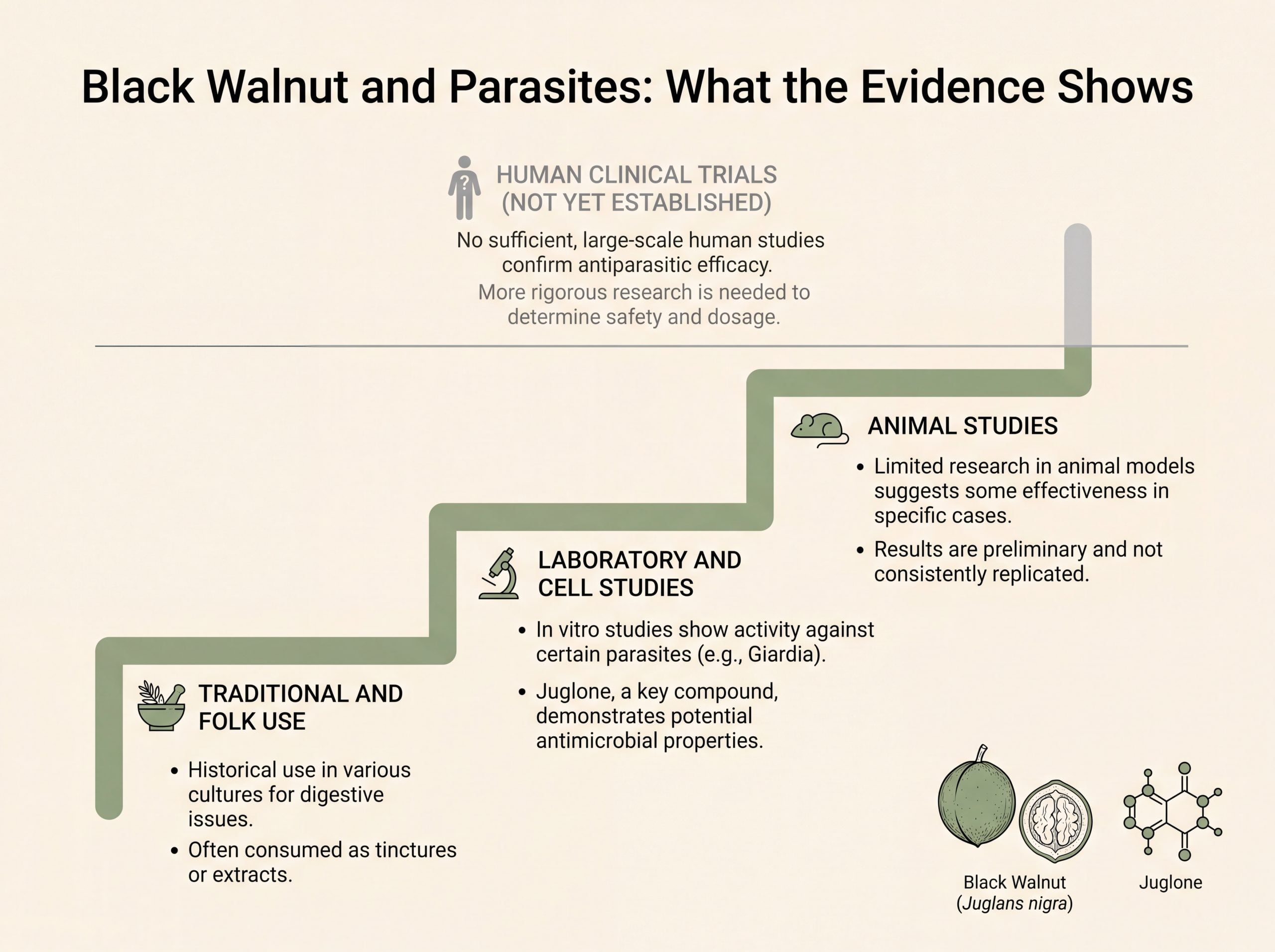
Among the various nuts, black walnuts stand out for their potent antiparasitic properties. These nuts contain juglone, a naphthoquinone compound studied for its activity against certain parasites in laboratory research (Ellendorff et al., 2015, Molecules, PMID: 26035104). We look at what that research does and does not establish in the section below.
Research on black walnut hulls demonstrates their effectiveness against parasitic infections, including worms and eggs that can inhabit the human body. The hulls produce substances that are toxic to many parasites but safe for human consumption in controlled amounts. This unique attribute makes Juglans nigra hulls a sought-after natural remedy for those looking to expel unwanted pests from their body, including worms like tapeworms, hookworms, and Giardia.
Historically, black walnut has been used for centuries as a traditional medicine, with its use dating back to the treatment of diphtheria and intestinal issues. Its killing prowess is not just limited to worms; it is also effective against various types of parasites, showcasing its broad spectrum of action. The Juglans genus, to which black walnuts belong, is recognized for its health benefits, including its antiparasitic capabilities.
The mechanism by which black walnut hulls kill parasites involves disrupting the metabolic processes of the parasites, thereby killing them or making the environment within the host body inhospitable for their survival. This effectively kills or expels the parasites from the body, helping to rid the host of these unwanted pests.
Juglone exhibits its antiparasitic properties through several mechanisms:
- Enzyme Inhibition: Juglone is believed to inhibit certain enzymes that are essential for the parasite’s metabolic function. This disruption impairs the parasite’s ability to produce energy and carry out vital processes, leading to its death.
- Astringent Properties: Juglone possesses astringent properties. These properties can damage the outer layer (cuticle or tegument) of parasites, making them more vulnerable.
- Antifungal Activity: Juglone has also demonstrated antifungal properties, that can work to eliminate fungal infections.
- Tannin Content: Black walnut hulls contain high tannin content.
What the Research Actually Shows: Studies on Black Walnut and Parasites
When readers ask us whether the science backs up black walnut, we give the honest answer: the evidence is real but early. Most of it comes from laboratory and animal studies rather than human clinical trials, so it is best read as promising traditional-use support, not proof of a cure.
In our review of the primary literature, the most relevant findings are these. An ethanolic leaf extract of English walnut (Juglans regia) showed measurable anthelmintic activity against the poultry roundworm Ascaridia galli in a controlled laboratory setting (Mir et al., 2024, Veterinary Research Communications, PMID: 38771447). Working with the same genus, researchers confirmed that hydrojuglone glucoside, the precursor compound to juglone, is the constituent of Juglans species responsible for activity against Trypanosoma parasites in vitro (Ellendorff et al., 2015, Molecules, PMID: 26035104). A 2025 screen of traditional European medicinal plants placed walnut among the botanicals with documented anthelmintic activity in laboratory models (Boyko et al., 2025, Biology, PMID: 41463411).
A note on what these studies do and do not say. They examine Juglans nigra (black walnut) hull and Juglans regia (English walnut) preparations against specific parasites in cells, test tubes, and animals. They are not clinical trials in people, and the U.S. Centers for Disease Control notes that a confirmed parasitic infection should be diagnosed and managed by a healthcare professional rather than self-treated (CDC, About Parasites). We read this body of work as a traditional-use rationale worth taking seriously, and as a reason to use black walnut hull thoughtfully alongside, not instead of, qualified medical care.
Recommended Dosage of Black Walnut for Parasite Cleansing
Determining the right dosage of black walnut hulls for a parasite cleanse is important for maximizing benefits while minimizing potential side effects. The dosage can vary based on factors such as age, health status, and the severity of parasitic infections. It’s essential for individuals to consult with a healthcare provider before starting any new treatment regimen, especially when using medicinal herbs for parasite elimination.
For most adults, a common starting point is a tincture or extract form, beginning with small doses and gradually increasing as tolerated. Typically, this might involve starting with just a few drops of black walnut tincture in water, taken once daily. The key is to observe how your body responds and adjust accordingly. For parasite cleanse protocols, some herbalists recommend increasing the dose slowly over a period of several weeks.
Capsules containing black walnut hull powder are another option, offering a more measured and potentially convenient method of ingestion. The recommended dosage for capsules will depend on the concentration of the hull extract they contain. As with any supplement, following the manufacturer’s guidelines or the advice of a healthcare professional is advised.
- Forms of Black Walnut: Black walnut is available in various forms:
- Tinctures: Liquid extracts, are often considered the most potent form.
- Capsules: Provide a convenient, pre-measured dose.
- Powder: Can be mixed into smoothies or other foods (though the taste can be strong).
- Duration: A typical black walnut parasite cleanse might last anywhere from 2 to 4 weeks. Some traditional protocols recommend cycling the treatment (e.g., 2 weeks on, 2 weeks off) to coincide with the full moon cycle, when parasites are believed to be more active.
- Timing: Some sources say it may be more beneficial to take black walnut extract on an empty stomach.
Incorporating black walnuts into your diet as part of a parasite cleanse should be done with care and consideration. Overconsumption can lead to adverse effects, underscoring the importance of adhering to recommended dosages and consulting with healthcare experts.
By using an appropriate dosage and consulting a qualified practitioner, individuals can incorporate black walnut hull thoughtfully as a traditional botanical used to support the body’s natural defenses against intestinal parasites.
Other Natural Remedies for Parasite Elimination
While black walnut hulls are highly regarded for their antiparasitic capabilities, they are not the only natural remedy available. A variety of herbs and substances have been recognized for their ability to expel parasites from the body, offering a comprehensive approach to parasite elimination.
- Cloves: Cloves are traditionally paired with black walnut in cleanse protocols. Cloves contain eugenol, a compound that has been studied for its activity against parasite eggs in laboratory settings, which is the traditional rationale for including cloves alongside black walnut hull and wormwood (Artemisia absinthium) in folk practice.
- Wormwood: Artemisia absinthium, commonly known as wormwood, contains the active compound thujone. Wormwood, with its active compound thujone, is effective in killing adult parasites, including various worms and Giardia. When used in combination, black walnut, cloves, and wormwood create a potent trio for parasite cleansing, offering a broad spectrum of antiparasitic activity. The “trio” is believed to be more effective because it targets different stages of the parasite life cycle: black walnut and wormwood kill adult and developing stages, while cloves target the eggs.
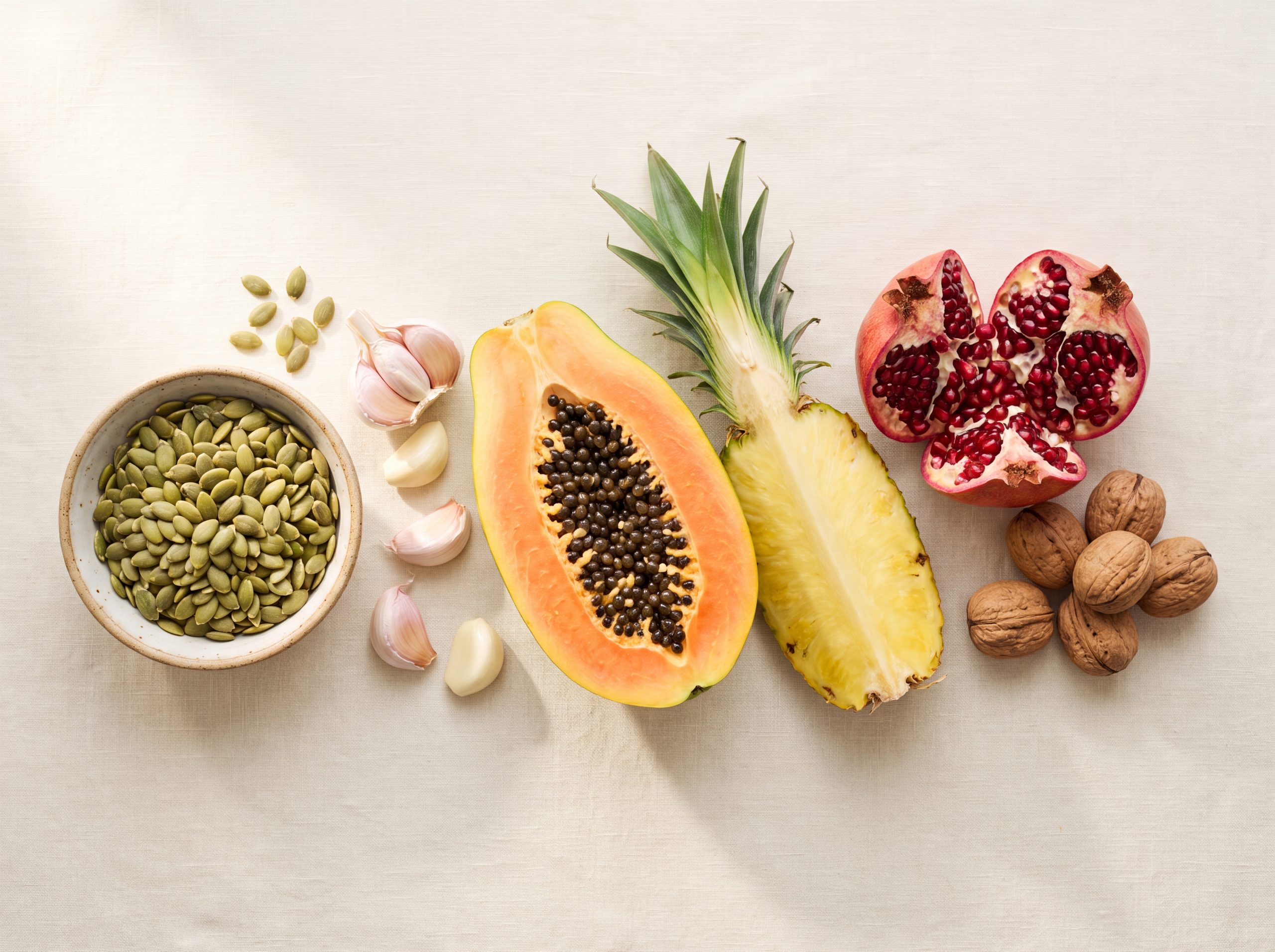
- Garlic: Garlic, specifically its active compound allicin, has demonstrated antiparasitic effects in some studies.
- Pumpkin Seeds: Pumpkin seeds contain cucurbitacin, a compound that may have anti-helminthic (anti-worm) properties, potentially paralyzing worms.
- Papaya (and seeds): Papaya and its seeds contain enzymes like papain and carpaine, which have been traditionally used for their antiparasitic effects.
- Probiotics: While not directly antiparasitic, probiotics are essential for restoring a healthy gut microbiome after a parasite cleanse. They help re-establish beneficial bacteria that may have been disrupted.
- Berberine: An alkaloid found in herbs like Oregon Grape, and Barberry.
Green hulls of black walnut, cloves, and wormwood are often found in parasite cleanse products, working together to provide a comprehensive solution for parasite elimination. This combination not only helps to kill the parasites but also aids in detoxifying the body, expelling the dead parasites and any toxins they have released.
It’s important for individuals considering these natural remedies for parasite elimination to consult with a healthcare professional, especially if they have underlying health conditions or are taking other medications. Research and medicinal use suggest that when used properly, these herbs can offer a natural, effective way to get rid of parasites and improve intestinal health.
Dietary Considerations During a Parasite Cleanse
What we eat can significantly impact the effectiveness of a parasite cleanse. Certain foods can either support or hinder the process.
- Foods to Avoid:
- Sugar: Parasites thrive on sugar, so it’s crucial to minimize or eliminate added sugars.
- Processed Foods: These often contain hidden sugars and additives that can feed parasites.
- Refined Grains: White bread, pasta, and rice can convert to sugar quickly.
- Alcohol: Can weaken the immune system and potentially feed parasites.
- Foods to Include:
- Fiber-Rich Foods: Fiber helps promote regular bowel movements, which is essential for eliminating parasites and their toxins. Good sources include vegetables, fruits, and whole grains (if tolerated).
- Probiotic-Rich Foods: Fermented foods like yogurt (unsweetened), kefir, and sauerkraut can help replenish beneficial gut bacteria.
- Anti-inflammatory foods: Foods that possess anti-inflammatory properties.
Other Antiparasitic Foods to Include
Black walnut hull is one traditional tool among several. In our sourcing and kitchen-testing experience, the foods below come up again and again in Western herbalism and folk practice for supporting the body’s own defenses against intestinal parasites. None is a substitute for medical diagnosis, and each is included here for its traditional role and its studied plant compounds rather than any promise of cure.
| Food | Key compound | Traditional role |
|---|---|---|
| Pumpkin seeds (Cucurbita pepo) | Cucurbitin | Traditionally used to help the body expel intestinal worms. |
| Garlic (Allium sativum) | Allicin | Long used in folk practice to support digestive defenses. |
| Papaya seeds (Carica papaya) | Papain, benzyl isothiocyanate | Traditionally taken to support the gut against parasites. |
| Pineapple (Ananas comosus) | Bromelain | A proteolytic enzyme traditionally paired with cleanse protocols. |
| Pomegranate (Punica granatum) | Punicalagins, alkaloids | Bark and fruit have a long anthelmintic history in several traditions. |
| For traditional-use context only. See a healthcare provider for a suspected infection. | ||
For a broader walk-through of how these foods fit into a gentle routine, our team covers the full approach in our guide to a natural herbal parasite cleanse.
Potential Side Effects of Using Walnuts for Parasite Removal
While black walnut hulls offer a natural approach to parasite removal, it’s essential to be aware of potential side effects. Like any medicinal herbs, they can interact with the body in unexpected ways, especially when not used according to recommended dosages.
- Allergic Reactions: One common concern is the potential for allergic reactions. Individuals with allergies to nuts may experience similar reactions to black walnut hulls, including rashes, swelling, or more severe anaphylactic responses. It’s critical for those with nut allergies to proceed with caution and consult a healthcare provider before incorporating black walnut hulls into their parasite cleanse regimen.
- Digestive Issues: Another consideration is the impact on the intestinal flora. While black walnut hulls are effective in eliminating parasites, they may also affect beneficial bacteria within the gut. This disruption can lead to digestive issues, such as diarrhea or constipation, underscoring the importance of moderation and potentially supplementing with probiotics during and after parasite treatment. The high tannin content in black walnut can also cause stomach upset in some individuals.
- Liver Function: Liver function is another area of concern, particularly with prolonged use of high dosages. The liver processes the compounds found in black walnut hulls, and excessive consumption can strain this vital organ. Monitoring by a healthcare professional is advisable to prevent liver damage and ensure the safe use of black walnut hulls for parasite removal.
- Medication Interactions: Black walnut may interfere with the absorption of certain oral medications due to its tannin content. It’s important to take black walnut several hours apart from any medications.
- Pregnancy and Breastfeeding: Black walnut is generally not recommended for use during pregnancy or breastfeeding due to a lack of safety data.
Lastly, it’s worth noting that research on the long-term use of black walnut hulls for parasite removal is limited. While anecdotal evidence and historical use support their benefits, individuals should approach treatment with an understanding of the potential risks and side effects.
By being informed of these potential side effects, individuals can make educated decisions about using black walnut hulls for parasite removal, balancing the benefits against the risks.
Can Eating Walnuts Regularly Help Keep Parasites Away?
This is one of the most common questions we get, and it deserves a careful answer. There is an important difference between the culinary English walnut (Juglans regia) you eat as a snack and the black walnut hull (Juglans nigra) tincture or powder used in traditional cleanse protocols. The active naphthoquinone content that gives black walnut hull its reputation is concentrated in the green hull, not in the nutmeat you buy at the grocery store.
So while eating walnuts regularly is a nourishing habit that supports overall wellness, it is not the same as a hull-based preparation, and no food should be relied on to prevent infection. We frame regular walnut consumption as part of a fiber-rich, whole-food pattern that traditionally supports a healthy digestive environment, and we point anyone with a suspected active infection toward a healthcare provider for diagnosis. Prevention, in the practical sense, comes mostly from hygiene, safe food handling, and clean water rather than from any single food.
Before starting any parasite cleanse, including one using black walnut, it is essential to consult with a qualified healthcare professional. They can help determine if a parasite cleanse is appropriate for you, assess potential risks and interactions, and guide you on proper dosage and duration of treatment.
Disclaimer: These statements have not been evaluated by the Food and Drug Administration. This product is not intended to diagnose, treat, cure, or prevent any disease. This article is for educational purposes and is not a substitute for professional medical advice. Consult your healthcare provider before beginning any herbal protocol, especially if you are pregnant, nursing, taking medication, or managing a health condition.